Sim Desai

91 posts

Sim Desai

Sim Desai

@SimDesai

Founder and CEO @Hiive_Hq. Unlocking private market liquidity.

가입일 Ekim 2017
201 팔로잉247 팔로워
Sim Desai
Sim Desai@SimDesai·
Public markets love a benchmark. That’s why the smartest private companies are using secondaries to shape their IPO before they file. These charts show the trading histories of @rubrikInc and @Chime on Hiive, their IPO prices, and their closing prices a few weeks post IPO. In both cases there was meaningful, controlled secondary trading ahead of the IPO. Not fire-sale liquidity. Not hype-fueled bidding wars. Just real price discovery: buyers and sellers aligning on value over time. Instead of the roller coaster ride many companies experience upon going public, it’s easy to see the market already had an understanding of the intrinsic value these companies had, possibly due to the secondary trading both companies allowed on @Hiive_HQ (and other platforms). That process does more than move shares around. It actually builds structure into the market: → A trading range emerges, anchoring expectations → Overhang gets absorbed, further reducing day-one downward trading pressure → Cap tables consolidate, improving post-IPO float quality and providing confidence to new institutional investors In other words: secondary trading becomes a quiet rehearsal for the main event, providing the market with information it never had before. This isn’t anecdotal anymore—it’s a repeatable pattern. And it’s rewriting how companies think about IPO prep. Liquidity is no longer just a late-stage employee benefit or investor pressure valve. It functions as a pre-listing signal, a market primer, and a cap table optimization strategy—especially for companies planning to list in the next 6–18 months. As the IPO window cautiously reopens, this may become a defining feature of the strongest offerings: companies that went public with a price, not just a guess. #liquidity
Sim Desai tweet mediaSim Desai tweet media
English
3
0
2
619
Sim Desai
Sim Desai@SimDesai·
Why does #liquidity matter, you ask? We ran a blind survey of 500 tech employees to find out.
English
1
1
2
473
Sim Desai
Sim Desai@SimDesai·
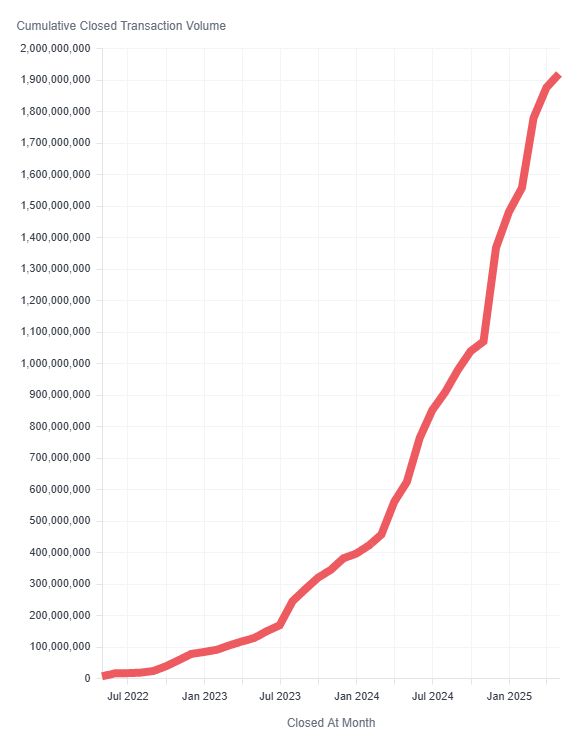
@RagnarDrees @mttgrmm Hiive is the world's largest marketplace for private securities trading. We are on pace to close almost $2 billion in 2025. Over 80% of our volume is direct share transfers. We also manage our own SPVs. We do not charge mgmt fees or carry. Transparent transaction fees only.
English
2
0
1
80
Matt Grimm
Matt Grimm@mttgrmm·
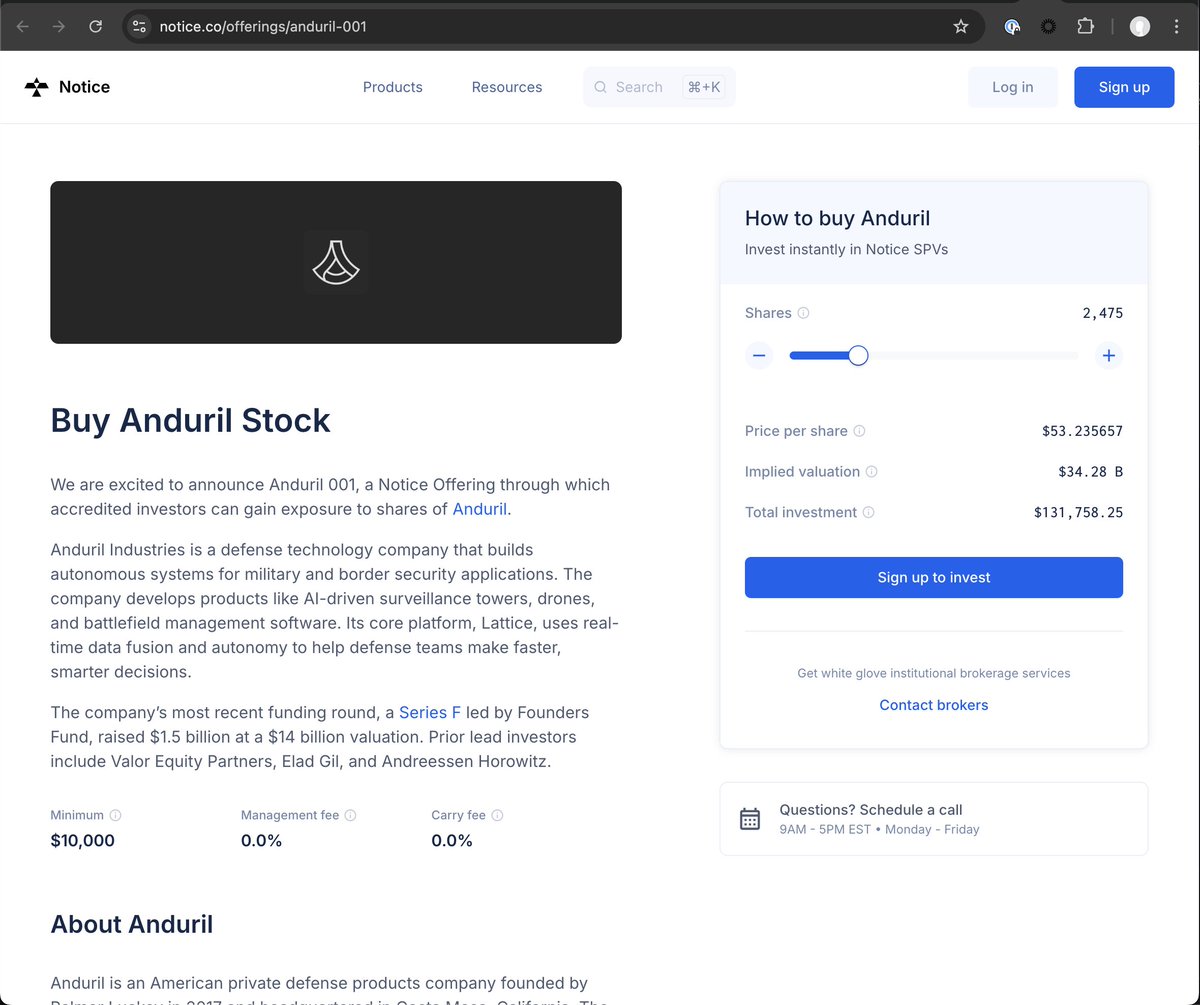
This is at best deceptive, at worst outright fraud. Notice is not on our cap table directly and has no direct access to shares, thus there is no possible way to offer 0/0 fee structures... even if they were buying out someone's LP position in a venture fund or other SPV, that fund would have (at least one layer of) fees. Be very careful with these secondary marketplaces. The market is rife with lies and outright fraud. And sorry to pick nits but we raised a fairly-well-publicized Series G earlier this year.
Matt Grimm tweet media
English
53
26
888
164.9K
Sim Desai
Sim Desai@SimDesai·
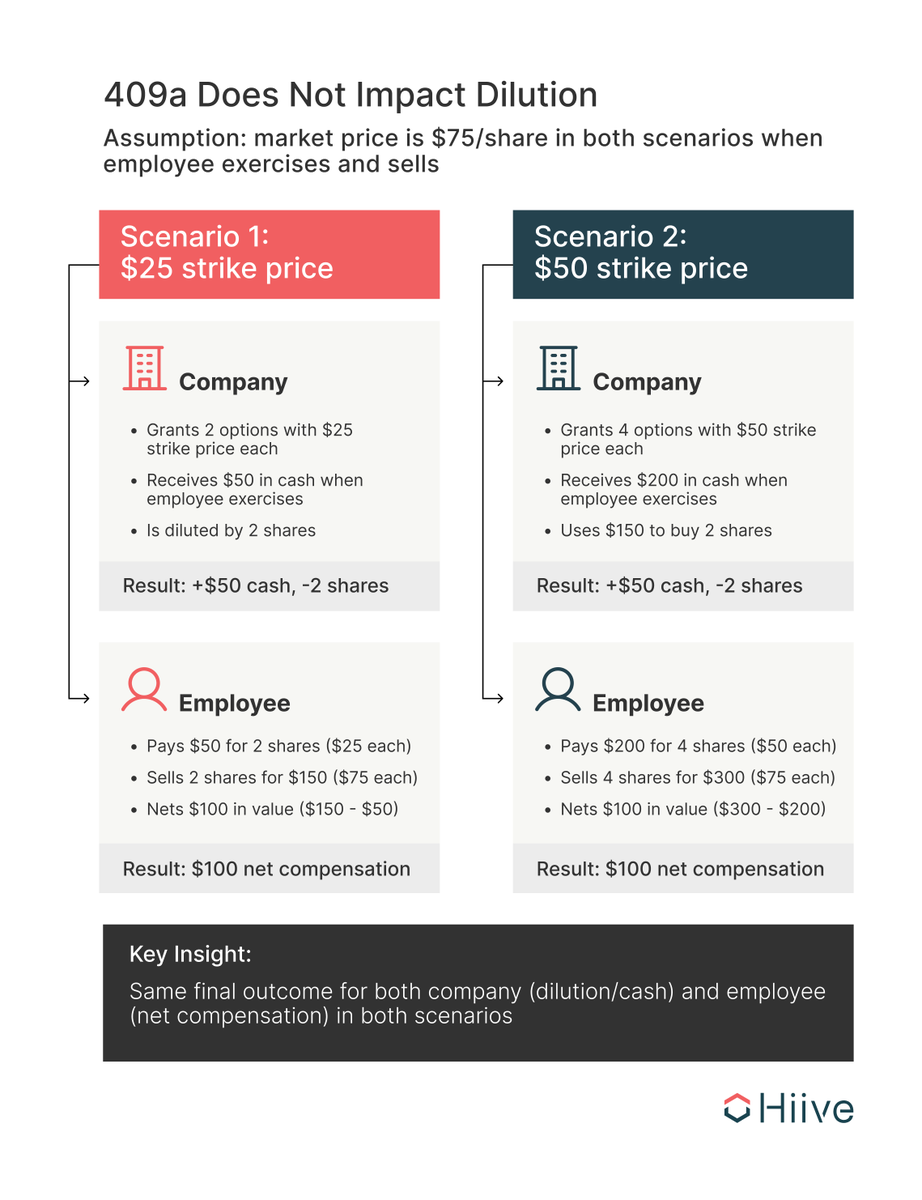
Company execs often justify prohibitions on secondaries based on concerns about the impact on their 409A valuation. Because the strike price of option grants to employees is priced at the 409A valuation, some executives are obsessed with keeping it low. They believe that they can confer more value on employees, with less dilution, by keeping the 409A artificially depressed. These fears are not well-founded for the following reasons: 1) Secondaries rarely impact the 409A valuation between annual re-assessments. 2) Even after 12 months, or in the rare cases where secondaries do impact 409A, the company should not fear greater dilution with a higher strike price because it is able to use the cash from option exercises to buy back stock at current market value (CHART BELOW ILLUSTRATES THIS POINT). 3) The fact that some of the largest private companies in the world (@cerebras, @krakenfx, @LightmatterCo, @Ripple, among many others) allow their stock to trade relatively freely gives evidence that these sophisticated firms are not concerned about this issue. The bottom line: there is plenty of evidence that 409A valuations are NOT a reason to stop secondary trading. Link to the full @Hiive_HQ BLOG POST on this topic in the comments below. Let me know if you can poke holes in our argument! #liquidity
Sim Desai tweet media
English
1
1
4
353
Sim Desai
Sim Desai@SimDesai·
If we want to close Canada’s productivity gap with the US, stop the brain drain, and build a prosperous innovation economy, we are going to have to make some big changes that are not going to be popular with everyone in the short term. Here are my suggestions, in order of impact: 1. Increase our economic integration with the massive US economy while maintaining political independence. We should drop all tariffs in exchange for the same in return. We should seek monetary union with the US, and free labour mobility, like in the EU. Economic barriers like customs, currency exchange, and restrictions on cross border labour movement, are a major drag on trade, and they disproportionately impact Canada as the much smaller economy. Protectionist policies will slow Canada's economy, not enhance it. 2. Expand and simplify economic incentives for innovative businesses. For example, Canada’s famous technology tax credit incentive program, SRED, is too difficult to access, because only hard experimental R&D costs qualify. It’s not even good enough to be building novel software. This has spawned an entire industry of consultants (the real winners from this program) who take 20% in exchange for helping primarily software companies ‘frame’ their expenses as R&D. Simplify the program to reward a more broadly defined category of ‘innovative’ businesses. 3. Eliminate inter-provincial barriers to commerce and labour mobility. For example, why does Canada have 13 securities regulators, and 13 different regulators for every profession (legal, medical, architectural and many others)? These barriers place administrative burdens on businesses and professionals (and increase costs to consumers) while reducing network effects in our national economy. 4. Stop picking winners! For example, anything we accomplish by propping-up a Canada-based airline can be done with targeted incentives instead. Similarly, Canada should base its procurement decisions on merit alone. Location should be nothing more than a tie-breaker. Spending by the government on inefficient companies and underproductive industries wastes taxpayer dollars, perverts the free market, and crowds out innovators. 5. Protect and commercialize the IP we are creating in Canada. Canada funds a large amount of research and development, including in the AI space, but has largely failed to capture this value in the form of patents owned by Canadians and Canadian businesses. Canada has also suffered from a massive brain-drain to the US. We need to own the innovation that we fund. If we want to be a technology leader, we need to make tough and disruptive decisions that defy norms. Are we willing to do it? @CBCNews
English
0
0
4
201
Sim Desai
Sim Desai@SimDesai·
@PsiQuantum This is not an offer to buy or sell securities. Investing in private stock is very risky and carries the potential for a total loss of investment.
English
0
0
0
166
Sim Desai
Sim Desai@SimDesai·
When unicorn fundraise announcements hit, the private markets move in response, and they move FAST. This @PsiQuantum chart tells a remarkable story: - The “aggregate price”, something we generate using a rolling weighted average of transactions and customer orders, is $38.42 today, up 118.05% in just 3 months - Fundraise announced March 24th at $41.13 per share - Before announcement: steady climb from ~$17 to $21.18 - After announcement: immediate jump to $40, now stabilizing around $38 This is a striking example of how private market prices react to primary funding news - the jump happens literally on announcement day. The chart also suggests that rumours about the round may have (not surprisingly) started to leak out to the market before it was announced. The latest aggregate price is now slightly below the round price. This is most likely due to the fact that primary round was for the most senior preferred stock, whereas secondary market trading is usually for more junior stock (common or early preferred). It’s really incredible that we can now observe these private market phenomena, almost in real time. #liquidity
Sim Desai tweet media
English
1
0
1
246
Sim Desai
Sim Desai@SimDesai·
@Hiive_HQ This is not an offer or recommendation to buy or sell Ripple stock. Investing in private securities is very risky and can result in a total loss.
English
3
0
0
210
Sim Desai
Sim Desai@SimDesai·
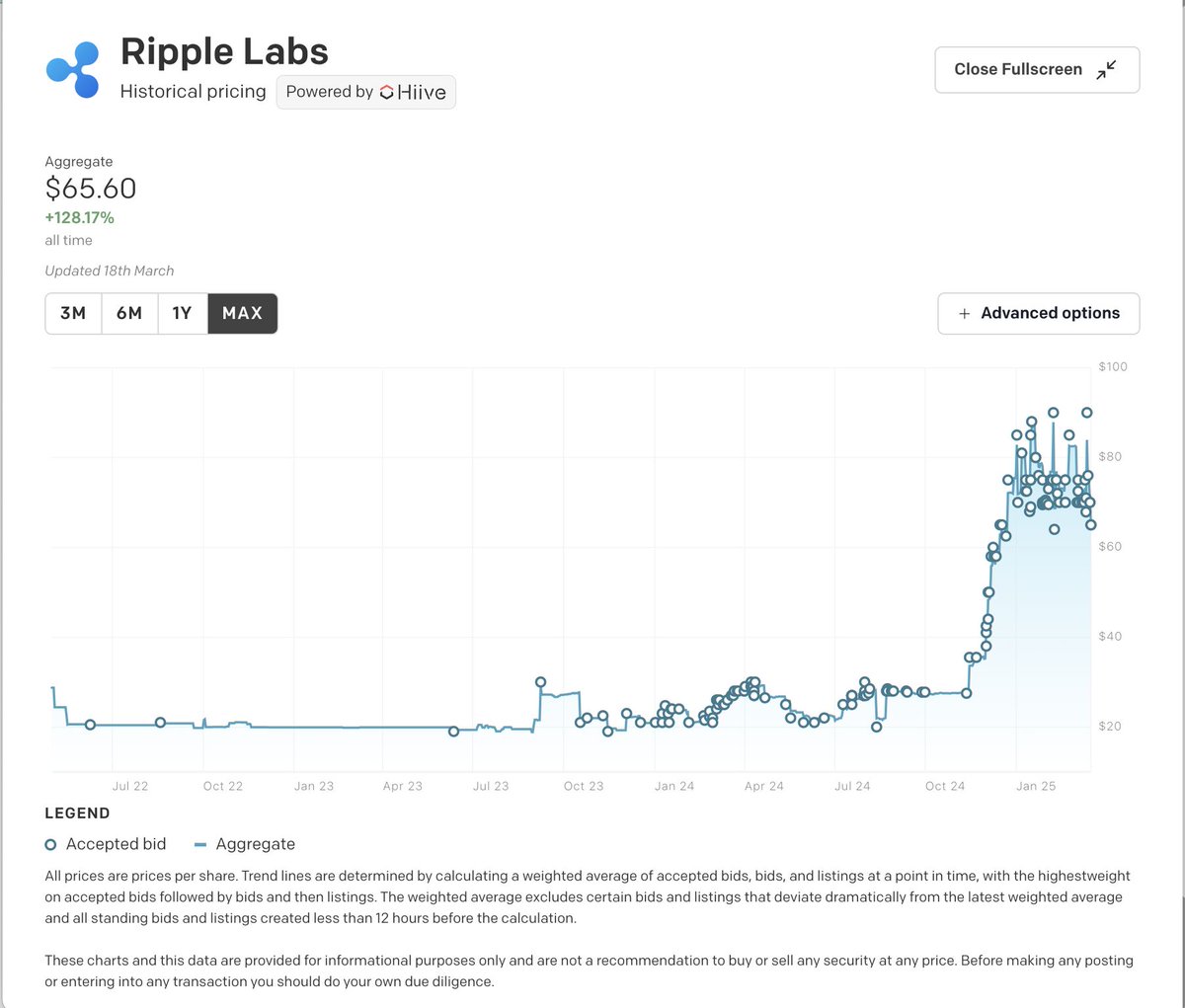
I'd be curious if there is any place with more liquidity in Ripple stock than @Hiive_HQ. Anybody know? #Liquidity
Sim Desai tweet media
English
4
0
1
624
Sim Desai
Sim Desai@SimDesai·
What's the over/under on the @CoreWeave IPO going ahead Friday? Markets, especially the tech-heavy NASDAQ100, are cratering. But on the other hand, CoreWeave just announced a $12 billion contract with @OpenAI. The stock has recently actually been trading on @Hiive_HQ above the $30 billion valuation target the press was speculating about back in the fall (based on unverified 3rd party sources, their Series C was $19.15 billion post-money at $780/sh). Our Execution Services team has been working feverishly to close as many trades as possible ahead of the expected lockup at the end of this week. One thing's for sure. Whether or not the IPO goes ahead, there will be an alternative. #liquidity
Sim Desai tweet media
English
0
0
3
512
Sim Desai
Sim Desai@SimDesai·
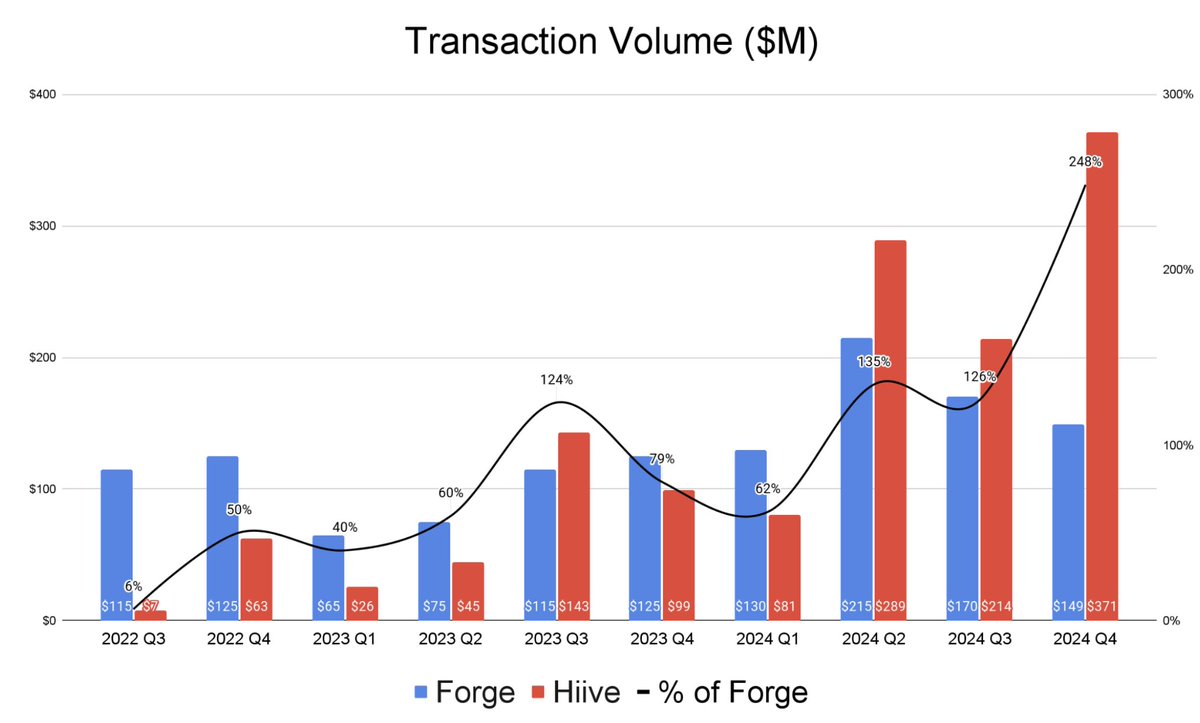
This might be the last time I post a comparison between @Hiive_HQ and @Forge_Global. In fact, in light of the continued listing standards notice they received from the NYSE in January, it might be the last time we have access to Forge’s quarterly results. And frankly, it’s time for us to focus on bigger fish. People ask me all the time, what makes Hiive different from all the other secondary market players out there? What explains our success? I believe it comes down to the following factors, which are unique to Hiive in this business: OUR DEDICATION TO TECHNOLOGY SOLUTIONS: We are the only liquidity platform to fully automate the transaction matching and execution process. We started as an automated trading system, and we have recently upped the ante by introducing an automated transaction execution system (we are currently in a pilot with 8 companies on this new tech). Within a few months, all sellers (if their company allows it) will be able to go from price discovery, to meeting a buyer, to cashless option exercise, to money in the bank, without ever leaving the platform, or even sending a single email. OUR COMMITMENT TO WORKING WITH COMPANY MANAGEMENT: We are giving private issuers a place on Hiive that recognizes their centrality in this process. Not only can we take the entire transaction execution process off their (and their counsel’s) hands, but we also give them one central place to track all of their past and pending transactions. If they want to create controls on trading (price floors, buyer pre-approvals, seller eligibility rules), we give them the power to hardwire these rules into our platform. And, we can even give them complete transparency into all of the POTENTIAL buyers and sellers of their stock on our platform. OUR STRENGTH IN BOTH THE INDIVIDUAL AND INSTITUTIONAL MARKETS: Our self-serve tech makes us a no-brainer for individual sellers and investors. But our ability to deliver large scale liquidity comes from our expert capital markets team and its access to the deep institutional market. In 2024, our transaction sizes ranged from $25,000 to $75,000,000. Further, RIAs and other compliance-heavy funds benefit from the anonymity and communications retention abilities of our platform. OUR FRIENDLINESS TO OUTSIDE BROKERS: We collaborate with leading independent brokers and treat them as partners. We welcome them (and companies who get transactions from other brokers) to use our execution services for their transactions at no charge. But most important of all (and without which none of these accomplishments would have been possible) is the incredible team of professionals that we have meticulously assembled to drive us forward in our mission. Congratulations Hiive Team! Onward and upward! #privatemarkets #vcsecondaries #preipo #liquidity
Sim Desai tweet media
English
0
0
2
207
Sim Desai
Sim Desai@SimDesai·
*Past performance is not indicative of future results. Indexes are unmanaged and cannot be invested in directly. Investing in private securities is speculative, illiquid, and involves the risk of loss.
English
0
0
0
157
Sim Desai
Sim Desai@SimDesai·
Hiive's Annual Year in Review Report is now live! Our platform data revealed three key trends shaping the landscape: #1: The Hiive50, our equal weight price index of the 50 most liquid private stocks, outpaced public benchmarks •The Hiive50 Index outgained both the S&P 500 and NASDAQ 100 in 2024, returning 38.4%. • AI, Hardware, and Web3 segments of the Hiive50 delivered returns in excess of 120% in 2024. #2: The marketplace shifted decidedly in favor of sellers • The ratio of bids to listings on the Hiive platform increased 73% year over year to a record 1.3x in December. • In Q4 2024, growth in matches on platform outpaced growth in listings for the first time. #3: More private companies offered liquidity to shareholders • 90% of ad hoc transfer requests that Hiive submitted for company approval resulted in successful sales. • Liquidity-blocking companies face unhappier employees across a range of employer brand metrics. It looks like private companies are embracing the reality that they need to offer liquidity to compete for top talent, with public companies offering RSUs and liquid stock grants. Get the full insights by reading our comprehensive report (link in thread). I'm incredibly proud of the Hiive team for their dedication to bringing transparency and efficiency to the private markets. We're committed to empowering stakeholders across the innovation economy, from investors to employees and startup leadership. #PrivateMarkets #SecondaryMarkets #Liquidity #VentureCapital #Startups
English
3
1
4
593
Sim Desai
Sim Desai@SimDesai·
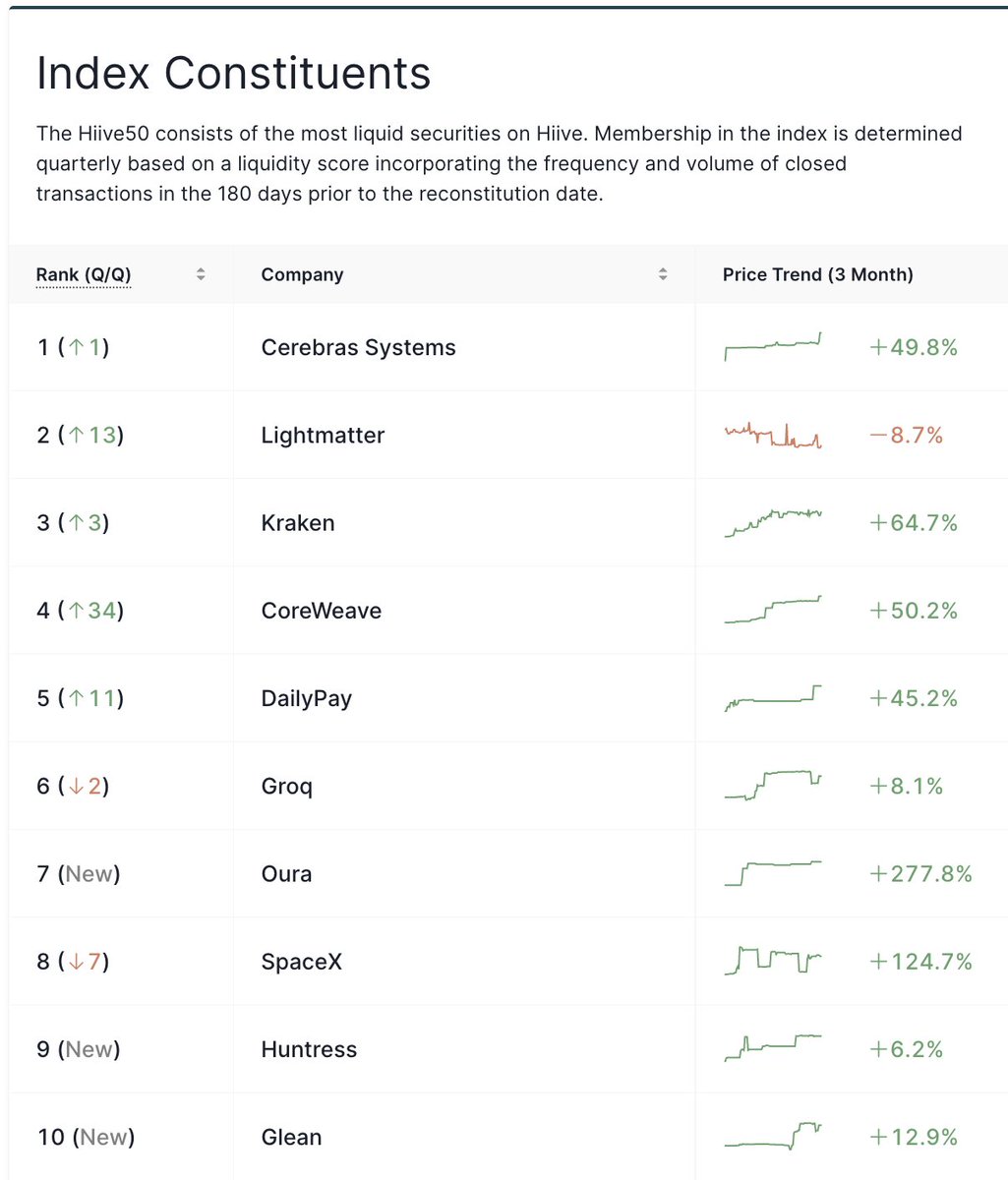
The Hiive50 is newly reconstituted for Q1/2025. We've now added an explicit rank for each of the 50 members, showing the current rank and the change in rank compared with the prior quarter. Some notable risers include @CoreWeave surging to number 4 from 38 last quarter, @LightmatterCo jumping to number 2 from 15 last quarter, @WHOOP up 18 spots to 11, @DragosInc soaring to 13 from 30, @SambaNovaAI up to 18 from 46, and @discord shooting up to 21 from 50 last quarter. @ouraring, @HuntressLabs, @glean, @SeatGeek, @INRIX, @CommureOS and @PsiQuantum are some of the most notable new members this quarter. The index consists of the 50 most liquid securities on Hiive. Membership in the index is determined quarterly based on a liquidity score incorporating the frequency and volume of closed transactions in the prior 180 days. The Hiive50 is based exclusively on @Hiive_HQ platform data and the price chart for the Hiive50 updates daily based on the latest trading. Is the Hiive50 a fair representation of the market, or does our platform have some blind spots? #liquidity
Sim Desai tweet media
English
2
1
5
609
Sim Desai
Sim Desai@SimDesai·
The Hiive50 Index is calculated and disseminated by The Hiive Company Limited (THCL), comprised of data points received by Hiive Markets Limited (an affiliate of THCL) and is a mark of THCL. The Hiive50 Index is provided for informational and educational purposes only, and is not a recommendation to buy or sell any security. It is not possible to invest in the Hiive50 Index, and THCL makes no assurance that any investment products based on or underlying the Hiive50 Index will accurately track index or market performance or provide positive investment returns. THCL is not an investment adviser and does not provide advice of any kind, including investment, legal, accounting or tax advice.
English
0
0
0
140