Sue๐Ÿ‡บ๐Ÿ‡ธ

14.8K posts

Sue๐Ÿ‡บ๐Ÿ‡ธ banner
Sue๐Ÿ‡บ๐Ÿ‡ธ

Sue๐Ÿ‡บ๐Ÿ‡ธ

@Sue1925

๐Ÿ‡บ๐Ÿ‡ธ ๐Ÿ‡บ๐Ÿ‡ธ๐Ÿ‡บ๐Ÿ‡ธ CONFORMITY is the JAILOR of FREEDOM and the ENEMY of GROWTH- JFK, In defense of Pres. Trump. My ๐Ÿฑ's control me. ๐Ÿšซ DM's

๊ฐ€์ž…์ผ Temmuz 2024
2.7K ํŒ”๋กœ์ž‰2.7K ํŒ”๋กœ์›Œ
Sue๐Ÿ‡บ๐Ÿ‡ธ
Sue๐Ÿ‡บ๐Ÿ‡ธ@Sue1925ยท
@RezaNasri1 "Care" and " flexibility " for terrorists, misogynists and an abomination of a civil society? No thank you. Most Americans want your ilk to be gone as do all civilized people. The world will finally be able to breath a sigh of relief.
English
3
0
4
323
Reza Nasri
Reza Nasri@RezaNasri1ยท
As a Pakistani diplomat who I happened to meet today, told me, "In essence, the United States can not conduct serious diplomacy; their arrogance and maximalist approach make it extremely difficult for them to show minimum care and flexibility for the interests and concerns of other nations."
English
1.6K
9.8K
35.1K
931K
harris4potus
harris4potus@kdh4potusยท
this shouldโ€™ve been Americaโ€™s First Family!!
harris4potus tweet media
English
2.2K
257
3.4K
47.6K
Don Winslow
Don Winslow@donwinslowยท
A total disgrace to America - to who we are, to what we were. These boys are a disgrace. Make America Great Again...what a complete load of BS.
English
2.1K
8.4K
36.5K
815.8K
Alex Cole
Alex Cole@acnewsiticsยท
DEI didnโ€™t just prove MAGA wrongโ€”it did it on a mission around the moon.
Alex Cole tweet media
English
6K
3K
17.5K
1.2M
Sue๐Ÿ‡บ๐Ÿ‡ธ ๋ฆฌํŠธ์œ—ํ•จ
World Affairs
World Affairs@World_Affairs11ยท
BREAKING: ๐Ÿ‡ธ๐Ÿ‡ฆ Saudi Arabia fully restores East-West oil pipeline, bypassing the Strait of Hormuz and pumping 7,000,000 barrels per day. Saudi Arabia says it needs no more strait of Hormuz.
World Affairs tweet media
English
1.6K
15.7K
58.7K
2.1M
Sue๐Ÿ‡บ๐Ÿ‡ธ
Sue๐Ÿ‡บ๐Ÿ‡ธ@Sue1925ยท
@adonispara Love โค๏ธ Tom Selleck!!!! Don't forget his Jesse Stone series. Was really good too.
English
0
0
3
95
ADONIS
ADONIS@adonisparaยท
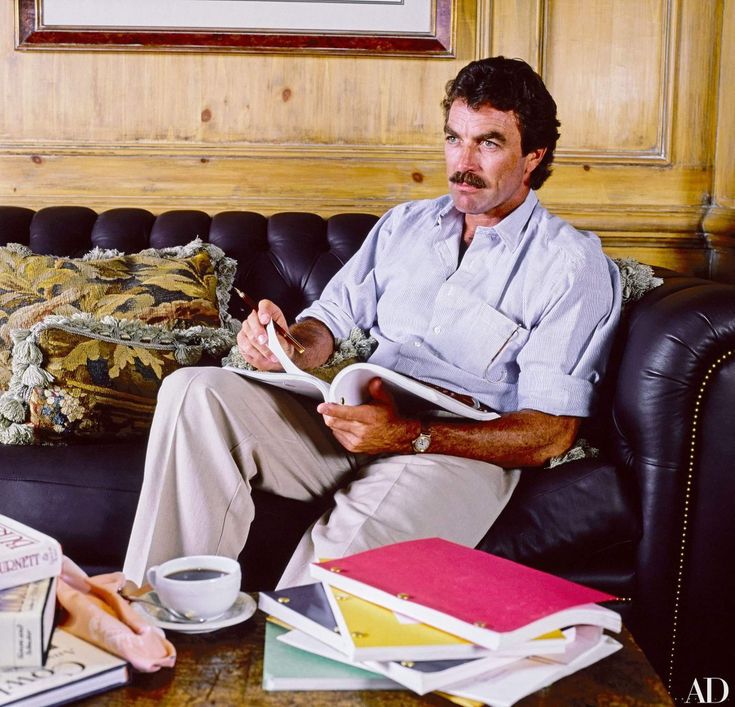
> born 1945, Detroit > dad was a carpenter > family packed everything into one car and drove west > grew up in Sherman Oaks, LA > 6'4" tall, athletic, good looking > worked part time at a clothing store to afford college > gets basketball scholarship to USC > fraternity brothers dared him to go on The Dating Game (he did it) > got spotted. Landed a Pepsi commercial > 20th Century Fox signed him to their talent programme > spent mornings in class, afternoons in acting training > served in the California Army National Guard > spent the late 60s and 70s doing commercials (cigarettes & colognes) > years of small TV parts and bit roles > nobody knew his name > made six pilots that never got picked up (SIX) > kept going > 1980 cast as Thomas Magnum in Magnum P.I. > show ran for 8 seasons > wins the Emmy & the Golden Globe > became the biggest TV star in the world > then Hollywood called him > was cast as Indiana Jones > had to turn it down > Harrison Ford got the role instead > Selleck didn't complain > went back to work > 1987 plays at Three Men and a Baby (highest grossing film in America that year) > played in Friends in the 90s (got an Emmy nomination for it) > Bought a 60-acre avocado ranch once owned by Dean Martin > 2010 joined Blue Bloods > Still working in his 70s Still working in his 70s, still growing avocados in his farm, still not trying to impress anyone
ADONIS tweet media
English
146
354
5.9K
261.7K
Sue๐Ÿ‡บ๐Ÿ‡ธ ๋ฆฌํŠธ์œ—ํ•จ
The Real Mike Rowe
The Real Mike Rowe@mikeroweworksยท
nationalreview.com/magazine/2026/โ€ฆ Cui bono? Hard to imagine a film with a more deceptive title, or a more disastrous legacy than this one. An Inconvenient Truth scared the hell out of millions of people. It predicted all kinds of climate-related catastrophes and polluted the minds of concerned citizens in countries all over the world with apocalyptic levels of fear and misunderstanding. It led to countless policies and regulations that wasted trillions of dollars, vilified the fossil fuel industry, and in the process, doomed millions of poor countries to another generation of โ€œenergy-poverty,โ€ which is of course, no different than โ€œpoverty-poverty.โ€ It gave us Greta Thunberg, and countless other misinformed activists who chained themselves to bridges, glued themselves to roads, and threw paint on priceless works of art in their misguided attempts to save the planet. It also won two Academy Awards and made Al Gore a very rich man. It seems obvious today that climate change is real, but that its impact on the planet has been wildly and irresponsibly overstated, primarily by people who have prospered from scaring us. Itโ€™s an old grift, but it always works, and Iโ€™m happy to share the attached article - an unsparing but very fair analysis of Al Gore's movie 20 years after it became the most profitable and influential environmental documentary ever produced. I thought the same thing last month when Paul Ehrlich died, and people finally began to acknowledge the false catastrophism that made him famous, thanks his bestselling horror story, The Population Bomb. It too, scared the hell out millions of people and caused a level of economic and psychological damage thatโ€™s simply incalculable. It also made Paul Ehrlich a rich man. Among other things, Ehrlich predicted that, by 1980, the average American lifespan would decline to just 42 years. โ€œMost of the people who are going to die in the greatest cataclysm in the history of man have already been born,โ€ Ehrlich wrote in 1969. โ€œThe death rate will increase until at least 100-200 million people per year will be starving to death during the next ten years,โ€ he declared the following year. By 1971, Ehrlich was willing to โ€œtake even money that England will not exist in the year 2000.โ€ Roughly 100 to 200 million people, he assumed, would die of starvation between 1980 and 1989 in what he deemed โ€œthe Great Die-Off.โ€ Paul Ehrlich was a distinguished evolutionary biologist who spent most of his career at Stanford University. He was also a highly respected environmentalist with all the proper credentials, and a media darling. (Johnny Carson alone had him on over a dozen times.) The Population Bomb was read by millions of people and reprinted no less than 20 times, making it one of the most consequential environmental books of the 20th century. And, just like An Inconvenient Truth, it was complete and total fiction. Opportunists like Gore and Ehrlich have always been with us and always will be. The most charitable thing we can say about them today is that they were wrong, but Iโ€™m not feeling charitable these days. Iโ€™m looking instead for the next grifter who wants to prosper by scaring me about the coming apocalypse, in whatever form it might take. And Iโ€™m asking myself a simple question, famously posed by Cicero a long time ago. โ€œCui bono?โ€ Who benefits? Itโ€™s well and fine to caution America about the odds of another pandemic, or the impact of AI, or the effect of processed foods, or the addictive qualities of social media, or in my case, the consequences of failing to close our ever-widening skills gap. (It won't be the end of the world, simply the end of America.) But if those warnings come with Oscars and bestsellers and large piles of money, remember Ciceroโ€™s question. And heed the answer... PS. Here's the article, if the link doesn't get you there... Two decades have passed since Al Goreโ€™s movie An Inconvenient Truth hit theaters, in May 2006, catapulting climate change into the global spotlight. The film, with its dramatic visuals and dire warnings, transformed the issue from a niche ecological concern into a front-page crisis. World leaders in rich countries began labeling it an โ€œexistential threat,โ€ and it dominated international agendas. Goreโ€™s message especially resonated with the elites who travel by private jet to attend global conferences, and it inspired a generation of influencers, activists, and policymakers. As we approach the filmโ€™s 20th anniversary, itโ€™s a time to reflect on not just its impact but its accuracy. The filmโ€™s predictions of escalating catastrophes have largely failed to materialize, its policy prescriptions have fallen short, and the $16 trillion currently spent in pursuit of its vision has delivered scant benefits. An Inconvenient Truth encapsulates the past two decades of climate debate: heavy on emotion and costs, light on evidence and benefits. Letโ€™s start with the filmโ€™s core narrative: that climate change is driving ever-worsening disasters. Gore painted a picture of a world besieged by floods, droughts, storms, and wildfires, with humanity on the brink. The data tells a different story. Over the past century, as the global population quadrupled, deaths from climate-related disasters have plummeted. In the 1920s, an average of nearly half a million people died annually from such events. Today, that number is under 10,000 โ€” a decline of more than 97 percent. This isnโ€™t because disasters have vanished. Itโ€™s because wealthier, more resilient societies have adapted through better infrastructure, early warnings, and disaster management. Richer, smarter societies have made us dramatically safer, proving that adaptation and resilience work far better than alarmists suggest. Goreโ€™s movie famously warned of vanishing polar bears, using poignant computer-generated images to suggest they were drowning because of melting ice. Again, reality is starkly different: Polar bear populations have increased from around 12,000 in the 1960s to more than 26,000 today, according to the best available evidence, including from the Polar Bear Specialist Group under the International Union for Conservation of Nature. The primary historical threat was overhunting, not climate change. While future warming poses risks, the apocalyptic narrative is undermined by the data. Hurricanes were another bogeyman. The film notably claimed that we would see more frequent and stronger storms; its poster cunningly showed a hurricane coming out of a smokestack. But global data from satellites actually show a slight decline in hurricane frequency since 1980. While Al Gore blamed Hurricane Katrina on climate change, just one year later, the U.S. began an unprecedentedly long streak of eleven years without major hurricane landfall. Indeed, the longest reliable data series for landfalling hurricanes in the U.S. has shown a decline since the year 1900, and major hurricanes are about as frequent as they were in the past. When adjusted for more people and more houses, the damages from U.S. hurricanes have declined, not increased. Wildfires follow a similar pattern. Media hype suggests a planet ablaze, but global burned area has decreased by 25 percent since 2001, according to NASA data. Each year, the reduction spares from the flames an area larger than Texas and California combined. In the U.S., while recent years have seen large fires, the 1930s Dust Bowl was five times worse. Fires are down everywhere else in the satellite era: Theyโ€™re trending lower in Australia, Europe, and South America; Asia hit its third-lowest annual burned area, and Africa (the biggest burner by far) posted its all-time low in 2025. North Americaโ€™s woes to a large extent stem from mismanagement: Weโ€™ve skipped the prescribed burns that lower long-term fire risk; a century of this fire suppression has built up undergrowth fuel and created tinderboxes. Yet this is spun as โ€œclimate change,โ€ not policy failure. Even CO2 emissions from wildfires are plummeting. The year 2025 saw the lowest-ever-recorded emissions in the satellite era, down 3 gigatons from early-2000s levels โ€” equivalent to wiping out the annual emissions of Brazil and Indonesia combined. This undercuts the core argument that rising global temperatures are supercharging fires and feedback loops of carbon release. This decline isnโ€™t new; itโ€™s a century-long pattern driven by human adaptation. People hate fires, so we prevent them. In the early 1900s, nearly 4 percent of global land burned yearly โ€” two Indiasโ€™ worth. Today, itโ€™s nearly halved, to 2.2 percent, sparing almost one India ablaze annually. Better land management, farming practices, and fire suppression have tamed blazes worldwide. Air pollution from fires follows suit. Globally, reduced burning means cleaner air. The risk of death from fire-related pollution has dropped significantly, likely saving tens of thousands of lives yearly, especially among vulnerable infants. Global fires are dramatically down, with lower emissions, pollution, and intensity โ€” all facts that challenge the alarmism. In the wake of Goreโ€™s film, media and activists have worked overtime to amplify every weather event as โ€œunprecedented,โ€ but the evidence shows that humanity is safer than ever from climate disasters. Climate change is real, but its impacts on extreme weather are dramatically overstated. Now consider the policy fallout. Goreโ€™s call to action spurred trillions of dollars in spending to reduce emissions. Yet global fossil-fuel emissions have set records nearly every year since 2006, and they again set a record in 2025. Fossil fuels still dominate because countries want cheap and reliable power. In 2006, the world got 82.6 percent of its total energy (not just electricity) from fossil fuels, according to the International Energy Agency. Annual fossil-fuel consumption rose 26 percent between then and 2023, the last year with global data. Even though renewables had also grown spectacularly, the world was still overwhelmingly dependent on fossil fuels delivering 81.1 percent of global energy. On current trends, it will take until the year 2708 to reach zero. Gore explicitly claimed that the solutions to climate change were already at hand โ€” especially solar and wind. Implementing these technologies swiftly and decisively, he said, required only sufficient political will from especially rich nations. This missed the fact that solar and wind are still not cheap and that much of the non-rich world has leaned even more into fossil fuels. Although solar and wind technologies have become dramatically cheaper in recent years, they remain fundamentally intermittent: They generate power only when the sun shines or the wind blows, not satisfying demand around the clock. Modern societies require reliable, 24/7 electricity, which means any heavy reliance on renewables necessitates substantial backup systems โ€” typically fossil-fuel plants (like natural gas) that can ramp up quickly to fill the gaps during extended periods of low generation. People think that batteries can play a large role, but almost everywhere, we have battery backup for just tens of minutes, whereas weeks or months would be needed โ€” which would entail a prohibitive cost. The result is that citizens and economies end up paying nearly twice. While we save on fossil-fuel costs, we have to pay once for the renewables themselves (including their installation, grid integration, and subsidies) and again for the reliable backup infrastructure that will keep the lights on. Studies examining real-world grids in places such as China, Germany, and Texas show that, after properly accounting for these backup costs, the true all-in price of solar and wind power often turns out to be significantly higher than claimed โ€” sometimes twice as expensive as coal, and many times more than fossil fuels when reliability is factored in. Weโ€™re constantly bombarded with the narrative that solar and wind are the cheapest energy sources around โ€” an idea that Gore did much to sell. But look at the real-world data: As nations ramp up their share of these intermittent renewables, electricity prices soar. Countries such as Denmark and Germany, for instance, get more than 40 percent of their power from solar and wind, but they face electricity costs double or triple those in China or the U.S., which use these renewables far less. And it turns out that even China, which is often rumored to be going green, is really overwhelmingly fossil-fuel-based. The solar panels and wind turbines China sells the rest of the world are mostly made with fossil fuels. An Inconvenient Truthโ€™s naรฏve framing โ€” that we already possess affordable, scalable solutions and merely lack the resolve to deploy them โ€” ignored these practical engineering and economic realities. Estimates vary, but climate policies since 2006 have cost more than $16 trillion globally, including subsidies, regulations, and infrastructure. In the U.S. alone, the Inflation Reduction Act poured hundreds of billions into green tech. Yet emissions climb because the rich worldโ€™s efforts ignore the developing worldโ€™s realities. Hereโ€™s the crux: An Inconvenient Truth focused on what rich countries should do: cut emissions drastically. But rich nations (OECD countries) will account for only about 13 percent of remaining 21st-century emissions. Emerging giants including China, India, and Africa drive the rest. Even if all rich countries achieved net-zero by mid-century, it would avert less than 0.2 degrees Fahrenheit of warming by 2100, using the U.N. climate panelโ€™s own model. Thatโ€™s negligible. This missing sense of proportion from Al Gore continues to stoke climate agitation, with activists happily glueing themselves to roads and vandalizing paintings in the U.S. and Europe, blaming Western countries for not reducing their carbon footprint enough. Meanwhile, the agitators ignore the real elephants in the room. As other global challenges โ€” poverty, disease, education โ€” demand attention, the costs of climate policy must be weighed. The best economic evidence suggests that unmitigated warming might shave 2โ€“3 percent off global GDP by 2100. Thatโ€™s not trivial, but context matters: Under baseline growth, the average personโ€™s income globally would rise 450 percent by this centuryโ€™s end; taking into account the impact of climate change, it would feel as if that person would be โ€œonlyโ€ 435 percent richer. Weโ€™re talking about being vastly richer, just slightly less so. Current net-zero policies, however, are fantastically expensive with minimal benefits. One set of analyses pegs global net-zero costs at $27 trillion annually across the 21st century, yielding just $4.5 trillion in annual avoided damages. That means for every dollar spent on todayโ€™s climate policies, we waste over 80 cents. Where Goreโ€™s movie failed most was in neglecting to make the case for smarter approaches. Instead of panic-driven mandates, we need to prioritize innovation. R&D into green tech โ€” better batteries, advanced nuclear, carbon capture โ€” could slash costs, making a transition affordable or even desirable for all. Adaptation saves lives cheaply: seawalls, drought-resistant crops, early warnings. And finally, development lifts billions out of poverty, building resilience. If weโ€™re actually going to tackle climate change, we will need to pivot from Goreโ€™s alarmist playbook to evidence-based strategies that deliver results. Central to this is ramping up innovation through green research and development. History shows that humanity solves big problems not by rationing or banning but by inventing breakthroughs. We didnโ€™t end air pollution by banning cars; we innovated the catalytic converter. Hunger wasnโ€™t curbed by telling people to eat less; it was the Green Revolution โ€” developing and spreading high-yield crop varieties alongside modern inputs like synthetic fertilizers, irrigation, and improved farming techniques โ€” that dramatically boosted harvests and helped feed billions. But governments have neglected climate R&D for decades. In the 1980s, rich countries spent nearly 8 cents per $100 of GDP on low-carbon tech. Today, itโ€™s less than 4 cents. Nations promised to double this in 2015 but fell far short. Economists, including Nobel laureates, estimate that boosting global green R&D to $100 billion annually โ€” still far less than the $2.3 trillion spent on green energy last year โ€” could make future decarbonization cheap enough for everyone, including the developing world. This would accelerate advancements in fission, fusion, advanced geothermal, and efficient storage, outpacing the costly rollout of current, inefficient renewables. Adaptation must complement innovation, as itโ€™s often the most cost-effective way to build resilience and save lives and livelihoods. Weโ€™re already adapting successfully, which is why wildfire deaths are down; flood deaths have likewise plummeted with adaptation and warnings. In low-lying nations such as Bangladesh, cyclone mortality has fallen sharply with shelters and better forecasts: from the global record death toll of more than 300,000 in 1970 to fewer than 200 dead per year since 2008. Investing in resilient infrastructure โ€” such as the Netherlandsโ€™ seawalls, which protect against rises far beyond current projections, or adaptations like drought-resistant seeds โ€” could avert damages at a fraction of mitigation costs. Adaptation gets just a fraction of climate funding, overshadowed by a drive for cuts in emissions that yield tiny temperature benefits. Finally, we need to prioritize development to build inherent resilience. Poverty is the real killer in disasters: A hurricane hitting rich Florida causes economic damage but few deaths, while the same hurricane hitting poor Haiti will kill hundreds and devastate the economy. Lifting billions out of poverty through education, health, and economic growth creates societies that can withstand warming. Much more important, such advances also create huge humanitarian and quality-of-life benefits. In Africa and Asia, where emissions will surge, affordable energy fuels this progress; forcing expensive green energy will stall progress. Goreโ€™s vision ignored all these factors; 20 years later, itโ€™s time to embrace them. Climate policy must ultimately serve people, especially the billions facing poverty, hunger, and preventable disease. Green policies can help a tiny bit, though they come at a huge cost, but the greatest threats to human welfare remain those immediate killers. We should allocate our limited resources in proportion to how effectively they can mitigate suffering โ€” tackling malaria, malnutrition, and lack of access to basic energy first, while advancing clean innovations that make reliable power affordable for everyone. This shift in focus, particularly in the worldโ€™s poorest places, will create far more resilient societies than rigid emissions targets alone ever could. Two decades on, An Inconvenient Truth reminds us that claiming to care about the planet and future generations is not enough. Alarmism has cost trillions but achieved little. We need to embrace the evidence: Climate change is a challenge, not a catastrophe. And there are cost-effective solutions such as innovation, adaptation, and development, even if they are not as morally satisfying as the exhortations in Goreโ€™s movie.
English
53
226
815
28.3K
Sue๐Ÿ‡บ๐Ÿ‡ธ
Sue๐Ÿ‡บ๐Ÿ‡ธ@Sue1925ยท
@mazemoore @JtShaggy Democrats and Pelosi know you need a scumbags to do their dirty work thats why that is all that is left in the Democrat party, scumbags.
English
0
0
1
18
MAZE
MAZE@mazemooreยท
Swalwellโ€™s political career should have been over after he slept with a Chinese spy. It wasnโ€™t. Instead, Pelosi put him on the Intelligence Committee so he could tell ridiculous lies about Trump and Russia. Democrats enabled this monster.
English
680
9.9K
42.9K
531.5K
Secretary Marco Rubio
Secretary Marco Rubio@SecRubioยท
Masoumeh Ebtekar - also known as "Screaming Mary" - was the spokeswoman for the Islamic terrorists who stormed the U.S. Embassy in Tehran in 1979 and held 52 Americans hostage for 444 days - subjecting them to beatings, starvation, and mock executions. In 2014, the Obama Administration granted visas to her son and his family to enter the United States. In June 2016, the Obama Administration gave them lawful permanent resident status via the Diversity Immigrant Visa Program. This week, I terminated their lawful permanent resident status and today, Seyed Eissa Hashemi, Maryam Tahmasebi, and their son are now in the custody of U.S. Immigration and Customs Enforcement pending their removal from our country. Her family should never have been allowed to benefit from the extraordinary privilege of living in our country. America can never become home for anti-American terrorists or their families - and under the Trump Administration, it never will.
English
17.9K
48.6K
192.4K
5.4M
Sue๐Ÿ‡บ๐Ÿ‡ธ ๋ฆฌํŠธ์œ—ํ•จ
Jesรบs Enrique Rosas - The Body Language Guy
Eric Swalwell was the frontrunner for California governor on Thursday. By Friday night, his campaign chair had resigned, his fundraising page was dead, Adam Schiff was pretending they'd never met, and Nancy Pelosi was speaking about him in the past tense. The man went from "party standard-bearer" to "we don't know who this guy is" faster than a Snapchat message disappearing from his phone. The official story is that multiple women came forward with serious allegations and the party responded swiftly. Which, sure, okay. Except "swiftly" undersells it. Because the demon-rat party's reaction looked like detonating a controlled demolition they'd already wired. Every endorsement pulled in the same news cycle. Every statement using the same language. Every union, every ally, every surrogate, all reading from the same script that apparently materialized from thin air on a Friday afternoon. You know what's funny? When Tara Reade accused Joe Biden of the same thing, the entire Democratic apparatus spent months explaining why believing women is more nuanced than it sounds. Biden stayed in. Won the nomination. Won the presidency. Why? Because Biden was an useful idiot. Swalwell was not useful. Swalwell was a problem. Eight Democrats splitting the vote in California's top-two primary means two Republicans could lock Democrats out of the general. Steve Hilton is polling at 22%. The math was bad. Swalwel was told to leave. He said no. And then, by extraordinary coincidence, every institutional support system in his political life collapsed simultaneously. Yup. Totally coincidental. They did this to Bernie in 2016. They did it to Crockett in Texas, so I don't buy the 'Swalwell is a white dude' argument either. Since the blue party does not have voters, it must rely on a plan. And if you happen to be standing where the plan needs to go, they will move you. The allegations might be true. They might not be. It doesn't matter! The point is the party didn't wait to find out because the point was never the allegations. The point was power...
English
440
1.8K
8.4K
461.5K
Sue๐Ÿ‡บ๐Ÿ‡ธ ๋ฆฌํŠธ์œ—ํ•จ
One Bad Dude
One Bad Dude@OneBadDude_ยท
If youโ€™re a conservative and youโ€™re not voting in the midterms, youโ€™re silently voting FOR: -Dudes in female spaces -Unchecked mass illegal immigration -Hormone blockers for children -Abortion up until birth -Funding for Ukraine -A packed Supreme Court -A weaponized DOJ And zero chance of ever going back to the country you love. They want you demoralized. They want you divided. Thatโ€™s how they win. I stand with President Trump, and Iโ€™ll admit the GOP sucks, but the left will make the presidentโ€™s life a living hell if they get a chance. Iโ€™ll do everything in my power to make sure that doesnโ€™t happen.
English
336
669
1.5K
18.7K
Sue๐Ÿ‡บ๐Ÿ‡ธ
Sue๐Ÿ‡บ๐Ÿ‡ธ@Sue1925ยท
@WSJ "Sources" who " heard comments " ๐Ÿคฃ๐Ÿคฃ๐Ÿคฃ๐Ÿคฃ๐Ÿคฃ๐Ÿคฃ
English
0
0
1
22
The Wall Street Journal
President Trump has repeatedly promised his top administration officials pardons before he leaves office, according to people who have heard his comments on.wsj.com/4c46o4H
English
115
49
148
54.9K
Sue๐Ÿ‡บ๐Ÿ‡ธ
Sue๐Ÿ‡บ๐Ÿ‡ธ@Sue1925ยท
@ABC Oh good say all the Republicans. Lol. This is a perfect example of Democrats inability to recognize an imbecile.
English
0
0
13
147
ABC News
ABC News@ABCยท
Former Vice President Kamala Harris kept the door open on a possible third presidential run, saying that sheโ€™s "thinking about it," eliciting cheers from a majority of the crowd at the National Action Network Convention on Friday. abcnews.link/JBdoFT0
English
144
32
194
68.8K
Sue๐Ÿ‡บ๐Ÿ‡ธ ๋ฆฌํŠธ์œ—ํ•จ
AJ Inapi (Allan)
AJ Inapi (Allan)@aj_inapiยท
For those who think that they made President Trump win the 2024 election, let's not get ahead of ourselves. President Trump spoke directly to the American people. Rallies, interviews, podcasts and on social media. Heck, he didn't attend the Republican Presidential debates and he still won the election. All of us just amplified his messages, fought disinformation and the voters decided at the polls. President Trump is the leader and face of MAGA. When he leaves office, he will leave that position to whom he sees fit. When he endorses someone, it's not necessarily because he likes that individual, it's because of strategic positioning when it comes to politics. He won't get it right all the time but at least his track record speaks for itself. Tucker wasn't MAGA. I don't recall him saying that. I only remember him pandering to MAGA when he was kicked off Fox and thousands of people supported him and Elon platformed him. Alex Jones wasn't MAGA. I only recall him begging MAGA to buy his supplements and merch so he could fight his legal battles that he himself was responsible for. Candace, she was just riding the waves for fame, not MAGA. Megyn, no idea what she is. Non of these people made President Trump who he is. They just rode the waves and built their own empires while feeding off of average Americans. We need to know our place in this world sometimes. I know mine and while I post on X, I'm aware of where I stand alongside MAGA and President Trump.
English
48
143
342
6.2K
The Day Warrior
The Day Warrior@thedaywar90ยท
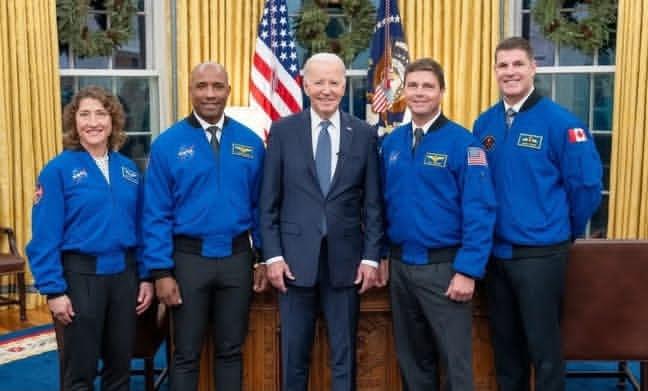
The Artemis crew with President Biden, whose administration planned the mission. In case the felon tries to take credit.

The Day Warrior tweet media
English
922
10.2K
73.9K
664.3K
Sue๐Ÿ‡บ๐Ÿ‡ธ
Sue๐Ÿ‡บ๐Ÿ‡ธ@Sue1925ยท
๐Ÿคฃ๐Ÿคฃ๐Ÿคฃ Fool. More Democrat lies. Origins of Artemis The Artemis program was formally established during the first Trump administration:In December 2017, President Trump signed Space Policy Directive-1, directing NASA to lead a program focused on returning humans to the Moon (as a step toward Mars), using commercial and international partners. NASA named the program Artemis in 2019, building on earlier elements like the Orion spacecraft and Space Launch System (SLS), which had roots in prior administrations but were redirected toward a lunar focus under Trump.
The Day Warrior@thedaywar90

The Artemis crew with President Biden, whose administration planned the mission. In case the felon tries to take credit.

English
0
0
0
53
Sue๐Ÿ‡บ๐Ÿ‡ธ
Sue๐Ÿ‡บ๐Ÿ‡ธ@Sue1925ยท
๐Ÿคฃ๐Ÿคฃ๐Ÿคฃ Fool. Origins of Artemis The Artemis program was formally established during the first Trump administration:In December 2017, President Trump signed Space Policy Directive-1, directing NASA to lead a program focused on returning humans to the Moon (as a step toward Mars), using commercial and international partners. NASA named the program Artemis in 2019, building on earlier elements like the Orion spacecraft and Space Launch System (SLS), which had roots in prior administrations but were redirected toward a lunar focus under Trump.
English
0
2
4
77
Sue๐Ÿ‡บ๐Ÿ‡ธ
Sue๐Ÿ‡บ๐Ÿ‡ธ@Sue1925ยท
@washingtonpost I really don't think this is controversial. One really cannot include the TDS psychosis in any sort of evaluation as literally EVERYTHING President Trump does is controversial to them. So not controversial.
English
6
0
7
288
The Washington Post
The Washington Post@washingtonpostยท
The Trump administration unveiled new renderings for President Trumpโ€™s planned 250-foot triumphal arch, his most significant effort to remake Washingtonโ€™s skyline, as officials begin the process of seeking formal approval for the controversial project. wapo.st/4vhb0Md
The Washington Post tweet media
English
162
39
112
41.6K