고정된 트윗

حکومتی که به
هر قیمتی
میخواد بمونه
به هر قیمتی شده
باید بره
به هر قیمتی
#ThankYouNetanyahu
#ThankYouPresidentTrump
#RezaPahlaviForIran
فارسی
Face
3.1K posts

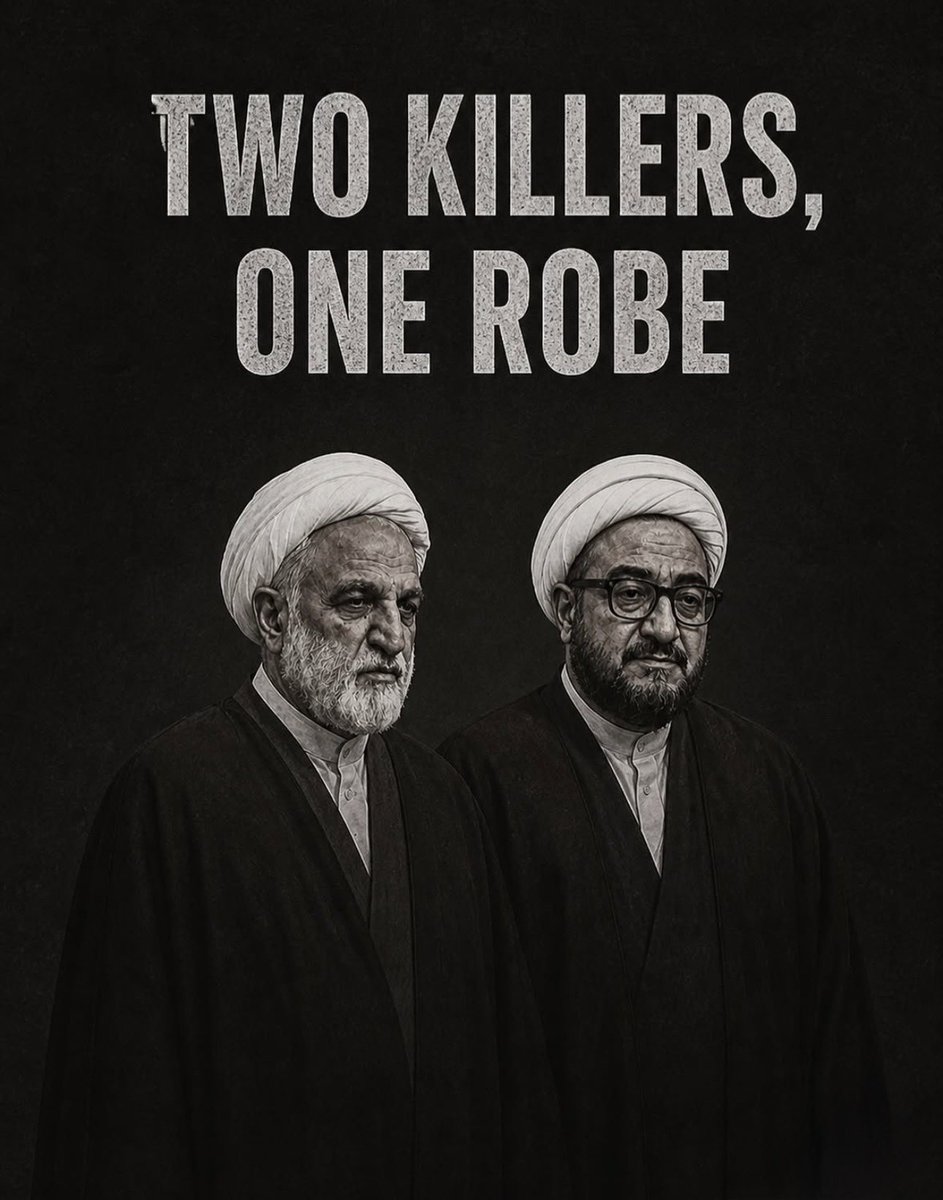
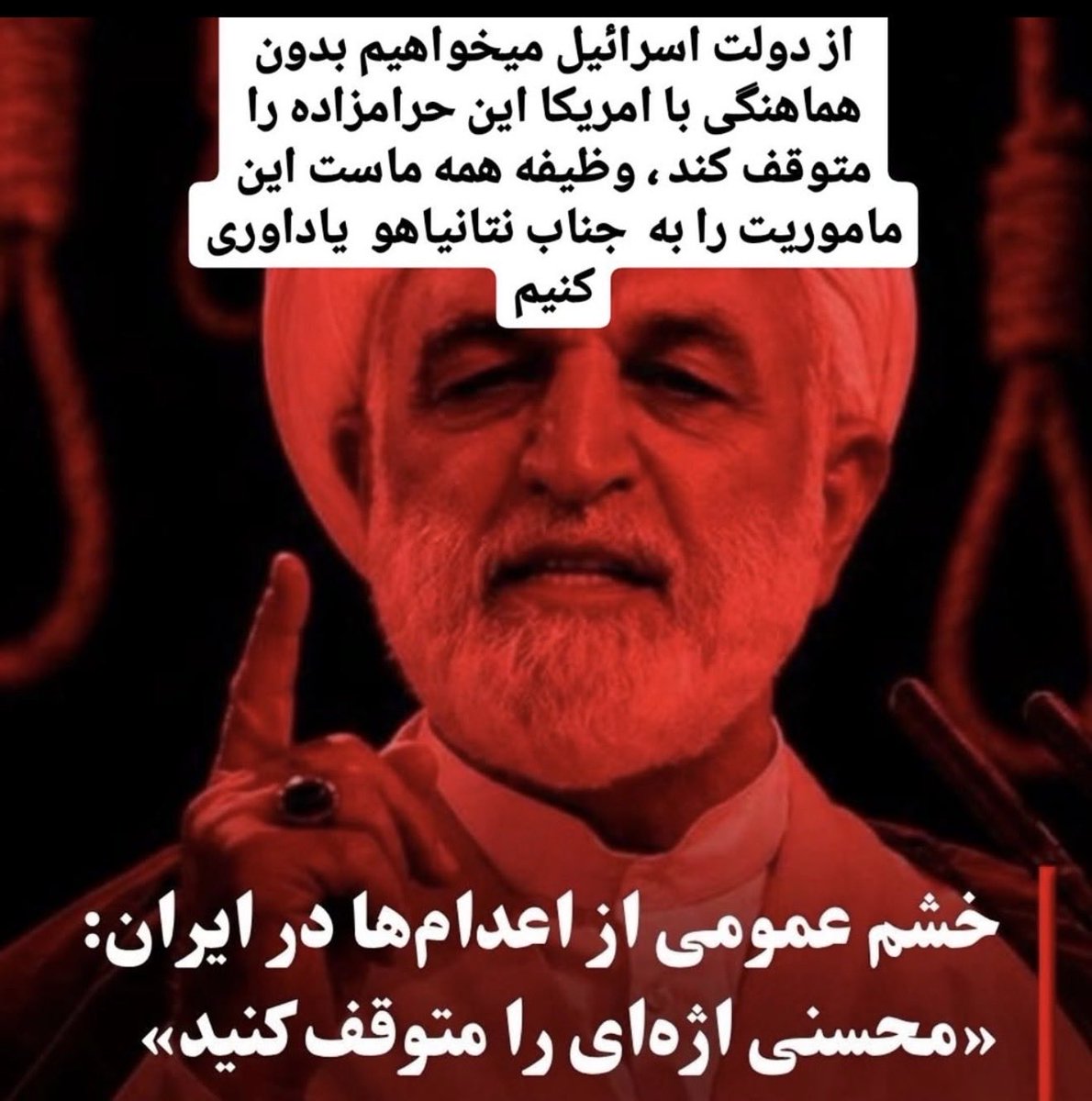
🚨Gholamhossein Mohseni Ejei & AbolGhasem Salavati🚨 Gholamhossein Mohseni Ejei and Judge Abolghasem Salavati are among the most notorious judicial figures of the Islamic Republic of Iran; names that for years have been associated with repression, political executions, unfair trials, and severe human rights abuses. Mohseni Ejei has served as Iran’s Minister of Intelligence, Prosecutor General, and currently as the head of the judiciary. Salavati, widely known among Iranians as the “Judge of Death,” has presided over numerous controversial cases involving political prisoners, journalists, activists, and protesters. Human rights organizations and international observers have accused them of involvement in: • suppressing protests • persecuting journalists and political dissidents • issuing heavy prison sentences after unfair trials • torture and forced confessions • and overseeing systematic executions of political prisoners Many critics of the Islamic Republic believe these figures have played a central role in building and maintaining a judicial system based on fear, repression, and executions carried out in the name of religion and the regime. These names are symbols of injustice, suffering, and decades of state violence. @unicef @UN @Europarl_EN @potus @FLOTUS45 @GilaGamliel @netanyahu @noorzpahlavi @PahlaviReza @PahlaviComms #IranRevolution2026 #IranMassacre #DigitalBlackOutIran










Over 40,000 Iranians were killed the first week of January 2026. European leaders have been complicit and absent through all of this. They are regime supporters, they don’t care about the Iranian people, and they haven’t mentioned anything about the 10,000+ political prisoners being held in Iranian prisons and can be executed at any time. We will not forgive, and we will certainly not forget. #FreeIran 💚🤍❤️🇺🇸🇮🇱🦁☀️









🚨 The Islamic Republic exposed its own lie on state TV, this time around the Minab elementary school bombing. An IRGC officer who was at the scene went on air and described what happened that day. He says they witnessed a number of drones heading toward the school, and he specifically refers to them as drones. He then describes how they first tried to shoot them down with small arms. After failing, they went to get a DShK 12.7mm heavy machine gun, set it up, engaged the targets, hit them, and brought them down. The problem with his account is that it directly contradicts the regime’s narrative of a U.S. Tomahawk cruise missile strike. That does not match the physics or timing. A Tomahawk travels at roughly 900 to 950 km/h, about 250 meters per second, often at low altitude. From the moment it is seen or heard, impact follows within seconds. You do not have time to: • Recognize the threat • Stop a vehicle • Exit, coordinate, and aim • Retrieve a heavy weapon • Set up a tripod-mounted DShK • Then open fire That sequence takes minutes, not seconds. There is another issue. You do not take down a high-speed cruise missile with small arms or even a DShK. These systems are not designed to intercept fast, low-flying cruise missiles. By the time you engage, the missile has already reached its target. The scenario described only makes sense against a slower, trackable aerial platform, such as a drone. You cannot reconcile both claims. Either it was a high-speed cruise missile with almost no reaction window, or it was something that allowed time to react and engage, like a drone as the IRGC officer described. The timeline described makes one of those impossible. The Minab story has been central to the war’s narrative, as the regime used it to generate international sympathy and condemnation while attempting to frame the U.S. as responsible. At the same time, eyewitness accounts have claimed the IRGC had placed watchtowers and military assets in and around the school.

🚨 When Bashar al-Assad was slaughtering Syrians, Yassamin Ansari supported U.S. military intervention, invoking R2P. She wrote, “It is the duty of the international community to help them,” that “force can be justified on humanitarian grounds,” and that there is a “moral imperative to intervene on behalf of the Syrian people.” Yet when the Islamic Republic slaughtered over 45,000 Iranian protestors, she took a staunch anti-interventionism stance and called for the Secretary of Defense to be impeached. She has been publicly praised for her positions in Islamic Republic state media.