Breakout Pattern

7.5K posts

Breakout Pattern banner
Breakout Pattern

Breakout Pattern

@breakoutpattern

Breakout ideas on leading growth stocks and high relative strength names. NASDAQ, RUSSELL 2000.
Toronto, Ontario 가입일 Nisan 2019
49 팔로잉1.9K 팔로워
Breakout Pattern 리트윗함
John Boik
John Boik@monsterstocks1·
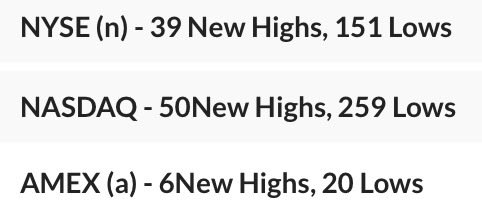
Highest net negative reading (IBD #’s) in over 11 months (back to early 4/25).
John Boik tweet media
English
2
4
29
3.6K
Breakout Pattern
Breakout Pattern@breakoutpattern·
@Andrew_Menaker Happy Friday Andrew. This post is a treasure trove. There are many people who would love to work with you, but are budget constrained. How would you advise traders to conduct consistent self awareness on their "identity level" & inner market?
English
0
0
0
53
Andrew Menaker PhD
Andrew Menaker PhD@Andrew_Menaker·
Many traders think they’re managing risk. But in reality, they’re managing their self-worth through P&L. And that’s where everything starts to break down. If your process is fused with outcome, then your identity becomes fused with P&L. • Green day: “I’m good enough” • Red day: “Something’s wrong with me” That’s not trading. That’s emotional exposure disguised as execution. This is why separating process from outcome is not just a performance concept… ➡️It’s an identity-level intervention. (Something I do a lot of in my 1:1 coaching) Because when you don’t separate them, every trade becomes personal. And when every trade is personal: You hesitate. You force. You override your plan. You size poorly. You chase. You cut winners. You hold losers. Not because you lack skill… …but because you’re trying to regulate how you feel. You're trying to avoid discomfort. This is where my concept of the Inner Market comes in. You’re not just trading what you see on the screen... You’re also trading an internal landscape with its own: • Supply (confidence, clarity, capacity) • Demand (urgency, fear, need to prove) • Support (self-trust) • Resistance (doubt, past pain, memory) And just like any market… If you don’t understand its structure, you’ll get chopped up. Now layer in the neurobiology. Every outcome creates a dopamine response: • Wins > reward signal > “do that again” • Losses > threat signal > “avoid this/fix it now” Over time, this builds a feedback loop: Outcome → Emotion → Behavior → Outcome If you’re not aware of it, you stop trading your edge… …and start trading your emotional state. On a hot streak: Dopamine rises Confidence expands Risk perception drops You start to feel invincible. You loosen discipline, not because you’re careless… but because your brain is reinforcing the feeling of reward. In a drawdown: Dopamine drops Threat sensitivity rises Your nervous system tightens Now you hesitate, avoid valid trades, or press to “make it back.” That's not trading your strategy. It's trading your state. So whether you’re up big or down big… The real question is: Can you stay anchored in process without outsourcing your self-worth to P&L? Because the traders who last… Aren’t the ones who feel the best. They’re the ones who can feel everything without needing to act on it. They’ve learned to: • Trade from intention, not emotional reaction • Stay connected to process under pressure • Awareness of their Inner Market in real time You don’t simply trade the market. You trade your state. And if your state is being dictated by P&L... then your P&L is no longer an output. It’s controlling your inputs. Separate process from outcome. Separate self-worth from P&L. That’s not just discipline. That’s freedom. And it’s a real edge. If this post resonates, follow, like, r/t, BOOKMARK this post. #tradingmindset #traderperformance #tradingpsychology $ES_F $NQ_F $QQQ $SPY
English
4
10
77
3.3K
Barry Bivingston
Barry Bivingston@lesse_jivermore·
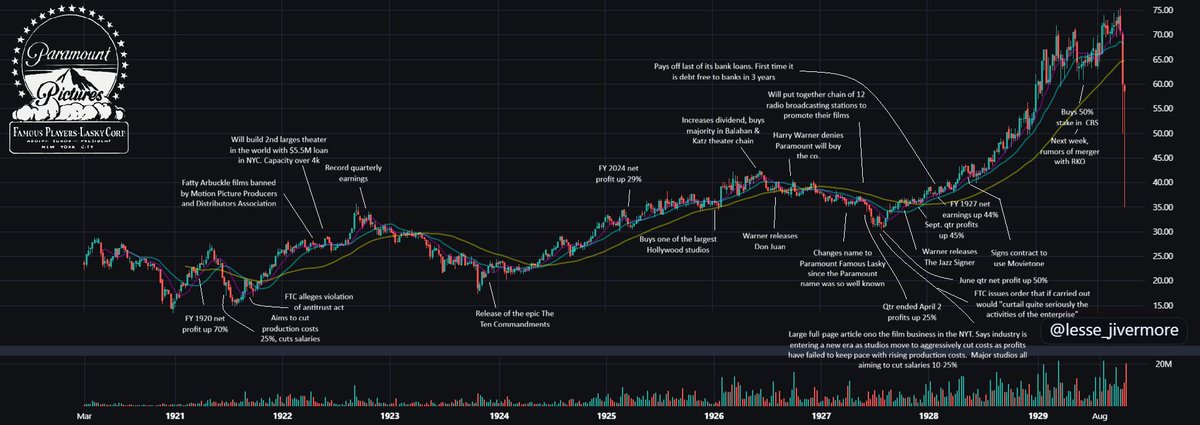
In 1926, Warner Brothers bet the entire company on sound movies. Most of Hollywood thought it was a gimmick. Three years later the industry had been completely transformed. My new deep dive reconstructs the 1920s movie stock boom using original charts and contemporary news coverage. It covers: – Paramount, MGM, Fox, Warner Brothers, RKO – The transition from silent films to talkies – The theater chains and vaudeville empires – Small equipment companies that exploded during the sound conversion – The stocks behind the movie group of the 1920s Full post: open.substack.com/pub/barrybivin…
Barry Bivingston tweet media
English
2
3
27
1.5K
Breakout Pattern 리트윗함
Steven Goldstein
Steven Goldstein@AlphaMind101·
One of the key elements of my Performance Coaching—and often the most transformative—is redefining a trader's relationship with uncertainty. At the root of almost every trading struggle is a complex, often fraught relationship with the unknown. We can categorize this using the famous Rumsfeld framework: 1️⃣ Known Knowns: The things we know we know. 2️⃣ Known Unknowns: The things we know we don't know (managed risk). 3️⃣ Unknown Unknowns: The ones we don't even know we don't know. It is that final category—the Unknown Unknowns—that truly "freaks us out." This is where performance dies. As humans, we do everything in our power to limit the potential damage of these Unknown Unknowns. But this defensive posture comes with a heavy cost—a "An Uncertainty Tax." We over-analyze, we hesitate, we trade too small, or we exit too early out of a primal need for safety. By recalibrating your relationship with uncertainty and learning to navigate it rather than fight it, you can significantly reduce that Uncertainty Tax. When you stop paying the tax, or at least pay less, your performance finally has the room to breathe.
Steven Goldstein tweet media
English
0
8
75
3.1K
Mark Ritchie II
Mark Ritchie II@MarkRitchie_II·
1. No, but you certainly could and then compare notes on the ones in 'uptrend vs down' etc. This is why taking notes and tracking stuff is great as you may find that when I trade abc setup in xyz condition I have an even stronger edge, that's kinda where this example comes from... 2. This is totally within my style just buying bigger names or more choppy type names. More efficiently priced (gold, etfs, or BIG caps vs single name growth/momentum) so less momentum hence a little wider on the stop and less on the overall avg win/loss.
English
1
0
6
243
Mark Ritchie II
Mark Ritchie II@MarkRitchie_II·
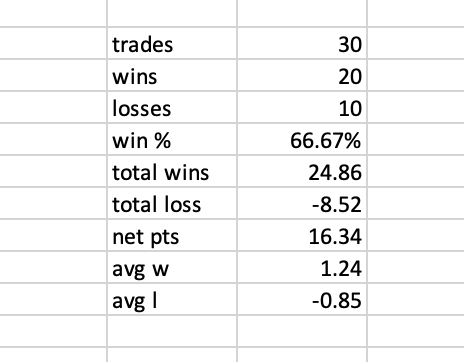
Part (II): Most traders do very little true post-trade analysis, and I won’t go down the rabbit hole on why—that’s a topic for another day (part IV, V...you get the idea). What I will say is that it has been, and continues to be, a cornerstone of what we do. The starting point is simply tracking and cataloging trades. That’s first base. It’s the basic blocking and tackling of trading, just like using stops or knowing your pain point on a trade is fundamental to risk first trading and good risk management but you can go a lot deeper there as well. When you take good notes, you can perform much deeper analysis on your trading. For example, over the last year or two we’ve taken a few more trades in situations where we don’t expect explosive momentum, but we can be more creative with structure and give the trade a bit more room initially—provided the instruments are very liquid. Think $GLD, $IBIT, bonds, certain ETFs, or highly liquid stocks that may not be screaming with momentum but are still very tradable and where our timing is less likely to be as precise. Historically, we would have avoided these types of setups, but part of the goal is to grow and mature as traders rather than become dogmatic. So I broke out all of these “lower-momentum, high-liquidity” trades from the past two years and looked at the results in terms of R-multiples (with 1R simply being the amount risked per trade). The good news: we have a clear edge. These trades win about two-thirds of the time (roughly a 66% win rate), and our average winner is about 1.5 times the size of our average loser. The less-good news: there were only 30 of these trades over two years. The reasons for the small sample size are a whole discussion on their own, but for now the takeaway is that we’ll continue to take these kinds of trades—and potentially more of them, if the market offers the opportunities—because we have greater confidence that there is a real, established edge here. This is where confidence and knowledge start to converge. Back to GI JOE, as in this case, I now KNOW I have an edge the next time I see a situation like this. A year/two ago I had much less confidence. The longer I go and the more of an established historical edge I have the more confident I get going forward. I'll discuss ways in which we use this more and other examples in the next post...
Mark Ritchie II tweet media
Mark Ritchie II@MarkRitchie_II

Post Trade Analysis (part 1): No better place to start than my favorite childhood cartoon and toy series good old G.I. JOE as 'knowing is half the battle.' If you don't know what your edge is and how it works (i.e. how you manage it) then maintaining profitability in the long run is far less likely and maximizing is literally impossible as how can you maximize anything you haven't studied/measured??

English
5
18
239
24.6K
Christian Flanders
Christian Flanders@CFlanders7·
@breakoutpattern Your actions. If you say you want to keep drawdowns controlled but constantly over-size, chase losses, break drawdown rules,etc. Who do you believe? Your actions or your words?
English
1
0
9
310
Christian Flanders
Christian Flanders@CFlanders7·
If you find yourself repeating self-destructive behavior over and over again in the markets ie. breaking rules, pulling stops, not pre-defining risk before placing a trade, chasing entries, and not understanding why, this will help. Its due to your belief system. You do not believe that those things are necessary to accomplish your objectives. You'd be right. Because what you THINK your objective is, is almost certainly not your TRUE objective. You are deluding yourself. If your TRUE objective was to keep your drawdowns controlled, then you would ALWAYS trade with a stop loss, cap your risk per trade and always pre-define your risk. How else could you possibly achieve your goal? If your TRUE objective is to make as MUCH money as possible right NOW then keeping your risk capped to 1% of account equity would make zero sense. Capping risk would be a hindrance, it would be impossible to achieve your objective if you did. You get exactly what you want... and then the inevitable drawdown hits and it blows you up. If your TRUE goal is being right. Then you should absolutely pull your stop. Because if you stop out, you are admitting that you were wrong. The only way you can be right is by pulling the stop, holding the loss and hoping it goes back in your favor. "Everyone gets what they want out of markets." It's true. If you don't see it yet, you are likely not being honest with yourself about what you TRULY want out of markets.
English
23
92
530
32.5K
Breakout Pattern
Breakout Pattern@breakoutpattern·
@CFlanders7 Aside from tracking relative strength, how do you maximize time during these periods? Post analysis & past performance review? Studying past leaders? Curious what that looks like for you.
English
2
0
0
69
Christian Flanders
Christian Flanders@CFlanders7·
If you struggle with over-trading in poor environments I would recommend physically removing yourself from your computer. Go for a walk, touch grass, reflect on what you are trying to achieve and if this is the correct environment to do it in.
English
34
34
471
24.3K
Breakout Pattern
Breakout Pattern@breakoutpattern·
@TheOneLanceB Well said Lance. Is this something we could see in a future video? Although each individuals personal circumstance is unique. The foundational aspects you alluded are likely universal principles.
English
1
0
1
937
Lance Breitstein 🇺🇸🌎
Lance Breitstein 🇺🇸🌎@TheOneLanceB·
For every unit of career risk you take, you want to take proportionally less risk in your personal life. Discretionary trading is VERY risky. As a result, you want to: -live well within your means -invest conservatively -keep a far larger emergency cash pile than otherwise This "barbell" method of risk allocation is so important for keeping traders in the game and minimizing external pressures that negatively impair your decision-making or can take you out of the game prematurely.
English
22
38
449
21.4K
Breakout Pattern
Breakout Pattern@breakoutpattern·
@Andrew_Menaker Shame is the silent assassin. Coaching is the ideal solution. For those who would love to have a coach, but can't afford it, how would you advise tackling the issue of shame?
English
0
0
3
85
Mark Minervini
Mark Minervini@markminervini·
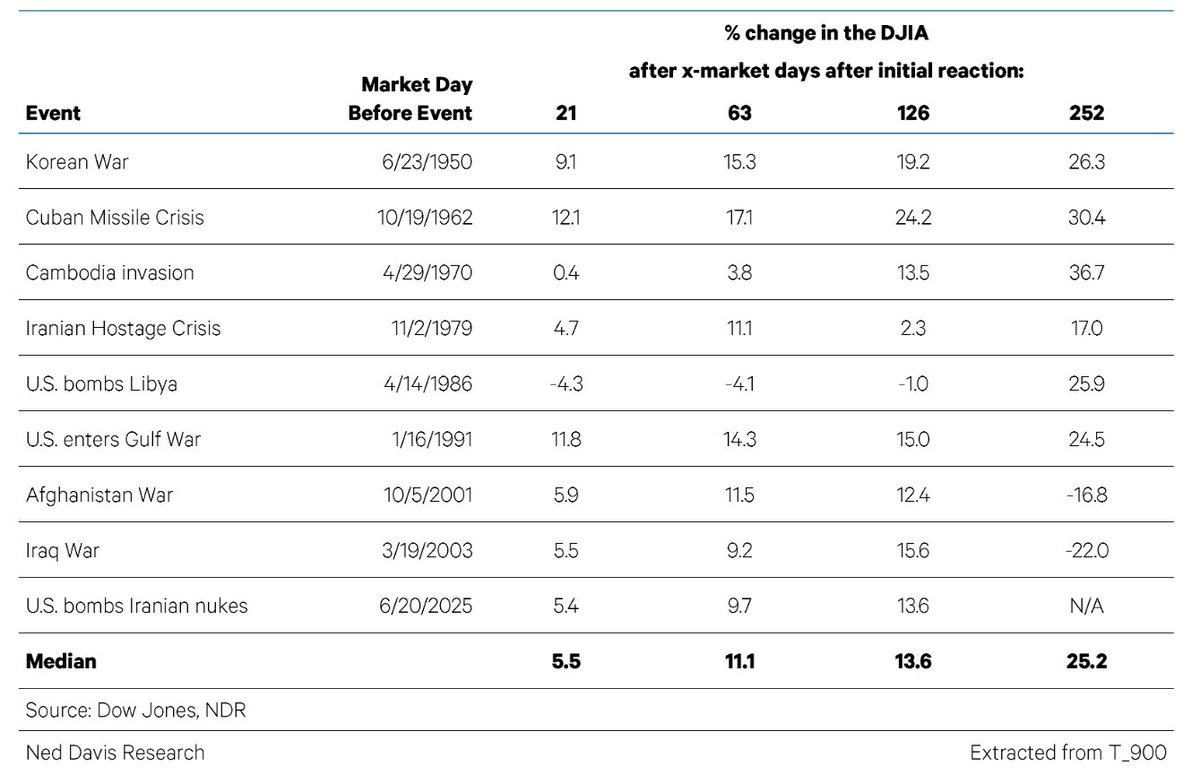
As always, risk management is paramount. In a market under distribution, tightening stops and prioritizing capital preservation isn’t just prudent — it’s essential. When the tape refuses to reward low-risk setups and breakouts fail to follow through, discipline becomes your greatest edge and cash is king. History shows that conflict-driven declines eventually create meaningful buying opportunities — but not immediately. Risk is elevated, and patience is required. This too will resolve. And when it does, a new upleg will emerge from the geopolitical rubble — as it always has. minervini.com
Mark Minervini tweet media
English
41
168
1.1K
105.5K
Breakout Pattern
Breakout Pattern@breakoutpattern·
@mwebster1971 You've done an incredible job Mike. Your before and after is like one of those fitness infomercials 💪🏽
English
0
0
1
77
Mike Webster
Mike Webster@mwebster1971·
3 years ago today, on 3/2/23 I started my health journey Initially quitting ALL alcohol, diet sodas, daily fast food, etc..COLD TURKEY really without a true plan…just an unbreakable desire to get healthy for my kids As time went on I added more health protocols that I picked up from Andrew @hubermanlab & his guests. I regard him as a true National Treasure I’m not going to lie…it’s been 3-LONG and hard years! I’ve wanted to go back to old habits nearly every day…just keepin’ it real During this time, I’ve been thrown the two of the hardest challenges of my life (plus a bunch of really hard ones) but I’ve stayed on my health journey…every day At the start of my journey I was at least 80 pounds heavier (I never weighed myself at my worst) & couldn’t even walk up the steps to my house without getting out of breath. How could this one time Div I long distance swimmer in perfect shape turn into a middle aged fat slob? Well…I’d had the wrong “WHY” others might refer to it as motivation or goal. I think of it this way…when trying to figure out if I should stay on the health journey or not…I ask myself WHY!!! Why struggle…why not take the comfortable way out? My “why” changed 3 years ago today…it became to get & stay as healthy as possible to be around for my kids. Your why might be different…but you need to figure it out if you want to stay motivated Sending this while on my typical 3 mile morning walk…something that would have been impossible just 3 years ago FWIW I lost the 80+ pounds without any medication & stopped drinking overnight without AA or other support. That’s just me…if those things help you more than hurt you…go for it. While it’s embarrassing to open up about this stuff…I’m doing so in hopes that it helps someone 🍀❤️🤘 For folks who drink…you might want to watch this episode What Alcohol Does to Your Body, Brain & Health youtu.be/DkS1pkKpILY?si… via @YouTube
YouTube video
YouTube
English
50
9
257
21.3K
Breakout Pattern
Breakout Pattern@breakoutpattern·
@Andrew_Menaker Hello Andrew. Have you considered writing a book about your coaching process? Perhaps something similar to the self paced course you offer.
English
0
0
1
37
Andrew Menaker PhD
Andrew Menaker PhD@Andrew_Menaker·
That 'should' be the case. But the reality is quite different. Otherwise, we would see a much higher percentage of successful traders. My contacts in the retail brokerage industry tell me it's less than 5% who are green at the end of any rolling 12 month period.
Gus Joury@Gussj

@Andrew_Menaker I guess that’s more dependent on the emotional state of mind a trader is bringing to the trading day. An emotional regulated nervous system trader should be able to stick to plan and regardless of the conditions. I guess easily said than done for most :)
English
1
0
9
1.3K
Breakout Pattern
Breakout Pattern@breakoutpattern·
@Andrew_Menaker Good afternoon Andrew. Does each response (Safety, freedom, power, love, proof) lead to a unique path one must take in order to achieve the ideal mindset?
English
0
0
2
1.1K
Andrew Menaker PhD
Andrew Menaker PhD@Andrew_Menaker·
LONG BUT WELL WORTH IT👇 Money is never just money. It’s a mirror. It reflects your fears. Your desires. Your beliefs about safety, worth, power. And most people never look directly into it. Some chase it relentlessly. Some quietly push it away. Some claim to be “above it.” But very few have a peaceful relationship with it. I’ve seen this up close. I’ve worked with founders after 10 figure exits. Portfolio managers running billions. Independent traders who finally “made it." On paper, they had more than they could ever spend. Yet internally? Still bracing. Still striving. Still uneasy. ➡️Because money doesn’t resolve the nervous system pattern that was there before it arrived. If you grew up equating safety with accumulation… More will never feel like enough. If you equate wealth with moral compromise… You’ll unconsciously sabotage growth. If you equate success with love… You’ll overtrade, overwork, overextend. Money amplifies what’s already there. And nowhere is this more obvious than in trading. 🌟The market is a continuous spiritual initiation disguised as a financial activity.🌟 It offers opportunity and risk… simultaneously. It asks: Can you hold abundance without gripping? Can you face loss without collapsing? Can you take risk without tying your worth to the outcome? Can you let money flow in and out without your identity swinging with it? Trading exposes your relationship with power. With uncertainty. With control. With surrender. You don’t see the market as it is. You see it as you are. 👉If money equals safety, you’ll hesitate to risk it. 👉If money equals status, you’ll chase moves you shouldn’t. 👉If money equals freedom, you might trade impulsively to “get there faster.” This is why wealth work is spiritual work. Not in a vague, woo sense. But in a grounded, nervous-system, identity-level sense. Real wealth integration means: You can build. You can risk. You can grow. Without your nervous system constantly in fight-or-flight. ✅It means money becomes a tool... not a judge. A flow...not a referendum on your worth. The paradox? The more at peace you are with money… The cleaner your decisions become. The less you need it to prove anything… The more effectively you can grow it. Because when money stops being your emotional regulator, you stop trading your psychology. And that’s when wealth becomes sustainable. Not just financially. But spiritually. If this resonates, reflect on this: What does money mean to you... beneath the surface? 🟢Feel free to reply to this post. 🟢Do you have the courage to reply...with honestly? Safety? Freedom? Power? Love? Proof? Until you truly know yourself and answer that honestly… the market mirror will keep reflecting it back. If you want me to keep posting, R/T, follow me, like, and BOOKMARK this post. #abundance #tradermindset #tradingpsychology $ES_F $NQ_F $SPY $QQQ
English
3
13
69
7.3K
THE SHORT BEAR
THE SHORT BEAR@TheShortBear·
Amazing gem video by MS today
English
20
94
629
64.8K
Breakout Pattern 리트윗함
Wall St Engine
Wall St Engine@wallstengine·
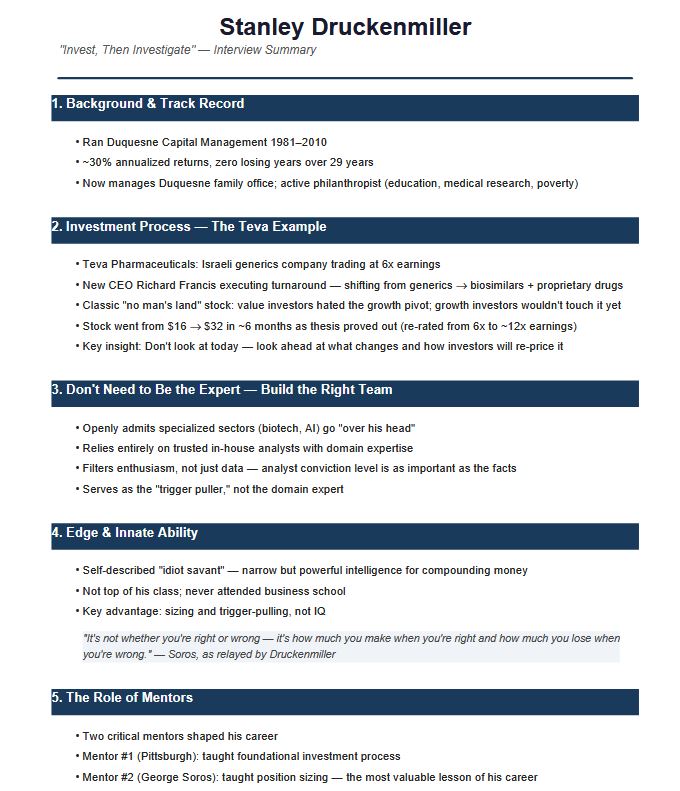
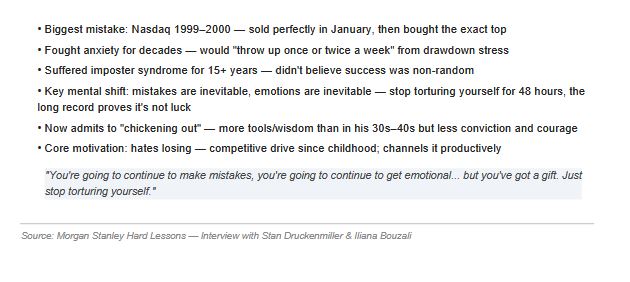
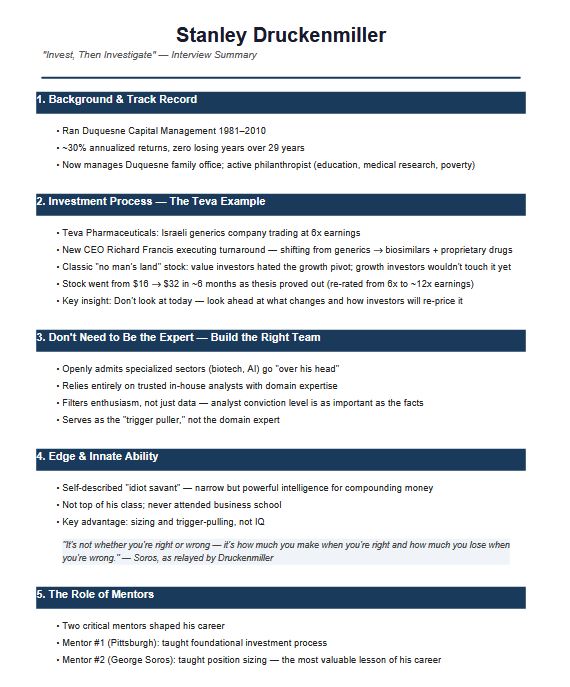
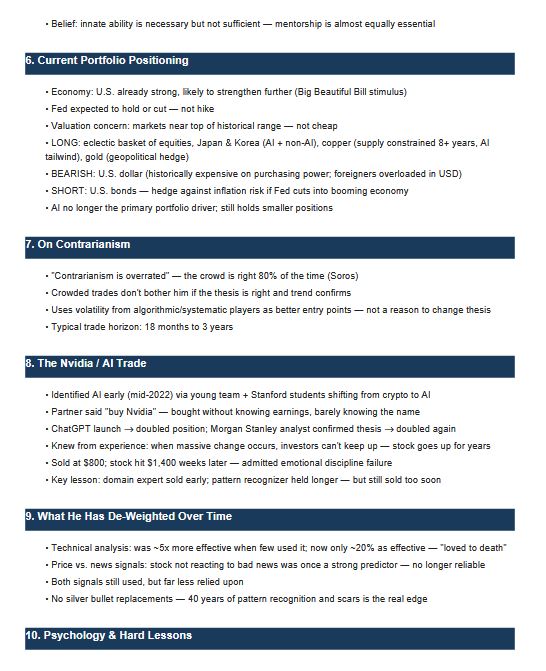
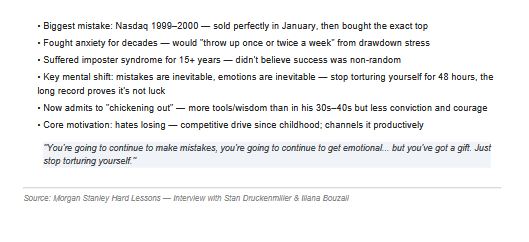
Stan Druckenmiller Interview: > The US economy is strong > Don’t think the Fed will hike rates > Valuations are toward the top range > A lot of disruptions going to happen > Portfolio not concentrated in AI anymore x.com/MorganStanley/… > Bearish on U.S. Dollar > Short Bonds > Long Gold > Long Copper > Long Korea + Japan > The macro matters > More Stimulus
English
15
126
733
105.2K
Breakout Pattern 리트윗함
Christian Flanders
Christian Flanders@CFlanders7·
AXON 2003-2004. Maybe one at most per bull market makes this kind of move.
Christian Flanders tweet media
English
12
22
205
13.4K