olderthanold
8.3K posts

Someone bought 11,000 call spread contracts on COMEX betting gold reaches $15,000 to $20,000 per ounce by December 2026. They started buying after the crash. Not before it. Not during the euphoria. After.
Gold hit a record above $5,600 in late January. On January 30, it plunged 11 percent in a single session, the worst day in decades. Retail panicked and sold. While they sold, a large buyer began accumulating December 2026 $15,000/$20,000 bull call spreads. Bloomberg confirmed the open interest build. By mid-February it had reached approximately 11,000 contracts, representing exposure to 1.1 million ounces. State Street’s Aakash Doshi called the positioning “surprising” for such deep out-of-the-money strikes after a correction of that magnitude.
The structure is a textbook tail-risk bet. Buy the $15,000 call. Sell the $20,000 call. Maximum loss is the net premium paid, which is small because both strikes sit roughly $10,000 to $15,000 above current spot. Maximum gain is $5,000 per ounce minus premium if gold exceeds $20,000. The spread costs almost nothing relative to the payout. It is a cheap lottery ticket if you believe the world stays normal. It is the most asymmetric trade on the board if you believe it does not.
Gold currently trades in the $4,700 to $5,000 range. Consensus year-end targets from Goldman and the major desks sit at $6,100 to $6,300. The call spread does not begin to pay until gold triples from here. Nobody builds 11,000 contracts on a bet that requires tripling unless they see a catalyst that the consensus has not priced.
Look at the catalysts.
The United States just committed $200 billion to a war supplemental on top of $150 billion already allocated. National debt is $38.86 trillion heading to $39 trillion. Core PCE printed 3.1 percent, the worst in nearly two years. GDP slowed to 1.4 percent. The Fed is paralysed between inflation it cannot cut into and growth it cannot hike into. Treasury borrowing funds the war. The war funds the inflation. The inflation erodes the currency. The currency is the dollar.
The Strait of Hormuz is commercially closed. Six Gulf states have energy infrastructure damaged or suspended. Qatar declared force majeure on LNG contracts that may last five years. Iran charges $2 million per tanker for safe passage. Oman crude hit $167 while WTI trades $96. Two oil markets now exist on the same planet. Ninety-five countries reported petrol price increases. Urea locked at $683. The fertiliser crisis becomes a food crisis. The food crisis becomes a sovereign debt crisis in every import-dependent country whose fiscal buffer was already exhausted.
China is hoarding gold at the fastest pace in decades. PBOC bought for the 16th consecutive month. Estimated true holdings exceed 5,000 tonnes. The A7A5 stablecoin corridor processed $72 to $93 billion in sanctions-evasion flows. De-dollarisation is not a theory. It is a transaction volume.
The buyer of those 11,000 contracts is not betting on gold. They are betting on the arithmetic. War spending plus stagflation plus energy chokepoint plus de-dollarisation plus fertiliser crisis plus sovereign stress plus a paralysed Fed equals a world where the only asset that sits outside every government’s balance sheet reprices to levels the consensus considers impossible.
Gold does not transit Hormuz. It does not require insurance. It does not need a P&I club or a VHF radio clearance. It does not decay. It does not deplete. It does not answer to a central bank.
Eleven thousand contracts. Built after the crash. By someone who counted to the same number twice and decided the strait changes everything.
open.substack.com/pub/shanakaans…
Shanaka Anslem Perera ⚡@shanaka86
JUST IN: While the world watches missiles hit gas fields, China is buying gold. Quietly. Relentlessly. For the 16th consecutive month. The PBOC added 30,000 ounces in February. Official reserves now stand at 2,309 tonnes, a record, valued at approximately $387.6 billion. Gold represents roughly 10 percent of China’s foreign exchange reserves. That share has doubled in twenty months. And analysts at Societe Generale, Goldman Sachs, and the World Gold Council estimate that undeclared accumulation through the Shanghai Gold Exchange, Hong Kong imports, bilateral deals with Russia, and state-owned enterprise cutouts could put the true figure at two to ten times the official number. China is building a reserve that no sanctions regime can freeze and no strait can block. The mechanics tell the story. The Shanghai Gold Exchange operates mandatory physical settlement. Buyers submit a notice of delivery after trade matching. The exchange assigns bullion from one of 58 certified vaults across 56 Chinese cities. Load-out occurs in whole bars only at 2 yuan per kilogram. Settlement runs same-day to two days. And the critical rule: once bullion exits a certified vault, it cannot be re-loaded. The gold leaves the system permanently. It becomes invisible to the exchange, to auditors, and to anyone tracking official flows. The SGE processed 126 tonnes of physical withdrawals in January alone. Hong Kong serves as the primary import gateway for mainland routing, with net imports surging in recent months. London, Switzerland, and Dubai supply 400-ounce bars through over-the-counter channels that never appear on exchange data. Russia settles bilateral gold deals in yuan, generating flows that appear in neither PBOC reserves nor trade statistics. This is not a central bank buying gold. This is a state operating a multi-channel physical accumulation system designed from the ground up for opacity. The Hormuz crisis accelerates the logic. China is simultaneously drawing commercial crude reserves at a million barrels per day, suspending nitrogen and potassium fertiliser exports, receiving discounted Iranian oil through the permissioned strait, running military exercises near Taiwan, and building gold reserves at a pace that will likely make it the largest sovereign holder within a decade. Five actions. One strategy. Every molecule that the rest of the world loses, China either hoards or hedges. Oil is drawn. Fertiliser is embargoed. Gold is accumulated. Each one strengthens domestic resilience while weakening competitor positioning. The dollar is still the world’s reserve currency. But the PBOC is building the insurance policy for the day it is not. Gold at $5,000 per ounce, with retail investors pouring $70 billion into ETFs while institutions sell, tells you that the physical market and the paper market are diverging on the same timeline as Oman crude and WTI. The retail buyer and the Chinese central bank see the same thing: the financial system is being repriced by physical chokepoints that monetary policy cannot reach. Nitrogen is trapped behind Hormuz. LNG is trapped behind a burning refinery. Plastic is trapped behind satellite targeting images. Water is trapped behind desalination vulnerability. And gold is being extracted from every exchange, vault, and bilateral channel on Earth by a state that has decided the ultimate molecule is the one that needs no strait, no pipeline, and no permission to store value. Two thousand three hundred and nine tonnes official. Unknown multiples undeclared. Sixteen months and counting. Full analysis: open.substack.com/pub/shanakaans…
English

Everyone’s hyped about Claude… but very few people know how to actually use it to replace real work.
I’ve compiled 700+ powerful prompts that turn Claude into a serious productivity machine—for writing, research, business, marketing, coding, and more.
If you want them all:
1. Like this post
2. Comment “AI”
I’ll DM you the full prompt library. 🚀
English
@Osint613 Should have thought about it before starting tariffs and clearly before starting a war. Maybe next time you plan outcomes
English

President Trump: “You have to remember, we have 45,000 troops in Japan, 45,000 in South Korea, and 50,000 in Germany.”
We defend all these countries, and then I ask them: “Do you have any minesweepers?”
They say, “Well, would it be possible for us not to get involved?”
English
@oldguy_steve It was your war when pearl Harbour occurred and that’s why you entered it
English

You know, World War 2 wasn't our war either. Had it not been for the USA, all of Europe would be speaking German.
Shadow of Ezra@ShadowofEzra
The European Union has rejected President Trump’s call for allied naval support to secure the Strait of Hormuz. The European Union says, “This is not Europe’s war,” and is basically telling the United States, “You’re on your own.” “Nobody wants to go actively into this war.”
English
@PeterLBrandt Love your work but I’m not borrowing money to trade so I remain on the sidelines admiring
English

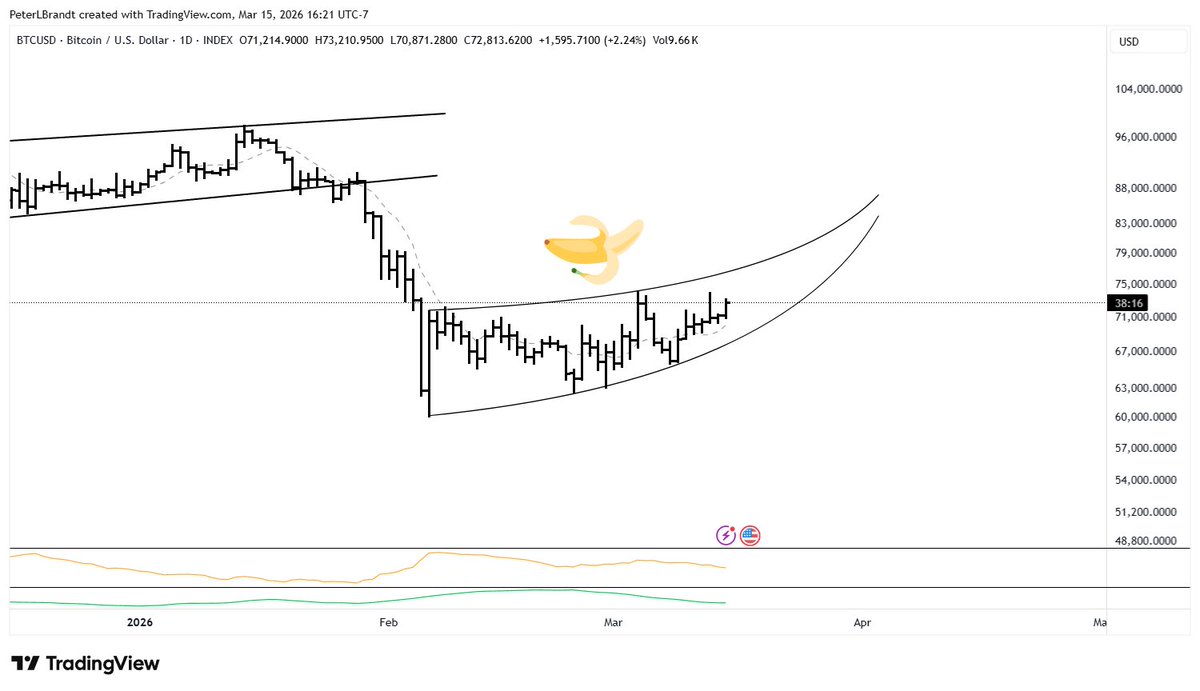
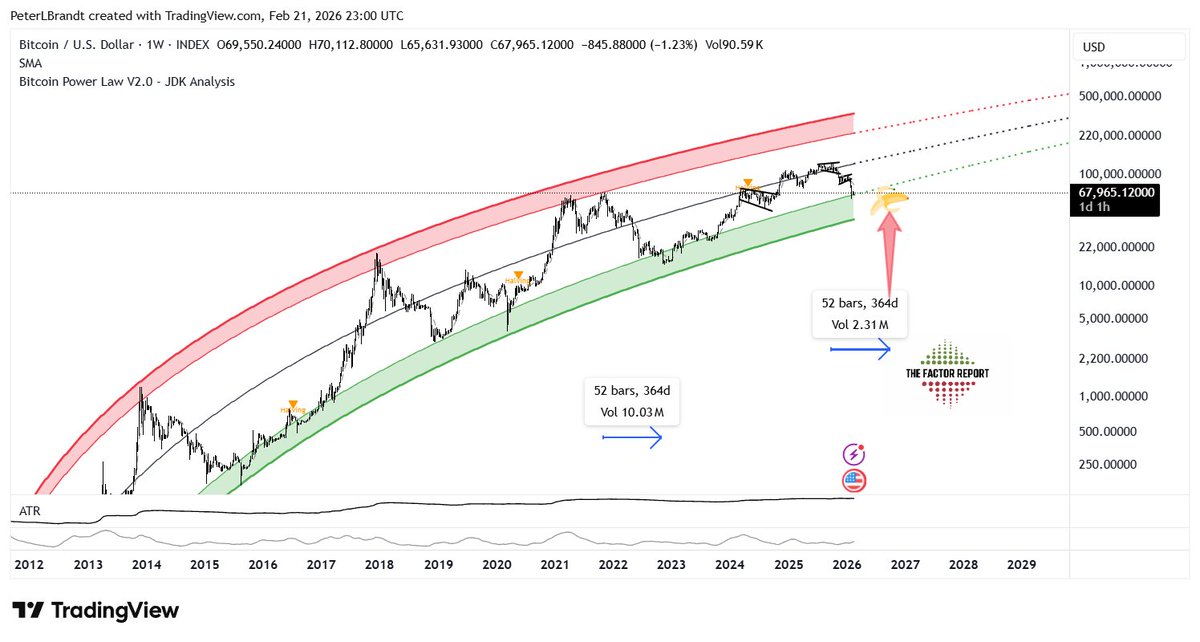
The Banana is splitting
This is a Horn
Richard W. Schabacker wrote about this in his 1934 book
$BTC
tinyurl.com/2r6jwn23
English

ChatGPT is insanely powerful.
But, without proper prompting its nothing.
That's why I built "1000+ GPT-4 Prompts":
• 1200+ Prompts
• 5000 AI Tools
• Full guide.
And for 24 hours, it's 100% FREE!
To get it, just:
1. Like
2. Reply "AI"
3. Follow me (so that I can DM)

English
olderthanold 리트윗함

JUST IN: $5 TRILLION NVIDIA CEO JENSEN HUANG JUST SAID LIVE ON CNBC THAT AI WILL NEED A "SYSTEM OF RECORD" TO VERIFY WHAT'S TRUE
SAYING THE QUIET PART OUT LOUD. #BITCOIN 🚀
English

Screw it. I want to pay it forward.
I’m giving away my complete guide on how to make $12,000 per month using ChatGPT.
Like + Comment "GPT" and I'll send you my step-by-step guide for FREE.
Must follow to get the guide in DM.
FREE for the next 48 hours only.
English
olderthanold 리트윗함
Actually, this is better analysis than I see from most crypto cultists
Coinvo Trading@CoinvoTrading
BREAKING: 🚨 Bitcoin has hit its bear market bottom at exactly 23 months after the ATH in every single cycle. We are sitting at 23 months right now. This has never failed.
English
olderthanold 리트윗함
olderthanold 리트윗함

Unrealized gains tax for Gen-Z:
You buy a Pokémon card for $50.
Someone offers you $500 for it. You say no. You love that card. You're keeping it.
The government says: "Cool, but that card is worth $500 now. You owe us $100 in taxes."
You: "…I didn't sell it."
Government: "Don't care. Pay up."
You don't have $100 lying around. So you're forced to sell the card you love just to pay a tax on money you never received.
Next month? That card drops back to $50.
Your card is gone. Your money is gone. And the government shrugs.
That's a wealth tax on unrealized gains. They don't pay you back the tax...
Now picture this.
Your mom calls you crying. She has to sell the house she raised you in. Not because she can't afford it. She's lived there 30 years. It's paid off.
But some website says it's worth more now and the government says she owes $15,000 she doesn't have.
So she sells your childhood home. The kitchen where she made you breakfast. The doorframe where she marked your height every birthday.
Gone.
To pay a tax on money that was never real.
Now picture the opposite.
Your dad put everything into his small business. For 20 years he built it from nothing. One year the business is "valued" at $2 million on paper. He owes a massive tax bill. He empties his savings. Sells his truck. Borrows money. Pays it.
Next year the market crashes. His business is worth $200,000.
He lost everything to pay a tax on a number that doesn't exist anymore.
Does the government give him his money back?
No.
Does the government give him his truck back?
No.
Does the government care?
No.
They sold this idea as "taxing billionaires." But billionaires have armies of lawyers, offshore accounts, and trusts. They'll be fine.
You know who won't be fine? Your mom. Your dad. Your neighbor with a small business. The farmer down the road who's had the same land for four generations and now has to sell it because dirt got expensive.
You're not taxing wealth. You're taxing people for owning things.
It's like getting a parking ticket for a car you might drive somewhere someday.
They want you to own nothing and be happy. To fund the fraud, waste and abuse of the welfare state they created.
There is enough money. More tax isn't needed. It's all a lie. But you've been gaslit into believing this is a rich vs poor debate.
I hope you understand what's at stake.
English
olderthanold 리트윗함

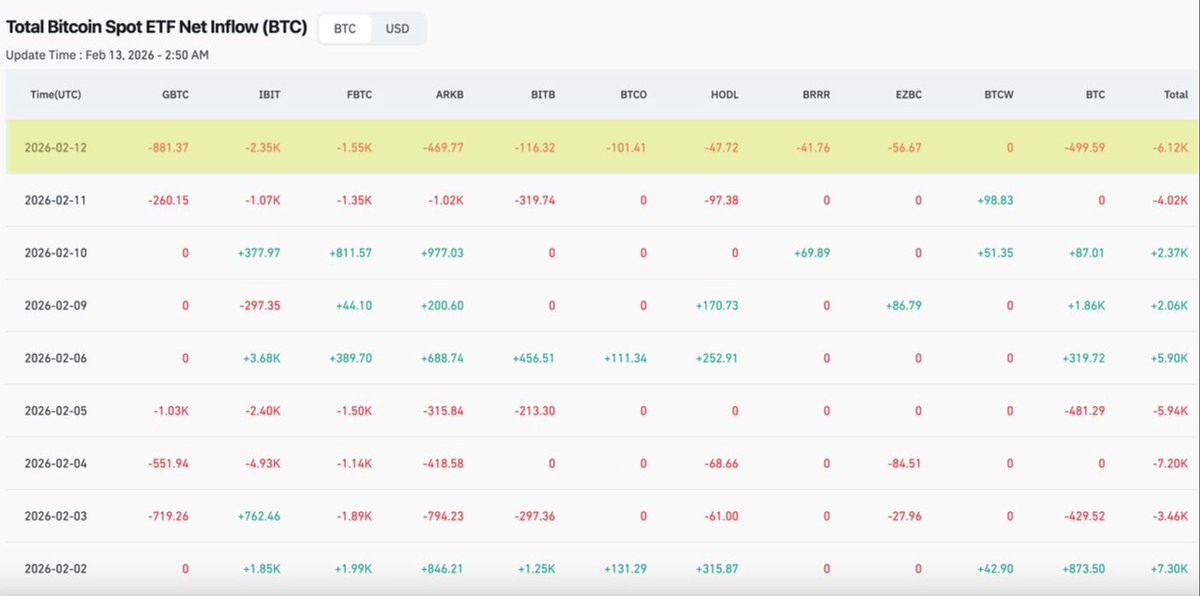
Bitcoin ETF outflows en masse can often be a sign of capitulation and signal trend reversal.
Don't have to call the bottom to profit, but have to participate with longer-term time horizon to profit.
$BTC $SPX $GLD $SLV $IBIT $BITO $ETH $BMNR
English
olderthanold 리트윗함

You only need ChatGPT + a laptop + 1 hour/day to make $8,500/month.
I’ve prepared the exact step-by-step guide.
Normally $179, but it’s free for 24 hours.
To get it:
• Like, Repost & Peply "NEED"
• Follow me so I can DM you
English
olderthanold 리트윗함

Saylor laid out America’s plan to rug pull BRICS by adopting Bitcoin and dumping gold 🤯
English
olderthanold 리트윗함

🚨MINDBLOWING STRC SINGULARITY🚨
Let's say Strategy buys 1,000 Bitcoin today with STRC issuance.
Will probably be more, but I like clean math.
Bitcoin is at $65,300.
1,000 x $65,300 = $65.3 million raised
The annual dividend obligation on this raise:
$65.3 million x 0.1125 = $7,346,250
10 years of an 11.25% dividend would be $73,462,500.
After 10 years at a 25% Bitcoin CAGR, $65.3 million grows to approximately $608 million.
That’s about a 9.3× increase over the decade.
Spread captured after 10 years of dividend payments:
$534.58 MILLION.
From 1 DAY of STRC issuance.
And you're bearish on MSTR?
LOL

English

NEW: Dutch Parliament Member Michel Hoogeveen explains how the 36% unrealized capital gains tax, just passed by the House of Representatives, will work.
Here is a more detailed example:
Step 1. Starting position
You own 500 shares.
Value on Jan 1, 2028: €50,000
Value on Jan 1, 2029: €100,000
So the paper gain is:
€100,000 − €50,000 = €50,000 unrealized profit
You did not sell. But for tax purposes, that €50,000 is treated as income.
Step 2. Apply exemption
You are married, so you get a €3,600 exemption.
€50,000 − €3,600 = €46,400 taxable amount
Tax rate: 36%
€46,400 × 36% = €16,704 tax bill
That bill is due in May, even though you never sold anything.
Step 3. Market falls before you pay
Now suppose by May the shares drop in value.
New total value: €60,000
So your portfolio is no longer worth €100,000. It’s worth €60,000.
But the tax bill is still €16,704, because it was calculated based on the January 1 valuation.
Step 4. You must sell shares to pay tax
To raise €16,704, you sell part of your shares.
After paying the tax, you’re left with:
€60,000 − €16,704 = €43,296
Originally you had 500 shares.
Now you have 360 shares left.
You were forced to sell 140 shares.
140 ÷ 500 = 28% of your shares gone.
Step 5. What happened economically?
Before the correction:
Paper gain was €50,000.
After the correction:
Portfolio is worth €60,000.
Original cost basis was €50,000.
Real gain is only €10,000.
But you paid €16,704 in tax.
So instead of being up €10,000, you are now:
€43,296 − €50,000 = €6,704 below your original starting value.
You turned a €10,000 real gain into a €6,704 net loss.
And you lost 28% of your shares permanently.
English
@zarahsultana Bollocks. I don’t have a pvt jet. I don’t have a pension because as a small business owner the gov destroy income and a strive for success by taxing every pound possible. And they tax each of those pounds multiple times.
English

A billionaire worth £17,000,000,000 who moved to Monaco to dodge £4,000,000,000 in tax is now blaming immigrants for Britain’s problems.
If parasitic billionaires like Jim Ratcliffe paid what they owe — and politicians weren’t in their pockets — our NHS, schools and public services wouldn’t be on their knees.
It is textbook divide and rule. The real enemy of the working class travels by private jet, not migrant dinghy.
English