Dean Hung

80 posts

Dean Hung

Dean Hung

@deanyhung

Taiwanese American | history (ancient, medieval, US, Asia esp Taiwan) | Taiwanese language | biotech | PhD molecular biology genetics 🧬 ex @UCB @Stanford

USA 가입일 Aralık 2024
73 팔로잉15 팔로워
고정된 트윗
Dean Hung
Dean Hung@deanyhung·
Taiwan has not been part of China for millennia, a common misconception. Indigenous peoples of many tribes have lived on Taiwan for millennia, but they are not related genetically to Han Chinese. In the 1600s, the Dutch established a colony on Taiwan, and recruited workers from Fujian/Hokkien, the part of China across the strait from Taiwan. (Up to that point, there was no real presence of Han Chinese on Taiwan.) It was these workers and subsequent immigrants who were my ancestors, and eventually formed their own identity as people of Taiwan. The situation is parallel to what happened during that same time frame in America, around the time of the Mayflower and Jamestown. Early English settlers in America eventually developed their own identity and thought of themselves as a people distinct from their European ancestral lands. In the same way, the people of Taiwan developed their own identity and referred to themselves in their language as Taiwanese. The language my ancestors and my family in Taiwan still speak is Taiwanese, derived from the language spoken in Hokkien (ie, Fujian). Most Westerners think that Chinese language is Mandarin; the reality is that there are dozens of mutually unintelligible languages from the region we call China, whose borders have changed many times throughout history. Taiwanese language is not mutually intelligible with Mandarin (just as Cantonese in Hong Kong is also not mutually intelligible). Taiwan was only nominally part of the Qing Dynasty (whose rulers and nobles weren’t even Han Chinese!) from the late 1600s until 1895, when the Qing ceded Taiwan to Japan, and Taiwan became a colony of Japan. My grandparents lived in that era, and spoke Taiwanese and Japanese, but not Mandarin. It was only after the Chinese civil war that the losing Nationalist government fled to Taiwan and imposed Mandarin language. The native peoples of Taiwan, such as my ancestors as well as the indigenous tribes, had almost nothing to do with China and its many troubles for centuries. All of the turmoil in China in the 1800s, including the Taiping Rebellion (the bloodiest civil war in world history), the Opium Wars and the so-called century of humiliation, the collapse of the Qing Dynasty and establishment of the Republic of China in 1912, had nothing to do with Taiwan. The imperial Qing court barely cared about Taiwan and considered it a malarial backwater with troublesome headhunters. After WW2, the Republic of China fled to Taiwan, and established martial law for 40 years. Taiwanese people who had ancestry on the island for centuries (in many cases back to the time of the Mayflower in America!) were often mistreated by the ruling ROC who fled from the communist takeover in China. The population of Taiwanese (who spoke Taiwanese language and Japanese) on Taiwan in 1949 when the ROC fled China was 6 million. The ROC and their military and families were around 1 million when they got to Taiwan, yet they handled all political power. If you’ve read this far, I hope you understand that the vast majority of people on Taiwan diverged historically and politically from China centuries ago, but were drawn back into Chinese political history with the ROC arriving in Taiwan. We Taiwanese didn’t ask for the ROC to show up, we didn’t ask to be forced to learn another foreign language, and we should be respected for our desire for self-determination, and not be lumped into the catchall term of “Chinese”. No Americans today would consider themselves British citizens; that history diverged long ago. To claim that white Americans are still part of England, even though they speak the same language, would be nonsensical. Most Americans today don’t even have ancestors who were in America from the 1620s Mayflower period, as they came in later influxes from Europe and Africa. Yet the vast majority of Taiwanese have ancestry in Taiwan that is older than that of most current Americans’ ancestry in America!
English
0
0
2
105
Erwan Le Corre
Erwan Le Corre@ErwanLeCorre·
In 17 years in the USA I never joined a French community or neighborhood, hanged out with French people, tried to stay French, waved a French flag, or bragged about France. These people flood your country like they conquered it, and accuse you of racism if you say anything.
English
53
275
3.2K
41.9K
Dean Hung
Dean Hung@deanyhung·
Yes, it often seems overlooked by non-Taiwanese people that Han settlers have been on Taiwan since before 1624, which is when the Dutch established a colony on Taiwan and brought in more Han people as laborers. It was these Han settlers over the subsequent 2+ centuries that are the ancestors of the Taiwanese people, who numbered around 6.5 million around the end of the Japanese colonization, and when the KMT fled China to Taiwan in 1949 with 1.5 million people. These Taiwanese have been on Taiwan as long as the English settlers have been in America, and just as the English colonists formed their own identity and history as Americans, Taiwanese people have formed their own identity as Taiwanese, distinct from all the turmoil in China in the 19th and 20th centuries. Unfortunately, much discourse online mistakenly lumps Taiwanese in with Chinese, simply because of genetic ties, treating Taiwanese as just a kind of Chinese. Of course, that would be like saying white Americans of English ancestry are just a type of English. These Americans would beg to differ, and I’m sure their cousins in Australia, NZ, and Canada would put in a word on the matter as well.
English
0
0
0
30
RamsSteveHam
RamsSteveHam@RamsSteve·
@christinelu You have an interesting perspective on the matter bc it's sort of on the periphery of the normal discourse between PRC and Taiwan. I'm sure the natives of Taiwan would like to preserve its culture for generations to come.
English
1
0
1
34
🖤 Christine
🖤 Christine@christinelu·
🥺 So… I shared the Netflix link for “A Foggy Tale” with my parents and my mom can’t watch it because it reminds her of what my late grandfather had to go through during KMT marital law era in Taiwan. My dad only got through half of it before he paused too.
🖤 Christine@christinelu

💔 This is such a sad but beautiful film. It takes place in 1953 Taiwan. My dad was only 5 years old then and my mom was 2. I can see why it won several Golden Horse awards.

English
3
3
36
1.7K
RandolphHickler
RandolphHickler@RandolphHickler·
@MattWalshBlog Band of Brothers style show. Following 2 plattoons. North and South . They end up fighting each other. Your hearts ripped out not knowing who to root for.
English
1
0
1
1K
Matt Walsh
Matt Walsh@MattWalshBlog·
Even crazier that we don’t have 30 movies about the Civil War. Of course I know why we don’t, but it’s still ridiculous. You could make a movie just about Antietam or Chancellorsville or Shiloh. You could make a Band of Brothers style thing following the course of the whole war and it would be phenomenal. In a just world Stonewall Jackson would have his own prestige awards bait biopic. But that will never happen in a million years.
Anthony J. Constantini@AJConstantini

It's insane how little there has been on say, the Revolution. Heck, we've never even had a major Washington biopic. We've never had an Andrew Jackson biopic - that man's life was made for movies! Ditto Roosevelt; just adopt Morris' trilogy and turn it into a film trilogy.

English
326
271
4.6K
422.6K
Dean Hung
Dean Hung@deanyhung·
I wonder if the complexity is so high that it is effectively a problem intractable to silicon-based computational methods running on mathematical descriptions/approximations of physical interactions and reactions. In other words, what if it’s edge cases all the way down, forever? Another way of looking at it: what if the machine you have to build to solve the problem looks exactly like the biological system itself? As if you need to build a replica cell and all its internal parts and components down to the atomic level to say you have the means to “solve” the problem? While this is a hypothetical, it’s a useful framework from which to analyze the problem; what aspects of this artificial-but-identical cell could be abstracted away into calculate-able mathematical descriptions and still replicate perfectly the behavior of a biological cell?
English
0
0
0
9
Dr Alexander D. Kalian
Dr Alexander D. Kalian@AlexanderKalian·
There is some nuance to be had here - while the approach you describe can certainly achieve a lot, it is almost certainly nowhere close to sufficient for any serious shot at "solving biology" or similar. The needle is moving, but the problem space of a domain like biology is so vast (and arguably infinite - both in terms of landscape and potential complexity), that "solving" it comprehensively is an almost ludicrously nonsensical goal.
English
1
0
0
185
Dr Alexander D. Kalian
Dr Alexander D. Kalian@AlexanderKalian·
It seems much of the "AI will solve biology!" crowd are pure tech guys, suffering from the Dunning-Kruger Effect about biology. They unironically think things like: "DNA is just code, so we can make LLMs learn it and solve biology!" Plenty also seem to look down on biology as a "soft and squishy" science full of qualitative knowledge... ... as if quantitative and computational approaches are not a sophisticated subdomain of the biosciences, and that all the research space has been waiting for is for their coding skills and Silicon Valley "move fast and break things!" attitude.
English
58
29
234
15.7K
Dean Hung
Dean Hung@deanyhung·
My experience was also similar, although mine diverges with yours and others in that Taiwanese politics was always discussed in our house. We lived outside of Washington, DC rather than CA, and even then there were lobbying efforts on a Capitol Hill on Taiwan’s behalf. My dad was involved in this, and our house always seemed to be a hotbed of Taiwanese political discussion and activity. Many prominent people in this movement came to our house (or stayed for awhile). The reason I didn’t know about the actual Taiwanese political history is because I only understood Taiwanese up to a three year old’s level. Didn’t learn Mandarin growing up, and only fluent in English (in those days). When my parents spoke Taiwanese, I basically tuned it out (unless it was them scolding me). But I do vividly recall attending a protest on the National Mall in DC in 1983, in support of a Taiwanese activist imprisoned in Kaohsiung and going on a hunger strike (Shih Ming-teh). I grew up aware of all of this stuff, but not the details, and for whatever reasons, none of it was very important to me, nor the other Taiwanese American kids I grew up with in that area. It took almost 40 years before I learned the history, and the agonies, of that period. What incenses me is that this occurred because an outside power came over in 1945 and dictated to Taiwanese (whose families on the island dated back to the time of the Mayflower in America) what they could and couldn’t do on their own land, and even what language they could speak!
English
0
1
5
180
🖤 Christine
🖤 Christine@christinelu·
My mom and dad were still teenagers in 1963. They weren’t allowed to speak Taiwanese in pubic let alone try to ask or understand why people in their neighborhood would disappear and end up in detention or worse. It’s the reason why they brought us to the U.S. in 1978. Mom said she didn’t want us growing up under the KMT. I was only 2 years old when I immigrated and knew nothing about this growing up because the small mention about Taiwan we read in our U.S. history books called Chiang Kai-Shek an ally against Communism since the Cold War was going on so that was that. Didn’t know about the 228 Massacre or that he murdered a generation of Taiwan’s intellectuals and leaders. Had no idea about the underground Taiwanese independence movement and the consequences they faced. Growing up in America, my parents never talked about Taiwanese politics or history with us as kids in the 80s but they picked up a copy of the World Journal newspaper every day from a small bookstore in Monterey Park and followed all the developments of Taiwan’s transition to democracy. Taiwan’s history is complicated af and has been both super interesting and painful to learn about in recent years but adding a Taiwanese centric lens to the U.S. and China lens on Taiwan is very helpful in understanding why Taiwanese people feel so strongly about remaining a free country (that can’t be called a country) and being seen as Taiwanese when told to be invisible.
Ted@ted_huang

On May 28, 1963, Chen Chih-hsiung 陳智雄 became the first activist executed by the KMT for advocating Taiwan independence Guards chopped his feet and pierced his cheeks to silence him Still, his final shout was: 台灣獨立萬歲 (Long live Taiwan independence!)

English
5
78
306
16.4K
Dean Hung
Dean Hung@deanyhung·
When the repression started, my grandfather’s older brother was a young medical doctor in Taipei; their family was originally from the Kagi (Chiayi) area. This older brother was told not to come back home, where his wife and young children were living. The fear was that if he were to return, the family might be rounded up and imprisoned, or worse. The KMT specifically targeted educated elites during this period, and as a doctor, this great-uncle of mine, and his family, would have been a prime target. He fled immediately to Japan. For reasons unclear to me, he ended up living the rest of his life in China, never returning to Taiwan and never seeing his wife and children, his brother, and the rest of his family again, save for one of my uncles who somehow found him in China and went to see him. Having grown up in the US since I was 3 years old, I’d never learned any of this 228 and White Terror history. And even after I did learn about it, I didn’t know it had directly impacted a part of my own family until recently, when my mom told me what she knew. There are so many stories Taiwanese people have of this awful period, and my impression is that the effects of the fear continues among older Taiwanese to this day, making them reluctant to bring these matters up.
English
0
0
6
102
🖤 Christine
🖤 Christine@christinelu·
My late grandfather was a young journalist in 1947 and fled for many years to Thailand. But again, my mom never told us why. She only said “Grandpa lived in Thailand before he married grandma.” It wasn’t until 2020 when I was spending a lot of time with them during the pandemic and asking them about where my grandparents were when 228 happened. He got on the radio to warn people in Taichung about what was happening in Taipei and blacklisted. I’m not sure how he was able to come back and feel safe but he lived a low key life after he came back and started a clothing company with my grandma.
English
2
4
30
966
theniumee 🏹🐠
theniumee 🏹🐠@theniumee_·
It is crucial to remember the KMT's efforts to suppress this chapter of Taiwanese history. While the linguistic bans were severe, the most devastating aspect of the White Terror was the targeted elimination of the island's intellectual class, including scholars and physicians. Those who were not so lucky from execution, fled the country and remained exiled, separated from their loved ones.
🖤 Christine@christinelu

My mom and dad were still teenagers in 1963. They weren’t allowed to speak Taiwanese in pubic let alone try to ask or understand why people in their neighborhood would disappear and end up in detention or worse. It’s the reason why they brought us to the U.S. in 1978. Mom said she didn’t want us growing up under the KMT. I was only 2 years old when I immigrated and knew nothing about this growing up because the small mention about Taiwan we read in our U.S. history books called Chiang Kai-Shek an ally against Communism since the Cold War was going on so that was that. Didn’t know about the 228 Massacre or that he murdered a generation of Taiwan’s intellectuals and leaders. Had no idea about the underground Taiwanese independence movement and the consequences they faced. Growing up in America, my parents never talked about Taiwanese politics or history with us as kids in the 80s but they picked up a copy of the World Journal newspaper every day from a small bookstore in Monterey Park and followed all the developments of Taiwan’s transition to democracy. Taiwan’s history is complicated af and has been both super interesting and painful to learn about in recent years but adding a Taiwanese centric lens to the U.S. and China lens on Taiwan is very helpful in understanding why Taiwanese people feel so strongly about remaining a free country (that can’t be called a country) and being seen as Taiwanese when told to be invisible.

English
1
3
25
1.7K
Dean Hung
Dean Hung@deanyhung·
Exactly. Many aren’t prepared and don’t fully realize it until they’re on academic probation. I wouldn’t call them brilliant, either. They got in by virtue of lowered academic standards and DEI favoritism. And if science/technical classes are slowed/dumbed down to accommodate students who are not prepared, it becomes very unfair for those who are prepared and qualified.
English
1
0
0
30
Andy
Andy@andy1820me·
@DrCamiloOrtiz But is that a problem? I'm much more worried at the margins where people just aren't prepared at all. Those brilliant kids still got fancy educations. I guess the question is if they had to dumb down science classes, which would be a loss for the kids that did get in.
English
1
0
1
181
Dean Hung
Dean Hung@deanyhung·
💯 it does students a massive disservice to tell them that they got in to places like Yale, only for them to realize they are woefully unprepared for an extremely demanding course load in technical areas of study. They were told they were good enough by virtue of having been accepted to the school, but find out in the most psychologically damaging way that they’re actually not good enough, or at least not nearly prepared enough. They then drop out of pre-med, engineering, hard sciences, etc and gravitate towards non-quantitative majors or drop out entirely), when in reality they might have done very well at a less demanding university and learned technical material at a slower pace more suited for them.
English
0
0
2
40
C. Gockel
C. Gockel@CGockel1·
Just think how many people were admitted who were unable to graduate, dropped out, and are now in crippling debt. (Even if tuition was free, they probably had to pay for room & board.) Imagine how many of these students are from disadvantaged backgrounds. Yale's policy was cruel to EVERYONE.
English
1
0
11
360
Dean Hung
Dean Hung@deanyhung·
Another aspect of attending places like that was the intellectual quality of fellow students. When you’re surrounded by very smart, very capable people, you tend to push yourself harder to accomplish things you might not otherwise considered yourself capable of accomplishing. When standards are dumbed down, then the intellectual quality of fellow students is diluted; the value of the experience and eventually the value of the degree itself will decline. This is very true at places like UC Berkeley; it is just coasting on a reputation built by previous generations of students and scholars now. A degree from there doesn’t mean what it used to mean.
English
0
0
11
413
AltAzn
AltAzn@Alt_Azn·
The value of elite universities like Stanford and Harvard was that even liberal arts majors could land jobs in Silicon Valley and Wall Street because getting in required exceptional test scores and intelligence. Remove that filter and the degrees become debased.
English
20
34
509
9.8K
Dean Hung
Dean Hung@deanyhung·
I think you are being too kind. There are no doubt closet conservatives at both places, but having been a student at both, the prevailing wind always blew left. Conservative thought would be ostracized and punished and an academic death sentence for any young faculty seeking tenure. I recall not too long ago even the Stanford Physics Department starting to kowtow to leftism; I couldn’t believe it but they were doing it. There may be some truth to your view that they were also victims of misguided thinking but I think that lets them off the hook too easily. If there is any institution on earth that should absolutely favor free speech and free thought, it is the university. But when even the Stanford physics department starts agreeing with leftism, it signals a kind of moral cowardice, that in fields that have nothing to do with human feelings but are focused on investigating the physical nature of the universe, that they’d be willing to parrot the leftist line, shows how corrupted against the pursuit of truth they became. Also, as a raw data point, at both universities, donations to political candidates were for Democrat candidates well over 95%, prima facie evidence of political leanings.
English
0
0
0
11
C Y
C Y@chyang888·
@deanyhung @Tool_Being No that was not my experience interacting with engineering and business professors from those universities. Hoover Institute at Stanford is a conservative think tank.
English
1
0
0
16
Dean Hung
Dean Hung@deanyhung·
What many people chiming in on Taiwan also don’t seem to know is that there have been Han settlers from Hokkien/Fujian province since before 1620 and their descendants became the largest demographic on Taiwan, by far. The Dutch East Indies Company set up a colony on Taiwan in 1624 and brought more settlers from Hokkien to Taiwan. The descendants of these Han settlers comprise over 80% of Taiwan’s population today. They can trace there ancestry on the island for three or four centuries, which is much longer than many Americans can trace their ancestry in the US. These Taiwanese people’s ties to the island extend back to even before the Mayflower in many cases. Yet no one claims that descendants of the Mayflower are still English — they are Americans. When the KMT/ROC fled to Taiwan in losing the Chinese Civil War, they numbered around 1.5 million. There were already 6.5 million Taiwanese people on the island, and that proportion has stayed roughly the same in the decades since. It is understandable if the KMT/ROC descendants consider themselves Chinese but most Taiwanese don’t think of themselves the same way. It does those of native Taiwanese descent a huge disservice to incorrectly label them as Chinese simply because we are racially Han as well. Taiwan’s history forked from Chinese history centuries ago; American history forked from English history about 250 years ago. The English colonists descended from the Mayflower and Jamestown formed their own ties to the land in America, and new settlers from other places did as well, and they eventually came to think of themselves as distinct from their ancestral nations. It is exactly the same situation with Taiwanese descendants of those early Han settlers. They formed their own ties with the land and each other, and had a separate history from those in China. Peoples can be related genetically, but that does not make them the same people. When commenters on the Taiwan issue blithely declare that Taiwan is and has always been Chinese because it’s full of Chinese people, note that this is like saying America is still British because it was originally settled by English people.
English
1
0
0
19
Chase W. Nelson 倪誠志
Chase W. Nelson 倪誠志@chasewnelson·
I encourage anyone interested in Taiwan to follow @TaiwanPlusNews. Those less familiar with Taiwan often talk as if it’s uninhabited land contested by China & the US. In reality it’s a nation of 23 million, already defending its sovereignty daily against aggression like this 👇
TaiwanPlus News@taiwanplusnews

Taiwan’s coast guard says it pushed four Chinese vessels out of restricted waters near Kinmen on Tuesday afternoon.

Taipei City, Taiwan 🇹🇼 English
13
23
175
4.6K
Dean Hung
Dean Hung@deanyhung·
@GrumpyTechBro @Tool_Being But faculty go along with it; they don’t even bother to put up a principled stand, since these policies generally accord with their own beliefs.
English
0
0
1
11
Ciro
Ciro@akvias_·
@Tool_Being It’ll be funnier if (when?) certain other departments, especially those most interested in leftist activism, offer counter proposals that perpetuate the problem
English
2
0
2
343
Gingerine
Gingerine@Gingerine5·
@Tool_Being I wonder if all those faculty members have been supporting all the progressive policies for the last 20 years. I'm going to say yes.
English
1
0
0
184
Dean Hung
Dean Hung@deanyhung·
Uhhm, no. They are leftists, the almost all of them. Some more leftist than others, but leftist all the same. It is not only the air they breathe, it is the air they MUST breathe. I was an undergrad there, and saw it upfront. To become an academic at any major university requires toeing the line, and that is invariably nearly 100% leftist at places like UC Berkeley. It has been so for decades, but at least in the 20th century, dissent was tolerated and even encouraged, but this tolerance was a courtesy extended to young minds in the expectation that they would eventually see the Light of Leftism.
English
1
0
0
18
C Y
C Y@chyang888·
@Tool_Being UC professors are not “leftists”. They are academics. They did not choose this. They are also victims of misguided political policies.
English
1
0
1
149
Dean Hung
Dean Hung@deanyhung·
Yes, there’s only so much hollowing out an institution of higher learning can absorb before it starts to collapse on its rotting core. Going to UC Berkeley used to mean something, but the brand has long been tarnished by the lowering of standards AND increasing the student population. Back in the late 80s and early 90s, the undergrad population was 20k. Now it’s 30k; how do you dilute the student population by 33% and still maintain academic standards at a school that large? And then they made it worse by doing away with the standardized testing requirements. You can’t maintain standards when you do away with the very things that keep standards high. And UC suffers for it in loss of prestige and reputation. They’ve been coasting on the reputation built by previous generations selected for the extraordinary caliber, to trade it all for entering classes who really can’t perform even 8th grade math. Sad. Hopefully the UC Regents reverse this stupid policy with a sensible one, but it’s California, a vastly different one from the CA of the 20th century.
English
0
0
2
36
West Coast Platonist
West Coast Platonist@Tool_Being·
@DaoshanS @townerman1 Their action is purely symbolic and requires zero personal risk. They are mostly libtards who agree with the premises of the left but are saddened to discover their institution is getting destroyed by the revolution.
English
1
0
9
638
Dean Hung
Dean Hung@deanyhung·
The problem is that there is no gun culture nor similar views of firearms as a bulwark against state oppression as we have here in the US. There is a fascination with guns, however, as glorified in Taiwan mafia movies (in fact, the Taiwan mafia plays a much more prominent role in society than the mafia used to here in the US). An acquaintance of mine had friends from Taiwan visiting, and they spent a whole week at some kind of gun camp where they had a lot of fun shooting guns (properly trained and supervised, of course). Perhaps this is an idea that the US State Department can get behind: sponsoring visits to gun training camps by interested Taiwanese citizens; they’d get to have fun doing things forbidden in Taiwan but also learning about the benefits of an armed populace and bringing a shift in mentality in Taiwanese society. A good place to start might be in AZ, outside of the TSMC fab they’ve just built.
English
0
0
0
21
Dean Hung
Dean Hung@deanyhung·
Erik Prince of Blackwater makes this exact point and discusses it at length on Shawn Ryan’s podcast on YouTube. The idea is that invading Taiwan is not the same as holding Taiwan. The US with all of its military strength had great difficulties in both Iraq and Afghanistan, and the lessons learned are present in the current conflict with Iran: the US has no troops on the ground this time. Prince argues that ~720k people armed and trained would be a massive deterrent against invasion, as it would be the porcupine/asymmetric warfare strategy at the population level. He draws this figure from the fact that the American Revolution was fought by only 3% of the population at that time. It would certainly be a relatively inexpensive way to create a deterrent at a different level compared to conventional weapons, and has successful examples in recent warfare history. If the cost in Chinese one-child princelings lives is too high, then China may decide not to invade.
English
1
0
1
100
Dean Hung
Dean Hung@deanyhung·
@One_True_Potato @zhaoxiongding @clashreport Wow, that is a fantastic bit of family history! I know that when the Dutch arrived they found around 1000 - 2000 Han already in the area. Any bits of family lore passed on to you about those ancestors?
English
1
0
0
21
Clash Report
Clash Report@clashreport·
Anduril Founder Palmer Luckey on China: Can we outmanufacture them? No. But we don't need to outmanufacture them to make a Taiwan invasion infeasible. There's a world where they have a hundred times more ballistic missiles than us and we still have enough between us and our allies to deny them access to Taiwan. If they take Taiwan, history and the words out of Xi Jinping's own mouth show they're immediately going to hop over to Okinawa, part of the Philippines, maybe part of Vietnam. Xi Jinping is going out saying, 'I was in our national archives reading about the Ryuku Islands — 650 years ago they sent a gift to us, that means they're a tributary state.' He's not saying this because he loves wandering the national archives. They are constructing a national narrative that would allow them to convince their people to start with Taiwan and end with a lot of our Pacific allies.
English
150
217
1.3K
202.2K
Dean Hung
Dean Hung@deanyhung·
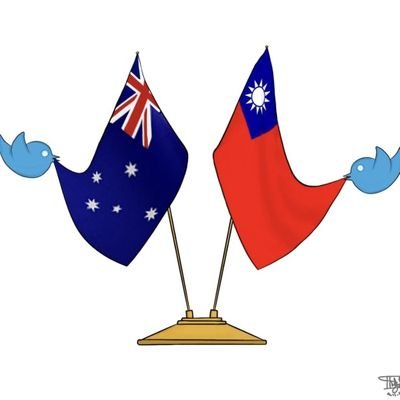
Indeed. Chinese warships conducted a live fire exercise in the Tasman Sea last year without prior notification to the Australian government. Why would they flex their might like this is not to send a message to Australia and New Zealand that they lie within China’s sphere of domination?
English
2
0
1
1.1K