Paul Schmidt

3.8K posts

Paul Schmidt banner
Paul Schmidt

Paul Schmidt

@drumming

Marketer, SEO & Musician. Director @SmartBugMedia. @HubSpot Alum.

Denver, CO 가입일 Mart 2009
1.4K 팔로잉1.2K 팔로워
andrew chen
andrew chen@andrewchen·
dear lazyweb- what's everyone's new modern customer support tool? (no more zendesk!!!) cc @KatiaAmeri
English
49
2
81
36.7K
Paul Schmidt 리트윗함
Pe:p Laja
Pe:p Laja@peeplaja·
Almost every B2B SaaS website has images or illustrations of some kind. But what should they be? A pattern that comes up repeatedly in Wynter tests for B2B SaaS websites is that people only want to see actual screenshots of the tool. They're looking to understand the tool better, make sense of it. "Just show me the software!" is a common cry. What they don't wanna see is - stock photos - stylized graphics - cartoon people - illustrations Those things don't add specificity or clarity about the SaaS product. What is the point of using images on a B2B SaaS website? It's not to make the website look sexy. The point of imagery is to help communicate the message and make people want what you sell. You do those things through enhancing clarity and communicating value props, not through cartoons and random graphics. I hear the "brand look and feel" argument, but that should never come at the expense of clarity.
Pe:p Laja tweet media
English
0
2
11
1.2K
Paul Schmidt
Paul Schmidt@drumming·
@0xgaut Looks like something out of Pee-wee's big adventure.
English
0
0
0
117
gaut
gaut@0xgaut·
Tech companies solving problems that don’t exist
English
212
1K
12.8K
4.7M
Pe:p Laja
Pe:p Laja@peeplaja·
This AI GTM / workflows space is really heating up. We went from 0 to many tens of companies in a jiffy.
English
3
0
8
2.1K
Paul Schmidt 리트윗함
Aaron Levie
Aaron Levie@levie·
One of the most common concerns about AI is the risk that it takes a meaningful portion of jobs that humans currently do, leading to major economic dislocation. Often these headlines come out of economic studies that look at various job functions and estimate the impact that AI could have on these roles, and then extrapolates the resulting labor impact. What these reports generally get wrong is the analysis is done in a vacuum, explicitly ignoring the decisions that companies actually make when presented with productivity gains introduced by a new technology -- especially given the competitive nature of most industries. The thinking generally goes that if a company could, say, be 50% more productive in a particular function, it would mean a commensurate reduction of jobs in that area. For instance, if a certain function (like engineering or sales) required 10 units of labor before, then with a 50% gain in productivity, in the future that same function would now only need ~7 units of labor. The challenge with this type of thinking is that it assumes that companies have maximized the amount of labor they wish they had for a particular function, when in reality many functions are only staffed at the level the company can afford. Further, it assumes that a company is not in a competitive field, and that the company would be complacent and happy about generating the same output as before, just with less costs. Finally, it ignores the fact that productivity gains in a market will lead to increased response from competition, which companies equally have to respond to with more productivity not necessarily more profit. Time and time again this is the type of flawed thinking that we tend to get out of broad economic studies on the labor needs in the economy. To break this down and make it practical, I thought I'd illustrate the point with the example of an engineering function -- one that already is seeing the benefits of AI starting to roll out. The numbers will all be kept simple, but you can change almost any variable and the point will remain the same. The key to thinking through job impacts is to think through what happens a step or two *after* the productivity gain of AI is experienced. So, imagine you're a software company that can afford to employee 10 engineers based on your current revenue. By default, those 10 engineers produce a certain amount of output of product that you then sell to customers. If you're like almost any company on the planet, the list of things your customers want from your product far exceeds your ability to deliver those features any time soon with those 10 engineers. But the challenge, again, is that you can only afford those 10 engineers at today's revenue level. So, you decide to implement AI, and the absolute best case scenario happens: each engineer becomes magically 50% more productive. Overnight, you now have the equivalent of 15 engineers working in your company, for the previous cost of 10. Finally, you can now build the next set of things on your product roadmap that your customers have been asking for. We can't assume it will be 50% more because there are new points of friction and coordination tax that emerge as you have 15 equivalent engineers, but let's say your output goes up meaningfully. Assuming you're acting in your best interests as a company, the features you build make your product that much more compelling, which means at some point (sooner or later) they should result in an incremental gain in revenue. Let's be somewhat conservative on what impact these new features will have on your product, but let's say they generate an incremental 10% of revenue over time or keep customers retained at a 10% greater rate (roughly the same financial benefit). Now let's assess the downstream impact. Firstly, any growth of revenue will often lead to some functions in the business growing as well to support these new customers, which will directly create new jobs. But further, the company now has to decide whether it remains satisfied with its 10 engineers that have the output of 15, or with their incremental revenue should they hire even more engineers to build the *next* set of features that will make them even more compelling to customers. Unless this company is in some rare monopoly position, they likely will want to build the next set of features even faster than the last set to grow even more quickly. This then means AI has caused the company --counterintuitively-- to hire more engineers than before, because the productivity of each engineer is much higher, allowing them to generate more return per engineer, and thus more revenue. What's interesting is this analogy works similarly for most functions in a business. In sales, if you could make sales reps 10% more productive (i.e. they sell 10% more of your products/services for the same cost), almost every company in the world would prefer to hire even more sales reps, instead of merely banking the incremental profit. That incremental sales productivity again would lead to downstream implications, like the need to deliver more features to customers, and thus more R&D hiring! Even back-office functions that don't as directly tie to revenue growth, often are a bottleneck to growth . If you can reduce the bottleneck -- say lawyers reviewing contracts, or people processing invoices-- cycle time in businesses accelerates, which almost always lets you serve more customers faster or grow more quickly, again letting a company reinvest those dollars. In the end, when you step out of the vacuum of just the specific productivity gain of a particular job function, and look at how the whole system will adapt and improve due to that productivity gain, a very different picture of AI's impact on jobs will emerge. Yes there will absolutely be changes to what jobs become more or less in demand in the future, but the competitive nature of companies inevitably ensures that across the whole system companies will be focused on leveraging AI to become more productive.
English
127
303
1.4K
611.6K
Paul Schmidt
Paul Schmidt@drumming·
@jasonfried @AppSumo (@noahkagan) has also proven this thesis and it's exciting. 1. What's coming after Campfire? 2. Will you use distribution channels like Appsumo or other software marketplaces to get your products out there or do you think selling direct will be the best bet?
English
0
0
0
55
Jason Fried
Jason Fried@jasonfried·
Something happened to business software. You used to pay for it once, install it, and run it. Whether on someone’s computer, or a server for everyone, it felt like you owned it. And you did. Today, most software is a service. Not owned, but rented. Buying it enters you into a perpetual landlord–tenant agreement. Every month you pay for essentially the same thing you had last month. And if you stop paying, the software stops working. Boom, you’re evicted. For nearly two decades, the SaaS model benefitted landlords handsomely. With routine prayers — and payers — to the Church of Recurring Revenue, valuations shot to the moon on the backs of businesses subscribed at luxury prices for commodity services they had little control over. Add up your SaaS subscriptions last year. You should own that shit by now. SaaS still makes sense for many products, but its grip will slip. Installation and administration used to be hopelessly complicated, but self–hosting tech is simpler now and vastly improved. Plus, IT departments are hungry to run their own IT again, tired of being subservient to Big Tech’s reign clouds. Once upon a time you owned what you paid for, you controlled what you depended on, and your privacy and security were your own business. We think it’s that time again. ONCE.com
English
107
92
964
283.7K
Paul Schmidt 리트윗함
Ross Simmonds
Ross Simmonds@TheCoolestCool·
I’ve never met a great marketer who doesn’t love to learn. If you’re not interested in personal growth — this industry might not be for you.
English
3
4
31
2.6K
Chris Meade 🏐
Chris Meade 🏐@thechrismeade·
YO - I want to build a Slack integration that reports to the entire company daily sales, profit, and % to monthly rev goal. I don't want to spend $900k on this shit. How can I do it?
English
139
3
146
109.8K
Paul Schmidt
Paul Schmidt@drumming·
@bmose14 Yeah it does feel a bit awkward sometimes. Any tips on opening lines when you are talking to a large group or do you just jump straight into the agenda?
English
1
0
0
17
Brian Moseley
Brian Moseley@bmose14·
One of my professional pet peeves is when sales reps jump on a call with a large group of 10+ people and ask the group, "How's everyone doing this morning?" lol what kind of response are you hoping for?
English
5
0
5
515
Paul Schmidt
Paul Schmidt@drumming·
@stephsmithio 100% agreed. Use to get all of my news and earliest access to legit educational info here from SMEs. Everyone has either left or they've been deprioritized in Twitter's algo. Only come here out of habit now and usually leave without getting much value.
English
0
0
2
16
Steph Smith
Steph Smith@stephsmithio·
Been extremely (perhaps embarrassingly) active on this platform for the last 6 years. Throughout that period, the algorithm has changed countless times. However, the last few weeks are the first time where I’ve genuinely felt less motivated to open the app, since I no longer see the content I came to love. Feed is now mostly short videos, mediocre memes, and cliche life lessons (from people I don’t recognize), that Twitter previously felt like an oasis from. Is it just me?
English
122
19
432
160.4K
Jack Rubin (the soap guy)
Jack Rubin (the soap guy)@JackRubin1·
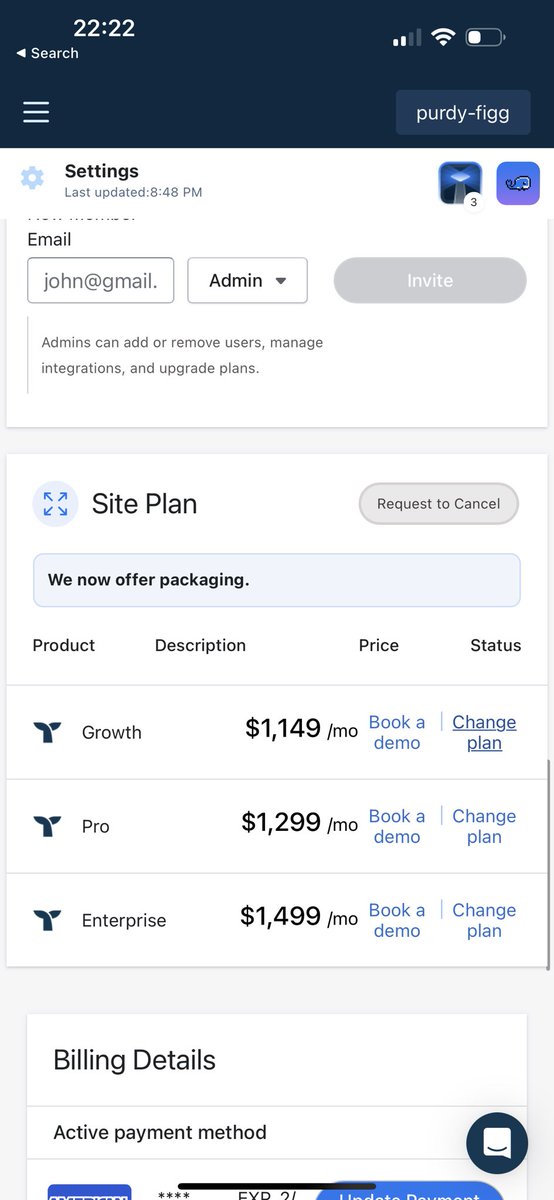
Wait what. Minimum @triplewhale package is moving to $1,149 per month. It can’t be. What happened to legacy pricing forever at $49 per month for the dashboard… the only feature I use 😭
Jack Rubin (the soap guy) tweet media
English
76
4
140
165K
Fred | Notion Punk 💡
Fred | Notion Punk 💡@notionpunk·
ANNOUNCEMENT I am launching Newsletter Wizard soon, an All-in-one operating system for Newsletters. It's launching it at $97 in a few weeks. But I need beta testers to help me test it. Drop a reply below if you'd like to beta test it for free and I'll DM you.
Fred | Notion Punk 💡 tweet media
English
73
5
115
0
Paul Schmidt 리트윗함
Kevin_Indig
Kevin_Indig@Kevin_Indig·
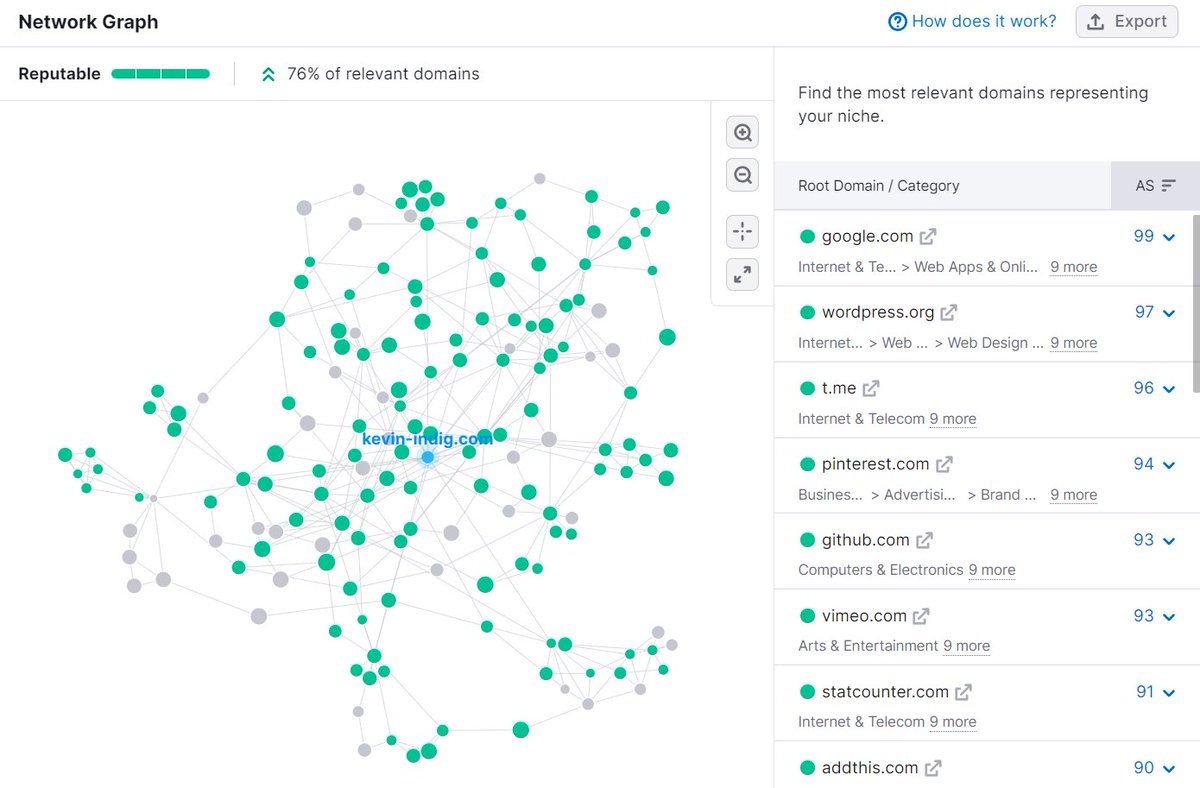
Hot take: if Semrush can visualize PBNs and link schemes, Google can, too. This new feature shows you the sites in your close neighborhood and how they're interlinked. Tip: export and compare with competitors. PS: May or may not have had a hand in this feature👀
Kevin_Indig tweet media
English
16
31
224
0