rio_lee
419 posts



MegaETH’s FDV now priced in at $700 M.
That’s like 80% lower than the price in premarkets when we entered the sale, and actually a 30% realized loss if it were to launch now. Didn’t expect this outcome.

English
今早看到earnAUSD只有0.63%的exposure,立马打算把🥚都塞进去,刚弄了第一笔就发现有个孙子干了3M进去,直接把APY从~30%弄到~4%,想着哪个大户连锅都砸了,结果是curator
Gamma Research@Gamma_Research_
1/ Following the Resolv exploit, increased withdrawal activity caused AUSD borrow rates on the earnAUSD/AUSD @curvance market to spike to 37%. As curators of earnAUSD, we have deployed AUSD liquidity to the pool as a temporary measure, bringing borrow APR down to ~4%.
中文
@Gamma_Research_ @Curvance bro I just deposited 10K and saw there is an additional 3M😂...
English

1/ Following the Resolv exploit, increased withdrawal activity caused AUSD borrow rates on the earnAUSD/AUSD @curvance market to spike to 37%.
As curators of earnAUSD, we have deployed AUSD liquidity to the pool as a temporary measure, bringing borrow APR down to ~4%.
English




之前分享的XRP DeFi应用 @doppler_fi,在达到200万美元的上限后,再次打开了XRPL金库,这次上限提升到了1000万美元
之前说过, 相比第一季,$1每小时获得0.012分涨到了0.03分,所以不用担心积分跟不上
一般来讲,加大池子额度说明项目已经到了冲刺阶段,再加上池子有cap,所以想存的可以现在去存一点,赶上这次进入的窗口
即使不管积分,金库自身的APR也达到了7-10%,每周分发,也算比较舒服了,再加上Doppler Points的预期,为未来可能的额外空投做准备,再配合300万的融资、透明的结构和清晰的产品设计,比那些随机的 degen farming 看起来更安全、其实可以稳参与一手
步骤很简单:
1⃣创建一个GirinWallet 钱包
2⃣从 cex(币安、bitget都支持) 走 XRPL 网络,把 RLUSD 转入钱包
ps: 需要在钱包中手动添加 RLUSD 代币
3⃣在网站直接存入就ok
如果可以的话,我的邀请码:W7WHK,可以获得20%额外DP奖励。
最后,听说@doppler_fi已经和Bybit、Bitget谈好合作了👀
人在币圈(Lovecity) (小爱)./@lovecity0088
前一段分享@doppler_fi的 $RLUSD Vault今晚9点就要开池子了 随之而来的是第2季积分计划。 如果担心XRP价格波动问题,那正好可以借 $RLUSD 参与@doppler_fi 而且积分较第一季$1每小时获得0.012分涨到了0.03分,不用担心积分跟不上,除此之外,大概是7-10%的apy。 唯一需要注意的是,需要提前准备好 $RLUSD ,此次存款有cap,只有1M。 如果到时候现买再存估计是有点来不及 我的邀请码:W7WHK
中文
In order to get elected, @BarackObama will start a war with Iran.
English

所以MegaETH 用例是什么呢?
我知道你快, 你链上的app也快。
现在大家不玩区块链是因为 速度慢吗? 可以继续在那里意淫。Monad 当初也这样的。
Shuyao Kong@hotpot_dao
MegaETH powers extreme apps what do I mean by extreme? - extremely onchain - extremely fun - extremely exogenous - extremely creative - extremely lucrative just use "extremely onchain" as an example, we could have worked with a DEX that only uses the blockchain for settlement ( super easy). however, I ask our team: what's the point of building the fastest chain when the apps aren't using the power of the chain? use @worldmarketsinc as an example, the DEX has no backend. let me repeat: World Market is a DEX that has NO BackEnd. meaning no indexer-driven API layer, no relayer, and no centralized application server sitting between the user and the protocol. its UI talks directly to MegaETH’s JSON-RPC endpoints, can be downloaded and run locally, and anyone can build an alternative interface. that is prolly the most cypherpunk design you'll ever seen in the entire DEX landscape. most dexes introduce indexers, caches, and proprietary backends, which become hidden trust assumptions and operational chokepoints, in their design. WM relies directly on MegaETH RPC, it treats chain state itself as the application’s live data source. That makes the system more permissionless, more censorship resistant, easier to fork, and less dependent on centralized infrastructure. we built the most performant RPC infrastructure so applications dont have to be forced to go back to Web2-style architecture.
中文
@block_dam @megamafia 他们刚上线的时候我挪了点eth过去,想着按plasma和monad来看,怎么defi都有点机会,但几个月了这穷b链一个补贴项目都没😂
中文



预测未来制造焦虑是最没意思的事情。回看之前每个巨变的前夜,无论是改开,棚改货币化还是互联网浪潮,甚至从挖出第一枚btc到产生价格共识,都是以年的单位来计算的,你有足够的时间拥抱它
挖矿小企鹅|进群私信@Goupenguin
前两天群里发过一次,2036构想,失业率40%,失信人口达到5%,银杭射保暴雷,普通人唯一的逃生通道是现在把你的房子现在卖给买家,然后找买家租同一套房不用搬家,十年以后腰斩了,再找他买回来。卖出来的钱就是你余生终身失业躺平的养老金。 最近忙着养虾,这篇文章没空写出来
中文
@0xBeyondLee USDG是paxos发的,有mas和nydfs牌照。和USD1这种纯靠个人背书的根本不是一个东西。PYUSD也是paxos发的
中文

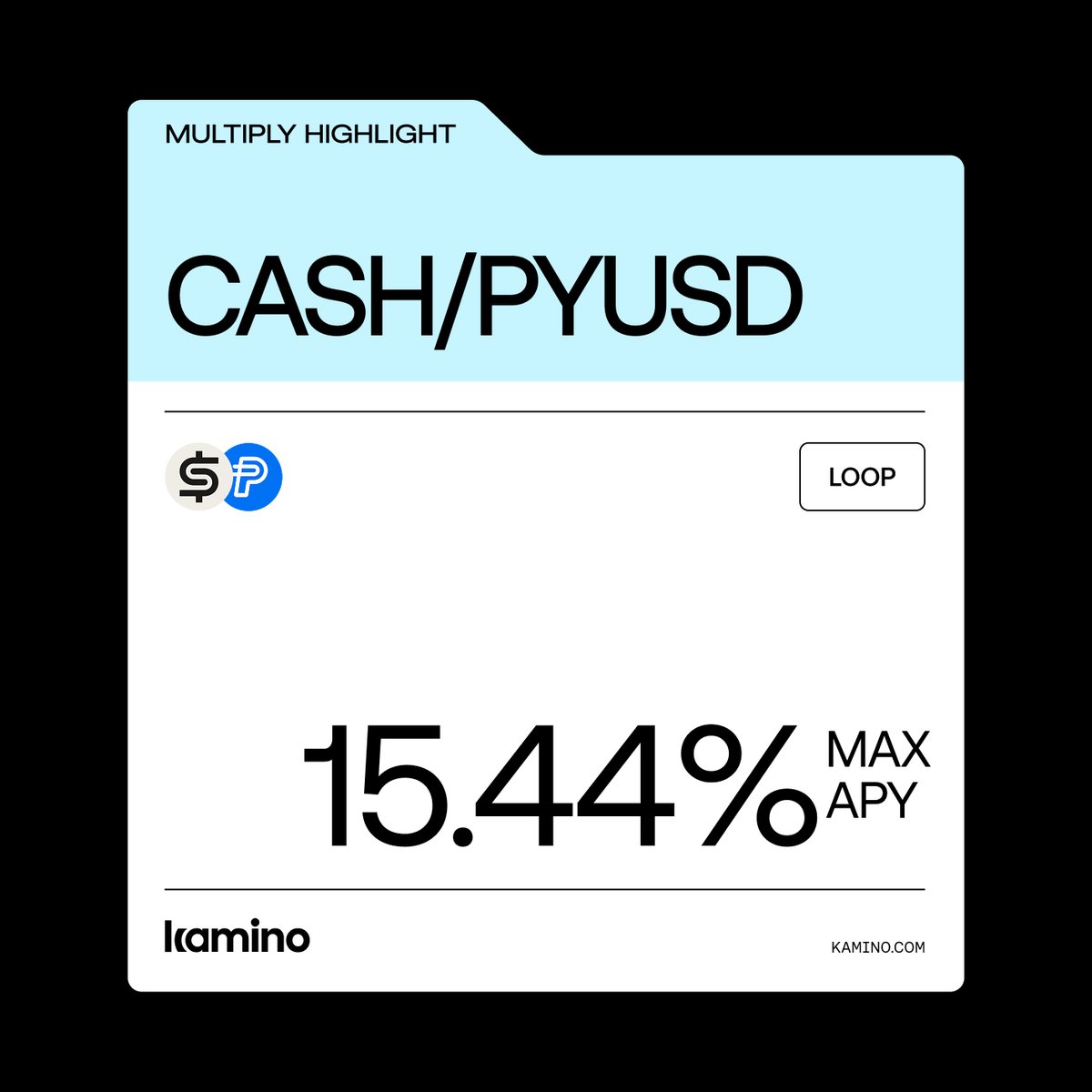
感觉你是那种喜欢「OKX 简单赚币 1.16% APY」的人
感觉你是那种喜欢「BN 活期理财 0.92% APY」的人
感觉你是那种喜欢「OKX PAY 前一万 10% APY」的人
感觉你是那种喜欢「Bybit 稳定币前一万 10% APY」的人
感觉你是那种喜欢「GRVT 积分和 10% APY」的人
但实在对不住了,麻烦告诉 简单赚币/活期理财/稳定币/DEX 今年过年我不回去了
稳定币理财这块我只认 USD1 无上限 13.8% APY !
每周到账 300 刀,感谢大自然的馈赠 🙏

解构师 Beyond@0xBeyondLee
能把事业和梦想铭刻在身上,有这样的决心,什么会事情做不成? 感谢 XDO 加一姐 @mscryptojiayi 邀请 很高兴见到愿意倾听社区声音的领袖们 @zakfolkman @WatcherChase @KGLJSTN LFG $WLFI! LFG $USD1! 🦅🥇
中文


rio_lee 리트윗함

我一直以为Okx当年爆仓5万的是个大哥,没想到是5万姐
在跟大家回顾一下当年Okx爆仓5万BTC的事件
2018年7月比特币单日暴跌14%(5万→4.3万元),OKEx平台突发宕机、闪退,用户无法补仓或平仓。
技术故障包括:仓位显示异常、交易卡顿、合约钱包余额无法刷新
为什么5万姐要直接梭哈5万个BTC做多?
给大家科普几个当年okex的规则
1. 爆仓单若未被市场承接,亏损由所有盈利用户分摊
2. okex全仓模式下,账户盈利后,本金可以转出,利润不能拿出。
3. 周五下午4点,季度合约未成交爆仓单,会以交割价,重新集中挂单
4. 五万个比特币的爆仓单,对市场造成巨额穿仓(2500个btc)如果行情持续下跌,会对盈利账户造成更多巨额分摊。
这是币coin当年做的图,详细讲述了5万姐如何用穿仓账户吃散户尸体,亏损让所有散户分摊的
5万姐应该是在其他交易所有对手盘,对手盘多空双开就是为了吃穿仓费用的2000个Btc
因为当年可能只有okx穿仓分摊最大,所以选择了okx来故意做这个爆仓单
我个人在交易所的经历猜测,Okx应该是很早就发现了5万姐的大规模持仓,并且一直是有邮件告知,我们做不了这么大的仓位
5万姐就是来吃Okx散户尸体跟穿仓收入的,所以根本不吊他们交易所
Okx没办法只能冻结5万姐的账户,强制减仓,不然5万姐爆仓,所有Okx的用户全部一起给这个大姐陪葬(穿仓分摊)
然后最终还是爆掉了
如果Okx不介入减仓可能是5000个BTC的亏损?
介入后还是亏了2500个BTC
5万姐最终的诉求,归还500个BTC,这个我估计是早就算在穿仓费用里了
我记得当年插了很长一根针,这500个BTC应该就画了这么一根针
其实Okx在保护巨鲸跟保护散户的选择里,选择了保护散户,从我的理解上来说算是正义之举
以上全是我的猜测,如有雷同,纯属巧合🤣🤣🤣
最后在放一张图,这个图是我放在公众号看到的,2018年的评论

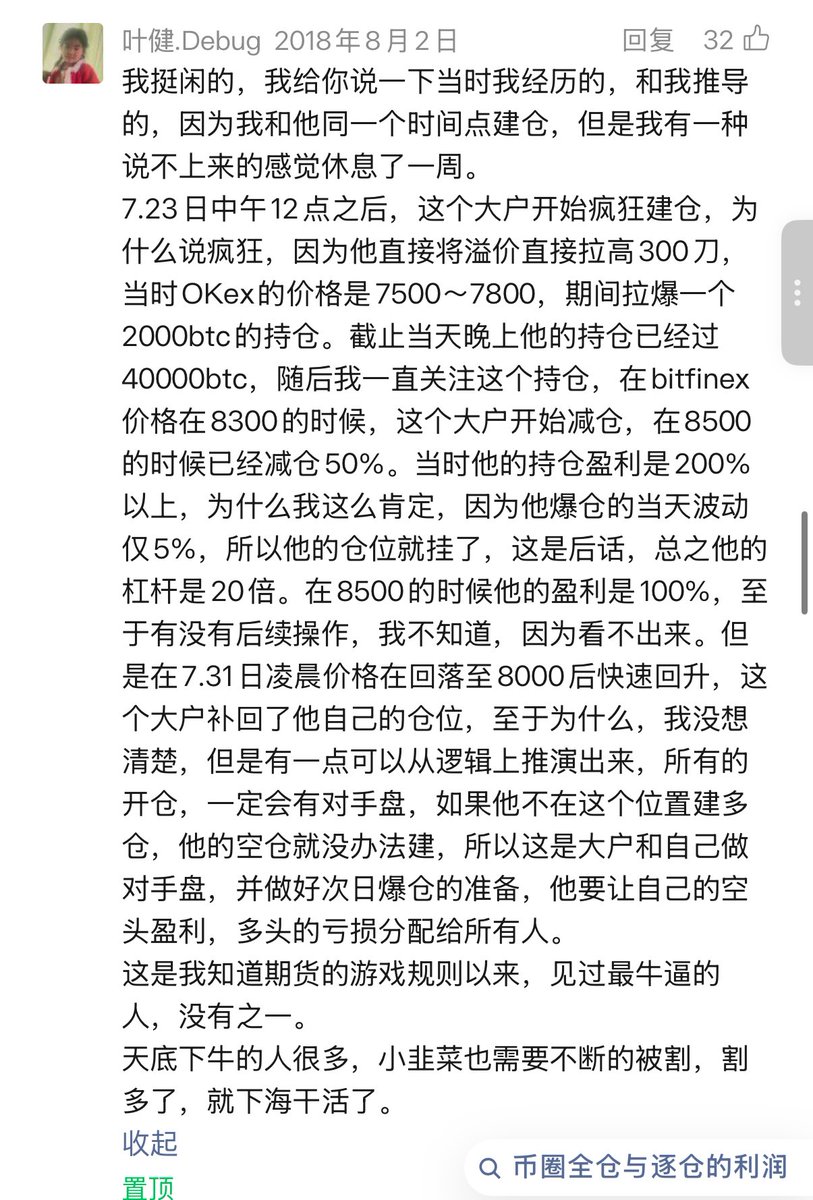
0xLoki@0xLoki_Zeng
虽然我经常喷 @okx 和 @star_okx ,但也都是基于事实 看了一下517BTC双方的说法,几个关键点: 1/ 是否是操纵市场? 用户在2018年开出了一张4.5亿美元的多单,当时的深度和交易量来说这个单子肯定是会出问题的。 这个暴露出来当时合约风控是有Bug的,一开始就不应该让用户开出来这么大的单子,触发警报后冻结也合理。 当事人开的是20x杠杆,波动不到5%就爆仓了,【如果没有冻结会自己减仓】的说法我认为是不太成立的 虽然用户不一定有操纵市场的主观目的,但高杠杆+头寸占比过高按照惯例都会被视为操纵风险,最后造成穿仓也客观上导致了系统风险的产生。 OKX用户协议6.2条提到了可关闭、限制、回滚交易。这个协议条款肯定是往有利于OKX的方式写,条款本身可能会有争议,但确实是在条款内行动的。 2/ 冻结517BTC是否合理? 从公告看,当时巨额合约是穿仓了的,OKX拿出来2500BTC 填窟窿,另外还用社会化补偿的方式扣了一些用户的盈利,再加上冻结当事人的517BTC 所以目测穿仓损失怎么也在4000BTC以上 至于现货余额,在用户协议里面也有说法【所有子账户/钱包通常视为同一用户整体资产。如果合约产生巨额负余额,平台有权跨账户扣划】 这个和冻结一个道理,条款有争议,但确实是按条款办事。 总的来说,当时OKX的合约风控有很严重的问题,不限制用户开仓规模和杠杆,只有少量保险基金+社会化分摊(同期BitMex已经用ADL了),造成重大系统损失之后,自己赔了一部分,盈利用户那里追了一部分,再把穿仓用户冻了517个BTC。 条款有点流氓,但是都是基于用户协议采取的正常流程,基本无解,只能通过法律渠道解决
中文

这个事件发生在2018年,该用户当年通过高杠杆短时间内建立异常大量的BTC多头仓位,并在平台基于风控多次提出“减仓要求”后拒绝配合,对市场的稳定产生重大影响。根据用户协议对相关账户执行冻结,后续由于杠杆倍率过高和BTC价格下降最终爆仓。如果,当时没有及时制止这种市场操控行为,会对所有交易用户产生巨大冲击。在该事件中,平台也从自有资金中拿出2500个BTC注入到风险准备金池,以降低对其他用户的影响。后续,平台也在通过标记价格、仓位限制等机制持续不断的优化风控体系。
作为中心化交易所承载着信任,承担着运营责任,因此有义务保护正常交易的用户。事件公告如下:okx.com/zh-hans/help/a…

中文
OKX 以前做过一个公链叫OKTChain, 原生代币OKT, 当年徐总说要花XX亿打造的, 后来烂尾了,
现在重新搞个 X-layer. 又是同样的说辞.
那么我就好奇,
1. OKX左手CEX合规, 右手搞X-layer和OKB, 两者会不会有可能有冲突的时候?
比如说出现洗钱等问题(参考 OKX钱包 swap功能暂停事件), 会牺牲哪边的进度?
2. X-layer是 2024年4月出来了, 现在1年10个月了, 进度如何? U卡支付, 钱包支付好像没下文了?
3. OKB出来这么久了, 有什么赋能吗? OKX官方已经说了和这个币没关系了, 换句话说就是个meme币. 徐总现在不会, 以后也不可能会喊这个币, 不然就别想上市了.
那么未来OKB会上涨的逻辑是什么?
4. 如果投资项目,就是投资创始人的话,
你怎么知道 OKB不会像OKT一样未来被直接抛弃掉,
再出个 OKZ?
中文
@UnicornBitcoin 它们一改我立马跑了,把ll都杀了,ll拿着40%的币,现在不跑等2年后ll砸盘吗,还80家机构,机构又不是傻子来接盘的…
中文

我在一个山寨亏了 200 万
失败不可怕
可怕的是失败后丧失了站起来的勇气
很多2017年同时进币圈的很多人
在暴跌中被吓到了
不敢再下注
退圈
以至没吃到比特币从几千到十万的红利
而留下来的吃到了
今我达成了一个新成就
在单个山寨币上亏 200 万
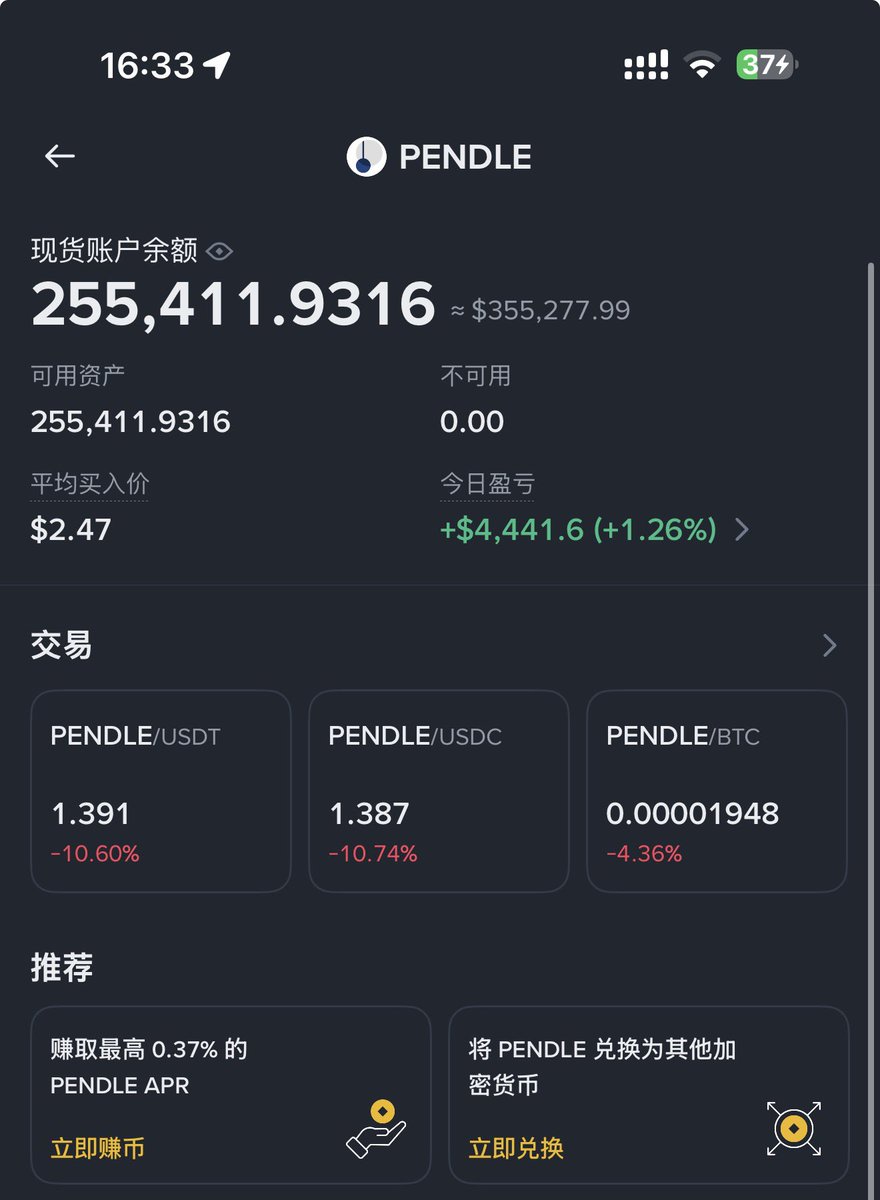
以2.5 刀买了 25.5 万个 $PENDLE
今跌到了1.3刀
亏28万刀,差不多196万
但没啥
我还在牌桌上
等下个机会来
我依然还会下注
收尾呼应一下子
失败不可怕
可怕的是失败后丧失站起来的勇气
中文
早就说过分裂社区的项目不会有一个好下场,还有人为了2倍利息接着锁vePendle…
ViNc@ViNc2453
「萬川終將歸海,舟行莫忘根源」 行船之遠非憑桅杆之高、風帆之美 而始終是那深邃無垠的海水、承托萬鈞之重 起於微末,成於眾志 「人種的是什麼,收的也是什麼」 如種下的是剝削與背叛,收穫的將是信仰崩塌後的荒涼
中文