
piobab ๐Ÿฆ€

235 posts

piobab ๐Ÿฆ€ banner
piobab ๐Ÿฆ€

piobab ๐Ÿฆ€

@piobab

CTO & Co-Founder at https://t.co/fPWAnbjKu3 ๐Ÿค– Building AI agents for brand visibility in AI search engines ยท Building for the agentic web

๊ฐ€์ž…์ผ AฤŸustos 2012
650 ํŒ”๋กœ์ž‰239 ํŒ”๋กœ์›Œ
piobab ๐Ÿฆ€
piobab ๐Ÿฆ€@piobabยท
@pydantic @MindsDB Same here! Pydantic AI + Temporal is my go-to stack at Qvery for production AI agents. No magic, no black box - just clean, controllable software. Great work @pydantic team! ๐Ÿ‘
English
0
1
8
2.5K
Pydantic
Pydantic@pydanticยท
@MindsDB migrated from LangChain to Pydantic AI and saw 10x better agent performance in one month. The secret: treat agents as software, not magic. Structured outputs, type safety, and more control over agent behaviour. Learn more on our latest blogpost pydantic.dev/case-studies/mโ€ฆ
English
1
15
116
55.9K
piobab ๐Ÿฆ€
piobab ๐Ÿฆ€@piobabยท
The web was built for humans clicking links. Itโ€™s being rebuilt for agents calling APIs. The transition isnโ€™t coming - every major infrastructure layer shipped in the last few weeks. 8 signals that AI agents are becoming first-class citizens of the web: ๐Ÿ”ต ๐Ÿญ. ๐—–๐—ต๐—ฟ๐—ผ๐—บ๐—ฒ ๐—ช๐—ฒ๐—ฏ๐— ๐—–๐—ฃ Google Chrome proposes WebMCP - a standard letting web pages expose capabilities directly to AI agents via MCP. Instead of scraping HTML, agents discover and call structured actions on any website. An API layer built into the browser itself. โ†ณ developer.chrome.com/blog/webmcp-epp ๐ŸŒ ๐Ÿฎ. ๐—–๐—ต๐—ฟ๐—ผ๐—บ๐—ฒ ๐—”๐˜‚๐˜๐—ผ ๐—•๐—ฟ๐—ผ๐˜„๐˜€๐—ฒ Chrome launched Auto Browse (Jan 28) - describe a goal, and Chrome autonomously opens sites, clicks links, fills forms, and completes multi-step workflows. Powered by Gemini 3. The browser IS the agent now. โ†ณ blog.google/products-and-pโ€ฆ ๐Ÿ“„ ๐Ÿฏ. ๐—–๐—น๐—ผ๐˜‚๐—ฑ๐—ณ๐—น๐—ฎ๐—ฟ๐—ฒ ๐— ๐—ฎ๐—ฟ๐—ธ๐—ฑ๐—ผ๐˜„๐—ป ๐—ณ๐—ผ๐—ฟ ๐—”๐—ด๐—ฒ๐—ป๐˜๐˜€ Cloudflare introduced one-click conversion of any website into clean, structured markdown when an AI agent visits. No more parsing messy HTML. The web is being re-served in a language agents understand natively. โ†ณ blog.cloudflare.com/markdown-for-aโ€ฆ ๐Ÿ›‚ ๐Ÿฐ. ๐——๐—ถ๐—ด๐—ถ๐˜๐—ฎ๐—น ๐—ฃ๐—ฎ๐˜€๐˜€๐—ฝ๐—ผ๐—ฟ๐˜๐˜€ ๐—ณ๐—ผ๐—ฟ ๐—”๐—œ ๐—”๐—ด๐—ฒ๐—ป๐˜๐˜€ Cloudflare + Browserbase are building cryptographic identity for agents - letting websites know WHO the agent is, WHAT itโ€™s authorized to do, and ON WHOSE BEHALF it acts. Agents need IDs just like humans need logins. โ†ณ browserbase.com/blog/cloudflarโ€ฆ ๐Ÿค ๐Ÿฑ. ๐—”๐—ด๐—ฒ๐—ป๐˜๐—ถ๐—ฐ ๐—”๐—œ ๐—™๐—ผ๐˜‚๐—ป๐—ฑ๐—ฎ๐˜๐—ถ๐—ผ๐—ป Anthropic, OpenAI, and Google co-founded the Agentic AI Foundation under the Linux Foundation (Dec โ€™25) - donating MCP as shared open standard. Direct competitors cooperating on infrastructure = the surest sign a tech layer is becoming permanent. โ†ณ anthropic.com/news/donating-โ€ฆ ๐Ÿ’ณ ๐Ÿฒ. ๐—”๐—ด๐—ฒ๐—ป๐˜๐˜€ ๐—–๐—ฎ๐—ป ๐—ก๐—ผ๐˜„ ๐—•๐˜‚๐˜† ๐—ง๐—ต๐—ถ๐—ป๐—ด๐˜€ Two competing commerce protocols launched weeks apart: โ†’ Googleโ€™s Universal Commerce Protocol - with Shopify, Target, Walmart โ†’ OpenAI + Stripeโ€™s Agentic Commerce Protocol - powering Instant Checkout in ChatGPT Visa and Mastercard both shipped agent payment tokens. โš”๏ธ ๐Ÿณ. ๐—ง๐—ต๐—ฒ ๐—”๐—ด๐—ฒ๐—ป๐˜๐—ถ๐—ฐ ๐—•๐—ฟ๐—ผ๐˜„๐˜€๐—ฒ๐—ฟ ๐—ช๐—ฎ๐—ฟ๐˜€ Every major player now has one: โ†’ Google: Chrome Auto Browse โ†’ OpenAI: ChatGPT Atlas โ†’ Perplexity: Comet โ†’ Microsoft: Edge Copilot Mode โ†’ Mozilla: Firefox with AI kill switch The browser war of 2026 isnโ€™t about tabs. Itโ€™s about who controls the agent. ๐Ÿงฑ ๐Ÿด. ๐—ง๐—ต๐—ฒ ๐—ฃ๐—ฟ๐—ผ๐˜๐—ผ๐—ฐ๐—ผ๐—น ๐—ฆ๐˜๐—ฎ๐—ฐ๐—ธ ๐—œ๐˜€ ๐—–๐—ฟ๐˜†๐˜€๐˜๐—ฎ๐—น๐—น๐—ถ๐˜‡๐—ถ๐—ป๐—ด โ€ข MCP โ†’ agent-to-tool โ€ข A2A โ†’ agent-to-agent โ€ข UCP/ACP โ†’ agent commerce โ€ข WebMCP โ†’ agent-to-browser โ€ข Markdown for Agents โ†’ agent-readable web โ€ข Digital passports โ†’ agent identity โ€” ๐ŸŽฏ Agents are the new users. The web is adapting. Brands that arenโ€™t agent-ready will be invisible.
English
1
0
2
62
piobab ๐Ÿฆ€
piobab ๐Ÿฆ€@piobabยท
"I can approach code that I couldn't work on before because of knowledge/skill issue." This hit hard. Almost 15 years building across: - Mobile apps (iOS, Android) - Web frontends (never loved UI work) - Backend systems (Java โ†’ Scala โ†’ Rust โ†’ Python, Kubernetes, Postgres, ClickHouse, Redis, Kafka...) - Blockchain/DeFi smart contracts - AI/ML systems The tech keeps changing. Half of what I used was replaced by something better. Some of it shouldn't have existed in the first place. But that breadth? It's become my biggest asset with coding agents. Not because I can write Java or Scala from memory (haven't touched them in years). Because I know what questions to ask. When Claude Code suggests an architecture, I've seen similar patterns before. I know when something smells wrong. I recognize when it's overcomplicating. The agent handles syntax. I handle judgment. Breadth of experience used to feel like being "jack of all trades, master of none." Now it feels like having many years of pattern recognition to guide an infinitely patient junior dev. Maybe the best investment for engineers isn't going deeper into one stack. It's going wider.
Andrej Karpathy@karpathy

A few random notes from claude coding quite a bit last few weeks. Coding workflow. Given the latest lift in LLM coding capability, like many others I rapidly went from about 80% manual+autocomplete coding and 20% agents in November to 80% agent coding and 20% edits+touchups in December. i.e. I really am mostly programming in English now, a bit sheepishly telling the LLM what code to write... in words. It hurts the ego a bit but the power to operate over software in large "code actions" is just too net useful, especially once you adapt to it, configure it, learn to use it, and wrap your head around what it can and cannot do. This is easily the biggest change to my basic coding workflow in ~2 decades of programming and it happened over the course of a few weeks. I'd expect something similar to be happening to well into double digit percent of engineers out there, while the awareness of it in the general population feels well into low single digit percent. IDEs/agent swarms/fallability. Both the "no need for IDE anymore" hype and the "agent swarm" hype is imo too much for right now. The models definitely still make mistakes and if you have any code you actually care about I would watch them like a hawk, in a nice large IDE on the side. The mistakes have changed a lot - they are not simple syntax errors anymore, they are subtle conceptual errors that a slightly sloppy, hasty junior dev might do. The most common category is that the models make wrong assumptions on your behalf and just run along with them without checking. They also don't manage their confusion, they don't seek clarifications, they don't surface inconsistencies, they don't present tradeoffs, they don't push back when they should, and they are still a little too sycophantic. Things get better in plan mode, but there is some need for a lightweight inline plan mode. They also really like to overcomplicate code and APIs, they bloat abstractions, they don't clean up dead code after themselves, etc. They will implement an inefficient, bloated, brittle construction over 1000 lines of code and it's up to you to be like "umm couldn't you just do this instead?" and they will be like "of course!" and immediately cut it down to 100 lines. They still sometimes change/remove comments and code they don't like or don't sufficiently understand as side effects, even if it is orthogonal to the task at hand. All of this happens despite a few simple attempts to fix it via instructions in CLAUDE . md. Despite all these issues, it is still a net huge improvement and it's very difficult to imagine going back to manual coding. TLDR everyone has their developing flow, my current is a small few CC sessions on the left in ghostty windows/tabs and an IDE on the right for viewing the code + manual edits. Tenacity. It's so interesting to watch an agent relentlessly work at something. They never get tired, they never get demoralized, they just keep going and trying things where a person would have given up long ago to fight another day. It's a "feel the AGI" moment to watch it struggle with something for a long time just to come out victorious 30 minutes later. You realize that stamina is a core bottleneck to work and that with LLMs in hand it has been dramatically increased. Speedups. It's not clear how to measure the "speedup" of LLM assistance. Certainly I feel net way faster at what I was going to do, but the main effect is that I do a lot more than I was going to do because 1) I can code up all kinds of things that just wouldn't have been worth coding before and 2) I can approach code that I couldn't work on before because of knowledge/skill issue. So certainly it's speedup, but it's possibly a lot more an expansion. Leverage. LLMs are exceptionally good at looping until they meet specific goals and this is where most of the "feel the AGI" magic is to be found. Don't tell it what to do, give it success criteria and watch it go. Get it to write tests first and then pass them. Put it in the loop with a browser MCP. Write the naive algorithm that is very likely correct first, then ask it to optimize it while preserving correctness. Change your approach from imperative to declarative to get the agents looping longer and gain leverage. Fun. I didn't anticipate that with agents programming feels *more* fun because a lot of the fill in the blanks drudgery is removed and what remains is the creative part. I also feel less blocked/stuck (which is not fun) and I experience a lot more courage because there's almost always a way to work hand in hand with it to make some positive progress. I have seen the opposite sentiment from other people too; LLM coding will split up engineers based on those who primarily liked coding and those who primarily liked building. Atrophy. I've already noticed that I am slowly starting to atrophy my ability to write code manually. Generation (writing code) and discrimination (reading code) are different capabilities in the brain. Largely due to all the little mostly syntactic details involved in programming, you can review code just fine even if you struggle to write it. Slopacolypse. I am bracing for 2026 as the year of the slopacolypse across all of github, substack, arxiv, X/instagram, and generally all digital media. We're also going to see a lot more AI hype productivity theater (is that even possible?), on the side of actual, real improvements. Questions. A few of the questions on my mind: - What happens to the "10X engineer" - the ratio of productivity between the mean and the max engineer? It's quite possible that this grows *a lot*. - Armed with LLMs, do generalists increasingly outperform specialists? LLMs are a lot better at fill in the blanks (the micro) than grand strategy (the macro). - What does LLM coding feel like in the future? Is it like playing StarCraft? Playing Factorio? Playing music? - How much of society is bottlenecked by digital knowledge work? TLDR Where does this leave us? LLM agent capabilities (Claude & Codex especially) have crossed some kind of threshold of coherence around December 2025 and caused a phase shift in software engineering and closely related. The intelligence part suddenly feels quite a bit ahead of all the rest of it - integrations (tools, knowledge), the necessity for new organizational workflows, processes, diffusion more generally. 2026 is going to be a high energy year as the industry metabolizes the new capability.

English
0
0
1
110
piobab ๐Ÿฆ€
piobab ๐Ÿฆ€@piobabยท
To be clear: @browserbase and @Stagehanddev are excellent tech. If you need headless browser infra or browser automation agents, highly recommend. This decision was about our strategy, not their tools.
English
0
0
1
135
piobab ๐Ÿฆ€
piobab ๐Ÿฆ€@piobabยท
Yesterday I deleted 60,000 lines of code. Not refactored. Deleted. In alpha we built a complex system: - Pipeline to create synthetic personas - Operating logged-in sessions building real conversation history in AI Search Engines - Integration with Browserbase headless infra + residential proxies - Custom Playwright scrapers - Agents with Stagehand to automate browser operations It worked. But: - High infrastructure costs to achieve statistical significance - Constant maintenance (UI changes = broken scrapers) - Hard to scale - Slowed us down The insight after iterating with customers: Our value isn't in HOW we collect data. It's in what we DO with it. So for beta, we simplified radically. Focus on analysis + AI agents. Ship faster. The 60k lines? Still in git history. Maybe we'll open source it someday. For now, removing it also clears context for our coding agents. Sometimes the best engineering decision is mass deletion.
piobab ๐Ÿฆ€ tweet media
English
2
0
3
130
piobab ๐Ÿฆ€
piobab ๐Ÿฆ€@piobabยท
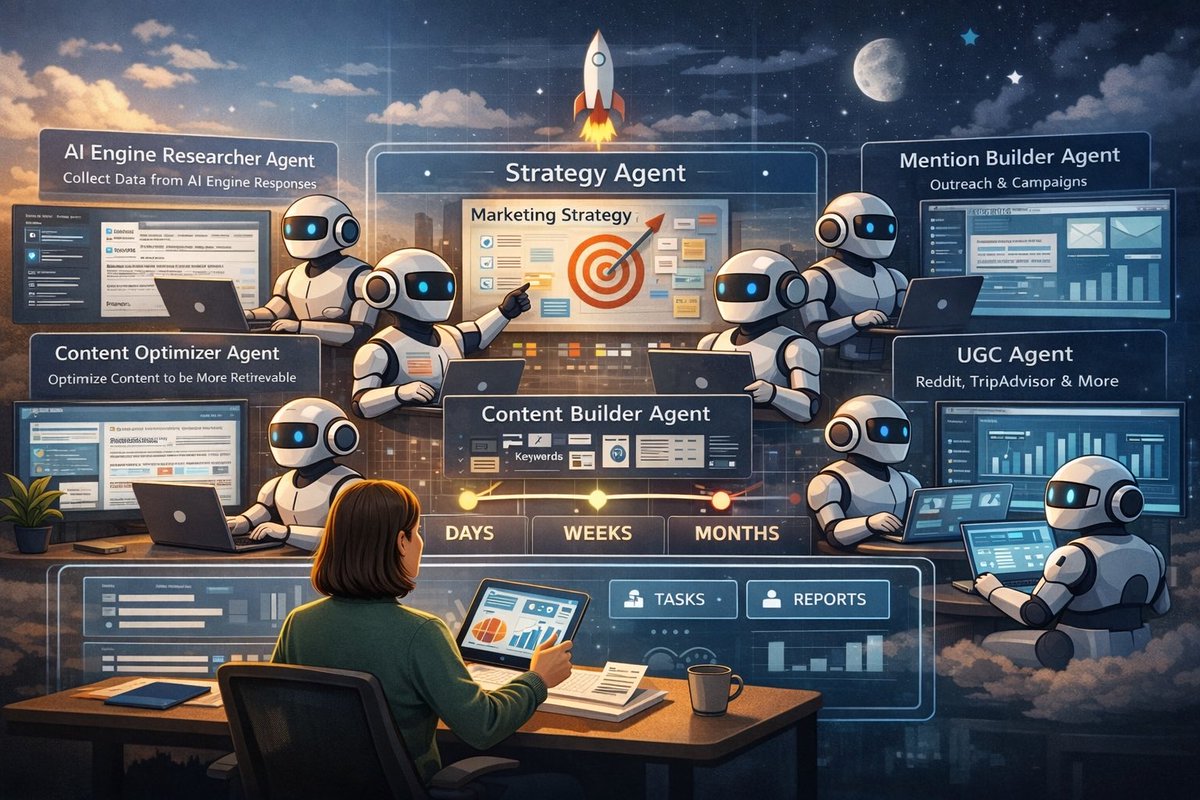
We're building for the agentic web. Autonomous agents working for days, weeks, months to measure and grow AI Engine Visibility: โ€ข AI Engine Researcher Agent โ€ข Content Optimizer Agent โ€ข Mention Builder Agent โ€ข UGC Agent โ€ข โ€ฆand more Brands won't compete for attention anymore. They will be chosen by machines. We'll be ready. ๐Ÿš€ Want to shape how these agents work? Early users have real influence on the product. DM me.
piobab ๐Ÿฆ€ tweet media
Qvery@qvery_ai

1/Our first official product update is live ๐Ÿ“ฃ We launched Qvery Alpha at SaaStock Dublin in October. Since then: 10 paying customers, first revenue, and a ton of learning. Here's what's new ๐Ÿ‘‡

English
0
0
5
517
piobab ๐Ÿฆ€
piobab ๐Ÿฆ€@piobabยท
@InjeraOfficial Hey guys, if youโ€™re going to copy code, at least configure it properly ๐Ÿ˜‰ This wasnโ€™t a bug - it was a misconfigured feature on your end. PS. If you need consulting, we offer great rates for projects that learn fromโ€ฆ their own mistakes.
English
0
2
18
966
piobab ๐Ÿฆ€
piobab ๐Ÿฆ€@piobabยท
@dirtysoda_3 Haha, Iโ€™ve been on Mars, fully focused on building. Guess it takes a big event to bring me back down to Earthโ€ฆ or at least to X ๐Ÿ˜œ๐Ÿš€๐Ÿ‘จโ€๐Ÿš€
English
0
0
0
184
Dirty soda
Dirty soda@dirtysoda_3ยท
@piobab Hey, bro, does this mean a big event? You never send x.๐Ÿคฃ
English
1
0
1
71
piobab ๐Ÿฆ€
piobab ๐Ÿฆ€@piobabยท
@grod220 @CosmWasm I would say it is not "next paradigm" but existing one. It is used extensively in JVM world for a few years now with Akka library. You have even implementation in Rust in Actix.
English
0
0
2
201
GameSwift AI ๐ŸŽฎ
GameSwift AI ๐ŸŽฎ@GameSwift_ioยท
Shoutout to @sysdogs and their involvement in helping build out our infrastructure! Head on over to their posted case study of our cooperation to learn more :)
English
3
11
77
0
piobab ๐Ÿฆ€ ๋ฆฌํŠธ์œ—ํ•จ
Jack Dabrowski
Jack Dabrowski@jdabrowski_aiยท
Proud to inform that our paper: arxiv.org/abs/2006.09979 has been accepted as oral talk for Machine Learning for Media Discovery #ML4MD at International Conference on Machine Learning @icmlconf #icml2020!!! Interpretabile multi-modal recommenders #xai #ai
English
0
6
9
0