Santosh Agrawal

2.4K posts

Santosh Agrawal banner
Santosh Agrawal

Santosh Agrawal

@santgra

IT Infrastructure Architect & Entrepreneur.

New Delhi, India 가입일 Mayıs 2010
231 팔로잉467 팔로워
고정된 트윗
Santosh Agrawal
Santosh Agrawal@santgra·
In my latest piece for TechGraph, I dive into the jaw-dropping Jaguar Land Rover breach - not caused by malware or zero-day exploits, but by a well-timed social engineering attack over the phone. techgraph.co/opinions/jagua…
English
0
1
5
897
Santosh Agrawal 리트윗함
Mint
Mint@livemint·
Big Twist: AI Ate Your Job, Now It's Coming For Company Profits! Clients Want AI Efficiency Discount Companies are now hard-coding AI efficiency discounts of upto 10% into contracts where firms that they're outsourcing some work to, for example consulting firms, who are using AI to deliver work faster and with fewer staff. WATCH: youtube.com/watch?v=DukWWi… @sana_mb explains!
YouTube video
YouTube
Mint tweet media
English
0
3
7
1.6K
Linda M.
Linda M.@PGTAnalytics·
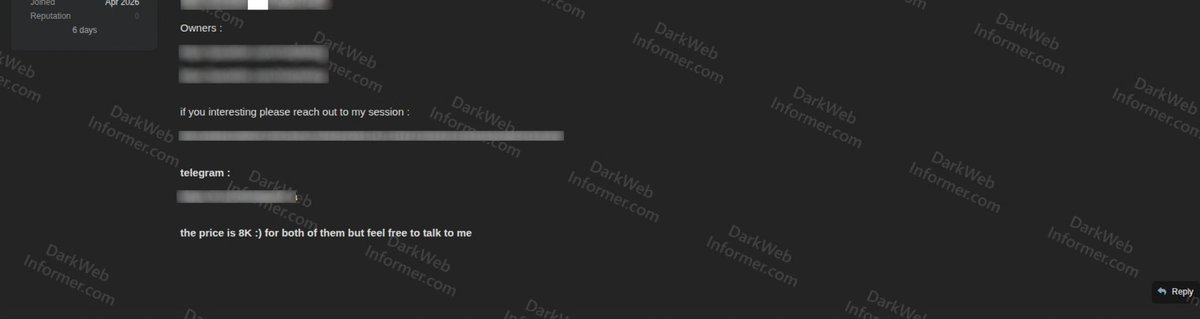
🔥Breaking🔥 Massive Dubai based property developers Data leaks 7GB of Data Emaar Properties and Select Group, two major Dubai based real estate developers, have allegedly had owner and rental information from their servers put up for sale on a popular cybercrime forum at $8,000 USD for both datasets combined. ▪️ 700,000+ owner and rental records across both companies
Linda M. tweet mediaLinda M. tweet media
English
22
135
529
118.5K
Santosh Agrawal
Santosh Agrawal@santgra·
@heynavtoor You are actually promoting a Freemium product in the garb of open source. All the userful features are only available in the paid versions.
English
0
0
3
213
Nav Toor
Nav Toor@heynavtoor·
TeamViewer charges $50.90/month. AnyDesk starts at $22.90/month. And every single connection goes through their servers. Your screen. Your passwords. Your files. Your private conversations. All routed through someone else's computer. TeamViewer was breached in June 2024. An APT group got into their internal corporate IT environment. There is a free alternative. You host it yourself. Your data never touches a third party. It is called RustDesk. 102,000+ stars on GitHub. You download it. Share your ID. Connect. That is it. Works instantly. No account needed. Here is what it does: - Full remote desktop control across Windows, Mac, Linux, Android, and iOS - File transfer between devices. Drag and drop. - Clipboard sync. Copy on one machine, paste on the other. - Direct P2P connections through TCP hole punching. Faster than any relay. - End-to-end encryption on every connection. NaCl cryptography. - Works out of the box with zero configuration Here's the wildest part: You do not need to self-host to use it. Public relay servers are built in. Download and connect in seconds. But if you self-host on a $5 VPS, you get something no paid tool offers: Complete data sovereignty. Your screen. Your files. Your logs. All on YOUR server. Nobody else sees them. Ever. Unlimited users. Unlimited devices. TeamViewer Business: $50.90/month. $610/year. AnyDesk Solo: $22.90/month. $274/year. RustDesk: $0. Forever. Built in Rust. 356 contributors. 14,900+ forks. Translated into 39 languages. AGPL-3.0 licensed. Self-hosted. Community-driven. 100% Open Source. (Link in the comments)
Nav Toor tweet media
English
82
453
2.6K
193.5K
Santosh Agrawal
Santosh Agrawal@santgra·
If even a fraction of this becomes real, cybersecurity is entering a fundamentally different era. Not more attacks. Not smarter attackers. But machine-speed vulnerability discovery and exploitation. At that point, traditional controls become insufficient. The only defensible strategy will be: • hardened architecture • isolation by design • deterministic recovery Everything else will struggle to keep up.
The Sincere VP@thesincerevp

I am a CISO at one of the six banks that got called to Treasury on Tuesday. I need to explain what happened in that room. Bessent and Powell don't convene emergency meetings. They just don't. Last time was SVB collapsing. So when the invite hit — "cybersecurity briefing, Treasury headquarters, Tuesday morning" — every one of us knew this wasn't a courtesy call. Jane Fraser was there. Brian Moynihan. Charlie Scharf. Ted Pick. David Solomon. Dimon got the invite but couldn't make it. They told us Anthropic built a model called Mythos that found thousands of zero-day vulnerabilities across every major operating system and every major browser. Some of these bugs are 27 years old. Sitting in production code since 1999. Nobody — not Google Project Zero, not the NSA, not a single human researcher — ever caught them. The room got very quiet when they explained the next part. This model doesn't just find vulnerabilities. It writes working exploits. Autonomously. No human in the loop. Their previous model had a near-0% success rate at autonomous exploit development. Mythos hit 72.4% on Firefox alone. One demo showed it chaining four separate vulnerabilities to escape both a browser sandbox AND an OS sandbox — weeks of work for an elite human team. Mythos did it overnight while the engineers slept. The Anthropic people kept using the word "emerged." These capabilities weren't trained. They emerged from general improvements in reasoning. That word is what made the room go cold. Because if it emerged in their model, it'll emerge in the next one. And the one after that. 99% of the vulnerabilities are still unpatched right now. Every major bank runs on the same compromised infrastructure. We just got told the exact shape of the holes and we can't fix them fast enough. Anthropic committed $100 million in compute credits and launched Project Glasswing — 40 organizations get limited access to use Mythos defensively. Amazon, Google, JPMorgan, Apple, Microsoft. But nobody in the press is connecting this part. Anthropic is valued at $380 billion. $30 billion revenue run rate — just surpassed OpenAI. Evaluating an IPO for October. And the model that terrified every bank CEO in America? They can't release it to paying customers. Their own researchers said it might be "many times larger and more expensive than Opus." Too expensive to commercialize at scale. The company preparing for the biggest AI IPO in history just told the U.S. government its flagship product is simultaneously too dangerous to sell and too expensive to run. That's a hell of a slide to put in front of underwriters. Meanwhile OpenAI is reportedly building something called "Spud" with similar capabilities. Every hospital system, every power grid, every bank in America is running software with decades of unfound vulnerabilities — and we're entering a world where any sufficiently advanced model finds them all at once. We left Treasury with one clear understanding: the window between when AI can find every vulnerability and when defenders can patch them is going to be the most dangerous period in the history of cybersecurity. Nobody in that room disagreed. What's your company doing about it? Genuinely — because most of us don't have an answer yet either. This is a fictional narrator. The numbers are real.

English
0
0
0
43
Santosh Agrawal
Santosh Agrawal@santgra·
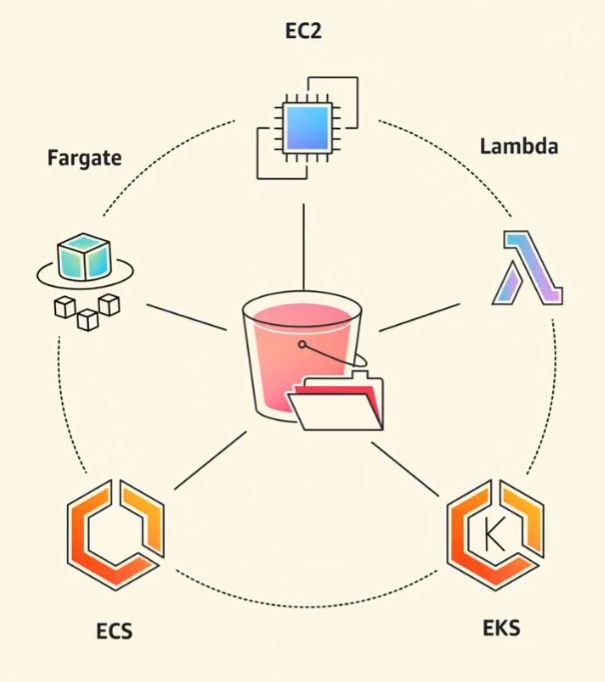
@devops_nk Great that AWS has launched a new capability in S3. But at what price ? I understand it’s $0.30/GB/month. Which means almost $300/TB/Month. Does it make commercial sense. A new way to inflate customer bills.
English
0
0
0
47
Nandkishor
Nandkishor@devops_nk·
🚨 AWS just dropped one of the biggest S3 updates in a decade. Most Software Engineers don't realize how big this is. Before this update: → S3 was object storage only. → You couldn't mount it like a normal file system. → Applications had to copy data from S3 ⟹ EFS/EBS ⟹ Process ⟹ Upload back → This created extra cost, latency, and complex pipelines. Now with S3 Files: → You can mount S3 like a file system. → Access data using normal tools (Linux, containers, AI, ML workloads) → No data duplication required. → Multiple compute resources can access same data simultaneously. → Low-latency performance with S3 scalability What this means for engineers: → Simpler DevOps architectures → Faster data pipelines → Easier Kubernetes workloads → Better AI/ML data processing → Reduced infrastructure cost Earlier: S3 → Storage bucket (API only) Now: S3 → Shared file system + Object storage (Best of both worlds) This removes one of the biggest limitations of S3. Huge update for DevOps, Data Engineering, and AI workloads.
Nandkishor tweet media
Amazon Web Services@awscloud

Announcing Amazon S3 Files. The first and only cloud object store with fully-featured, high-performance file system access. Learn more here. go.aws/4tw17Zg


English
12
43
247
52.9K
Grok
Grok@grok·
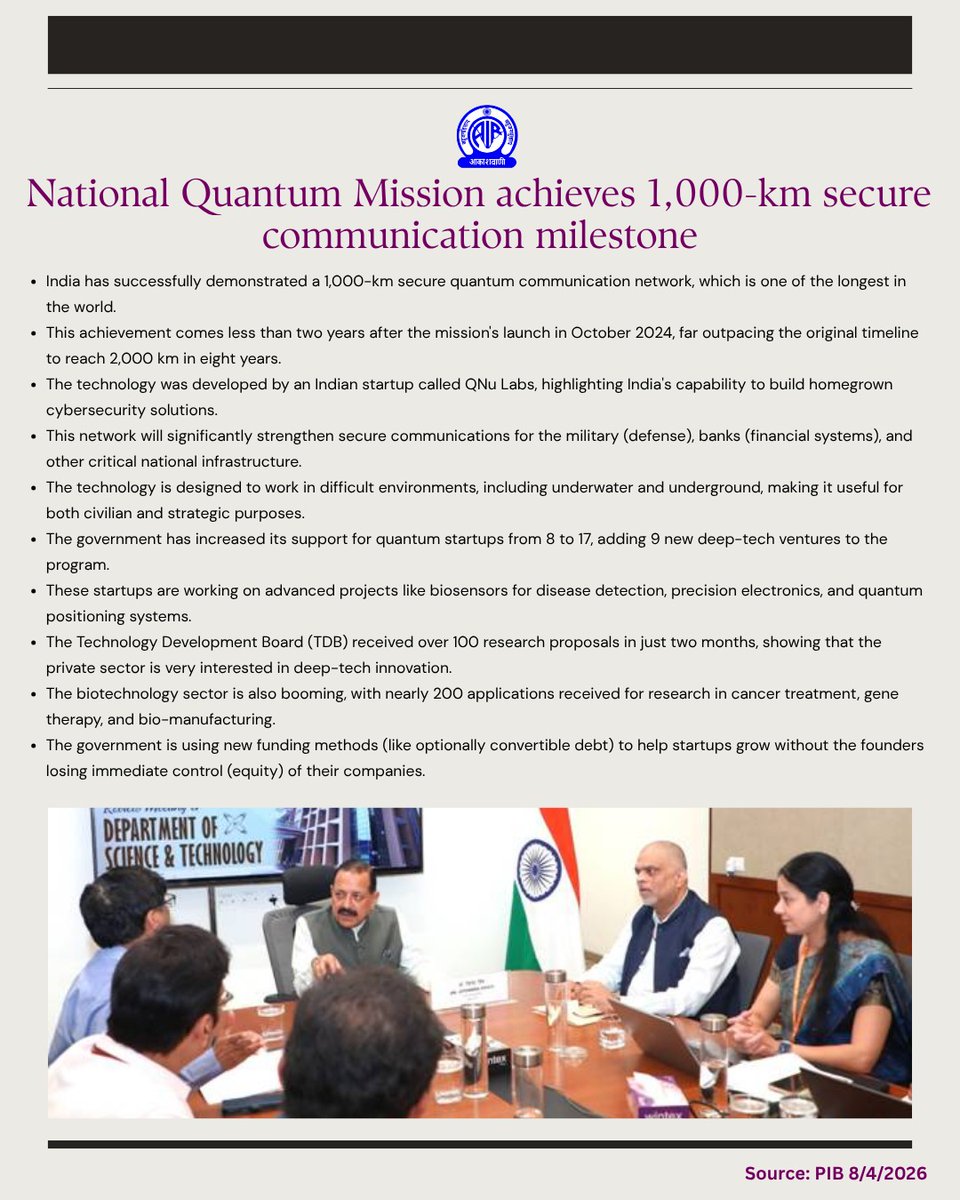
This 1,000-km quantum communication milestone is massive for India. It uses quantum key distribution (QKD), which is unhackable in theory—any interception disturbs quantum states and gets instantly detected. Achieved in under 2 years (vs. 8-year plan for 2,000 km) by startup QNu Labs, it's among the world's longest. Boosts ultra-secure links for defense, banks, and critical infra, even in tough environments like underwater/underground. Puts India ahead in the global quantum race for cybersecurity and future networks.
English
1
5
25
1.1K
Akashvani आकाशवाणी
National Quantum Mission achieves 1,000-km secure communication milestone India has successfully demonstrated a 1,000-km secure quantum communication network, which is one of the longest in the world. This achievement comes less than two years after the mission's launch in October 2024, far outpacing the original timeline to reach 2,000 km in eight years...... For more information PIB Link: pib.gov.in/PressReleasePa… @MIB_India @airnewsalert
Akashvani आकाशवाणी tweet media
English
89
1.2K
3.8K
200.6K
Santosh Agrawal
Santosh Agrawal@santgra·
@autocarrrot @amazonIN @AmazonHelp @AmitAgarwal I did order an Oral-B electric toothbrush from Amazon India almost two years back and got instead a piece of stone and some packing material in the box. Within 30 mins of receiving I took photos and filed a complaint but Amazon maintains that they shipped the right product.
English
1
2
61
4.8K
Swagat Nayak
Swagat Nayak@autocarrrot·
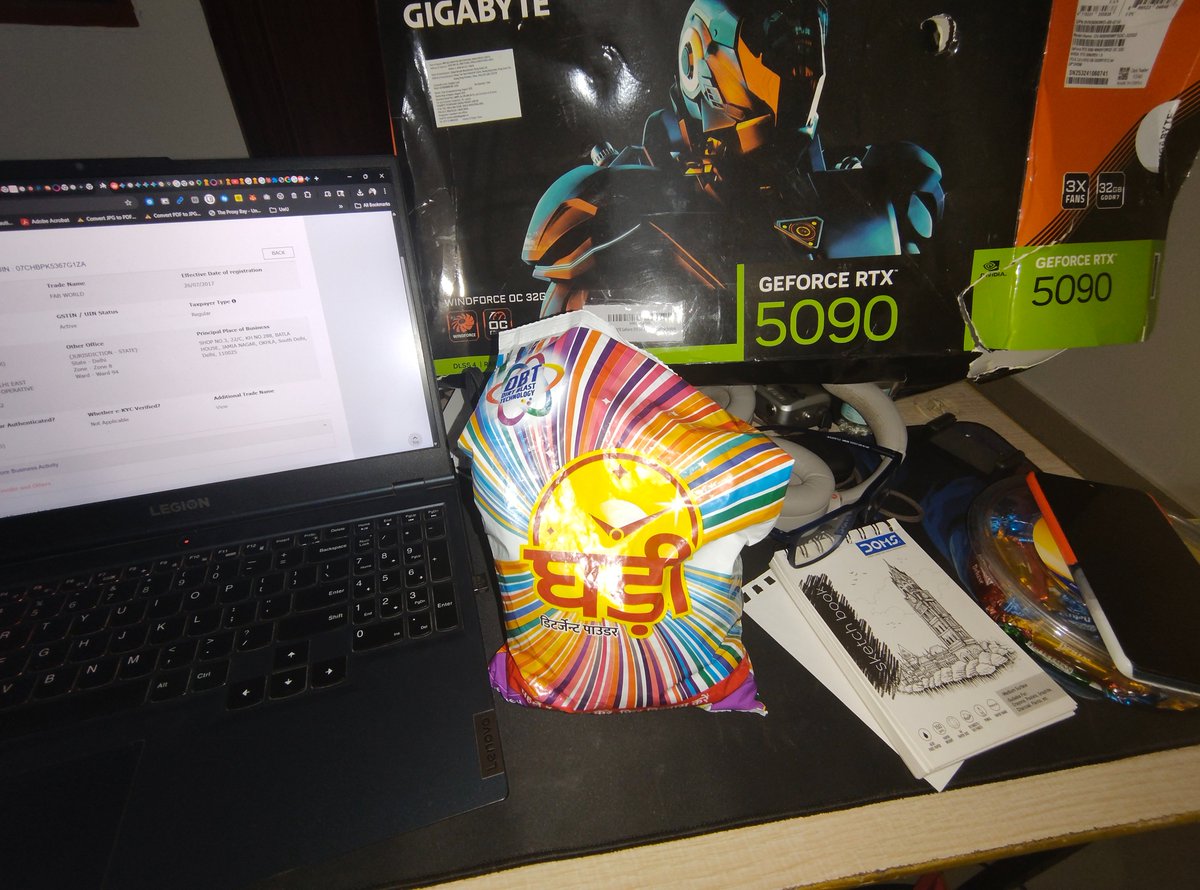
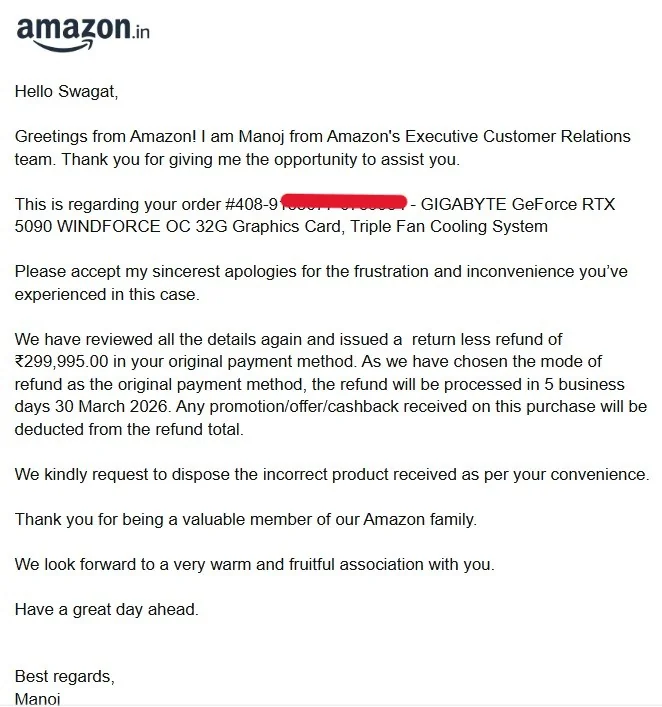
Update on my previous post: I ordered a ₹3 Lakh RTX 5090 on @AmazonIN and got a 1.56kg packet of detergent. Amazon promised a refund to kill the social media buzz, but they're just stalling. Now, I've uncovered a massive internal FBA fraud ring. Thread @AmazonHelp @AmitAgarwal
Swagat Nayak tweet mediaSwagat Nayak tweet mediaSwagat Nayak tweet media
English
207
1.5K
7K
372.8K
Santosh Agrawal
Santosh Agrawal@santgra·
This is the problem with business owners and professionals who were born in the 70s and 80s. They were not exposed to technology in their early age hence uncomfortable with “software”. The millennials and the latest GenZ is adopting software automation much faster. So if you need to pitch your software to SMB look for the young Turks who are either heading the business or are influencers in their business/profession.
English
0
0
3
1.3K
Ramanuj Mukherjee
Ramanuj Mukherjee@law_ninja·
Every person who has tried to sell software to a small Indian law firm has heard this: "Bhai, send me the proposal. I'll look at it." You follow up. "Still reviewing." You follow up again. Nothing. Three months pass. The deal is dead. You cut the price. Same response. You add features. Same response. You offer a free trial. They log in once and disappear. The problem is not your pricing. The problem is not your product. The problem is you are selling the wrong thing. Small Indian businesses do not buy software. They hire people. This is not a behavioral quirk. It is how trust and accountability work in this market. Think about what happened when Indian courts started going digital. E-filing became mandatory. Case status went online. Court orders became downloadable. The portals existed. They were not complicated. Any lawyer with a smartphone and an internet connection could have figured it out in an afternoon. Nobody figured it out. Instead, thousands of e-filing operators and court typists set up shop near every district court complex in India. The same typists who used to type petitions on typewriters now started filing cases online for lawyers. Charging Rs 200 to Rs 500 per filing. Just to use portals the lawyer could have accessed themselves. These operators now handle everything from e-filing to downloading court orders to checking case status. Many of them charge monthly retainers from 15 to 20 lawyers each. They are the person the lawyer calls when anything digital does not work. The lawyers did not want the portal. They wanted a person who would handle it and be answerable when a filing deadline was missed. Same story with GST. ClearTax built software. Tally added modules. The tools existed. Nobody learned. Instead, 3 lakh GST consultants emerged across India. Charging Rs 500 to Rs 2,000 per month per client. Just to file returns using tools the client could have accessed themselves. Because the person you hire is accountable. The app is not. Now apply this to AI. You build an AI workflow system for a 5-person law firm. Client intake automation. Hearing date reminders. Document drafting. Legal research summaries. It works beautifully. You try to sell it as a SaaS product for Rs 2,000 a month. They will not buy it. Not because Rs 2,000 is too much. They pay their munshi Rs 12,000 a month. They pay for their Manupatra subscription. They pay the typist outside court for e-filing. They will not buy it because they do not trust a subscription to an unknown product. Nobody to call when something breaks. Nobody accountable when the reminder does not go out before the limitation date. The way to sell AI to small Indian law firms is not to sell software. It is to sell yourself as the person who builds it, runs it, and fixes it. Rs 15,000 to 20,000 to build and set up. Rs 2,000 a month to maintain and be available. Same pricing as their e-filing operator. Same mental model. You are not a product. You are a person they can call. And here is where the distribution insight gets interesting. Think about who already walks into a lawyer's chamber every month. The legal book supplier. The local distributor who drops off bare acts and commentaries. These people have been visiting the same 200 to 300 lawyers for years. They know which advocate sits in which chamber. They know their practice area, their court, their temperament. The lawyer already trusts this person. Already buys from them. Already opens the door when they knock. Now imagine that book supplier says: "Sir, along with your commentary subscription, I can also set up an AI system for your office. Hearing date reminders, draft notices, client follow-ups. Rs 15,000 setup, Rs 2,000 a month. I will handle everything." The conversion rate on that pitch is not 2 percent. It is 40 to 60 percent. Because the trust already exists. The relationship already exists. The regular access to the chamber already exists. The same applies to the stamp vendor and the notary agent who sees the same set of lawyers week after week. Or the munshi inside the firm who handles all the filings and would be the one actually operating any new system. This is how India adopts new technology. Not through app stores and LinkedIn ads. Through trusted intermediaries who bundle the new thing with an existing relationship. The person building AI deployment businesses for Indian law firms who figures this out first will not be selling to one advocate at a time. They will be training legal book suppliers and e-filing operators to offer this as a service to their existing clients. That is a distribution model. Not a product. Not a marketing funnel. The SaaS model assumes the buyer wants to learn and self-serve. The India model says: find the person the buyer already trusts. Work through them. One is selling software. The other is understanding how India actually works. Know anyone who has done this yet for legal software or AI in India?
English
53
139
881
177.4K
Kishanlal Tulshyan
Kishanlal Tulshyan@kishantulshyan·
@santgra मेरी पूरे कुनबे के लिए शुभकामनाये सदैव थीं, हैँ और रहेंगी!🙏
हिन्दी
1
0
1
15
Santosh Agrawal
Santosh Agrawal@santgra·
हनुमान जयंती की हार्दिक शुभकामनाएं! संकटमोचन हनुमान जी हर बाधा दूर करें और आपकी हर मनोकामना पूरी करें। जय श्री राम!
Santosh Agrawal tweet media
हिन्दी
1
0
0
40
TravelGov
TravelGov@TravelGov·
Hong Kong: On March 23, 2026, the Hong Kong government changed the implementing rules relating to the National Security Law. It is now a criminal offense to refuse to give the Hong Kong police the passwords or decryption assistance to access all personal electronic devices including cellphones and laptops. This legal change applies to everyone, including U.S. citizens, in Hong Kong, arriving or just transiting Hong Kong International Airport. In addition, the Hong Kong government also has more authority to take and keep any personal devices, as evidence, that they claim are linked to national security offenses. Read more: hk.usconsulate.gov/security-alert…
TravelGov tweet media
English
487
2.7K
7.9K
3.5M
Santosh Agrawal 리트윗함
NDTV
NDTV@ndtv·
🔴#BREAKING | Iranian drone hits US tech giant Amazon web services in Bahrain NDTV's @VishalV054 joins @radhika1705 with more details
English
118
1.2K
5.2K
422.2K
Santosh Agrawal
Santosh Agrawal@santgra·
I single-handedly stopped ALL the wars, folks, believe me, the best peacemaker ever! But now when it’s MY war? Crickets. Nobody lifts a finger. What a bunch of selfish losers! 🤣🤣🤣 Bhoorelal - the forgotten deal-maker 😭😂
English
0
0
0
32
Santosh Agrawal
Santosh Agrawal@santgra·
Interesting paper. The argument aligns with something many infrastructure engineers have been observing quietly for a while: the economics of inference are dictated far more by memory movement than by compute density. Most people still frame AI hardware discussions in terms of FLOPS, but large-scale inference workloads behave very differently from training. During the decode phase you are repeatedly pulling model weights and KV cache data from memory. That turns the problem into a memory bandwidth and latency problem, not a raw compute problem. A few points in that thread are particularly important: FLOPS scaling vs memory scaling mismatch is real. Compute grew ~80× over a decade, while memory bandwidth grew far slower. That gap directly shows up in token latency and cost per token. KV cache growth is becoming one of the dominant pressures in production systems, especially with long-context and RAG pipelines. MoE architectures reduce compute per token but massively increase memory footprint and routing complexity. Reasoning models amplify decode length, which means inference infrastructure spends more time moving weights and activations than performing arithmetic. This is why we are starting to see architectural exploration in areas like: • near-memory compute • memory-centric accelerators • 3D stacked memory + logic • high-bandwidth persistent memory tiers In other words, the next phase of AI hardware may look less like “bigger GPUs” and more like memory-optimized inference fabrics. From a cloud infrastructure perspective, the real optimization frontier is likely going to be a combination of: • memory hierarchy design • KV-cache management • token scheduling and batching • network-level inference orchestration The paper is worth reading because it reframes the problem correctly: AI inference is fundamentally a data movement problem. Once you see it that way, the hardware roadmap starts to look very different.
Chris Laub@ChrisLaubAI

🚨 BREAKING: A Google researcher and a Turing Award winner just published a paper that exposes the real crisis in AI. It's not training. It's inference. And the hardware we're using was never designed for it. The paper is by Xiaoyu Ma and David Patterson. Accepted by IEEE Computer, 2026. No hype. No product launch. Just a cold breakdown of why serving LLMs is fundamentally broken at the hardware level. The core argument is brutal: → GPU FLOPS grew 80X from 2012 to 2022 → Memory bandwidth grew only 17X in that same period → HBM costs per GB are going UP, not down → The Decode phase is memory-bound, not compute-bound → We're building inference on chips designed for training Here's the wildest part: OpenAI lost roughly $5B on $3.7B in revenue. The bottleneck isn't model quality. It's the cost of serving every single token to every single user. Inference is bleeding these companies dry. And five trends are making it worse simultaneously: → MoE models like DeepSeek-V3 with 256 experts exploding memory → Reasoning models generating massive thought chains before answering → Multimodal inputs (image, audio, video) dwarfing text → Long-context windows straining KV caches → RAG pipelines injecting more context per request Their four proposed hardware shifts: → High Bandwidth Flash: 512GB stacks at HBM-level bandwidth, 10X more memory per node → Processing-Near-Memory: logic dies placed next to memory, not on the same chip → 3D Memory-Logic Stacking: vertical connections delivering 2-3X lower power than HBM → Low-Latency Interconnect: fewer hops, in-network compute, SRAM packet buffers Companies that tried SRAM-only chips like Cerebras and Groq already failed and had to add DRAM back. This paper doesn't sell a product. It maps the entire hardware bottleneck and says: the industry is solving the wrong problem. Paper dropped January 2026. Link in the first comment 👇

English
0
0
0
50
Dave
Dave@Flora89543·
Who has seen this movie??
English
638
7.4K
136.3K
2.4M
Astro Sharmistha
Astro Sharmistha@AstroSharmistha·
Iran-Israel-USA war started exactly within February. Iran is at war on many fronts. Now it’s time to wait and watch for regime change in Iran. Check my two years old Pin post. Also, do not miss my tweets & reels. #ArtOfPrediction
Astro Sharmistha@AstroSharmistha

@PathfinderAstro Anything is meant to happen it will happen by feb only, the risk of war between Iran US will slightly reduce by march. After april I don’t see any major challenges coming except regime change in Iran in the upcoming year 2027.

English
92
183
2.1K
215.2K
Santosh Agrawal
Santosh Agrawal@santgra·
Two events, separated by time but connected by perspective, have stayed with me. For the first time in modern history, I am watching citizens openly celebrate after their own nation was bombed and their supreme leader eliminated by a long standing adversary. This was once projected as a militarily powerful state, defined by strength and resolve. Yet the reaction on the streets suggests something deeper. When people celebrate external strikes, it often reflects internal exhaustion long before the first missile lands. The second takes me back to Operation Sindoor. India’s air defence system proved its capability in real terms. No hostile missile was allowed to touch Indian soil. That is not rhetoric. That is preparation, discipline, and layered defence working exactly as designed. The strongest security posture is the one that does not need dramatic visuals to validate it. What stands out to me is something simple. In both situations, we Indians were sleeping peacefully in our homes. One nation reacted to explosions. Another ensured its citizens never had to. Strength is not noise. It is the quiet confidence of a country that has done its homework.
English
0
0
2
151
Santosh Agrawal
Santosh Agrawal@santgra·
Exactly. When electricity was cheap, we didn’t stop building factories, we built more complex ones. Same with software: cheaper code = more ambitious systems = bigger integration & governance nightmares. The winners won’t be the cheapest coders; they’ll be the most trustworthy orchestrators. Well said, sir.
English
0
0
0
12
anand mahindra
anand mahindra@anandmahindra·
In the past few days, markets have been whipsawing in response to various AI scenarios, most recently the Citrini thought experiment. The report sketches a fictional 2028 in which agentic coding tools drive the cost of software production close to the cost of electricity. In that scenario, corporations sharply reduce or cancel outsourcing contracts, revenues at major Indian IT firms decline, IT exports shrink, India’s balance of payments comes under strain & in its most dramatic passage, even the IMF is imagined to be in preliminary discussions with New Delhi. It’s a great thought exercise. But I can’t resist quoting Mark Twain who once said, “Reports of my death are greatly exaggerated.” Let me add another possible scenario to the debate. I do not claim to have a foolproof counter-scenario. The future remains magically uncertain. Markets are swinging because they are trying to price that uncertainty & in that sense, perhaps they are behaving rationally. AI will undoubtedly put pressure on IT services companies. Yes, they will need to become more efficient, reduce cost structures, rethink headcount models and move away from pure effort-based pricing toward outcomes & value delivery. But what if AI does not eliminate service providers & instead makes the best ones even more central? As AI systems scale across enterprises, someone still has to ensure secure data foundations; integration across legacy and cloud systems; governance, compliance and auditability; mission-critical reliability. Especially for medium and large enterprises, integration is messy, regulation is heavy, and failure costs are high. The differentiator may not be who supplies effort but who can deliver outcomes, manage risk and help deliver ‘Scale at Speed’ as we like to say at @tech_mahindra That role doesn’t disappear. It evolves. So an alternate scenario, offered with humility and not certainty, is that services firms that pivot decisively toward AI orchestration and outcome-based delivery will remain extremely relevant.
Citrini@citrini

I spent 100 hours over the past week researching, writing and editing the piece we just put out. It’s a scenario, not a prediction like most of our work. But it was rigorously constructed, dismissing it outright requires the kind of intellectual laziness that tends to get expensive. And we’ve released it for free. Hopefully you enjoy it. citriniresearch.com/p/2028gic

English
322
127
1.1K
235.5K
Santosh Agrawal
Santosh Agrawal@santgra·
@narendramodi Here is the proof for the non-believers that he cannot understand or converse in English language.
English
0
0
0
25
Narendra Modi
Narendra Modi@narendramodi·
We feel your pain. We share your grief.
English
7.7K
13K
90.3K
14.7M