Ythan Pratt
1.5K posts

고정된 트윗
Ythan Pratt 리트윗함

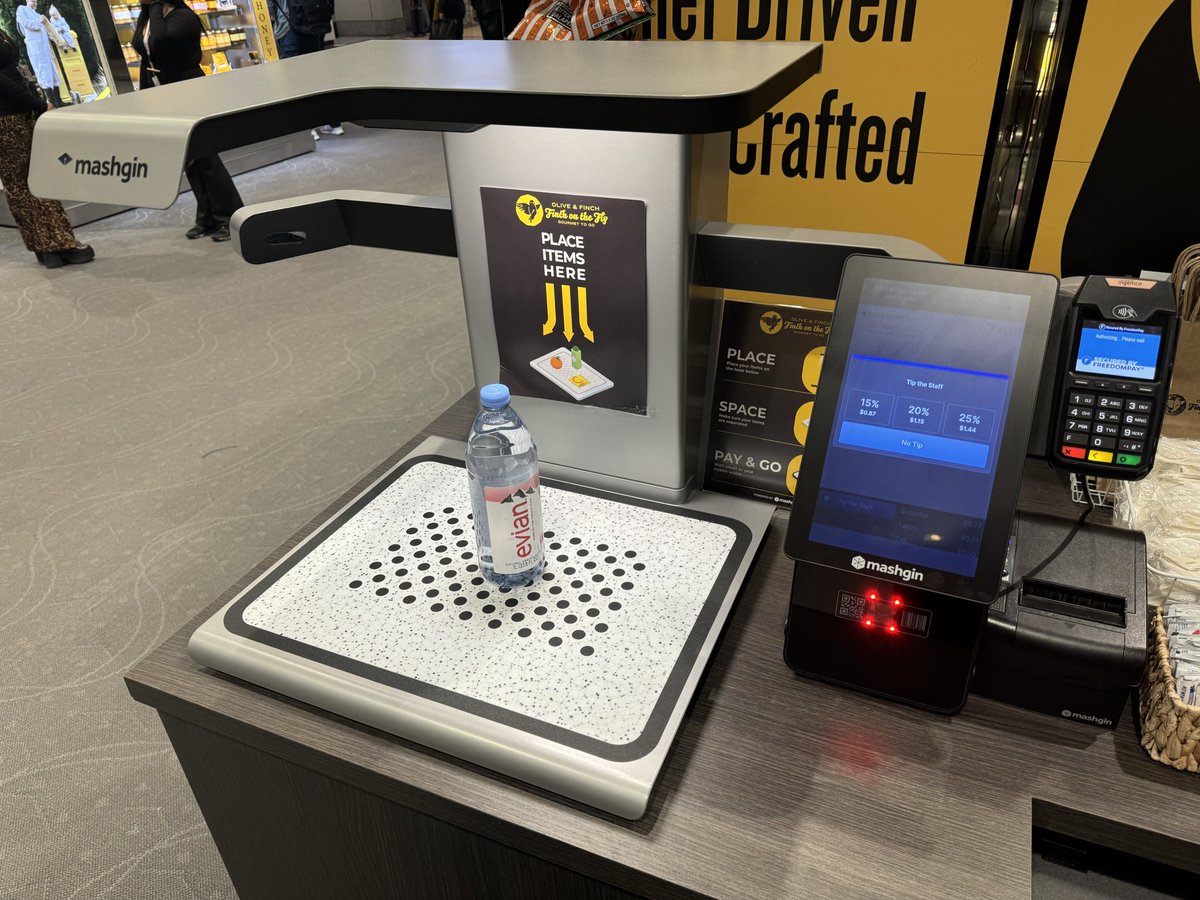
@Mashgin after months I’m still puzzled by this experience. Why does your self-checkout POS prompt the user for a tip?
English
Ythan Pratt 리트윗함

@davi49452 @Benioff @adcock_brett Riveting vision of the future. “They promised flying cars, instead we got humanoids that can either flip a package, or flip a hamburger, or fold a towel”
English

@ythanpratt @Benioff @adcock_brett It's astonishing that some humans have no capability to imagine a future that's better than their present.
English

@Benioff @adcock_brett Can it grab packages that aren’t thrown at it?
English

@Benioff @adcock_brett Impressive that it can do exactly one thing
English

@foundmyfitness “Micro-dosing exercise” or “workout snacks” as @hubermanlab would say. I like to do half mile sprints on my treadmill at 10mph.
English

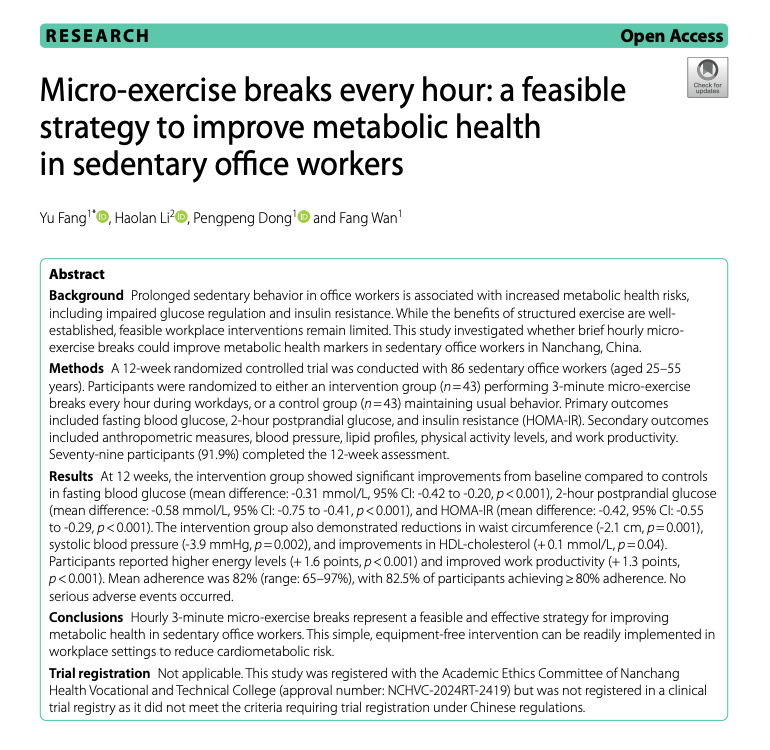
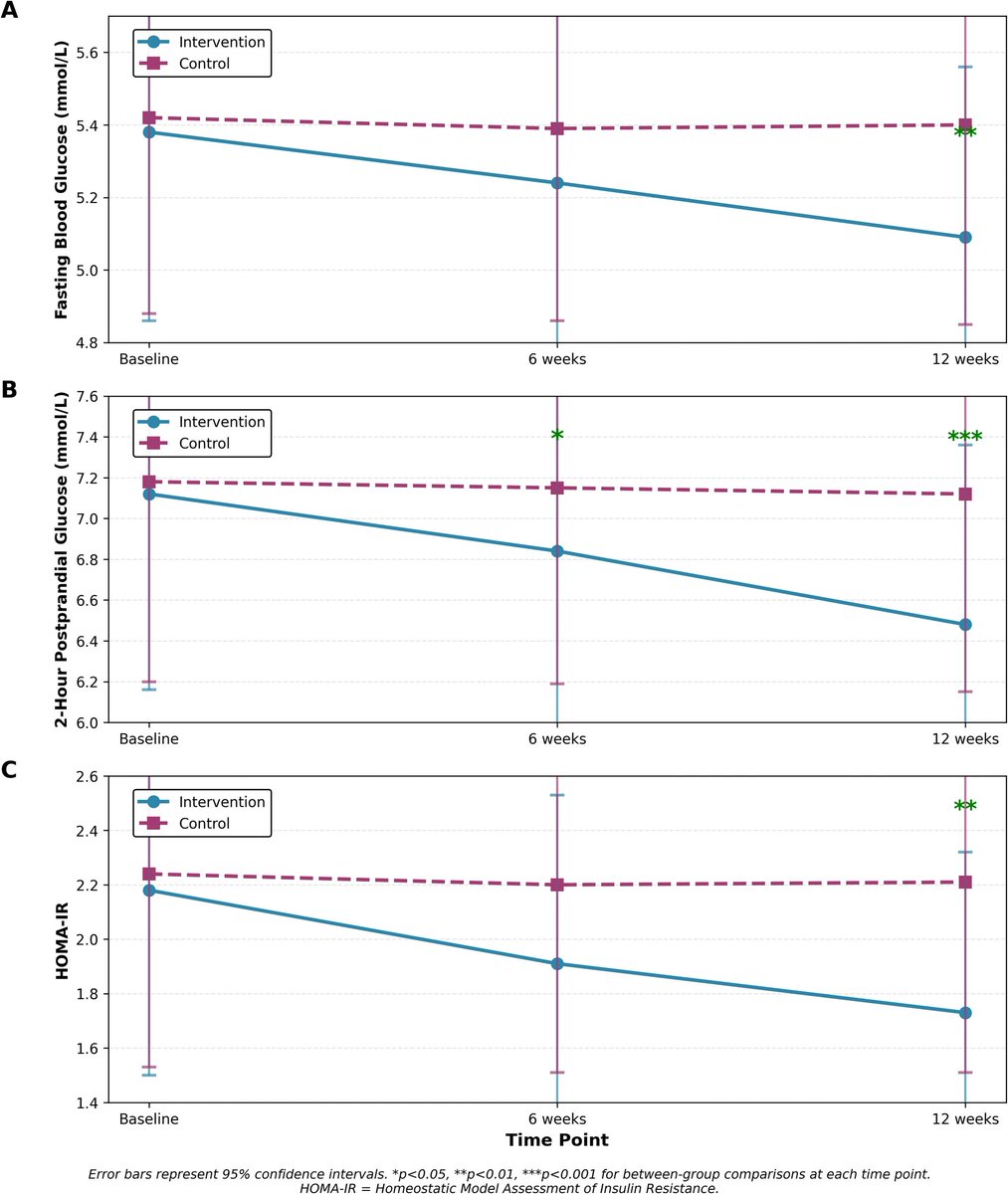
If you work at a desk, incorporating "micro-exercise breaks" into the day can greatly improve your metabolic health.
A 12-week study found that doing 3-minute exercise breaks every hour during the workday (e.g., marching in place, push-ups, squats, heel raises) improved fasting blood glucose, insulin sensitivity, and even waist circumference, blood pressure, and HDL cholesterol.
These metabolic benefits happen because muscle contraction stimulates insulin-independent glucose uptake. This is especially beneficial after meals.
Big upside for a low time and effort investment!


English

@markgadala Just wait until you realize how your X data is used
English

This is wild.
143 million people thought they were catching Pokémon. They were actually building one of the largest real-world visual datasets in AI history.
Niantic just disclosed that photos and AR scans collected through Pokémon Go have produced a dataset of over 30 billion real-world images. The company is now using that data to power visual navigation AI for delivery robots.
Players didn't just walk around with their phones. They scanned landmarks, storefronts, parks, and sidewalks from every angle, at every time of day, in lighting and weather conditions that staged photography would never capture. They documented the physical world at a scale no mapping company with a fleet of vehicles could have replicated on the same timeline or budget.
Niantic collected this systematically, data point by data point, across eight years, while users thought the only thing at stake was catching a rare Charizard.
The most valuable AI training datasets in the world aren't being assembled in data centers. They're being built by people who have no idea they're building them.
NewsForce@Newsforce
POKÉMON GO PLAYERS TRAINED 30 BILLION IMAGE AI MAP Niantic says photos and scans collected through Pokémon Go and its AR apps have produced a massive dataset of more than 30 billion real-world images. The company is now using that data to power visual navigation for delivery robots, letting them identify exact locations on city streets without relying on GPS. Source: NewsForce
English
Ythan Pratt 리트윗함
Ythan Pratt 리트윗함
Ythan Pratt 리트윗함
Ythan Pratt 리트윗함

.@pmarca breaks down his reading diet:
"I have an almost perfect barbell strategy, which is: I read X and I read old books."
"It's either up-to-the-minute what's happening right now, or it's a book that was written 50 years ago that has stood the test of time."
With @lennysan
Marc Andreessen 🇺🇸@pmarca
My information consumption is now 1/4 X, 1/4 podcast interviews of the smartest practitioners, 1/4 talking to the leading AI models, and 1/4 reading old books. The opportunity cost of anything else is far too high, and rising daily.

English
Ythan Pratt 리트윗함

prediction re the end of spreadsheets
AI code gen means that anything that is currently modeled as a spreadsheet is better modeled in code. You get all the advantages of software - libraries, open source, AI, all the complexity and expressiveness.
think about what spreadsheets actually are: they're business logic that's trapped in a grid. Pricing models, financial forecasts, inventory trackers, marketing attribution - these are all fundamentally *programs* that we've been writing in the worst possible IDE. No version control, no testing, no modularity. Just a fragile web of cell references that breaks when someone inserts a row.
The only reason spreadsheets won is that the barrier to writing real software was too high. A finance analyst could learn =VLOOKUP in an afternoon but couldn't learn Python in a month. AI code gen flips that equation completely. Now the same analyst describes what they want in plain English, and gets a real application - with a database, a UI, error handling, the works. The marginal effort to go from "spreadsheet" to "software" just collapsed to near zero.
this is a massive unlock. There are ~1 billion spreadsheet users worldwide. Most of them are building janky software without realizing it. When even 10% of those use cases migrate to actual code, you get an explosion of new micro-applications that look nothing like traditional software. Internal tools that used to live in a shared Google Sheet now become real products. The "shadow IT" spreadsheet that runs half the company's operations finally gets proper infrastructure.
The interesting second-order effect: the spreadsheet was the great equalizer that let non-technical people build things. AI code gen is the *next* great equalizer, but the ceiling is 100x higher. We're about to see what happens when a billion knowledge workers can build real software.
English
Ythan Pratt 리트윗함
Ythan Pratt 리트윗함

According to @SBakerMD (and I believe him) the guy (verified 81 yo) in this video started sprinting at 66. Super impressive!
PS: First person to comment on the indoor lighting slowing him down needs a MRI.
Dr Shawn Baker 🥩@SBakerMD
This is absolutely inspiring! 81 years old, 29 sec 200m sprint!

English
Ythan Pratt 리트윗함
Ythan Pratt 리트윗함