

@WeTheBrandon "we cant trust Islamic regime"
We always do the Epstein regime 55555.
English
HowDareU💖
13.9K posts


💥NEW: Maria Bartiromo: “We don’t want a nuclear terrorist to have a nuclear weapon.” Khanna: “And Obama was on the road to achieving that!” Bartiromo: “Obama did squat! … He gave the money to Iran … They gave it to Hamas, Hezbollah — and then they committed atrocities.”

Today, officials from both China and the United States formally announced President Trump's visit to China scheduled for this week. In an effort to reassure Japan, Treasury Secretary Scott Bessent was dispatched to make a preliminary visit to the country on May 12. Sanae Takaichi’s hope—that Trump would stop in Japan for a visit before proceeding to China—was ultimately dashed; indeed, such an outcome was all but inevitable. On one hand, Trump's visit to China had been the subject of active coordination between the two nations since last year. Furthermore, the visit—originally scheduled for April—had already been postponed due to the U.S.-Iran conflict; had the itinerary been altered yet again, it is highly likely that finding a mutually agreeable window for the visit in the near future would have proven impossible. On the other hand—and this is the most critical factor—current Sino-Japanese relations have deteriorated severely due to erroneous remarks made by the Japanese Prime Minister, Japan's trajectory of military expansion, and incidents such as the attack on the Chinese Embassy by members of the Japan Self-Defense Forces. Had Trump visited Japan first before traveling to China, it would inevitably have provoked Beijing, thereby ultimately jeopardizing U.S.-China relations. Given Trump's eagerness to secure "major gains" from his engagements in China—and his specific desire for China to exert diplomatic influence over Iran—dispatching the Commerce Secretary to reassure Japan was likely deemed the most prudent course of action. Secretary Bessent stated that this visit would advance President Trump's "America First" economic agenda, emphasizing that "economic security is national security." The current Japanese government—having already fully embraced U.S. diplomatic, military, and economic policies—finds itself with no choice but to continue cooperating with and ceding benefits to the U.S. in the face of its "America First" trade and economic agenda, primarily by increasing investment in the United States, while receiving little in the way of reciprocal returns. In the eyes of the Liberal Democratic Party (LDP) government, the interests of the Japanese public pale in comparison to the interests of their own political faction. They are also deemed far less important than the government's own ambitions: to bolster the U.S.-Japan alliance and, through it, realize their strategic vision of transforming Japan into a so-called "normal military power" and a major global player. However, by blindly following the strategic lead of the United States, Japan risks steering itself into an increasingly perilous position.


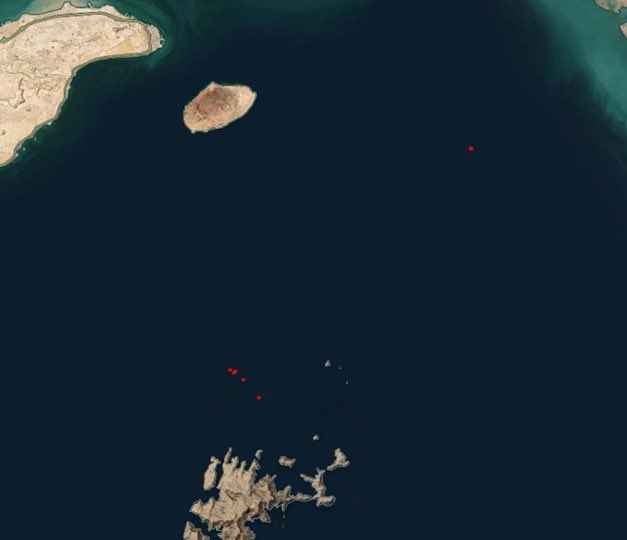





The U.S. Strategic Petroleum Reserve is now drawing down at more than 1 million bpd. Global trading firm Trafigura has so far been the most active buyer of SPR barrels, taking 21.4 million barrels, with Shell coming in second (18.1 million barrels). European refiners are benefiting from discounted U.S. crude, as SPR barrels (often sour grades) are offered below local prices and shipped to hubs like Rotterdam










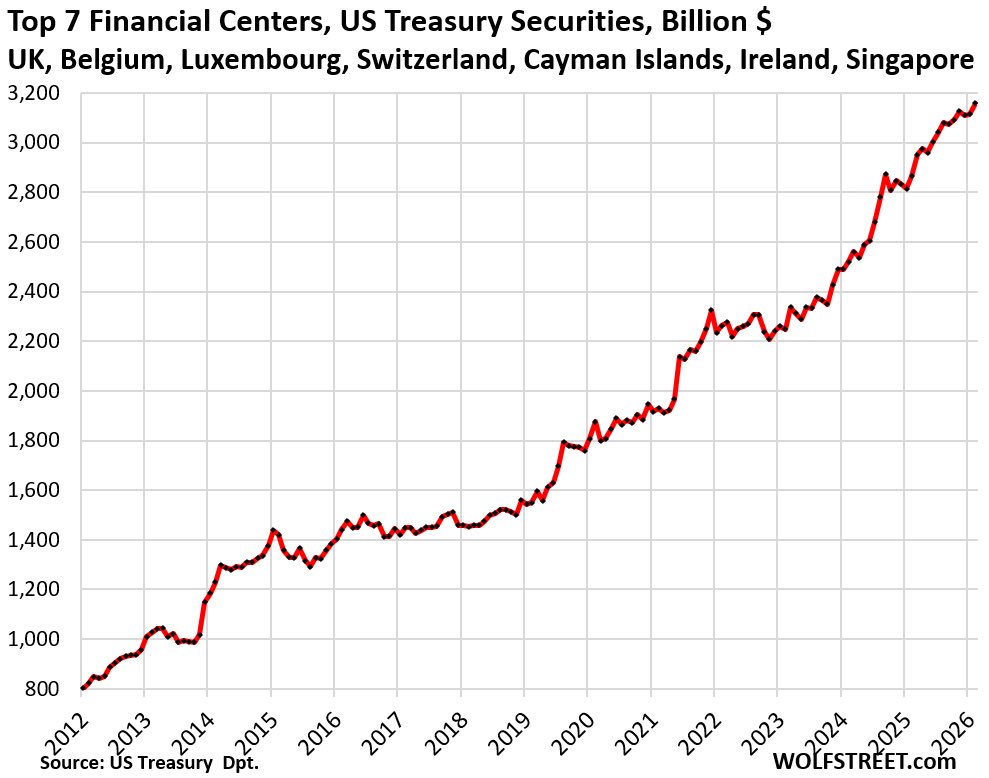
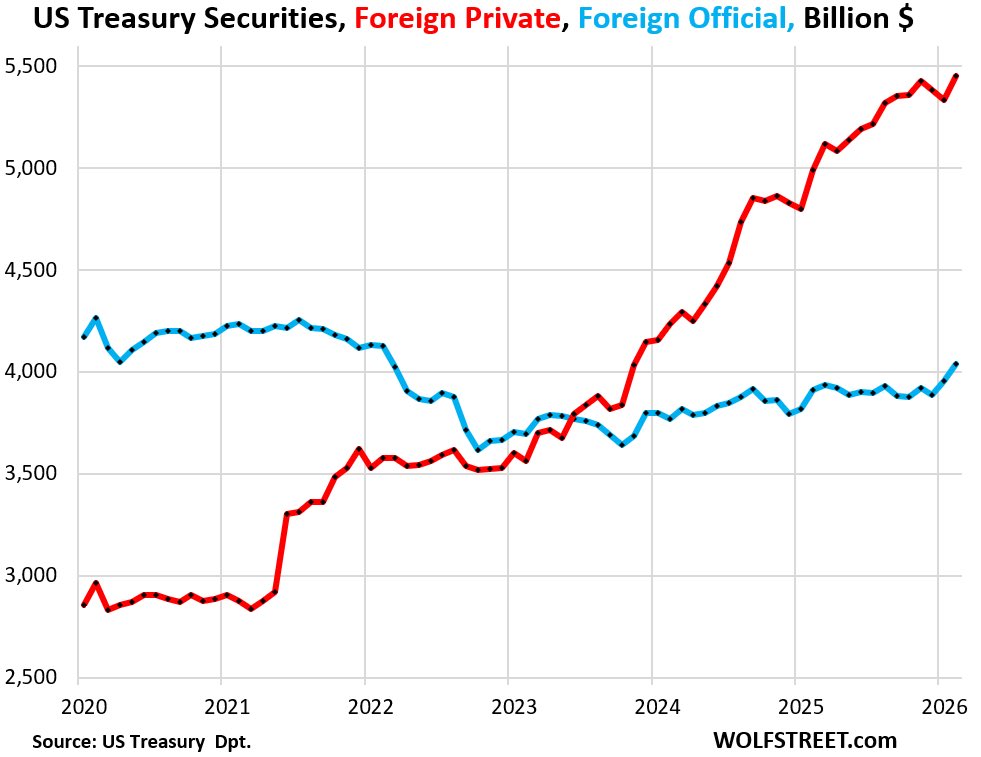
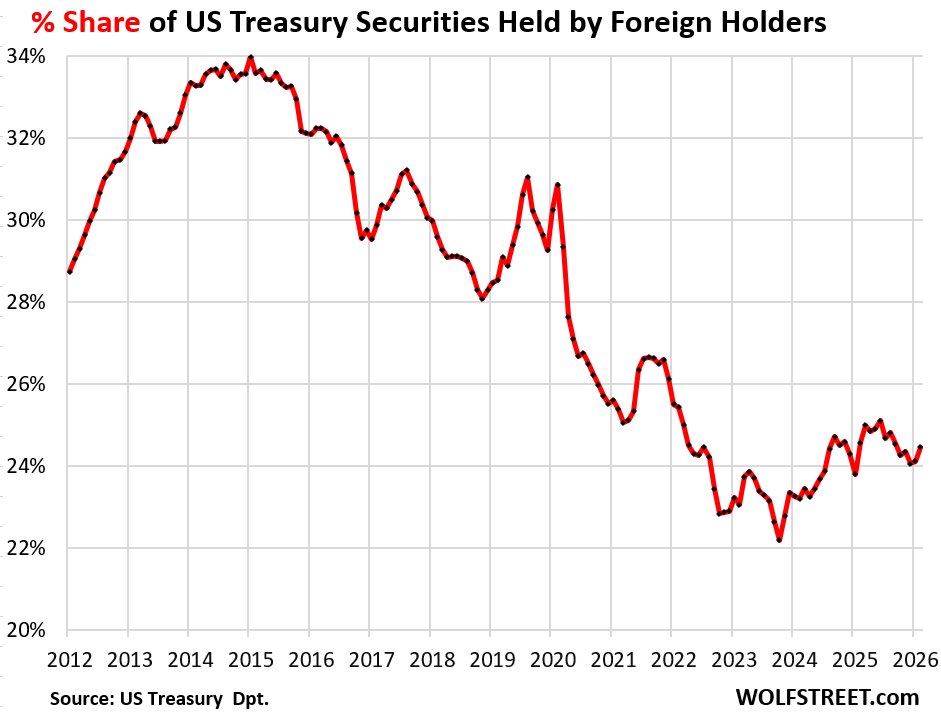
BREAKING: Foreign holdings of US Treasuries surged +$200 billion in February, to a record $9.49 trillion. Of that total, $7.76 trillion, or 84%, consists of long-term Treasury securities, with the remainder held in short-term Treasury bills. Over the last 12 months, holdings have risen +$587 billion. Japan, the largest foreign holder, raised its stockpile by +$14 billion, to $1.24 trillion, the highest since February 2022. This marks Japan's 13th monthly purchase of the last 14 months, as Japanese institutions continue chasing higher yields overseas. The UK, the 2nd-largest holder, posted a +$17 billion increase, to $897 billion, the 2nd-highest on record. China, the 3rd-largest owner, trimmed its stockpile by -$1 billion, to $693 billion. Foreign demand for US debt remains strong.

