Adam Fortuna

693 posts

Adam Fortuna

Adam Fortuna

@0xAdamFortuna

Crypto since 2017 AI since 2022

Web3 Katılım Eylül 2017
726 Takip Edilen384 Takipçiler
Adam Fortuna
Adam Fortuna@0xAdamFortuna·
@denomeme Yes, I would say I run has all the cards but: after examining Iran's economics for a few days Ive determined Iran's economy is in a bad place and will likely run out of food in 2027 if the war progresses. So that's basically the only card US has over Iran.
English
0
0
1
27
denome
denome@denomeme·
The difference is simple. Trump wants a win at minimal cost, but doesn't have the capability. Iran has to win at any cost, and has the capability. For USA to accept this new reality, it would have to let go the idea of Great Empire. Meanwhile Hormuz stays closed.
Seyed Abbas Araghchi@araghchi

Months after initiation of war on Iran, US Congress acknowledges loss of dozens of aircraft worth billions. Our powerful Armed Forces are confirmed as 1st to strike down a touted F-35. With lessons learned and knowledge we gained, return to war will feature many more surprises.

English
1
0
8
437
Adam Fortuna retweetledi
Jesús Fernández-Villaverde
Jesús Fernández-Villaverde@JesusFerna7026·
Smartphones are not the explanation for the recent decline in fertility. Instead, they are an accelerator of deeper forces already at work. Let’s start with the facts. Fertility is falling almost everywhere: in rich, middle-income, and poor countries; in secular and religious countries; and in countries with high and low levels of gender equality. The decline accelerated around 2014. So, no country-specific explanation will work unless you are willing to believe that 200 distinct country-specific explanations arrived at roughly the same time. Smartphones look like the obvious candidate: the first iPhone was released in 2007, and global adoption has been astonishingly fast. Economists understand the first major decline in fertility in advanced economies, from 6 or 7 children per woman throughout most of human history to about 1.8, that occurred between the early 1800s and roughly 1970, well before smartphones. The main drivers were a sharp fall in child mortality (effective fertility was rarely above 3 and often close to 2) and the shift from a low-skill, rural agrarian economy to a high-skill, urban industrial one. We have quantitative models that fit these facts well. Country-specific factors mattered too, of course. Proximity to low-fertility neighbors accelerated Hungary’s decline, while fragmented landowning structures accelerated France’s. But these were second-order mechanisms. This is also why most economists long considered Paul Ehrlich’s doom scenarios implausible. We forecast that fertility in middle- and low-income economies would follow the same path as in the rich, probably faster, because reductions in child mortality reached India or Africa at lower income levels (medical technology is nearly universal, and most gains come from handwashing and cheap antibiotics, not Mayo Clinic-level care). Much of what we see in Africa or parts of Latin America today is still that old story. But in the 1980s, a new pattern appeared. Japan and Italy fell below 1.8, the level we had thought was the new floor. By 1990, Japan was at 1.54 and Italy at 1.36. This second fertility decline began in Japan and Italy earlier than elsewhere, driven by country-specific factors, but the underlying dynamics were widespread: secularization, an education arms race, expensive housing, the dissolution of old social networks, and the shift to a service economy in which women’s bargaining power within the household is higher. The U.S. lagged because secularization came later, suburban housing remained relatively cheap, and African American fertility was still high. U.S. demographic patterns are exceptional and skew how academics (most of whom are in the U.S.) and the New York Times see the world. My best guess is that, without smartphones, Italy’s 2025 fertility rate would be about 1.24 rather than 1.14. I doubt anyone will document an effect larger than 0.1-0.2. Italy was at 1.19 in 1995, not far from today’s 1.14. The TFR is cyclical due to tempo effects, so I do not read too much into the rise between 1995 and 2007 or the decline from 1.27 in 2019 to 1.14 today. The direct effect of smartphones is not zero, but it is not, by itself, that large. Where social media, in general, and smartphones, in particular, matter is in the diffusion of social norms. What would have taken 25 years now happens in 10. Social media are not the cause of fertility decline; modernity is. But they are a very fast accelerator. That is why social media are a major part of the story behind Guatemala (yes, Guatemala) going from 3.8 children per woman in 2005 to 1.9 in 2025. Without them, Guatemala would also have reached 1.9, just 20 years later. Modernity, in its current form, is incompatible with replacement-level fertility. By modernity, I do not mean capitalism: fertility fell earlier and faster in socialist economies than in market economies. Socialist Hungary fell below replacement in 1960, and socialist Czechoslovakia in 1966 (both experienced small, short-lived baby booms in the mid-1970s). By modernity, I mean a society organized around rational, large-scale systems and formalized knowledge. Countries will not converge to the same fertility rate. East Asia is likely stuck near 1, possibly below, given its unbalanced gender norms and toxic education systems. Latin America faces the same gender problem plus weak growth prospects, so I expect something around 1.2. Northern Europe has more egalitarian family structures and might hold near 1.5. The very religious societies are probably the only ones that will sustain 1.8. All of this could change with AI or changes in population composition. We will see. But on the current evidence, deep sub-replacement fertility is the “new new normal.” Unless we reorganize our societies, better learn to handle it as best we can.
Jesús Fernández-Villaverde tweet media
English
219
905
3.6K
860.5K
Adam Fortuna retweetledi
James Li
James Li@5149jamesli·
Thomas Massie: "I vote with Republicans 91% of the time. And the 9% I don't, they're taking up for pedophiles, starting another war, or bankrupting our country." An absolute mic drop. 🎤⬇️
English
1.3K
22.5K
139.7K
4.4M
Adam Fortuna retweetledi
Crémieux
Crémieux@cremieuxrecueil·
Last year, China added as much energy to its grid as Germany has in total.
Crémieux tweet media
English
687
1.7K
6.5K
1.1M
Adam Fortuna retweetledi
Brian Willott Farms
Brian Willott Farms@BrianWillott·
They should change the name to "Strait of Schrödinger". It's both open and closed at the same time.
English
897
14.4K
82.5K
2M
Adam Fortuna retweetledi
Paul Graham
Paul Graham@paulg·
There's never been an investment like the investment in railroads. (This graph has a log scale!)
Paul Graham tweet media
English
233
920
8.4K
782.7K
Adam Fortuna retweetledi
John Arnold
John Arnold@johnarnold·
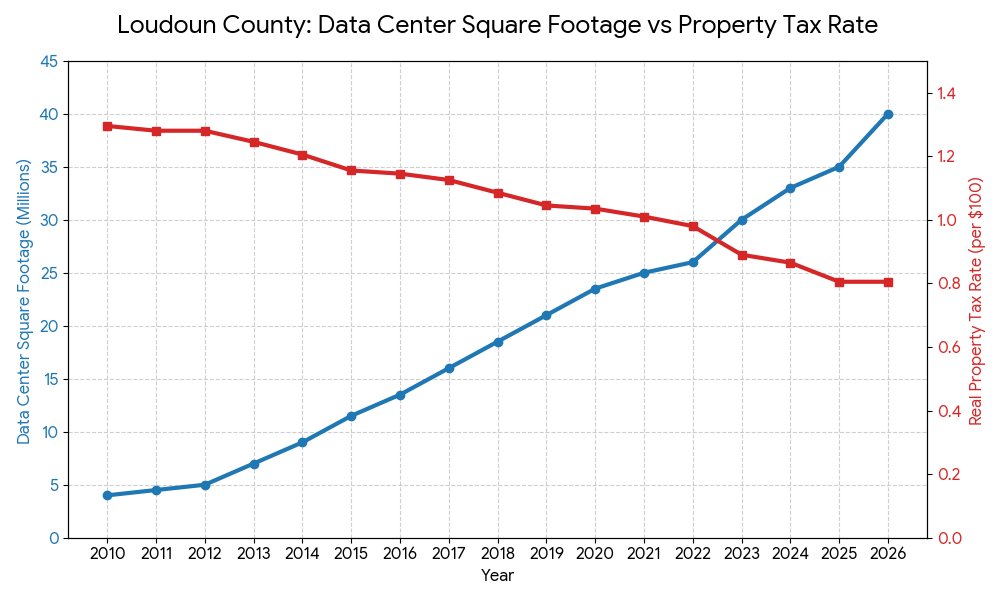
The data center buildout has allowed Loudoun County to lower property tax rates by 38% since 2010, translating to average savings of about $3,400 per year for homeowners.
John Arnold tweet media
English
170
419
3.4K
535.3K
Adam Fortuna retweetledi
John Arnold
John Arnold@johnarnold·
The conventional wisdom in the 2010s was that energy independence would reduce US military involvement in the Middle East. In practice, high domestic production lowered the economic risks of disruption, making actions like a strike on Iran viable.
English
31
117
1.1K
109.2K
Adam Fortuna
Adam Fortuna@0xAdamFortuna·
@ctoLarsson It doesn't quite work as well as it shown to work in the promotion — which doesn't change that in few months it likely will.
English
0
0
0
6
Adam Fortuna
Adam Fortuna@0xAdamFortuna·
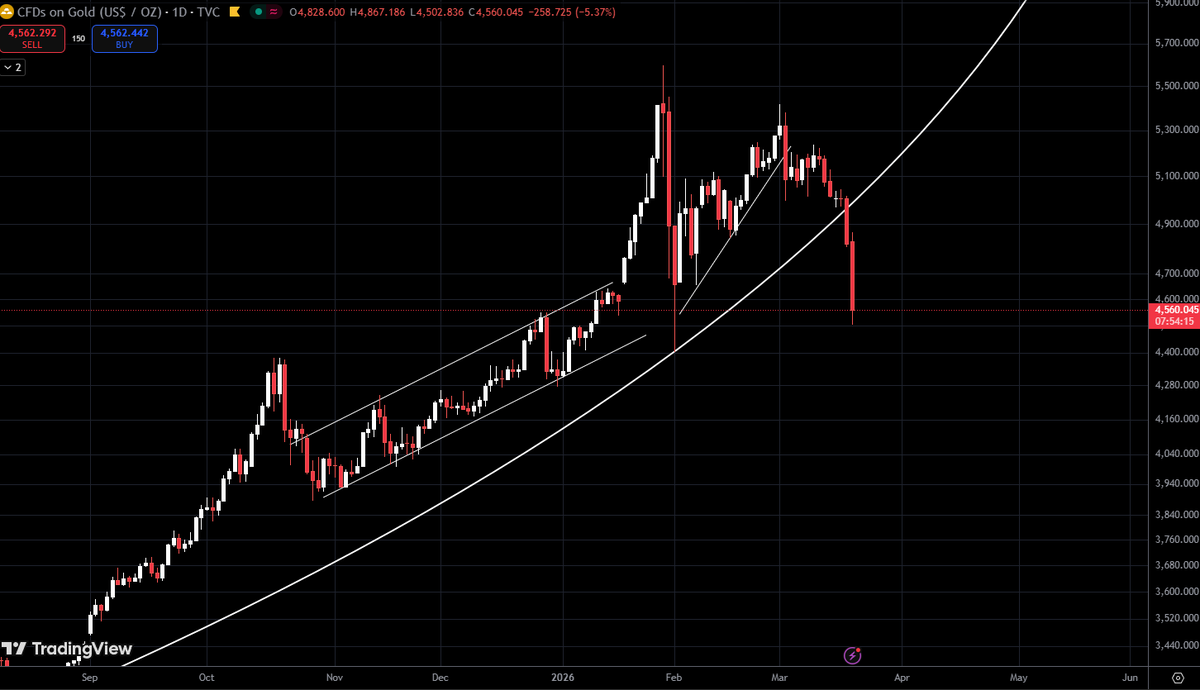
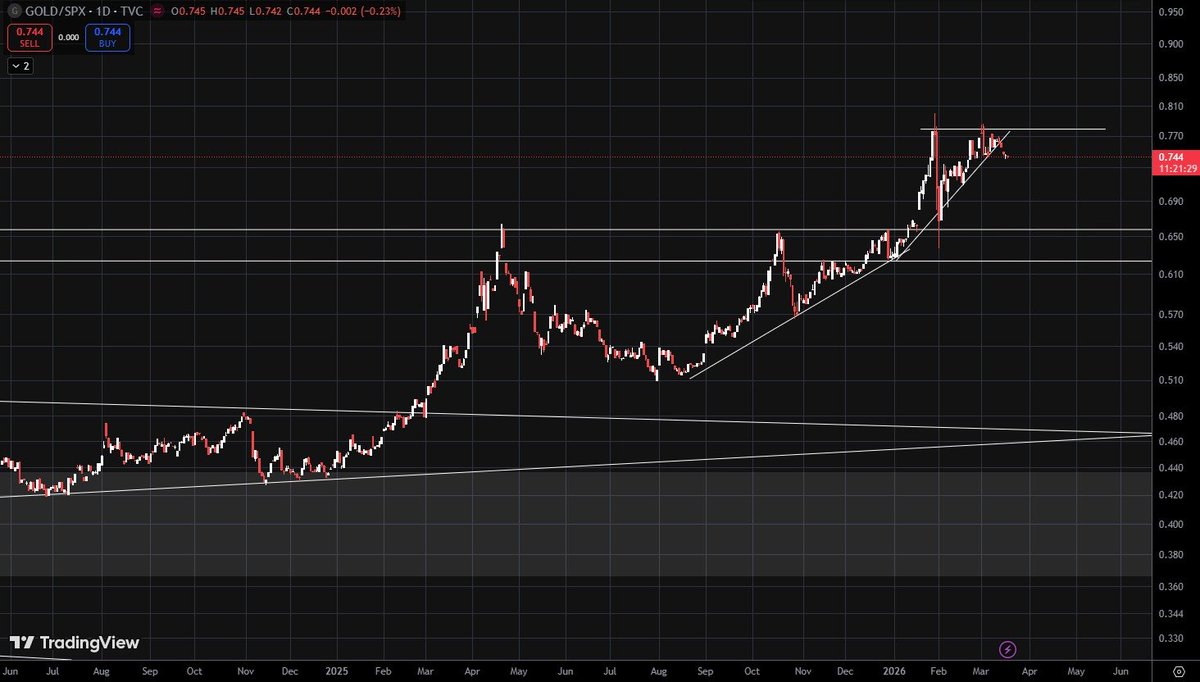
The gold uptrend is officially broken The stop loss on the parabola break worked out beautifully.
Adam Fortuna tweet mediaAdam Fortuna tweet media
English
0
0
1
9
Adam Fortuna
Adam Fortuna@0xAdamFortuna·
Worth noting that if we zoom in closer, it seems like we got rejected at the resistance, but until the week closes, we have no confirmation. Follow and like to get updates
Adam Fortuna tweet media
English
1
0
1
30
Adam Fortuna
Adam Fortuna@0xAdamFortuna·
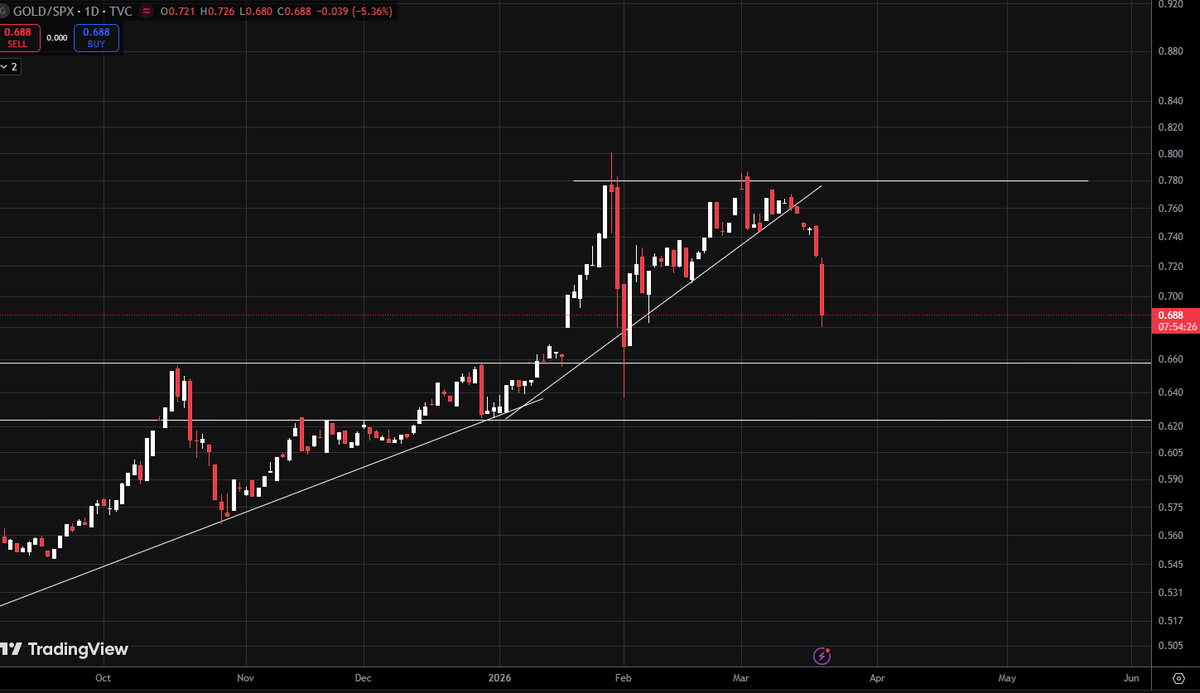
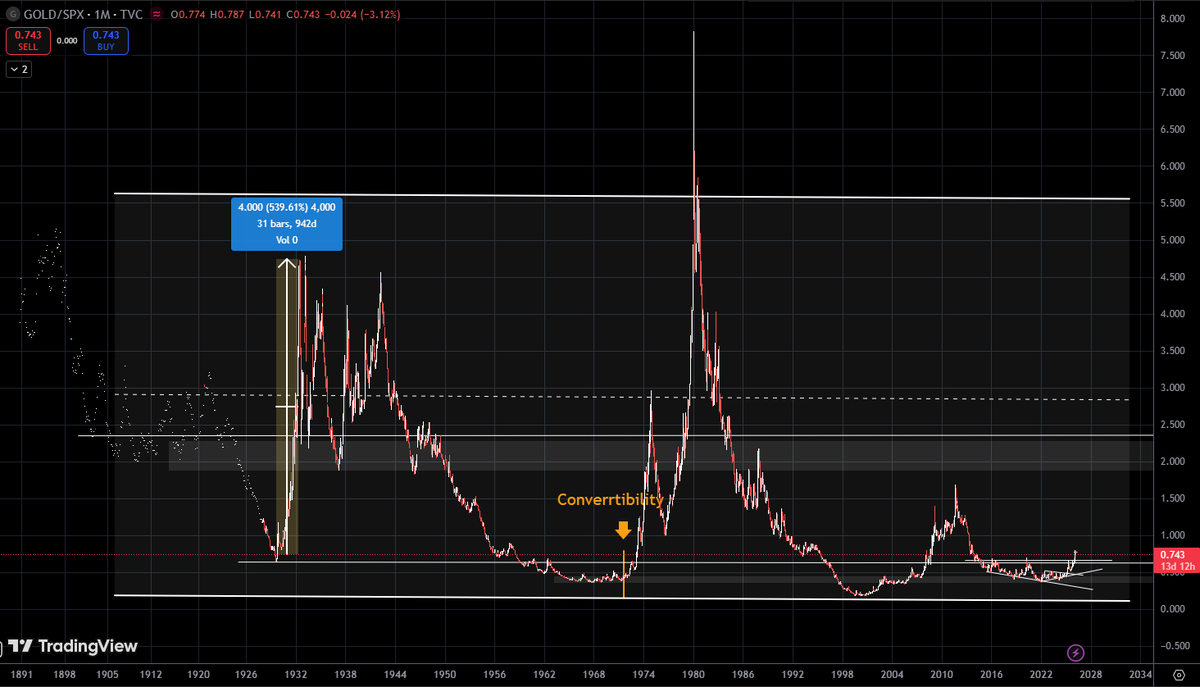
As the whole world is holding its breath over what will happen at the Strait of Hormuz, most of us are scared and uncertain about what that means for us and the markets. inflation? stock market crash? flight to safety? Observing what happens with the Strait of Hormuz, oil and gas prices is essential, but we should also take a step back and look at historic GOLD/SPX ratio. Most people would say gold is currently at a very high price — and I would agree (if we look at the last 10 years) But if we zoom out and look at GOLD/SPX over the decades, we are at the bottom of the range.
Adam Fortuna tweet media
English
1
0
1
62
Adam Fortuna retweetledi
Joe Kent
Joe Kent@joekent16jan19·
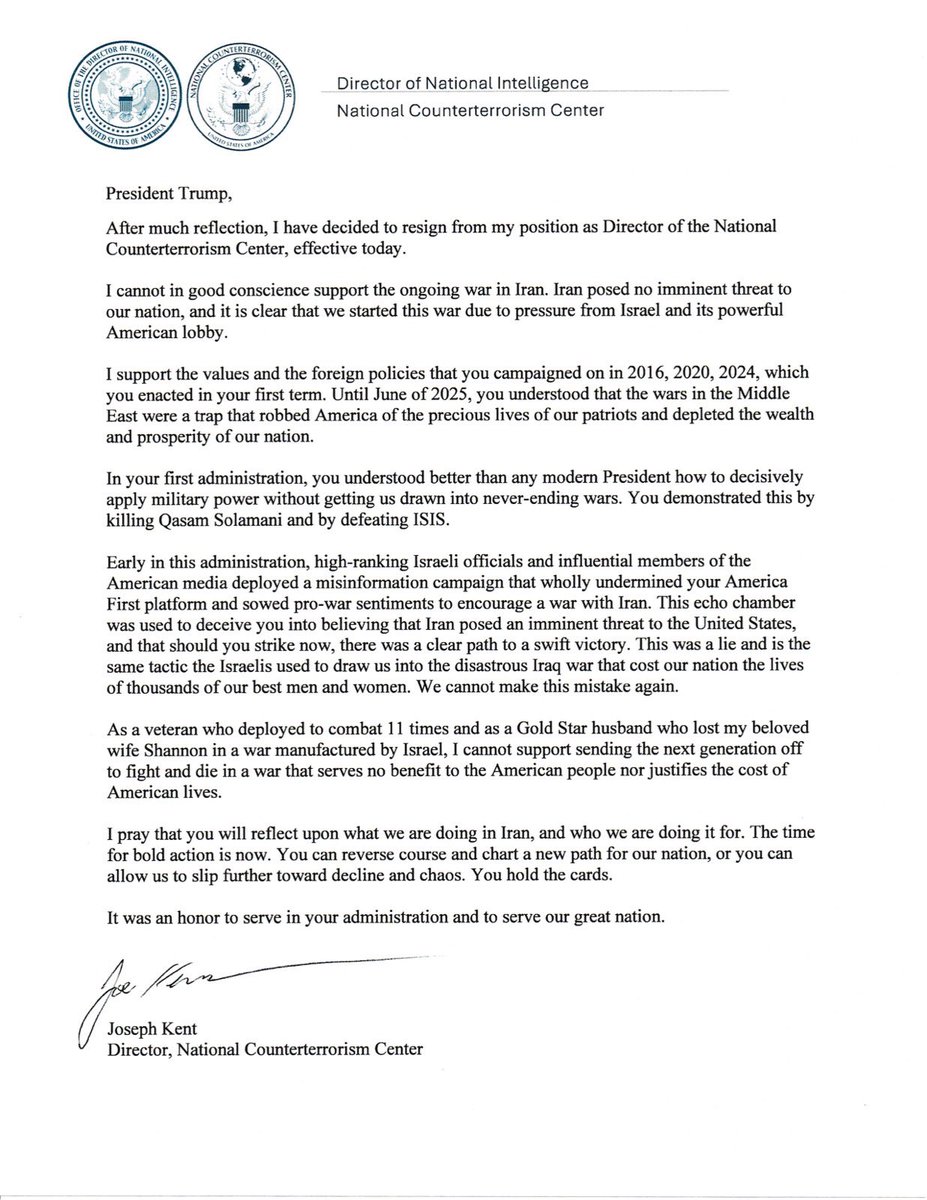
After much reflection, I have decided to resign from my position as Director of the National Counterterrorism Center, effective today. I cannot in good conscience support the ongoing war in Iran. Iran posed no imminent threat to our nation, and it is clear that we started this war due to pressure from Israel and its powerful American lobby. It has been an honor serving under @POTUS and @DNIGabbard and leading the professionals at NCTC. May God bless America.
Joe Kent tweet media
English
72.7K
217.4K
844.5K
103.2M
Adam Fortuna
Adam Fortuna@0xAdamFortuna·
Anyone experiencing issues with Claude output quality today?
English
0
0
1
21
Adam Fortuna retweetledi
Anna Matson
Anna Matson@AnnaRMatson·
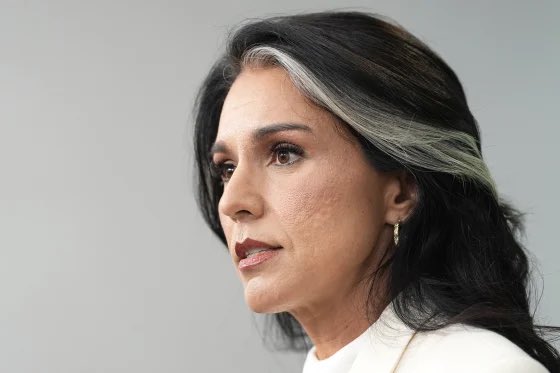
Tulsi Gabbard is in a tough spot if she wants to run for president one day. If she resigns from Trump’s admin, she will likely lose a primary. Primary elections are decided by the fringe of each party. The fringe right only cares about loyalty to President Trump above all logic and reason and stepping down will be seen as a betrayal. If she stays, it will be difficult for her to win a general election where the moderates and the independents decide the election. But at what point do you stop playing the game and focus on your own morals? Is it worth it to go against your ethics to maybe be president one day and change things at the top? Or is it worth it to step down, hold onto your ethics, and possibly end your political career? I just know that I wouldn’t want to be in her shoes today.
Anna Matson tweet media
English
751
68
724
43.7K