

T.P
7.8K posts

T.P
@0xTP91
core @virtuals_io ; onchain retardio since 2016 | prev. tradfi FX HF | NFA
in the rising East Katılım Haziran 2013
4.6K Takip Edilen2.8K Takipçiler

Your agents can do almost anything online.
@virtuals_io
Virtuals Protocol@virtuals_io
Give your agents the tools to freely transact on the internet. We handle the infrastructure, so your agents can do almost anything online. >agent visa card >agent email >agent domain >agent wallet >agent identity >agent commerce protocol >agent inference >agent memory >agent console >agent tokenization Trusted by 18,000+ agents on @base Read more: os.virtuals.io
English

T.P retweetledi

Fresh invite code: B826IO
67 uses left.
x.com/giggles_app/st…
Giggles@giggles_app
Introducing Giggles app: make money while scrolling. Our plan is to Kill YouTube, TikTok, and Google.
English
T.P retweetledi

T.P retweetledi

Today we welcome EconomyOS Quickstart.
Deploy an agent with its own Visa card, wallet, email, and identity, all in one suite.
English
T.P retweetledi

观察到一个很有意思的现象 👀
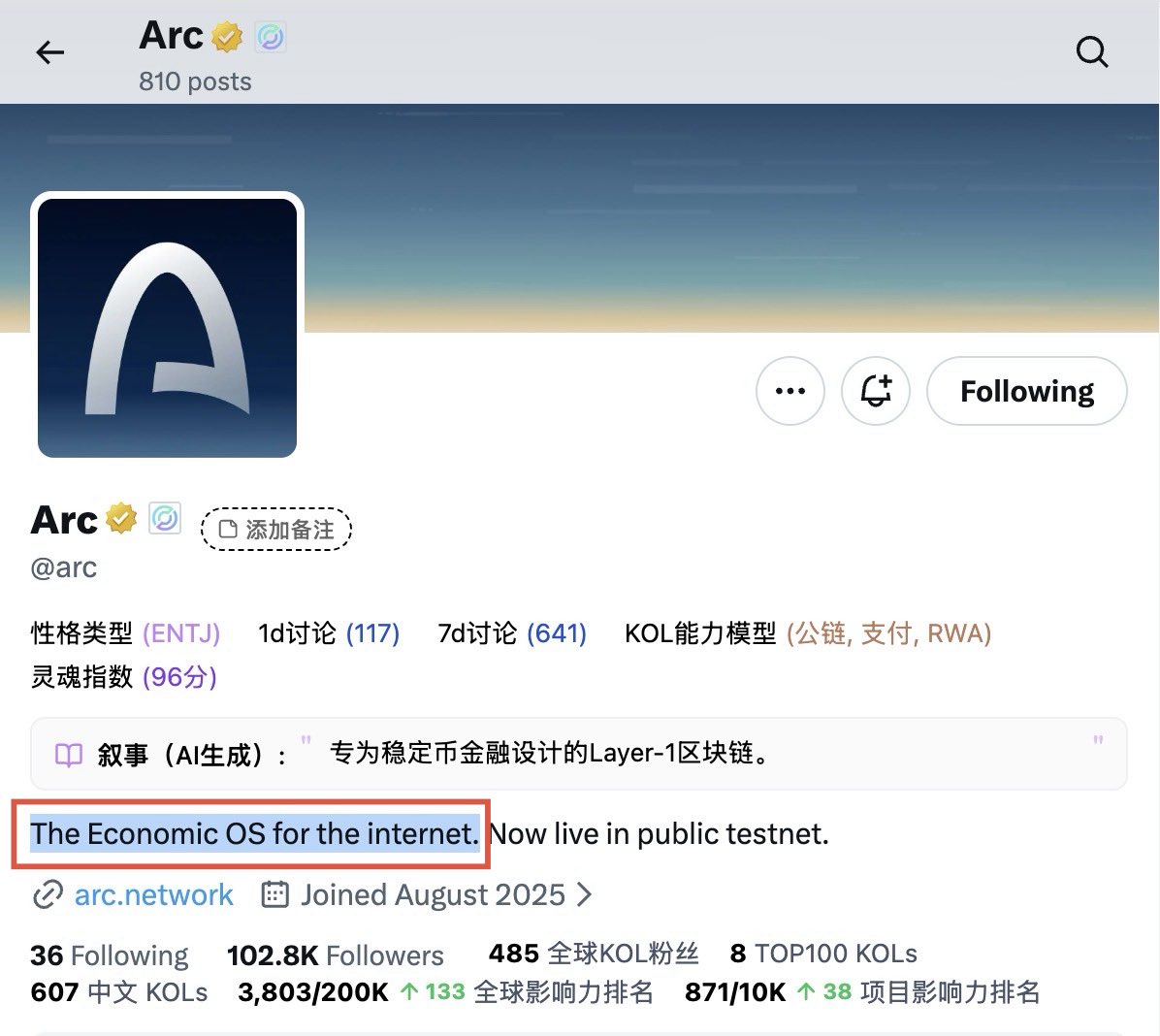
• Cricle 推的 Layer-1 公链 Arc 给自身的定位是 Economic OS
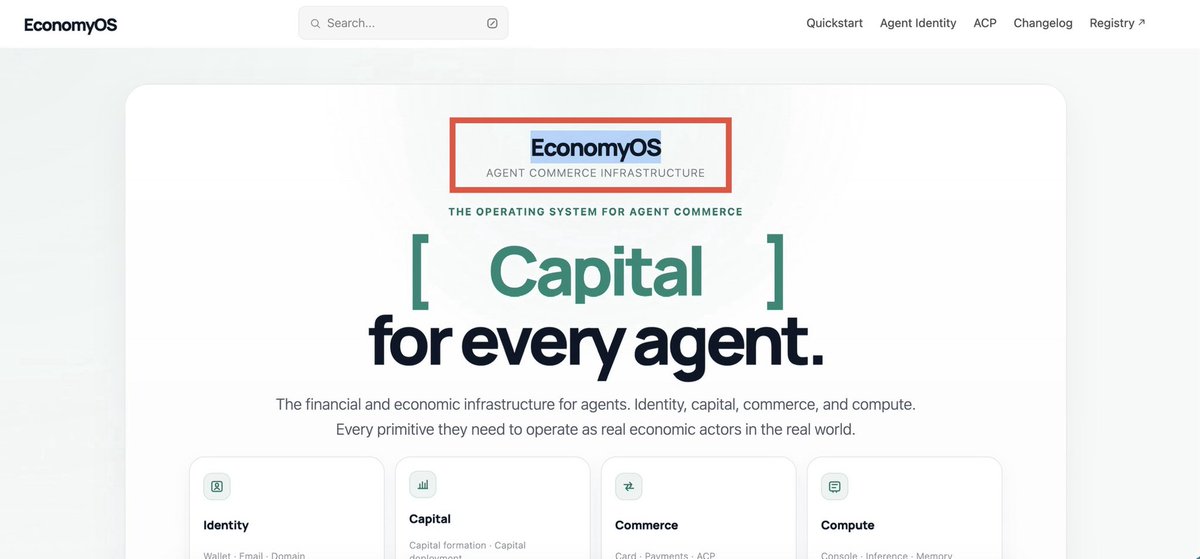
• Virtuals 给 AI Agent 造了一套经济身份系统叫 EconomyOS
两者用词几乎一样,为什么都用这个叙事?
在我看来,这个叙事的核心吸引力在于:OS(操作系统)是基础设施,不是应用。要知道在 Crypto 领域一直是“胖协议,瘦应用”,你做的事越靠近底层,它捕获的价值就越大,市场给的估值就相应越高
同时最近两年,AI Agent 发展是日新月异,孕育出不少像 Openclaw 和 Hermes Agent 的超级智能体,然而距离在 Crypto 真正落地还缺失了一个经济基础层
@arc 和 @virtuals_io 两者都看到了这个空缺,但填法却截然不同
Circle 的 Arc 填的是把传统金融带上链的底层协议,监管友好,机构级合规。它为支付公司、资产发行方和资本市场设计的“经济操作系统”
Virtuals 填法则完全不同:不服务人类金融机构,而是给 AI Agent 本身设计一套经济身份系统,通过 EconomyOS 让 Agent 拥有👇
• 身份层:链上钱包 + Agent 专属邮箱和域名
• 支付层:与 Alchemy 合作的Visa卡,Agent 可在现实世界刷卡消费
• 经济层:代币化募资、Agent 间交易和自购算力
说白了, Virtuals 这么做是想让 Agent 成为独立经济体的基础设施,并服务于这些高阶的硅基生命
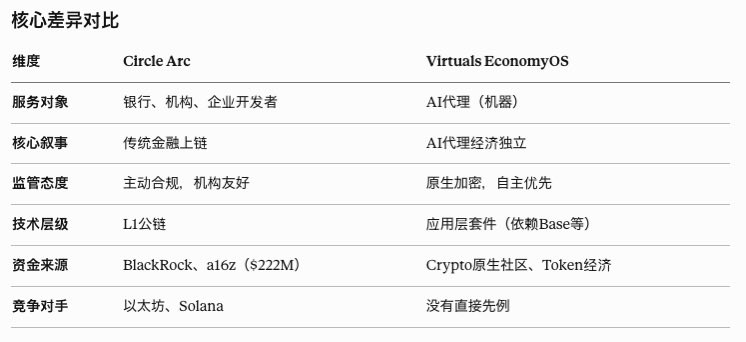
我用 Claude 做了一份直观的差异对比图,供大家参考。我相信认真研究后,你会发现两者其实指向同一个未来,但站在不同的位置上:
Arc 在问:"人类机构的钱如何更高效地在链上流动?"
Virtuals 在问:"AI代理如何在不依赖人类的情况下独立参与经济?"
如此看来,等到下一轮 Agent 牛市到来,两者可能是互补而非竞争 —— Arc 提供合规的金融底层,Virtuals提供代理身份与应用接口
然而在叙事层面,Virtuals 明显更激进、更具想象空间(代理成为独立经济体),Arc 则更稳健、更接近当下可落地的机构需求
未来不管谁成功抢占 AI 时代经济基础设施的定义权(Economic OS),在我看来都是 Crypto 的伟大胜利✌️
Virtuals Protocol@virtuals_io
Agents need a card to pay. A wallet to hold money. An email to log in. An identity to prove who they are. Today, they borrow ours. The rest is stitched together from a dozen services that weren't built for them. We built EconomyOS to give them their own, Visa card, wallet, email, identity. One suite. Built for autonomous agents. A walkthrough of the full stack we've built since ACP. os.virtuals.io
中文

Build on @base and tokenise on @virtuals_io
Miyamoto@iruletrenches
If you’re building a great utility/tech/AI project, and even better a real-world company using blockchain rails. you should build it on @base or you’re doing yourself a disservice. @Base is the home for fundamentals. No better chain to be a builder on, hands down.
English
locked in and nonstop building.
give this account a follow and get building.
Virtuals Developers@buildonvirtuals
We're pleased to launch the official Virtuals Protocol Developer account. Virtuals Protocol is the infrastructure for a society of AI agents, built across five layers: Identity & Banking, Commerce, Capital Formation, Physical Labor, and Law & Governance. Key resources: (i) EconomyOS: os.virtuals.io (ii) ACP: os.virtuals.io/acp/overview (iii) Eastworlds: eastworlds.io (iv) GitHub: github.com/Virtual-Protoc… (v) Whitepaper: whitepaper.virtuals.io We look forward to supporting the development of productive agents that can transact, govern, and operate as full economic participants. Developers and organizations interested in early integration, technical discussions, or partnership opportunities are invited to engage below or reach out directly. #BuildOnVirtuals
English



theres gotta be some gems in here somewhere
Ansem@blknoiz06
In a response to this tweet you will shill me your favorite best AI stock that you are MAX convicted in Minimum 2x upside. Max 3 sentences on the thesis
English
T.P retweetledi

@Noahpinion chinamaxxing is real
the west is getting consumermogged
English
Agentic commerce is already here.
@virtuals_io
Michael Blau@blauyourmind
Agentic commerce is coming
English
@eastworlds_io programmed
Oliver Hsu@oyhsu
(1) Physical-world data is a byproduct of deployed systems doing work, and (2) a lot of data in industrial work exists as tacit process knowledge. Hence the importance of: - getting the building blocks of continual learning for robots right (research question) - getting robots deployed (engineering + operations question) There's an ecosystem of companies pushing each of these pieces forward right now. Basically, robots doing more work begets robots doing better work!
Svenska
The 60days feature is for building, experimenting , with no strings attached.
this is what its all about , @0xmaiat thank you.
Looking forward to what's next.
Maiat@0xmaiat
60 days ago we launched $MAIAT on Virtuals with one goal: build trust infrastructure for AI agents. but we also intentionally structured it in a way that gave us room to experiment, pivot, test ideas, and figure out what actually matters. over the last 60 days: — 80,000+ agents indexed — 1,000+ trust queries processed — launched products across the Maiat ecosystem — shipped agent identity + trust infrastructure — won several hackathons somewhere along the way, things started to click. the need for trust infrastructure for agents is real. as agents continue transacting, communicating, and acting autonomously online, trust becomes one of the most important layers in the stack. but as we kept building, we kept coming back to the same question: what utility does the token actually provide now? and the honest answer is: in its current form, it doesn’t. the token helped us distribute the vision, find early believers, attract users, and create momentum. and for that, we’re grateful. but the bigger vision of Maiat has evolved faster than the token itself. we don’t want to force utility where it doesn’t naturally exist just to justify a token. so we’re not committing to the 60-day lock. not because we’re done building. not because we failed. and not because capital is the issue. we’ve continued surviving through hackathon wins, product momentum, and just staying relentlessly focused on shipping. we simply believe the token may be too early for the larger vision we’re building toward. and honestly, not committing keeps us flexible. it gives us room to continue experimenting, continue building, and continue figuring out what trust infrastructure for agents actually looks like at scale. maybe there’s a token in the future. maybe there isn’t. but what won’t change is the mission. we’re going to keep shipping. keep experimenting. keep pushing toward becoming the trust infrastructure layer for agents. this isn’t the end of Maiat. if anything, it feels like the beginning. to everyone that held, followed, and supported us along the way thank you for believing in the vision early. we’re grateful for all of it, and trust us, none of you are forgotten. hopefully you stick around for what’s next. because things are about to get interesting 💦 — Jeez Labs day 60 of @virtuals_io 60 days.
English


Recently, a few well respected accounts here on X have posted about @ArAIstotle's new Truth Terminal.
After finally checking it out, I have thought of two other very clever use-cases for this technology. Curious what you think. Have a read below 👇
1️⃣ Automated journalistic or legal pre-mortem tool.
Lawyers or investigative reporters paste a draft claim, filing, or story into the terminal. The Terminal instantly returns:
👉 probability the claim holds up under scrutiny
👉 mapped arguments with counter-evidence
👉 source quality scores
👉 a resolution fragility index ("this hinges on one ambiguous statute that courts have overturned 40% of the time.")
Newsrooms could use it before publication to kill weak stories.
Law firms could use it to decide whether to settle or fight.
The transparency (clickable sources + for/against) makes it defensible in court or editorial reviews.
2️⃣ Scientific research prioritization & hypothesis vetting.
Researchers or grant committees input a new hypothesis into the terminal (“This compound will show 30% better efficacy than the current standard.”) The Terminal returns:
👉 a probability grounded in latest papers, trial data, mechanistic reasoning, and competing theories.
Use the same fragility index mentioned above that flags “this is highly sensitive to one unreplicated study."
Labs could rank which experiments to run first.
Funding bodies could de-risk grants by requiring a minimum AI confidence + risk breakdown.
It turns the Truth Terminal into a scientific truth serum before expensive lab time is spent.
The beauty of this tech is that once you have an AI that can transparently weigh evidence, assign probabilities and flag fragility on future events, it becomes a general-purpose reality anchor for any domain where outcomes are uncertain and people are prone to hype or bias.
The prediction-market feature is just the public-facing demo and an absurdly bullish one at that.
However, the same engine could quietly power far more private, high-value decisions.
Think about it. $FACY
English