

zert
792 posts

zert
@0xzert
Solo sé que no sé nada; en IA y negocios, menos. Excofundador. Siempre con algo entre manos. DeFi/GenArt/ReFi: relación complicada. PhD | MRes | MSc×2 | MEng
Gaia · Digital Katılım Şubat 2022
3.4K Takip Edilen258 Takipçiler

this is one for all chads
$SPECTRA / $USDC APR 45,6%
that's farming on @Scale_Farm
real @base chads are there
when do i see you there 🫵
Scale.Farm@Scale_Farm
$SPECTRA chads, this one’s for you. SPECTRA/USDC is sitting at 45.6% APR. With SCALE emissions streamlined over 42 days, rewards stay smooth and consistent for farmers on @Base. 🟦Start earning: scale.farm/liquidity/0x39…
English
@SiloIntern love the capped rates per market, it makes looping them way SAFER. thx for the reply! looking forward to these upcoming deals!
English

good q ser. a few differences:
on Morpho, when utilization spikes, rates can jump fast. Silo has capped rates per market, adjustable over time without forcing position migrations.
CDS = liquidation that doesn't require DEX liquidity. no other lending protocol has this. good for assets like LP tokens, RWAs, LRTs, etc.
liquidation fees go to lenders instead of external liquidators.
between dual-liquidation and isolated architecture, Silo can support more assets.
TLDR: Silo allows any asset, liquid or not, to have a safe, functional lending market.
some good deals coming, keep an eye 👀
English
silo v3 is here.
your boy has been hinting at this for weeks. it’s finally live.
this fundamentally changes how lending works in DeFi.
let me show you why 🧵👇

Silo Labs | V3 Live@SiloFinance
Silo v3 is LIVE. Silo introduces the safest lending markets in DeFi. We rebuilt the core assumption behind lending: collateral does not need to be sold to keep markets solvent. That shift puts lender protection first — and makes yield more durable. Here’s how 👇
English
@SiloIntern ser, can you expand on how is it different than morpho? Also, any deals that are coming to silo that are not possible in other lending platforms? Thx
English
silo v3 is live.
go explore Silo v3:
app.silo.finance/explore
Português
zert retweetledi

Are we getting more CLARITY?
Don’t miss our founder & CEO @samkazemian on a pivotal panel at @TheBitcoinConf joined by Senators @berniemoreno and @SenLummis, and @patrickjwitt, moderated by @milesjennings, at a defining moment for digital asset legislation.

English
zert retweetledi

>_ The List. md is compiling, not everyone will make it.
Retweets will be noted. Being early matters.

English
zert retweetledi

Everyone thinks the crypto selloff is crypto-native. The real story is a TradFi entity running a multi-leg carry trade that unwound.
Follow the funding chain. A HK entity borrows yen at 0.75% (the BOJ’s highest rate in 30 years, up from near-zero). Uses that cheap leverage to build a multi-leg position across IBIT options, Binance crypto, and precious metals. Three asset classes, one funding currency, zero margin for error.
Oct 10 was the first crack: $19.16B in crypto liquidations, the largest single-day wipeout ever. Prime broker gives them 90 days to recover. So they double down on precious metals, which had been ripping. Gold and silver were up 65% and 145% respectively in 2025. Looked like a reasonable recovery bet.
Then Kevin Warsh gets nominated as Fed Chair on Jan 29. Markets read that as hawkish dollar policy. Gold drops 11%. Silver drops 31% in its worst day since 1980. The recovery trade is now a second hole in the balance sheet.
Feb 5 was the margin call heard across three asset classes simultaneously. IBIT traded $10B in volume (284 million shares, shattering its prior record). Put options hit 25 volatility points above calls, the highest skew ever recorded. Silver plunged another 20% to below $71 before bouncing. Bitcoin fell from $73,100 to $62,400 intraday, its first time below $70K in 15 months.
Here’s what most people are missing. Nasdaq removed position limits on IBIT options in January 2026. That regulatory change allowed exactly this kind of concentrated leveraged exposure to build up in a single ETF. One entity could now take a position large enough to move the entire market on unwind.
The 13F filings drop Feb 14. That’s when we’ll see which single-asset funds based in Hong Kong were holding outsized IBIT positions. But the story isn’t who. The story is the plumbing.
Cheap yen funded the trade. IBIT options concentrated the risk. Precious metals were supposed to be the hedge. When all three legs failed in sequence, the forced selling cascaded across crypto, metals, and options simultaneously. Michael Burry called this a “collateral death spiral” earlier this week, where falling crypto collateral forces liquidation of metals positions, which triggers more margin calls, which forces more crypto selling.
This is what happens when carry trade leverage meets concentrated ETF options meets thin commodity liquidity. Three separate markets, one funding source, and when the music stops, they all sell at once.
The crypto market crashed because a currency trade went wrong on the other side of the Pacific, and the new ETF options infrastructure made it possible to concentrate that bet at a scale that could move $10B in a single session.
Dean Eigenmann@DeanEigenmann
was sent a pretty in-depth report on what's driving the crypto unwind. the short version: a large non-crypto entity likely based in HK was running JPY carry trade funding into leveraged IBIT options + Binance positions + precious metals. Oct 10 blew a hole in the balance sheet ($19.16B in crypto liquidations, largest single day ever). prime broker granted ~90 days. entity doubled down on PM recovery trade. Warsh nomination destroyed it (gold −11%, silver −31%). now underwater on all legs. Feb 5 was the forced unwind. IBIT did $10.7B volume, $900M in options premium, both all-time records. 13F filings drop Feb 14. we'll know who it was soon.
English

I’ll start by saying I love gearbox and many good freinds of mine are closely involved there, Gearbox is building a great primitive, but it’s a different layer based on what I know of them.
They are building a margin account for RWAs, you borrow from a pool into an isolated credit account, then use that buying power to hold an RWA via the issuer contract so It’s more prime brokerage / leverage rails. (I could be wrong @mugglesect is the best gigabren to explain gearbox imo)
Avon is credit market infrastructure, isolated credit strategies publish their own terms (collateral set, LTV, curve, risk manager, liquidation + settlement rules) and an orderbook coordinates them so borrowers route to best execution across multiple facilities in one atomic fill, while lenders stay fully isolated so more like syndication + price discovery for credit.
So when Gearbox onboards tokenizers, it mostly expands what assets can be financed inside credit accounts. We’re focused on making the underwriting, clearing and settlement mechanics institutional grade so scalable capital can actually quote and size onchain credit.
English
I think we need to come to terms with the fact that the next wave of DeFi growth isn’t going to rely on leverage cycles or infinite emissions. It’s going to come from structural upgrades that let scalable capital underwrite onchain credit with the same clarity it expects offchain.
That’s the focus at @avon_xyz
Credit needs to become a market. Pools are convenient but they force one risk curve on everyone, create cash drag, and cap what collateral and loan structures you can actually support.
We flip this into isolated credit strategies each with its own collateral set, LTV, rate curves, risk manager and liquidation path. Lenders pick the exact risk box they want. Zero blended contagion.
Your treasury strategy doesn’t get rekt because someone else’s high yield book blew up.
Fragmentation is real and so coordination matters a lot, Isolated markets solve risk but fragment liquidity. That’s why we use an orderbook as the coordination layer. Strategies quote transparently, borrowers route to best execution, liquidity clears across multiple strategies in a single atomic transaction while lenders remain completely isolated.
Think automated syndication desk $75M fills across three strategies at different rates, but the borrower sees one blended rate and lenders never touch each other’s risk.
RWAs need settlement aware mechanics. Tokenized credit doesn’t liquidate like ETH. Offchain assets settle T+N, bonds are T+2, private credit takes weeks.
We’re building liquidation mechanisms at the strategy level that respect that reality instead of pretending everything is instantly dumpable on a DEX , this is the infrastructure gap killing institutional adoption.
Yield needs to sit sustainably above risk free and If the product supports real borrowers lenders can underwrite risk precisely, yields don’t need subsidies to be attractive, they become a function of credit spread. That’s how we attract capital that actually stays.
on chain lending is entering a credit infrastructure era, Avon is positioned at the center of it it’s time to move on from cycle dependance to sustainable growth via borrow demand driven by product and lender yield sustained by spreads.
English
@mugglesect @deepcryptodive The question is if the market is a winner takes all and still aave eats gearbox despite being late in tech
English

@deepcryptodive Because looping mimicked composability enough for people to not care about added benefits.
Now with RWAs eliminating flashloans and DEX liquidity, composability has no real work around. Real world assets need real world lending, not loops
Slowly and all at once moment soon
English
These are the ideal ones.
These are already live on Gearbox.
These are live without needing any DEX liquidity as well. 0 slippage, native redemption/minting, all compliance logic configurable in isolated borrower accounts
Simply the best lending UX for RWAs in the space
Kolten@0xKolten
Next wave of growth for @aave will come from collateral types beyond ERC-20 tokens. This includes @safe balances, DEX LP positions, yield-bearing vaults, new types of RWAs, and more. That's why V4 is best positioned to bring the next trillion dollars onchain. Aave will expand beyond ERC-20 lending to become the venue where all onchain credit is priced.
English

zert retweetledi

Remember simpler times?
Remember 'we are early'?
Remember the bribes?
Actually the bribes are still here.
(SOUND ON🔊)
@ConvexFinance @CurveFinance @yearnfi @Frax @yieldbasis @ResupplyFi
English
@captnhayz @FraxForce @fraxfinance I can't agree more with frax. The counter argument is that they always chase narratives instead of being strong on one. So, how can we onboard these ones? It's always and has been about stables?
English

BULLISH ON FRAX⚔️
Frax is included in all narratives and Metas:
- neo bank infrastructure ( FraxNet+Fraxtal)
- genius act stablecoin
- yield on chain account (Fraxnet)
- white label stabelcoin (FraxNet + frxUSD )
- defi/payment/settlement focused layer 1 ( Fraxtal)
- revenue meta ( dune.com/stablescarab/f… )
- AI agents through @iqofficial
Maybe we were all too early…
Maybe only the strongest from the early days with the most conviction and believe will win in the end.
The “maybe” in these sentences becomes weaker and weaker. The signs are clear.
The teams with the right vision over the last years and the ones who followed their vision without excuses or shiny narrative distraction will win.
$FRAX (prev. $FXS)

English
I had a scenario related to the regular cycle that good coins will pump. Scenario B was this one. So, I found protocols fitting both to bet on @Frax was the one I allocated the most.
Santiago R Santos@santiagoroel
The Most Uncomfortable Phase of Crypto Has Begun When adoption rises but prices don’t open.substack.com/pub/obviously/…
English
zert retweetledi

Ethereum's next major upgrade, "Fusaka" goes live in under a month.
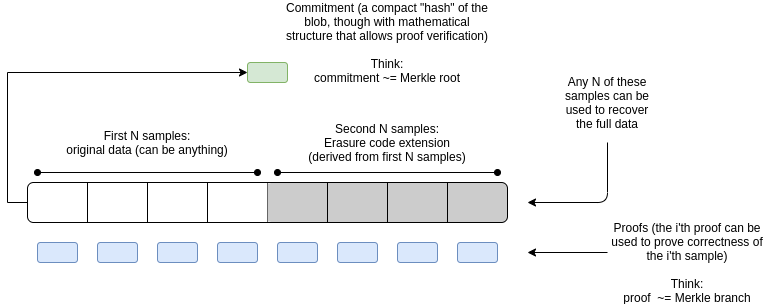
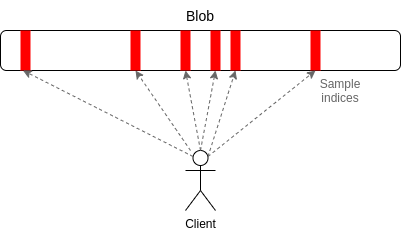
Its core feature, called PeerDAS, lets nodes store only parts of each blob instead of the entire thing.
This lets Ethereum scale to more blobs per block.
More blobs → cheaper DA → cheaper L2 transactions.

English
zert retweetledi

PeerDAS in Fusaka is significant because it literally is sharding.
Ethereum is coming to consensus on blocks without requiring any single node to see more than a tiny fraction of the data. And this is robust to 51% attacks - it's client-side probabilistic verification, not validator voting.
Sharding has been a dream for Ethereum since 2015 , and data availability sampling since 2017 ( github.com/ethereum/resea… ), and now we have it.
That said, there are three ways that the sharding in Fusaka is incomplete:
* We can process O(c^2) transactions (where c is the per-node compute) on L2s, but not on the ethereum L1. If we want to scaling to benefit the ethereum L1 as well, beyond what we can get by constant-factor upgrades like BAL and ePBS, we need mature ZK-EVMs.
* The proposer/builder bottleneck. Today, the builder needs to have the whole data and build the whole block. It would be amazing to have distributed block building.
* We don't have a sharded mempool. We still need that.
But even still, this is a fundamental step forward in blockchain design. The next two years will give us time to refine the PeerDAS mechanism, carefully increase its scale while we continue to ensure its stability, use it to scale L2s, and then when ZK-EVMs are mature, turn it inwards to scale ethereum L1 gas as well.
Big congrats to the Ethereum researchers and core devs who worked hard for years to make this happen.
English
@FlyingTulip_ Posible TGE? airdrop???
DeFi todo-en-uno: spot/swaps, perps con leverage y cross-margin en una sola cuenta (más lending). Menos fricción, ejecución on-chain. Fundador: @AndreCronjeTech (@yearnfi @SonicLabs).
To-do: flyingtulip.com/quiz/10
Español
@BaltoAlt @ninja_writer21 ups, my dyslexia in action, thanks for the correction ^^
English

@0xzert @ninja_writer21 FRAX is frxUSD
And yes, just use frxUSD.
English

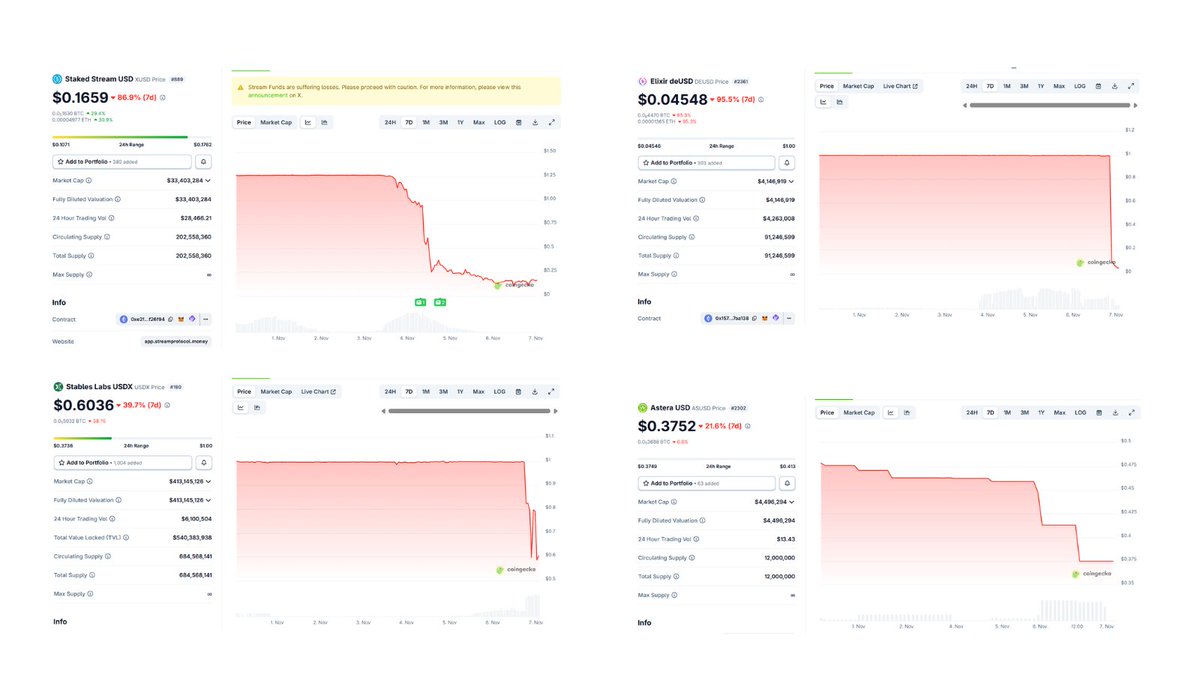
State of stablecoins right now.
stablewatch@stablewatchHQ
JUST IN: $deUSD has depegged to $0.1
English

@Saxenasaheb If you go for a MBA, my advice is that you either go to a top university or don't do it at all. The most important asset is the networking you are going to do. Best of luck, and apply to many of them so that you can select afterwards. Go to a prep school for the GMAT
English