@WShak1 lol, must be hard for the regime dealing with someone who lies more than they do..
English
Richard Carter
5.6K posts


New major position: Renewables Infrastructure Group (TRIG) Been buying aggressively last couple of weeks at average of about 69p (n, goes ex-div tomorrow for 1.89p Shares at 68.6p tomorrow post div, yield will be 11%. NAV at 109.7p, div has reasonable cover.
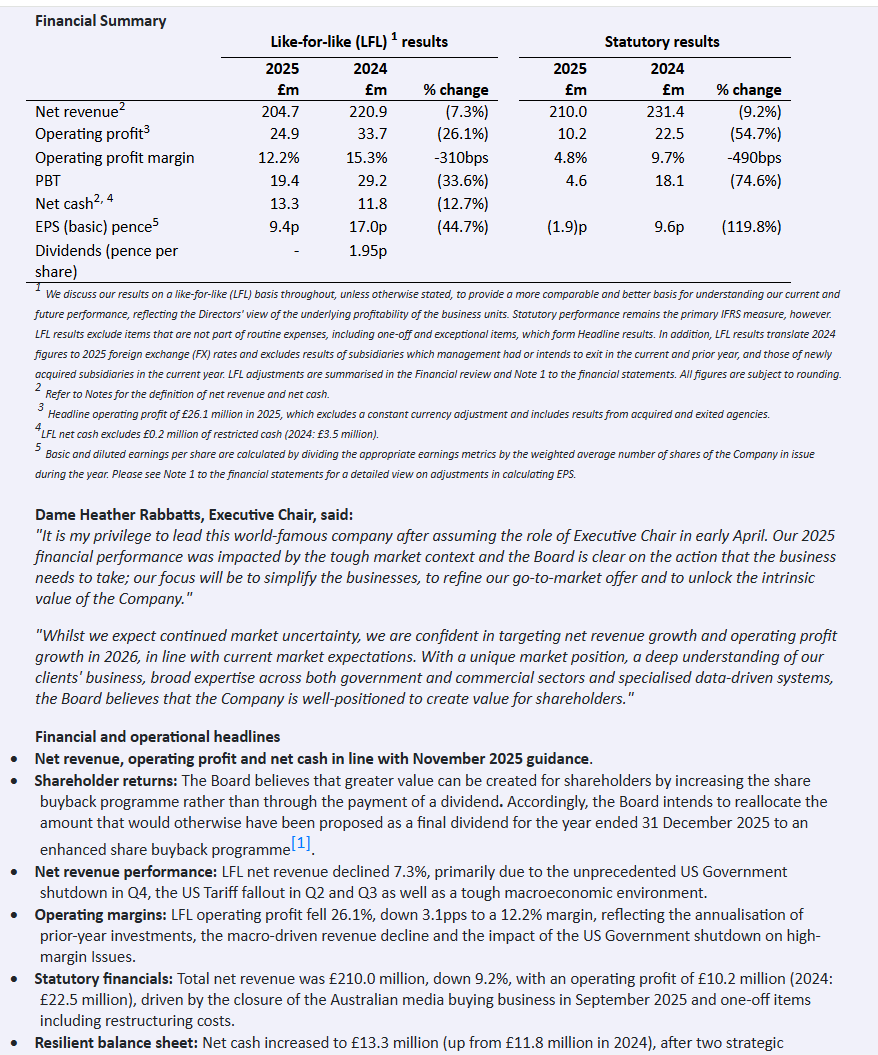
* S&PGR Raises Tullow Oil To 'CCC+'; Senior Sec Nts Rated 'CCC+'




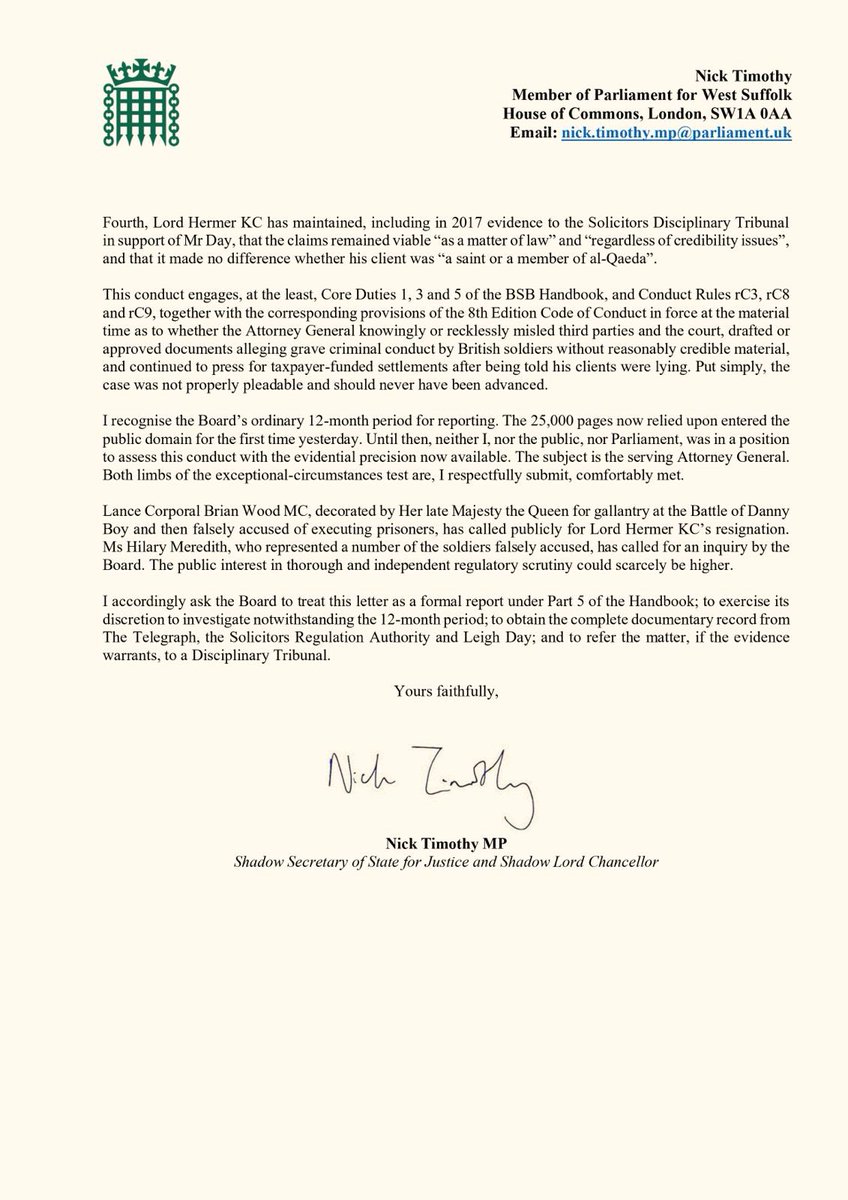
UK FINANCE MINISTER REEVES CALLS IN BANK CHIEFS FOR TALKS AMID DEEPENING IRAN WAR FALLOUT - SKY NEWS



🚨 #NEW: What Chris Mason’s @BBC Headlines Since April Reveal About Political Framing Since 30 April 2025, the eve of the most recent UK local elections, BBC Political Editor Chris Mason has published 95 items on the @BBCNews website: bbc.co.uk/news/topics/cd… A systematic review of those headlines (captured in the screenshot collage below) reveals a clear pattern in both whose politics are foregrounded and how they are framed. This analysis develops my two recent posts about Mason’s February 12th article (“Chris Mason: Latest vetting row raises fresh concerns over Starmer's judgement”) and February 9th article (“Chris Mason: Starmer's predicament is dire and now he faces future without top aides”). By reviewing each headline on Mason’s BBC topic page, which includes short analyses, clips, interviews and video posts, clear trends appear in both focus and valence (headline tone). While no individual headline is overtly partisan, their cumulative effect warrants scrutiny. 1. Who Gets the Spotlight? Across the 95 items examined: Approximately four-fifths focus centrally on Labour, Prime Minister Keir Starmer, or the government. A much smaller share (around 5–8%) centre on the Conservatives. The remainder (roughly 8–12%) focus on Reform UK, other parties, or cross-cutting themes such as international diplomacy or institutional inquiries. This concentration is striking but perhaps not wholly surprising: in a Westminster system, the governing party and prime minister are usually the most newsworthy subjects. Yet the scale of that focus (roughly four out of every five headlines) is nonetheless notable. If the logic of news values gives prominence to elite actors, it also implies that opposition or alternative voices receive proportionally less attention. 2. Valence of Framing Perhaps more striking than what is covered is how it is presented. Among headlines focused on Labour/Starmer: Almost three-quarters use negatively valenced language, highlighting setbacks, missteps or internal tensions. Common words include predicament, humiliation, backlash, U-turns, fresh concerns over judgement and similar phrasing. Only a small minority have an overtly positive framing, such as emphasising resilience or political opportunity. The remainder are more neutral, focusing on factual statements or interviews without evaluative wording. Negatively valenced headlines may be justified by their subject matter: governments do face challenges, and reporting those challenges is legitimate journalism. But the proportion of negative framing applied to Labour stands out sharply compared with other subjects. For example, when controversy arises around internal policy rows or appointments, the headline language routinely foregrounds personal judgement or crisis (“raises fresh concerns over Starmer’s judgement”). Even where events have long-term political context, the distilled headline often foregrounds personalised drama over substance. This pattern goes beyond simple reporting and moves into the realm of narrative emphasis. That isn’t to say anything untrue is being reported, but the choice of evaluative language matters, especially when repeated across many headlines from the same authoritative voice. 3. What the Pattern Suggests Three structural tendencies stand out: (a) Crisis foregrounding (setbacks are framed as symptoms of deeper instability rather than isolated events). (b) Personalisation (controversies are routinely linked to questions of leadership judgement). (c) Process over policy (internal dissent and political manoeuvre receive more headline emphasis than substantive policy delivery). Stories that might foreground policy detail (e.g., economic indicators, social programmes, legislative achievement etc) appear less frequently than stories about political process, internal dissent, or leadership volatility. Opposition parties and broader political actors are comparatively under-covered. While Reform UK or the Conservatives do appear, they constitute a small minority of the focus. These tendencies aren’t necessarily the product of individual bias; political editors naturally gravitate toward the locus of power and to moments of conflict or consequence. But the cumulative effect across nearly one hundred headlines is what makes this pattern notable. 4. Why Framing Matters Headlines act as a gateway to news: they shape first impressions and frame how readers interpret what follows. The recurrence of negatively slanted headlines about one political actor (even if factually accurate) reinforces a specific narrative: that the sitting government is beset by crisis, misjudgement, and internal strife. Headlines such as “Starmer’s predicament is dire” or “fresh concerns over judgement” do not fabricate crises, but they do foreground them. That focus amplifies Westminster drama (e.g., leadership peril, internal rows, political reset) sometimes at the expense of broader context, such as policy delivery, longer-term economic trends, or the everyday impact of government action. British media scholarship has long observed that political journalism often defaults to conflict framing, as it maps easily onto political competition and power struggles. While familiar to journalists and audiences alike, this emphasis also shapes how democracy is perceived: as a series of leadership dramas rather than a process of complex democratic governance and public service. 5. Fairness, Impartiality and Public Expectations Unlike most UK news outlets, which are privately owned, the BBC operates under a public-service mandate with explicit commitments to impartiality and balance. There is no reason to believe that Mason’s headlines systematically violate these standards: they report real events, real controversies, and real concerns expressed within political circles. But impartiality is not only about balance of facts; it is also about balance of emphasis. Reporting the government’s missteps is essential (holding power to account is a core journalistic function essential for a well-informed citizenship able to participate effectively in a functioning democracy) but when that emphasis overwhelmingly dominates the headline space for one actor over others, it merits reflection on whether the broader political landscape is being presented in full. Governing parties are inevitably subject to scrutiny. But the combination of high headline frequency and consistently negative valence towards Labour during this period risks foregrounding political instability over governance progress, shaping public perception even when underlying events are more complex. 6. Conclusion This systematic snapshot of Chris Mason’s BBC headlines posted on the BBC News website since April 2025 shows a clear pattern: a dominant focus on the Labour government combined with a high proportion of negatively slanted language. This brief analysis examines headlines only; a fuller picture would compare full article content and parallel coverage from other outlets over the same period. None of this suggests bad faith or factual inaccuracy. Rather, it reflects how cumulative framing choices from a powerful newsroom voice shape the political narrative audiences encounter daily. That cumulative weight is not a matter of conspiratorial bias, but of editorial emphasis. And emphasis, over time, shapes political reality. In an era often described as an “outrage economy,” where news consumption is increasingly headline-driven and attention is scarce, understanding not just what is reported, but how it is framed, is vital to maintaining public trust in journalism and a healthy democratic discourse. A comparative study of political editors’ output across other broadcast outlets, such as @SkyNews, @itvnews, @Channel4News and @GBNEWS, would help place these findings in broader context. ENDNOTE: For readers interested in political framing and language, I recommend Frame Lab (theframelab.org), co-founded by cognitive linguist Dr. @GeorgeLakoff and journalist @gilduran76, which offers excellent and timely commentary and analysis on how political rhetoric and moral narratives shape public discourse.



This is probably the most important article of the month: an op-ed by Oman's Foreign Minister, who mediated the talks between the U.S. and Iran, in which he writes that the U.S. "has lost control of its foreign policy" to Israel. He repeats that a deal was possible as an outcome of the talks (something confirmed by the UK's National Security Advisor, who also attended: x.com/i/status/20341…) and that the military strike by the U.S. and Israel was "a shock." Interestingly, given he is one of Iran's neighbors and given that Oman has been struck multiple times by Iran since the war began (en.wikipedia.org/wiki/2026_Iran…), he writes that "Iran’s retaliation against what it claims are American targets on the territory of its neighbours was an inevitable result" of the U.S.-Israeli attack. He describes it as "probably the only rational option available to the Iranian leadership." He says the war "endangers" the region's entire "economic model in which global sport, tourism, aviation and technology were to play an important role." He adds that "if this had not been anticipated by the architects of this war, that was surely a grave miscalculation." But, he adds, the "greatest miscalculation" of all for the U.S. "was allowing itself to be drawn into this war in the first place." In his view this was the doing of "Israel’s leadership" who "persuaded America that Iran had been so weakened by sanctions, internal divisions and the American-Israeli bombings of its nuclear sites last June, that an unconditional surrender would swiftly follow the initial assault and the assassination of the supreme leader." Obviously, this proved completely wrong, and the U.S. is now in a quagmire. He says that, given this, "America’s friends have a responsibility to tell the truth," which is that "there are two parties to this war who have nothing to gain from it," namely "Iran and America." He says that all of the U.S. interests in the region (end to nuclear proliferation, secure energy supply chains, investment opportunities) are "best achieved with Iran at peace." As he writes, "this is an uncomfortable truth to tell, because it involves indicating the extent to which America has lost control of its own foreign policy. But it must be told." He then proposes a couple of paths to get back to the negotiating table, although he recognizes how difficult it would be for Iran "to return to dialogue with an administration that twice switched abruptly from talks to bombing and assassination." That's perhaps the most profound damage Trump did during this entire episode: the complete discrediting of diplomacy. If Iran was taught anything, it is: don't negotiate with the U.S., it's a trap that will literally kill you. The great irony of the man who sold himself as a dealmaker is that he taught the world one thing: don't make deals with my country. Link to the article: economist.com/by-invitation/…