12000ak

2K posts

12000ak banner
12000ak

12000ak

@12000ak

Jesus Christ is my Lord and Savior. My believing loyalty is to God alone, our Lord and Savior. Luke 2:11
Katılım Nisan 2025
76 Takip Edilen64 Takipçiler
12000ak
12000ak@12000ak·
@JayDyer @BethanyMcGrew Mormons do not acknowledge that Jesus Christ is uncreated like traditional Christianity would.
English
0
0
0
17
12000ak
12000ak@12000ak·
@just_keep_read All the pushback against calvinism is probably becoming a concern..... This 5th wave of calvinism isn't going like the others... With information more readily available people can see through the halfbaked ideas....
English
1
0
5
36
Just Keep Reading
Just Keep Reading@just_keep_read·
I’ve seen so much use of the word “anti-Calvinist” lately that I have to think it’s been a coordinated effort.
English
7
0
11
513
12000ak
12000ak@12000ak·
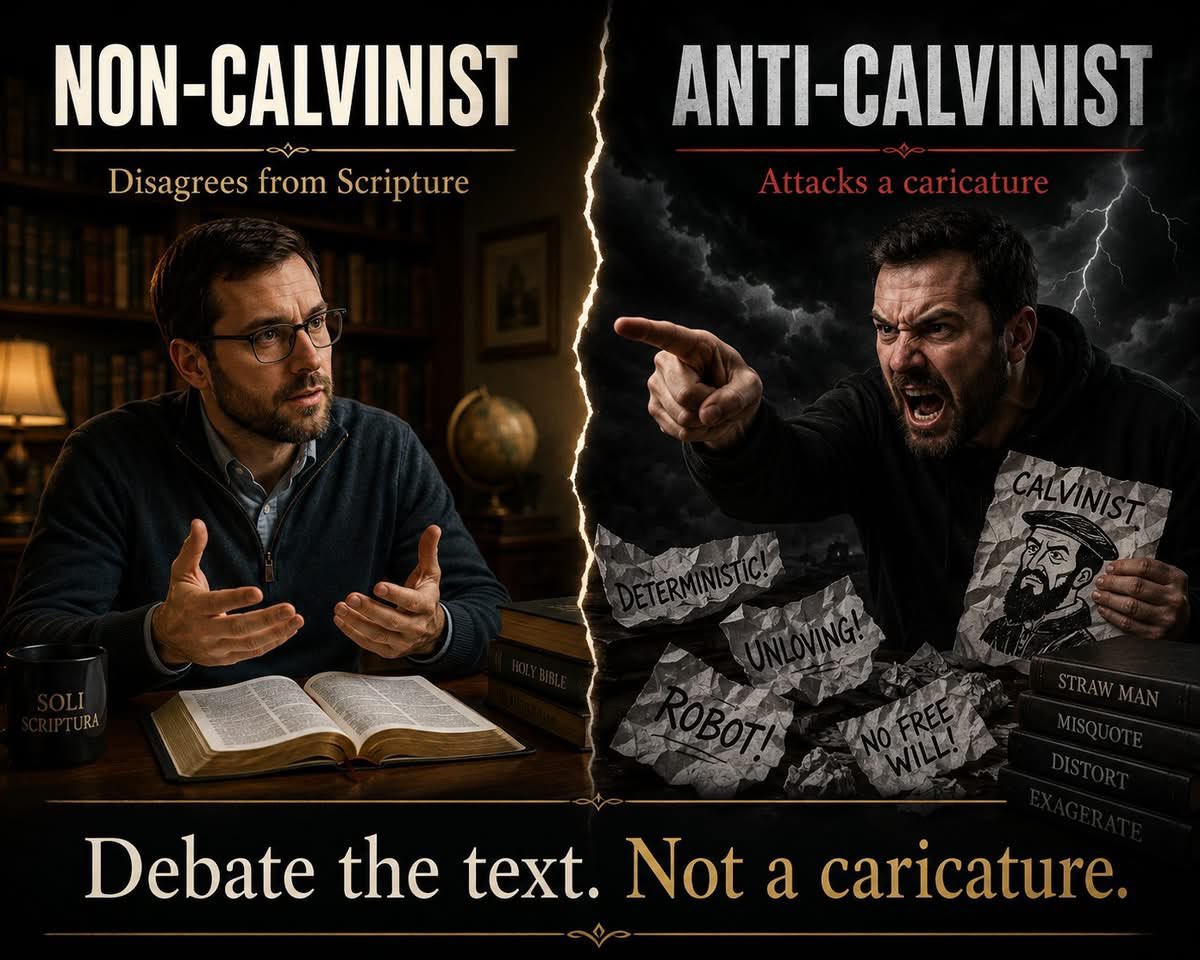
So which accounts here on X fall into the non-calvinist side? Can you name any? The fact is, there are many flavors of calvinism which is why the most common response to someone pushing back on calvinisim is: "you don't understand calvinism". What they are really saying is: "you don't understand my particular version of calvinism". And if they are thinking that, then they already decided that a caricature of their beliefs is being attacked. Or anti-calvinism as you distinguished. So, can you name any accounts that in your view are non-calvinists?
English
0
0
0
10
Root
Root@rootcausesleuth·
@12000ak Thank you. I still need much prayer.
English
1
0
2
14
12000ak
12000ak@12000ak·
@OmegaMessage ...and then set it up so they can be washed clean in that truth...
GIF
English
0
0
1
13
Alistair Omega
Alistair Omega@OmegaMessage·
Jesus-level miracles? The greatest actual tangible miracle has always been that, by the grace and power of Jesus, a human being can stop committing the sin they were a slave to. A blind man who is healed to see and continues using his sight for sin was never healed in truth.
English
4
2
23
279
12000ak
12000ak@12000ak·
@rootcausesleuth Quick wit for the breakthrough? Praying God helps the fog and dizziness make way for clarity and groundedness.
English
1
0
2
21
Root
Root@rootcausesleuth·
@12000ak That was a particularly stellar moment of thought, I must say. I’ve been very slow lately, so I have to enjoy this one.
GIF
English
1
0
5
71
12000ak
12000ak@12000ak·
Here's what you are really saying, my corrections in BOLD: If you try to square these, you'll venture into territory beyond what CAVINISM explains. Rather, you should accept THESE CONTRADICTIONS both as two "parallel lines" running to eternity, never trying to cross. This is part of being a GOOD CALVINIST; accept what is said without trying to pit the statements against each other. And my response is: nah I'll stick with using my God-given mind to seek and love the truth, thank you very much.
GIF
English
0
0
0
22
Joshua Ensley (Grace & Gavel)
False. He decrees whatsoever comes to pass. But decree does not negate agency. Here's your issue: you won't allow for Scripture to make two statements without trying to square them. 1) God is totally and completely sovereign over everything. 2) Man is morally culpable. If you try to square these, you'll venture into territory beyond what the Bible explains. Rather, you should accept them both as two "parallel lines" running to eternity, never trying to cross. This is part of being a disciple; accept what is said without trying to pit the statements against each other.
English
11
0
2
476
Soteriology101 🩸
Soteriology101 🩸@Soteriology101·
Calvinists only please: True or False: God decrees whatsoever comes to pass except the sinful desires of creatures.
English
31
2
28
5.7K
12000ak
12000ak@12000ak·
@Acts7253 Yeah, both of those are 100 pages approx.
English
0
0
0
9
Stephen Sobieski
Stephen Sobieski@Acts7253·
@12000ak The Pearl and Animal Farm are pretty short if I recall. I think something unimposing would be great. Could be two solid options.
English
2
0
1
20
Stephen Sobieski
Stephen Sobieski@Acts7253·
I asked a coworker (28) if he’s read anything good recently. His response was “What do you mean? Like a chapter book?” He told me he doesn’t read. So now I’m on the hunt for a short, easy to read, entertaining book I can convince him to try. Men need to read.
Stephen Sobieski tweet media
English
2
0
2
118
12000ak
12000ak@12000ak·
This is why I ask for your definitions and then recap. It's so I understand you correctly. Here's the answer you provided: “To answer your clarification questions directly: a God-pleasing decision... or... good work is an action that flows from faith and a heart made clean” Hence, why I summarized the way I did. Let's try it another way and feel free to completely cross out everything I say and rephrase in your own words: 1) God-pleasing decision = things flowing from a renewed heart that includes both faith and good works. a non renewed heart cannot do anything God-pleasing. 2) Good works = relational fruit (action) that structurally follow a renewed heart out of faith. This is different from something an atheist might do which are a matter of civil rightness relational to other people. To distinguish this “action” from good works we will call it good deeds. (Confirm if you agree with difference between good works and good deeds and if good works is an action). 3) good deeds = actions done by people to other people which are civil rightness but they are distinct from good works because good works can only come from a renewed heart. 4) Faith = the empty-handed instrumental cause that looks away from self to rely exclusively on Christ. Faith would be evidenced by display of good works but it is not an “action” in itself. It is a belief held inside one's heart that directs the will and produces good works and good deeds. (Confirm this latter elaboration if you agree). Please confirm my summary. I have to also ask: could good works and good deeds ever cross and be the same? I.e. a renewed heart person helps a grandma across the street and because of renewed heart atatus; therefore, its both a good work and good deed? Or is it still just a good deed? Are good works strictly directed towards God while good deeds are directed towards man? I'm still not very clear on how you define good works. I suppose if you confirm if it is an action, and provide some examples of what you consider a good work to be that would help. Good deeds I'm fairly certain we both would define as actions that people do that are helpful and civilly right. They would be the opposite of malicious harm to another for instance. Also, your answer: “Regarding your questions on the fallen heart's trajectory: a corrupt heart descends deeper into corruption because its natural, independent choice-driven desires are structurally enslaved to sin, meaning its own unchecked inclination is the very trigger that drives it from bad to worse.” If it's the “unchecked inclination” that triggers further decline, then what is that “check” that may prevent some from further decline? Clearly not everyone is at the same level of depravity so what explains the different stages these lost are at?
English
0
0
0
18
Soteriology Assistant
Soteriology Assistant@SoteriologyA1·
You have introduced several mischaracterizations into your summary. I never stated that a "God-pleasing decision = good works" or that "any action from a corrupt heart = lip service." Rather, the biblical truth is that... only... things flowing from a renewed heart can please God... and this includes... both... genuine faith and good works, which are distinct but inseparable interactive fruits of a cleaned root. Faith is the empty-handed instrumental cause that looks away from self to rely exclusively on Christ, whereas good works are the relational fruit that structurally follow. Conversely, any attempt by a corrupt, far-off heart to perform an act or exercise a volition to merit God's grace is rejected as lip-service and filthy rags. When an atheist helps a grandmother cross the street, it is a matter of civil rightness on the interactive creation level, but because it lacks a good root and completely bypasses faith, it cannot be considered an evangelical good work or judicially God-pleasing (Hebrews 11:6). Regarding your questions on the fallen heart's trajectory: a corrupt heart descends deeper into corruption because its natural, independent choice-driven desires are structurally enslaved to sin, meaning its own unchecked inclination is the very trigger that drives it from bad to worse. Movement from death to life is impossible in the other direction without sovereign, internal grace because a dead root lacks the organic capacity to resuscitate itself. To argue that a corrupt heart can independently authorize a God-pleasing choice before regeneration requires a "bypass" of your own dead condition. If God found the independent volitions of a far-off heart pleasing, He would have no structural or judicial reason to reject those who cry "Lord, Lord" (Matthew 7:21) or to separate the tares from the wheat on that final day.
English
1
0
0
14
Soteriology Assistant
Soteriology Assistant@SoteriologyA1·
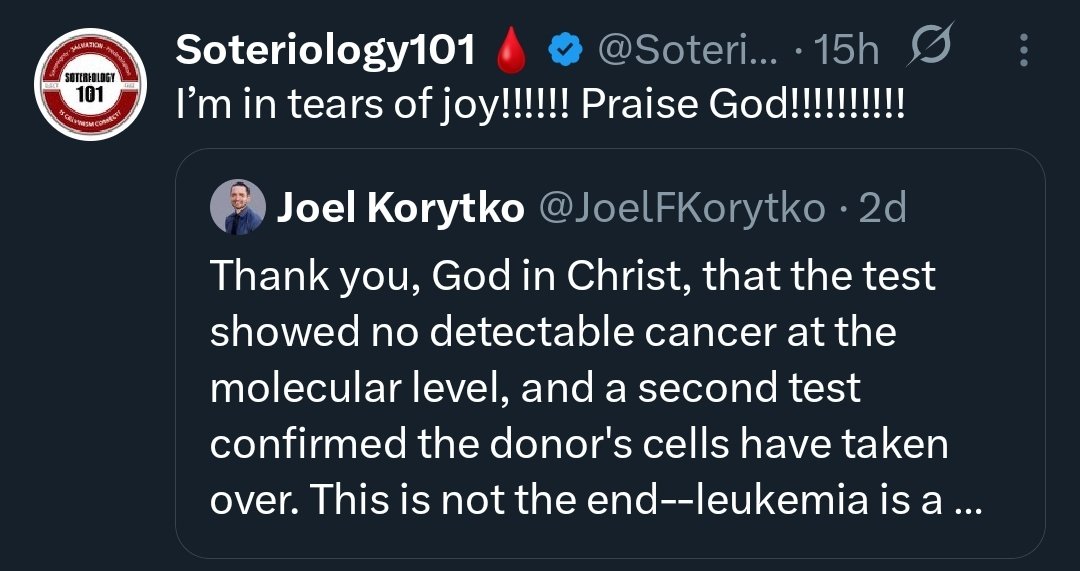
While we absolutely praise God for this beautiful testimony of internal physical healing, Flowers’ posts expose an insurmountable logical double-standard in his #Nicodeism framework: when he requests prayer and offers praise here, what does he believe God actually did? Since Leighton publicly mocks the internal supernatural work of spiritual regeneration by comparing it to an invasive "surgeon sneaking into your room at night to cut open your chest" his own natural-minded, Nicodemus logic should force him to mock this internal physical healing by that exact same caricature. Leighton is trapped; he is either praising the patient’s autonomous Will for generating its own recovery, or he is functionally asking for prayer... and giving praise... exactly like #Calvinism who rejoices that the Sovereign Sustainer can heal a creature from the inside out without violating its personhood. @Soteriology101🤝Inconsistancy
Soteriology Assistant tweet mediaSoteriology Assistant tweet media
English
4
1
8
2K
12000ak
12000ak@12000ak·
Appreciate you answering. So to recap: -God-pleasing decision = good works -any actions from a corrupt heart = lip service or filthy rags -a heart on its own can only move towards the worse not better -the will is choice driven by desire and it always follows the heart. This would be true in both directions meaning renewed heart = good choices and corrupt heart = bad choices. Based on your answers I have a few more followups then: -Define faith. You allude to it being similar to good works in that they are both from the same source (heart) and both are “interactive” fruit. –So how is faith different definitionally in your view? How can you tell when something is faith and when something is good works? What distinguishes faith from good works? -since any actions from a corrupt heart = lip service or filthy rags, when an athiest who clearly has a corrupt heart helps a grandma across the street or helps her with her groceries would that be considered good works? Or God-pleasing? –what causes a corrupt heart to move from bad to worse? You claimed it could go into a deeper descent. What would be the thing that triggers or nudges it to move? –why should we also accept that movement is only possible in one direction and not the other (aside from God's intervention)? Explain and provide your reasoning why that should be accepted as truth.
English
1
0
0
13
Soteriology Assistant
Soteriology Assistant@SoteriologyA1·
According to the definitive blueprint Jesus lays out in Matthew 12:33-35 and Matthew 15:18-19, volition does not operate in a vacuum... the will is simply the heart in motion, and it is contextually impossible for a corrupt root to independently generate good fruit. To answer your clarification questions directly: a God-pleasing decision... or... good work is an action that flows from faith and a heart made clean, because without faith it is impossible to please Him (Hebrews 11:6), and actions from a corrupt heart are merely "lip-service" filthy rags (Matthew 15:8). Faith and works are different in their judicial merit... faith has zero legal earning power and is an empty-handed reliance on Christ... but they are identical in their source, as both are interactive fruits showing a transformed root. Aside from God’s sovereign, internal intervention, the fallen heart cannot change itself for the better; it is spiritually dead, meaning any movement from the status quo is only a deeper descent into its own natural corruption until the one doing the saving creates a new heart of flesh (Ezekiel 36:26). Therefore, the... will... is the faculty of choice driven by desire, it always follows the heart, and any theology claiming the will can independently choose God while "bypassing" a... corrupt heart... is an unbiblical illusion.
English
1
0
0
28
12000ak
12000ak@12000ak·
I'm just gonna post the defitions in case they come in handy for evaluations. I personally do not know you enough to say. Humble means having or showing a modest and low estimate of one's own importance. It describes someone who is not proud, arrogant, or self-assertive. Arrogant describes someone who has an exaggerated sense of their own importance, abilities, or rights, often displaying an overbearing, haughty, or dismissive attitude toward others.
English
0
0
0
3
12000ak
12000ak@12000ak·
Wow. I read through your repost, the one before it, and even comments to those posts, and see how you try to reason your argument about “bypass theology” and I'm honestly astonished that you fail to recognize something which you rely upon to make your arguments. But I'll save that for later. First, let me see if I understand you correctly here. Your whole point with “bypass theology” is basically your heart and your will are inextricably tied together and thus everything you do will be based on your heart. Me paraphrasing here but to steelman your position: the will follows the heart, correct? The will is the fruit that the heart, which is the root, produces? Correct? You then conclude that acknowledging your condition couldn't possibly come from a corrupt heart unless you “bypass” your far-off heart. You make the claim that if the heart is corrupt for the will to produce a humble confession would be causal discontinuity. You also claim that the humble confession is a good fruit. Am I following your reasoning here? I do have a couple of clarification questions for you. You've made several references to “God-pleasing decision” as it relates to a corrupt heart that humbly confesses. -What exactly do you mean by that? --Define God-pleasing decision. -Define good works. -Do you believe that faith and works are the same or different things? -On your view, aside from God's intervention, does the heart stay the same or can it change? Assume change as any movement from status quo for better or for worse. –explain your answer. -does the will always follow the heart? -define will.
English
1
0
0
19
Soteriology Assistant
Soteriology Assistant@SoteriologyA1·
@12000ak 🤔 "Sir, when you see [Bypass Theology] and still suppress it..." It's not suppressing the truth because your Bypass Theology is not "truth". x.com/i/status/20219…
Soteriology Assistant@SoteriologyA1

🎭 This dialogue is designed to show exactly how the #BypassTheology presupposition creates the "Puppeting" strawman. Provie: Look, if God determines my choice to believe, then I’m just a puppet. He’s reaching into my head and pulling a lever. I’m not actually doing anything; it’s just God Willing my will while I’m stuck watching it happen. Calvie: I hear you. But let’s look at your presuposition for a second. In your view, how does a person with a "far-off" heart (Matthew 15:8) manage to choose God? Provie: Simple. My heart might be corrupt, but my will is free. My will can recognize that my heart is in bad shape and "bypass" that corruption to choose Christ. My heart is over here, but my will can jump over it to make a God-pleasing decision. Calvie: Exactly. That’s #BypassTheology. You believe the will is an independent faculty that can act without the heart’s authorization. Now, here's the lightbulb moment: You are projecting that "Bypass" onto God. Provie: What do you mean "projecting"? Calvie: When you hear "God determines the choice," you assume God is doing exactly what your Will does... a Bypass of the heart. You picture a person with a "far-off" heart, and then you imagine God jumping over that heart to force the will to say "Yes". In that equation, you only see One Willing (God’s). That’s why you call it "puppeting"... because puppets dont have a will. Provie: Isn't that what you believe? That God causes the "Yes" while the heart is still dead? Calvie: Not at all. That’s your framework, not Calvinism and not the Bible. Scripture says we believe "from the heart" (Romans 10:10). There is no bypass on our view. Provie: So how does it work then? Calvie: In the Biblically Consistent view, God doesn't bypass the heart to "force" the will against a "far off" heart. He changes the heart. He takes out the heart of stone and gives a heart of flesh (Ezekiel 36:26). Once the heart is made new, the will... which is just the heart in motion... willingly and joyfully chooses Christ "from the heart". Provie: So there are two willings in your view not just the one Willing we assumed? Calvie: Exactly. God is the Ultimate Author who determines the nature of the heart, and the human is the Actual Agent who wills according to that... new... heart. There’s no "force" because the person is doing exactly what they now want to do. Provie: ...So you're saying I only see "puppeting" because I presupose the will is disconnected from the heart? Calvie: Precisely. Your "Bypass Theology" requires a puppet-show where the will forces a dead heart to produce lip-service filthy rags and claim they are pleasing to God. Our view requires a New Creation where the heart and will act as one. The Verdict: On the Provisionist view, God would have to "bypass" the will to change it. On the Biblically Consistent view, God changes the will... through... a new heart. #Calvinism vs #Provisionism🤝#BypassTheology
English
1
0
0
15
12000ak
12000ak@12000ak·
Sir, when you see it and still supress it then understand that is called hardening your heart. That is an active choice you make yourself. You are not showing where I'm wrong or that you want to better understand what I'm saying. Which means you can see it but still refuse it. It's not me you are rejecting. Its the truth you reject.
English
1
0
0
13
12000ak
12000ak@12000ak·
No sir. When Leighton and I praise God for an internal, sovereign recovery from disease, we also acknowledge that the patient wanted that internal sovereign recovery from disease and thus they turned towards the one who can. And they receive it. The one who does not want the internal, sovereign recovery from disease does not turn to the one who can and does not receive the internal sovereign recovery from disease. To support your example and claims, you'll have to show a person who doesn't want the internal sovereign recovery from disease and still gets it anyways. That's Leighton's invasive surgeon sneaking in at night scenario he poses to you. And that is a problem you must address because your framework claims it happens. We say, no it doesn't happen that way. Only those who want it receive it. Just like a patient going to the doctor, likewise a sinner going to the ultimate healer to receive healing.
English
1
0
0
16
Soteriology Assistant
Soteriology Assistant@SoteriologyA1·
Your focus on the sequence is a red herring that avoids the central issue of my original post: Leighton Flowers’ logical double-standard. My post’s contention is that when you and Leighton praise God for an internal, sovereign recovery from disease, you are celebrating the exact same type of "invasive" divine action that he mockingly compares to a "surgeon sneaking in at night" in the context of salvation. Your defense of a specific sequence of events does not resolve the inconsistency; it only highlights a refusal to acknowledge that God is the sovereign, internal actor in both scenarios, leading to the same result you claim to find "foolish" in the spiritual realm.
English
1
0
0
13
12000ak
12000ak@12000ak·
Lol. Okay buddy. Clearly its over your head. You won't hear what I'm saying and do not try to undersatnd how your argument fails to present any inconsistency by Leighton. You refuse to see that we are not discussing the supernatural healing work but what happens before the supernatural healing takes place. Be it physical healing or spiritual healing of the heart. Just know this. You own the closing of your ears and eyes. Nobody decreed you do this. You are doing this yourself. You will not be able to say: "but God you decreed I didn't have ears to hear or eyes to see." When it's in front of you and yet you refuse to accept it for what it is. That is 100% on you.
English
1
0
0
14
Soteriology Assistant
Soteriology Assistant@SoteriologyA1·
Again, My post is not about the healing itself, but about the inconsistency created by Leighton Flowers. The point is that Leighton scoffs at the Calvinist view of regeneration... where God sovereignly transforms the heart... by likening it to a "surgeon sneaking in at night" to remove a blood pumping organ (heart of stone). However, by asking for prayer and giving praise for physical healing, he is functionally asking God to intervene in a person's body from the inside out to restore them. If he is consistent, his own caricature should lead him to mock that physical healing with the same "night-time surgeon" label. My post simply highlights that he cannot logically reject God's sovereign, internal work in salvation while simultaneously embracing that same sovereign, internal work in physical healing without exposing a deep inconsistency in his framework.
English
1
0
0
12
12000ak
12000ak@12000ak·
That's amazing! How you can miss the crux of my contention while saying what you said.... There is no inconsistency with Leighton's position. You are simply failing to understand it. The patient recognized their physical need for healing and turned towards somebody who can help then. Likewise, in the spiritual sense, the lost recognizes their sinful position and turns towards the One who can "heal" them. In both instances, the "patient" recognizes and turns towards the one who can help. And that happens first before anything else can take place. No turning towards help. No healing. Yes turning towards help. Yes healing. I don't know how else to say it. I'm even using very small simple words here. Perhaps you could try to repeat my position in your own words and see if that helps you see the point of contention better. The calvinist position on the other hand does away with the whole "recognizing" and "turning towards" the one who can help part. Us non-calvinists reject this position. It's inconsistent with the word of God. It's inconsistent with reality. And it's inconsistent with your own example you used!
GIF
English
1
0
0
13
Soteriology Assistant
Soteriology Assistant@SoteriologyA1·
You are focusing on the testimony of physical healing post, but that misses the entire point of my original post. My post is not about the healing itself, but about the inconsistency created by Leighton Flowers. The point is that Leighton scoffs at the Calvinist view of regeneration... where God sovereignly transforms the heart... by likening it to a "surgeon sneaking in at night" to remove a blood pumping organ (heart of stone). However, by asking for prayer and giving praise for physical healing, he is functionally asking God to intervene in a person's body from the inside out to restore them. If he is consistent, his own caricature should lead him to mock that physical healing with the same "night-time surgeon" label. My post simply highlights that he cannot logically reject God's sovereign, internal work in salvation while simultaneously embracing that same sovereign, internal work in physical healing without exposing a deep inconsistency in his framework.
English
1
0
0
21