Sabitlenmiş Tweet
Ryan Allen
10.1K posts

Ryan Allen
@1900hurricane
Meteorologist. TAMU & MSST. Catholic. Truth, integrity, empathy, justice, & passion. We are masters of our own stories. INFP. He/him. Thoughts are my own alone.
Klein, TX Katılım Mart 2010
2.2K Takip Edilen1.7K Takipçiler

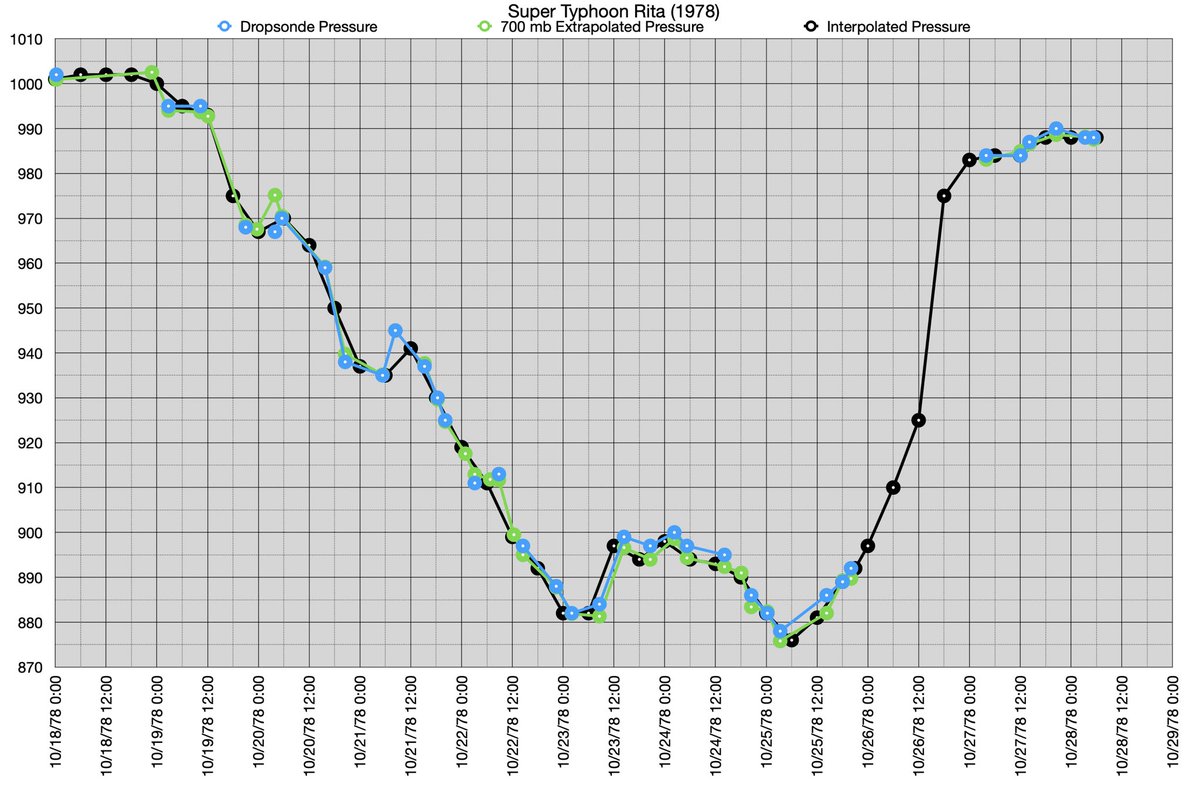
@WxTca @MikeFischerWx Thanks for the shoutout. With the new satellite data, it's also possible that it maintained sub 900 mb about 12 hours or so longer than indicated with that graph, where I originally interpolated steady weakening up until landfall.
English

True! Someone I know (who is much smarter than I am) has been hard at work trying to derive brightness temperature data from the BMPs, using an old JMA paper as a reference. The results are pretty incredible — Rita ‘78 is clearly one of the greatest TCs in the satellite era.
GIF
Ryan Allen@1900hurricane
@Sekai_WX @xiaoqianWX Don't forget @WxTca, he's the one who actually contacted JMA and got the data initially.
English
@Sekai_WX @xiaoqianWX Don't forget @WxTca, he's the one who actually contacted JMA and got the data initially.
English
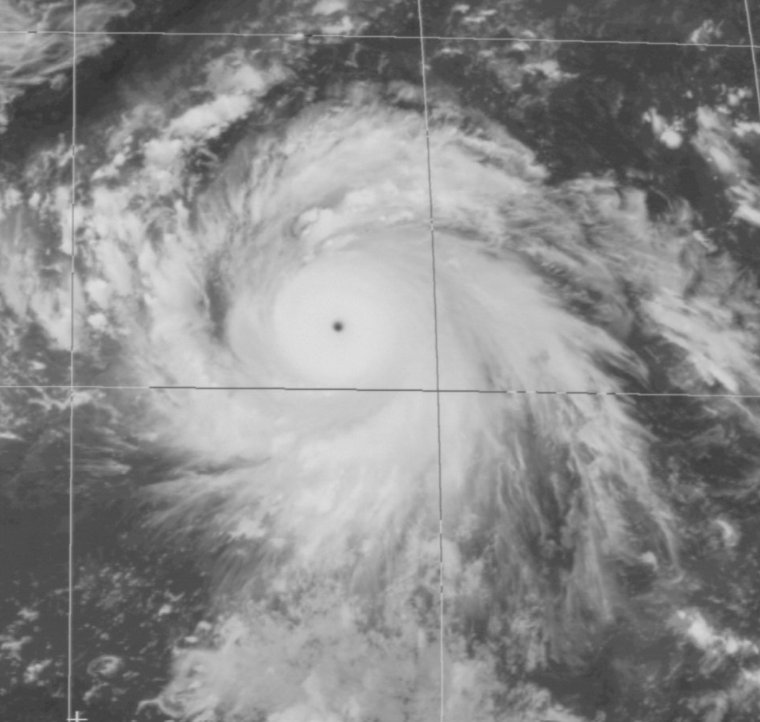
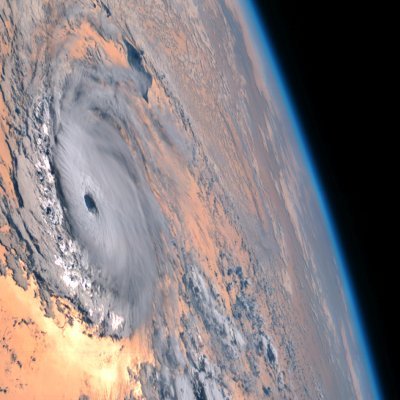
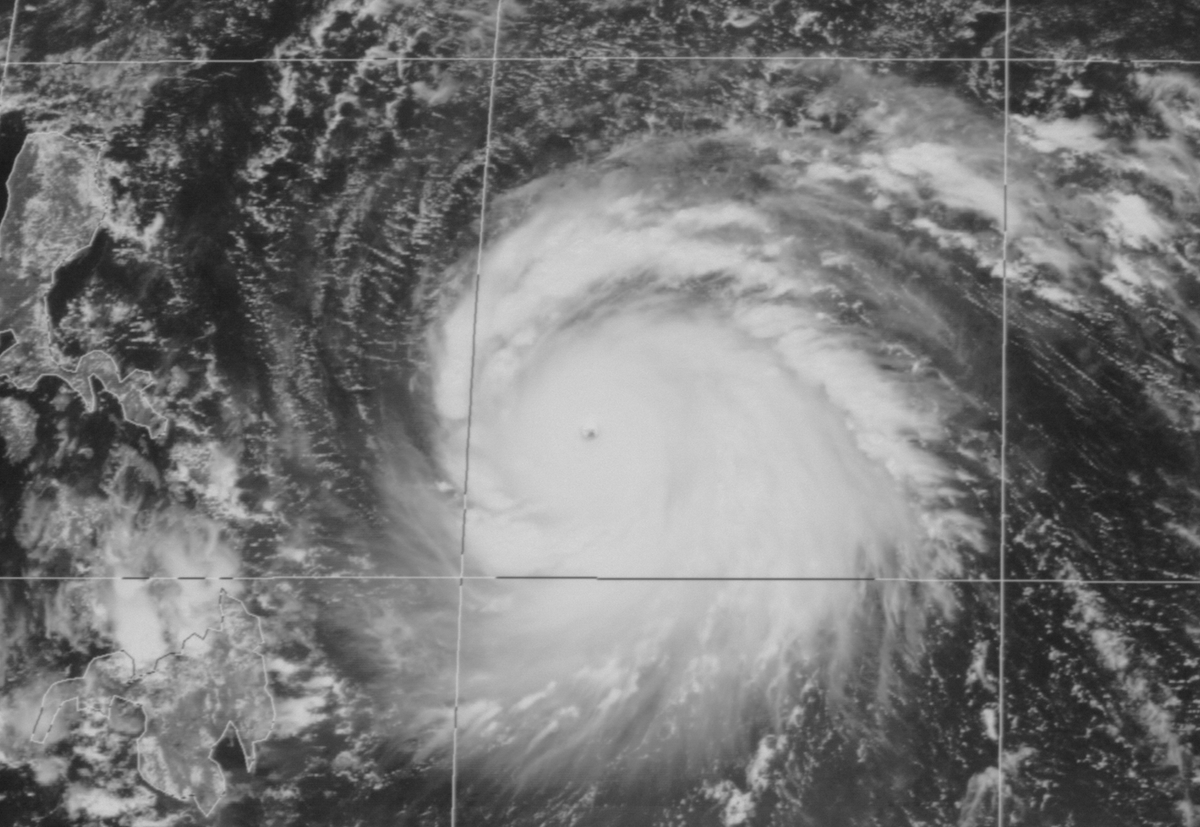
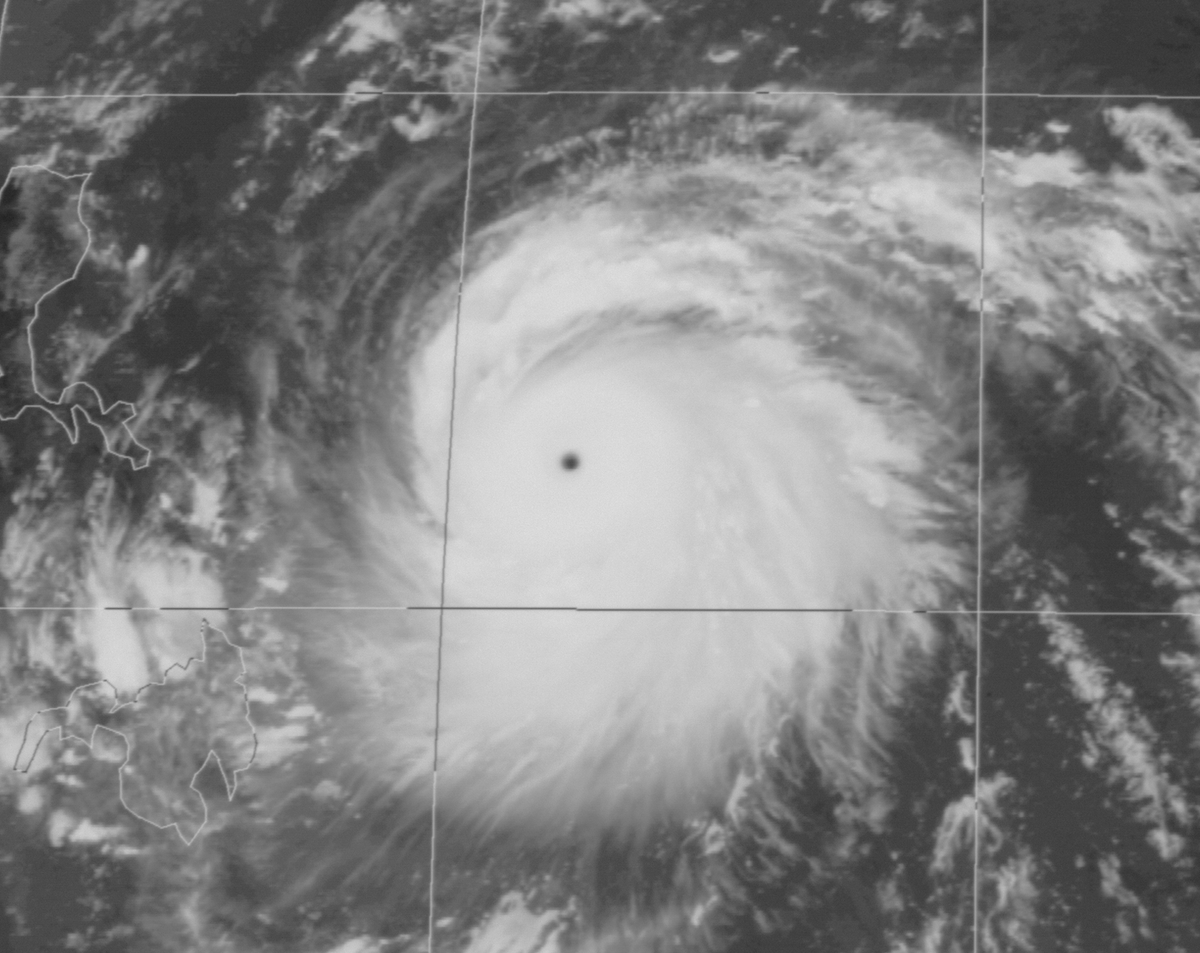
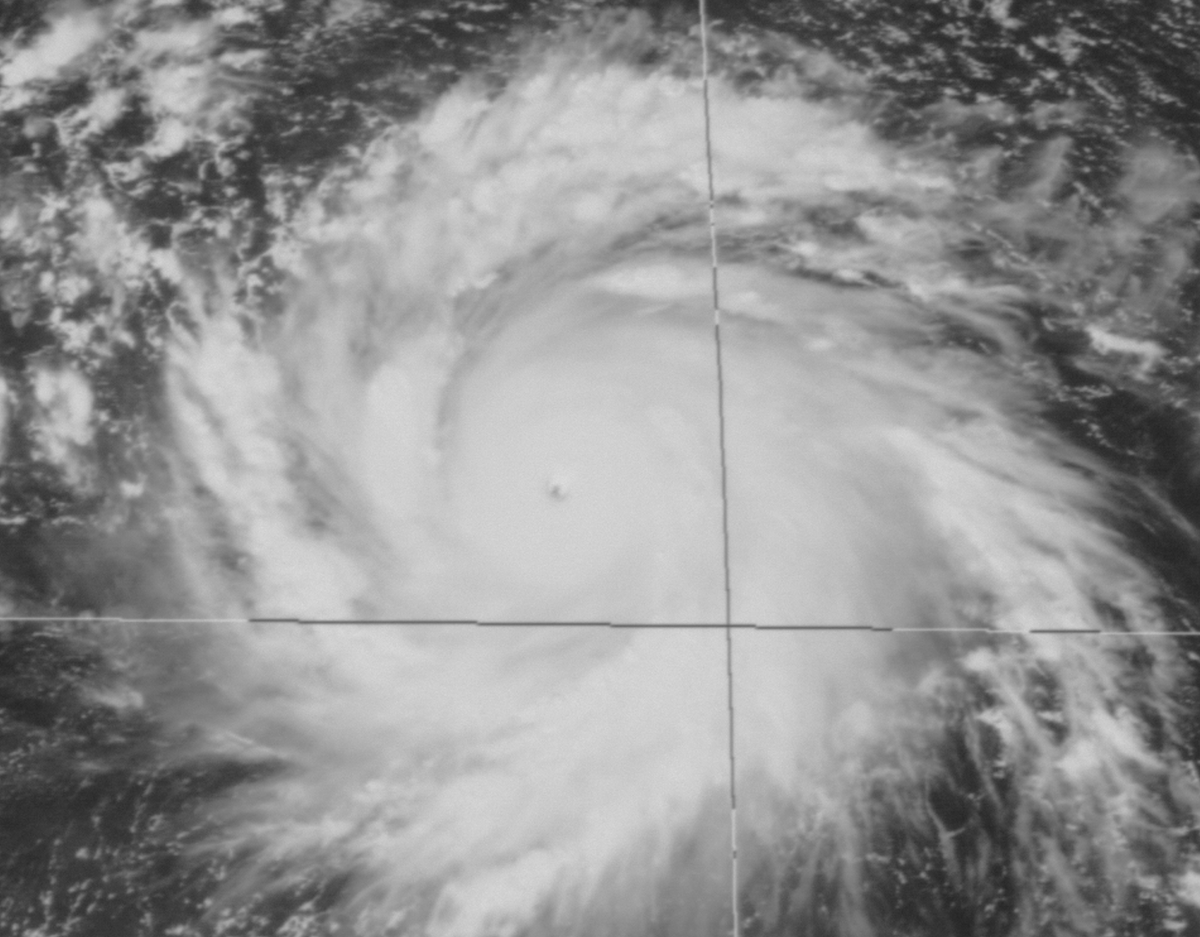
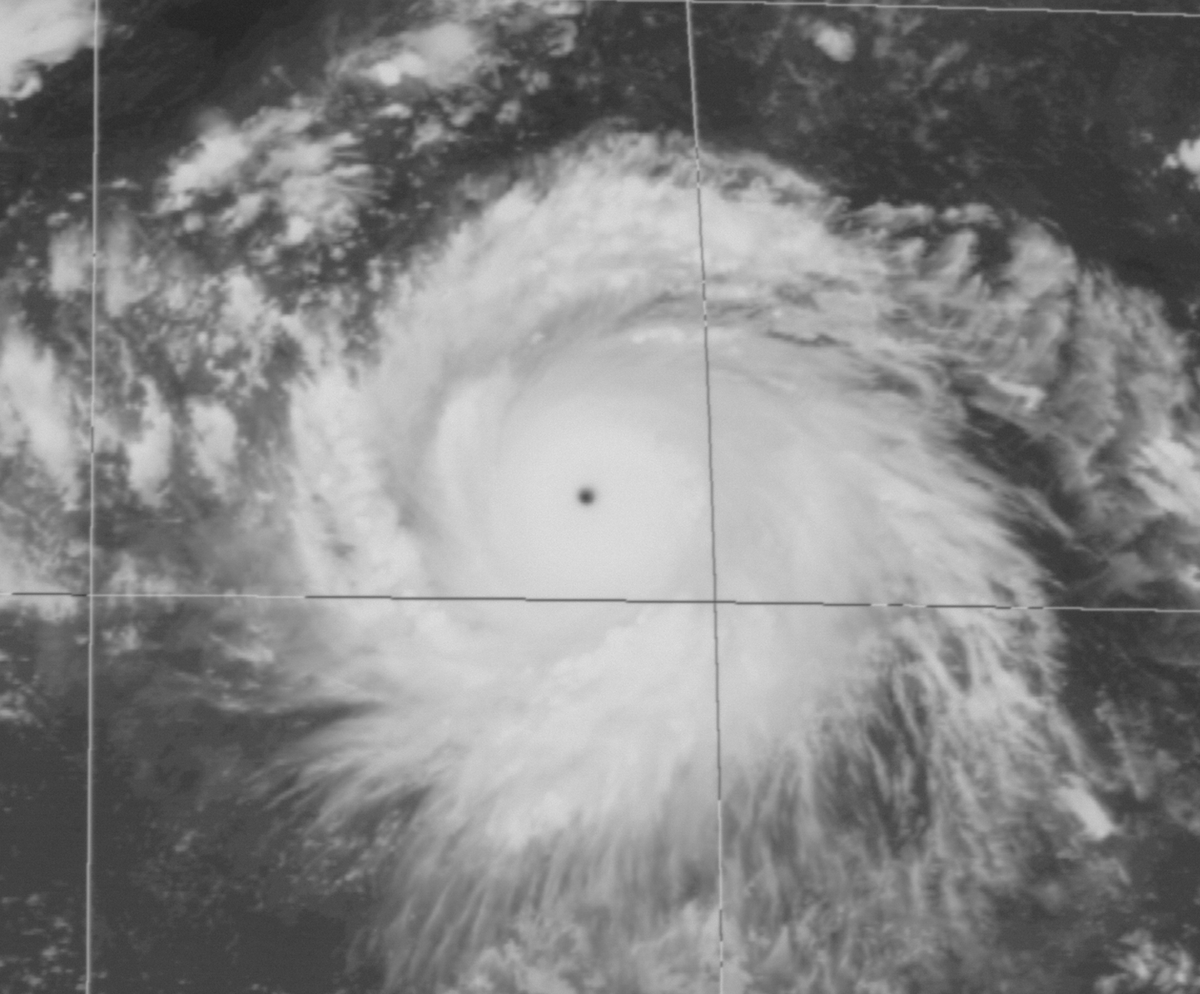
@xiaoqianWX just got access to the holy grail of all TC enthusiasts: The elusive GMS-1 data for 1978's Typhoon Rita.
This storm was incredible, staying under 900 mb for 3 days with a recon-measured 878 mb peak.
It's incredibly rare to see perfectly symmetrical outflow this.

English

(1/n)
@JMA_kishou provided us with some data of scanned GMS-1 imagery for Typhoon Rita(1978). For the first time ever, it allowed us to see the entire life cycle of this historic system.
P1-2 is 10/23 0230UTC, recon observed 882mb
Special thanks to @WxTca for contacting JMA!


English
Ryan Allen retweetledi

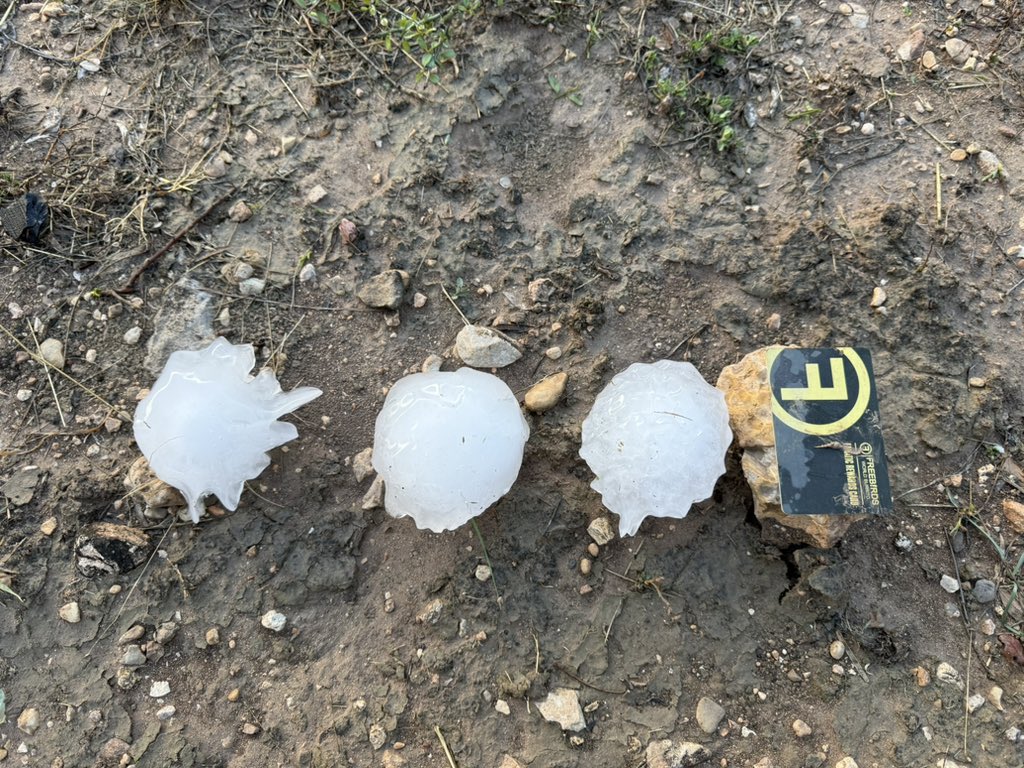
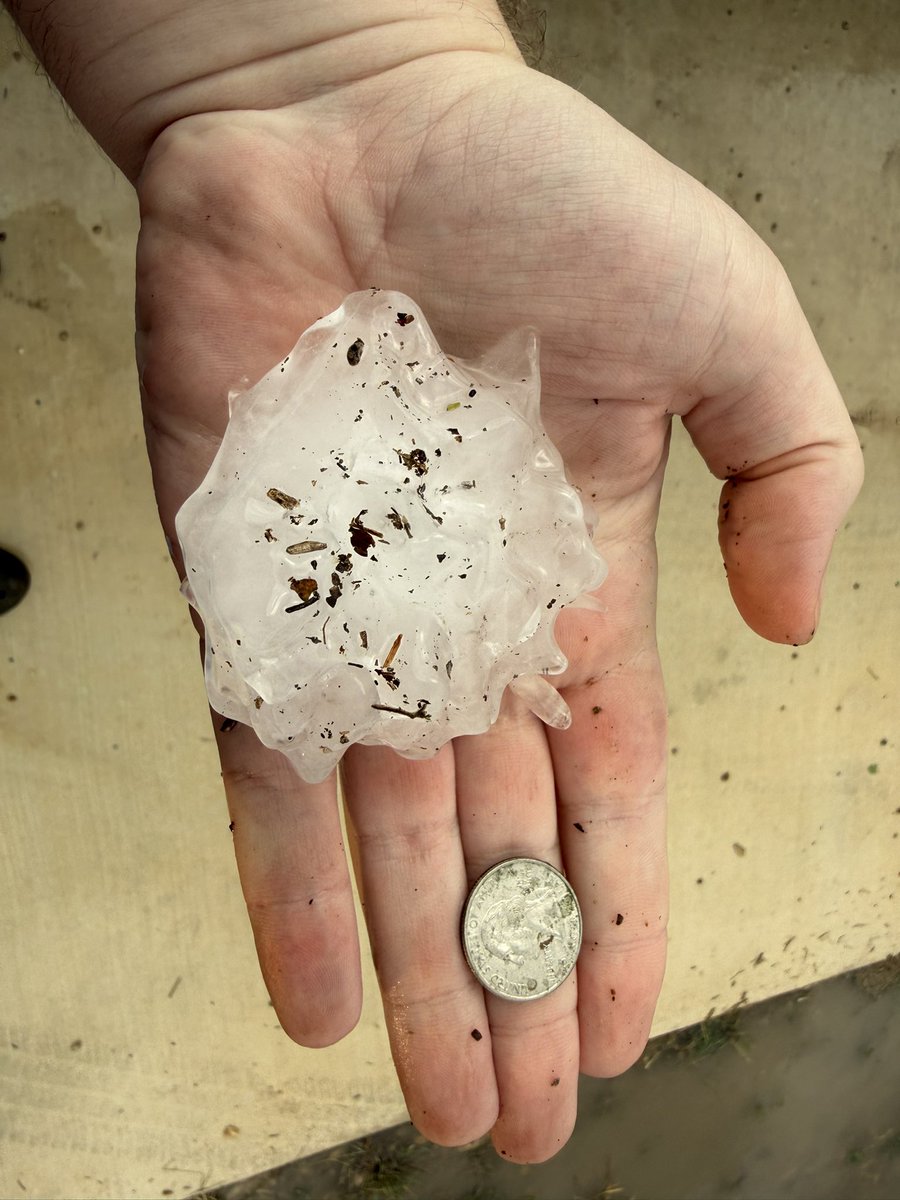
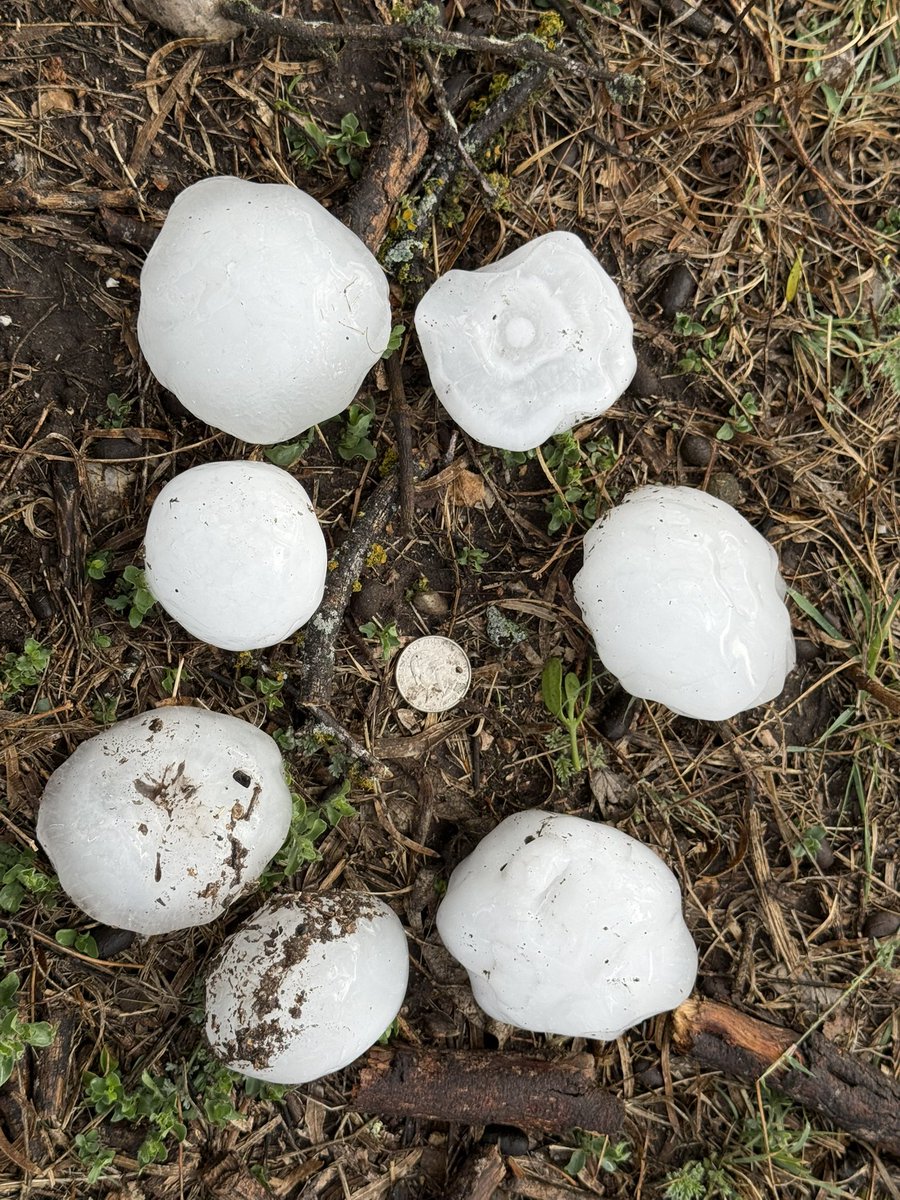
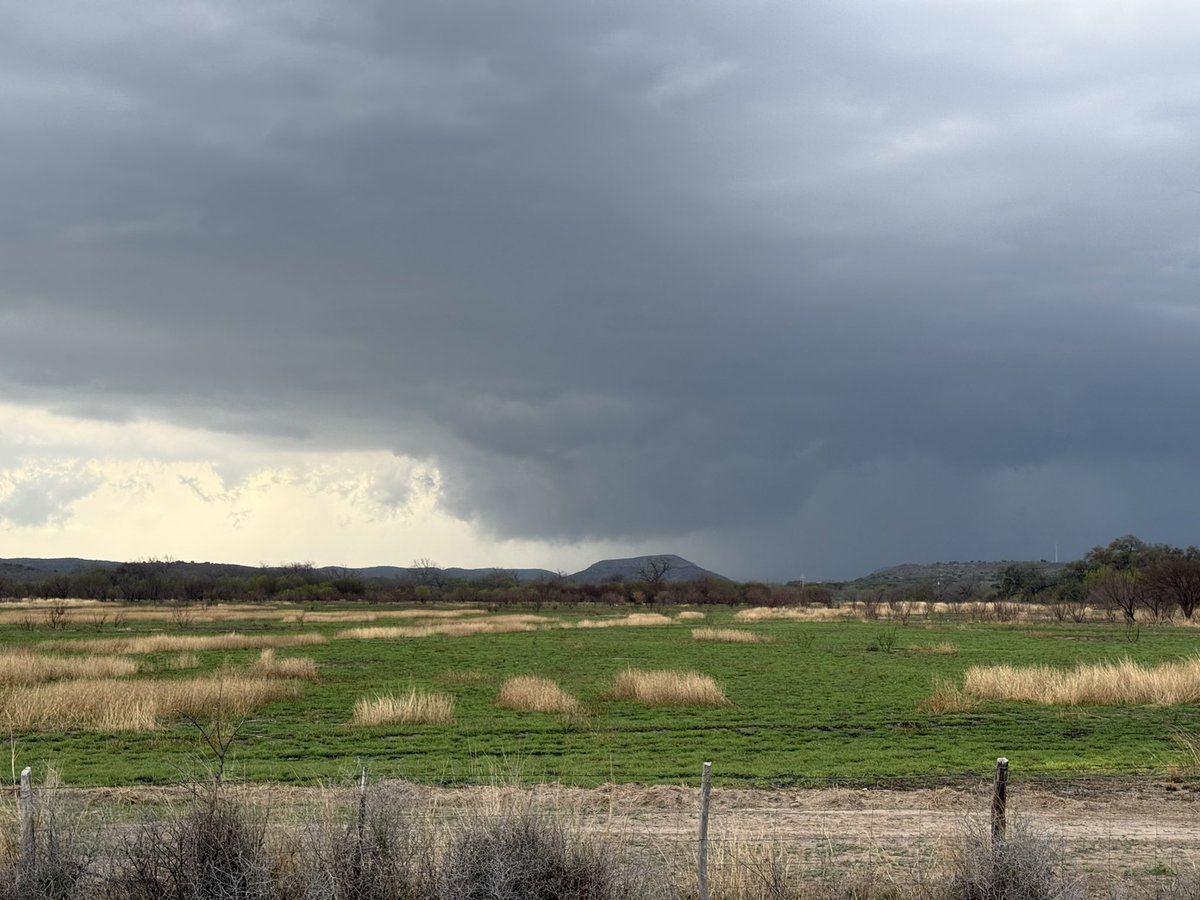
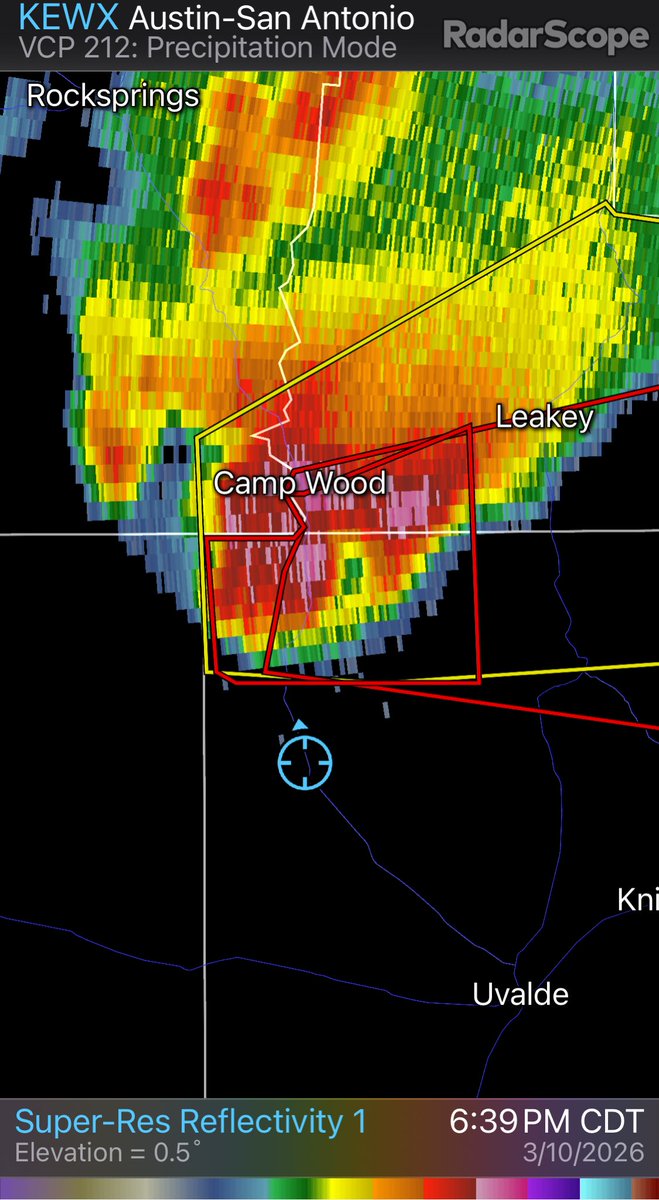
@NWSSanAntonio Largest hail I found was about the length of a credit card. Picture taken at 7:24 PM CDT, well after storm passage. @NWSSanAntonio

English

@NWSSanAntonio A few more of the big ones. They must have been truly massive when they were coming down. @NWSSanAntonio


English
Ryan Allen retweetledi

@Havoc_Six That one was a fun ride through a bunch of convection on the southeast side of a tropical storm… in the eye of Hurricane Lee was cooler though. I shot both videos so feel free to ask questions.
English
Ryan Allen retweetledi

Man. #Hurricane #MELISSA. Incredible power. Perhaps the mightiest hurricane of the 83 I've witnessed.
My location (Crawford, a tiny beach town in St. Elizabeth Parish #Jamaica) took the full force of the inner right eyewall and may have seen the peak winds in this historic, record-smashing hurricane.
First pic: as it started to get scary. Bone-rattling gusts were making roofs explode into clouds of lethal confetti. The grand palm tree out front was starting to bend obscenely—in a way I found unnatural.
Second pic: after we bolted the door shut because it was getting too dangerous even to watch the storm. (I'd randomly ended up in the hotel's kitchen with a local family.)
The hurricane's inner eyewall was a screaming white void. All I could see through the cracks in the shutters was the color white—accompanied by a constant, ear-splitting scream that actually caused pain. (Notice the woman in the pic holding her ears.) The scream occasionally got higher and angrier, and those extra-screechy screams made my eardrums pulse. Meanwhile, water was forcing in through every crack—under the floor and between the window slats.
I remember shuddering at the thought of what was happening to the town—what this screaming white void was doing to people, homes, communities.
My fears were well-founded. The impact in this part of coastal St. Elizabeth Parish is catastrophic. Wooden structures were completely mowed down and in some cases swept from their foundations. Some concrete structures collapsed. The well-built ones—like my hotel—survived, but even they had major roof, window, and door damage. The landscape has been stripped bare—the trees just sticks. The roads are blocked with rubble and utility poles.
Nearby Black River—a unique old historical town right on the water—was smashed beyond recognition: historical sites destroyed, main streets filled with rubble, the town market twisted like a pretzel, even the regional hospital destroyed.
It's a good thing I wasn't in my hotel room during the storm because one of the windows blew out, showering the bed with glass and wood. The hotel lost most of its roof, and several third-story rooms were smashed open. But in the lower flooors, those grand old concrete walls protected us. And so far I'm aware of only two deaths in Crawford—a fellow who had a heart attack at the school next door (his body was still in his car and unclaimed the next morning, a sad and disturbing sight), and a woman who drowned in the storm surge in Gallon Beach. While walking down the devastated streets of Black River, I ran into the Jamaican Member of Parliament for this region, @floydgreenja. He's a great dude and I appreciate that he already has a gameplan for turning this catastrophe into an opportunity—to build this region back better. And I vowed on the spot that I'm going to make it my mission to spread awareness of this catastrophe and get that aid flowing in. I'll be talking about MELISSA a lot over the coming months—because it is both a fascinating meteorological event and a human disaster that demands an international response. (And I swear an epic video is coming out of this.)


English
Ryan Allen retweetledi

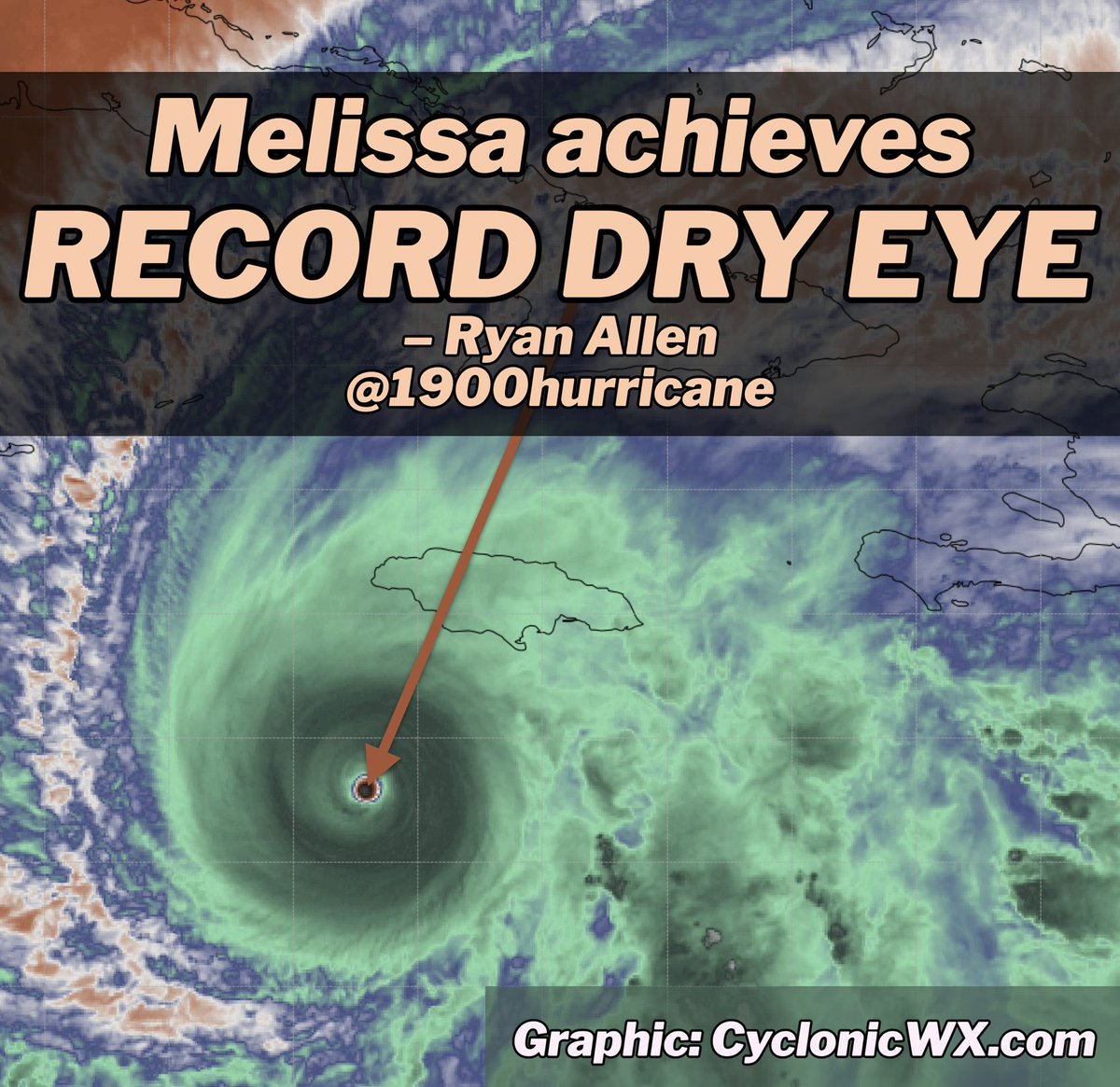
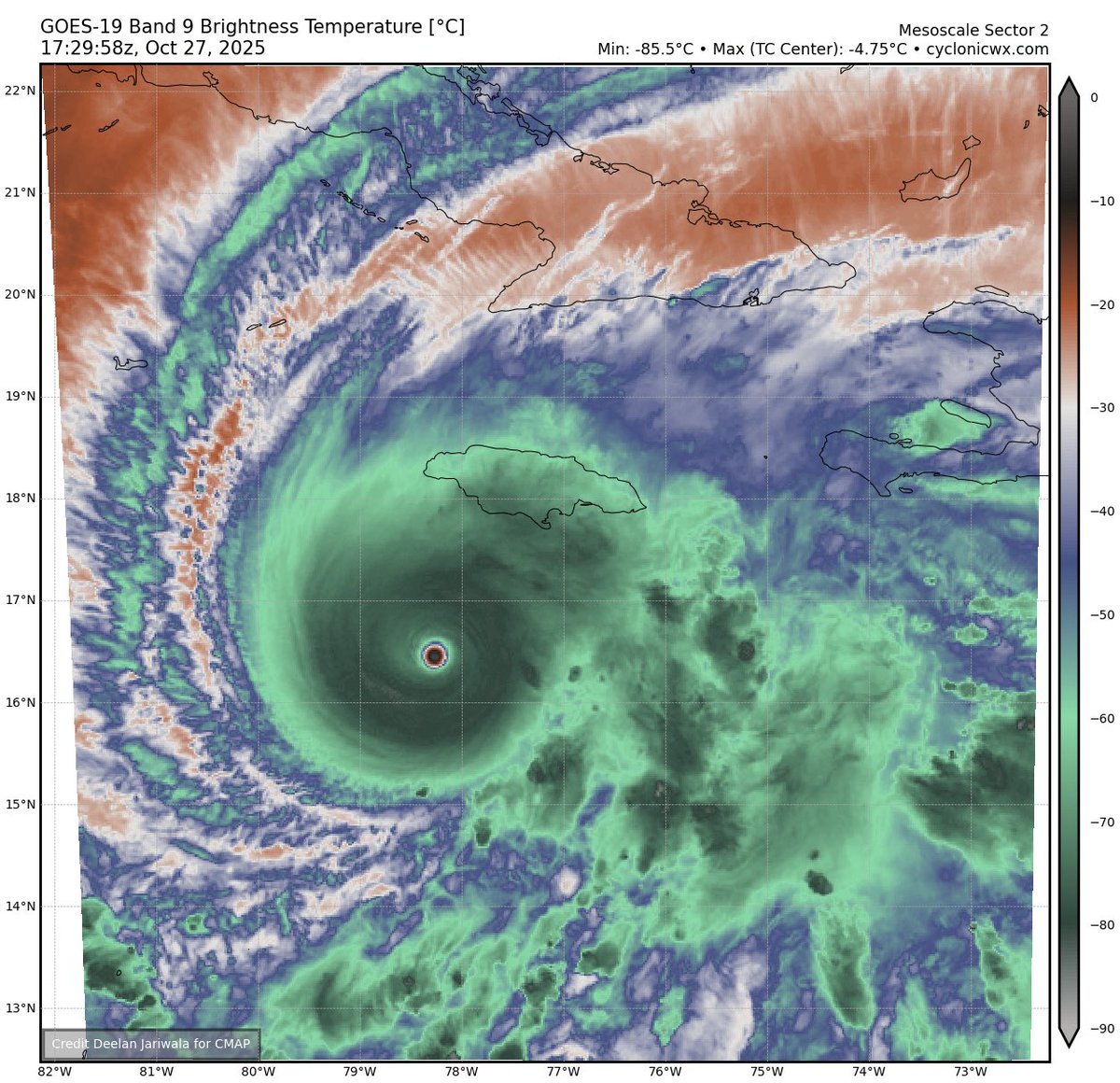
I'd like to extend a thank you to the brilliant Ryan Allen (@1900hurricane), who adroitly maintains an archive of satellite data. He provided more context on the incredible dry eye Melissa has.
He reviews water vapor imagery (the satellite senses how much moisture is present in the eye). His dates goes back to 2015, since he wants to maintain a consistent dataset. (For the tech-oriented folks: he looks at the 6.9 micrometer band from the GOES 16, 17, 18 and 19 satellites and Hiwawari 8/9.)
Melissa's eyewall is LIFTING an incredible volume of air... trillions and trillions of pounds! That causes a "void" of missing air at the surface that pulls air inwards – hence the extreme winds. About 10-11% of the atmosphere's mass is missing from the middle.
All that air rises in the erywall, but then collides with the tropopause, or ceiling of the lower atmosphere. Some of that air sinks back down, subsiding and drying.
That punches out the hollow eye, eroding clouds and leading to a hot, dry pillar in the middle of the storm.
And since satellites are discerning a record-dry eye, it's clear Melissa is an UNBELIEVABLY powerful storm.

English
Ryan Allen retweetledi

@NickKrasz_Wx @MatthewCappucci Thanks, I appreciate it. I don't share my work a ton these days, so it can be difficult to trace the origin of some of the stuff. I think chances are pretty good you saw a screenshot of the table at some point with the top storms, posted about it, and then Cappucci saw your post.
English

@MatthewCappucci I’m sorry, I just woke up from a nap haha. This is absolutely all credit due to @1900hurricane (Ryan Allen), I had nothing to do with this, I was just simply sharing the statistic for people to see. I don’t claim his work whatsoever, all respect to him.
English

@MatthewCappucci What methodology did he use to come across this data?
English

@WxTca Just a note, while I've gone through many frames of satellite imagery for Meranti and Goni, I haven't been totally exhaustive &have only looked at full disk imagery so far. It is not impossible I have missed a warmer frame for the others, but we are on the same tier at minimum.
English
Ryan Allen retweetledi

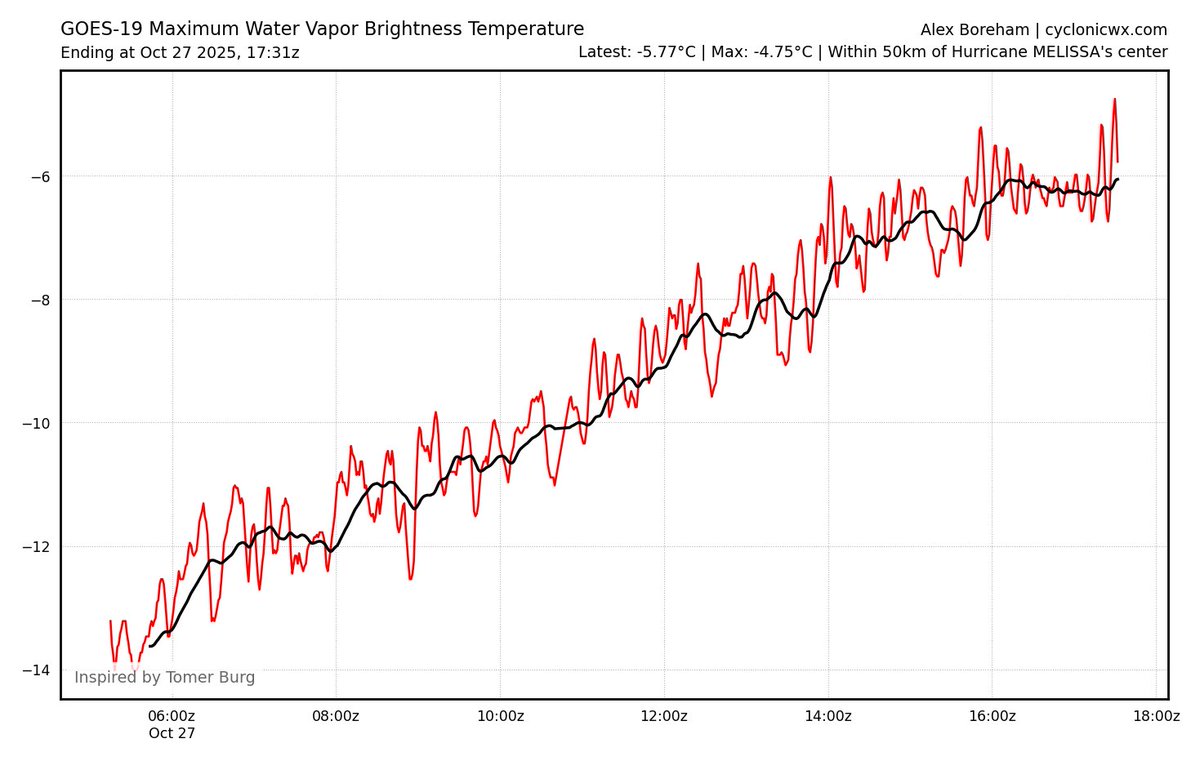
This beats the previous record set by 2016’s Super Typhoon Meranti. Credit to @1900hurricane for this table!

English
Ryan Allen retweetledi

The water vapor temperature has further risen to a remarkable -4.75C. To my knowledge, this is the warmest value recorded by geostationary satellites in the eye of a TC. Of note are the periodic oscillations in temperature associated with mesovortices rotating in the eye.


Deelan Jariwala@WxTca
Another dropsonde in the eye of the storm shows that subsidence in the center has become extreme, with substantial drying and warming penetrating closer and closer to the surface. No surprise that water vapor temperatures are as dry as they've ever been in a TC.
English