Andrew Altshuler

2.7K posts

Andrew Altshuler banner
Andrew Altshuler

Andrew Altshuler

@1eo

data infra ∩ context graphs ∩ agentic coordination | building nanograph & OMNIgraph

Katılım Aralık 2007
2.2K Takip Edilen2.9K Takipçiler
Andrew Altshuler
Andrew Altshuler@1eo·
I use SaaS SaaS adds LLM chat Agents use SaaS via MCP Every SaaS ships native CLI ⬅️ We are here 💡SaaS is mostly a DB wrapper DB CLI is better than SaaS CLI Agents can do all the DB ops I can vibe-code UI myself I use database
English
2
0
7
268
HelixDB
HelixDB@helixdb·
INTRODUCING HELIX-DB v2!!!💥🚀 HUGE changes coming to Helix-DB: - New query methods 🔎 - Object-storage backed 🪣 - Query insights 📝 - Vectors on nodes AND edges 🌐 More info below 👇🏻
HelixDB tweet media
English
9
16
183
367K
Andrew Altshuler
Andrew Altshuler@1eo·
@saranormous Problem is at some point it will become just a pile of md files. Agents start missing things and become confused. nanograph can solve it: github.com/nanograph/nano… It's a light on-device graph db that syncs via github. Code agents love it. OSS, all data stored in lance files
English
0
0
1
280
sarah guo
sarah guo@saranormous·
all I want is for my notes/content repo to be: 1. simple, reliable, fast 2. take recordings and do transcription/ASR 3. legible to code agents 4. enable more content creation (.md guidance) w/repo 5. not trap me in weird proprietary agent-building gui 6. sharing/permissions
English
41
4
231
25.8K
Andrew Altshuler
Andrew Altshuler@1eo·
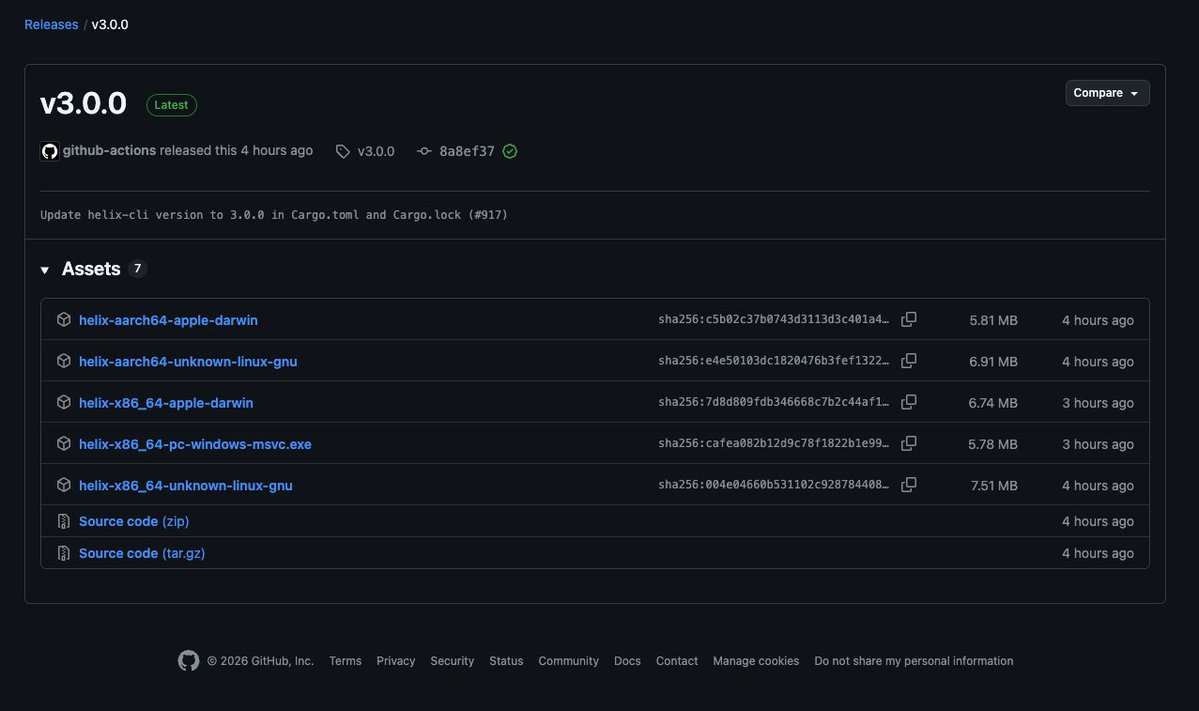
shape of agent-native db is more clear now: less: system of record more: context assembly models, memories, maps, reasoning structures from "retrieve some data for LLM" to "curate & maintain context state" multi-paradigm, not just multimodal: graph, columnar, documents, KV, objects, embeddings not trying to suck every resource into acts as an index & coordination surface for agents & existing systems CONTEXT-AS-CODE git-style: branch, version, merge set of linted queries [lens] ready for concurrent batch writes ONTOLOGY-AS-CODE declarative schema file enforced, versioned, tracked SECURITY-AS-CODE single YAML policy file enforced at the lens level UI-AS-CODE Jupyter-like notebook dashboards living projection of the domain models INFRA-AS-CODE: lakehouse: compute & storage are separated terraformed: S3 + elastic compute FROM source of truth TO source of competing views on what's useful now.
Andrew Altshuler tweet media
English
0
1
11
256
Andrew Altshuler retweetledi
Mitchell Hashimoto
Mitchell Hashimoto@mitchellh·
AI slop is good, actually. Slop is what enables fast parallel experimentation. The etiquette and skill is understanding the boundaries of where slop exists and the extent to which it should be cleaned up and how. A few examples: I’m working on the internals of some system right now. The API and GUI of this thing is fully zero shame slop. It’s horrible. But it lets me focus on the core quality while shipping a usable piece of alpha quality software to testers (transparent about the slop frontend). Similarly, this system has plugins. We sent agents in Ralph loops overnight to generate dozens of plugins. The plugins are slop. The quality is bad. The plugin API/SDK is absolutely not done. But we can test a full GUI with a full plugin ecosystem. When we change the API, we can regenerate them all. The cost of change is just tokens, the velocity is incomparable to before. I built Terraform. We tested and shipped TF 0.1 with about 3 very weak providers. Because we ran out of time. Building was slow. And when we changed our SDK the cost was immense. Totally different today, 10 years later. Today, I would’ve slop generated 100 providers (again, with transparency and cleanup later, but just to prove it out). As an anti example, I would not PR this (without prior warning) to another project. I would not throw this onto customers without full review or transparency (as I’m already doing). I would not accept first pass slop. It’s almost never right. Slop is a tool. And like anything else it’s not blanket bad or good. The context is everything.
English
107
220
2.7K
213.7K
Andrew Altshuler
Andrew Altshuler@1eo·
Fully migrated to @zeddotdev for code + docs I used to switch between VSCode <> Cursor <> Obsidian Now it’s just Zed Minimal. Opinionated. OSS. Tiny RAM footprint. Rust-native UI render on Metal beats Electron all the time. One of those upgrades when you don’t look back.
English
0
1
9
516
Andrew Altshuler
Andrew Altshuler@1eo·
@TGUPJ It is confusing I've mounted a local folder - where do I see it now?
English
0
0
0
1K
Udara
Udara@TGUPJ·
Distill desktop is now generally available to everyone! 🍾
English
17
18
523
63.1K
Andrew Altshuler retweetledi
Conjecture Institute
Conjecture Institute@ConjectureInst·
Conjecture Institute Advisor @DavidDeutschOxf on some problems he'd like to see solved: 1. The theory of how to create an artificial intelligence (which will be far more illuminating than actually implementing the theory) 2. Progress in constructor theory (fundamental theory in physics that casts all laws of physics in terms of possible and impossible tasks) 3. Revival of optimism (apparent obstacles are just problems to be solved)
English
12
16
126
8.3K
Andrew Altshuler
Andrew Altshuler@1eo·
The problem is Signal vs Noise, not structure. One way to solve it is to define clearly what constitutes the signal for you (this will be your contract with the agent). You need to keep the definition up-to-date and versioned. You can define it as a set of rules / patterns / anti-patterns. Without those your knowledge base will turn into a pile of random noisy snippets real fast. After you got the contract right - just use the database you like (via mcp or cli). Set up the schema and start collecting information. In Claude Code you can create a skill and connect it to an end-session hook: so agent could extract high-signal info from your sessions. Also sessions dashboard tools are useful - give you observability so you wouldn't miss important things. The next question is: how to keep your knowledge base up-to-date and hydrated. You can solve it with another agentic workflow: make agent go through your database and surface things that are conflicting, stale, or contradicting. For this create another skill and run your agent with this skill on a cron schedule. At some point you will get a bunch of policies for agent to resolve contradictions autonomously. Next step - go into semantics and ontology. You need those to give your agent not just knowledge, but reasoning pathways. Full toolkit: Database Skills Cron If you give this post to your agent of choice - it will set up v0 for you right away
English
0
0
2
151
Chamath Palihapitiya
Chamath Palihapitiya@chamath·
This may be a dumb question but I’ll ask it here anyways: I can’t find a good way for my various AI chats to automatically sync its conversation history into a structured knowledge base. So that as I update various chats from time to time and refine context, my knowledge base automatically grows with this new info.
English
1.1K
63
2.4K
806.3K
Andrew Altshuler
Andrew Altshuler@1eo·
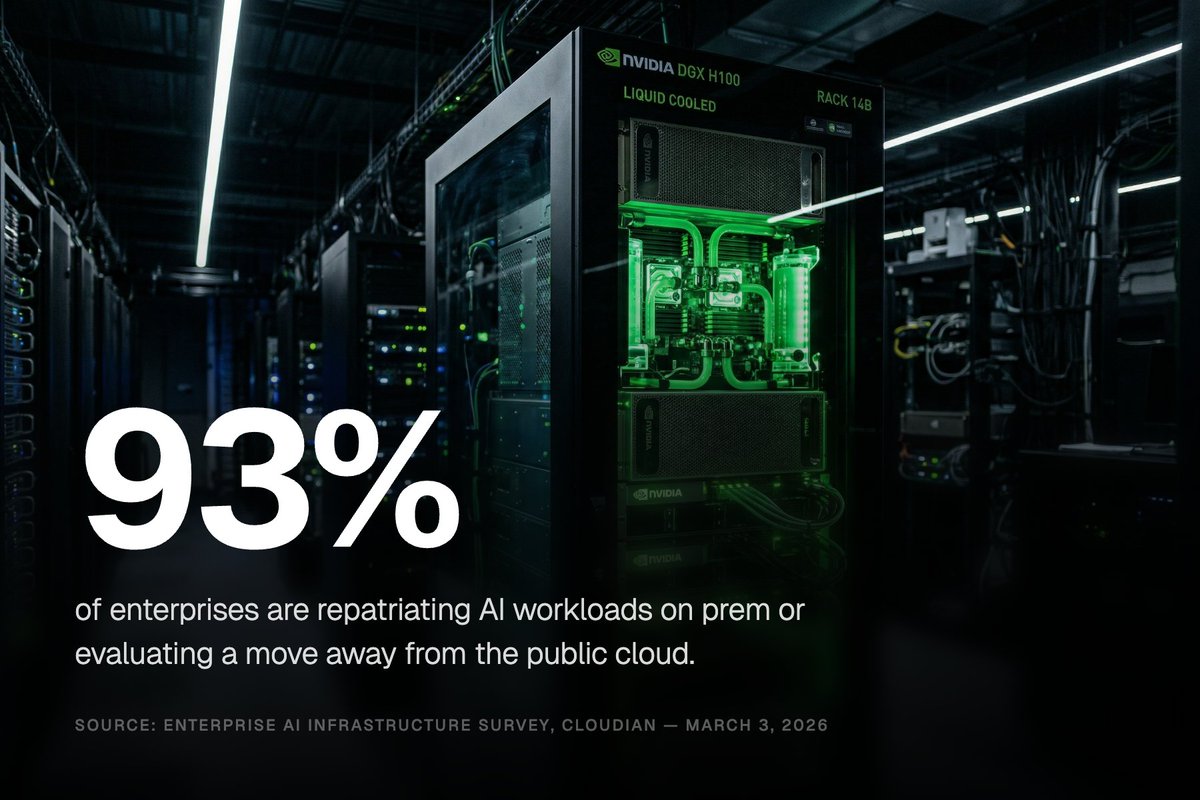
On-prem is the new cloud @chamath called this 2 months ago. Now it's everywhere: On-prem - ideal VPC - okay SaaS / public cloud - 👎 The cost of setting up infra is decreasing fast. Agents can configure anything in a matter of hours: Firmware, LAN, VMs, k8s, Terraform - you name it. Many companies are running open-source LLMs in-house for simple workflows. And pseudonymize data for cloud models. CFOs love it! They hate everything that is per-seat or per-token. Way more focus on what's defensible: data policies ontology know-hows decision chains New motto: Data sovereignty Zero vendor lock-in Headless OSS stack On-prem / hybrid infra Centralized governance Context graph ownership Bearish on rent Bullish on own
Andrew Altshuler tweet media
English
0
5
11
560
Andrew Altshuler retweetledi
BuccoCapital Bloke
BuccoCapital Bloke@buccocapital·
The reason I am an AI optimist is that the world is full of brilliant, driven, creative people Now these people - across science, medicine, technology, business and more - can create and iterate faster than ever before How could you not be hopeful?
English
61
36
663
34K
Andrew Altshuler retweetledi
Austin Malerba
Austin Malerba@austin_malerba·
While others have been working diligently to destroy reading experiences using pretext, I’ve been thinking a bit about how to improve them using llms. Here’s a tldr concept where you can seamlessly swipe between synopsis and original article while maintaining your reading position at all times.
English
25
21
576
39K
Andrej Karpathy
Andrej Karpathy@karpathy·
Thank you Sarah, my pleasure to come on the pod! And happy to do some more Q&A in the replies.
sarah guo@saranormous

Caught up with @karpathy for a new @NoPriorsPod: on the phase shift in engineering, AI psychosis, claws, AutoResearch, the opportunity for a SETI-at-Home like movement in AI, the model landscape, and second order effects 02:55 - What Capability Limits Remain? 06:15 - What Mastery of Coding Agents Looks Like 11:16 - Second Order Effects of Coding Agents 15:51 - Why AutoResearch 22:45 - Relevant Skills in the AI Era 28:25 - Model Speciation 32:30 - Collaboration Surfaces for Humans and AI 37:28 - Analysis of Jobs Market Data 48:25 - Open vs. Closed Source Models 53:51 - Autonomous Robotics and Atoms 1:00:59 - MicroGPT and Agentic Education 1:05:40 - End Thoughts

English
319
401
5.5K
1.1M
Andrew Altshuler retweetledi
Aaron
Aaron@AaronWGoh·
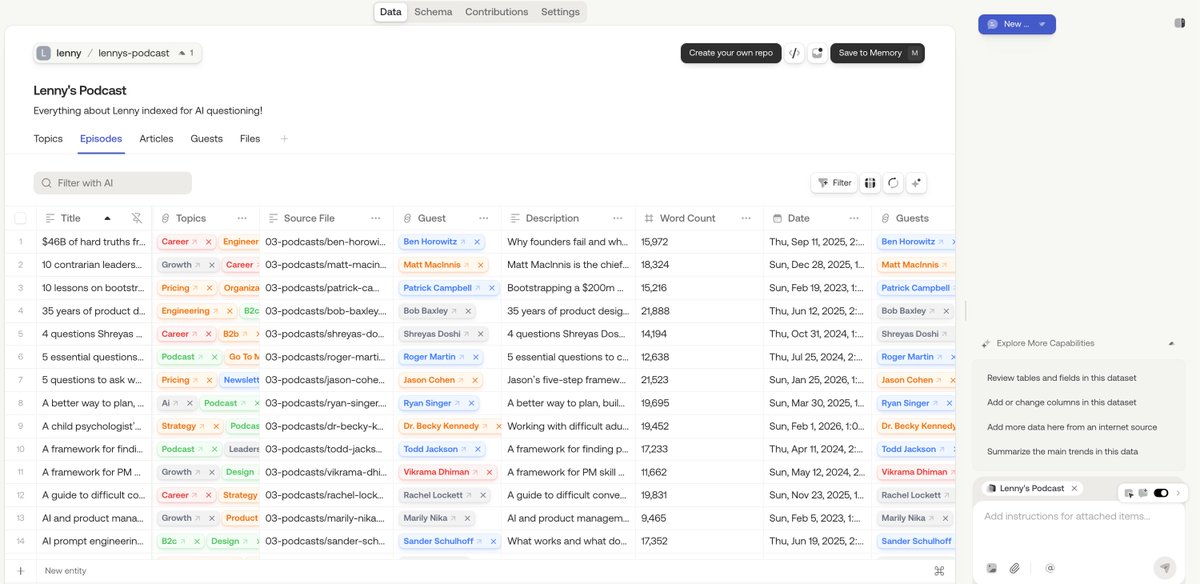
Indexed Lenny's content for agents > ask any questions without recall issues (structure + codegen) > converted all the markdown files to a db > connect curated data as context for agents via MCP, API, CLI > was set up in 10 min and can be applied to other knowledge bases!
Aaron tweet media
Lenny Rachitsky@lennysan

Can't wait to see what y'all build

English
5
21
154
10.1K