
Eric

3.9K posts

Eric banner
Eric

Eric

@3jnsn

eventually consistent

Katılım Temmuz 2011
1.1K Takip Edilen1.2K Takipçiler
Eric
Eric@3jnsn·
"Premature optimization is the root of all evil" applies to more than just software.
English
0
0
1
10
Eric
Eric@3jnsn·
Hanging out in the slack huddle by myself, just vibing to the smooth jazz
English
0
0
0
10
Eric retweetledi
Aakash Gupta
Aakash Gupta@aakashgupta·
Every time Google Maps gives you directions, your phone does this. 14,671 streets searched to find a single 2.3 km route across Naples. It's called Dijkstra, the undefeated king of shortest path since 1959. Until last month. For 66 years, every GPS, every flight booking, every internet packet route ran on the same algorithm. In 2024, Robert Tarjan and four co-authors won Best Paper at FOCS proving Dijkstra was optimal. The world's most-used algorithm, certified untouchable. Eight months later, a team at Tsinghua led by Ran Duan published a paper proving them wrong. The catch is in what "optimal" means. Tarjan's proof showed Dijkstra is the fastest possible algorithm IF you have to output every point sorted by distance. The Tsinghua group noticed something the field had quietly assumed for 41 years: finding the shortest path does not actually require that sorting. The problem just asks for the distances. They combined Bellman-Ford's batch updates with a recursive partial ordering trick from Duan's own 2023 paper. Instead of sorting the frontier, they cluster the boundary nodes and only explore the representatives. The new bound is O(m log^(2/3) n), beating the 1984 ceiling. Best Paper at STOC 2025. The reframe came before the algorithm. Tarjan did not prove Dijkstra was the best shortest path algorithm. He proved Dijkstra was the best sorted-output shortest path algorithm. The field treated those as the same problem for four decades. They are not. Every speed limit you have memorized has a definition wrapped around it. Crack the definition and the limit breaks. The world's most settled algorithm just got beat by someone asking what problem it was actually solving.
English
84
282
2.8K
1.7M
Eric
Eric@3jnsn·
first plausible, detailed take I’ve seen about where we’re heading 👇 implications, economic and otherwise, are staggering if true, the entire existing tech hegemony is living on borrowed time
signüll@signulll

the craziest part now is that the modern computer probably has to be entirely reinvented, from scratch. pretty much like how jobs & co brought apple ii to market. like not improved. not given a chatbot sidebar or something but really from the ground up like the iphone redefined what it meant to be a pocket computer. the current paradigm for computers was built around a human staring at a screen, moving a cursor, opening apps, managing windows, naming files, remembering where things live, & manually translating intent into interface actions. that made sense when the human was the runtime. but in an ai native world, it starts to look kinda ridiculous. you can see this ridiculousness when you use computer use agents… they are useful sure, but they’re also obviously transitional. they’re teaching ai to operate machines designed for humans, which is clever, but also kind of absurd. it’s like making a robot hand so it can use a doorknob instead of asking why the door needs a knob at all. yes i know humans also need to use a door knob, but maybe in the future humans don’t need to use a computer, or at least what we think of a computer today at all. this all leads to some interesting questions: - what is a file when the system understands context? - what is an app when intent can route itself? - what is a desktop when work can be decomposed, executed, monitored, & summarized by agents? - what is a browser when the agent can retrieve, compare, transact, & remember? - what is an operating system when the primary user is no longer just a person, but a person plus a swarm of delegated intelligences? or no person at all. the old computer assumed navigation. the new computer has to assume a new kind of intention. the old computer organized information. the new computer has to try to organize agency. we’re still in the hacky middle stage at the moment with sidebars, copilots, agents clicking through legacy ui, & automation layers sitting on top of 40 year old metaphors. the new computer is likely one where memory, context, identity, permissions, tools, agents, & interfaces are native primitives. this means desktop, mobile, browser, apps, files, folders deserves another first principles look.

English
0
0
0
20
Eric
Eric@3jnsn·
How come nobody calls it the ANE 🦞
English
0
0
0
9
Eric retweetledi
John Attridge
John Attridge@John_Attridge·
Consider the lilies of the field. They hustle not, neither do they grind
English
75
1.8K
8.7K
191K
AA
AA@measure_plan·
i made tetris but the board and pieces are attached to your body and it's quite tiring to play
English
360
1.3K
17.1K
2.9M
Eric retweetledi
Ben Zaehringer
Ben Zaehringer@benzaehringer·
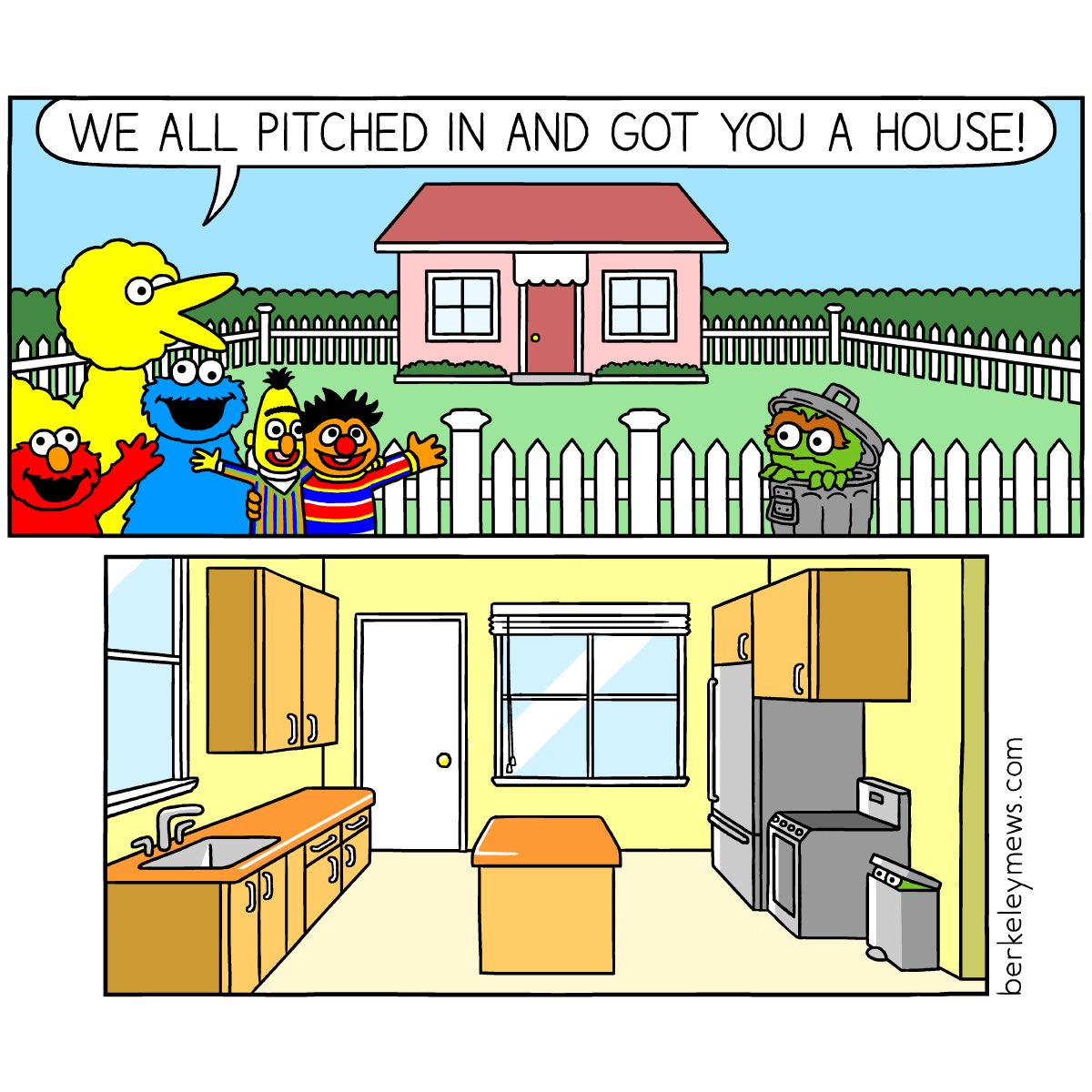
Oscar's house
Ben Zaehringer tweet media
Eesti
60
2.7K
84.6K
969.8K
Eric
Eric@3jnsn·
People are already sick of dynamic pages that reconfigure themselves right when they try to press a button. Stop being clever, design for USABILITY
English
0
0
0
7
Eric
Eric@3jnsn·
Hot take! 🔥 These Pretext demos highlight the ever-widening gap between web devs and users. Devs are fawning over a dragon flying around in the text. Fun to build I guess, but who actually wants to look at that? Annoying AF.
English
1
0
0
23
The Kairos Pulse
The Kairos Pulse@TheKairosPulse·
She started smiling when she saw those strawberries 🥰
English
256
1.9K
20.7K
999K
Eric retweetledi
Kpaxs
Kpaxs@Kpaxs·
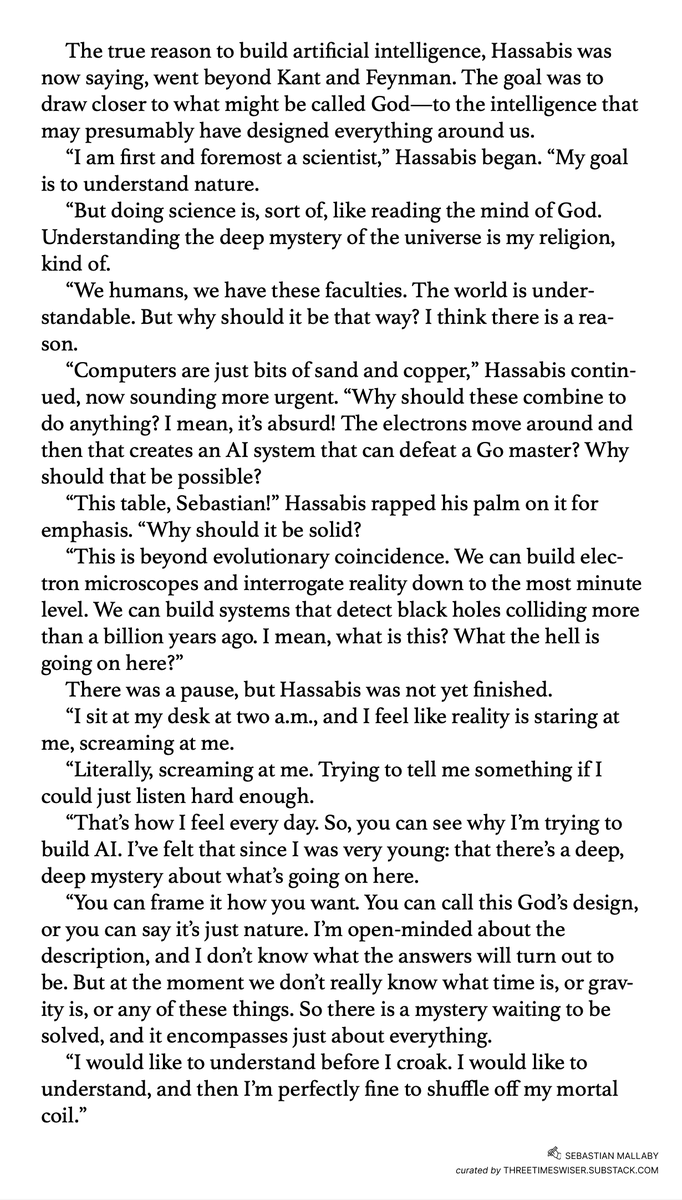
This is a man who has been haunted since childhood and built a billion dollar company as a side effect of trying to make the haunting stop.
Kpaxs tweet media
English
111
449
4.4K
1M
Patrick Heizer
Patrick Heizer@PatrickHeizer·
I am pleading with the forces of the universe to convince Villeneuve to tackle yet another "unfilmable" sci-fi series.
Patrick Heizer tweet media
English
437
567
9.7K
470K