Fried egg galaxy

250 posts

Fried egg galaxy

Fried egg galaxy

@7742_friedegg

Katılım Aralık 2024
29 Takip Edilen8 Takipçiler
Fried egg galaxy
Fried egg galaxy@7742_friedegg·
@dnystedt When the national security logics completely defeat the market principles, then well, it is totally up to them.
English
0
0
0
31
Dan Nystedt
Dan Nystedt@dnystedt·
Taiwan will remain critical for advanced semiconductors for at least another decade — not 12-18 months. Chamath is a sharp investor, but this feels like applying SaaS-style thinking (build once, scale infinitely at near-zero marginal cost) to the harsh realities of chip manufacturing. The physical world doesn’t work that way: -Leading-edge fab construction takes 2-3 years. -Equipment installation, process qualification, and reaching high yields in volume production adds at least another year. -Key tools like EUV machines have 12-16 month lead times. Taiwan/TSMC and its ecosystem still produce the vast majority of the world’s most advanced logic chips. The CHIPS Act is helping the US ramp up, but even optimistic projections show America reaching only around 14% of global advanced capacity by 2032. Just Look at Intel’s struggles. The painful reality behind its 5-Nodes-In-4-Years plan is showpiece process nodes. It’s not even winning 3nm customers away from TSMC, despite explosive AI chip demand. TSMC is expanding 3nm capacity (not even the most advanced node) - as fast as it can. There’s a mountain of money chasing 3nm capacity right now — yet none of it can be served by US production today. "Being “close” on a new process node in the lab is nowhere near “ready” for commercial manufacturing. TSMC’s Arizona plants are important (1st fab in production, 2nd coming), but they represent a small share of total capacity, come with higher costs, and still rely heavily on Taiwanese expertise. And it’s not just the fabs. Taiwan dominates the full supply chain — specialty chemicals, substrates, advanced packaging, talent clusters, infrastructure, and fab know-how built over decades. Replicating this elsewhere is extremely difficult. Bottom line: Smart “friendshoring” (Taiwan, South Korea, Japan, EU) plus building redundancy, makes sense. US investments are good long-term insurance, but they complement Taiwan’s capabilities, they do not replace them anytime soon. Its 'Silicon Shield' remains very much in place.
The All-In Podcast@theallinpod

Chamath: Taiwan Loses Its Strategic Importance in 18 Months @chamath: “ We're 18 months from Taiwan not being an important moment of conversation the way it is today. Why 18 months? Because we are at a point where we're probably 1-2 nanometers away from being able to do what we need Taiwan to strategically do for us. And so as we scale up our chip fabs, as we get more capacity, and interestingly, there are these orthogonal technologies being developed. I don't know if you guys saw, but Neuralink was showcasing a machine that is literally operating at the almost nanometer scale to do the brain operations for the implantation, all automatically. When you have the dexterity and the capability mechanically to make these things, the real reason then is a very different one than what it is today. Today, it's economic. And if you take that off the table, I think we'll have a very different attitude to Taiwan.”

English
33
51
321
34.6K
Fried egg galaxy
Fried egg galaxy@7742_friedegg·
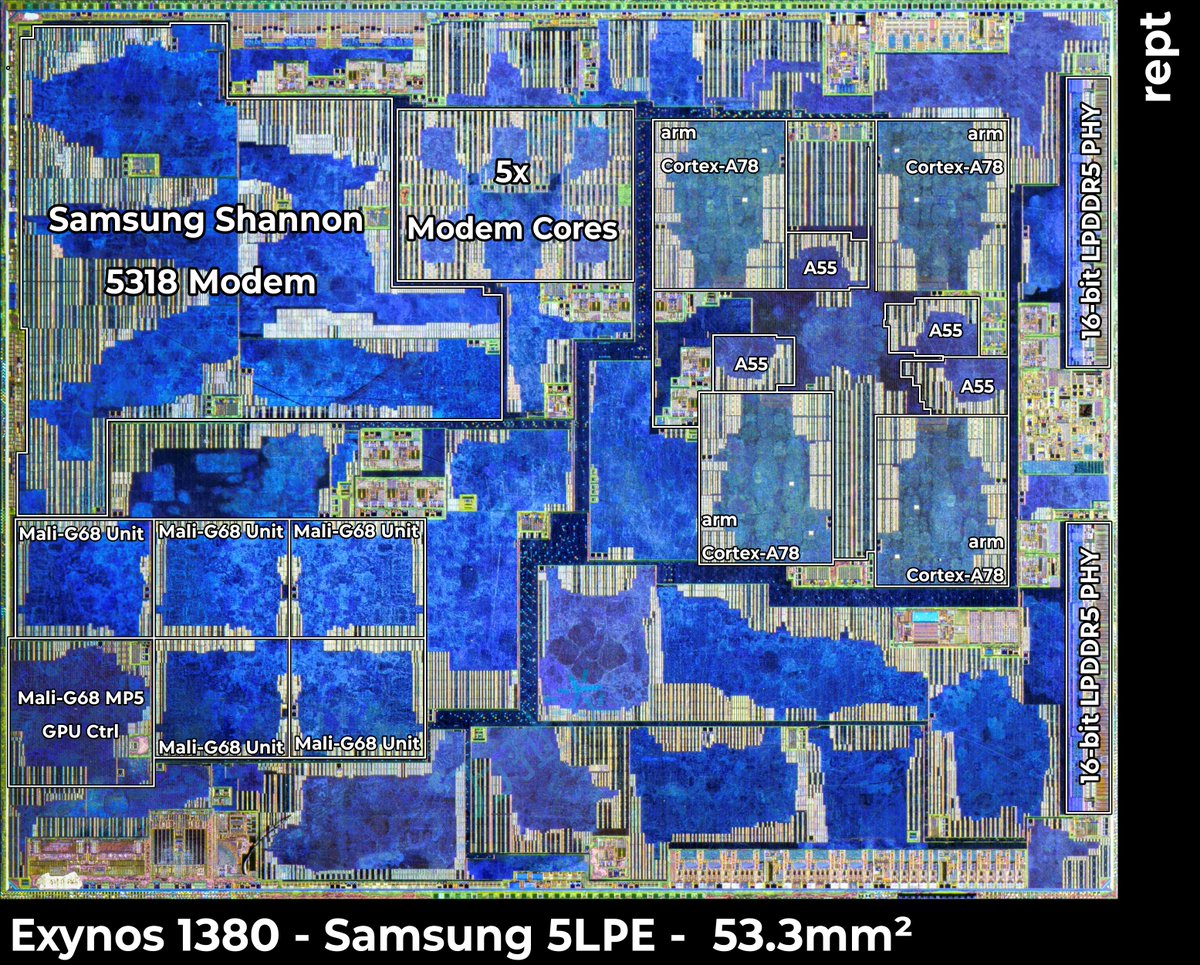
@Reptalicant Note: there's a die shot of Exynos 990 in his website you linked, a.k.a. Samsung's Nightmare (Equivalent to Qualcomm's Nightmare (SD810)).
English
1
0
1
53
Fried egg galaxy
Fried egg galaxy@7742_friedegg·
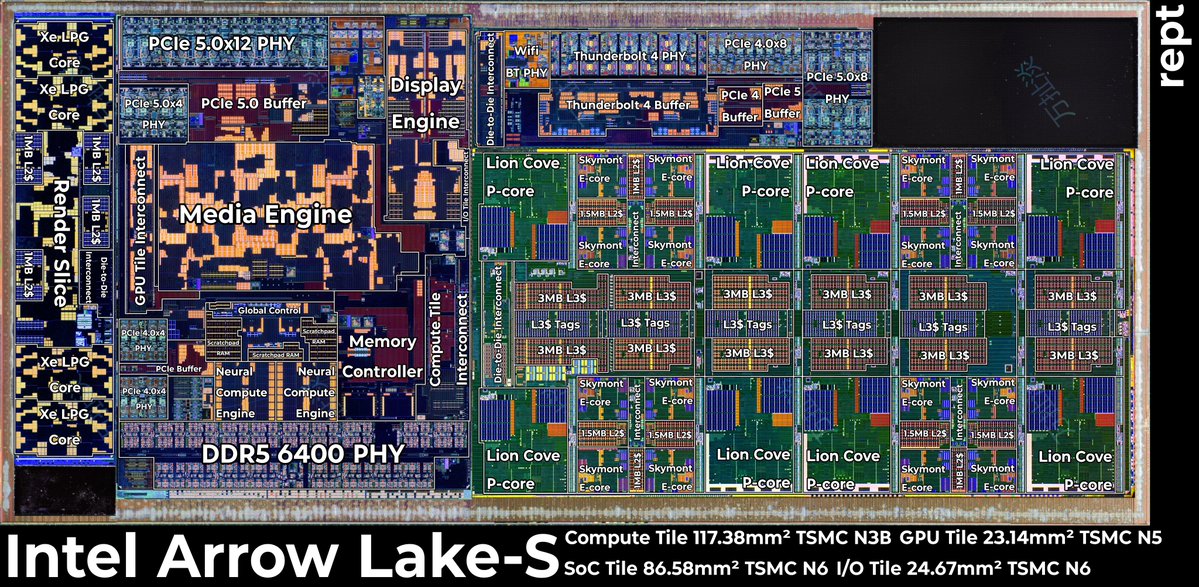
@Reptalicant That seems to be intriguing. Since there are no infos at all about Apple M4 Pro and M4 Max die shot (what we know is that the size of M4 Max is 454.27 square mm), I hope someone would de-lid the heat spreader and take a dieshot photograph in the World.
English
2
0
0
423
텍사스트럭기사
텍사스트럭기사@TexasTrucker30·
이러니까 씨발 윤어게인이 개정신병자 새끼들이라는거임. 이걸 지지하는게 일반인이냐? 일반인 축에도 못끼는 병신들 주제에 지들이 우파랰ㅋㅋㅋㅋㅋㅋㅋㅋㅋㅋㅋㅋㅋㅋㅋ ㅅㅂ 존나 기가차서 ㅋㅋㅋㅋㅋㅋㅋㅋㅋㅋㅋㅋㅋㅋㅋㅋㅋㅋㅋㅋㅋㅋㅋㅋㅋㅋㅋㅋㅋㅋㅋㅋㅋㅋㅋㅋㅋㅋㅋㅋㅋㅋㅋㅋㅋ
뉴스1@News1Kr

윤석열 "12·3 계엄, 국민 깨우는 비상벨"… '계몽령' 주장 되풀이 "내가 하나님의 종임을 깨달았다"…옥중서 '신이 예정한 계엄' 주장까지 #뉴스1 news1.kr/politics/gener…

한국어
13
326
754
22.8K
Reptalica
Reptalica@Reptalicant·
@ChristoRobin2 Hi, the Exynos V920 was never put into mass production due to lack of interest from automotive partners
English
1
0
2
77
Reptalica
Reptalica@Reptalicant·
@7742_friedegg followed just in time, you might be interested in this 10667mt ram as standard with large cache def helped them here
English
1
0
2
1.4K
Reptalica
Reptalica@Reptalicant·
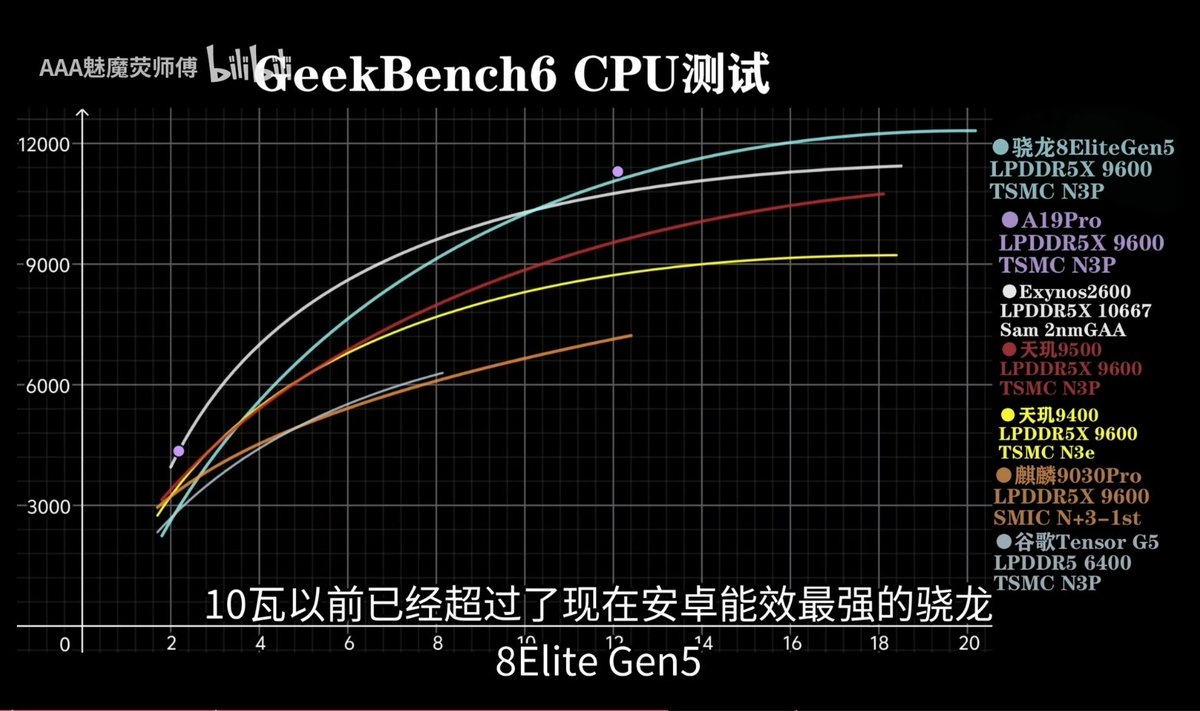
Exynos 2600 Geekbench 6 MT and Steel Nomad Lite power curve by AAA魅魔荧师傅 (Bilibili) I don't typically add my commentary, but WHAT black magic did Samsung LSI do for E2600 to be more efficient than Snapdragon and Mediatek? b23.tv/9dmJfgC
Reptalica tweet mediaReptalica tweet media
English
11
15
97
7.3K
yamazaki
yamazaki@yamazaki1812·
1. device 리본펫의 다양함 삼성 gaa는 3개층에 multi width를 기본으로함 intel의 경우 4개층의 두개 혹은 세개정도의 fet을 제공할거로 예상 2.bspdn backside power delibery network 후면전력공급망으로 기존부 signal line 대량확보, sram 등 기본 cell size 에서 확실한 이점을 가져갈것 3. backend metal layer 역시 줄어들어 많은 이점 존재(가격,perf...) 2번이 되면 정말 설계의 새로운 방식이 펼쳐질 것이어서 너무 기대가됨. 4t 5t 따지며 power 맨들과 signal맨들이 고뇌하던걸 독립된 영역전개가 펼쳐지니 효율이 엄청날거임. 공정개발자들은 죽어나겠지만, 그만큼 설계자들은 천국이 펼쳐짐.
북극성@PolarisLog

머스크가 테라팹에 인텔 14A 공정 도입 선언 - 일론 머스크가 테슬라 1분기 실적발표 컨퍼런스콜에서 대규모 반도체 생산시설 테라팹에 인텔 14A 공정을 활용하겠다고 직접 밝힘. - 인텔 14A는 1.4나노급 차세대 공정으로, 2세대 리본펫 트랜지스터와 후면 전력공급 기술 파워다이렉트를 적용한 인텔의 야심작임 - 머스크는 “테라팹 확장이 시작될 시점에 인텔 14A가 충분히 성숙해 있을 것”이라며 이 공정을 적절한 선택으로 봄 - 인텔 14A는 이르면 2027년 말 리스크 생산 예정으로, 테라팹 확장 일정과 맞물리는 구조임. - 테슬라는 약 30억 달러를 투자해 텍사스 오스틴에 반도체 생산 기술 연구시설을 구축할 계획이며, 월 수천 장 규모의 웨이퍼 시험 생산을 목표로 함 - 초기 연구개발은 테슬라가 주도하고, 이후 대량생산 단계는 스페이스X가 담당하는 방식으로 역할을 나눔 - 두 회사 모두 이사회 승인이 필요한 상황으로, 아직 확정된 계획은 아님. - 인텔 입장에서는 테라팹이 파운드리 사업 반등의 발판이 될 수 있는 대형 고객사 확보 기회로 주목받음 - 인텔 측은 이날 별도로 밝힐 내용이 없다는 짧은 입장만 전달함

한국어
2
1
7
553
Fried egg galaxy
Fried egg galaxy@7742_friedegg·
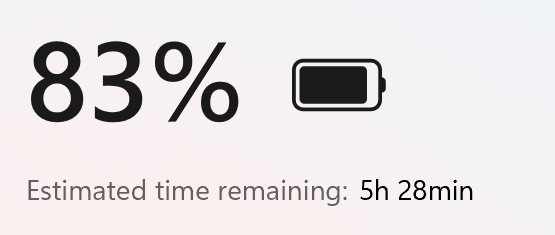
@hjc4869 What is main task? Battery life is task intensity-dependent.
English
0
0
0
366
David Huang
David Huang@hjc4869·
用了几天总结:X2EE续航就是一坨屎。
David Huang tweet media
中文
17
4
65
11.5K
Fried egg galaxy
Fried egg galaxy@7742_friedegg·
I call it a logical error - tu quoque and red herring; whataboutism.
唐柏桥@tangbaiqiao

@Jaemyung_Lee Have you ever mentioned and condemned the Iran evil regime killed and tortured thousands of peaceful protesters? BTW, this is fake news. I suggest you delete it.

English
0
0
0
34
Muhammad Zuhair
Muhammad Zuhair@mzuhair123·
18A yield rates are currently around the 70% mark, most likely 65%, judging by Zinsner comments in the last earnings calls. Tan would have never opted for Panther Lake rampup without knowing that there's a viable progression path for 18A yields.
English
1
0
0
252
Muhammad Zuhair
Muhammad Zuhair@mzuhair123·
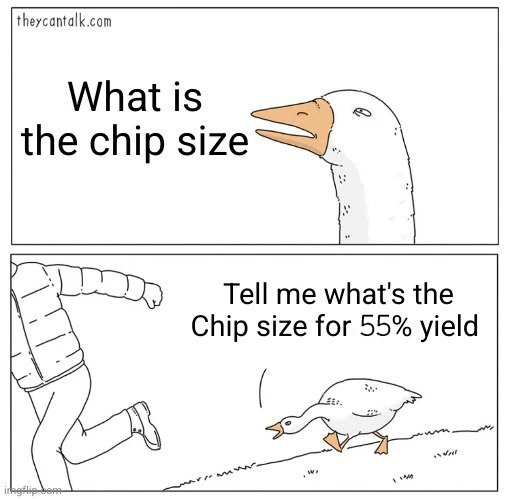
Based on my internal estimates, Intel 18A yield rates are better than SF2's current yield rates. But considering the how variable Korean media reports are on Samsung's 2nm process, the 55% figure might be inaccurate atm. We will have to see how the node turns out with Exynos 2700.
Jukan@jukan05

[Exclusive] Samsung Foundry 2nm Yield at 55%… Stuck Below the 'Mass Production 60%' Threshold Samsung Electronics' foundry business — a key future growth engine — has hit a wall at the '60% mass production' threshold for its 2nm (nanometer; 1nm = one-billionth of a meter) process. With yields stuck in the mid-50% range and failing to enter stable mass production territory, effective yields are expected to drop to the 40% range once back-end processing is factored in. While the company has succeeded in achieving technical entry, the consensus is that it remains insufficient to win orders from global Big Tech clients. According to semiconductor industry sources on the 13th, Samsung Electronics' foundry division's average yield for the 2nm process is understood to be approximately 55%. This is lower than the '60%-plus' estimates floated by some, signaling that additional time is still needed to reach mass production stability. A source with knowledge of internal affairs stated, "The 2nm process yield is in the 50–60% range, with an average around 55%," adding, "The process is running, but it is still a long way from a stable mass production phase." The pace of yield improvement itself has been rapid. Samsung's foundry 2nm yields were reportedly stuck in the 20% range as recently as the second half of last year. Reaching the mid-50s in less than a year is assessed as technically reaching a level where the mass production line can be operated. This is attributed in part to the accumulation of process experience driven by incoming orders for Bitcoin mining chips from China's Canaan and MicroBT, among others. Given the extreme difficulty of the 2nm ultra-fine process, some consider this an exceptionally fast rate of improvement. However, the prevailing view in the industry is that it remains a "half-process" at best. In a structure where nearly half of all wafer input is discarded as defective, the process fails on both price competitiveness and delivery reliability. In particular, when factoring in losses from performance binning and packaging, the actual percentage of chips that can generate profit is estimated to fall as low as 40%. Considering that a single wafer for cutting-edge processes costs tens of millions of won, a 1% difference in yield translates to annual operating profit differences ranging from hundreds of billions to trillions of won. This is bound to significantly derail Samsung Electronics' efforts to improve foundry business profitability. An industry source said, "A yield in the 50% range only means the process 'runs' — it is not a stage where customers can entrust orders with confidence," adding, "It is a zone where both delivery and quality variability coexist." By contrast, rival TSMC is reported to have secured stable yields of 60–70% for its 2nm process. Samsung Foundry's current mid-50% yield is therefore assessed as corresponding to the technical entry stage, but falling short for securing major customers — a "transitional zone." Significant progress has been made, but analysis suggests actual mass production remains premature. In practice, Samsung has secured some customer and internal volumes, but has yet to achieve results in winning key clients such as Apple, NVIDIA, and AMD. Notably, Qualcomm — a global mobile application processor (AP) company that had raised expectations for new orders — is also showing signs of returning to TSMC, citing process yield and stability concerns. Additionally, the 'AI6' advanced autonomous driving chip contracted with Tesla is scheduled for mass production this year, and the yield level achieved at the actual production milestone will be critical in determining profitability and supply stability. Meanwhile, Samsung Electronics' strategy is to win new orders, run its facilities, and improve yields going forward. At Samsung Electronics' annual general meeting on March 18, Han Jin-man, head of the foundry business division (President), stated, "For the 2nm process as well (which is at a higher level than the 4nm process), we can build up order experience with major companies and secure yields through that process." $INTC $TSM

English
2
1
12
2.5K
Jukan
Jukan@jukan05·
@harukaze5719 Bro, have some common sense. That’s obviously the mobile chip size.
English
5
0
41
8.2K
포시포시
포시포시@harukaze5719·
포시포시 tweet media
Jukan@jukan05

[Exclusive] Samsung Foundry 2nm Yield at 55%… Stuck Below the 'Mass Production 60%' Threshold Samsung Electronics' foundry business — a key future growth engine — has hit a wall at the '60% mass production' threshold for its 2nm (nanometer; 1nm = one-billionth of a meter) process. With yields stuck in the mid-50% range and failing to enter stable mass production territory, effective yields are expected to drop to the 40% range once back-end processing is factored in. While the company has succeeded in achieving technical entry, the consensus is that it remains insufficient to win orders from global Big Tech clients. According to semiconductor industry sources on the 13th, Samsung Electronics' foundry division's average yield for the 2nm process is understood to be approximately 55%. This is lower than the '60%-plus' estimates floated by some, signaling that additional time is still needed to reach mass production stability. A source with knowledge of internal affairs stated, "The 2nm process yield is in the 50–60% range, with an average around 55%," adding, "The process is running, but it is still a long way from a stable mass production phase." The pace of yield improvement itself has been rapid. Samsung's foundry 2nm yields were reportedly stuck in the 20% range as recently as the second half of last year. Reaching the mid-50s in less than a year is assessed as technically reaching a level where the mass production line can be operated. This is attributed in part to the accumulation of process experience driven by incoming orders for Bitcoin mining chips from China's Canaan and MicroBT, among others. Given the extreme difficulty of the 2nm ultra-fine process, some consider this an exceptionally fast rate of improvement. However, the prevailing view in the industry is that it remains a "half-process" at best. In a structure where nearly half of all wafer input is discarded as defective, the process fails on both price competitiveness and delivery reliability. In particular, when factoring in losses from performance binning and packaging, the actual percentage of chips that can generate profit is estimated to fall as low as 40%. Considering that a single wafer for cutting-edge processes costs tens of millions of won, a 1% difference in yield translates to annual operating profit differences ranging from hundreds of billions to trillions of won. This is bound to significantly derail Samsung Electronics' efforts to improve foundry business profitability. An industry source said, "A yield in the 50% range only means the process 'runs' — it is not a stage where customers can entrust orders with confidence," adding, "It is a zone where both delivery and quality variability coexist." By contrast, rival TSMC is reported to have secured stable yields of 60–70% for its 2nm process. Samsung Foundry's current mid-50% yield is therefore assessed as corresponding to the technical entry stage, but falling short for securing major customers — a "transitional zone." Significant progress has been made, but analysis suggests actual mass production remains premature. In practice, Samsung has secured some customer and internal volumes, but has yet to achieve results in winning key clients such as Apple, NVIDIA, and AMD. Notably, Qualcomm — a global mobile application processor (AP) company that had raised expectations for new orders — is also showing signs of returning to TSMC, citing process yield and stability concerns. Additionally, the 'AI6' advanced autonomous driving chip contracted with Tesla is scheduled for mass production this year, and the yield level achieved at the actual production milestone will be critical in determining profitability and supply stability. Meanwhile, Samsung Electronics' strategy is to win new orders, run its facilities, and improve yields going forward. At Samsung Electronics' annual general meeting on March 18, Han Jin-man, head of the foundry business division (President), stated, "For the 2nm process as well (which is at a higher level than the 4nm process), we can build up order experience with major companies and secure yields through that process." $INTC $TSM

ZXX
7
25
1.2K
87.4K
Intel God
Intel God@God_Of_Intel·
@jukan05 If TSMC care about relationship more than money than they would lower their margins. Business is business. It's better for Intel to fail in TSMC eyes, as that means less confidence for companies to try other foundryn like Samsung or rapidus in fear of execution failure.
English
2
0
4
651
Jukan
Jukan@jukan05·
Interesting. Even within MediaTek itself, there are concerns about using Intel's EMIB. 1. Intel has no track record, and it can't even reliably handle its own volume. 2. If they commit to EMIB and it fails? They can't switch to CoWoS at that point. Even TSMC is worried about what might happen if MediaTek uses Intel EMIB and it fails. $INTC $TSM
Jukan tweet media
English
35
16
263
74K
Fried egg galaxy
Fried egg galaxy@7742_friedegg·
@Darth_Goldsmith @Frederic_Orange I still wonder about it. But there's a website with known URL (hubweb.cn). What I can do is purely speculative about M4 Pro/Max: APL1208/1209 if speculated, If it follows the pattern of M3 series But the die number are known by TechInsights (TM5J93/94).
English
1
0
1
32
Fred the Frenchy
Fred the Frenchy@Frederic_Orange·
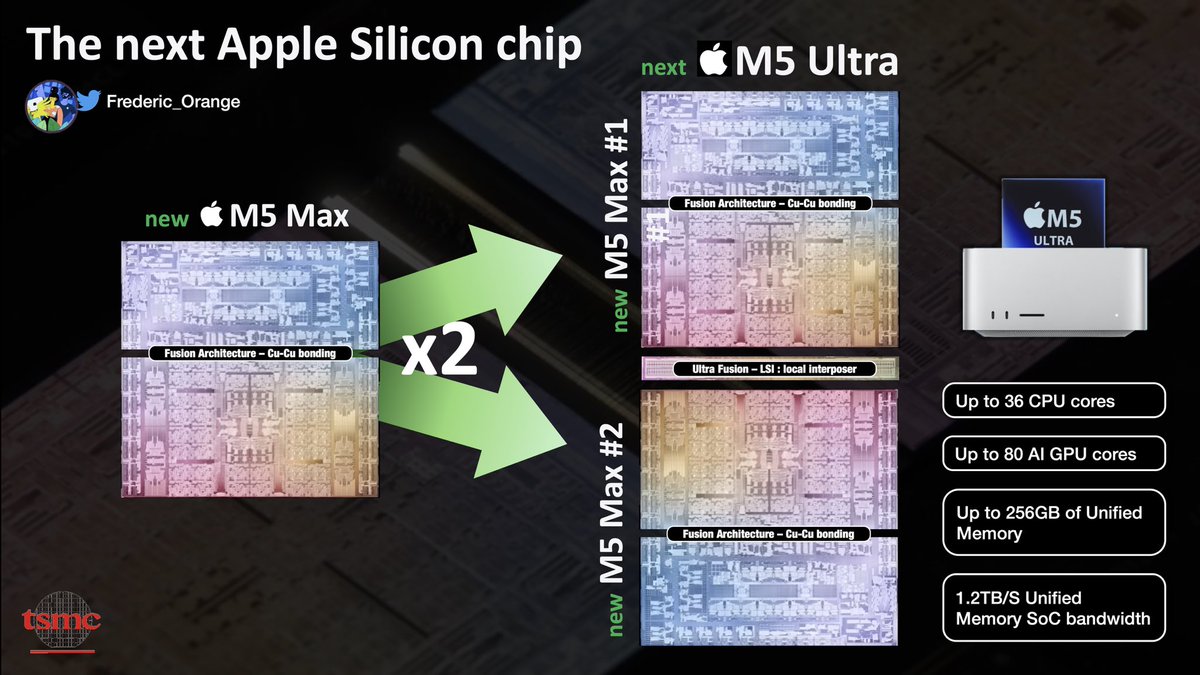
Apple should present its futur M5 Ultra at the next WWDC. My pronostic is clear, Apple will reuse Ultra Fusion process to connect two M5 Max. It’s simple and secure. ⁦#tsmc #macstudio
Fred the Frenchy tweet media
English
11
7
135
12.2K
Vadim Yuryev
Vadim Yuryev@VadimYuryev·
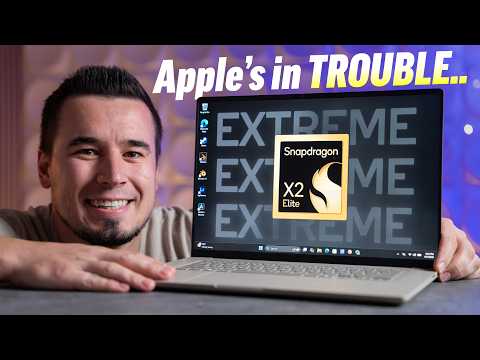
The @Snapdragon X2 Elite Extreme is FINALLY here! The CPU perfomance is absolutely insane. It’s now the fastest Windows CPU in the world. And GPU is now 2.3x faster than original X Elite. Basically neck and neck with Intel Panther Lake B390 GPU. Video: youtu.be/-EOHSlp5kcc
YouTube video
YouTube
Vadim Yuryev tweet media
English
23
19
193
52.2K
Fried egg galaxy
Fried egg galaxy@7742_friedegg·
@Market_Mind_ In South Korea, for oil refinery industries, it is contrary - heavy-oil is more profitable due to cheap cost and higher margins from refined products.
English
0
0
0
18
The Market Mind
The Market Mind@Market_Mind_·
Most people think oil is just oil. But in reality… oil quality changes everything. Here’s the difference 👇 🇺🇸 US WTI: 40° API → Light & easy to refine 🇮🇷 Iran Light: 34° API 🇷🇺 Russia Urals: 31° API 🇻🇪 Venezuela: 8–12° API → Thick, almost like tar 📊 API Gravity = Oil Quality Higher API → Lighter oil → More valuable. Why it matters 👇 ⚡ Lighter crude → cheaper refining ⛽ More petrol, diesel & jet fuel 💰 Higher refining margins 🏭 Heavy crude → complex refining 💸 Higher cost 📉 Lower profits 🌍 This is why oil geopolitics isn’t just about supply… It’s about crude quality
The Market Mind tweet media
The Market Mind@Market_Mind_

Products from one Barrel of Crude Oil

English
94
1.2K
3.6K
644.7K
Fried egg galaxy
Fried egg galaxy@7742_friedegg·
@mame_c @_Valentino 사실 미국 헌법 자체가 굉장히 헐렁합니다. 그래서 1979년 지미 카터가 의회 패싱하고 미국-중화민국 상호방위조약을 파기할 수 있었죠.
한국어
1
0
1
30
MAME C🇰🇷
MAME C🇰🇷@mame_c·
이 스레드의 말처럼 미국의 나토탈퇴는 정치적 자살이 될 가능성이 더 높습니다. 지금은 그냥 자기가 저지른 짓을 수습을 못해서 떼쓰는 것에 가까워 보이는데 떼쓰다 자살하면 그건 그것대로 웃길 것입니다. 제 개인적 의견으론 미국이 진짜로 나토를 나갈 경우에는(가능성은 거의 없지만...)
Chetuya Math Chinagolum@Chetuyachinago

So basically, ever since NATO refused to dance to Washington's war drums in the Middle East, there has been this lobotomized trend of Americans pushing for their "sweet and all-powerful" country to pull out of NATO to "teach Europe a lesson." It is worth noting that I've seen plenty of room-temperature IQ takes on this platform, but this one right here takes the trophy. Understand that America cannot pull out of NATO because doing so would be tantamount to a high-speed suicide. 1. BASES ARE NOT CHARITY HOUSES: Fact is that, American bases scattered around Europe are not a collection of homeless shelters for soldiers. They are being used by America to project raw power. They are the forward-operating gas stations of American hegemony. Those bases allow the US to protect trade routes and strike anywhere on the planet in a matter of hours. America has the ability to force and bully the world into using the dollar to buy oil today specifically because of these bases. Without these bases acting as drainage pipes around the Persian Gulf, America would not stand a single, solitary chance against Iran. So Americans, understand that you u are not "protecting" the EU; you're squatting in their yard so you can keep your boot on the world’s throat. 2. CLOSE ALL TRADE: Again, even with a rudimentary, fifth-grade knowledge of Economics, it’s not difficult to see that should America decide to close all trade with the EU, Americans will be eating their own shoes within weeks. Cutting the EU off would send the US stock market into an unprecedented nose dive and ensure that the "Made in the USA" sticker becomes a pathetic relic of a bygone era. You’re not "punishing" the Europeans; you’re amputating your own legs here. 3. THE TECH BAN: Refusing to sell military equipment to Europe may sound "alpha" to the Twitter keyboard warriors until you realize that American military industries like Lockheed Martin, Boeing, and Raytheon employ hundreds of thousands of Americans. Closing that market corridor is an automatic sack letter to that entire labor force, which would collapse the US economy overnight. Furthermore, the EU won't just sit there and cry like a baby,they will simply outsource their military equipment from Russia and China, and case closed. The American economy would effectively grind to a halt while your rivals cashed the checks. 4. INTELLIGENCE SHARING: This is the most delusional part of the entire manifesto. Intelligence sharing is a two-way street. If America refuses to share intelligence with the EU, then the EU shuts the blinds on America likewise. If their radar detects Intercontinental Ballistic Missiles from North Korea, China, or Russia heading for US soil, and you've "cut them off," they are not going to pick up the phone either. Before your own local radar can even pick up the signal, half of America’s major cities would already be buried under the rubble. Conclusion: This "Catturd" manifesto is a bluff written by people disconnected from reality who have enjoyed the safety and luxury of a US-led world for so long they’ve forgotten how they got it. You can't be the "greatest nation on earth" while hiding under your bed and refusing to talk to the neighbors. Cutting off the EU is not "America First." It’s America Finishing Last, alone, irrelevant, and blind, while the rest of the world moves on without the dying and outdated empire.

한국어
1
53
96
15K
Fried egg galaxy
Fried egg galaxy@7742_friedegg·
@mame_c @_Valentino [ ???: 헌법(미국 헌법 제2조)에서는 조약 비준 시 2/3 재적 의결 필요할 뿐 그 외에 아무런 명시 없어... 헌법에 따를 것 ]<- 트럼프라면 이럴 수도...
한국어
1
0
1
24
MAME C🇰🇷
MAME C🇰🇷@mame_c·
@_Valentino 그래도 현재는 너무 걱정할 필요 없을 것 같습니다. 나토탈퇴하려면 의회의 3분의 2를 석권해야 하는데 지금 트럼프의 역량으로 의회를 3분의 2 석권하는 건 가능성이 거의 없다고 보이거든요.
한국어
2
1
2
348