An Zeng

450 posts

An Zeng banner
An Zeng

An Zeng

@AA_Zeng

Regeneration researcher @ SIBCB | From planarians to hearts, decoding how tissues heal and regenerate. https://t.co/dOW63IWCmM
Shanghai, China Katılım Haziran 2015
1.5K Takip Edilen513 Takipçiler
An Zeng retweetledi
Boxiang Liu
Boxiang Liu@boxiangliu·
If you are interested in single-cell splicing QTLs, it will be worth trying our new tool ISSAC. Sharing my talk at the Biology of Genomes 2026. Preprint: medrxiv.org/content/10.648…
English
1
29
139
14.9K
An Zeng retweetledi
China Science
China Science@ChinaScience·
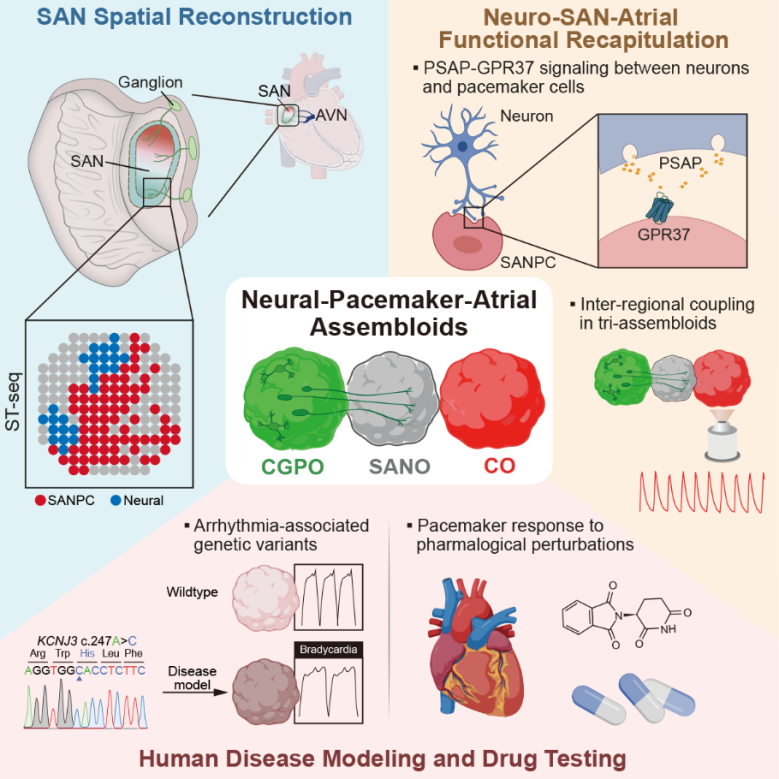
Chinese researchers have successfully engineered a "biological pacemaker" in a petri dish, creating a sinoatrial node organoid that can be regulated by nerve cells to control the heartbeat, a breakthrough that offers a new platform for studying heart rhythm disorders and drug development. The heart's continuous and rhythmic beating relies on the "natural pacemaker" in the right atrium -- the sinoatrial node. How to create a near-authentic human "biological pacemaker" in the laboratory has long been a major challenge in cardiac pacing and conduction research. By simulating key signals in embryonic development and conducting systematic screening, researchers guided stem cells to form three-dimensional sinoatrial node organoids capable of autonomously generating stable heartbeats. When connected to atrial-like organoids, electrical signals could be emitted from the sinoatrial node and conducted to the atrial tissue, thereby successfully mimicking the in vivo "pacing-conduction" process. Published in the journal Cell Stem Cell, the study shows that this model can not only elucidate the mechanisms underlying heart rate-related diseases but also be used to evaluate potential therapeutic agents.
China Science tweet media
English
1
10
34
1.6K
An Zeng retweetledi
Voice to the world
Voice to the world@YtIfeng·
China's research team has developed a 'biological pacemaker' for the human heart—a sinoatrial node-like organoid. The related results were recently published in the international academic journal 'Cell Stem Cell.'
Voice to the world tweet media
English
0
2
6
175
An Zeng retweetledi
Science and Technology Daily
Science and Technology Daily@SciTechDaily01·
Chinese researchers have built a tri-assembloid system linking human pacemaker organoids, nerves, and atrial tissue. For the 1st time, this model allows scientists to study neural-pacemaker interactions in vitro and uncover key molecular mechanisms behind heart rhythm regulation.
Science and Technology Daily tweet media
English
1
1
3
194
An Zeng
An Zeng@AA_Zeng·
This work provides a human-based platform for studying pacemaker development and neural regulation, as well as for drug testing and future biological pacemaker research. Any feedback is welcome.
English
1
0
0
126
An Zeng
An Zeng@AA_Zeng·
We are excited to share our latest work, in which we used human PSCs to build human “biological pacemaker” organoids that model the structure and function of the sinoatrial node. This provides a new platform to study pacemaker development, disease mechanisms and drug testing.
Cell Stem Cell@CellStemCell

Online Now! Human PSC-derived sinoatrial node-cardiac plexus assembloids model innervation-associated maturation of pacemaker systems dlvr.it/TSYZR1 #stemcells

English
1
7
28
6.9K
An Zeng
An Zeng@AA_Zeng·
@jmartinlab Congratulations on this remarkable discovery. Truly a significant and substantial contribution to the field.
English
0
0
0
18
An Zeng
An Zeng@AA_Zeng·
Six years in the making, this project reflects the sustained efforts of our lab and our collaborators at BGI. Huge thanks to Dr. Yue Chen, Kai Han, Mengyang Xu, and all team members for their dedication. We sincerely welcome your feedback!
English
0
0
0
186
An Zeng
An Zeng@AA_Zeng·
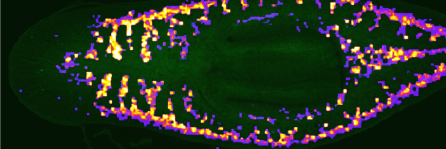
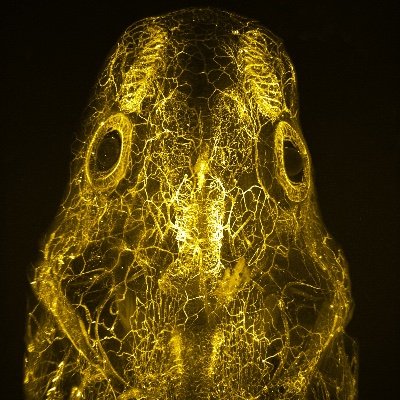
We're excited to share our preprint describing single-cell–resolution 4D (space + time) digital atlas of planarian regeneration. In this work, we identify an injury-induced spatial regulatory domain and its regulator, uncovering the mechanisms underlying blastema formation.
biorxiv_devbio@biorxiv_devbio

4D Single-Cell Spatial Transcriptomics Reveals Dynamic Morphogenetic Gradients and Regenerative Domains in Planarians biorxiv.org/content/10.648… #biorxiv_devbio

English
1
3
17
2.5K
Ben Shih-Lei Lai 賴時磊
Ben Shih-Lei Lai 賴時磊@BenLai_Taiwan·
Glad to see this work from @AA_Zeng and the team published in @CellStemCell describing a regenerative cardiac–immune crosstalk in neonatal mouse heart, echoes our findings in fish models! Also, thanks to @SheilaChari's invitation to highlight the work in a perspective Preview.😃
Ben Shih-Lei Lai 賴時磊 tweet media
An Zeng@AA_Zeng

Huge thanks to Dr. Lai and his team for the inspiring preview and their groundbreaking work in this thrilling field! Big thanks to the reviewers for making this paper much stronger. Seeing basic biology turn into real regenerative medicine solutions is just incredibly exciting!

English
1
2
5
1.6K
An Zeng
An Zeng@AA_Zeng·
@BenLai_Taiwan @CellStemCell @SheilaChari Thank you so much, Dr. Lai, for your kindness and for sharing your inspiring perspectives. There is still so much to learn from zebrafish and other parallel regeneration models. We are truly grateful to you and your team for your pioneering work!
English
1
0
1
63