Avery Faigenbaum

467 posts

Avery Faigenbaum banner
Avery Faigenbaum

Avery Faigenbaum

@AFaigenbaum

Professor of Health and Pediatric Exercise Science, The College of New Jersey.

Katılım Mart 2011
258 Takip Edilen5.8K Takipçiler
Avery Faigenbaum retweetledi

Howard Luks MD
Howard Luks MD@hjluks·
I’ve been an orthopedic surgeon for nearly 30 years, and a few patterns have become impossible to ignore. One is that many musculoskeletal problems in adults aren’t sudden injuries. They’re the moment when declining capacity and awful metabolic health finally reveals itself. Over the decades your strength fades, muscle mass declines, as your aerobic capacity tanks. Tendons and connective tissues lose substance, stiffness, and resilience. For years the body compensated... quietly. Then one day a knee hurts during a run to get the train, or shoulder aches reaching overhead, or a back tightens lifting something simple. At that point the story usually becomes more about structural damage. An MRI gets ordered. Welcome to high-tech, low-medicine. And the MRI almost always finds something. A meniscus tear. A rotator cuff tear. A disc bulge. Why? Because by midlife these findings are extremely common — even in people with no pain at all. If you have a tear in one shoulder, image the other shoulder... you probably have the same tear there. But I digress. Once the scan appears, the narrative changes. The image becomes the diagnosis. Now the patient believes something is broken, and the focus often shifts to fixing what the MRI shows. What often gets lost in this is the reason the symptoms appeared in the first place. Many so-called “atraumatic” orthopedic complaints are not purely mechanical failures. They are the moment when reduced strength, declining tissue capacity, and sometimes broader metabolic health issues finally reach a tipping point. Our tissues change over the decades... get over it. In other words, the MRI didn’t create the problem. Well... it sort of did in this scenario. But all the MRI showed was something that was already there.... because of your age, lifestyle, health and so on. The real driver of symptoms is often loss of physiologic reserve. Less muscle. Less tendon or aerobic resilience. Less tolerance for load, etc. Once the MRI enters the picture, the risk becomes overtreatment. This is probably the number one reason people have surgery. When in many cases the most powerful intervention was never the scan or the procedure. It was rebuilding capacity. Strong muscles stabilize joints. Aerobic fitness improves metabolic health and tissue perfusion. Gradual loading restores tolerance. But people often don't take PT seriously prior to surgery. They often take PT very seriously afterwards. Therefore, PT is probably the reason you feel better, despite the surgery. The irony is that the treatment many people ultimately need is the same thing that might have prevented the problem in the first place. Staying strong. Staying active. Maintaining the reserve that protects our joints/tendons/muscles/abilities as we age.
English
102
279
1.8K
247K
Avery Faigenbaum retweetledi
Adam Grant
Adam Grant@AdamMGrant·
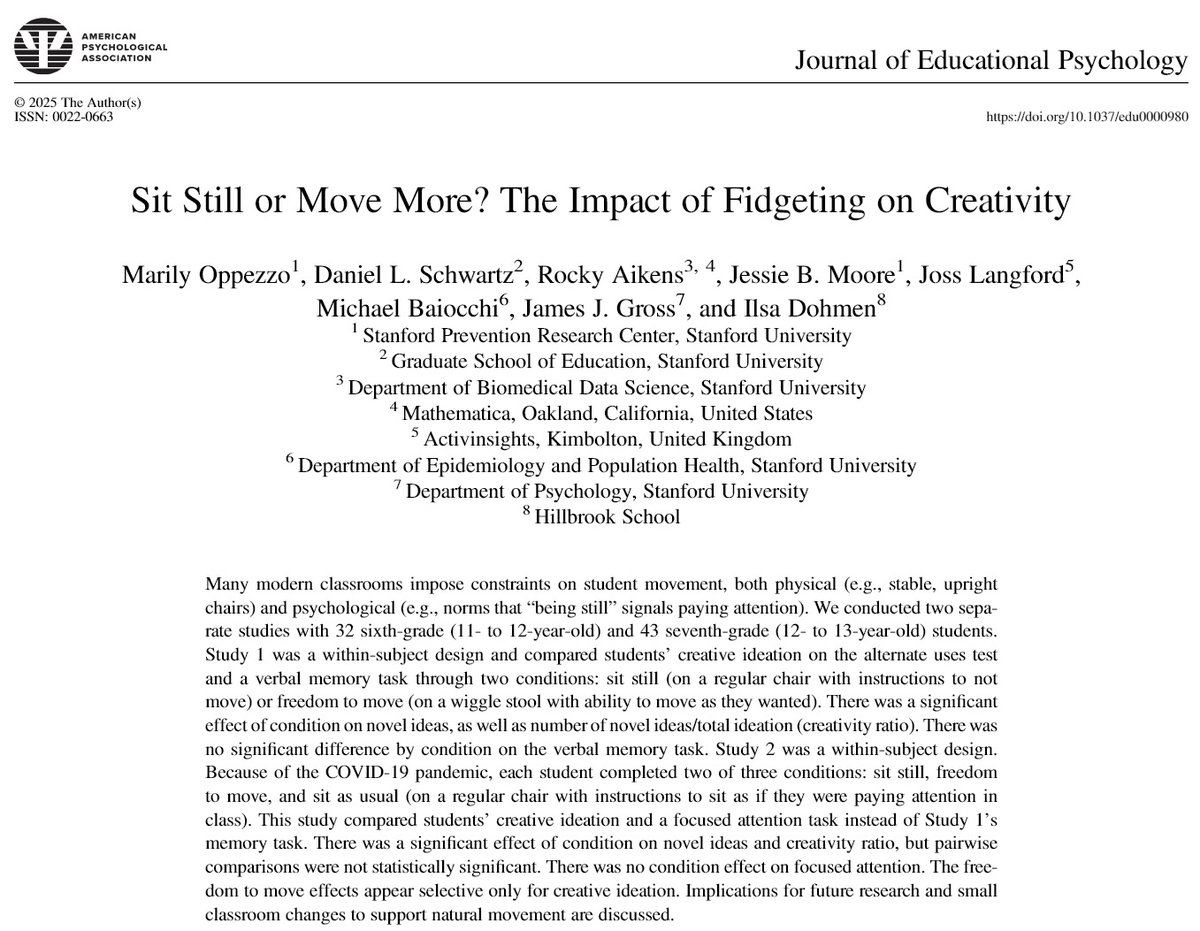
Telling kids to sit still doesn’t build discipline. It stifles imagination. Evidence: When students are given freedom to fidget and wiggle in their seats, they pay just as much attention—and generate more creative ideas. Physical activity unlocks mental agility.
Adam Grant tweet media
English
89
349
1.6K
212.3K
Avery Faigenbaum retweetledi
Iñigo San Millán
Iñigo San Millán@doctorinigo·
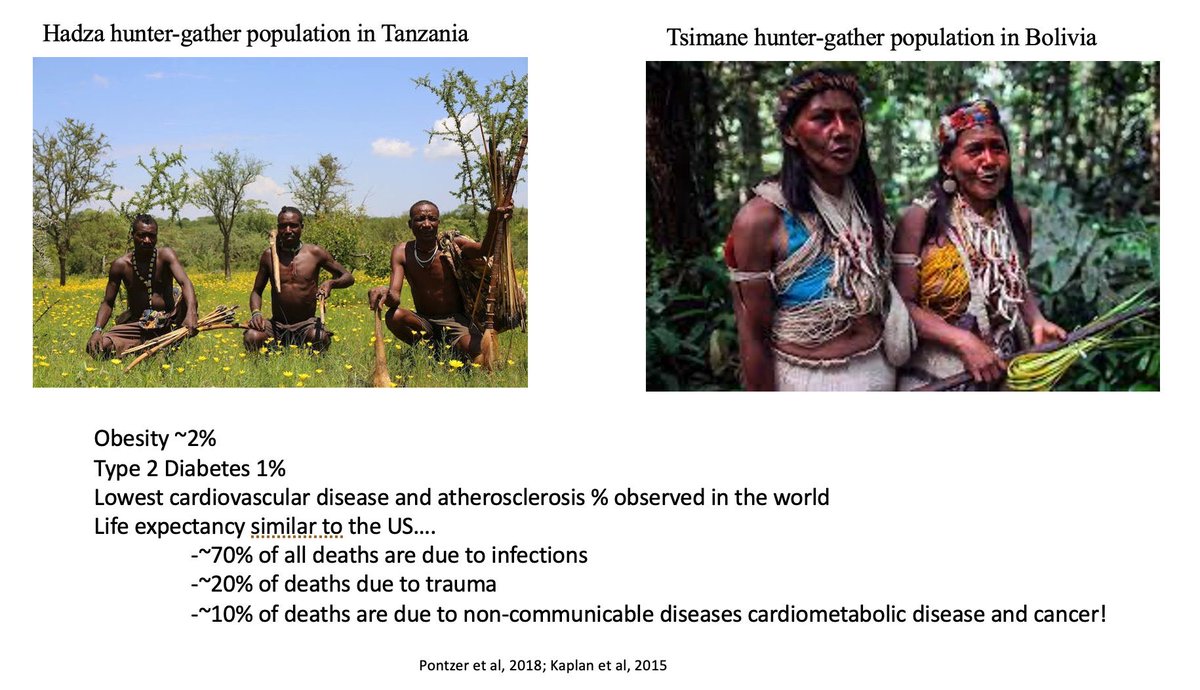
For about a decade, I’ve been showing these two slides at conferences. Two hunter-gatherer populations (Hadza and Tsimane), likely the closest living humans to our Paleolithic ancestors. Diet: • 65–70% carbohydrates • 15-20% protein • 10–15% fat • ~13% lower daily caloric intake than the US population Daily movement: • 115–135 minutes per day • 6–12 km of walking Health outcomes: • Obesity: ~2% • Type 2 diabetes: ~1% • Cardiovascular disease: among the lowest ever observed This is not a low-carbohydrate population. The difference is metabolic fitness. When mitochondria are continuously stimulated by daily movement, carbohydrates can be oxidized (burnt). When movement disappears, fuel oxidation fails and metabolic disease emerges. The debate should not be low-carb vs high-carb. That debate has failed to solve obesity or type 2 diabetes for decades. The real question is: Can your mitochondria still do their job? #MitochondrialFunction #MetabolicFitness #MetabolicFlexibility #PhysicalActivity
Iñigo San Millán tweet mediaIñigo San Millán tweet media
English
66
195
1.4K
167.7K
Avery Faigenbaum
Avery Faigenbaum@AFaigenbaum·
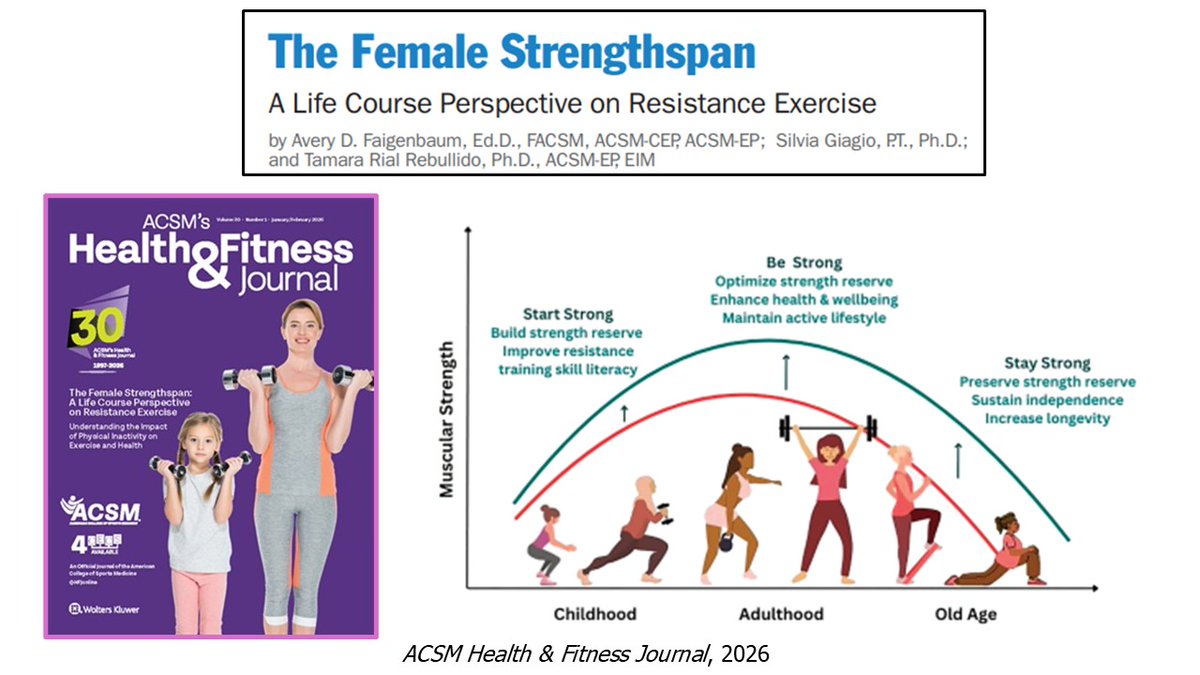
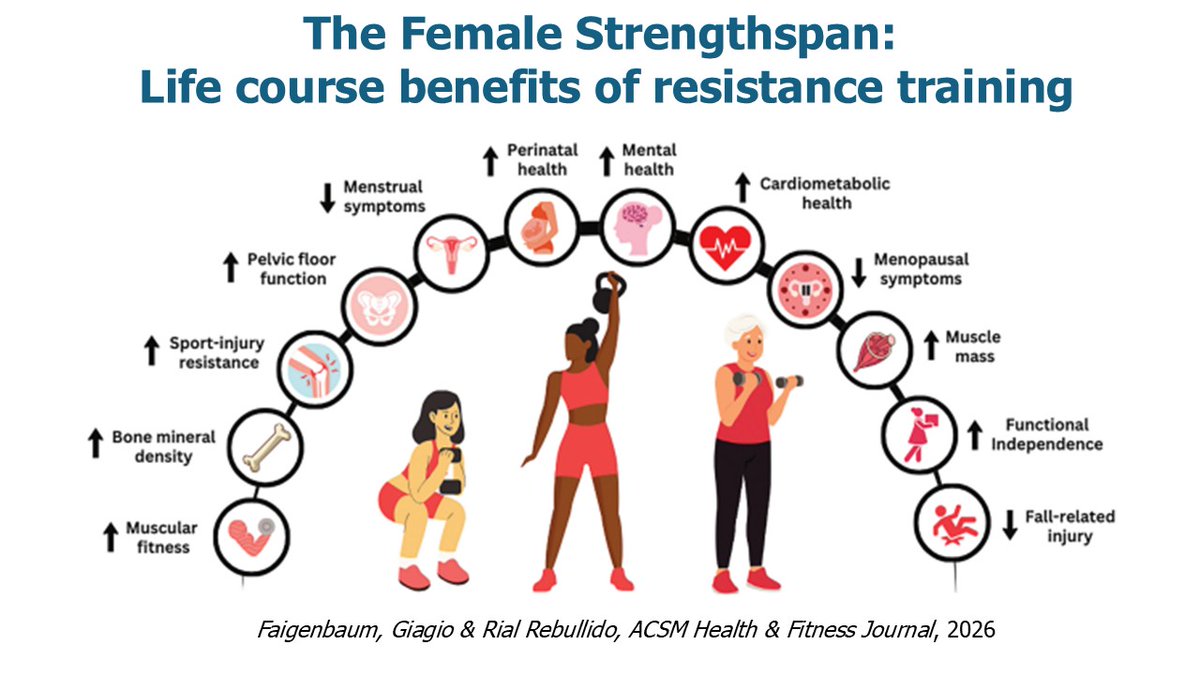
For women, resistance exercise is not just about lifting weights. Rather, its about optimizing strength reserves that support long term health and well being. Free access journals.lww.com/acsm-healthfit…
Avery Faigenbaum tweet media
English
1
10
48
3.3K
Avery Faigenbaum retweetledi
Daniel Berglind, PhD
Daniel Berglind, PhD@DanielBerglind·
Grip strength is a powerful marker of health—but not a cause. Evidence from >1M participants shows low grip strength predicts higher risk of CVD and premature mortality 👉But grip strength is a proxy for whole-body muscle mass, not the driver itself. thelancet.com/journals/lance…
English
2
16
99
4.4K
Avery Faigenbaum retweetledi
Jacinto Muñoz-Pardeza
Jacinto Muñoz-Pardeza@Jacinto_MP_·
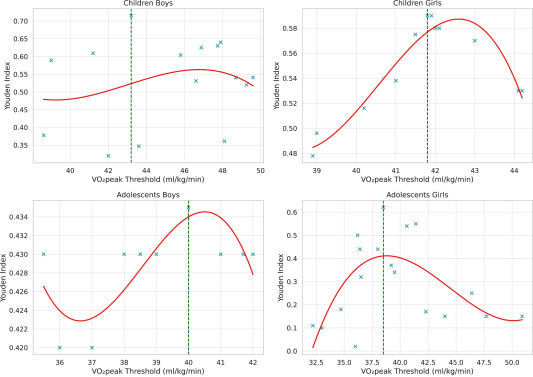
Just published🔥 Honoured to be a co-author of this article!🆕 VO₂peak thresholds to flag cardiometabolic risk in youth 👦❤️‍🩹👧 <13 years: ♂️ <43.2 ml/kg/min ♀️ <41.9 ml/kg/min ≥13 years: ♂️ <40.0 ml/kg/min ♀️ <38.5 ml/kg/min 📜👇 doi.org/10.1016/j.nume…
Jacinto Muñoz-Pardeza tweet media
English
2
8
32
3.9K
Avery Faigenbaum retweetledi
Antonio García-Hermoso
Antonio García-Hermoso@a_garciahermoso·
🆕🆕 Nuestro meta-análisis (n=10,588) establece nuevos umbrales de fuerza de prensión manual/peso🤚 (kg/kg) en niños y adolescentes 🧒🧠 ✔️6–12 años 👦0,39 👧0,30 ✔️13–18 años 👦0,42 👧0,36 ⬇️ Por debajo = 🚨 mayor riesgo cardio-metabólico 🆓onlinelibrary.wiley.com/doi/epdf/10.10…
Antonio García-Hermoso tweet media
Español
2
48
92
4.1K
Avery Faigenbaum retweetledi
Mikel Izquierdo
Mikel Izquierdo@mikelizquierdo_·
💊+🏋️‍♂️= Medicine. In our latest @TheLancetLongevity paper we argue: 👉 “Exercise prescription is medically indicated, professionally implemented, and clinically monitored.” It’s time to integrate exercise into medication management for older adults. Read here ➡️ thelancet.com/journals/lanhl…
Mikel Izquierdo tweet media
English
1
81
239
15.1K
Avery Faigenbaum retweetledi
Nicholas Fabiano, MD
Nicholas Fabiano, MD@NTFabiano·
Our paper was just published in the British Journal of Sports Medicine. 🧵1/10
Nicholas Fabiano, MD tweet media
English
52
197
1.4K
122.8K
Avery Faigenbaum retweetledi
Nicholas Fabiano, MD
Nicholas Fabiano, MD@NTFabiano·
Lifting weights reverses muscle aging.
Nicholas Fabiano, MD tweet media
English
29
333
3.5K
122.2K
Avery Faigenbaum retweetledi
Dr. Rhonda Patrick
Dr. Rhonda Patrick@foundmyfitness·
Exercise is an antidepressant. A new meta-analysis of 26 randomized controlled studies found that both aerobic and resistance training significantly reduced symptoms of depression and anxiety, often rivaling standard treatments like medication and therapy. Although both modes were beneficial, aerobic exercise had a slightly greater impact on depression, while resistance training showed a modest edge for anxiety. Many of the included studies didn't even meet the minimum weekly physical activity recommendations for aerobic or resistance exercise, and even then, reduced depressive and anxiety symptoms significantly. For those with depression or anxiety, movement is powerful medicine. And the dose needed might be smaller than you think.
Dr. Rhonda Patrick tweet media
English
98
887
5K
556K
Avery Faigenbaum retweetledi
Nicholas Fabiano, MD
Nicholas Fabiano, MD@NTFabiano·
Writing is thinking. Don't let AI do it all.
Nicholas Fabiano, MD tweet media
English
147
2.3K
12.6K
825.1K
Avery Faigenbaum retweetledi
Jonathan Haidt
Jonathan Haidt@JonHaidt·
Our latest survey of family life, with @HarrisPoll: Kids would much rather spend time with friends in unstructured play, rather than seeing friends online or in adult-supervised activity. To get kids off phones, we need to give them back the real world theatlantic.com/ideas/archive/…
English
20
146
730
74.1K
Avery Faigenbaum retweetledi
JAMA Pediatrics
JAMA Pediatrics@JAMAPediatrics·
Viewpoint: The 2023 AAP guidelines recommend obesity treatment in youth with #GLP1RA medications, amidst ongoing uncertainties about implementation and safety. ja.ma/3GAsNtx @edmondsonemmak
JAMA Pediatrics tweet media
English
0
3
5
1.2K
Avery Faigenbaum retweetledi
Current Sports Medicine Reports
Is it time for a new visual model to promote physical activity? @AFaigenbaum et al. propose My Physical Activity Plate: designed to promote an inclusive approach to PA emphasizing personal choice & variety in movement w/strategies to support adherence. brnw.ch/21wTFFH
Current Sports Medicine Reports tweet media
English
0
7
21
1.2K