Ashley Lauren

3.3K posts

Ashley Lauren banner
Ashley Lauren

Ashley Lauren

@ALubeyMD

ER MD Peel Region, @MacEmerg FRCPC 2020 & @UofTMDProgram 1T5 alumni. Clinician Educator DRCPSC.

Mississauga, Ontario Katılım Mart 2018
734 Takip Edilen945 Takipçiler
Sabitlenmiş Tweet
Ashley Lauren
Ashley Lauren@ALubeyMD·
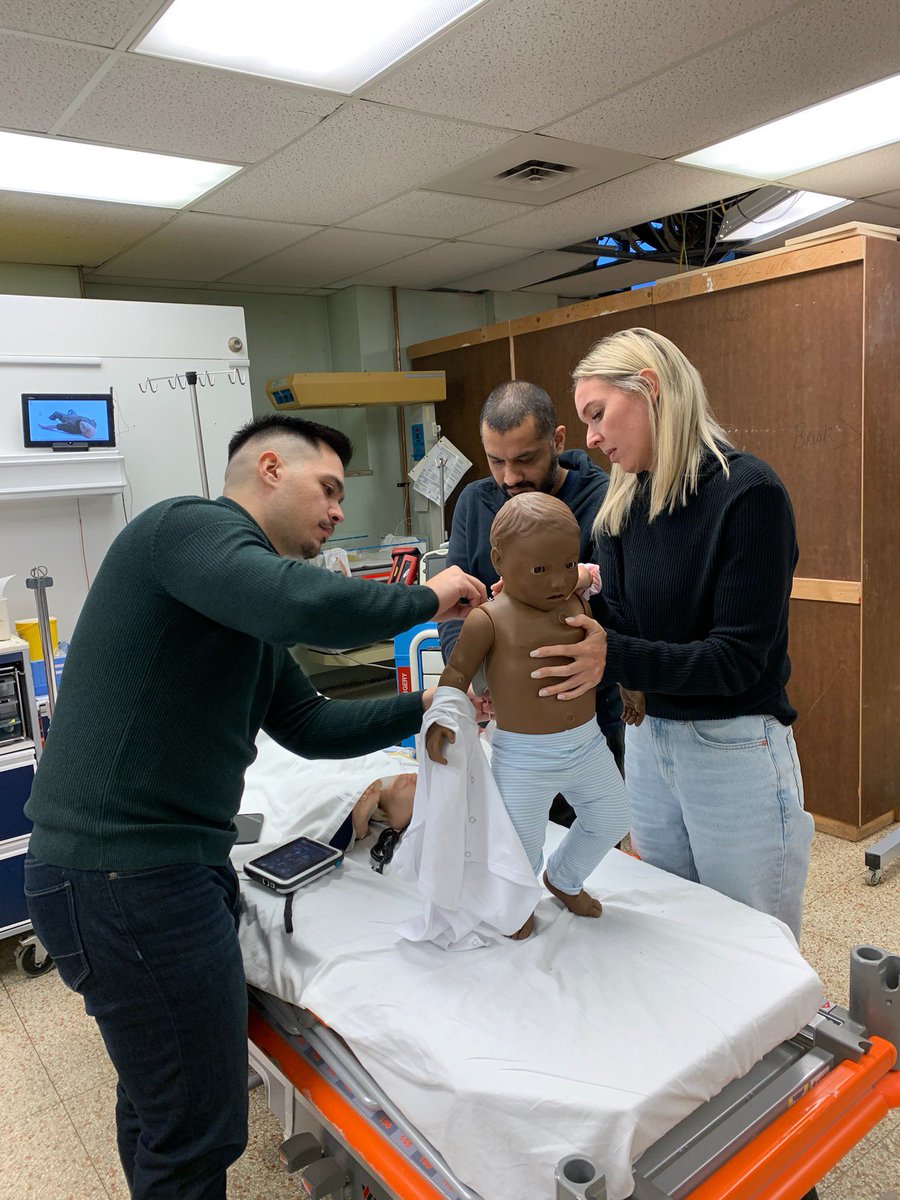
@MacEmergFRCPC congratulations & welcome to our newest member of the Mac Emerg residency program, born January 9th, 2024.
Ashley Lauren tweet media
English
0
0
8
471
Ashley Lauren retweetledi
Sophia ❣️
Sophia ❣️@KeruboSk·
Millennials are the elite generation because they cranked out 12-page essays the night before they were due. No ChatGPT. No Claude. Just lo-fi beats playing in the background, Black coffee at midnight, footnotes that were somehow correct, and pure delusion. Grade was an A minus. Period.
English
1.3K
7.4K
52.1K
3.5M
Sachin Trivedi
Sachin Trivedi@svt882·
@AirCanada Just wrapping up an approx 7 days trip away, and on two legs my bag didn’t make it despite being listed as a “priority bag.” On my return flight there was over 13 hours between connections. Why does this keep happening?
English
5
1
1
65
Ashley Lauren retweetledi
Raghu Venugopal MD
Raghu Venugopal MD@raghu_venugopal·
When my ER patient is day 4 on an ER stretcher - people - we have a problem. We cut, slashed and destroyed our hospital capacity with no realization Canada was aging, growing and more medically complex. It’s hard to find a more abject policy failure in Canadian history.
English
120
320
1.1K
20.5K
Ashley Lauren retweetledi
Neil Stone
Neil Stone@DrNeilStone·
Meningitis can kill kids within hours CDC data shows meningococcal vaccines reduced U.S cases by over 75% since 2005 with effectiveness exceeding 90% in young children. It was just DROPPED from the routine schedule RFK Jr acting out his anti vax fantasy. Kids will die
The Associated Press@AP

BREAKING: The U.S. drops the number of vaccines it recommends for every child in an unprecedented overhaul of childhood health protections. apnews.com/article/childh…

English
360
4.8K
13.2K
354.7K
Ashley Lauren retweetledi
Raghu Venugopal MD
Raghu Venugopal MD@raghu_venugopal·
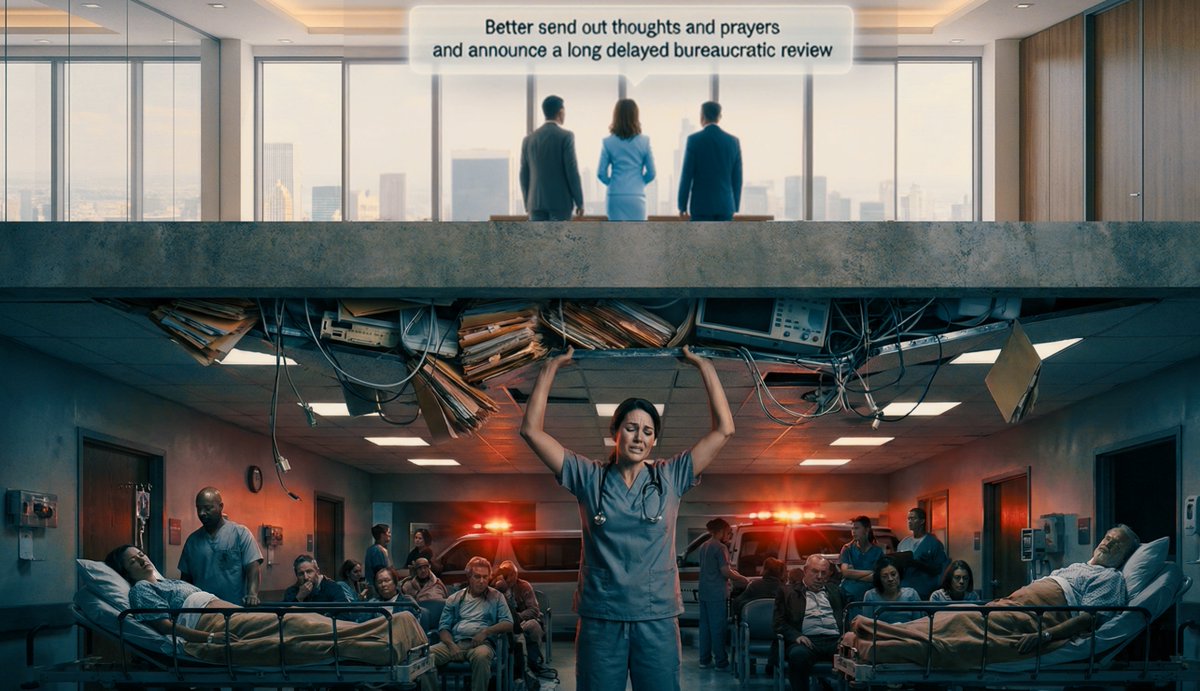
Lack of hospital bed capacity causes ER overcrowding - and deaths. And Ontario - brace for hospital cuts. The FAO projects losses of 2457 hospital beds, 7263 RNs and 1784 PSWs over 3 years .👇👇👇 This is all because we will see only 0.7% annual increase in health spending. That is the least growth in funding to meet an older, more complex and larger population - since 1993. The number of LTC beds per capita will drop too. On the contrary, Ontario must increase health spending 4% per year to maintain current medical services to average Ontarians. Meanwhile - at baseline - Ontario hospitals struggle with the 2nd lowest hospital bed capacity in Canada. So what happens? Hospitals desperate for space put patients awaiting long-term care in hotel rooms. These are people just too sick to return to home. No matter how you cut it - Ontario's FAO (independent financial and economic analysis to Queen's Park) cites that Ontario spends the least amount per capita on hospitals compared to the rest of Canada. My hallway patients know this reality. My patients stuck 3 days waiting for a hospital bed know this reality. Doctors, nurses, patients and families know this reality. Does the Ontario government know this reality? thestar.com/news/gta/hamil…
Raghu Venugopal MD tweet media
English
33
146
285
7.9K
Ashley Lauren retweetledi
Parksy
Parksy@PfParks·
This is an excellent summary of some of the data on our HC system and why we are at where we are. Please take a moment to read. Govt has been neglecting investment in workforce and hosp/LTC capacity for years... we are paying the price now. paulstewartii.substack.com/p/canadas-heal…
English
9
90
164
4.9K
Ashley Lauren retweetledi
Andrea Dekeseredy
Andrea Dekeseredy@AndieWinnipeg·
I wanted to share what we’re doing in Manitoba that is pushing us in the right direction (and people out of the EDs). This flyer went to every house in the neighbourhood. It explains how to book same-day appointments online and you see every available appointment in your area.
Andrea Dekeseredy tweet media
English
42
133
536
41K
Ashley Lauren retweetledi
Parksy
Parksy@PfParks·
Seeing more and more weighing in about how the GNH Triage nurse/ED team should be held to personal account makes me realize that the avg AB just doesn’t understand what an utter dumpster fire our major EDs have been for months/yrs. 1/9
Parksy tweet media
English
54
251
662
68.3K
Ashley Lauren retweetledi
Isaac Bogoch
Isaac Bogoch@BogochIsaac·
There is a lot of influenza circulating in Canada right now. The flu can be especially rough on older adults & young kids...see below for current flu hospitalization rates. It’s not too late to get your flu shot if you haven’t already.
Isaac Bogoch tweet media
English
337
165
470
57.9K
Brandon Avedikian
Brandon Avedikian@bavedikian·
Go to Costco on a weekday at 2pm. You’ll see a bunch of young people in workout clothes casually shopping. You might think, “What are these people doing? Do they not have jobs?” They do have jobs. They work from home.
English
1.2K
162
12.5K
12.6M
Ashley Lauren
Ashley Lauren@ALubeyMD·
@DanMazierMP It’s because residency programs barely receive any funding from the universities/government to run their programs, they need to find alternative streams of funding to pay people/ things like administrators, simulation programs, program events, etc
English
0
0
16
1.3K
Dan Mazier
Dan Mazier@DanMazierMP·
BREAKING NEWS The health committee has summoned the University of Toronto's Faculty of Medicine for its role in training Saudi-funded doctors in Canadian hospitals. Thousands of Canadians who study medicine abroad are told there are “no training spots” for them at home. Yet the federal Immigration Minister is letting Canadian universities cash in by training foreign-funded doctors through the visa-trainee program. In 2024 alone, the Liberal government approved over 1,100 Saudi-funded doctors to train in Canadian hospitals. Almost none will ever work in Canada after their training. Universities are making millions, while Canadians who want to come home and practice medicine are blocked. The Associate Director of Postgraduate Medical Education at the University of Toronto refused to appear before the Health Committee three times. Parliament has now summoned her. How much is the University of Toronto profiting from Saudi-funded doctors? More to come.
English
90
662
2.1K
95.5K
Ashley Lauren retweetledi
Raghu Venugopal MD
Raghu Venugopal MD@raghu_venugopal·
No tech no scan. A key bottleneck in hospitals especially on evenings and overnight. As Canada’s Conservatives march to privatize healthcare this is only going to get worse. They look after their own first and that is the problem.
Parksy@PfParks

Just a reminder to all Albertans: we already cannot staff our large hospitals with Ultrasound Technicians to provide safe and timely care for all kinds of afterhours emergencies. buff.ly/ovAGkeq

English
2
28
57
2.3K
Ashley Lauren retweetledi
Sam Ghali, M.D.
Sam Ghali, M.D.@EM_RESUS·
As a new Emergency Medicine attending 10 years ago I was asked to write about my insights into what it's like to be an ER Doctor. I just randomly came across it and after all these years I'm amazed by how much this all still rings true in my heart today. So I wanted to share it with you guys. Here's what I wrote: MAKE THINGS HAPPEN, SAVE LIVES, ALLEVIATE SUFFERING My Emergency Department is a battlefield. Volumes are high and the pace is fast. To succeed as an Emergency Physician I must be an expert of efficiency. I also must be an expert of triage. I am constantly triaging and re-triaging as things evolve. The ED is highly unpredictable. My entire shift I am on guard and ready for any emergency to come flying through the doors at any moment. In the meantime I am either taking care of or seeking out other emergencies. My job is not to be expert in all of medicine. My job is to be jack of all trades and master of diagnosing and treating what can and will kill you. If I cannot provide the definitive care you need, my job does not end until I have gotten you there. The more I practice Emergency Medicine, the more I realize that what I do more than anything else is - make things happen. Cliff Reid (@cliffreid) delivered an excellent SMACC talk on making things happen in the resuscitation bay. (If you haven’t yet heard it I recommend you do). I’ve come to realize that this concept extends beyond the resus bay and pervades all aspects of my job. So what does it mean to make things happen? Making things happen means putting my visions of what needs to happen into motion and making them reality. In order to make things happen, I must first appreciate that my ED is equipped with an army of highly skilled staff that are the heart and soul of the department – and that without them I could make very little happen. Making things happen means identifying a sick patient and getting them quickly moved to a critical bed; it means getting my suspected head bleed patient expeditiously to the CT scanner with least possible delay; it means mobilizing help to intervene on my flash pulmonary edema patient in hypertensive crisis and getting her on CPAP & Nitro immediately to pull her out of the water and prevent intubation; it means convincing my adamant patient who is ready to walk out the door but is clearly not well enough to go home not to sign out against medical advice, but rather to stay in the hospital where he/she is safe and taken care of; making things happen means advocating for my patients and convincing my consultants to take them emergently to the cath lab or operating room at 3 AM when it otherwise would not have happened until morning. Making things happen means constantly thinking two steps ahead. Making things happen is an art. I have learned that to excel in Emergency Medicine I must master the art of making things happen. If my goal is to save lives, I must first recognize that a life needs to be saved – that is, I must be an expert at diagnosing life-threatening processes. The 75-year-old clutching his chest with tombstones on his ECG – that’s easy. The problem is that most of my patients are not truly sick. Some are here because they are afraid that they are sick, and just need reassurance. Some are here just for pain medications. Most of my patients are undifferentiated. Sickness is a spectrum. Truly sick patients often look sick, but often they do not. I must be expert at sifting through the crowd and identifying which patients are harboring a life-threatening diagnosis. This is not always an easy task, but it’s up to me to figure it out. It’s my job to figure out that the 45-year-old gentleman who looks comfortable sitting up in bed watching television and texting on his phone has a Type A Aortic Dissection. If I simply get two sets of cardiac enzymes, repeat an ECG and discharge him home since these are normal – there is a good chance he will die. It’s my job to figure out that the 60-year-old lady with chest pain who was transferred to me for “NSTEMI” actually has a huge saddle pulmonary embolus. It’s not enough to just admit her to the hospital floor only for her to sit up there, decompensate, and have a bad outcome. I have to do better than that. In the Emergency Department, there are landmines scattered everywhere. It’s my job to find the landmines. I can’t talk about saving lives without talking about Resuscitation. This is an entire topic in and of itself and I could write all day about it – but I won’t do that here. I will simply say that if I want to save lives, I must be an expert at Resuscitation. I believe that as an Emergency Physician, if I am not expert at Resuscitation – my purpose is lost and my mission is in vain. Resuscitation encapsulates those moments that matter most; the moments that often determine my patients’ fates, and define Emergency Medicine as a specialty. Resuscitation is the essence of Emergency Medicine. In the end, Emergency Medicine is all about the patients. While patients are under my care, I consider them family. When I walk into a room, I shake hands with each patient and all their friends and family members who have come to support them. I look my patients in the eyes. I listen to them. I try my best to put myself in their shoes and empathize with them. I know that communication is vital and I make sure we are on the same page, and that all of their questions have been answered. I make a point to ensure that they know to let me know if they need anything. If my patients are not comfortable, I am not comfortable. Some humble advice I have to offer for success in Emergency Medicine: 1. Never stop learning. There’s too much out there to know, and knowledge is the foundation for the care we provide. Your eyes won’t see what your mind doesn’t know. Never get complacent in your knowledge. 2. Trust your instincts. Gestalt is at the heart of what we do. Without it we are merely computers and robots. Gestalt trumps any clinical decision rule any day. Even if you don’t know exactly what’s wrong with your patient, but you have a feeling something bad is going on – trust it and pursue it. 3. Be decisive. I’ve seen too many times patients crash while “decisions were being made”. If you choose not to intervene that’s fine, but not intervening should never be the default decision, as a result of indecision. That is unacceptable. First do no harm, does not mean do nothing. Don’t fall victim to being more comfortable with the devil you know than the devil you don’t. Understand that sometimes not taking a risk can be extremely risky. 4. Learn to control your mind in stressful situations. Adrenalinization is normal. While it’s a natural reaction and will enhance your performance, too much will impair your thought process and technical skills. Learn to recognize when you’re becoming over-adrenalized, and learn whatever it is that works for you to be able to relax, stay calm, and temper your sympathetics. 5. Be cognizant of human factors. So much of what we do is psychological. Be aware of your susceptibility to cognitive bias. The key to conquering cognitive errors is to be aware of their existence. 6. Debrief after codes or tough cases and take time to reflect back after shifts. I do this routinely and I find it to be invaluable. Some of the greatest things I have picked up on have been via this process. 7. Learn Emergency Ultrasound.Believe me when I tell you that Emergency Ultrasound will transcend your practice. If you don’t learn EM ultrasound, at least learn the critical care stuff. If you don’t learn the critical care stuff, at least learn basic Echo – it has the greatest impact. 8. Follow up on your patients. I can’t express how much of my learning is through following up on my patients. If you don’t do it already – start! You will be amazed by how much you will learn. 9. Accept and embrace that some of your patients will have bad outcomes or die no matter what you do – but never, ever let this be an excuse to provide anything less than the best care you possibly can. 10. Be kind and compassionate. When it’s all said and done our patients may not remember details of their ED stay during what might very well have been the worst day of their lives – but they will remember how we made them feel.
English
312
1.5K
7.1K
4.2M
Ashley Lauren retweetledi
Charli Huxley
Charli Huxley@ImKnotTheOne·
I won’t be lectured on Tylenol from the people that drink raw milk.
English
563
9.1K
95.5K
1.5M
Buitengebieden
Buitengebieden@buitengebieden·
Meanwhile on the Coral Coast, Western Australia.. 😊
English
187
2K
21.9K
1.2M