Andrew Gunn 🇺🇦

3.3K posts

Andrew Gunn 🇺🇦 banner
Andrew Gunn 🇺🇦

Andrew Gunn 🇺🇦

@ASGunn

Dr Andrew Gunn 🎓 Political Economist of Higher Education. Lecturer @OfficialUoM 🐝. Views my own. RT≠Endorsement.

United Kingdom & Australia Katılım Mayıs 2010
2.2K Takip Edilen1.6K Takipçiler
Andrew Gunn 🇺🇦 retweetledi
Johan Norberg
Johan Norberg@johanknorberg·
Today is the 250th anniversary of Adam Smith’s The Wealth of Nations, one of the most important books ever. If you don’t have the stamina to read it all, we made a film about him a few years ago. My favourite part is when his metaphor of “the man of system” comes alive.
English

40
583
2.3K
127K
Andrew Gunn 🇺🇦 retweetledi
Jess Hoel
Jess Hoel@Jess_Hoel·
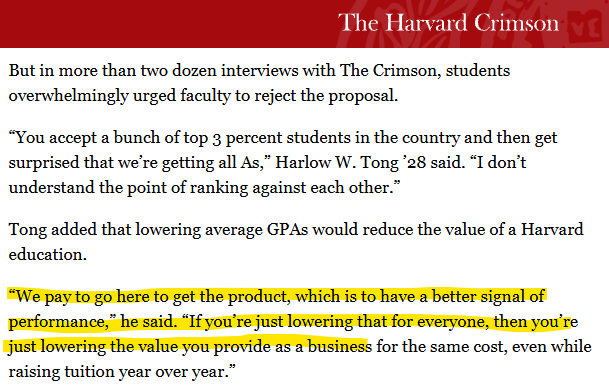
This student does not understand the economics/signaling value of higher education. (A committee of Harvard faculty has proposed capping the percentage of A's per class at 20%.)
Jess Hoel tweet media
English
1
1
1
324
Andrew Gunn 🇺🇦 retweetledi
Gabriel M Ahlfeldt
Gabriel M Ahlfeldt@Ahlfeldt·
Good architecture is a posterchild public good: non-rival and non-excludable. Had great fun using the economics toolbox to study why developments look rather underwhelming and simulate what policies could lead to more beautiful cities. Plus, so cool to work with my amazing former and current @LSEGeography PhDstudents... github.com/Ahlfeldt/DPs/b…
Gabriel M Ahlfeldt tweet media
English
2
26
142
10.8K
Andrew Gunn 🇺🇦 retweetledi
Southern Chestnut 🍀
Southern Chestnut 🍀@AppyOrtho·
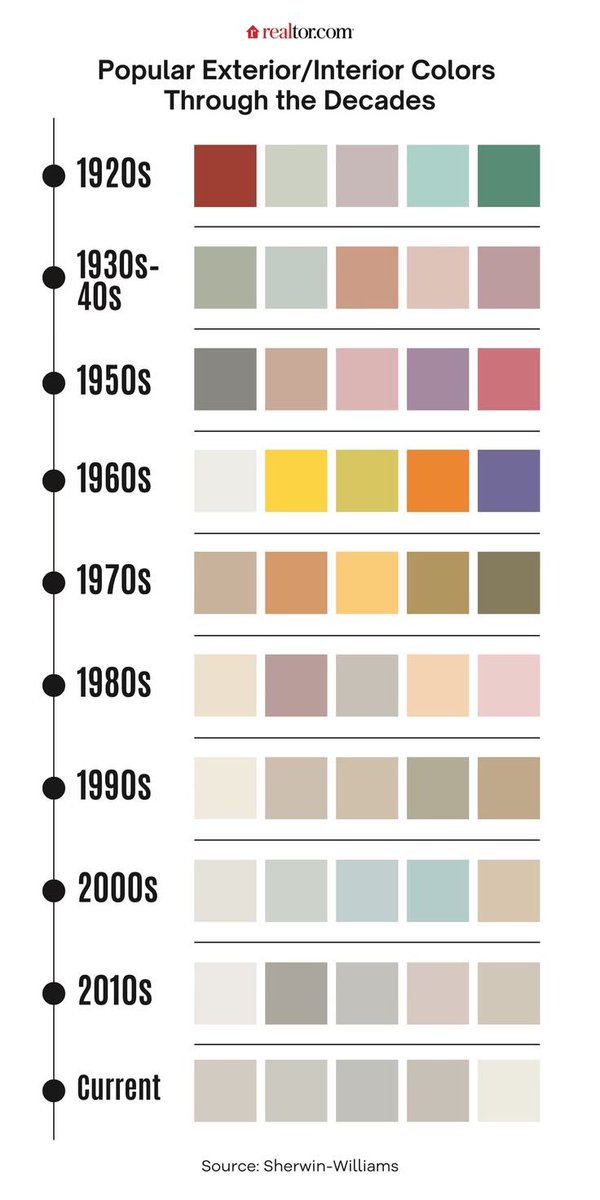
You can see the soul drain from society in real time.
Southern Chestnut 🍀 tweet media
English
1.5K
9.7K
63.8K
3.8M
Andrew Gunn 🇺🇦 retweetledi
Robert Peston
Robert Peston@Peston·
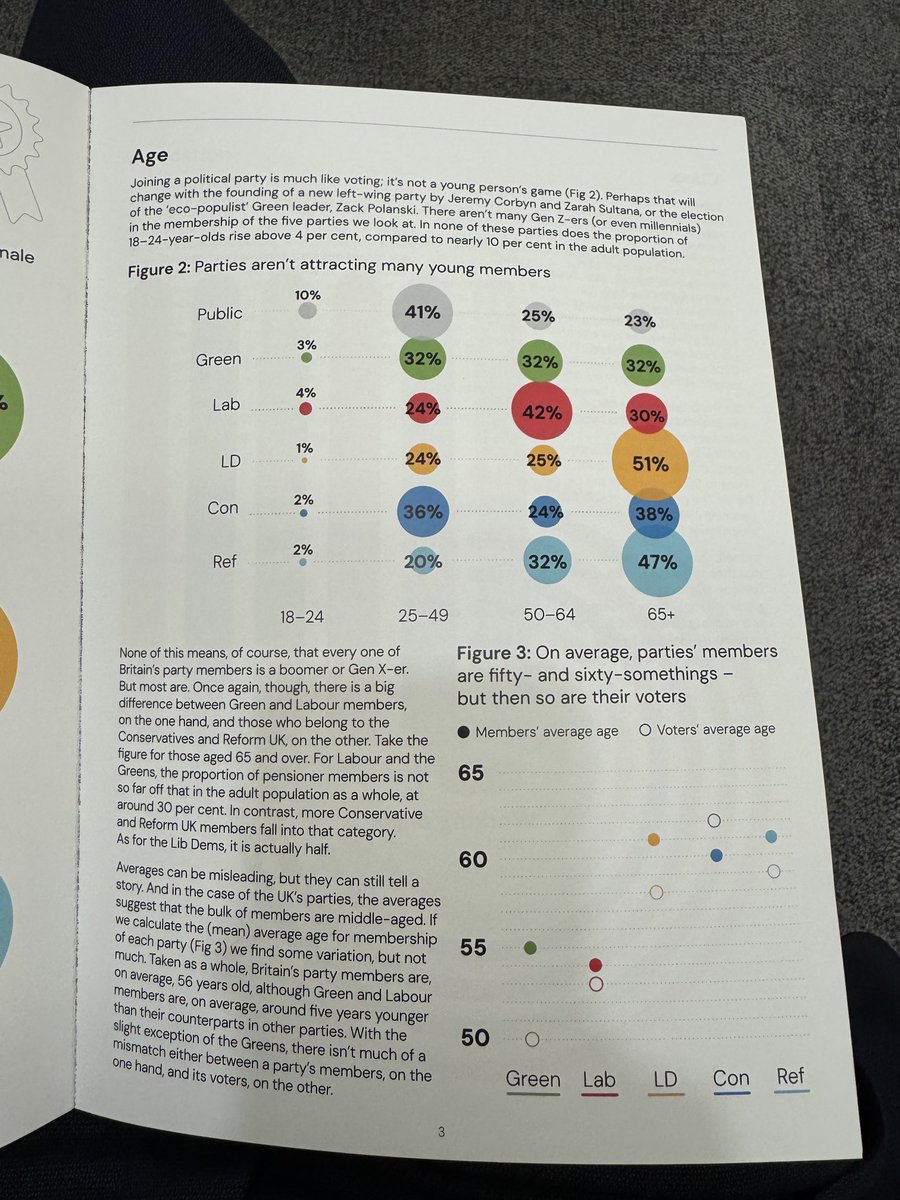
Quite literally, our political parties are aging and dying (research by Tim Bale et al ⁦@QMUL⁩)
Robert Peston tweet media
English
16
18
53
34.2K
Andrew Gunn 🇺🇦 retweetledi
Financial Times
Financial Times@FT·
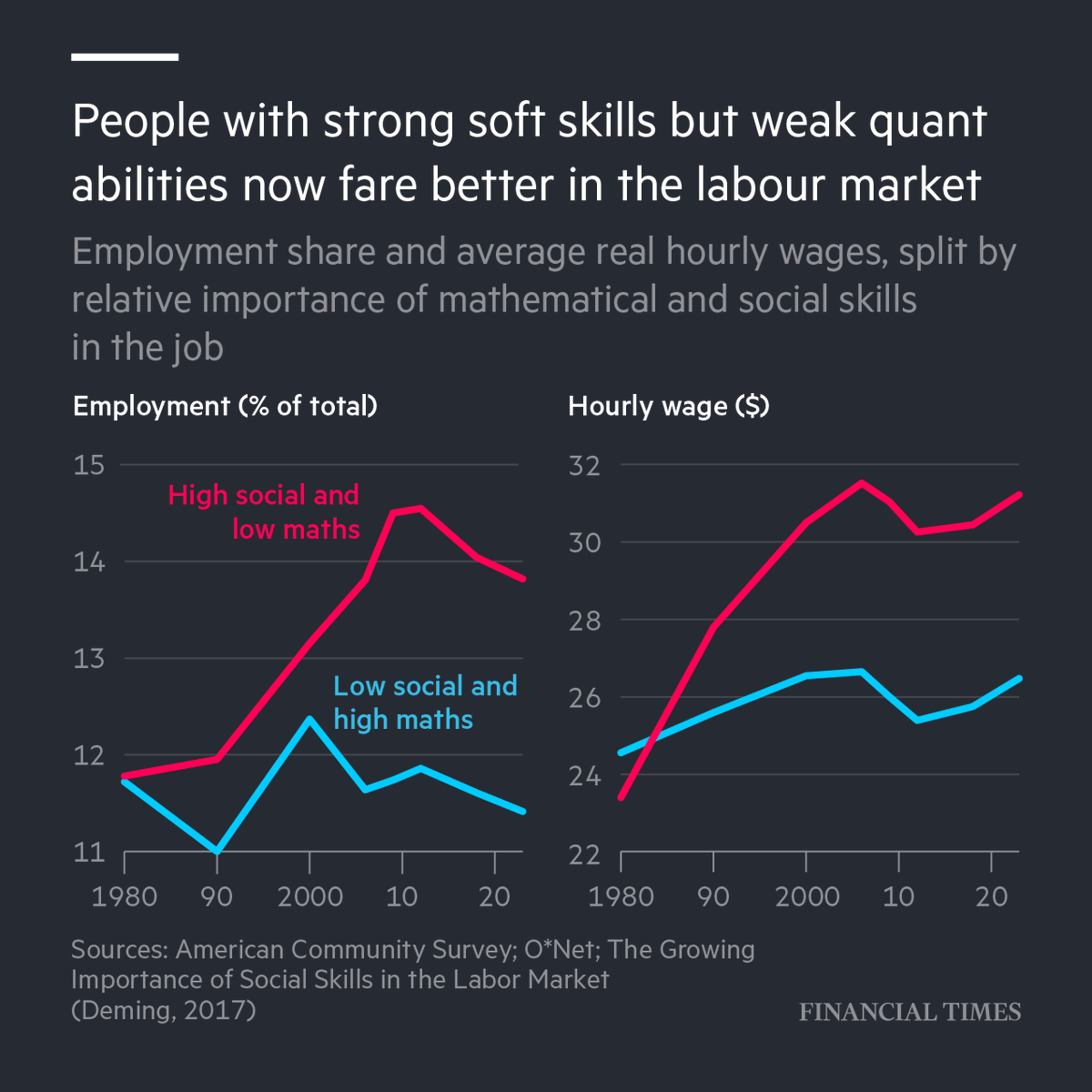
Counter to the prevailing view, soft skills more than quantitative competency have seen the biggest rewards in the labour market over recent years, writes John Burn-Murdoch. ft.trib.al/Kf3UYah
Financial Times tweet media
English
72
370
1.8K
241.7K
Andrew Gunn 🇺🇦 retweetledi
Robert Colvile
Robert Colvile@rcolvile·
Here for example is @benwansell's map of voting intention by occupation. Big left-wing clump (Lab and Lib indistinguishable!). Big culturally right-wing grouping, with Tories less right on culture, more on econ and Reform vice versa. Big gap between. benansell.substack.com/p/british-poli…
Robert Colvile tweet media
English
5
7
24
16.4K
Andrew Gunn 🇺🇦 retweetledi
Committee for Academic Freedom
Committee for Academic Freedom@ComAcFreedom·
Professor Arif Ahmed, the Office for Students’ Director for Freedom of Speech and Academic Freedom, speaking at our annual Navigating Academic Freedom conference, is drawing on philosopher Michael Oakeshott’s distinction between civil and enterprise associations. He argues that universities have drifted from the civil model — a community bound by rules that protect independent inquiry — toward an enterprise model that enforces shared moral missions like EDI. Defending academic freedom means returning to the civil model.
Committee for Academic Freedom tweet media
English
1
8
21
1.5K
Andrew Gunn 🇺🇦 retweetledi
Arpit Gupta
Arpit Gupta@arpitrage·
These results suggest that getting a PhD causally worsens mental health, or at least receiving psychiatric medicines. The reversal post PhD degree is particularly convincing. But the up trend among the control group is intriguing. The highly educated are in distress.
Arpit Gupta tweet mediaArpit Gupta tweet mediaArpit Gupta tweet mediaArpit Gupta tweet media
English
70
371
1.8K
469.3K
Andrew Gunn 🇺🇦 retweetledi
Carl Benedikt Frey
Carl Benedikt Frey@carlbfrey·
My guest essay in @nytimes today. I make 5 key points: 1. There’s little clear evidence of AI eliminating jobs at scale yet. But waiting to see is risky. Pittsburgh’s steel towns saw early signs with mini-mills before the losses showed up. Service capitals like London and New York should prepare now rather than after the shock. 2. Diversification helps—but only so much when the disruptor is a general-purpose technology. Being “in many industries” isn’t a shield if the same tool touches them all. 3. High-skill, knowledge jobs have big local multipliers. Each manufacturing job supports 1.6 local jobs; each high-skill tech/professional role supports 5. That means even modest losses of analysts, developers, or paralegals can ripple through restaurants, retail, and transit systems. 4. AI needn’t fully replace workers to matter. It only needs to make work easier. As location and experience matter less at the margin, more work will offshored to cheaper places (e.g. India, UAE, or Philippines). 5. The lesson from deindustrialization isn’t inevitability—it’s reinvention. Detroit poured resources into legacy industries and still declined. Boston repeatedly bet on talent, education, and new sectors.
Carl Benedikt Frey tweet media
English
30
160
614
84.4K
Andrew Gunn 🇺🇦 retweetledi
Jostein Hauge
Jostein Hauge@haugejostein·
You *must* read this brilliant new paper linking industrial policy to geopolitics. It outlines a three-tiered hierarchy of nations’ ability to implement industrial policy in the modern world economy — with wealthy nations at the very top.
Jostein Hauge tweet media
English
12
162
681
45.5K
Andrew Gunn 🇺🇦 retweetledi
John B. Holbein
John B. Holbein@JohnHolbein1·
Did you know that your neighbors influence your political party? New in The Journal of Politics: Panel data on 41M voters show that people are more likely to switch political parties to match their neighbors.
John B. Holbein tweet media
English
25
62
310
68.4K
Andrew Gunn 🇺🇦 retweetledi
Ed Hodgson
Ed Hodgson@edhodgsoned·
Really fascinating looking at voting intention by life satisfaction: Both the Green Party and Reform do much better with people with lower life satisfaction, Labour is only convincingly ahead with people who rate their life satisfaction at 10/10
Ed Hodgson tweet media
English
11
66
269
81.5K
Andrew Gunn 🇺🇦 retweetledi
Jostein Hauge
Jostein Hauge@haugejostein·
Karl Marx and Adam Smith, despite their differences, approached economics in a similar way. They both understood that economics is shaped by human values, social norms, and ideologies. According to Marx and Smith, to be an economist is also to be a philosopher.
English
33
198
1.1K
47.6K