ASPC

9.7K posts

ASPC banner
ASPC

ASPC

@ASPCardio

The ASPC is a group of physicians, researchers, and allied health professionals working in the field of preventive cardiology.

Texas, USA Katılım Temmuz 2011
3.4K Takip Edilen8K Takipçiler
Sabitlenmiş Tweet
ASPC
ASPC@ASPCardio·
📣 Registration is open! Join us July 31–Aug 2, 2026 at #ASPC2026 in Scottsdale for cutting-edge prevention science, expert debates, new research, and the latest innovations from industry partners. Open to all cardiovascular care professionals. 🔗 aspconline.org/events/2026con…
ASPC tweet media
English
0
7
25
3.2K
ASPC retweetledi
AJPC
AJPC@AJPCardio·
New research sheds light on how early and how differently coronary artery disease develops in South Asian populations. In the DILWALE CTA Study, coronary plaque was present in 72% of individuals, with the majority being noncalcified—and therefore potentially missed by CAC scoring alone. Notably, 40% had plaque before age 40, and nearly all plaque in younger individuals was noncalcified. Sex and age differences were also striking—men had greater plaque burden, while overall plaque prevalence and calcification increased with age. The takeaway: traditional risk tools may underestimate risk in this population, reinforcing the need for earlier, more nuanced imaging and personalized prevention strategies. 📖 Read more: ow.ly/wYTJ50YwzC0 #Cardiology #PreventiveCardiology #HealthEquity #ASCVD #MedicalResearch
AJPC tweet media
English
2
2
6
273
ASPC retweetledi
Maya Inspired
Maya Inspired@Maya4Rights·
Early detection saves lives. Period. CAC scoring offers that critical window to intervene, and honestly, it's frustrating that such proven diagnostics remain underutilized.
ASPC@ASPCardio

New episode out now 🎙️ Coronary artery calcium (CAC) scoring is redefining how we assess cardiovascular risk in asymptomatic patients. A score of zero signals extremely low event rates—even in higher-risk individuals—while elevated scores help pinpoint who benefits most from preventive therapies. In this episode of The Heart of Prevention, host Dr. @Kpakanati3, @MichaelJBlaha, and @khurramn1 break down how CAC enables a shift from population-based care to truly personalized prevention—highlighting the “power of zero” and when to intensify treatment. 🎧 Listen now: art19.com/shows/the-hear… #PreventiveCardiology #Cardiology #HeartHealth #PrecisionMedicine @AJPCardio

English
0
1
1
140
ASPC
ASPC@ASPCardio·
New episode out now 🎙️ Coronary artery calcium (CAC) scoring is redefining how we assess cardiovascular risk in asymptomatic patients. A score of zero signals extremely low event rates—even in higher-risk individuals—while elevated scores help pinpoint who benefits most from preventive therapies. In this episode of The Heart of Prevention, host Dr. @Kpakanati3, @MichaelJBlaha, and @khurramn1 break down how CAC enables a shift from population-based care to truly personalized prevention—highlighting the “power of zero” and when to intensify treatment. 🎧 Listen now: art19.com/shows/the-hear… #PreventiveCardiology #Cardiology #HeartHealth #PrecisionMedicine @AJPCardio
English
0
4
20
1.1K
ASPC retweetledi
ASPC retweetledi
Khurram Nasir
Khurram Nasir@khurramn1·
Important work by @BNriagu @GarimaVSharmaMD & colleagues highlighting how #SDOH shape #CVHealth differently across the female life course. Key input on the temporal pattern. In younger women, adverse SDOH align more with behavioral and early cardiometabolic risk, while in midlife the signal shifts toward metabolic disease and inactivity. Clearly, if we are thinking about focusing on what important from #CVDPrevention perspective, it has be contextual and life-stage specific...... this information will be key for designing effective and equitable strategies. Thanks to the entire team for advancing this important conversation. This is exactly the type of impactful insights that @AJPCardio is looking to publish and share with our readers. @ASPCardio @CiccaroneCenter @CardioNerds @DrMarthaGulati @
Garima Sharma M.D@GarimaVSharmaMD

Delighted to share the analysis by @BNriagu @AJPCardio w co-authors @HoustonMethodi1 @ISHVnews @fmetlock @DrDastmalchi doi.org/10.1016/j.ajpc…

English
0
9
23
1.3K
ASPC retweetledi
Akinchan Bhardwaj, MD, DM, FACC
We may be entering a new phase of preventive cardiology, where behavior change is no longer “advice”, but continuously guided, personalized intervention. The My Heart Counts study published in @AJPCardio is interesting for both, its scale, as well as for what it represents: • A fully digital biobank integrating real-world physiology (steps, HR, sleep, ECG, EHR) • And now, LLM-driven coaching grounded in behavioral science If effective, this shifts prevention from clinic-based counseling to real-time, adaptive guidance at scale. The real question: will AI-driven coaching translate into sustained behavior change and hard cardiovascular outcomes? #PreventiveCardiology #DigitalHealth #CardioTwitter #CardioX @ASPCardio
AJPC@AJPCardio

📱🫀 New in preventive cardiology research: The My Heart Counts Cardiovascular Health Study outlines the design of a large digital biobank and a randomized trial using large language model (LLM)–driven coaching to boost physical activity. This innovative study leverages digital tools at scale to evaluate how AI‑led behavior change support may impact cardiovascular health—marking a step toward personalized, data‑driven prevention. 🔗 sciencedirect.com/science/articl… #PreventiveCardiology #DigitalHealth #AI #PhysicalActivity #CVDPrevention #MedTech

English
2
5
8
1.2K
ASPC retweetledi
National Triglyceride Alliance
One year of impact—and we’re just getting started. The National Triglyceride Alliance was founded on a simple idea: triglycerides deserve more attention as a critical driver of cardiovascular and metabolic health. Since then? ✔️ A growing national coalition ✔️ New education and clinical resources ✔️ Expanded awareness for patients and providers As we approach #NationalTriglyceridesDay (March 28), we’re reminded that progress starts with awareness—and continues with action. Let’s keep pushing forward. Read the press release: ow.ly/NPoz50YwlrN @SethJBaumMD @EliotBrinton @mmillermd1 @lipiddoc @ArchnaBajajMD @drmaggarwal @nationallipid @ASPCardio @NatPancFdn @livingwithfcs @TheAACE @HeartNurses @ionispharma @ArrowheadPharma @Amarincorp #Triglycerides #Cardiology #MedEd #HealthcareInnovation
English
0
5
7
142
ASPC retweetledi
Sahithi Sharma
Sahithi Sharma@SSharma_MD·
2026 ACC/AHA Dyslipidemia updates at a glance. From guideline to a brief clinician-focused digest. Early action. Better risk stratification. Clear LDL/non-HDL goals.
Sahithi Sharma tweet media
English
3
31
104
4.8K
ASPC retweetledi
AJPC
AJPC@AJPCardio·
📱🫀 New in preventive cardiology research: The My Heart Counts Cardiovascular Health Study outlines the design of a large digital biobank and a randomized trial using large language model (LLM)–driven coaching to boost physical activity. This innovative study leverages digital tools at scale to evaluate how AI‑led behavior change support may impact cardiovascular health—marking a step toward personalized, data‑driven prevention. 🔗 sciencedirect.com/science/articl… #PreventiveCardiology #DigitalHealth #AI #PhysicalActivity #CVDPrevention #MedTech
AJPC tweet media
English
0
5
10
3.1K
ASPC
ASPC@ASPCardio·
Following the 2026 multisociety dyslipidemia guidelines, @Amarincorp highlights the guideline-supported role of icosapent ethyl in reducing cardiovascular risk. The update reinforces that: • Residual risk persists despite statin therapy • Elevated triglycerides contribute to ongoing CV risk • Evidence-based therapies like icosapent ethyl can help reduce CV events when added to statins in high-risk patients 🔗 investors.amarincorp.com/news-releases/… #Cardiology #PreventiveCardiology #Triglycerides #ASCVD #ClinicalGuidelines
English
0
3
11
531
ASPC retweetledi
HCPLive
HCPLive@HCPLiveNews·
We spoke with Viet Le, DMSc, PA-C, from Intermountain Health, to discuss the ACC/AHA joint published guidelines for the treatment of dyslipidemia - including an updated risk calculator, renewed focus on Lp(a), and more. Watch now: hcplive.com/view/acc-aha-d…
English
1
4
6
291
ASPC
ASPC@ASPCardio·
@ASPCardio announced its 2026 Virtual Imaging Symposium—focused on multimodality cardiovascular imaging for prevention. 📅 April 25, 2026, from 8:00 AM to 12:55 PM EDT Experts will explore how advanced imaging can improve early detection, risk stratification, and personalized care in preventive cardiology. Featured speakers include: @CardioMDPhD Leandro Slipczuk, MD, PhD, FASPC, @a_l_bailey Alison Bailey, MD, FASPC, @MichaelJBlaha Michael Blaha, MD, MPH, @khurramn1 Khurram Nasir, MD, MPH, MSc, FASPC, Parag Joshi, MD, MHS, @lesleejshaw Leslee Shaw, PhD, Matt Budoff, MD, @DLBHATTMD Deepak L. Bhatt, MD, MPH, FASPC, Seamus Whelton, MD, MPH, Valentin Fuster, MD, PhD, @Borjaibanez1 Borja Ibanez, MD, PhD, Beatriz López-Melgar, MD, PhD, Harold Bays, MD, FASPC, Salvatore Carbone, PhD, RDN, @DonnaRyanMD Donna H. Ryan, MD Unrestricted educational support for the program is provided by industry partners, @Heartflow and @Cleerlyhealth. Read the press release: 🔗 prnewswire.com/news-releases/… #PreventiveCardiology #Cardiology #Imaging #MedEd #CardioTwitter
English
1
9
14
595
ASPC
ASPC@ASPCardio·
LDL-C may be controlled, but cardiovascular risk can still persist. ⚠️ The 2026 Multisociety Dyslipidemia Guidelines highlight that triglyceride-rich lipoproteins and remnant cholesterol contribute to residual ASCVD risk, even when LDL-C is at goal. The guidelines also emphasize that severely elevated triglycerides increase the risk of acute pancreatitis. Key updates include: • Triglycerides ≥150 mg/dL recognized as an ASCVD risk enhancer • TG ≥500 mg/dL associated with increased pancreatitis risk, with ≥1000 mg/dL requiring urgent management • Lifestyle as first-line therapy for elevated TG • Statins as the foundation of ASCVD prevention • Consideration of additional TG-lowering therapies (e.g., icosapent ethyl, fibrates in select patients) when risk remains elevated 📹 Featured expert: @DrMarthaGulati — Director, Davis Women’s Heart Center; Professor of Cardiology; Davis Women’s Heart Endowed Chair; Houston Methodist DeBakey Heart & Vascular Center; Immediate Past President, ASPC Follow ASPC for evidence-based updates on cardiovascular disease prevention. This educational initiative is supported by an unrestricted educational grant from @Amarincorp ahajournals.org/doi/10.1161/CI… #CardioPrevention #ResidualRisk #Triglycerides #ASCVD #Pancreatitis 🫀📊
English
2
11
41
3.6K
ASPC retweetledi
Seth Martin
Seth Martin@SethShayMartin·
So special to celebrate together on this big day for the field of Preventive Cardiology @rblument1 Apropos that we were both in clinic actively implementing the guideline recommendations as they were released Grateful for the incredible leadership by you and @PamelaBMorris
Roger Blumenthal@rblument1

Great to celebrate our Preventive Cardiology Guideline release with my colleague & key writing group member ⁦@SethShayMartin⁩ - special thanks to the Prevention Dream Team Writing group & my co-chair, the Amazing Dr. Pam Morris

English
2
4
65
3.8K
ASPC retweetledi
Khurram Nasir
Khurram Nasir@khurramn1·
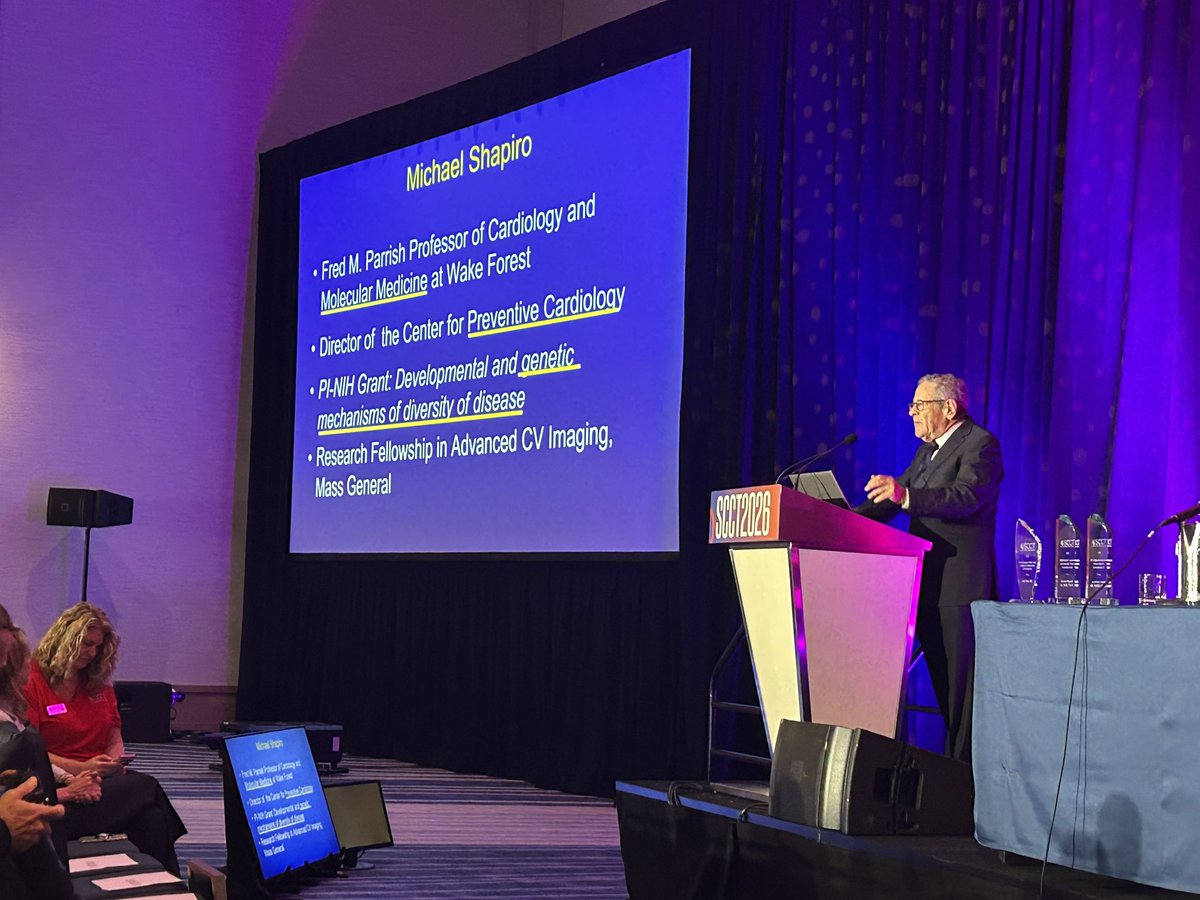
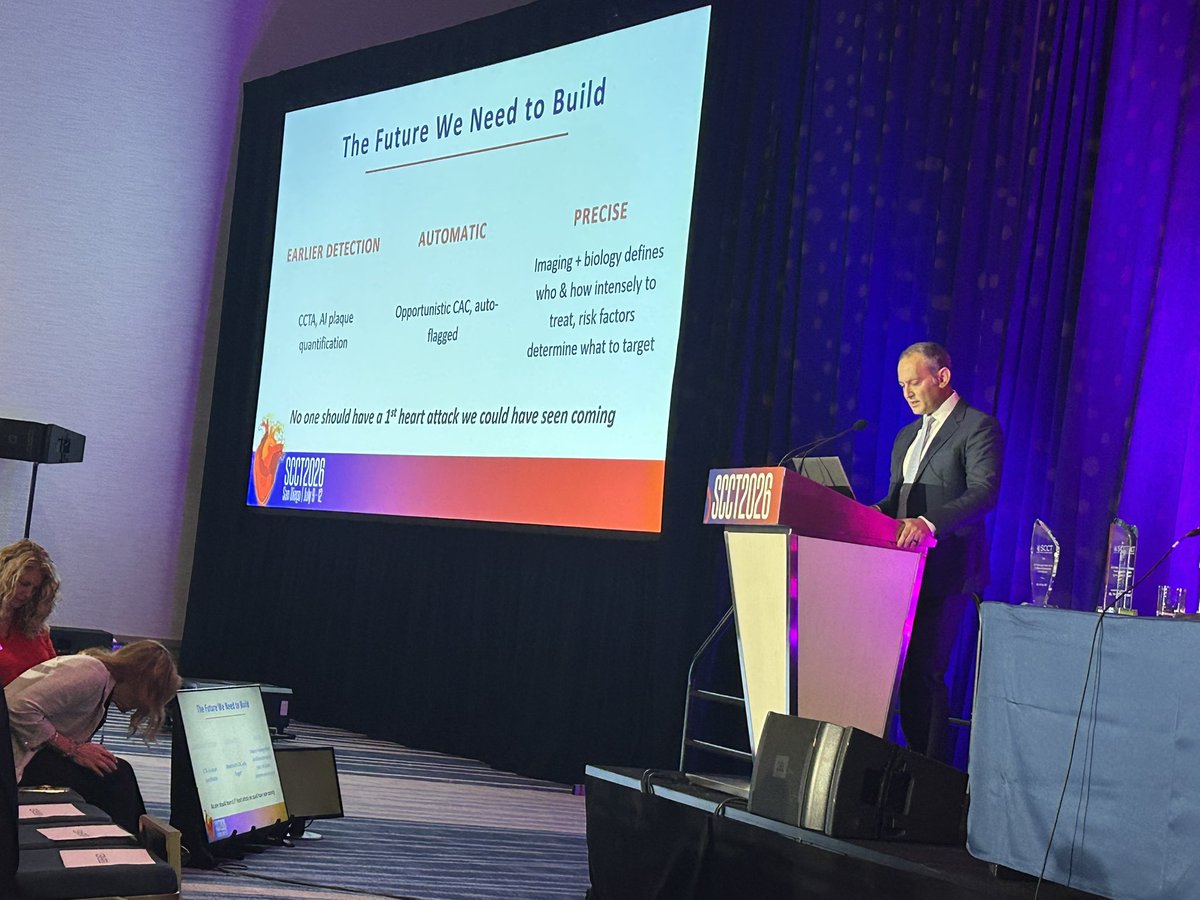
One of the most meaningful evolutions in the 2026 ACC/AHA dyslipidemia guideline is the continued elevation of CAC as a central tool in preventive decision-making. We have come a long way. 1. In the 2013 guidelines, CAC was effectively sidelined. 2. By 2019, it re-emerged as a decision aid. 3. In 2026, it is now clearly embedded in the framework of risk assessment, treatment initiation, and treatment intensity. Two messages stand out. 1. First, CAC has become the preferred decision aid when treatment decisions are uncertain. This is not an uncommon situation. In real-world practice, uncertainty is the rule rather than the exception, especially in borderline or intermediate-risk individuals. #PowerOfZero provides a clear distinction who is and not at risk that for the decision whether lipid-lowering therapy should be initiated. 2. Second, the guideline goes beyond initiation. CAC is increasingly used to guide the intensity of therapy. Increasing plaque burden corresponds to progressively more aggressive LDL targets and therapeutic strategies. For example, individuals with CAC ≥300–1000 are recommended to pursue LDL reduction strategies approaching secondary prevention intensity, reflecting event rates comparable to treated ASCVD populations. This is a MAJOR shift. CAC is no longer simply a tie-breaker for statin decisions. It is evolving into a disease-guided framework for preventive intensity. From a practical standpoint, this matters.Risk equations estimate probability. CAC visualizes disease. 1. When uncertainty exists, seeing the burden of atherosclerosis often changes the conversation for both clinician and patient. 2. It also aligns therapy more closely with biology (GREATER DISEASE, MORE INTENSE THE TREATMENT) rather than risk-factor projections alone. IN 2026. CAC has moved from the margins of guidelines to the center of preventive cardiology. For clinicians, that represents one of the most practical advances in translating risk assessment into actionable care. Congrats @rblument1 @RonBlankstein @DrMichaelShapir & rest of the guideline authors @AJPCardio @ASPCardio @MichaelJBlaha @Sadeer_AlKindi @HMethodistCV
Khurram Nasir tweet mediaKhurram Nasir tweet mediaKhurram Nasir tweet mediaKhurram Nasir tweet media
English
26
126
435
121.5K
ASPC retweetledi
National Triglyceride Alliance
📢 New multisociety dyslipidemia guidelines are here. The 2026 ACC/AHA/AACVPR/ABC/ACPM/ADA/AGS/APhA/ASPC/NLA/PCNA Guideline on the Management of Dyslipidemia brings together leading organizations to advance evidence-based care for lipid management and cardiovascular risk reduction. The updated 2026 ACC/AHA Dyslipidemia Guideline places a major new emphasis on triglycerides (TG) as both an ASCVD risk enhancer and a driver of pancreatitis risk. Here are the key takeaways: ➡️ Triglycerides matter more than ever. Elevated TG are now recognized as contributors to atherogenic remnant particles—raising ASCVD risk—starting at fasting ≥150 mg/dL or nonfasting ≥175 mg/dL. Persistent elevation is officially listed as a risk enhancer in overall cardiovascular risk assessment. ➡️ Lifestyle is the foundation of TG management. The guideline strongly reinforces that the first-line intervention for TG ≥150 mg/dL is lifestyle: lowering added sugars and refined carbs, reducing saturated fat, minimizing alcohol, adopting plant-forward dietary patterns, increasing physical activity, and aiming for 5–10% weight loss. ➡️ TG ≥500 mg/dL = elevated pancreatitis risk. Levels at or above 500 mg/dL significantly increase the risk of acute pancreatitis, with ≥1000 mg/dL demanding urgent dietary intervention and elimination of alcohol and added sugars. ➡️ Statins remain first-line for ASCVD, even with high TG. Statins reduce TG modestly (10–30%) and remain foundational for ASCVD prevention in patients with elevated triglycerides. ➡️ Additional TG‑lowering therapy for higher levels. For TG 500–999 mg/dL, adding fibrates or prescription omega‑3 fatty acids is reasonable to reduce pancreatitis risk. For ≥1000 mg/dL, these therapies become even more critical, along with strict dietary fat restriction. ➡️ A major update: Olezarsen for FCS. For patients with familial chylomicronemia syndrome (FCS) and TG ≥1000 mg/dL, the guideline recommends Olezarsen, an apoC‑III inhibitor shown to significantly lower TG and reduce pancreatitis episodes. ➡️ Referral to an RDN is now a Class 1 recommendation. For TG ≥1000 mg/dL—and even TG 150–999 mg/dL with CKM syndrome—working with a Registered Dietitian Nutritionist is strongly recommended to tailor nutrition therapy. #sec-10" target="_blank" rel="nofollow noopener">jacc.org/doi/10.1016/j.… @SethJBaumMD @EliotBrinton @mmillermd1 @lipiddoc @ArchnaBajajMD @drmaggarwal @nationallipid @ASPCardio @NatPancFdn @livingwithfcs @TheAACE @HeartNurses @ionispharma @ArrowheadPharma @Amarincorp
English
1
10
19
1.7K
ASPC
ASPC@ASPCardio·
📢 New multisociety dyslipidemia guidelines are here. The 2026 ACC/AHA/AACVPR/ABC/ACPM/ADA/AGS/APhA/ASPC/NLA/PCNA Guideline on the Management of Dyslipidemia brings together leading organizations to advance evidence-based care for lipid management and cardiovascular risk reduction. These guidelines aim to support clinicians in improving prevention and treatment strategies for ASCVD. #sec-10" target="_blank" rel="nofollow noopener">jacc.org/doi/10.1016/j.… #Dyslipidemia #Triglycerides #PreventiveCardiology #LipidManagement #CardioTwitter 🫀
English
2
13
36
2.2K