Alan

588 posts

Alan

Alan

@Aalanwho

lost money to learn how not to. survived. now, thrive. The Divinely protected individual. - https://t.co/twt5YOkUMy

Katılım Kasım 2025
157 Takip Edilen66 Takipçiler
Sabitlenmiş Tweet
Alan
Alan@Aalanwho·
Reflection on the current events of this cycle The market keeps getting worse. I, too, like some (or most) of you, am feeling down. But as people say - if you’re tired, do it tired. Hang in there. The thing is, the “keep going” mindset must come with clarity and awareness. Otherwise, you’re just blindly running into the darkness, exhausted. My post may not give you a clear direction for your next steps - but it’s meant to help you pause, awaken your mental state amid all the chaos. From there, you can start planning your next moves. ⏪ Let’s start with that insane liquidation on October 10th. It marked the largest single-day liquidation event in crypto history, with an estimated $19 billion (and some estimates even closer to $30 billion) in leveraged positions wiped out across exchanges. Fortunately, I didn’t get liquidated. (I was also in a leverage position at that time, but maybe I was lucky - I went with small leverage, and it was on a perps DEX, so the wick didn’t reach my liquidation price.) However, my bros weren’t that lucky. They got liquidated hard. We’ve had our strategies - our ways of trading perps - for a long time, and we hardly lost. But from that day, our belief in what we knew… corrupted. Ngl, I got scared to open any leveraged positions after that. Just recently started again. ⏳ Some other highlighted events recently: - The Kadena team stepped back from operations, $KDA plunged, leaving the network’s long-term future in doubt. - Zcash ($ZEC) surged from $48 to over $500 by November 7, 2025, breaking past $600 for the first time since 2018. It has risen over 350% in the past month, hitting $628 and pushing its market cap above $10 billion - surpassing Monero. Zcash now leads the privacy coin revival. - Balancer got hacked for almost $100M. - xUSD by Stream Finance lost its entire value, TVL dropped to 0 after the fund behind it suffered a $93M loss. - csUSDL by Coinshift saw a 95% TVL outflow, leaving only $1.92M remaining. - Two stablecoins, deUSD and sdeUSD from Elixir, faced severe liquidity crises - users struggled to withdraw or trade. - USDX by Stableslabs also faced issues, losing $1M in liquidity during the Balancer V2 hack. currently still deeply depegged, nearly 50%. - MMT started at $0.35, scam-pumped to $10 (that’s $350M FDV to $10B FDV), and crashed back to $0.55 - all within 72 hours. Crime is legal now, I guess. @MMTFinance - @wintermute_t stated: “Liquidity drives crypto cycles, and now, the money has stopped flowing in... Capital is rotating internally, not entering fresh → rallies die fast and breadth keeps narrowing.” - The U.S. government shutdown has reached its 38th day, marking the longest in history. … This week, Bitcoin keeps dumping below the $100K range. Most altcoins got rekt as well. 🐂 On the positive side: BTC is still trying to hold within the $98K range. Hopefully, we’ll see Bitcoin’s weekly candle close above $100K. 🐻 But what if it doesn’t? What if we’ve truly entered the bear? Have you ever thought about that? I still believe that the top has not yet come. (Because honestly, that belief keeps me going.) But I still think rationally about the bad-case scenarios. Since I’m not a KOL, a founder, or a whale - I must plan how to live on with what I’ve got, in case the market keeps bleeding from here. If you’re like me: - Give your portfolio a deep dive, restructure if needed. - Plan your budget ahead. - Ask yourself: What will you hold for the next top? What else can you do to earn along the way? - Think about how to stack more USDC so you can catch the real dip. - Or even consider cashing out and re-entering later with a better entry if your situation requires that to sustain your living. Don’t listen to those hollow motivational lines saying you must “stay resilient no matter what” - when your family needs food too, bro. You can make money in many ways. Even if you leave the market temporarily and come back later, the market will still be here. Risk-on is profitable when the market is in good condition - with volume and money flow. Risk-on while everyone is in fear is self-destruction. No revenge trading. No emotional trading. That alone will save you enough to buy the real dip later. Being optimistic is good. Being prepared is necessary. May we all win.🙏 WAO. Fock it.
Alan tweet media
English
4
0
7
352
Alan
Alan@Aalanwho·
I AM ABOUT TO WALK INTO THE MOST ABUNDANT BALANCED WEALTHY AND SUCCESSFUL PERIOD OF MY LIFE. I NATURALLY ATTRACT GOOD FORTUNE, AND I AM WEALTHY IN MORE WAYS THAN ONE. I GIVE MYSELF PERMISSION TO PROSPER, AND I HAVE THE POWER TO BUILD THE LIFE THAT I DESIRE.
English
0
0
0
14
Alan
Alan@Aalanwho·
Brilliant - and honestly, unsettling. The unsettling part is necessary. People working in knowledge industries have grown too comfortable assuming their value is structurally protected. This piece forces you to confront the possibility that it isn’t. At the same time, I don’t fully agree with the thesis as presented. It assumes that repricing and disruption will necessarily cascade into systemic fragility, but history shows that markets and labor systems are far more adaptive than static models suggest. Destruction in one layer often becomes fuel for expansion in another. The transition can be painful, but it is rarely purely subtractive. And on the other side, there are investors who have been waiting for a true repricing event - something that resets inflated assumptions and forces reality back into valuations. Not because they want destruction, but because mispricing cannot sustain indefinitely. Every major cycle eventually demands a reset. The uncomfortable question is whether this is just another narrative or the early signal of that reset already underway.
Citrini@citrini

JUNE 2028. The S&P is down 38% from its highs. Unemployment just printed 10.2%. Private credit is unraveling. Prime mortgages are cracking. AI didn’t disappoint. It exceeded every expectation. What happened?​​​​​​​​​​​​​​​​ citriniresearch.com/p/2028gic

English
0
0
0
21
Alan
Alan@Aalanwho·
Show up when it's hard. Show up when it's messy. Show up when no one's watching. Show up when you don't feel like it. Show up when the rewards are uncertain. Just show up.
English
0
0
0
15
Mad Coach◎🎒
Mad Coach◎🎒@SolanaCoach·
Gm. « When things don't go your way, you have two choices : be bitter or be better. »
English
6
0
14
272
Alan
Alan@Aalanwho·
Been a busy month - personal life, moving around, touching some real-world stuff. I’m back to crypto now. Time isn’t as abundant as before since I just took on a new role at a company, which is a good thing. More growth, more exposure, more perspective. That said, I’m locking back in. A lot to read. A lot to catch up on. Been off-grid for almost a month, so it’s time to recalibrate.
English
0
0
0
20
Alan retweetledi
DeFi Warhol
DeFi Warhol@Defi_Warhol·
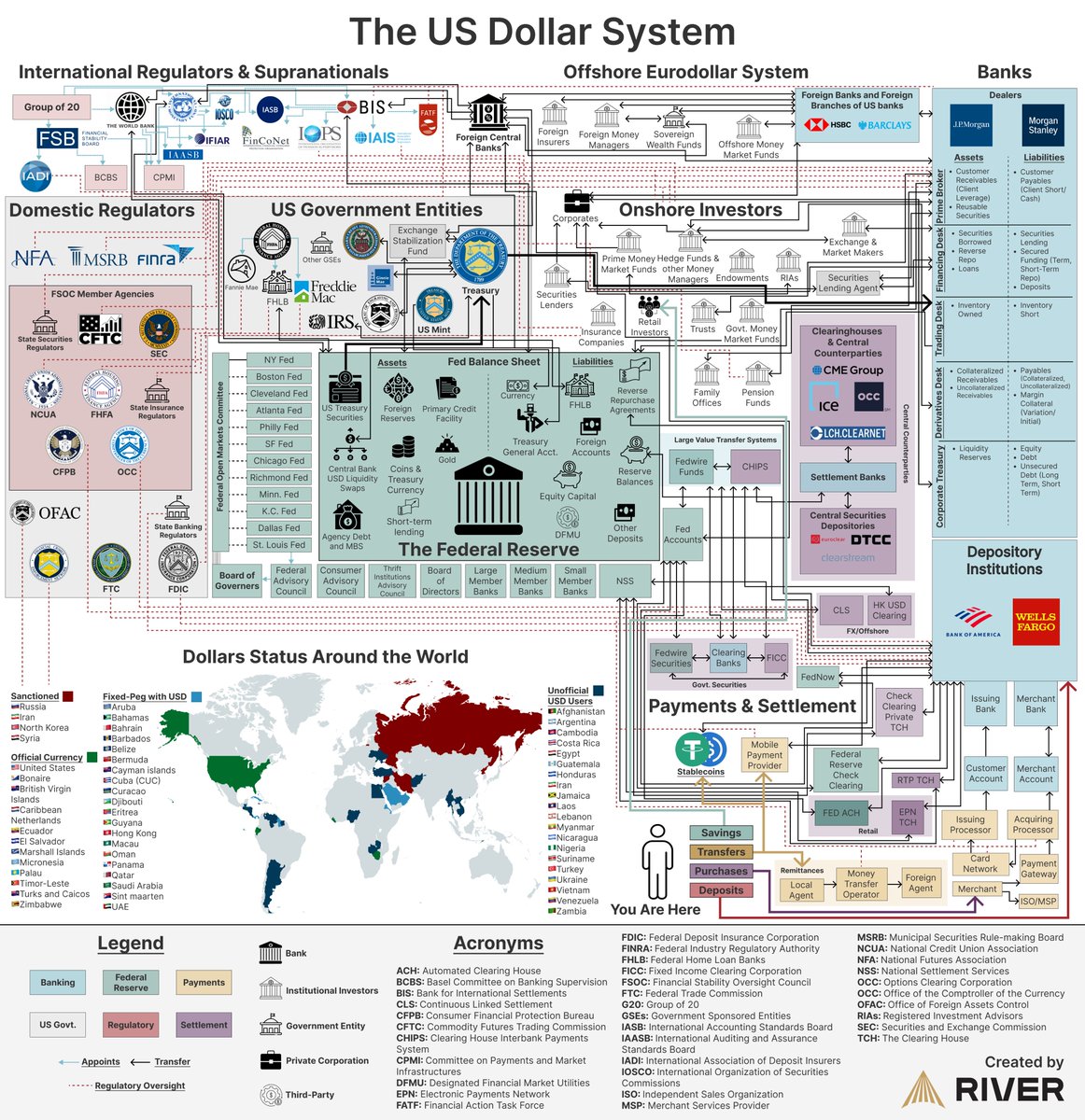
If you think crypto is complicated, wait till you find out the US Dollar works
DeFi Warhol tweet media
English
80
488
2.3K
87K
Alan
Alan@Aalanwho·
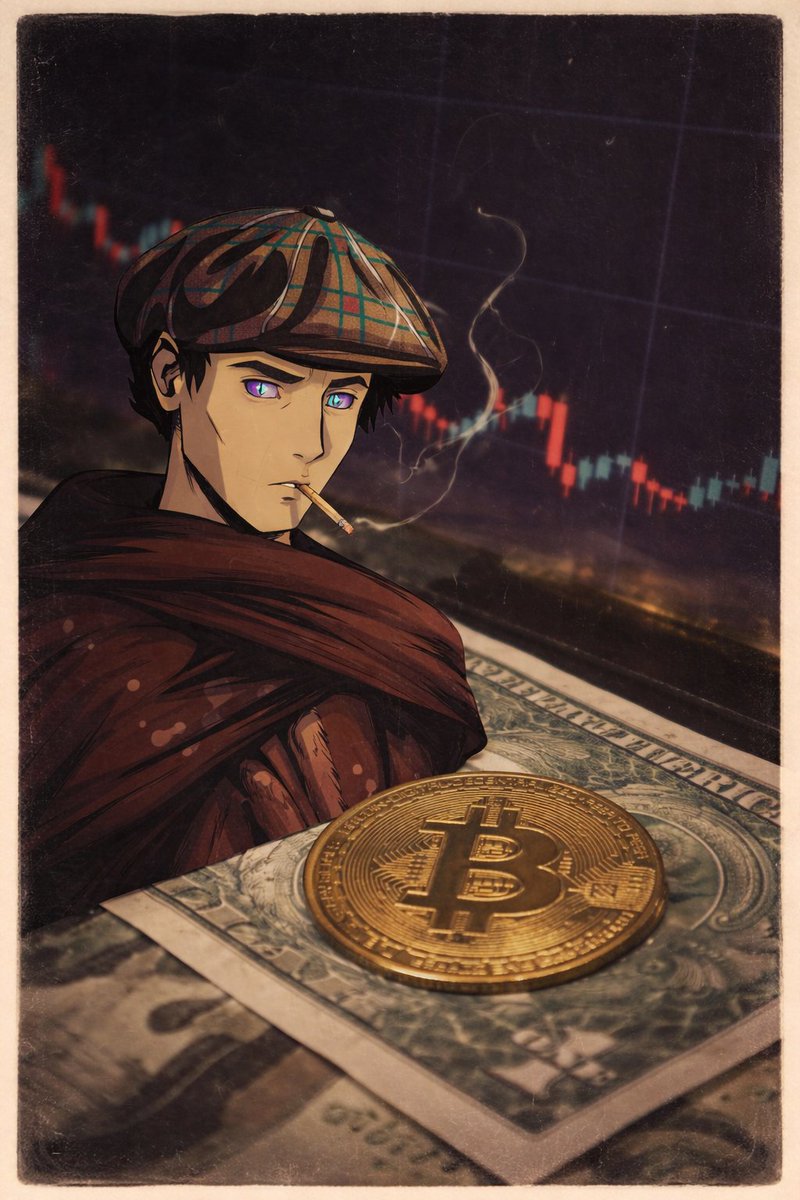
Well, sometimes, you just have to believe that you're not wrong; you're just early.
Alan tweet media
Alan@Aalanwho

Kinetiq TVL $1B vs. Market Cap $42M > undervalued or not? I’m studying @kinetiq_xyz, and this is my first trade ever in the @HyperliquidX ecosystem. I might’ve missed some details, so feel free to correct me and drop any feedback I should know. The Protocol’s Core Strength: The product itself is clean, obvious, and actually useful. - Native LST on a hyped chain - Auto-delegation system (StakeHub) - One token (kHYPE) becoming a base DeFi building block - Zero friction staking flow - Composability everywhere on-chain ➡️ This is the kind of “boring infrastructure” that usually prints if the chain keeps growing. ➡️ BUT: it’s also the kind of protocol that will get commoditized quickly if Hyperliquid opens the gates for others. “Fastest growing LST protocol ever” “Institutional-grade primitives” “Omnipresent in Hyperliquid DeFi” “Making HYPE the perfect money lego” ➡️ Their entire fate is tied to Hyperliquid’s trajectory. ➡️ If HL slows down > Kinetiq’s growth evaporates instantly. My takes: - It has legs. The product is undeniably strong. - Until they clearly define how KNTQ captures value (fees? staking? emissions? treasury flow?) the token is not “undervalued” - The token is still a black box, the allocation favors insiders, and the growth is reflexive, not yet durable.

English
0
0
0
16
Alan
Alan@Aalanwho·
A Rigged Era Isn’t a Feeling. 1. Extreme Wealth Concentration Has Ballooned Data from Oxfam shows that the richest 1% have massively outpaced the rest of the world in wealth growth: - Since 2015, the richest 1% added at least $33.9 trillion in wealth - a sum that could eliminate annual global poverty 22 times over. - Between 2023 and 2024, billionaire wealth alone grew by about $2 trillion - three times faster than the year before. - 60% of billionaire wealth comes from inheritance, monopoly power, or crony connections, not just market merit. This shows a dual-track economy: liquid assets and capital appreciation accruing at the very top, while most people see little real improvement. 2. Wealth Growth Far Exceeds Real Economic Output According to structural economic analyses, wealth - both financial and real estate - has grown much faster than actual economic production in major economies. This reflects a shift toward asset-dependent growth: - In the U.S., financial wealth rose from 335% to 447% of GDP over recent decades, while real estate also surged. - When asset prices drive economy, ordinary income and productivity matter less than asset ownership. In practice, this means those with capital always participate in gains first, while wage earners fall further behind. 3. Rich Capture a Disproportionate Share of New Wealth Long-term wealth distribution reports reveal an ongoing imbalance: - The wealth of the global top 0.001% has increased as a share of global income - from ~12% in 1995 to over 30% in 2025. - Over the past decade, the top 1% grabbed nearly two-thirds of all new global wealth, while the bottom 99% captured a far smaller share. This is not random - it’s the result of compounded returns on existing capital, preferential access to financial markets, and structural advantages in taxation and regulation. 4. Wealth Growth for the Average Person Has Been Slow or Stagnant Even as asset-based wealth explodes at the top: - The median net worth of U.S. households did rise notably between 2020 and 2022, largely due to stock and real estate gains, but income growth lagged behind underlying asset growth. - Wage growth in advanced economies remains uneven, and in many places real wages have barely kept up with cost of living increases. This highlights a structural issue: asset price inflation benefits owners more than workers, reinforcing a cycle where capital beats labor. 5. Extreme Wealth Growth Coexists With Slow Poverty Reduction Despite dramatic gains at the top: - The number of people living below the global poverty threshold hasn’t significantly declined since 1990, even as billionaire wealth has soared. This shows that system-wide gains don’t automatically translate into better outcomes for the majority - the system redistributes upward far more than it distributes broadly. ❓ So What Does This Mean When people say the financial world is rigged, they’re describing patterns rooted in incentives and institutional design, not just perception: ➤ Capital-first Returns Asset ownership compounds faster than wages or productivity, meaning those already rich get richer disproportionately. ➤ Access and Information Asymmetry Insiders, institutions, large capital allocators, proprietary trading desks - have access to leverage, credit, and information that average individuals do not. ➤ Macro Policy That Reinforces Asset Values Quantitative easing, low interest rates, and regulatory frameworks have historically boosted asset prices more than wages. ➤ Accumulated Advantage over Time Wealth begets privilege: inheritance, tax loopholes, monopoly power, and crony connections all enable the top tier to convert systemic leverage into real economic advantage. 🟩 Understanding this context doesn’t mean giving up. It means understanding the rules so you can navigate, adapt, and find where real opportunities exist - whether in new financial ecosystems like crypto, in entrepreneurship, or in technology.
Alan tweet media
English
2
0
1
59
Alan
Alan@Aalanwho·
The world is unfair by design, but those who understand the structure can still climb - from survival, to success, to significance - if they move fast, build systems, and stop playing alone.
!iquid@liquidspliff

x.com/i/article/2007…

English
0
0
0
22
Alan
Alan@Aalanwho·
@MythagoW3 Agree on the role of large trading desks as catalysts sir
English
0
0
1
3
Mythago
Mythago@MythagoW3·
The only one's who can pull it off are big trading rooms aka Wintermute And now that market narrative has shifted and still mainly persists in yield farming there's not enough degens with liquidity to participate in these pumps and dumps. Whales ain't dumb either they know to pump something with their bags most likely will result in dump on them and will come out at loss. This narrative will return once we see big rotation into alts post ATH Cycles repeat
English
1
0
2
20
Alan
Alan@Aalanwho·
Why Big, Coordinated Crypto Pumps Are Getting Harder The conditions that once allowed large, coordinated pumps no longer exist. 1. Attention no longer converges - and money follows attention Big pumps require one thing above all else: shared focus. In earlier cycles, most participants were watching the same narratives, the same charts, the same debates. Attention converged first, liquidity followed second, price moved last. Today, attention is fractured. Everyone lives inside a different feed, shaped by algorithms, incentives, and personal bias. Ten narratives compete at the same time, none powerful enough to dominate for long. When attention can’t converge, capital can’t either. And without concentrated capital, coordinated moves fall apart quickly. 2. Fragmented liquidity can’t sustain collective momentum Liquidity today is spread thin across: Too many tokens for 1 narratives Too many overlapping narratives This creates a paradox: prices can move fast, but they can’t stay there. A pump that starts strong immediately runs into shallow depth. As soon as one group takes profit, the structure collapses under its own weight. Big moves don’t fail because people stop believing - they fail because there isn’t enough liquidity to support belief at scale. 3. Market participants are more experienced - and more cynical The market has matured, but not in a idealistic way. Most participants have already lived through: One or more brutal drawdowns Coordinated hype that ended in coordinated exits Narratives that sounded inevitable - until they weren’t As a result, pumps are no longer treated as movements. They’re treated as temporary inefficiencies to exploit. Conviction has been replaced by risk management. Holding the line is no longer a virtue - it’s a liability. 4. Narratives move faster than conviction can form The internet compresses everything. Narratives used to evolve over time: disbelief → debate → adoption → mania. Now, they’re packaged instantly. A single thread, video, or AI-generated summary can explain an entire thesis in minutes. By the time people “get it,” the opportunity is already crowded. There’s no time left to build shared myths - and large pumps require shared myths, not just information. 5. Coordination costs more, but pays less Pulling off a major, sustained pump today requires: Perfect timing Deep liquidity Narrative alignment Implicit coordination across many actors At the same time: Upside is front-run faster Downside hits harder Exits happen earlier For rational participants, the math no longer works. The market rewards many small, fast rotations, not one grand collective push. ▶️ We’re operating in a post-monoculture market: Attention is fragmented Belief is individual, not collective Speed beats ideology Distribution matters more than volume The winners adapt to fragmentation.
Alan tweet media
English
1
0
3
48
Alan
Alan@Aalanwho·
@waleswoosh it's only been 4 days what happened sir ????
English
0
0
0
3
wale.moca 🐳
wale.moca 🐳@waleswoosh·
I already failed 2026. 2027 gonna be my year
English
732
10
1K
40.9K
NoLimit
NoLimit@NoLimitGains·
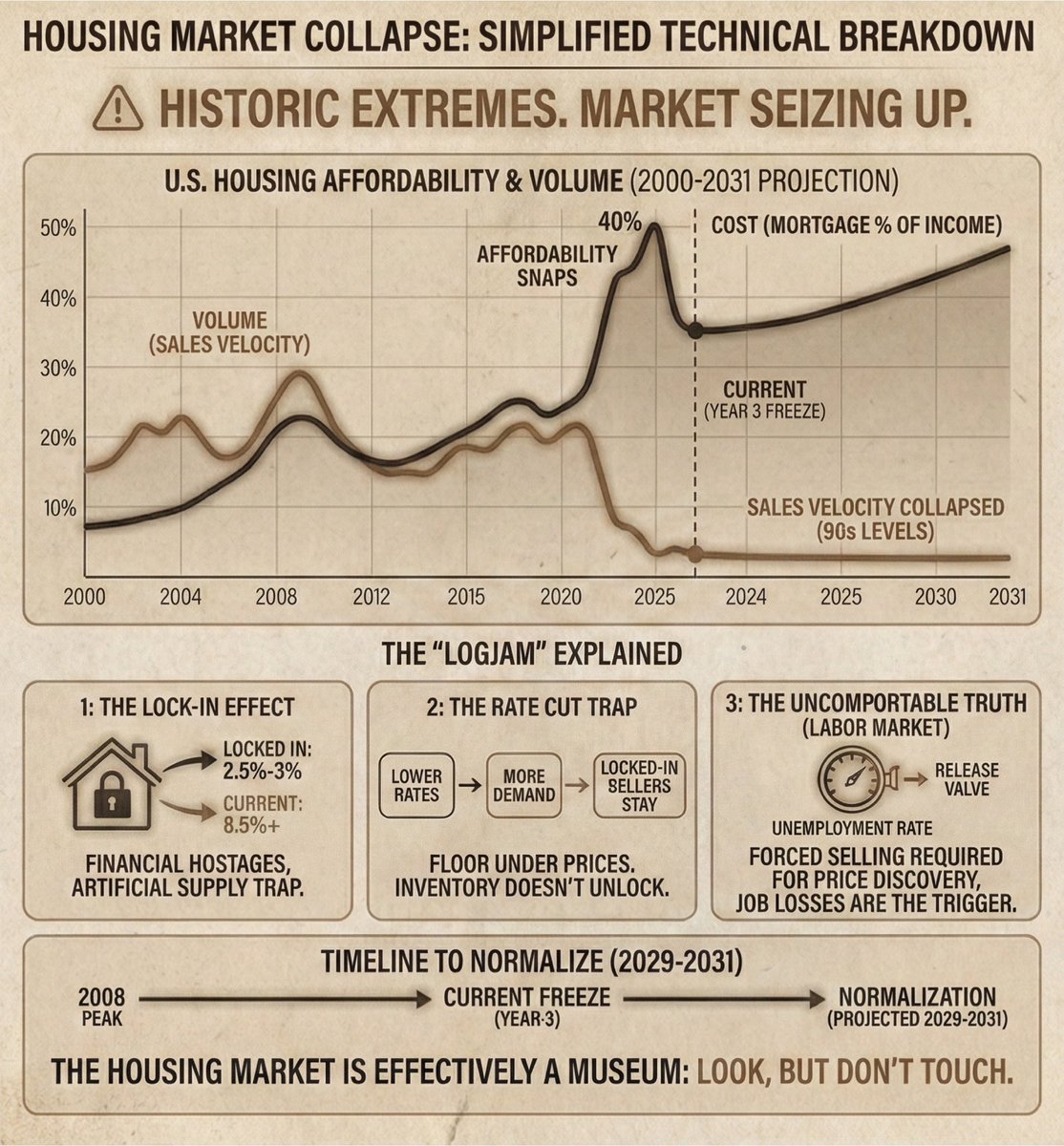
🚨 THE HOUSING MARKET IS ABOUT TO COLLAPSE, AND I HAVE PROOF 80% of people will lose their homes… because they can’t afford to pay for them anymore. This isn’t about waiting for a Fed pivot, the system itself is seizing up. AND THIS IS WORSE THAN 2008. Here’s exactly why: Look at the chart. It tells you the entire story of the U.S. economy right now: Black line (Cost): Mortgage payments as a % of income are at 40%. HISTORIC EXTREMES. Brown line (Volume): Sales velocity has collapsed to levels we haven't seen since the 90s. When affordability breaks, markets usually clear via price. This time, they adjusted via volume. Here is the technical breakdown of the "Logjam" and why it lasts until 2030: 1: The Lock-In effect is structural We are battling a massive distortion in the credit markets. Millions of homeowners locked in 2.5%-3% mortgages in 2020. These people are not sellers… THEY ARE FINANCIAL HOSTAGES. To move, they have to swap a 3% rate for a 6.5% rate. That doubles their monthly carry just to buy a similar house. Result: Supply is artificially trapped off-market. You cannot fix inventory when the incentives are mathematically broken. 2: The rate cut trap The consensus view is: The Fed cuts rates, and housing heals. The Reality: Lower rates stimulate demand before they unlock supply. If rates drop to 5.5%, buyers flood back in, but the "locked-in" sellers still sit tight. This keeps a floor under prices even as affordability remains stretched. Furthermore, mortgage rates don’t fix insurance premiums, property taxes, or maintenance costs… all of which have structurally re-priced higher. 3: The uncomfortable truth (The Labor Market) This is the part nobody is happy about... In a frozen market where sellers have strong hands (low rates), you do not get price discovery without force. Inventory doesn't loosen because people want to sell, it loosens because they have to. Historically, the release valve for a bubble of this magnitude is the Unemployment Rate. Until job losses force involuntary selling, the bid-ask spread remains too wide to clear. We have seen this movie before. – 1980s: Affordability took 5-7 years to normalize. – 2008: It took 4-6 years from the peak to reset, and we are currently in Year 3 of this freeze. The Lock-In effect makes this cycle slower and EVEN WORSE than 2008. If you are waiting for 2019 prices, you are betting on a depression. If you are waiting for things to go back to normal (25–30% of income), the math points to 2029–2031. The logjam will clear, but not gently. It clears when the labor market breaks. Until then, the housing market is effectively a museum: LOOK, BUT DON’T TOUCH. I’ve been in macro for 22+ years, and I’ve called every major top and bottom for the last 10 years. When I make a new move, I’ll share it here publicly. If you haven’t followed me yet, you’ll regret it. Trust me.
NoLimit tweet media
English
299
582
2.5K
268.3K
Alan
Alan@Aalanwho·
Most people already know this. Very few are willing to live it for many straight days. This reads less like a “how-to” and more like a mirror. Remarkable years aren’t planned. They’re built quietly, one shipped action at a time.
Marianne@mariannehere

x.com/i/article/2006…

English
0
0
0
29
Mad Coach◎🎒
Mad Coach◎🎒@SolanaCoach·
FDV this. Volume that. Supply this. Airdrop that. There are only two realities. The first is that no project in 2025 has delivered and improved its product as much as @Backpack . The same will be true in 2026. The second reality is @MadLads on top. Deal with it. Fock it.
Mad Coach◎🎒 tweet media
English
20
3
81
2.2K
Alan
Alan@Aalanwho·
I read this piece and had to pause for a moment and really sit with it. The line “It’s why finding your purpose in life is fundamental to happiness. How do you want to be useful to the world, to yourself, and your loved ones?” hit harder than I expected. It made me think about my two biggest wins in 2025. The second one was objectively much bigger - almost 10x the first. On paper, it should’ve felt incredible. But it didn’t. And I realized why. Between the first win and the second, I lost someone very important to me - someone I used to share those moments with. And that “winning” only means something when the rest of life still holds its weight.
۟@MINHxDYNASTY

x.com/i/article/2006…

English
0
0
0
25
Alan
Alan@Aalanwho·
@MINHxDYNASTY What hit me wasn’t the money lost - it was how casually we traded away hours, focus, and mental space. Things I can’t ever compound back.
English
0
0
0
5
Alan
Alan@Aalanwho·
Narratives to watch in 2026 👀 Crypto is moving past pure hype. The next cycle favors products with real users, real cash flow, and real utility. Key themes shaping 2026: • Prediction & opinion markets → skin-in-the-game truth • Community-led fundraising & ICOs → airdrops fading • Privacy as a requirement for institutional capital • Wallets evolving into full crypto neobanks • DePINs proving usage + revenue • Perp DEXs becoming core trading infra • AI shifting from tools to onchain infrastructure The edge isn’t chasing narratives late - it’s spotting them while they’re still forming. 2026 will reward curiosity, fundamentals, and patience.
HEADBOY 🦇🔊@NDIDI_GRAM

x.com/i/article/2005…

English
0
0
0
17
Alan
Alan@Aalanwho·
This hit close to home. The portfolio ATH mindset is way more damaging than I thought, and I’ve been stuck in it longer than I should’ve been. Chasing an old number quietly poisons decision-making and makes it impossible to rebuild cleanly. Well noted and genuinely appreciated; this is a timely reminder to let go, forgive past mistakes, and focus on growing what’s actually in front of me, not what used to be.
English
0
0
0
8