
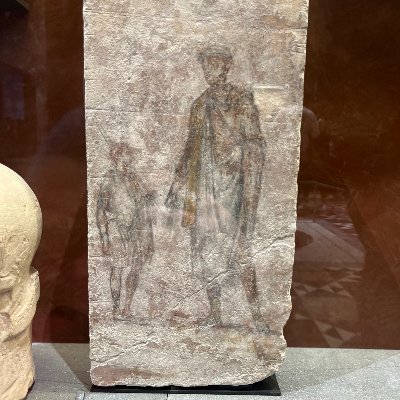
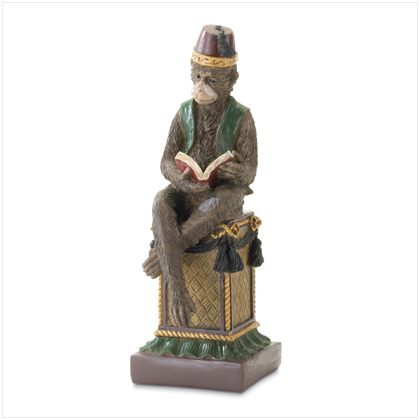
@SlavAesthetics Core childhood memory. I have read the red one cover to cover a dozen times.
English
Aaron Gardiner
4.7K posts

@AaronXGardiner
A wondeful young man with a bright future


A lot of women think they’re gonna be ok later in life being alone cuz they’re used to it now but I suspect being alone in your 20s and 30s while still receiving ample male attention will feel much different than being alone in your 40s and 50s. Pride

Why is the income/wealth distribution in the UK so flat at the top end? The 90th percentile wealth cutoff is 1MM gbp, 99th is 3.6 as of 2020 For comparison, in the US in 2020 90th percentile was 1.2MM USD vs 11.1 for the 99th





Can a 29-year-old start all over again?



Retatrutide phase 3 obesity trial just came out and the results are genuinely insane: - 28.3% bodyweight lost on 12mg over 80 weeks - 70.3 pounds on avg. or 31.9 kg - 45.3% of patients hit 30%+ weight loss (this is bariatric surgery territory) - 30.3% weight loss (85 lbs) at 104 weeks in higher-BMI patients - 65.3% of 12mg patients dropped below the obesity BMI threshold - 19% loss on 4mg over 80 weeks (47.2 lbs) with fewer dropouts than placebo (4.1% vs 4.9%) - significant drops in blood pressure, triglycerides, non-HDL cholesterol, waist circumference, and hsCRP - no cardiac or liver signals Retatrutide is going to completely overshadow tirzepatide and semaglutide, and take the throne as the best-selling drug of all time.


To all my American friends: You guys are actually terrifying 😂🇺🇸 CoCo Ichibanya has over 1,500 stores across Japan. Japan’s total population is 120 million. Tokyo alone has 14 million people. Yet the #1 highest-grossing CoCo Ichibanya store in the entire country is in Okinawa — a prefecture with only 1.46 million people. Why? Because American service members stationed there regularly order multiple full plates per person like it’s nothing. One American = multiple Japanese portions. We always knew you guys had big appetites… but damn, you’re single-handedly making a small island the curry capital of Japan. Respect. And please keep eating. We’re impressed (and a little scared). Which one of you is responsible for this? Drop your CoCo stories below 👇


Ever notice how when some men suddenly come into large amounts of money, they start pretending to have a money snake, aka ubhululu/umamlambo/inyoka yemali? Even when they don’t start such rumours, they allow them to fester because this generates fear, which keeps people from asking questions. They do this because this ambiguity helps to explain away sudden wealth in unequal communities, discourages scrutiny, especially when the money is ill-got, but even when it’s not, it also creates mystique and fear and it protects secrecy around actual income sources. Another reason is that in the townships and rural areas, unexplained prosperity attracts pressure with relatives asking for help, neighbours demanding to be plugged, witchcraft, jealousy and criminal targeting. So a rumour about occult wealth becomes useful because if people think “Don’t ask too many questions, that guy has something dark behind him”, they stop probing. What you then get is that the new money mogul never explicitly says, “I have a money snake.” He just doesn’t deny the accusation; instead, he acts mysteriously, avoids explaining business operations and usually cultivates fear intentionally. That opacity protects him from accountability. It’s harder to ask “What exactly do you do?” “Where did the tender money come from?” “Why are there no visible businesses?” “How did you suddenly buy twelve taxis and a Ferrari?” because the conversation shifts from economics to the supernatural, and most people simply don’t want that smoke. This is not new; Khotso Sethuntsa perfected this technique decades ago. (x.com/i/status/16590…) Oral histories are full of him boasting about supernatural powers, yet he also had documented political ties to Afrikaner elites and the Apartheid Nationalist Party. Sethuntsa ran shebeens, transport, and property, but the myth of the seven snakes in jars under his bed made people afraid to ask how a Black man in Apartheid South Africa could own so much. He just claimed his wealth came from a deal with a White sangoma in the sea, and that was it. Sethuntsa understood that the snake mystique protected the real sources of his influence and money. Decades later, people still whisper about his snakes rather than his actual economic networks. Now, the money snake is almost always associated with men in these narratives. Women who accumulate wealth suddenly are more often accused of prostitution, ukuthwala, or being izangoma, selling sex for money. But the idea is the same. In a 1999 paper titled Occult Economies and the Violence of Abstraction, Jean and John Comaroff note how South Africa has seen a “dramatic rise in occult economies: in the deployment, real or imagined, of magical means for material ends”. The Comaroffs referred to this as “the occult economy”, which they linked to the deployment of supernatural explanations to handle the baffling realities of postcolonial capitalism and argued that postcolonial capitalism, especially after Apartheid ended in 1994, feels deeply mysterious to everyday people, because in the “New South Africa”, people were promised that freedom would bring wealth, yet severe structural inequality remained. So, when sudden, massive wealth appears without a clear trail of hard labour, as is often the case with winning a tender, pyramid schemes, or sudden investments, it looks and feels like magic. The Comaroffs call this “the enchantment of capitalism”. They make the point that under global financial capitalism, money flows are highly abstract, with electronic transfers, shares, bonds, offshore accounts, and government tenders. So if a community cannot see the physical factory or the sweat of a man’s brow, the wealth becomes “abstract” and mysterious. It is notable that for White people, wealth was never seen as magical; it has always been seen as merit, inheritance, hard work, or good business sense. The same abstraction of offshore accounts, share portfolios, and trust funds that looks opaque to Black eyes is culturally coherent to White middle-class investors. So, for Black people, the snake myth fills a gap: a way to narrate wealth that has no visible labour, but in a context where the official explanations are themselves unavailable or implausible to poor observers. To this end, the authors argue that because (Black) people cannot trace the real economic roots of the wealth displayed in front of them, they try to make it concrete by using the language of the supernatural. Meanwhile, by letting the paranormal rumour flourish, the new money moguls use this as a shield. They replace a potentially dangerous legal/political question with a terrifying supernatural one. The Comaroffs describe this as a symptom of South Africa as a postcolony where the lines between legitimate business and magical speculation have completely blurred, at least for most Black people and that an occult economy is born out of “the appeal to mystical mechanisms for producing wealth ... mechanisms that defy standard economic laws”. This is because under Apartheid, Black wealth was systematically blocked; after 1994, sudden accumulation by a few looks doubly suspicious. In this sense, we can say the occult economy is not “irrational” but a rational response to a violent, racially stratified transition to neoliberalism. Now, this is where it gets tragic: The myth is not harmless. As the Comaroffs warn, the belief that money has to be coming from mystic sources becomes self-fulfilling, as eventually people go out and seek magical means through ritual murders, tokoloshes, etc., when real accumulation fails. We have all heard of how desperate people, seeing no structural way out of poverty through hard labour, attempt to replicate the myth. So the “strategic” silence often spills over into actual occult practices, further entrenching the link between inequality and supernatural belief, which incentivises real ritual murder. Now, I keep making the point that allowing the rumour to flourish cultivates fear; however, when someone does push through the fear, like a disgruntled relative, a journalist, or an ex-associate, the snake narrative may collapse into violence when the rich man kills the questioner, which is then interpreted as being done to “feed the snake”. This protects the mogul from being viewed as a mobster or a corrupt actor; instead, he remains a terrifying, untouchable mystical figure. That’s why you often see such men also cultivating political patronage, just like Sethuntsa before them, because the snake rumour shields them from the poor, while they keep politicians to protect them from institutional investigation by SARS, the Hawks, SIU, etc. In summation, we can say that what looks like mythology is, at its core, a governance mechanism that protects big money from scrutiny while leaving communities to explain their own dispossession through the only way made available to them: ancient folklore. If you like reading this sort of heterodox thought on a variety of topics, I’d appreciate your support. Please feel free to subscribe to my Patreon for exclusive essays that don’t make it to the public feed. Your subscription keeps this work going. Link in bio. Thank you for reading.

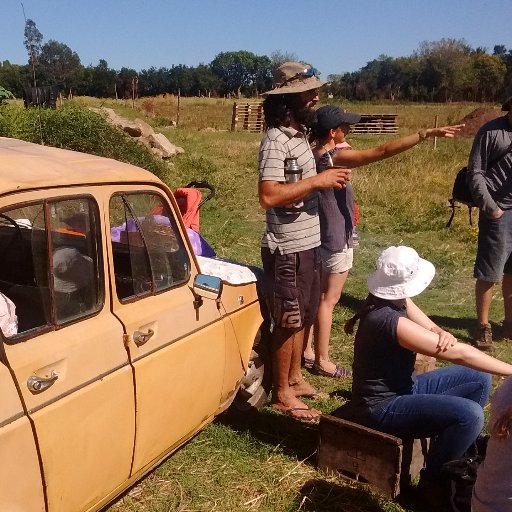
cooking minimalist meals may or may not help you save for a home or stave off bankruptcy. you should do it irrespective of that, especially if you don't have to, because you dont want to turn into an adult baby incapable of bearing the rigors of the coning winter, do you
Every once in a while in Moby Dick, Melville will suddenly stop giving us Ishmael’s point of view and simply write out an entire chapter out like a play, with stage directions and all. There is no explanation as to why.



In a wealthy country, no individual service that requires the labor of others will be widespread. We can grow beef and distill alcohol on a massive scale for cheap. We can’t have someone custom cook your food and deliver it to you for cheap.
Why are restaurants so expensive in the West? I'm honestly asking. In Asia people eat out almost every day, there are options cheaper than cooking for yourself. But even "street food" is expensive here. I paid $17 for 4 tacos out of a truck from a guy who spoke no English.


