A +

4.5K posts

A + banner
A +

A +

@Accanian

+++

United States Katılım Haziran 2020
503 Takip Edilen775 Takipçiler
A + retweetledi
Nuru
Nuru@vrainuru·
Kabibi “la vie est belle”
Français
2
162
548
67.4K
A + retweetledi
Explorer Of Moments
Explorer Of Moments@ExplorerMoment·
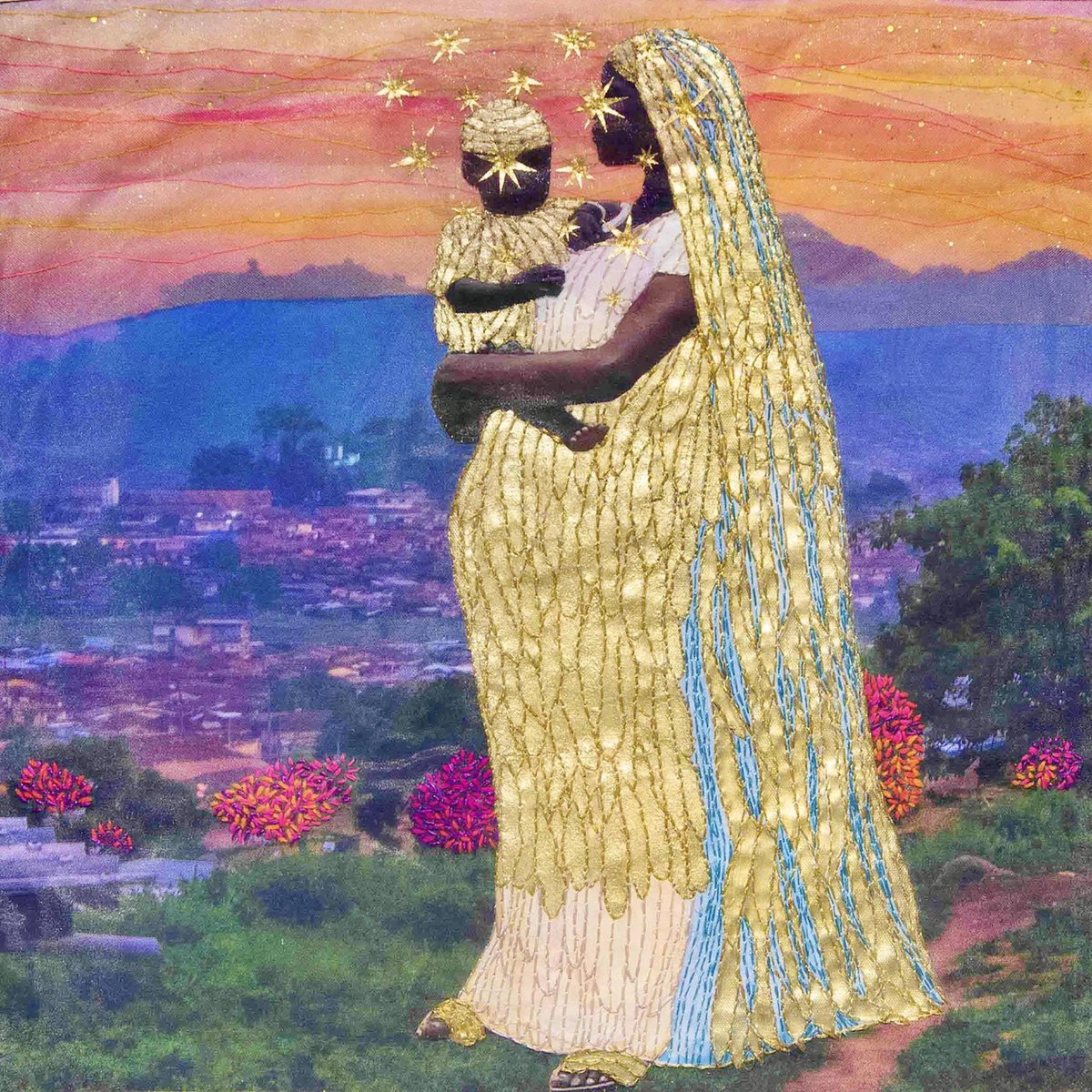
Maria Del Pilar, Joana Choumali, 2022.
Explorer Of Moments tweet media
Català
8
792
3.1K
32.3K
A + retweetledi
gwen
gwen@mpumszn·
I hate an uneducated hater. Do some research, bitch.
English
217
49.5K
200.6K
2.8M
A +
A +@Accanian·
@KwaoBuabeng Also this is literally an Afena, a lot of the cultural practices found in modern day Togo and Benin diffused from them interacting with Akan groups like the Akwamu through trade and contact.
isaac Samuel@rhaplord

Sword dedicated to Gu; the god of iron and war. Abomey, Benin. "Today, smiths forge work to accommodate new contexts and purposes. The Yorùbá deity of iron, Ògún, for example, has become the patron of automobiles, laptops, and cell phones." africanhistoryextra.com/p/a-general-hi…
English
0
0
0
56
Kwao Buabeng
Kwao Buabeng@KwaoBuabeng·
@Accanian I don't know about stools. Don't Dahomey sit on stools
English
2
0
0
37
A +
A +@Accanian·
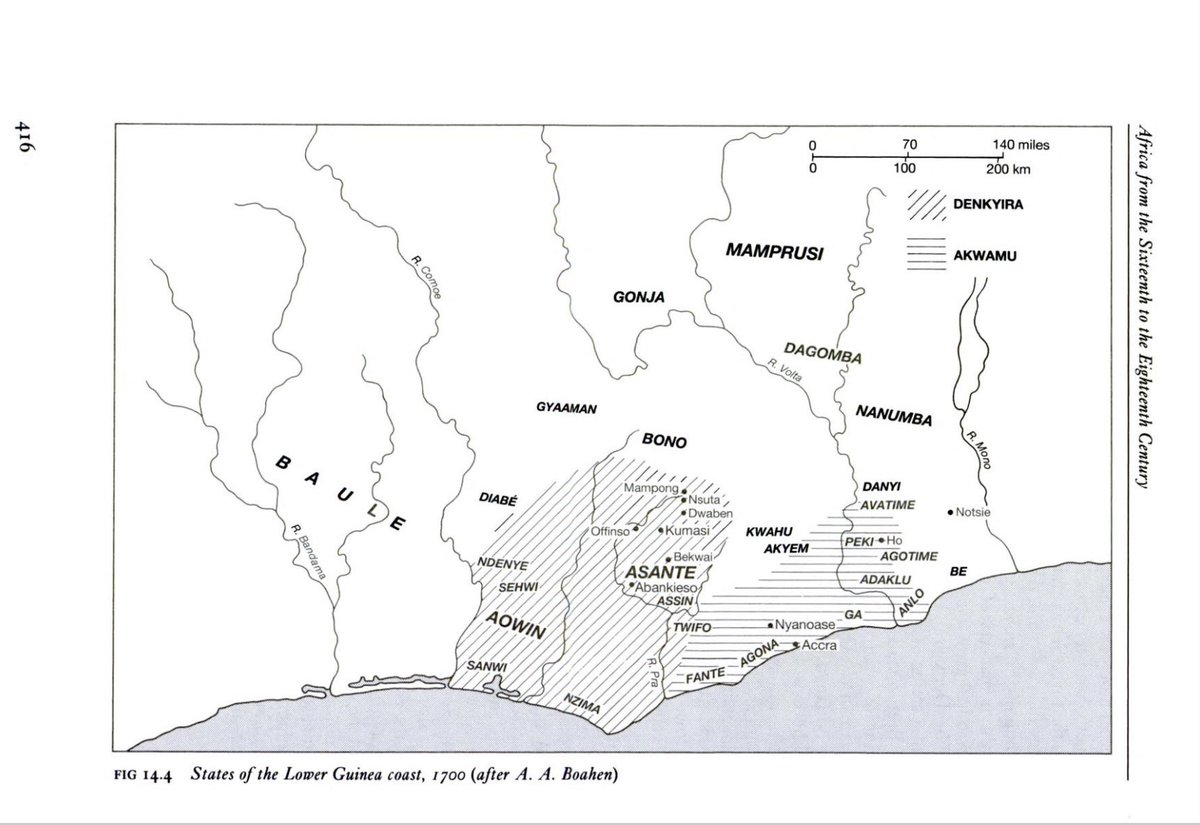
@damilol90092229 Akwamu and Denkyira were the first imperial Akan states, Denkyira dominated the west, Akwamu dominated the east. Akyem was sandwhiched between the two but it was strong enough to check Akwamu.
A + tweet media
English
0
2
5
140
A +
A +@Accanian·
@damilol90092229 The area the Akwamu Empire operated in wasn’t rich in gold, to keep up with and fight Akyem + Denkyira (strongest at the time), they expanded to become a massive imperial state that ravaged the entire central eastern bloc of modern day Ghana, reaching parts of Togo/Benin.
English
3
1
2
81
damilola taiwo
damilola taiwo@damilol90092229·
I am not an expert in Ghanaian history so I stand to be corrected was it the Akwamu ?
MR SAMMY@ErnestooPa

@IAmajeedez @kwakuhelate1 Slave trade started in Gold Coast the late 15th century. Ashanti Empire established 1701, So I'm asking you 16th century to 17th century who are those tribes re doing Slave business?

English
1
0
1
270
Sé:gbɛ:gnön🍀
Sé:gbɛ:gnön🍀@KZankeli·
@Accanian dead end. it's not leading anywhere. esp. when that's not the main theme of my post.
English
1
0
1
46
A +
A +@Accanian·
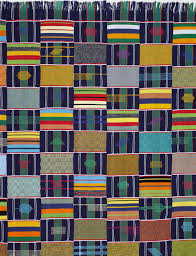
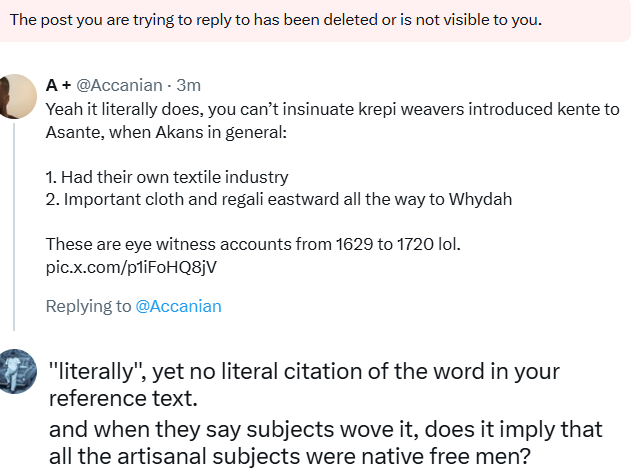
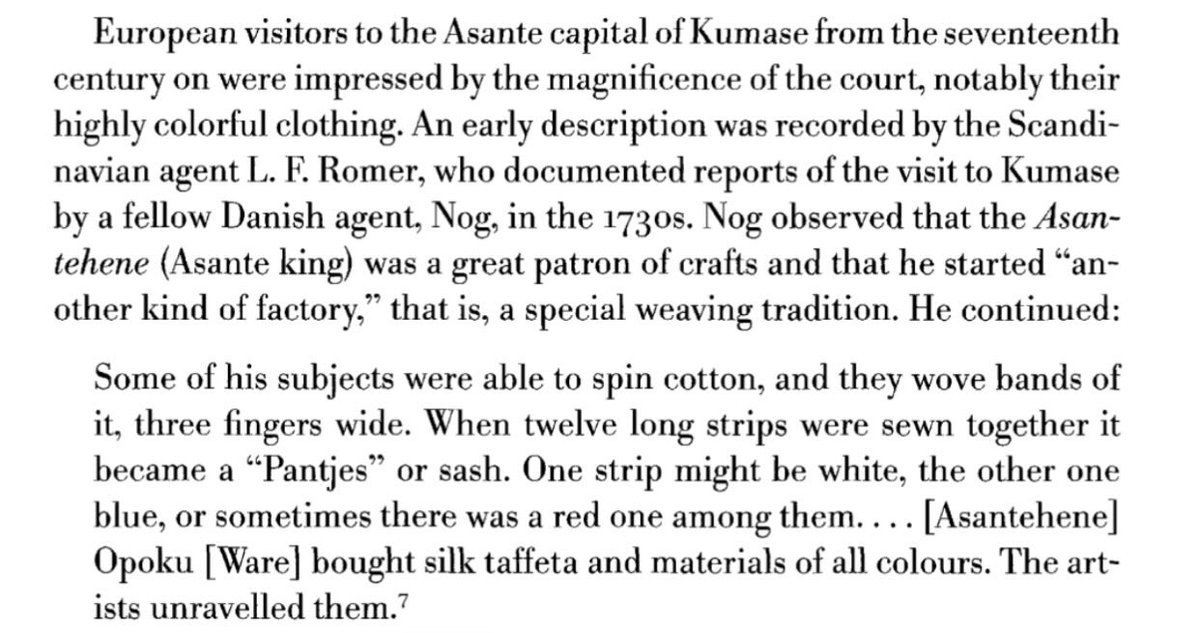
@KZankeli Yeah it does, you can’t insinuate krepi weavers introduced kente to Asante, when Akans in general: 1. Had their own textile industries 2. Exported cloth and regalia eastward all the way to Whydah These are eye witness accounts from 1629 to 1720 lol
A + tweet media
English
0
0
7
312
Sé:gbɛ:gnön🍀
Sé:gbɛ:gnön🍀@KZankeli·
Akanny cloth doesn't imply kente, does it? Pulling up Dutch references without arguing your point helps no one.
English
2
0
0
345
Sé:gbɛ:gnön🍀
Sé:gbɛ:gnön🍀@KZankeli·
that is highly contestable! 1. the krepi-ewe captives from peki, avatime, kpetoe, and neighbouring areas were traditional weavers of kente. 2. as captives, they were taken to asante, bringing their weaving skills with them. couldn’t they also have introduced the craft to asante? 🤔 3. the swiss-german missionaries in the krepi-ewe areas documented the art of kente weaving before the war. you'll find these records in the bremen & basel mission archives. 4. just as the adinkra artistry of bono captives was absorbed into asante, and the batakari kese donned by the otumfuor is native to some northern groups. 5. there are several nuances to this argument. 6. straying from the point, i was shocked to find out that the first african head of lawyers to practise law in asante was ben kporku tamakloe (first son of the anlo slave trader, togbi nyaho tamakloe). at the time, only non-native africans were practising law in asante, until edward okyere asafu-adjaye (a royal) came on the scene in 1927.
Sé:gbɛ:gnön🍀 tweet mediaSé:gbɛ:gnön🍀 tweet media
K California@_cali_k

@KZankeli To add to this, the alliances of Anlo of Keta and Anloga pave the way for trade and intermarriages and culture assimilation. Many Asantes settled in Anlonga and it's environ. Asantes brought the kente weaving skills there. Today, many people think kente........see more

English
24
19
72
26.9K
A +
A +@Accanian·
@KZankeli This same logic is applicable to the narrative of Asantes introducing weaving to Anlo as well.
English
0
0
3
152
A +
A +@Accanian·
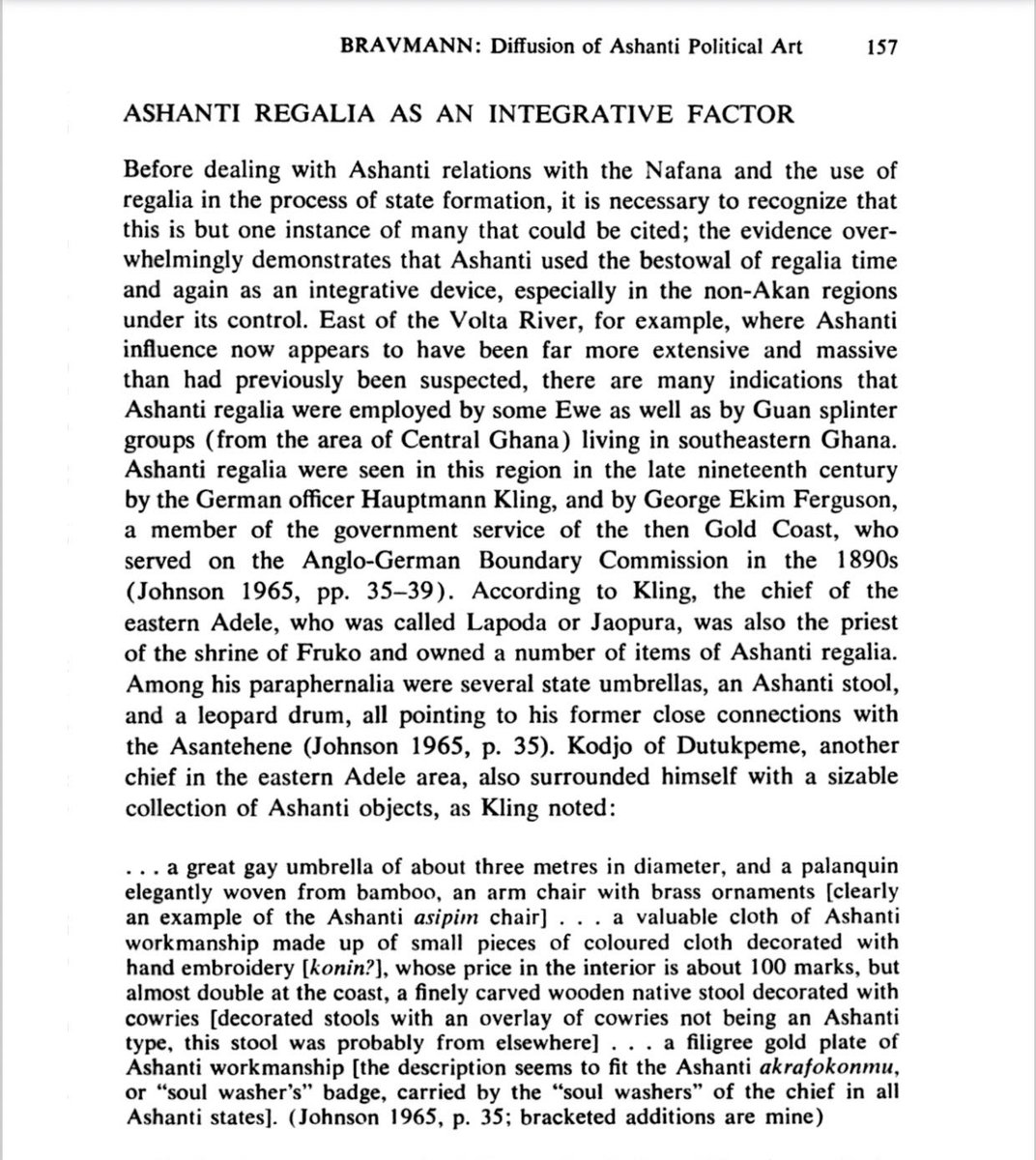
@KZankeli Well the insinuation from you and the original poster would be wrong. The Akan had their own weaving and textile industries that were later inherited by the Asante. Furthermore there’s way more evidence of Asantes imported regalia and cloth eastward than vice versa.
A + tweet mediaA + tweet media
English
1
1
9
371
Sé:gbɛ:gnön🍀
Sé:gbɛ:gnön🍀@KZankeli·
@Accanian that was a response his claim that the weaving of kente was introduced to the anlos by their asante affiliates. and arguing to the contrary, the krepi captives, were also known to be weavers, and took the skill into captivity in asante. x.com/_cali_k/status…
K California@_cali_k

@KZankeli To add to this, the alliances of Anlo of Keta and Anloga pave the way for trade and intermarriages and culture assimilation. Many Asantes settled in Anlonga and it's environ. Asantes brought the kente weaving skills there. Today, many people think kente........see more

English
1
0
0
452
A +
A +@Accanian·
@KZankeli So what does “couldn’t they also have introduced the craft to Asante” mean exactly ?
A + tweet media
English
1
0
4
415
Sé:gbɛ:gnön🍀
Sé:gbɛ:gnön🍀@KZankeli·
@Accanian no where did i claim that akans imported woven textiles from krepi! the point still remains that some captives from krepi took their kete weaving skills to asante.
English
1
0
2
933
A +
A +@Accanian·
@KZankeli This is one of the most uninformed assertions pushed by mainstream media. It’s all based on the fact that both Adinkra and Adinkera are one and the same. It’s Adwini (crafts) and Nkron (inscriptions or marks). That is the true etymology.
English
0
0
0
36
A +
A +@Accanian·
@KZankeli Not really, people associate Adinkra (Adwini nkron) symbols with Kwadwo Adinkra of Gyaman because of the a misinformed narrative that falls flat once you realized Adinkra motifs and textiles were already present in Asante and even Denkyira before the fall of Kwadwo Adinkra.
English
1
0
0
40