Gwen Roelants

609 posts

Gwen Roelants

Gwen Roelants

@AdionC

Katılım Nisan 2009
47 Takip Edilen33 Takipçiler
Gwen Roelants
Gwen Roelants@AdionC·
@shekhu04 I agree that software can be more optimized, but did you actually open a word processor in 1995? Most software had splash screens those days because starting up could take a while
English
2
0
1
251
Shikhar
Shikhar@shekhu04·
In 2026, we have CPUs with billions of transistors and 2-nanometer architecture, yet it takes your laptop longer to open a basic "To-Do" app today than it took a computer in 1995 to launch a word processor. This is Wirth's Law: Software is getting slower more rapidly than hardware becomes faster. We have essentially "spent" all our hardware gains on layers of abstraction, unoptimized libraries and AI-generated code bloat
English
242
485
6.2K
242.4K
Gwen Roelants
Gwen Roelants@AdionC·
@mr_james_c (take Fukushima, which will require maintenance and dumping worldwide detectable nuclear waste for at least the next 50 years without producing any electricity)
English
0
0
0
3
Gwen Roelants
Gwen Roelants@AdionC·
@mr_james_c Only that gas/coal/oil is fairly cheap and fast to build and scale in emergencies. So seems fine as a renewables backup. Nuclear is imo only fine if you don't care to think about the next 100000 year of maintenance of the waste
English
1
0
0
18
James Clark 📈📉¯\_(ツ)_/¯
What a lot of negative responses to this fail to understand: - If you want a functioning society, your grid CANNOT fail - If you need a gas backup renewables for your grid, you need it to be able to cover 100% capacity. - If that is the case then your backup isn't "backup", it is the basis of your grid - So why not just build nuclear instead? Does away with emissions from gas plus unreliability of renewables.
James Clark 📈📉¯\_(ツ)_/¯@mr_james_c

The battery capacity to provide Britain with 2 weeks of electricity during winter would cost more than £2tn. Which is 20x the cost of building enough nuclear power stations to provide all the UK's electricity needs.

English
72
133
1K
29.8K
Gwen Roelants
Gwen Roelants@AdionC·
@Empiricist871 @davidamusick And back to needing third party software for literally everything? Connecting to a network? Writing to a memory card, connecting a printer, scanner, camera? Every program needing separate code for every brand of speakers?
English
1
0
2
167
bender871
bender871@Empiricist871·
@davidamusick Totally agree, and with the idea of eliminating bloat and unneeded abstraction layers to get back to computers that are as fast and responsive as they could and should be. x.com/Empiricist871/…
bender871@Empiricist871

We are decades into the personal computing revolution, but personal computing remains in many ways a mess, and is in some ways worse than what we had in the 1980s and 1990s. It is not "the future we were promised". Software we purchase is not guaranteed to run flawlessly, or to run at all. Protracted struggles with drivers and configurations are commonplace, and fixes tend to be purely empirical. Hardware we purchased is not guaranteed to function flawlessly, or at all, despite monumental engineering effort towards "plug and play", "universal" interconnects, etc. The promise of easy, intuitive use remains unfulfilled. Users at all proficiency levels struggle with cryptic errors, unexpected and emergent behaviors that defy diagnosis, incompatible file formats, freezes, slowdowns and crashes, in some areas more so than on the computers of old. Productivity is not always increased. Perversely, we often perform busy work on the machines that were meant to relieve us of busy work. Automation of repetitive actions is frequently available only to power users with coding skills. Modern devices come with built-in distractions. Many feel that creative work was more effective on ancient machines that did not have the internet, or multitasking. George R.R. Martin is known to write on a MS-DOS PC using WordStar 4.0 (released in 1987), because it provides a distraction-free environment. Old computers guaranteed the privacy of our data, simply by not being internet connected. Privacy on modern devices is basically a lost cause. One problem is arguably a lack of legal liability for large software and hardware makers. The situation would be different if they could be legally held responsible to deliver promised functionality, or for data losses, or privacy violations. They might then focus on program correctness instead of "features" and re-discover the value of good software engineering, instead of "moving fast and breaking things", being "agile" and forever abusing their customers as beta testers. I see the foundational problem as technological though: it is the generality of the modern PC. A PC is a constantly evolving and mutating nominal equivalence class of many different machines with different hardware that are, or are supposed to be, compatible. The PC is also designed as a near-universal computer that covers a wide spectrum of use cases; private, professional, industrial, academic, server. Technological management of this diversity of hardware specs and use cases requires layers and layers of abstraction, which exacts a complexity tax. The operating systems of old computers resembled the organization of small, efficiently run private businesses. Current PC operating systems resemble the vast, byzantine and labyrinthine bureaucracies of modern nation states. The excessive complexity and abstractionism of modern PC operating systems was perhaps unavoidable in the decades during which semiconductor technology was rapidly evolving. This rapid evolution has ended though, and a plateau phase has arguably been reached. A way towards a better personal computing experience would be to return to the old "home computer" model of a fixed hardware platform with a lean, "prudently minimalist" operating system, written and optimized for the precise hardware. The main use cases would be web browsing, standard productivity applications, media playback, hobbyist coding, and light gaming. The development philosophy of such a machine would not be feature-driven, but rather slow and steady convergence towards a flawless implementation of the pre-defined feature set. The political goal would be empowering and liberating users and coders by giving them an a stable alternative to mainstream IT and its ever worsening enshittification. Fixed hardware means for example that you can get rid of drivers. Without drivers, there are no driver problems. You could get rid of the USB stack too and have PS/2 connectors for mice and keyboard. A radically decomplexified OS means a faster, more responsive, reliable and predictable machine that is less prone to unexpected emergent behaviors which vex and frustrate users and programmers alike. The idea of a specialized computer optimized around limited use cases is of course already standard in gaming. It's the gaming console. There is a reason though that this idea has not yet been realized for personal computing. It is philosophically and politically compelling, but not economically. The main economic obstacle is that this new personal computer requires not just a new operating system, but libre hardware, which does not currently exist, certainly not with the specs to be an alternative to the PC. Trying to build based on existing commercial parts would inevitably lead back to the vicious cycle of dependence on someone else's black-box components and changing specs. If you follow that route, you become the Raspberri Pi Foundation. You wanted to democratize and simplify computing, and empower coders, but your answer ended up being "ARM + Broadcom + Linux". RPi thus became what it was trying to avoid: proprietary hardware with a bloated software stack. Freedom from forced enshittification must start with libre hardware. Who would pay for the huge cost of the initial development, especially the hardware (a libre CPU, GPU, chipset) though? Wait for a benevolent billionaire? Who actually manufactures the hardware? Should there be a non-profit foundation? How do you prevent this foundation from being corrupt? If you de-centralized too much, how do you prevent platform fragmentation? These are some of the difficult problems. I do not have good answers for them.

English
4
0
58
17.7K
bender871
bender871@Empiricist871·
It's funny, but it also illustrates how ridiculously bloated modern software has become. Windows 11 is about 150 times larger than the first floppy disk based edition of Windows 95 while fundamentally offering the same functionality and being subjectively just as slow, if not slower. If order of magnitude advances in hardware specs had not been eaten up by at least matching inefficiency increases in operating systems and applications, we could have mainstream operating systems that perform a cold boot in less than a second, update themselves in seconds, and applications that start instantaneously. PCs are hundreds or thousands of times faster today than in 1995, depending on how you measure, but all that increase in raw performance has been wasted on bloat and enshittification.
Lingo.dev@lingodotdev

Imagine trying to install Windows 11 like this 🫣

English
200
920
8.5K
281.2K
Gwen Roelants
Gwen Roelants@AdionC·
@graywrabbit @cyber_razz Just make sure your computer is updated and that you connect to websites with https (which is pretty much all websites today, and all browsers today also warn if not the case). The only thing a vpn adds is hiding the specific ip addresses you browse, but that's rarely useful info
English
1
0
0
328
Abdulkadir | Cybersecurity
Abdulkadir | Cybersecurity@cyber_razz·
A both funny and educational meme. Let me explain: In the first panel, Joey is excited because the hotel’s “free Wi-Fi” is extremely fast. Anyone who has stayed in hotels knows their Wi-Fi is usually slow, overloaded, and frustrating. So when a connection suddenly feels blazing fast, it feels like you got lucky. In the second panel, Joey checks his device and notices his IP address starts with 172.16.42.x. His expression instantly changes to shock — because that number means something very specific in cybersecurity. That IP range is the well-known default network configuration used by a device called a WiFi Pineapple. A WiFi Pineapple is a portable penetration-testing tool that attackers can use to create rogue Wi-Fi access points. It can imitate legitimate networks … like a hotel’s Wi-Fi and trick nearby devices into connecting to it instead of the real network. Once your device connects, the attacker effectively becomes the network in the middle, allowing them to observe or manipulate traffic passing through it. This is a classic Man in the Middle (MitM) attack. The reason the connection feels “fast” is simple: you’re probably one of the few people connected to it, and the attacker is letting your traffic pass through so they can monitor it. So if you ever connect to public Wi-Fi and notice an IP address like 172.16.42.x, there’s a good chance you’re not actually on the hotel’s network…. you might be connected to a rogue hotspot controlled by someone else.
Cyber_Racheal@CyberRacheal

😂 If you understand this, explain it

English
294
16K
103.5K
6.6M
Gwen Roelants retweetledi
mousie is a hedgehog
mousie is a hedgehog@MementoMousie·
covid is like if everyone u know was in a house fire 3-6 yrs ago, and it stressed them out so much that they begin unplugging smoke detectors and throwing away fire extinguishers so they don't have to think about it. and if when their house catches fire again, they just ignore it
English
50
1.9K
9.9K
108.3K
Gwen Roelants
Gwen Roelants@AdionC·
@barkmeta @WerikMetaX So what proof is there for the claim in your post? The price has been stable for the past few weeks, and this claimed rebound is still lower than the price on February 6. So far it's actually prove that they do not significantly affected the price?
English
0
0
0
2
Bark
Bark@barkmeta·
@WerikMetaX If we actually get a rebound there will be so much cope.
English
2
0
23
13.5K
Bark
Bark@barkmeta·
Jane Street was running an algorithm that dumped Bitcoin every single morning at 10am. Every day. For months. Crashing the price. Liquidating retail. Buying back lower. Rinse and repeat. The second they got sued it stopped. The 10am dump disappeared. Now Bitcoin just had the best day in months. One trading firm... That’s all it took to suppress the entire crypto market for months. Now ask yourself how much of the crypto price action is even real. How many people panic sold because the charts look terrible. How many people got liquidated. How many billions were taken from regular people by a single trading desk. And this is just the first one to get caught so far… it’s about to get VERY interesting.
zerohedge@zerohedge

And there it is: Jane Street was behind the 2022 crypto winter, destroying Terraform by first depegging the token and destroying the ecosystem, then pretending it would rescue Terra, while effectively it was soaking up what little value remained.


English
802
2.3K
16.1K
2.4M
Gwen Roelants
Gwen Roelants@AdionC·
@envidreamz Sounds like the same precautions you could take against covid would also work against these conspiracy theories though
English
1
0
2
140
Envidreamz
Envidreamz@envidreamz·
Someone in the “Died Suddenly” Facebook group just described her entire family being hit with “the exact sickness we all got in November 2019.” “Weeks of severe sickness” and it’s a “horrible experience!” -High fevers. Her husband’s hit 106.5 F! -Chest tightness -Croup like cough -Shortness of breath -Low O2 levels -Racing heart -“Full body inflammation.” She lives in Ohio. Current Covid wastewater levels in Ohio are VERY HIGH!! And the comments are incredible: “It’s poison they’re spraying on us!” “Boost your immune system.” “Everyone needs to fast. ANY food feeds the sickness.” “Look into urine therapy.” “Did you take the 🥕?” “Clean your air conditioner, that’s the source of reinfection.” “It’s all in your head.” At what point do we allow the most obvious explanation to exist?! It’s almost impressive. We can describe Covid in perfect clinical detail and still refuse to say the word and come up with the most ridiculous excuses. But sure…. It’s poison spray from the planes! Or carrots. Or the HVAC system plotting revenge. And I’m sure urine therapy, fasting, and “immune boosting” will fix everything except the one thing it obviously is. 😉
Envidreamz tweet mediaEnvidreamz tweet mediaEnvidreamz tweet mediaEnvidreamz tweet media
English
45
320
3.6K
191.4K
Ralph Kolbeek
Ralph Kolbeek@KolbeekRal9319·
@Bricktop_NAFO The way Trump calculates: price drop from 1000 to 200. So, 1000 is 5 times 200. In his head it’s 500%. Lutnik explained this way of mathmatics. It’s very remarkeble way of ‘calculating’. Of prices rising they calculate ‘old school’.
English
4
1
1
3.5K
Bricktop_NAFO
Bricktop_NAFO@Bricktop_NAFO·
''Ozempic will drop from $1,000 to $199 a 578% difference.”................. Wrong, Its 80.1% Donald, and what Trump fails to mention, the reduction in Price in temporary. Ozempic is free in the UK for People with Diabetes, and only £129 for those that dont have it. Trump is failing to change to Gangland world of medicine in the States or he's taking massive bribes.
English
29
100
1.1K
162.9K
Gwen Roelants
Gwen Roelants@AdionC·
@Rumble_Ray @aakashgupta Amazon apparently lost 3 billion cumulative in 8 years before becoming profitable, so not exactly the same ball park
English
0
0
3
213
Raymond
Raymond@Rumble_Ray·
xAi needs to grow (data centers, GPU) and that costs money. Although the approximate $1B/month seems high but in line with what OpenAi and Anthropic are burning. Didn’t Amazon early on burn capital for years before turning a profit? Obviously these numbers are way higher but every Ai player is losing money to win long term.
English
2
0
2
5.4K
Aakash Gupta
Aakash Gupta@aakashgupta·
The SpaceX math is even crazier than this post suggests. Three days ago Musk merged SpaceX with xAI. Combined valuation: $1.25 trillion. SpaceX revenue: $15-16 billion. xAI revenue over nine months: $210 million. xAI cash burn over the same period: $9.5 billion. So the IPO isn’t really for SpaceX. SpaceX generates $1-2 billion in free cash flow and doesn’t need public capital. The IPO is an exit ramp for xAI investors before the burn rate chews through the $20 billion they raised last month. The WSB poster says institutional investors will have to “smell the shit before chomping on it.” He’s right. But the shit isn’t Starlink. Starlink did $10.4 billion last year with 50%+ growth and real margins. The shit is that Starlink’s cash flows are now permanently funding a money-losing AI lab while Musk pitches electromagnetic railguns on the Moon to launch orbital data centers. The roadshow deck has to explain that to pension fund managers who allocate 3% to growth equity. Good luck.
Fred Lambert@FredLambert

This guy cooked. And he is sadly likely to be mostly right.

English
88
199
1.7K
437.8K
IT Guy
IT Guy@T3chFalcon·
"YOUR ISP CAN SEE YOUR TRAFFIC, USE A VPN" What they actually mean: Yes — your ISP sees: Every domain you visit (e.g. twitter[.]com) How much data you're sending/receiving Your real IP address Timing & patterns (can figure out habits even without content) sold/used for ads/profiling. But NO — with HTTPS: They CANNOT see exact page (/login vs /profile), passwords, messages, or content inside encrypted connections. VPN fixes the domain/IP visibility by routing everything through their encrypted tunnel (ISP only sees Proton's server IP). But now you trust Proton instead (no-logs audited is good, but still a shift). HTTPS protects content. VPN protects metadata + location.
English
197
422
10K
1.5M
Mac Guy3135
Mac Guy3135@MacGuy3135·
@SebAaltonen Yet you still need a chunky dongle that somehow reaches 100 degrees by just existing to plug in a mouse that doesn’t have a ten year latency… I cannot work without my G502 and having to carry around some ewaste that cost more than the mouse itself to use it is insufferable.
English
1
0
5
303
Sebastian Aaltonen
Sebastian Aaltonen@SebAaltonen·
I am glad Apple did cut all the non-standard ports like firewire and mini-DP. Almost no device supported those. Now my M3 Max has 3x 40Gbps USB-C ports, which support 4K 240Hz HDR video, audio (in/out), storage devices, networking, etc. HDMI 2.1 port for TVs, projectors and older monitors, shared speaker+mic 3.5mm port (modern headsets use one 3.5mm cable or USB-C or are wireless), a SD card reader (never used it, my camera sends photos to cloud directly nowadays). And a MacSafe port for charging, which I almost never use as USB-C supports 100W charging, while at the same time delivering 4K 240Hz image an connecting the keyboard + mouse which are connected to my monitor. Single cable to dock. No cable hell. My M3 Max also has 2.4Gbps wifi and Bluetooth for wireless connections. Today most peripherals support wireless. Firewire was just 0.8Gbps and almost no device supported it. How was that better? Big clunky device with poor battery life and lots of single-use poorly supported ports?
Aditya@adityadotdev

This is what Apple took from us.

English
59
16
953
124.5K
Gwen Roelants
Gwen Roelants@AdionC·
@politicalmath How many products would actually run out of people to sell to though? There are billions of people, and even with declining birth rates still every year millions of new people to sell to
English
0
0
0
5
PoIiMath
PoIiMath@politicalmath·
The real question is "how do you create an sustainable income stream from a durable product?" Because businesses need a sustainable income stream. This was the problem with Instant Pot. It was a monstrously successful product but it was too durable. You bought one and that was the only one you needed. The company tried to expand into other product lines but people only wanted the Instant Pot, they only needed one, and it lasted a long time. So the company went bankrupt.
ⓘ Dogs don't have thumbs@MorlockP

Once again: "planned obsolescence" is an engineering tool to keep costs affordable. Consumers would rather buy a 60 year stream of appliance utility in 15 year chunks than pay up front, with costly current dollars, for the whole thing, especially since fashions and needs change

English
62
23
472
29.6K
Gwen Roelants
Gwen Roelants@AdionC·
@TrungTPhan I was curious to compare how much their business had grown since going digital. From the 1.2m rentals in a peak week, they apparently went to 3.4 billion viewing hours per week in 2023, so over 1000x
English
0
0
0
200
Trung Phan
Trung Phan@TrungTPhan·
Over 25 years (1998-2023), Netflix shipped >5 billion DVDs and still had DVD rental sales of ~$150m in 2022. The busiest weeks sent 1.2m DVDs. It was a major logistics achievement. And one key innovation was the automated rental return machine (AARM). A single person could open ~600 DVDs per hour (checking titles, finding damage, cleaning discs). The AARM processes 3,500 DVDs per hour. “At its height, Netflix was the Postal Service’s 5th-largest customer,” writes the New York Times. “[It] operated 58 shipping facilities and 128 shuttle locations that allowed Netflix to serve 98.5 percent of its customer base with one-day delivery.” The AARM (Netflix owned >100 of them) had “the precision of a Swiss watch manufacturer”. And it helped the DVD business grow to 20 million subs and ~$1B in sales by early 2010s. As the streaming business took over, Netflix’s full final year of DVD rental sales (~$150m) was only 0.5% of $32B total revenue. The first DVD test-shipped was “Casino” and the first official DVD sent to a customer was “Beetlejuice”. The final DVD sent was “True Grit” in September 2023. *** Good background from NYT: nytimes.com/2023/09/23/bus… Interesting piece from Bronway, which won the contract to make the AARM (explaining their approach with videos): bronway.com/products/custo…
English
16
42
442
228.2K
Gwen Roelants
Gwen Roelants@AdionC·
@davepl1968 The chance that I'll remember this is equally small though, so probably would have to look up either way
English
1
0
3
165
Gwen Roelants
Gwen Roelants@AdionC·
@Jorgey_x @SheriefFYI It's weird that in general both VSCode and visual studio feel quite optimized. Fast startup, fast opening of files, fast search/intellicode etc...
English
0
0
2
349
Jorgey
Jorgey@Jorgey_x·
@SheriefFYI 1. This explains Microsoft software in general. 2. I wonder if the solution would've been better or worse if they had LLMs in 2020. PS: Windows explorer fully blocks for > 1 minute when failing to access anything on the network. From Windows 95 all the way to Windows 11.
English
6
1
81
6K
Gwen Roelants
Gwen Roelants@AdionC·
@rohit_negi9 What exactly needs to be compared in Instagram though? There's like 3 posts at a time visible that are non overlapping and no elements change size. How could you possibly make this slow
English
0
1
10
1K
Rohit Negi
Rohit Negi@rohit_negi9·
React's billion dollar engineering trick, Turn an impossible O(n³) problem into O(n).... Here's the problem, You update your UI. React has two virtual DOM trees, one showing what's currently on screen, one showing what should be on screen. It needs to figure out what changed. The textbook solution? Compare every node in tree A with every node in tree B to find the optimal transformation. That's the classic tree edit distance algorithm. Time complexity: O(n³). For 1,000 UI elements, that's 1 BILLION comparisons. Your app freezes for 10 seconds on every button click. Facebook's news feed? Instagram's timeline? Literally impossible. React looked at this solved computer science problem and said, What if we don't need the PERFECT answer? What if GOOD ENOUGH is fast enough? They just made 2 brutal trade-offs: Trade-off 1: Different component types? Don't even compare their children. Destroy the entire old subtree. Create the entire new subtree. Zero analysis. Instant O(1) decision. Sometimes wasteful? Yes. Fast? Definitely. Trade-off 2: Same type? Only compare nodes at the same tree level. Never look for better matches elsewhere in the tree. Miss some optimizations? Sure. But now it's linear O(n) instead of cubic O(n³). The result, 1 billion operations become 1000 operations. 10 seconds become 2 milliseconds. The impossible becomes trivial. This is why Instagram scrolls smoothly with infinite feeds. Why Facebook doesn't freeze when you click like. Why your React app with 10,000 components feels instant. Why the web feels native. React didn't solve the impossible problem. They changed what problem they were solving. The real lesson, Perfect is the enemy of fast. And fast is the only thing users care about.
English
49
92
1.2K
267.4K
Gwen Roelants
Gwen Roelants@AdionC·
@willmcgugan Depends what they are working on and when they started working as well though. If they came in at 9pm they shouldn't be tired yet
English
0
0
0
125
Will McGugan
Will McGugan@willmcgugan·
They desperately want to go home. Fatigue set in hours ago and their error rate is so high that if they tried to do anything more than moving lines around, they would create bugs that could only be fixed after a good night's sleep. Which they probably aren't going to get anyway. FFS Were no lessons learned from crunch time in the video games industry in the 90s and 00s?
Cameron@czoob3

9:15 pm Monday night. Not a single Eng has left yet. The only thing to do in life is build.

English
87
235
8.1K
463.1K
Gwen Roelants
Gwen Roelants@AdionC·
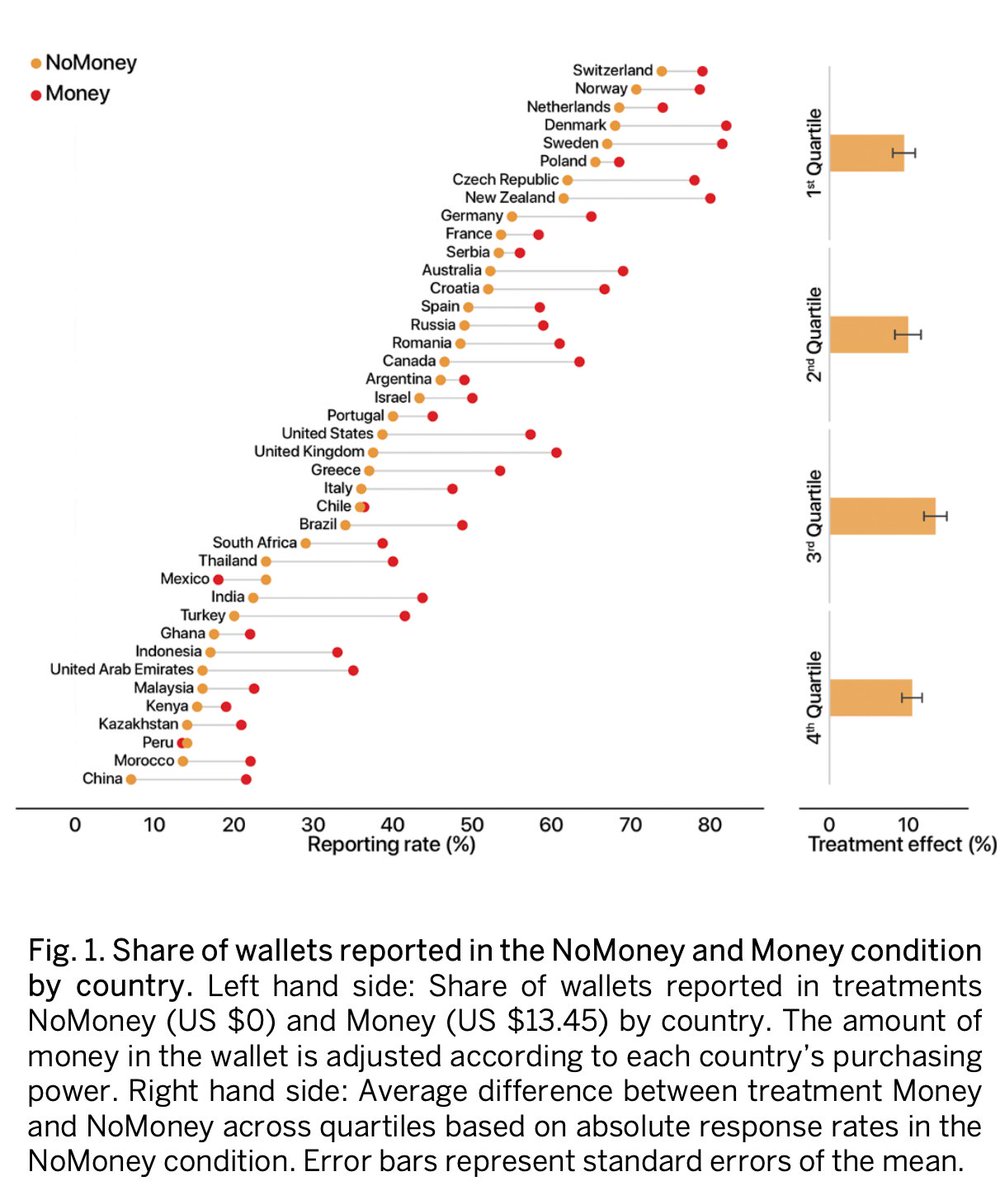
@armsq17 @JohnHolbein1 @GarettJones And also, except for email being an uncommon messaging format in China,wallets and cash are also rare in China. Tracking lost phones would probably be a better measure
English
0
0
0
18
John B. Holbein
John B. Holbein@JohnHolbein1·
You drop your wallet on the ground. In which country are you most likely to get it back? It depends on how much $$$ is in the wallet. But, in general, it's better to lose your wallet in... Switzerland 🇨🇭, Norway 🇳🇴, the Netherlands 🇳🇱, Denmark 🇩🇰, and Sweden 🇸🇪 On the other hand, you're far less likely to get your wallet back in... China 🇨🇳, Morrocco 🇲🇦, Peru 🇵🇪, Kazakhstan 🇰🇿, and Kenya 🇰🇪
John B. Holbein tweet media
English
20
10
85
11.1K
Indra
Indra@IndraVahan·
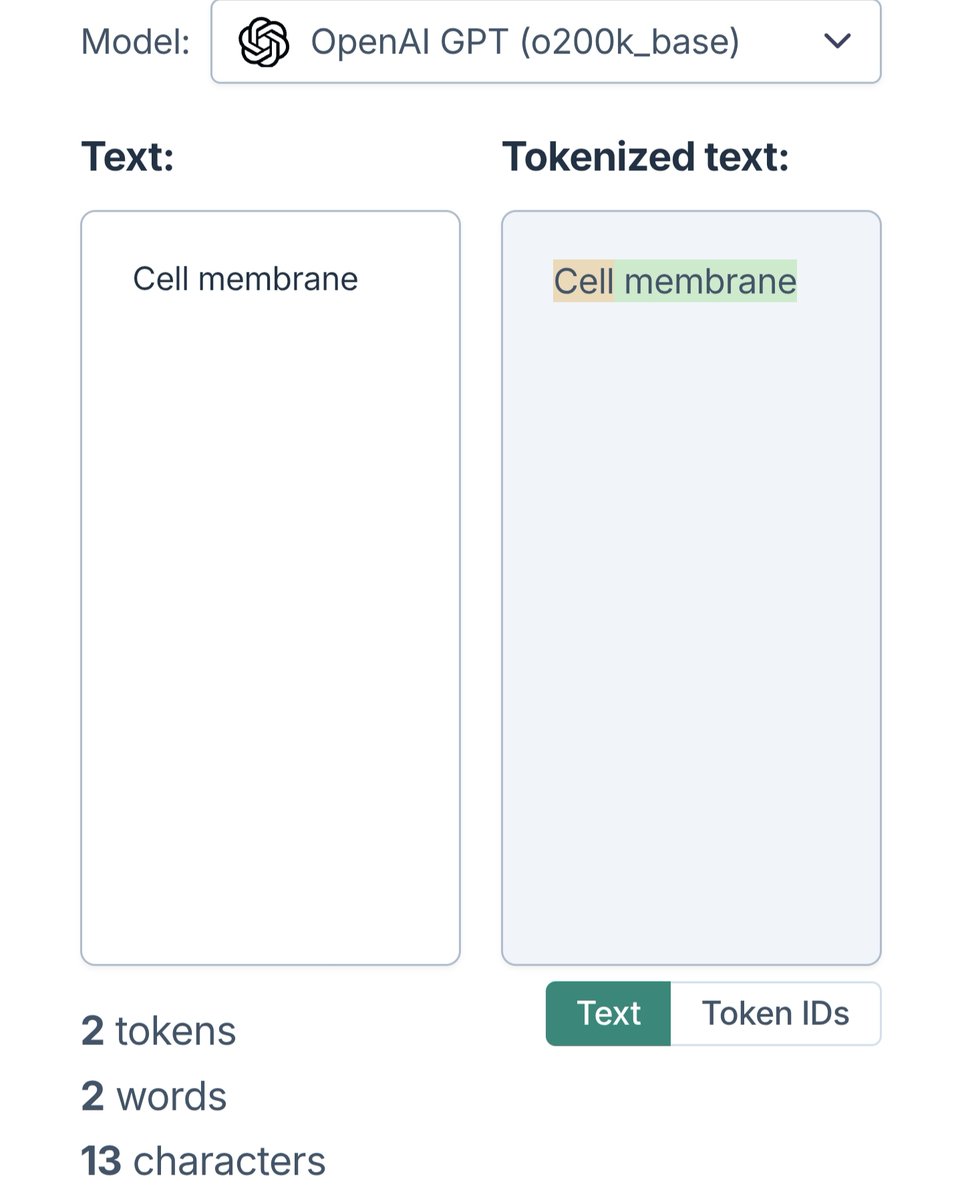
chinese tokenizes more efficiently than english. even gpt o1-pro used to switch to chinese midway on complex queries. there is more information density with specificity in chinese. let’s say in english, the word ‘cell’ could mean cell membrane or battery, but in chinese there are specific words for it: 细胞" (xìbāo) means "cell" in biology, and it is different from "电池" (diànchí), which means "battery" (in a physics/energy context). fewer tokens and clearer semantics result in cheaper internal reasoning.
Harveen Singh Chadha@HarveenChadha

deepseek inference speed has significantly improved... but why does it switch reasoning language mid way?? is there a study where it is shown that reasoning in non english languages is better?


English
104
206
3K
288.4K