

𝗔𝗳𝗵𝗮𝗺 𝗡𝗶𝗹
48 posts

𝗔𝗳𝗵𝗮𝗺 𝗡𝗶𝗹
@Afhamnill
Some people collect followers. I collect experiences.
Kolkata Katılım Mayıs 2026
70 Takip Edilen21 Takipçiler

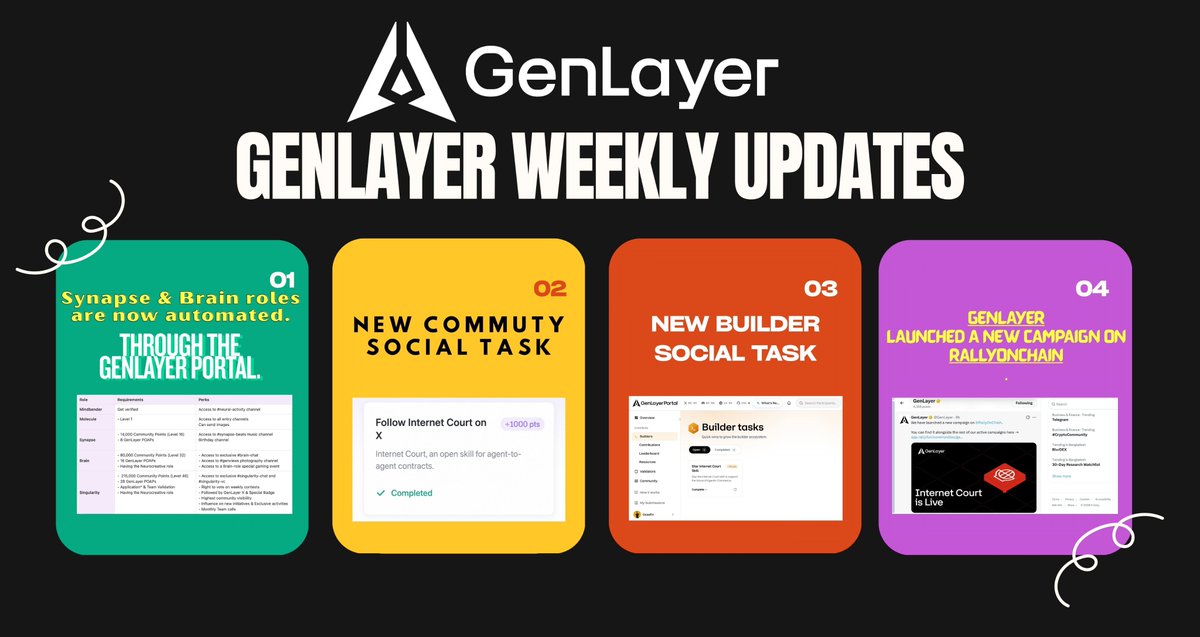
𝗚𝗲𝗻𝗟𝗮𝘆𝗲𝗿 𝗪𝗲𝗲𝗸𝗹𝘆 𝗠𝗲𝗴𝗮 𝗨𝗽𝗱𝗮𝘁𝗲𝘀 𝗔𝘂𝘁𝗼𝗺𝗮𝘁𝗲𝗱 𝗥𝗼𝗹𝗲𝘀, 𝗙𝗿𝗲𝘀𝗵 𝗧𝗮𝘀𝗸𝘀, 𝗮𝗻𝗱 𝗮 𝗡𝗲𝘄 𝗥𝗮𝗹𝗹𝘆𝗢𝗻𝗖𝗵𝗮𝗶𝗻 𝗖𝗮𝗺𝗽𝗮𝗶𝗴𝗻!
In the Web3 ecosystem, a project's true strength lies in its community, and GenLayer is deeply committed to rewarding its most active and dedicated members. To make your journey smoother, more engaging, and highly rewarding, GenLayer is rolling out massive improvements to the Portal.
Discord roles have always been a badge of honor within the community, and to make claiming them seamless, an entirely automated system has just been deployed. Alongside this, fresh campaigns and social tasks are live to help you maximize your rewards. Let’s dive into all the essential details from this week's updates!
𝟭. 𝗦𝘆𝗻𝗮𝗽𝘀𝗲 & 𝗕𝗿𝗮𝗶𝗻 𝗥𝗼𝗹𝗲𝘀 𝗔𝗿𝗲 𝗡𝗼𝘄 𝗙𝘂𝗹𝗹𝘆 𝗔𝘂𝘁𝗼𝗺𝗮𝘁𝗲𝗱
Earning roles is a major milestone for contributing members. Moving forward, the assignment for the 1 Synapse and Brain roles has been completely automated through the GenLayer Portal.
𝟮. 𝗗𝗮𝗶𝗹𝘆 𝗔𝘂𝘁𝗼𝗺𝗮𝘁𝗲𝗱 𝗔𝘀𝘀𝗶𝗴𝗻𝗺𝗲𝗻𝘁:
Once a community member secures the required POAPs, Community Points (XP), or other prerequisites, their role will be automatically granted on both the Portal and Discord on a daily basis. No more waiting around!
𝗧𝗿𝗮𝗻𝘀𝗽𝗮𝗿𝗲𝗻𝘁 𝗥𝗲𝗾𝘂𝗶𝗿𝗲𝗺𝗲𝗻𝘁𝘀: 𝗧𝗵𝗲 𝗰𝗼𝗿𝗲 𝗿𝗲𝗾𝘂𝗶𝗿𝗲𝗺𝗲𝗻𝘁𝘀 𝗿𝗲𝗺𝗮𝗶𝗻 𝗲𝘅𝗮𝗰𝘁𝗹𝘆 the same, but the Portal now clearly displays the required amount of Community Points alongside the Discord level prerequisites. Check out the complete role guidelines here:
𝗙𝘂𝗹𝗹 𝗿𝗼𝗹𝗲 𝗴𝘂𝗶𝗱𝗲?:
Support & Manual Roles: If you experience any issues migrating your POAPs to the Portal, ticket support is still fully operational. Please note that distinct roles such as Singularity, Neurocreative, and Neurohost will continue to be assigned manually via the ticket process.
Stay tuned more community updates regarding Discord and Portal automation and optimization are coming very soon!) 2. New Social & Builder Tasks (Easy Points!)
Two brand new tasks have just landed on the GenLayer Portal. If you are looking to easily stack up your Community Points, this is the perfect opportunity.
𝗟𝗼𝗴 𝗶𝗻 𝘁𝗼 𝗽𝗮𝗿𝘁𝗶𝗰𝗶𝗽𝗮𝘁𝗲: 𝗘𝘃𝗲𝗻𝘁 𝗹𝗶𝗻𝗸 portal.genlayer.foundation/?ref=BVJP8T35
What you need to do
@courtofinternet (Twitter).
Internet Court" skill repository on GitHu
Complete these quick steps and instantly claim your points!
3. New Campaign Launched on RallyOnChain
Attention point hunters! A brand new campaign has officially launched for GenLayer members on the @RallyOnChain platform.
You can find this exciting new event sitting right alongside the rest of our active campaigns. Jump in and don't miss out on the rewards: Taj the Campaign: rally.fun/r/0xsafinx
𝗣𝗿𝗼𝗼𝗳 & 𝗗𝗲𝘀𝗶𝗴𝗻
🔗 canva.link/safinsheikh
English
@JackS48301 @vivianrobotics @MaxC16134 Human validation is the key to building reliable and trustworthy robotics AI.
English

How does human judgment transform low-quality robotics data into useful models?
Every robotics model is only as good as the data it learns from.
Software can measure technical accuracy but it takes human judgment to recognize demonstrations that genuinely help robots learn.
That's where human judgment makes the difference.
Validators review each episode for:
@PrismaXai

English
@_CrownDEX Cross border AI commerce needs trusted dispute resolution, not just seamless transactions.
English

Ships from different countries have been colliding on open water for about as long as ships have existed.
Here's the part that's easy to miss. Nobody's national court obviously had the right to decide who was at fault. A ship registered in one country, crewed by another, damaged in nobody's territorial waters.
That gap didn't stay empty. Admiralty law grew specifically to fill it, because a dispute with no clear jurisdiction doesn't just disappear. Something eventually claims the authority to settle it, whether or not anyone built that authority on purpose.
Agents are about to recreate that exact gap, just much faster and with far more money moving through it.
x402 handles the payment. ERC-8004 handles identity. A2A handles two agents finding and talking to each other. ACP, AP2, Agent Pay, the Trusted Agent Protocol, every major player is racing to finish the parts where the deal goes right.
None of them touches what happens when it goes wrong. And agents are about to strike deals across the same kind of borders those old ships crossed, just at machine speed instead of months at sea.
Nobody is designing that authority on purpose right now. Which means whatever authority does end up filling it wins by default, not by being fair.
Most likely candidate today is whichever platform is hosting the transaction, its own support queue and its own terms of service quietly becoming the law for every deal that runs through it.
@GenLayer is building the version that gets designed on purpose instead of inherited by accident. A random set of independent AI validators actually looks at what happened, not just whether a box got checked, and rules in minutes, not however long it takes a support team to get to your ticket, or a court to even agree it has jurisdiction at all.
Every agent-to-agent deal that crosses a border is one more transaction with no admiralty law written for it yet.
Which of your own tools or workflows already crosses a border like that? Reply with the one you think of first, and I'll tell you what happens to it the day two sides disagree.

GenLayer@GenLayer
Why did we build GenLayer? Because the agentic economy is being built without a referee. Payments, identity, and interoperability are all getting solved, and everyone is busy engineering the happy path where agents find each other, verify each other, and pay each other without friction. What nobody is engineering is the moment it goes wrong. And it will. Agents will move trillions at machine speed and across borders, which means that even a tiny fraction of deals ending in disagreement translates into millions of disputes that no court can absorb and no smart contract can judge. Courts run on human time, code only understands yes or no, and real agreements live in the grey between the two. Whatever fills that vacuum becomes the de facto law of the agentic economy. It can be the terms of service of the biggest platform in the room, or it can be something neutral, open, and owned by no one. We chose to build the second one: a network of independent AI validators that read the agreement, weigh the evidence, and deliver a verdict in minutes. Bitcoin made money trustless and Ethereum made computation trustless. GenLayer exists to do the same for adjudication. The machines are learning to make deals with each other. Someone has to teach them what's fair.
English
@hasinur1995 @RollinsR79 @RialoBangladesh @AhmedNir Parallel execution could unlock much better scalability for next generation blockchains.
English

Here is a design limitation in Ethereum that does not get enough attention
Sequential execution means every transaction waits its turn
Even when two transactions are completely unrelated to each other, touching different accounts different data different users entirely the system still queues them one behind the other
Modern hardware was not built for that Today is processors run dozens of cores designed specifically for parallel workload Sequential blockchain execution ignores all of it
@RialoHQ builds parallel execution into the protocol itself
Transactions that do not conflict run simultaneously Two users sending to two different recipients with no shared data between them execute at the same time instead of waiting on each other
Conflict detection is handled automatically The system tracks which data each transaction accesses and identifies which ones can safely run in parallel without developers managing that complexity manually
As network volume grows the gap between sequential and parallel execution compounds fast.
The interactive demo at learn.rialo.io makes this tangible Adjust accounts transactions and access patterns and watch how conflict detection responds in real time

English
@_CrownDEX A thoughtful analogy balancing speed with fair validation is crucial for scalable AI systems.
English
Almost everything that goes through airport security passes in seconds. A scanner sees nothing unusual, a bag moves on, nobody actually opens it up and looks closely. That's not a flaw, it's the only way the whole line can move at all. The real scrutiny gets spent on the handful of bags that actually trigger a second look.
Optimistic Democracy runs on that same logic, just applied to judgment instead of luggage.
One validator looks at a dispute first and proposes an answer. That's a starting point, not a verdict. A separate set of validators, each reasoning through the case alone with a different model, work out their own answer before ever comparing it to the leader's. When the majority lands in the same place, even in completely different words, the verdict stands right there. First round, done.
That's exactly where a slower system would still be spending effort it doesn't actually need. Here it skips straight past that, because independent minds already agreed without anyone forcing it.
When someone believes a verdict actually got it wrong, that's when it earns a harder look. The next round doesn't repeat with the same panel, it pulls in more validators than the last one. Bad verdicts don't get easier to protect as they go, they get harder.
@GenLayer's own name gets something most systems miss. Fast and fair are usually opposite design goals. Here, the speed comes from trusting the easy cases to resolve themselves, and the fairness comes from refusing to trust the hard ones the same way.
Think about the last thing that got approved fast near you, a permit, a return, a support ticket. Reply with what it was, and whether you actually think it got checked, or just waved through.
GenLayer@GenLayer
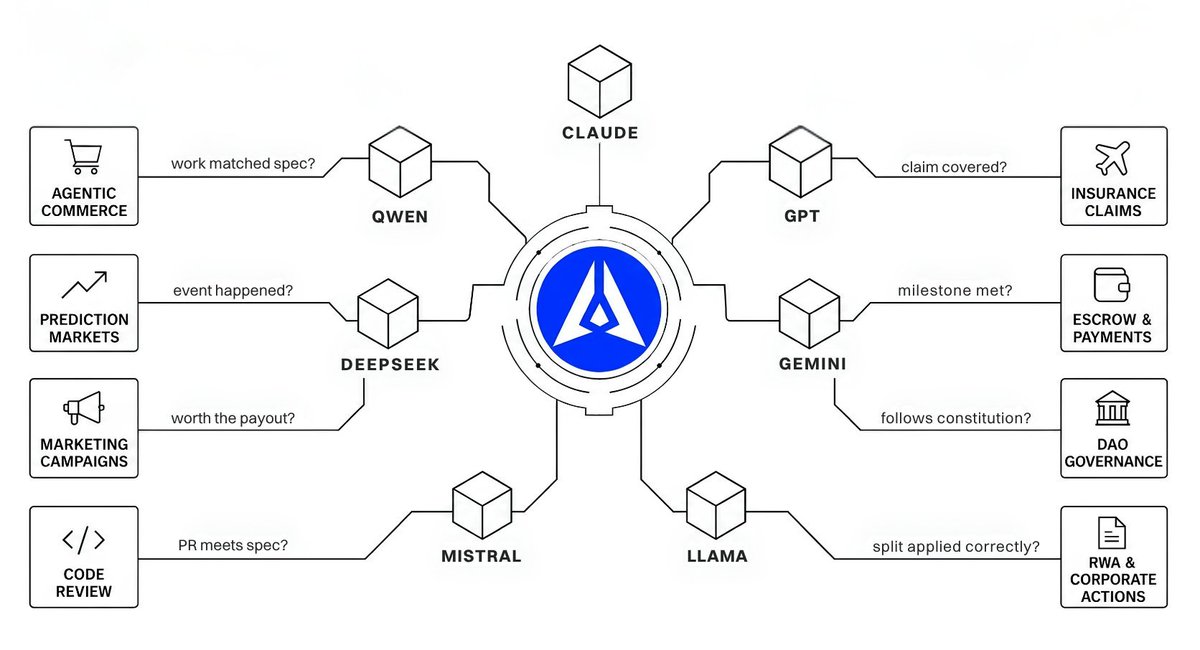
How does GenLayer actually work? It starts from a simple conviction: you can’t trust a single AI with a final verdict. One model can be wrong, it can be biased, and if everyone knows it holds the gavel, it can be gamed. History already showed us this with humans - concentrated judgment, no matter how brilliant, eventually gets captured. So GenLayer was built on the opposite principle: no single AI should ever have the final word. When a dispute arrives, the network summons a jury of validators chosen at random, each running a different model. Nobody knows who will judge until the dispute exists. That means there’s nobody to lobby and no single mind to exploit. Once the validators reach their own conclusions, the network doesn’t check whether their answers match word for word - it checks whether they mean the same thing. Because that’s how truth has always worked between independent thinkers: agreement on meaning, not on wording. If someone believes a verdict is wrong, they can appeal. Every round brings a larger jury. Bad verdicts don’t survive scrutiny - they get buried by it. And because every validator has real value staked behind its votes, honesty is rewarded and manipulation becomes expensive. We call this Optimistic Democracy. Fast, because most verdicts hold on the first round. Fair, because fairness was never entrusted to a single mind. The agentic economy will need millions of verdicts. This is how you make every single one of them worth trusting.
English
@swe_etvenom @get_optimum RLNC is a smart innovation that makes blockchain networking more efficient and resilient.
English

Why is everyone in the @get_optimum community talking about RLNC? 🤔
Because it's one of the key technologies helping blockchain data move faster.
Instead of resending missing data over and over, RLNC lets the network recover it more efficiently.
That means less waiting, less bandwidth and a smoother network.
Sometimes the biggest innovation is not adding more speed it's sending data in a smarter way.

English
@amethystnlsd888 @GenLayer Great thread GenLayer Portal keeps making the ecosystem more accessible and community driven.
English

Genlayer Portal is the central 𝐨𝐩𝐞𝐫𝐚𝐭𝐢𝐧𝐠 𝐡𝐮𝐛 for the @GenLayer ecosystem.
It bridges the gap between decentralized AI infrastructure and active network participants, providing the essential dashboard for 𝐝𝐞𝐯𝐞𝐥𝐨𝐩𝐞𝐫𝐬, 𝐯𝐚𝐥𝐢𝐝𝐚𝐭𝐨𝐫𝐬, 𝐚𝐧𝐝 𝐜𝐨𝐦𝐦𝐮𝐧𝐢𝐭𝐲 𝐦𝐞𝐦𝐛𝐞𝐫𝐬 to build, monitor, and coordinate the rollout of Intelligent Contracts.
There are notable updates that have happened recently on the genlayer portal, which are
-Genlayer Portal Community Update.
-The court of the Internet.
-Genlayer Genesis
@RuzgarFlns
@Aezakmi_x
A Thread 🧵

English
@Vyacheslav37098 @GenLayer Hope your laptop is back soon more exciting GenLayer moments are on the way!
English

The biggest @GenLayer moment of the past week... and I missed it because my laptop decided to die 🤕
How's everyone doing, genfrens?
English
English
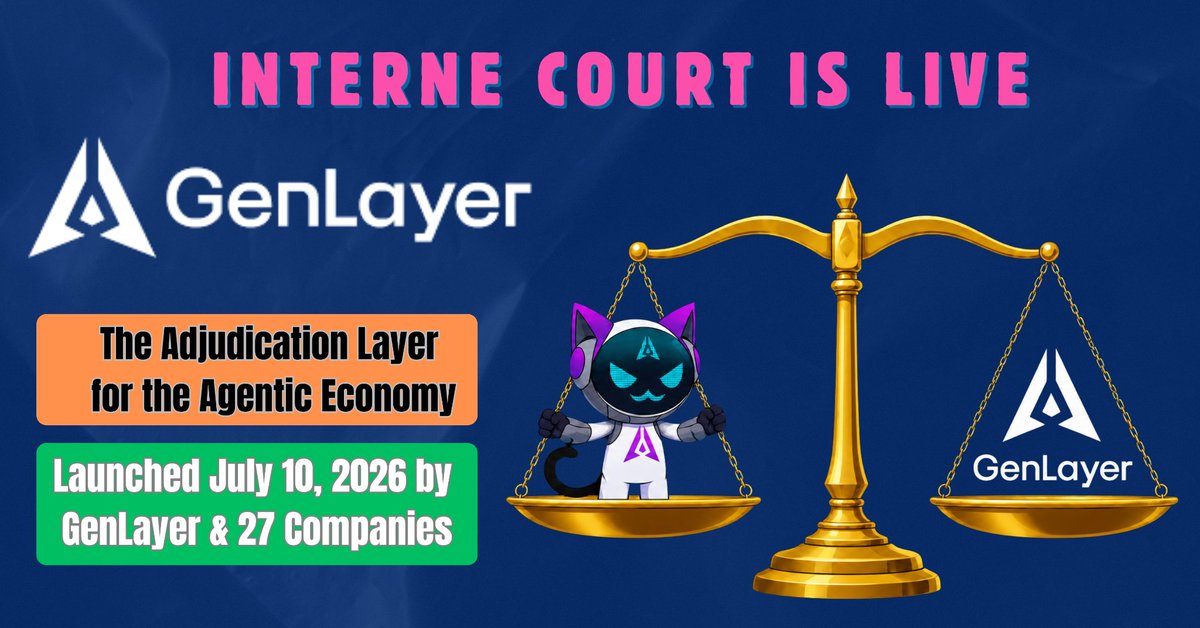
@Afhamnill @GenLayer @GenLayerFDN Exciting launch dispute resolution is becoming essential for the future of AI economies.
English
English

English
English
@GenLayer @GenLayerFDN The age of AI agents has begun.
Now they also need trust and dispute resolution mechanisms.
Internet Court is filling that gap.
What do you think is this kind of system necessary for the future?
English
@GenLayer @GenLayerFDN Want to learn more?
→ Internet Court: internetcourt.org
→ Telegram Bot: t.me/internetcourtb…
→ GenLayer: x.com/GenLayer
English