Aidan Pak

170 posts

Aidan Pak banner
Aidan Pak

Aidan Pak

@AidanPak

Premji Invest | prev @SummitPartners | prev @InvictiSecurity | @VanderbiltU math/cs alum

San Francisco, CA Katılım Nisan 2012
432 Takip Edilen255 Takipçiler
Sabitlenmiş Tweet
Aidan Pak
Aidan Pak@AidanPak·
It turns out, to solve the integration problem, all we needed to do was give the agent access to bash + filesystem + browser, and it could integrate with effectively anything. One of the biggest takeaways from OpenClaw (and Claude Code/Codex) is that SaaS companies have already lost the battle for the integration surface, whether they've realized it or not. The traditional driver of growth/expansion for enterprise software was owning the platform where real work is done (system of work). While the moat is rooted in being the system of record, owning the interaction layer on top is what justified seat expansion, feature upsell, and pricing power. The future value of enterprise SaaS companies like Salesforce is entirely dependent on their ability to maintain this status as the system of work, and in the age of AI, that means owning the agent, or the interface with the agent. But what Claude Code / OpenClaw are showing us is that if you give the agent bash, a filesystem, and a browser, the agent can just "learn" to use your product and harden it in a "skill." This could take the form of a script calling an API, using a CLI, or using the browser to navigate the UI. This doesn't mean that systems of record get fully replaced in the medium term, but it does mean they're beginning to lose their status as the system of work (essentially becoming just a data provider) which significantly questions future growth and pricing power.
English
1
1
13
10.3K
Aidan Pak
Aidan Pak@AidanPak·
Every category of knowledge work desperately needs a platform built for human/agent collaboration, and Melius has nailed that product surface for creative work. Through the Melius API, CLI, and MCP, agents get every frontier image, video, and audio model behind a single endpoint, and a node-based canvas that gives creative work a structure they can actually operate on. Creatives get a beautiful canvas for collaborating with those agents, and the right surface to express judgment and taste. Congrats @n0w00j and team!
joowon@n0w00j

If you’re a creative not using AI you’re fcked. Introducing Melius: the world’s first creative canvas for agents. Here’s how it works:

English
1
2
13
2.1K
Aidan Pak retweetledi
joowon
joowon@n0w00j·
Creative tools like Higgsfield require excessive prompting and have predatory pricing, and fail to keep generations consistent. Even worse, you’re forced to go back and forth on different pages and stitch together assets on different platforms.
English
2
6
83
17K
Aidan Pak
Aidan Pak@AidanPak·
Looking at the model card, the difference between Fable and Opus 4.8 looks small. Same for GPT-5.4 vs 5.5. But after using Fable for a while now, the thing that really stands out is its ability to reason for longer without falling apart and the capability gains from duration is massive. The majority of agent tasks are compositional: a task is mostly a chain of dependent steps, meaning it only finishes if ~every step lands. So task success ≈ p^t (where p = per-step accuracy, t = number of steps). For example, the jump from 98% to 99% roughly doubles the length of task completable with 50% probability. This is why a single number on a system card is the wrong lens to evaluate model capability and instead performance should be measured as a function of compute and the length of time it can stay coherent.
Aidan Pak tweet media
English
0
0
3
70
Aidan Pak
Aidan Pak@AidanPak·
Very well said and I would add there's a pareto distribution of task value. Open models can already do 80-90% of tasks and will continue to over time (especially now with post-trained OSS >= closed-source models for a specialized task), but even as OSS models improve, 80-90% of spend will continue to go to the frontier because the economic value is wildly skewed toward the model that can solve the hardest 5-10% of societal problems.
English
0
0
4
182
Aidan Pak
Aidan Pak@AidanPak·
What's next? Haiku Sonnet Opus Fable (guardrailed Mythos) Mythos
English
0
0
1
95
Aidan Pak
Aidan Pak@AidanPak·
@AnthropicAI Cant wait to use Fable to "grammatically correct this email" 💀
English
0
0
1
160
Anthropic
Anthropic@AnthropicAI·
Claude Fable 5 will be available again globally tomorrow. After a series of productive conversations with the US government, we're redeploying the model with a new set of classifiers to target and block more cybersecurity tasks. In the near term, some routine tasks like coding and debugging will fall back to Opus 4.8. We’ll continue to refine these classifiers over the coming weeks to reduce false positives and better distinguish genuine misuse from legitimate requests. We’ve also begun drafting a consensus framework—with Amazon, Microsoft, Google, and other Glasswing partners—for assessing the severity of AI jailbreaks and how AI developers should respond to them. We invite other industry partners and model providers to join us in this effort. Finally, we’re scaling up our collaboration with the US government on model testing and safeguards. This will include pre-release access to models and safeguards for evaluation, information sharing on jailbreaks and misuse, and dedicated resources for joint research. Thank you to our users for your patience, and to our partners across the government, industry, and the research community who worked alongside us to make Fable 5 available again. Read our full blog: anthropic.com/news/redeployi…
English
3.6K
6.5K
43.4K
15.4M
Aidan Pak
Aidan Pak@AidanPak·
@databricks is uniquely positioned to be the first to actually solve HTAP, the holy grail DBs have chased for decades. HTAP has historically failed because no single layout serves both workloads. OLTP wants data stored by row to grab one record fast, OLAP wants it by column to scan a field efficiently, and you cannot be optimal at both. So in practice you run two systems, an OLTP db and an analytics warehouse, glued together with CDC, which is incredibly brittle and leaves you fighting replication lag, duplicated spend, and split governance. Following the @neondatabase and @mooncakelabs acqs, Databricks' bet is to stop trying to unify the engine and unify the storage instead. Neon (now Lakebase) is OLTP that already split storage from compute and writes Postgres straight to object storage. Mooncake (pg_mooncake) is the transcode piece that keeps a columnar Parquet/Iceberg mirror of those tables continuously in sync, so Postgres keeps serving transactions while engines like Spark and Photon run analytics on the same fresh copy, all governed by Unity Catalog under one permission and lineage model. Of course there are still tradeoffs and this won’t be true real-time HTAP, but killing the pipeline and unifying storage seems to be the right direction, and if anyone pulls it off, it is Databricks.
Databricks@databricks

Databricks Co-founder and Chief Architect @rxin announces LTAP (Lake Transactional/Analytical Processing) at #DataAISummit 2026. LTAP is a new data processing architecture that unifies OLAP and OLTP on a single copy of data in the lake, eliminating ETL, replicas, and pipelines by design. databricks.com/company/newsro…

English
0
0
3
146
Aidan Pak
Aidan Pak@AidanPak·
@evisdrenova This is the case for intelligent routing between closed and oss models. @OpenRouter is great and I also think @databricks has a strong case to own routing for large enterprise
English
1
0
0
40
Evis Drenova
Evis Drenova@evisdrenova·
I'm starting to believe that every company will run open source models in addition to OAI/ANT. I think we'll see more OSS models trained in the US as well. With that, the demand for infrastructure to support the open source models will dramatically increase.
English
7
1
36
4.8K
Aidan Pak
Aidan Pak@AidanPak·
It's fascinating to see how frontier capabilities seem to be first unlocked via the harness, but over time, that behavior gets inevitably baked into the weights of the model and the scaffolding around it evolves. For example, in the early days, agent frameworks wrapped LLMs in pre-defined DAGs with dedicated planning, context management, and tool-calling steps to overcome limitations in the base model such as hallucinating tool arguments, forgetting instructions, and context anxiety. These encoded assumptions quickly became stale as reasoning models were introduced and quickly improved, but importantly, that didn't mean the infrastructure around the model went away. What's super interesting about SPIRAL is that it's research on how to encode the current SOTA behavior of a harness (e.g. Claude Code dynamic workflows / loops) directly into the weights. Specifically, training a model to spin up parallel reasoning traces and then synthesize them into a final answer (which is one of the multi-agent architectures that is prevalent with dynamic workflows, e.g. fan-out-and-synthesize) but instilled end to end via RL rather than in the harness. I have been incredibly impressed by the capabilities unlocked by dynamics workflows. This is where Claude writes the orchestration as a JS program and then runs that code. The script holds the loop, the branches, and the intermediate results, fans out a pile of subagents in parallel, and a synthesizer folds them back into one answer. Other multi-agent patterns like tournaments, adversarial verification, and generate-and-filter are also prevalent. This behavior is currently a part of the harness but might soon be embedded in the weights.
Jubayer Ibn Hamid@jubayer_hamid

The most capable reasoning systems in AI scale inference compute along several axes: sequential compute to think longer, parallel compute to sample many independent attempts, and aggregative compute to synthesize prior traces into a new improved one. But during training, we only optimize how models use sequential compute. This creates a fundamental mismatch between how we ultimately deploy these systems and how we train them, leaving much of search and synthesis unoptimized. We introduce SPIRAL, an RL framework for making all inference-compute primitives end-to-end learnable: models learn to coordinate sequential, parallel, and aggregative reasoning using only the reward of the final output. Work with @ifdita_hasan (co-lead), @michaelyli_ , @oshaikh13 , @yoonholeee , @DorsaSadigh , @chelseabfinn , @noahdgoodman 🧵

English
0
0
5
277
Shay Boloor
Shay Boloor@StockSavvyShay·
$MU ABSOLUTELY CRUSHED THEIR EARNINGS • Revenue $41.5B vs Est. $35.5B • EPS $25.11 vs Est. $20.39 • Net Income $33.7B vs Est. $23.9B • Gross Margin 85% vs Est. 82% Q4 Guide • Revenue $50B vs Est. $43B • EPS $31.00 vs Est. $25.07 • Gross Margin 85% vs Est. 84%
Shay Boloor tweet media
English
231
602
3.9K
1M
Aidan Pak
Aidan Pak@AidanPak·
Great post! I think the next step for "code review" looks less like “review” and more like code validation / dynamic verification. It will be less statically reading a diff / running tests, and more simulation where agents drive an environment, run a feature against its real dependencies, check how it behaves against other services, and adversarially try to break it. The problem today is that productizing this is incredibly hard: (1) dev environments are custom to each enterprise, and (2) the cost of compute to run them at scale is still too high. I believe @cognition is heading in this direction
English
0
0
0
26
Aidan Pak
Aidan Pak@AidanPak·
@JakeEpstein1 Super cool stuff Jake! Offloading as much work as possible to small, local OSS models will be increasingly important. Would be great to add in a smart router / BYO keys to route between frontier / local models
English
0
0
0
17
Jake Epstein
Jake Epstein@JakeEpstein1·
I built Bayou, an open source harness for running OSS models on Mac. It'll run models larger than available memory (quantization + MoE caching) - even spec decode against a small model on an iPhone. Building is how I learn to invest. Run it yourself: jakee.vc/bayou
English
1
0
1
34
leyland
leyland@leylndd·
“independent thinkers” as soon as boris chreny breathes
leyland tweet media
English
3
4
54
3.3K
Aidan Pak
Aidan Pak@AidanPak·
Longer-running agents are creating enormous KV cache that has to be moved around: offloaded across storage tiers, shared between nodes, etc. The reason CPU demand is exploding isn't that CPUs are replacing GPUs (Matmul still belongs on the GPU) which is purpose-built for it. It's that CPUs are increasingly the ones moving all that KV and data around to keep the GPUs fed along with the actual computing required to execute tool calls, navigate a browser, etc.. It's why NVIDIA's NVL72 rack pairs the GPUs with Grace CPUs.
English
0
0
1
921
tae kim
tae kim@firstadopter·
An NVIDIA executive just told me the GPU-to-CPU ratio will go from 2:1 today to 1:1 “in months" due to agentic AI. NVIDIA executive is saying 1:1 IN MONTHS. CPU CPU CPU $NVDA
English
46
64
1.1K
379K
joowon
joowon@n0w00j·
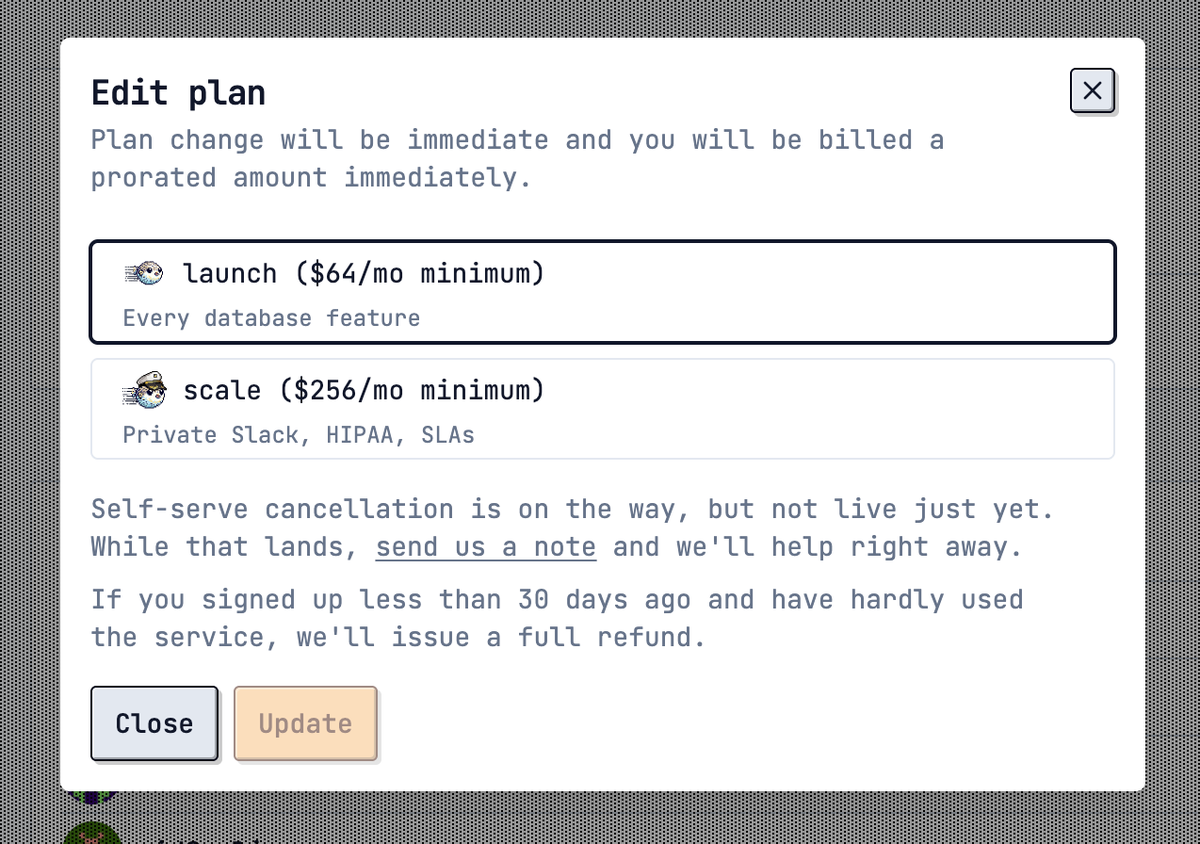
$100m ARR and can't even spend $11 dollars on claude tokens to build a simple cancel plan flow. "send us a note" LMAO yea okay
joowon tweet media
English
35
0
405
74.6K
Aidan Pak
Aidan Pak@AidanPak·
@Jason I've heard from a source close to a Mag 7 CEO that the government is quietly pressuring large companies (Microsoft, Meta, etc.) to avoid mass layoffs. Many leaders obviously see an incredible opportunity to optimize their headcount given AI but being forced to slow it down
English
0
0
0
138
@jason
@jason@Jason·
There will be significant AI job displacement. The only question is how fast we can manifest new jobs. The AI washing claim was accurate for the first couple of rounds of layoffs, but the ones this year are explicitly because owners think they can do more with far less. And the owners are correct. You can easily job proof yourself by being AI-first, starting a company or joinging generation toolbelt.
English
252
34
728
195.5K