
Sabitlenmiş Tweet
Albie 💃🤌
51K posts


Albie 💃🤌
@AlbieBrian
in the replies of the few candidates who want to abolish Billionaires. Class traitors welcome.
Card Room Katılım Aralık 2010
2.2K Takip Edilen2.5K Takipçiler

Albie 💃🤌 retweetledi

Ohio - Governor Polling:
🔵 Acton: 53%
🔴 Ramaswamy: 43%
EMC / Feb 22, 2026 - (Released Today)

English
@HacknerTyler @eternallyRaq I agree, once she announces even the negative stuff will make her sound viable. Especially since Dems vote more on electability than republicans

English
@AlbieBrian @eternallyRaq At least that means more people are talking about her
English
The Third Way can’t get a social media mention without AOC paranoia.
Nick Field@nick_field90
Third Way's Jon Cowan's Nightmare Scenario: “[Kamala Harris] runs, she takes a bunch of the Black vote away from the would-be moderate nominee, and somebody like AOC consolidates her [left-wing] vote and Harris screws us.” politico.com/news/magazine/…
English
Millennials are will be 46-47 dude, and they’ve gotten more liberal in a younger state than NC, the graph shows people trending liberal even a little above millennial. Not to mention your numbers for 40 and under aren’t even correct unless you are counting the primary but this is the general.
English

@AlbieBrian @VideoGamer05 TX electorate:
2018 - 30% under 40
2020 - 28% under 40
2024 - 29% under 40
50% of the electorate would be 21pt gain. Not happening. For one thing under 30 are least registered group.
The absolute best youth turnout was Obama NC 2008. 45% of electorate was under 44.
English
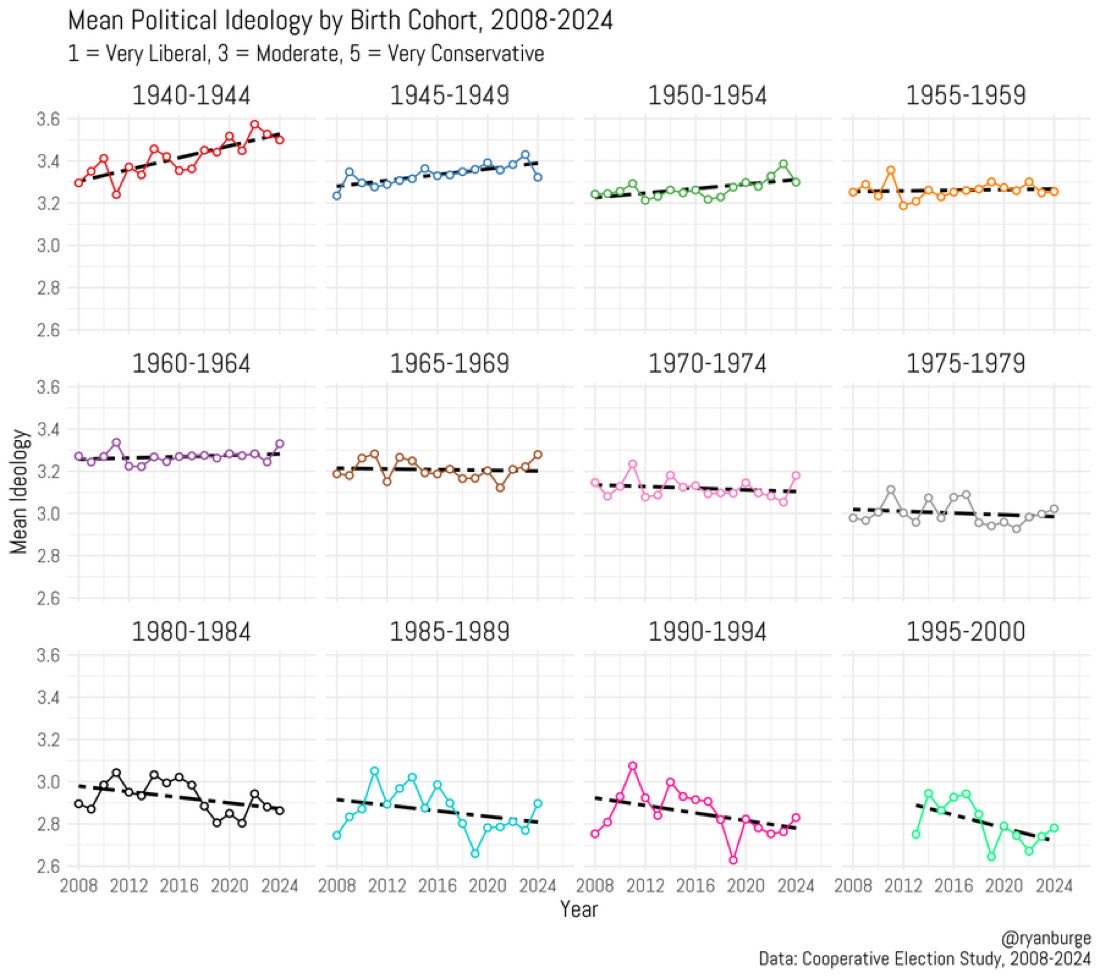
Despite just being a terrific candidate, this is why Talarico will win. Tx has the 2nd youngest us population and half of the general electorate will be Gen Z and Millennials who, as you can see from the charts, have gotten more liberal. Not to mention Latinos sprinting away from the gop.
Ryan Burge 📊@ryanburge
Do people become more conservative as they age? If they were born between 1940 and 1954, the answer is clearly "yes." Among people born from 1955 to 1979, there's really been no change. For those born in 1980 or later, it looks they are becoming more liberal as they age.
English
@LauraDavisTx @HQNewsNow That’s not how numbers work. You can think he’ll underperform those numbers or the gop will overperform but with those numbers there isn’t really anything to argue.
English

@HQNewsNow Thank goodness. With these numbers Talarico will not win. 👏🏽
English

A new poll shows James Talarico beating either potential GOP candidate in the Texas Senate race:
🔵 James Talarico, 44
🔴 John Cornyn, 43
🔵 James Talarico, 47
🔴 Ken Paxton, 45
English
This is a negative incentive incentive to growing the middle class. When you redistribute from the ultra rich you get more tax revenue back cause the lower brackets already pay a higher effective tax rate. He’s trying to protect the rich from the more “extreme” wealth taxes and progressive taxes needed.
English
I cannot begin to explain how stupid this is.
NewsWire@NewsWire_US
Ahead of 2028, Sen. Cory Booker to unveil bill to make $75,000 in income tax-free — NBC
English
@briana__gomez He will but I think I’m the only one who’d rather face Cornyn
English

@SaraForTexLege @sdpadrebob01 Can the bar be intervening maliciously in politics? Bad people shouldn’t be held unaccountable because they aren’t seeking office.
English

@sdpadrebob01 Chad isn’t running for office. He’s allowed to have his secrets, but not if he keeps actively trying to damage the safety and security of my state/country with his bull shit lies.
English
Albie 💃🤌 retweetledi
@yankie_review @LeftyWinter Under probable spam and probably not from the us. People must be really scared of President AOC

English

@AlbieBrian @LeftyWinter The Dem voter base broadly supports "leftist" policies on healthcare, tax, housing, Palestine etc making AOC a moderate in the party and the special interest candidates fringe. Wait until the debates.
English

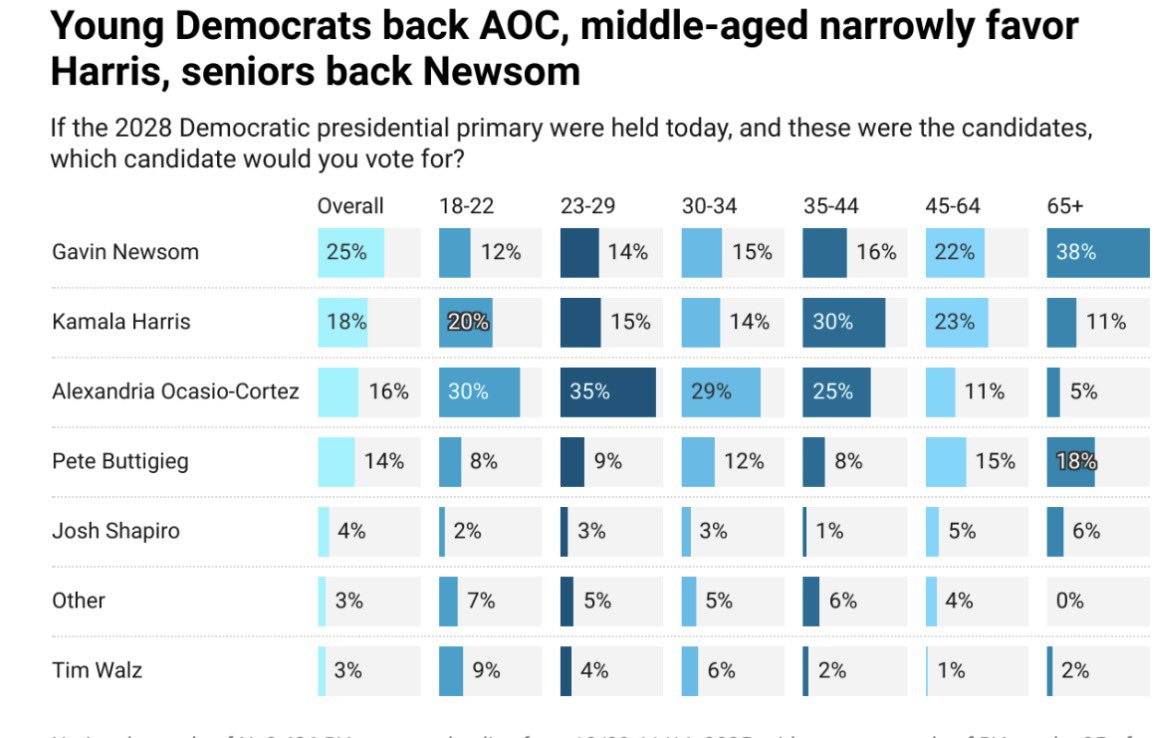
This poll speaks for itself.
AOC has the backing of young people not Kamala Harris.
AOC is more in line with what the majority of my generation wants.
Jenell@imjenell
Kamala..nevermind
English
@CodyModyMody44 @LeftyWinter You have been misinformed. By 2028 Gen Z and Millennials will be the majority of the electorate and Millennials has only gone more left. Also 1 year of GenA to add to the stack.
English

Tell that to the laborers losing sleep renovating Donna Kelce’s house.
Joe@electionsjoe
Agreed. Make daylight time permanent.
English

@AlbieBrian ik they dont like him, but liking some of their policies doesnt not make me a progressive
just like me worrying about the debt doesnt make me a conservative
im a progressive because i align most with them on the vast majority of issues like healthcare, ss, energy, childcare
English
@AlbieBrian and i’m not a leftist haha, pretty progressive but imo extremes of anything would lead to havoc
and i’m pro abundance when it comes to housing policy in blue states, & how we can achieve energy independence
English

@AlbieBrian Sorry Little Man,
I’m a whole real live human female, which may be foreign to you and if you trust Apartheid Elon’s “partners”, you’re dumb. But then you’re paying for his acknowledgment. Send me an address over DM and I’ll gladly show you how real I am. Otherwise go to bed.
GIF
English
I do not understand what is happening in this world that people don’t know how to behave in public anymore and on airplanes. God bless those flight attendants if that had been my mother and I’ve found out this had happened to her and nothing had been done it would’ve been a figh
꧁✿Nessa✿꧂@Softnessa_
Just watched American Airlines flight attendants intervene when four tall white men got very aggressive with an elderly Black woman who said no to switching seats. They got booted from the flight after one got in the passenger’s face. They asked her if she felt comfortable sitting by the one they were going to allow to stay and she said quietly no I really don’t so they removed him too. Thankfully we hadn’t even pushed back yet. This is how it should be handled.
English
Universal healthcare would create the business incentives libertarians tell you cutting taxes will.
Jackie 🏳️⚧️🏳️🌈🌹@KaoticLeftist
Holy shit, Graham Platner explains how he was able to afford his Oyster Farm Business.
English