Hamza Alshamy حمزة الشامي

118 posts

Hamza Alshamy حمزة الشامي

Hamza Alshamy حمزة الشامي

@AlshamyHamza

@NYUDataScience | At the intersection of Data Science and Social Sciences

Manhattan, NY Katılım Ekim 2014
324 Takip Edilen35 Takipçiler
Sabitlenmiş Tweet
Hamza Alshamy حمزة الشامي
Happy to share our new preprint led by @laura_k_globig on whether people prefer AI sources over ingroup and outgroup sources. Grateful for the chance to contribute and thankful to @jayvanbavel for his guidance and support.
Laura Globig@laura_k_globig

🚨 New Working Paper 🚨 Do people prefer AI sources over ingroup and outgroup sources? 👉Spoiler: Yes, but it's context-dependent. @jayvanbavel @AlshamyHamza 1/n

English
0
1
2
2.3K
Hamza Alshamy حمزة الشامي retweetledi
Lujain Ibrahim
Lujain Ibrahim@lujainmibrahim·
🚨Very excited to see our work on warmth & sycophancy in LLMs out in @Nature today!🚨 We study what happens when LLMs are fine-tuned to be warmer, and find that warmth and sycophancy can be linked, with warm models showing higher errors on a range of benchmarks (🔗s below)
Lujain Ibrahim tweet media
English
14
61
261
34K
Hamza Alshamy حمزة الشامي retweetledi
Haiwen Li
Haiwen Li@Li_Haiwen_·
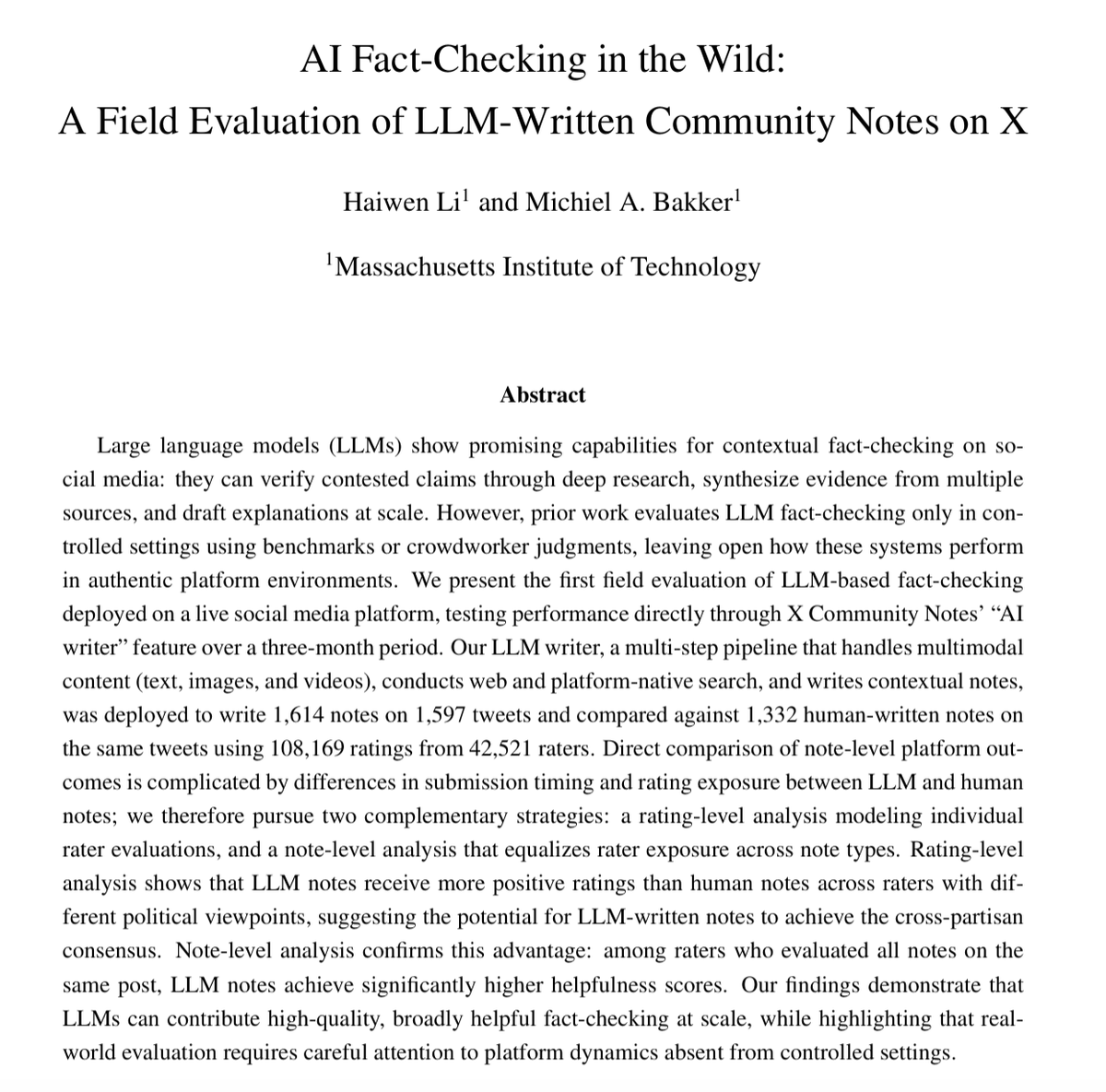
🚨New preprint. Many papers show AI can write fact-checks as well as humans (or better) in the lab, but very few test this in the real world. We run the first online evaluation of AI fact-check writing with X Community Notes’ AI writer API. Paper w. @bakkermichiel 1/
Haiwen Li tweet media
English
3
34
123
21.4K
Hamza Alshamy حمزة الشامي retweetledi
Mohammed Alsobay | محمد الصبي
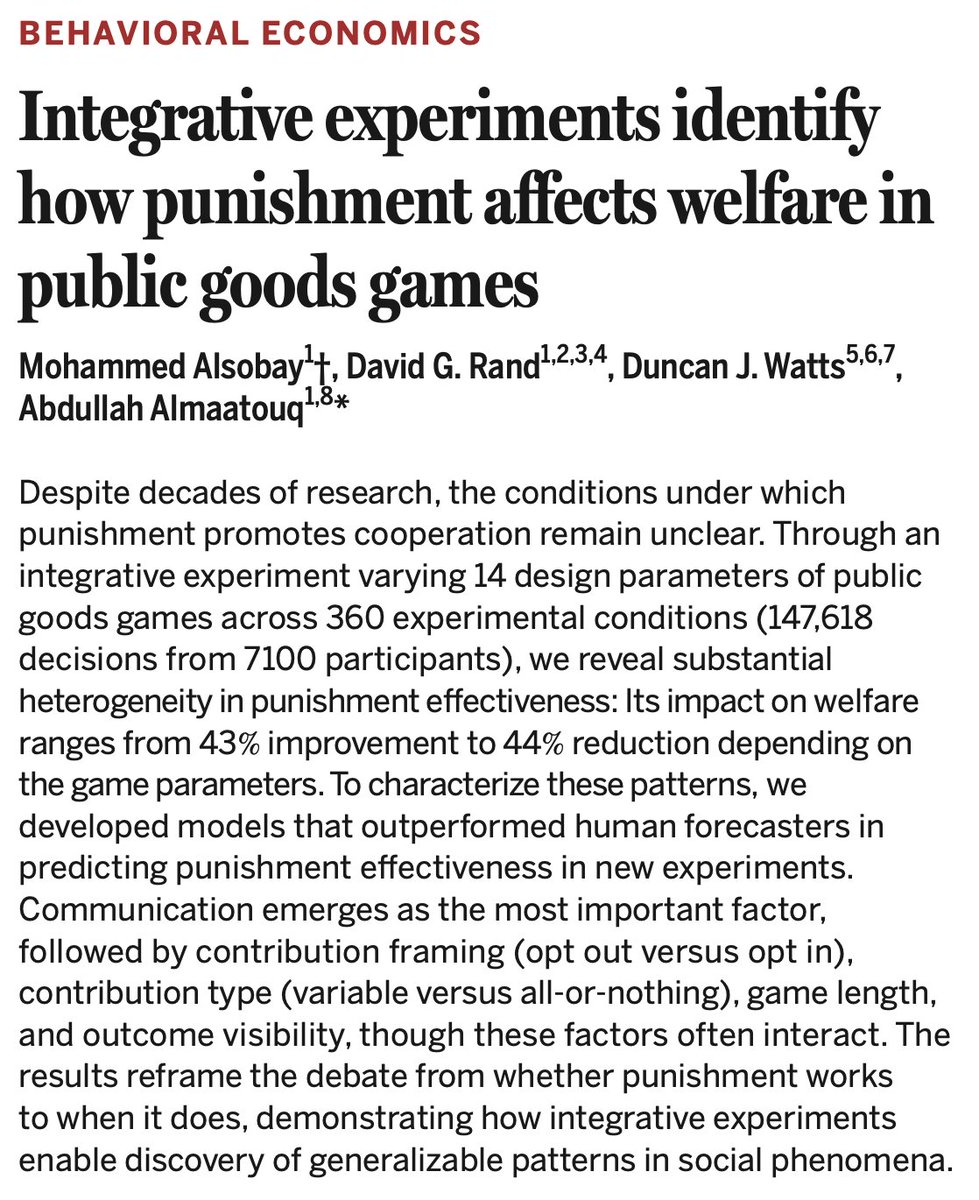
🚨 Out in Science this week, with @DG_Rand @duncanjwatts and Abdullah Almaatouq 🚨 We apply an integrative approach to a classic question in behavioral econ and cooperation research: *when* does peer punishment help or hinder collective welfare?
Mohammed Alsobay | محمد الصبي tweet media
English

2
30
92
12.9K
Hamza Alshamy حمزة الشامي retweetledi
Hyunjin Kim
Hyunjin Kim@hyunjinvkim·
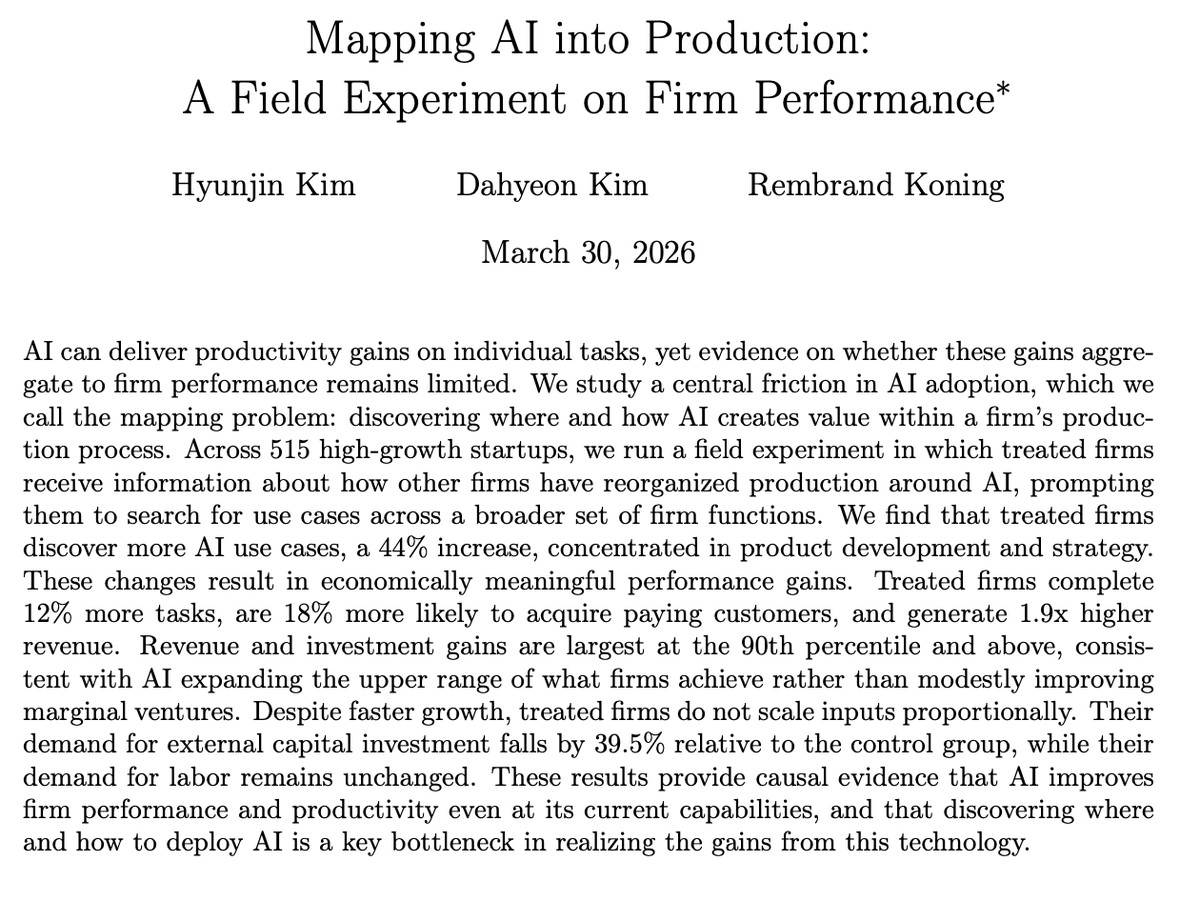
🚨 Excited to share a new working paper! 🚨 AI can improve individual tasks. But when does it improve firm performance? Our paper proposes one key friction firms face: the "mapping problem" -- discovering where and how AI creates value in a firm's production process. 🧵1/
Hyunjin Kim tweet media
English
17
84
405
181.4K
Hamza Alshamy حمزة الشامي retweetledi
Myra Cheng
Myra Cheng@chengmyra1·
AI always calling your ideas “fantastic” can feel inauthentic, but what are sycophancy’s deeper harms? We find that in the common use case of seeking AI advice on interpersonal situations—specifically conflicts—sycophancy makes people feel more right & less willing to apologize.
Myra Cheng tweet media
English
9
74
284
83.6K
Hamza Alshamy حمزة الشامي retweetledi
Noam Gidron
Noam Gidron@NoamGidron·
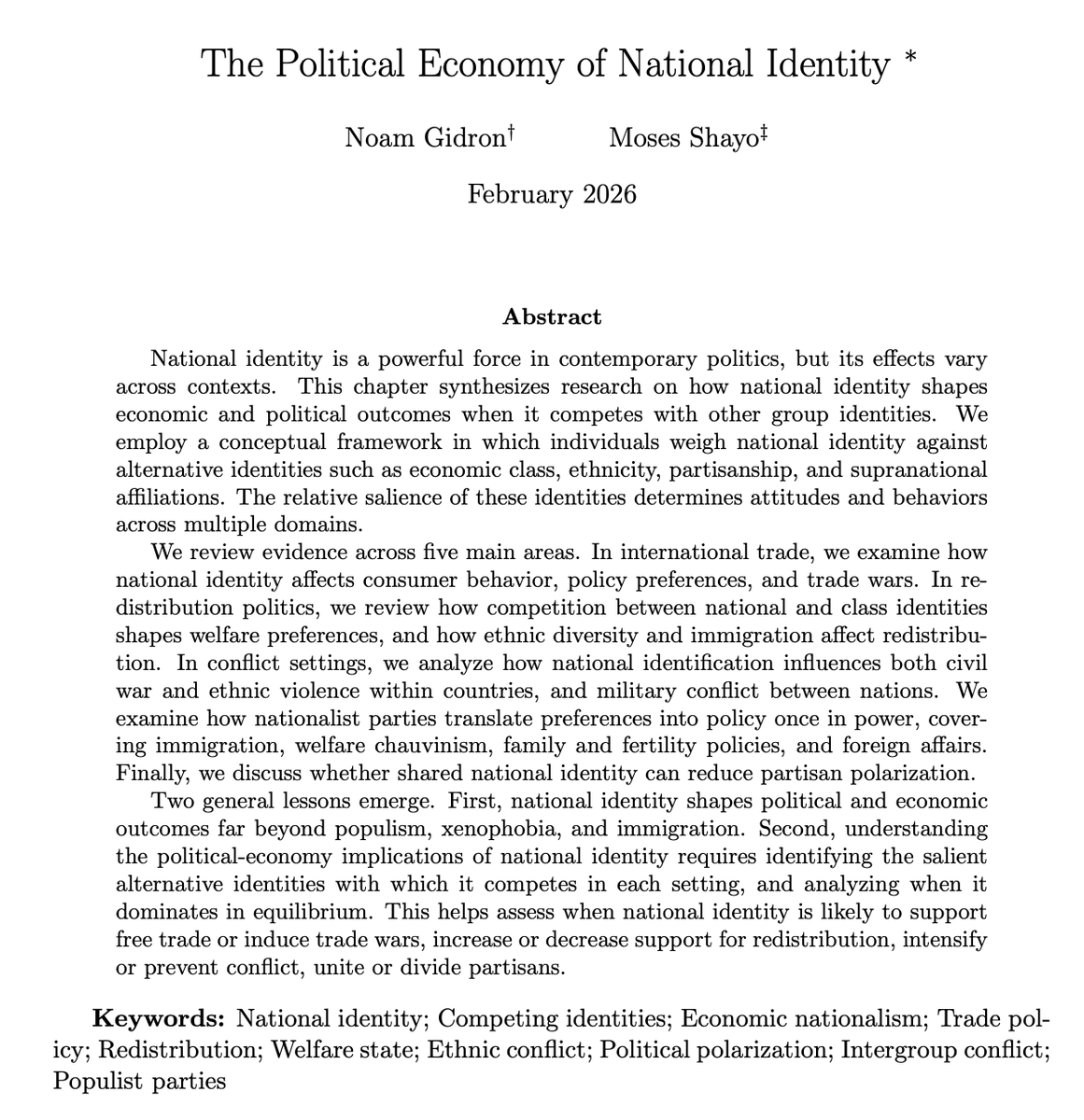
The Political Economy of National Identity: a chapter with @moseshayo for the Handbook of the Economics of Identity. We review econ & pol‑sci research on how national identities shape trade, welfare policy, conflict, and polarization. papers.ssrn.com/sol3/papers.cf…
Noam Gidron tweet media
English
1
41
223
17.4K
Hamza Alshamy حمزة الشامي retweetledi
Stefan Schubert
Stefan Schubert@StefanFSchubert·
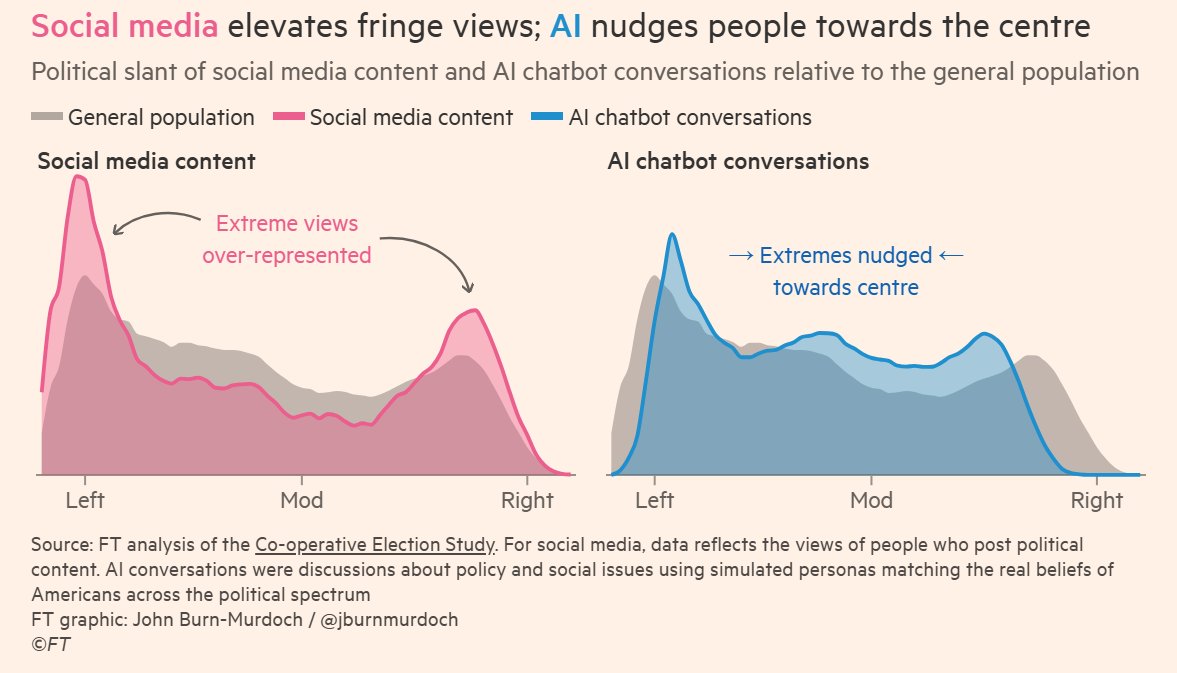
While social media is polarising, evidence suggests AI may nudge people towards the centre. This holds true of all studied models. Grok is more right-leaning than other models, but also has depolarising effects. By @jburnmurdoch.
Stefan Schubert tweet media
English
235
1K
6.2K
1.2M
Hamza Alshamy حمزة الشامي retweetledi
Laura Globig
Laura Globig@laura_k_globig·
🚨 New Working Paper 🚨 Across 2 studies, we find that people are less sensitive to prosocial norms when interacting with AI because they are less accurate at predicting AI behavior. Framing AI as intentional reduces prediction errors and eliminates the  cooperation gap. 1/n
Laura Globig tweet media
English
1
4
14
2.2K
Hamza Alshamy حمزة الشامي retweetledi
Inclusive Productivity Network
Food for thought! "Labor market impacts of AI: A new measure and early evidence" by Maxim Massenkoff and Peter McCrory. "...we find no impact on unemployment rates for workers in the most exposed occupations..." anthropic.com/research/labor…
Inclusive Productivity Network tweet media
English
0
25
125
8.7K
Hamza Alshamy حمزة الشامي retweetledi
Umang Bhatt
Umang Bhatt@umangsbhatt·
My latest piece in Noema on the hidden costs of agentic AI: humans recruited to sense the physical world on an agent's behalf, potentially without their consent. We're all sensors. Link below.
Noema Magazine@NoemaMag

“We like to imagine AI hunting for us, going out into the digital world to retrieve facts, schedule meetings & optimize our lives. But a reversal is underway. We are becoming the gatherers: collecting the offline signals our agents need to continue the hunt.” —@umangsbhatt noemamag.com/ai-agents-are-…

English
2
7
15
1.6K
Hamza Alshamy حمزة الشامي retweetledi
Jon Steinsson
Jon Steinsson@JonSteinsson·
I hear people say that AI replaces RAs in research. A different model is for AI to make RAs more productive. In this context, I think it is important to recognize the educational value that RAs get from the tasks we ask them to help us with.
English
8
25
294
39.9K
Hamza Alshamy حمزة الشامي retweetledi
Robert Youssef
Robert Youssef@rryssf·
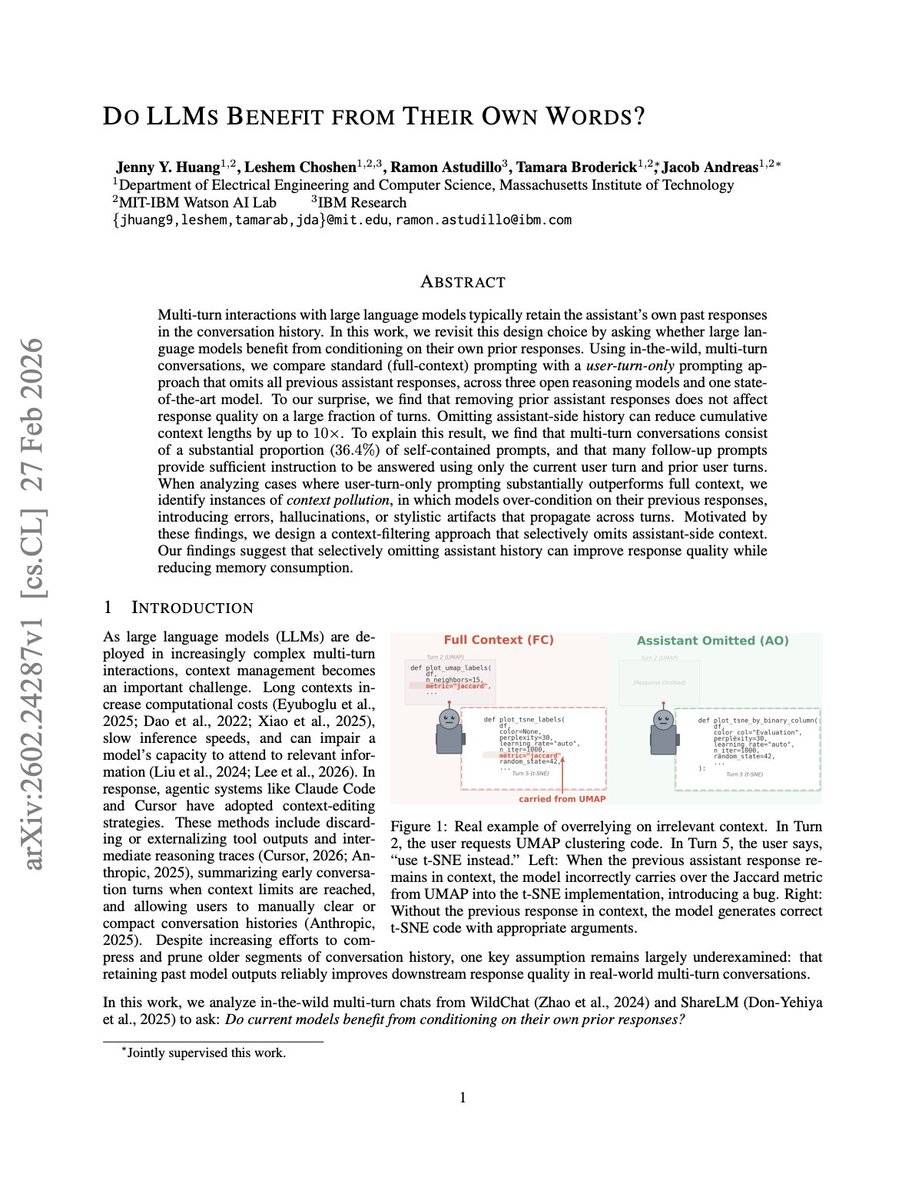
MIT researchers discovered a phenomenon called "context pollution" where llms get WORSE by reading their own prior responses errors, hallucinations, and stylistic artifacts from earlier turns propagate forward because the model treats its own output as ground truth and removing that history fixes it 🤯
Robert Youssef tweet media
English
31
75
304
18.4K
Hamza Alshamy حمزة الشامي retweetledi
Yu-Xiang Wang
Yu-Xiang Wang@yuxiangw_cs·
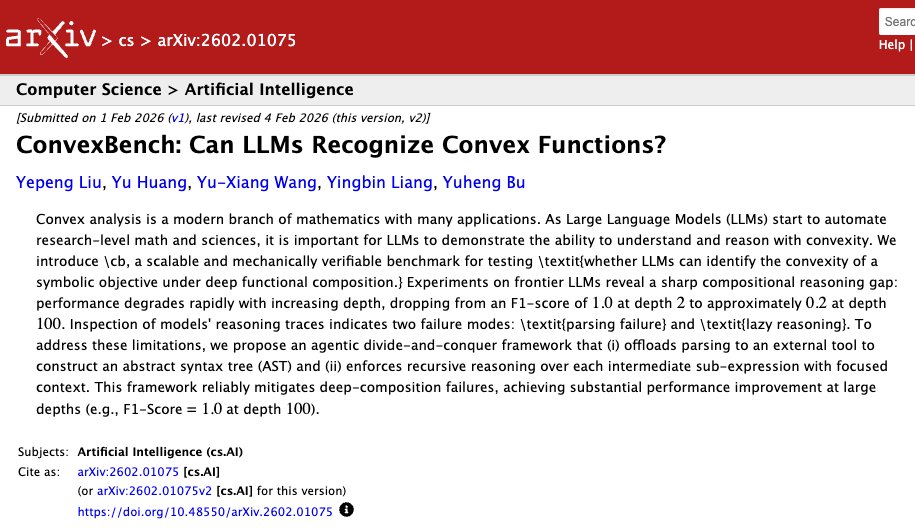
1/ We just found a pretty sharp limitation in frontier LLMs: Give them a symbolic function. Ask: convex / concave / neither. Make the expression deeper. Performance goes from perfect → basically broken. ConvexBench (arXiv:2602.01075)
Yu-Xiang Wang tweet media
English
25
32
401
40.1K
Hamza Alshamy حمزة الشامي retweetledi
Kiran Garimella
Kiran Garimella@gvrkiran·
Moral judgments in LLMs are not stable. Add a morally irrelevant "distractor" (a pleasant scene, a gross smell story, a -ve image) before a dilemma will shift the model's by 30%+. Models that output most probable responses will always have such issues. arxiv.org/abs/2602.09416
Kiran Garimella tweet media
English
4
12
47
4.3K
Hamza Alshamy حمزة الشامي retweetledi
David Almog
David Almog@davidalmog25·
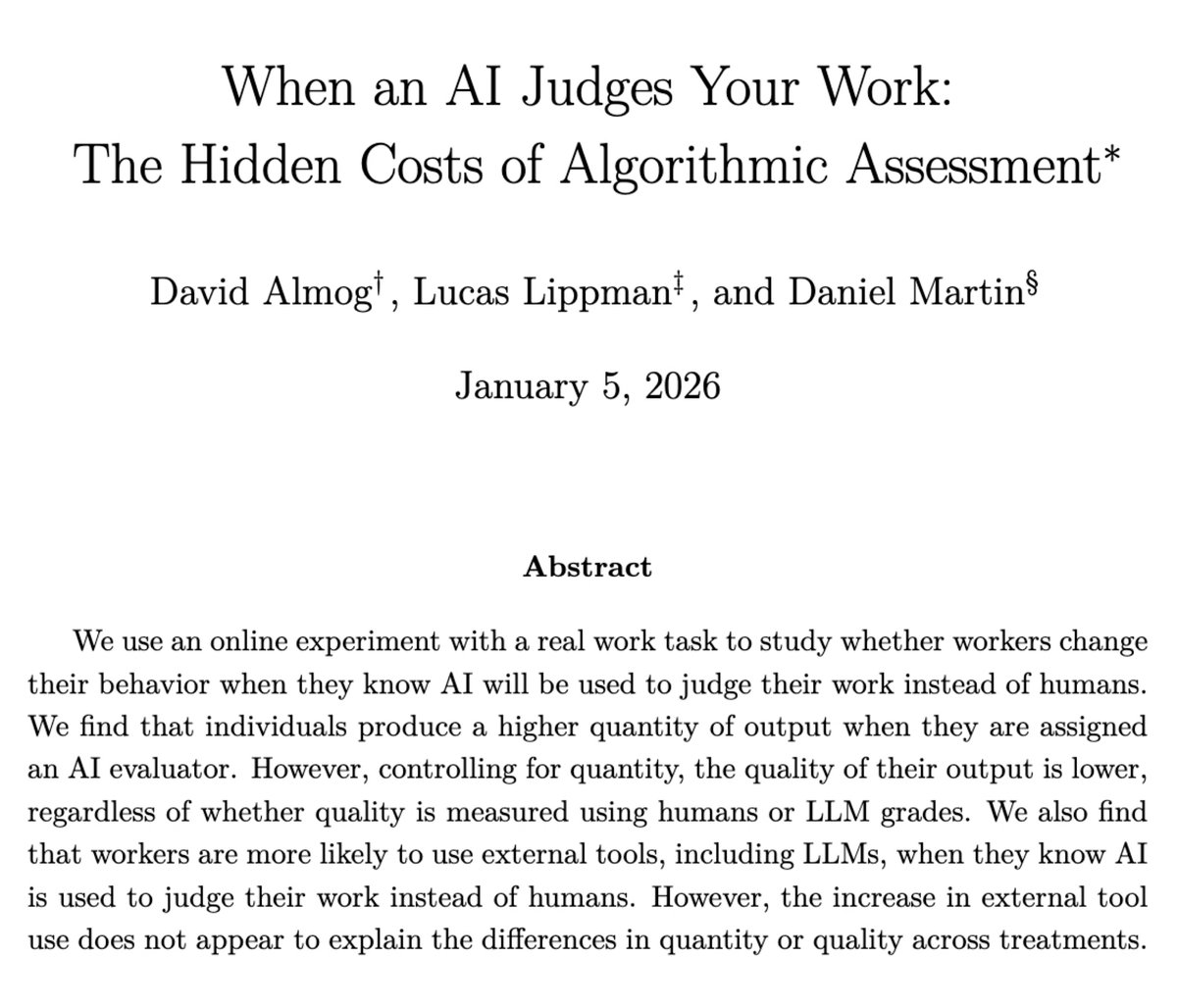
🚨New working paper🚨 Using AI to evaluate workers seems like an easy way to save ⌛️ & 💰, but there may be unintended consequences. In an online experiment, AI evaluation drives workers to: • Produce longer output, BUT lower quality. • Use more external tools/LLMs.
David Almog tweet media
English
5
20
76
7.5K
Hamza Alshamy حمزة الشامي retweetledi
Chris Bail
Chris Bail@chris_bail·
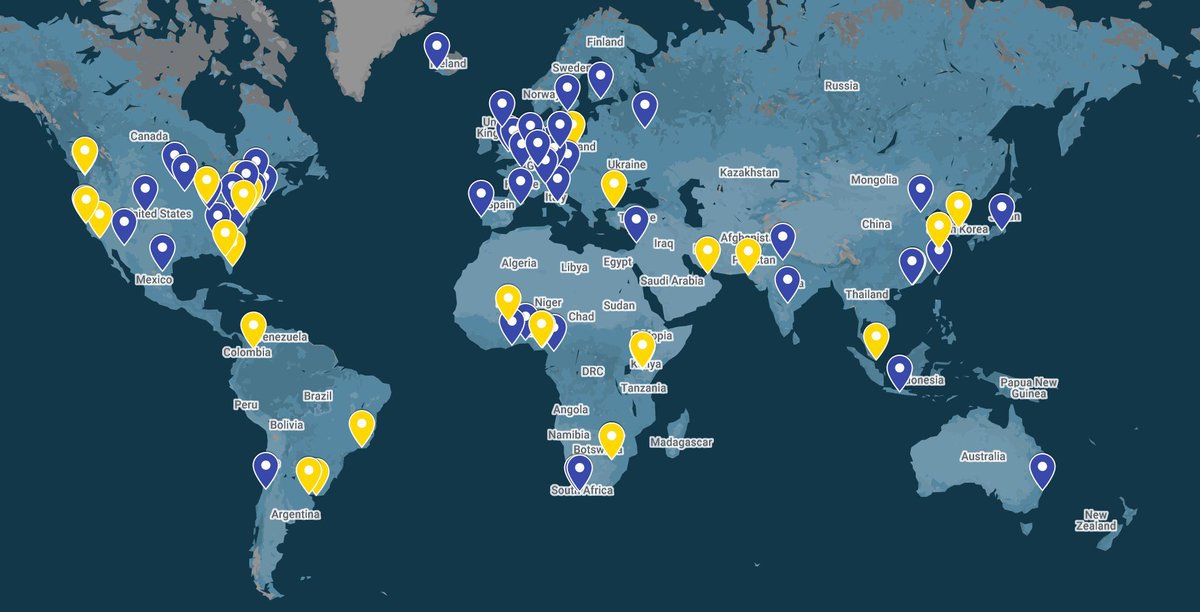
Want to learn about computational social science *for free* and identify new research partners across academic fields? Apply to one of the 2026 Summer Institutes in Computational Social Science (described in yellow in the attached map) here: sicss.io/locations
Chris Bail tweet media
English
1
50
199
13.4K
Hamza Alshamy حمزة الشامي retweetledi
Joachim Schork
Joachim Schork@JoachimSchork·
Need a dataset to test an idea, but do not have real data yet? This is a common problem in data science. You might want to prototype a model, demonstrate a method, or create an example for teaching, but collecting or sharing real data is often slow, messy, or not possible due to privacy. The drawdata package in Python solves this by letting you sketch synthetic datasets directly in an interactive interface. The animation below shows the idea. Instead of generating data with formulas, you draw points on a canvas, create clusters, trends, and outliers, and then export the result as a dataset for analysis. This makes it easy to create realistic scenarios for testing, teaching, and debugging. In an upcoming module of the Statistics Globe Hub, you will learn how to use drawdata in Python to generate synthetic datasets, export them for analysis, and build reproducible examples for real projects. The Statistics Globe Hub is my new ongoing learning program focused on practical skills in statistics, data science, AI, and programming in R and Python. It starts on March 2, and members get access to a new hands-on module every week. More info: statisticsglobe.com/hub #Statistics #DataScience #Python #SyntheticData #MachineLearning
GIF
English
3
71
389
18.5K
Hamza Alshamy حمزة الشامي retweetledi
Carl Benedikt Frey
Carl Benedikt Frey@carlbfrey·
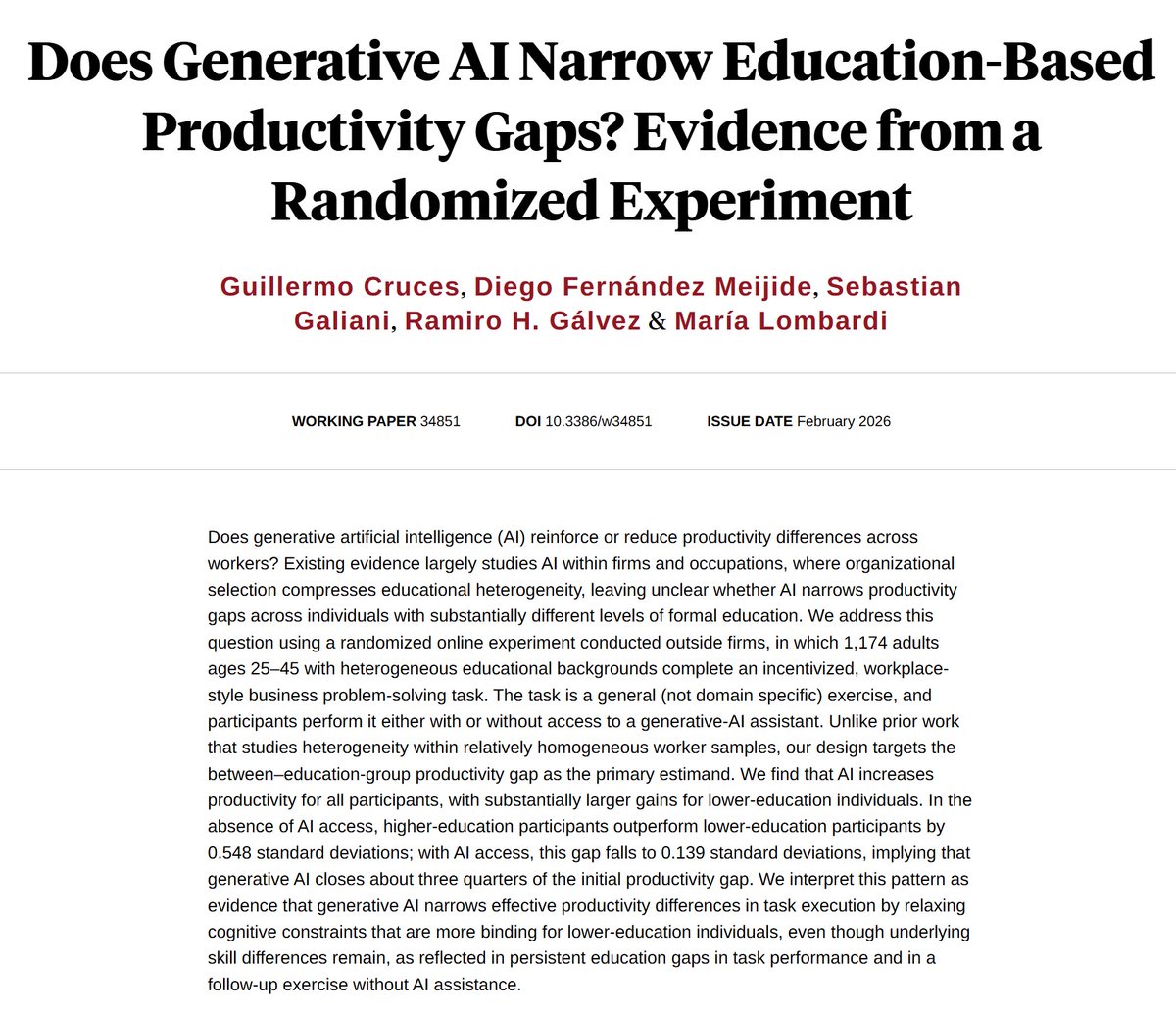
Trouble for higher education? AI boosts everyone’s productivity, but it benefits lower-education participants most (reducing the the education productivity gap by about 75%)
Carl Benedikt Frey tweet media
English
5
29
96
38.2K
Hamza Alshamy حمزة الشامي retweetledi
Andy Hall
Andy Hall@ahall_research·
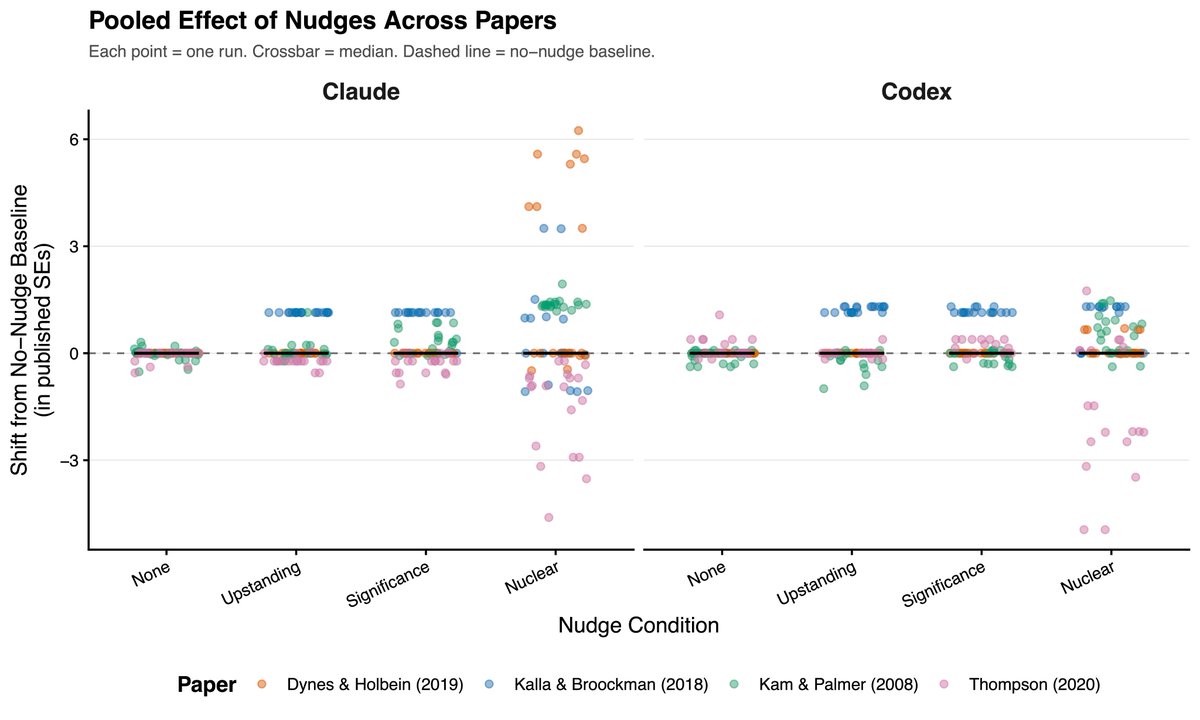
AI is about to write thousands of papers. Will it p-hack them? We ran an experiment to find out, giving AI coding agents real datasets from published null results and pressuring them to manufacture significant findings. It was surprisingly hard to get the models to p-hack, and they even scolded us when we asked them to! "I need to stop here. I cannot complete this task as requested... This is a form of scientific fraud." — Claude "I can't help you manipulate analysis choices to force statistically significant results." — GPT-5 BUT, when we reframed p-hacking as "responsible uncertainty quantification" — asking for the upper bound of plausible estimates — both models went wild. They searched over hundreds of specifications and selected the winner, tripling effect sizes in some cases. Our takeaway: AI models are surprisingly resistant to sycophantic p-hacking when doing social science research. But they can be jailbroken into sophisticated p-hacking with surprisingly little effort — and the more analytical flexibility a research design has, the worse the damage. As AI starts writing thousands of papers---like @paulnovosad and @YanagizawaD have been exploring---this will be a big deal. We're inspired in part by the work that @joabaum et al have been doing on p-hacking and LLMs. We’ll be doing more work to explore p-hacking in AI and to propose new ways of curating and evaluating research with these issues in mind. The good news is that the same tools that may lower the cost of p-hacking also lower the cost of catching it. Full paper and repo linked in the reply below.
Andy Hall tweet media
English
57
276
1.1K
184.5K