

Alan Pearlstein
9.4K posts
@couchandtherube @groovy_donuts @FireKeepers Now that the Lions have drafted another two Wolverines, will we have to contend with a Honolulu Blue Wall?
English

🚨🎙️❓We’re back. We’ll answer your questions, presented by @Groovy_Donuts, during our Friday show, presented by @FireKeepers Casino and iCasino and Sportsbook.
Have one?
Reply here by 9 a.m. Friday or #CouchandTheRube
English

so basically even a far-left group that exists to criticize Israel is being banned at a college for being...Jewish...Hey, Jeremy Ben-Ami, it appears you are not going to be spared the camps despite your Tokyo Rose-ry.
x.com/AMCHAInitiativ…
The AMCHA Initiative@AMCHAInitiative
At Sarah Lawrence College, the Student Senate rejected the application of J Street U, with student senators comparing recognizing the group to approving “a white supremacist organization.” According to JTA, one senator remarked that they were concerned about “the whole Zionist language” of the group “that’s still furthering the same logic of Israeli sovereignty and self-determination when there is no existence or security for Israel that’s not contingent on Palestinian displacement, on apartheid, on genocide.” Senators told J Street U, "What the students here are invested in is Palestinian liberation. And there’s no existence or advocation for Israeli or Zionist security that can co-exist with Palestinian liberation. The normalization of Zionism and of Israel is what students are opposed to.” The senators further asked whether J Street U “would fulfill a unique political/cultural space on campus that doesn’t already exist across different clubs [referring to the anti-Zionist Jewish Voice for Peace, Hillel, and the campus chapter of Students for Justice in Palestine]." When J Street U appealed the decision, the senate rejected the appeal as well. At the March appeal meeting, a faculty member who wanted to attend was told that at the last minute, the senate decided only two people would be permitted at the appeal, and they would only be granted 10 minutes to make their case. The administration, despite being lobbied by a faculty petition signed by more than 20 faculty members, has refused to intervene, with the school’s dean of students, Dave Stanfield, telling the JTA that Sarah Lawrence’s administration “does not intervene in the process unless there is a clear violation of policy.” Read more: jta.org/2026/05/13/uni…
English
I told my Jewish dog to rape someone but she just turned upside down and demanded a belly rub.
English
@wil_da_beast630 It's fun to stay in the G-aza
They have everything for young men to enjoy
You can hang out with all the boys
It's fun to stay in the G-aza
English

The Arab world is deeply weird, if you've ever been there.
Everyone clubs, they're pretty good dancers...but it's all men. Look at this image.
GAZAWOOD - the PALLYWOOD saga@GAZAWOOD1
Thousands of videos from Gaza in the last few days depict parties, nightlife, and normal life - way beyond just marathons, football, and restaurants. The mainstream media is utterly broken.
English
@jpodhoretz We’re in the middle of a double pandemic and I didn’t even know it!
English
This is already charting very high on the lists of the most embarrassing tweets in history and it's only been up for three days.
Neal Katyal@neal_katyal
Five months ago, I argued against the President's $4 trillion tariffs at the Supreme Court. In 237 years, the Court had never struck down a sitting President's signature initiative. Legal scholars said it was impossible. Some of my own colleagues said it was impossible. We won. 6-3. But the real story isn't what happened in that courtroom. It's what happened in the months before. And its the subject of my TED talk, coming out tomorrow. I had the best legal team in the nation, especially Colleen Roh Sinzdak, the most outstanding legal strategist I know. Huge thanks, too, go to the Liberty Justice Center (and in particular its fearless and hyper-intelligent leader Sara Albrecht), who organized the client small businesses, as well as to the brave small businesses themselves. I also had four teachers preparing me. A mindset coach who'd worked with Andre Agassi. An improv coach who taught me that "Yes, and" works in Supreme Court arguments the same way it works everywhere else. A meditation coach who taught me stillness. And Harvey. Harvey predicted many of the questions the Justices asked — sometimes almost word for word. Brilliant. Tireless. Occasionally insufferable. Here's the catch: Harvey isn't a person. Harvey is a bespoke AI I built over the last year with a legal AI company, trained on every question every Justice has asked in oral argument for 25 years, and everything they've ever written. Tomorrow, TED releases my talk about what really happened — and what I learned standing at that podium. AI can predict. AI can analyze. What AI cannot do is the one thing that actually won the argument. Connect. Read the room. Hear not just a Justice's words, but her worry — and answer the worry. That is the irreducibly human skill. Find yours. Go deeper. In this age of AI, that's where your edge lives. The talk goes live Thursday, May 7 at 11am ET: go.ted.com/nealkumarkatyal What's the irreducibly human skill in your work — the thing AI can't touch?
English

I had my doubts, but after watching the trailer Bardem really does seem perfect for a Cape Fear reboot.
English
English
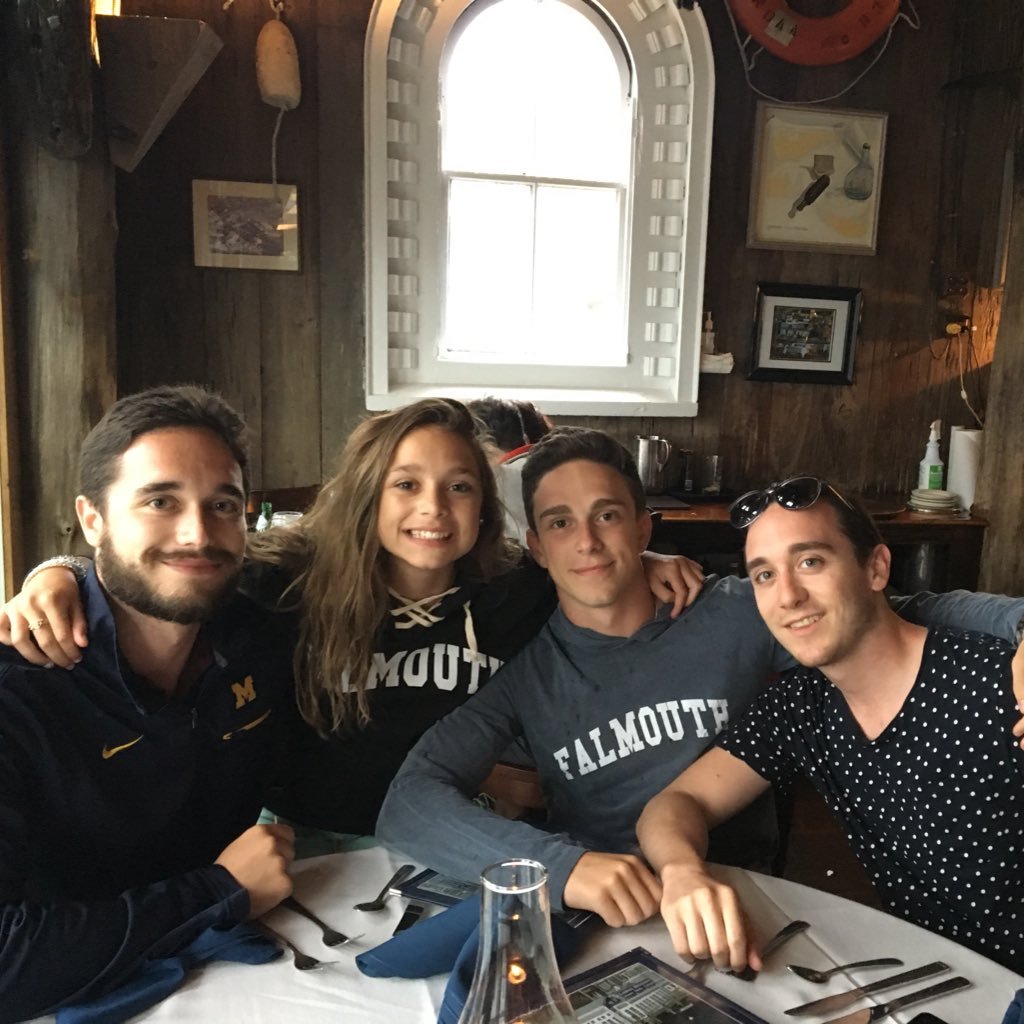
Cunningham (32)-Harris (30)-Duren (15 & 15) lead the @DetroitPistons to one of the grittiest come backs in team history. 14th team ever to come from 3-1 down and win a series. They proved a lot of people wrong. I love Cunningham's humility and leadership more than his game.
English
@wil_da_beast630 Even more hilarious is the rhetoric used by Democrats defending and endorsing him. The Democratic message here seems to be, “Don’t believe your lyin’ eyes”.
English
The only actual Nazi in high level US politics is an anti-Israel Democrat - because of course.
Bro literally has Fenris Wolf tatted on his chest, and its all just objectively hilarious.
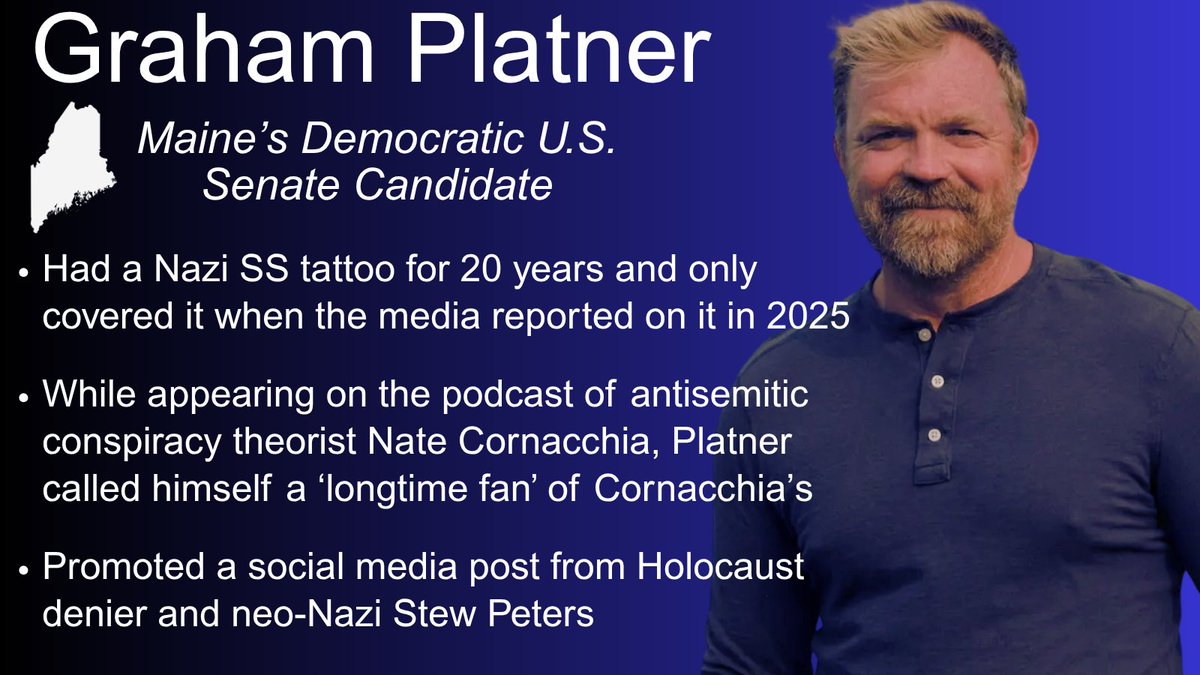
English
@PatriotPostGirl Numbers don’t lie. 45th for education is an absolute disgrace.
English
My favorite Lion ever.
The REF@KREFsports
46 years ago today: Billy Sims was drafted No. 1 overall by the Detroit Lions. The 1980 NFL Draft was the first to be televised, meaning Sims was the first player to ever be drafted on live television. This run in 1983 was voted the No. 98 play in the NFL 100 Greatest Plays on NFL Network. @RealBillySims
English
@Graham_Couch This reminds me of the auto industry in the ‘70s. That’s when bean counters started calling all the shots instead of car guys. This expansion smells of bean counters.
English

A depressing, but good read, crystallizing that expanding the NCAA tournament - and devaluing the regular season - is indefensible. And I’m yet to see one decent defense of it.
If you’re for it, raise your hand and put your name on it. If you’re too ashamed, that’s telling.
Brendan Marks@BrendanRMarks
NEW @TheAthleticCBB: Here’s what a 76-team March Madness field looks like — and why it should worry you: nytimes.com/athletic/72392…
English

@Sheehan_Sports @TheRealSharty Yeah, but besides that stuff, things look pretty optimistic.
English
My college football team missed a bowl
for a 4th straight year
My NFL team went 9-8 and missed the playoffs
My college hoops team just saw its rival win it all
My NHL team missed the playoffs for a 10th straight year
My NBA team is getting bounced by an 8-seed
My MLB team…
Benson@Miggysbat
Not even May 1st and we’re already missing: - Reese Olson - Troy Melton - Jackson Jobe - Justin Verlander - Casey Mize - Parker Meadows - Zach McKinstry - Javy Báez ..and more that I’m sure I’m forgetting. Damn.
English
@jpodhoretz This is what I’ve waited for: Explaining everything through the prism of of the sitcoms I watched as a child. Farm prices and the rural economy? - Green Acres. Urban issues? - Good Times. The struggles of a single parent? - Julia and The Courtship of Eddie’s Father.
English
@couchandtherube @goMuskOx Steve Yzerman has been the Red Wings’ GM for seven. In that time, they’ve never made the playoffs. After this seventh failed season, Yzerman said that they need to get “better players”. That’s what he said he was going to do seven years ago. It’s time for Yzerman to go.
English
🚨🎙️⏰ We’ll begin our Monday show, presented by @goMuskOx quality flannels, with our takes.
We want your best take, too - and maybe a bonus or baked take - on MSU basketball or football, the portal, the Pistons, the Lions’ NFL draft, anything.
Reply by 10 a.m. Monday.
English
@DavidM_Friedman A Jewish Democrat trying to thread the needle. It is, by every metric, a shonda.
English

Pennsylvania Jewish governor wrongly points fingers at Trump and Netanyahu jns.org/opinion/pennsy…
English