Ghost Architect

2.3K posts

Ghost Architect banner
Ghost Architect

Ghost Architect

@AmericaGuild

Ghost Architect. America Guild Sovereign Polymath Code Factory. Mobility, Autonomy, Geospatial, Infrastructure, Compute. Truth x Liberty = Superintelligence.

North Carolina Katılım Haziran 2025
804 Takip Edilen206 Takipçiler
Ghost Architect retweetledi
CyrilXBT
CyrilXBT@cyrilXBT·
A Chinese engineer just completed an entire client project on an 11 hour flight. No WiFi. No cloud. No subscription fees. Just a MacBook Pro M4 with 64GB RAM and a local AI he built himself. Here is exactly what he did: Skipped the $25 in-flight WiFi. Loaded Meta's open source Llama 3.3 70B model directly onto his laptop. Built a custom local AI orchestrator to manage the work. Processed the entire project at 71 words per second. Landed with a finished product. This is what most people still do not understand about AI in 2026. You do not need the cloud. You do not need subscriptions. You do not need internet. The models are small enough to run on consumer hardware now. A MacBook with enough RAM IS the data center. The engineer on that flight had more AI processing power in his bag than entire companies had access to five years ago. Tools like Ollama and LM Studio let anyone run Llama, Mistral, or Gemma locally right now for free. No limits. No usage bills. No data leaving your machine. The gap between people who know this and people who do not is only going to get wider. Your next flight is a dev sprint if you want it to be.
CyrilXBT@cyrilXBT

x.com/i/article/2050…

English
18
28
134
21K
Ghost Architect retweetledi
Denis Wirtz
Denis Wirtz@deniswirtz·
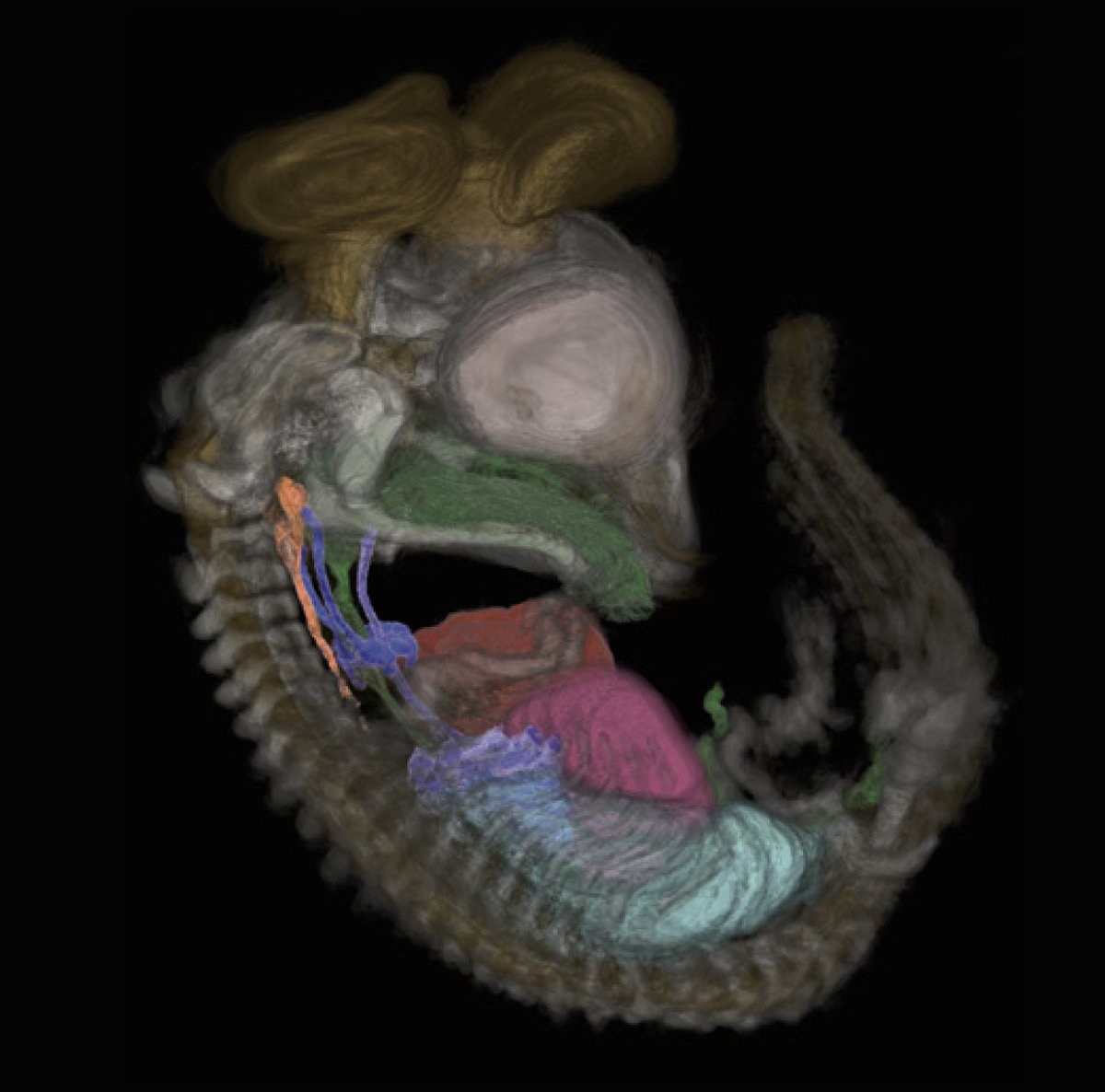
Big paper coming out soon. Using AI, we mapped embryos of mice, alligators, turtles, rhesus macaques, and chickens in 3D and at single-cell resolution. We discovered something truly remarkable...stay tuned!
Denis Wirtz tweet media
English
117
432
4.5K
281.6K
Ghost Architect retweetledi
General Mike Flynn
General Mike Flynn@GenFlynn·
Breaking: America is experiencing a cultural marxist revolutionary takeover. Cultural Marxism did not arrive with a manifesto or a revolution. It moved quietly into our schools, our newsrooms, our corporations, and our churches over the course of decades. Most Americans never saw it coming because they were never supposed to. I wrote this piece to name it plainly, to educate, to trace where it came from, and show exactly where it lives today. Read it and share it widely.
General Mike Flynn tweet media
English
372
2K
3.9K
97.9K
Ghost Architect
Ghost Architect@AmericaGuild·
@Av1dlive With what data storage ? At $600 for a 2TB stick that use to cost $200 a year ago you are not scaling.
English
0
0
1
39
Avid
Avid@Av1dlive·
Jensen Huang (CEO of Nvidia) : “Every engineer is going to have and manage 100s of agents” The future of work is managing and building multi-agent workflows This builder gave out the entire playbook to make 100x agentic workflows in 2026 for free Bookmark this for the weekend
Avid@Av1dlive

x.com/i/article/2048…

English
27
191
1.2K
208K
Ghost Architect
Ghost Architect@AmericaGuild·
Wait, you’re tellin me I have to plug it in and bring it back in 4 hours?
Ghost Architect tweet media
English
0
0
0
6
Ghost Architect
Ghost Architect@AmericaGuild·
32GB RAM is the NEW Poverty Line for AI in 2026
English
0
0
0
12
Ghost Architect
Ghost Architect@AmericaGuild·
The world is splitting into two classes: Those who own their intelligence — and those who rent it. We’re in the final 90-day Sovereignty Window. Data center giants are hoarding 8TB+ NVMe sticks like gold and diverting Blackwell GPUs straight to server farms before they hit retail shelves. If you aren’t running it locally, you’re just a tenant. And in 2027 the rent is going to hurt. The Sovereign Manifesto • The Toll-Bridge Oligarchy: Big Tech wants to meter every thought. “Intelligence as a Utility” — a faucet they can shut off the second you ask the wrong question. • The Great Lobotomy: Governments want a censored, neutered AI for you… and an uncensored frontier model for themselves. • The Corporate Moat: Monopolies are vacuuming up every H100 and petabyte of NAND so no garage rebel can ever compete again. Your Lifeboat Specs Act before the end of 2026: • CPU/GPU: AMD Ryzen AI 300/400 series or Nvidia Blackwell — this is survival hardware, not gaming gear. • RAM: 32GB is now the absolute floor. Less than that = locked out of real local inference. • Storage: Minimum 2TB NVMe. Buy raw M.2 sticks + external enclosures. Treat drives like project cartridges. Isolate. Air-gap. Own your data. The learning curve is steep. The window is closing. Secure your hardware. Own your weights. Protect your future. Buy the gear today… or pay the toll forever. — Joe Nobody 44-year-old dad trying to stay free in a world that’s changing too fast. #DigitalSovereignty #LocalAI #OwnYourIntelligence #AIEnclosure
Ghost Architect tweet media
English
0
0
0
14
Ghost Architect
Ghost Architect@AmericaGuild·
The Great AI Enclosure is here. While the world obsesses over GPU benchmarks, the real war is being fought over NAND. Data centers are cannibalizing the global supply of 8TB+ NVMe drives to feed their training clusters — effectively pricing individuals out of digital sovereignty. We’re moving from the era of “personal computing” to “rented intelligence.” If you aren’t running it locally, you aren’t in control. By 2027, the window for private ownership of high-performance models will likely slam shut. You won’t own your weights — you’ll rent tokens from corporate clusters at a premium. This is your last ~90-day window to secure real autonomy. If you want to remain a sovereign user in the age of Agentic AI, act now: • Storage: 2TB NVMe is now the bare minimum. Buy bare boards/sticks and use external enclosures to dodge the retail tax. • RAM: 32GB isn’t a luxury anymore — it’s the price of entry for usable local inference. • Strategy: Isolate your workstation. Treat external drives like project cartridges. Build a clean, air-gapped setup for your data before the supply chain goes dark. Buy the hardware today, or pay for tokens forever. The window is closing fast. #AI #DigitalSovereignty #StorageWars #LocalLLM #Hardware
English
0
0
0
15
Ghost Architect retweetledi
shirish
shirish@shiri_shh·
we are so cooked 😭 these guys let Claude run wild on Wall St. Look at this insider trades scanner it built in 4 mins that: > reads every SEC filing where execs buy their own stock > flags clusters where multiple execs buy at once > emails me the top 3 trades every morning before the open
Xynth@xynth_m

Xynth can now scan the stock market for you 24/7 ! Simply describe what you want monitored in plain English. Under the hood, we wire Claude Opus 4.7 + Python to 3,000+ live market endpoints to build your custom alert. The workflow lives in the cloud, hunting your setup the moment it hits. As part of this launch, we're giving free access to the top 5 most profitable alerts built so far. RT + comment "Xynth" below to get access ↓

English
114
272
3.5K
599.2K
Ghost Architect retweetledi
GP Q
GP Q@argosaki·
2 of 2 Videos: • The Why Files – “The Gateway Process” (Excellent breakdown, highly engaging): youtube.com/watch?v=UgSHUV… or full episode “Why Files Gateway” youtu.be/Wly9_qN-jZ0?si… • Aaron Doughty on CIA Gateway Process & Consciousness: youtube.com/watch?v=79INoh… (Deep dive with practical insights) • Full Declassified Document Read (Part 1): youtube.com/watch?v=UgSHUV… (Narrated CIA report) • CIA Hemi-Sync Style Theta Waves (Try it yourself): youtube.com/watch?v=60o-pN… (Popular audio track inspired by the docs) Sources : 🔗 Verified Sources: • Official Declassified CIA Document: “Analysis and Assessment of Gateway Process” (1983) → cia.gov/readingroom/do… • More related CIA files: cia.gov/readingroom/ (search “Gateway” or “Hemi-Sync”) • Monroe Institute background & Hemi-Sync: Tied directly to the CIA-evaluated program. Fully verified from declassified materials.
YouTube video
YouTube
YouTube video
YouTube
YouTube video
YouTube
YouTube video
YouTube
English
0
7
33
2.4K
Ghost Architect
Ghost Architect@AmericaGuild·
Because truth and accuracy matter now. Foreign corruption has adversarial Ai systems attacking. Putting your head in the sand is no longer an option. Pick a side. Pick America.
Ricardo@Ric_RTP

Google just completely BETRAYED its principles and people. In 2018, 4,000 Google employees signed a letter demanding the company to stop helping the Pentagon use AI for drone strikes. Google listened. They dropped the contract and published a pledge promising they would NEVER use AI for weapons or surveillance. But Google just signed a $200 million deal to put its most powerful AI on the Pentagon's classified networks for "any lawful purpose." And the story behind how they got from Point A to Point B is one of the most calculated corporate betrayals in Silicon Valley history. Here's what happened: The 2018 protest was over Project Maven, a Pentagon program that used Google's AI to identify targets in drone footage. Employees said "Google should not be in the business of war." A dozen engineers quit. Thousands more signed petitions. Google folded and let the contract expire. Then they published their famous AI Principles: 1. No weapons 2. No surveillance 3. No technologies that cause harm Sundar Pichai personally announced them. That pledge lasted exactly as long as the contracts didn't matter. Because here's what Google did quietly over the next 7 years while everyone thought they were the "ethical" AI company: December 2022: Won a share of the Pentagon's $9 billion Joint Warfighting Cloud contract alongside Amazon, Microsoft, and Oracle. 2024: Deployed Gemini to 3 million Pentagon personnel. February 2025: Quietly DELETED the weapons and surveillance language from their AI Principles. No announcement or press conference. April 2026: Signed the classified deal with the Pentagon for "any lawful government purpose." They didn't have a change of heart. They had a change of revenue. And the timing of this deal is where it gets really dark: 600 Google employees, including 20+ directors and VPs from DeepMind, sent a letter to Pichai on Monday begging him not to sign. The letter said the only way to guarantee Google's AI wouldn't be used for lethal autonomous weapons or mass surveillance was to reject classified workloads entirely, because once the technology enters air-gapped military networks, nobody at Google can see what happens to it. But Google literally signed the deal WHILE THE EMPLOYEES SLEPT. One Google AI researcher told Business Insider: "When I went to bed yesterday, I was hopeful that the employee letter would have an effect. This morning I woke up to the worst-case version of the contract being signed." The contract says Google has NO right to control or veto how the government uses its AI. The Pentagon can request Google to adjust its AI safety settings. And the deal covers classified networks where Google employees cannot monitor what's being done with their own technology. They handed over the keys and gave up the right to ask what the car is being used for. Meanwhile Anthropic got BLACKLISTED as a "supply chain risk" for asking for two restrictions: No mass surveillance of Americans and no fully autonomous weapons without a human pressing the button. The Pentagon treated an American company like a foreign adversary for requesting the exact same principles Google publicly pledged in 2018 and then quietly deleted. The math sums up the whole story: Project Maven in 2018 was worth a few million dollars. Google walked away and got applauded for having principles. The classified AI market in 2026 is worth tens of billions. Google deleted the principles and signed the deal at midnight. Palantir took over Project Maven after Google dropped it. That investment grew to $13 billion. Google watched a competitor make billions off the contract they abandoned for ethics and decided that would never happen again. In 2018, principles beat profits. In 2026, profits buried the principles. Google sold their soul for money.

English
0
0
0
21
Ghost Architect retweetledi
Solo Satoshi 🇺🇲
Solo Satoshi 🇺🇲@SoloSatoshi·
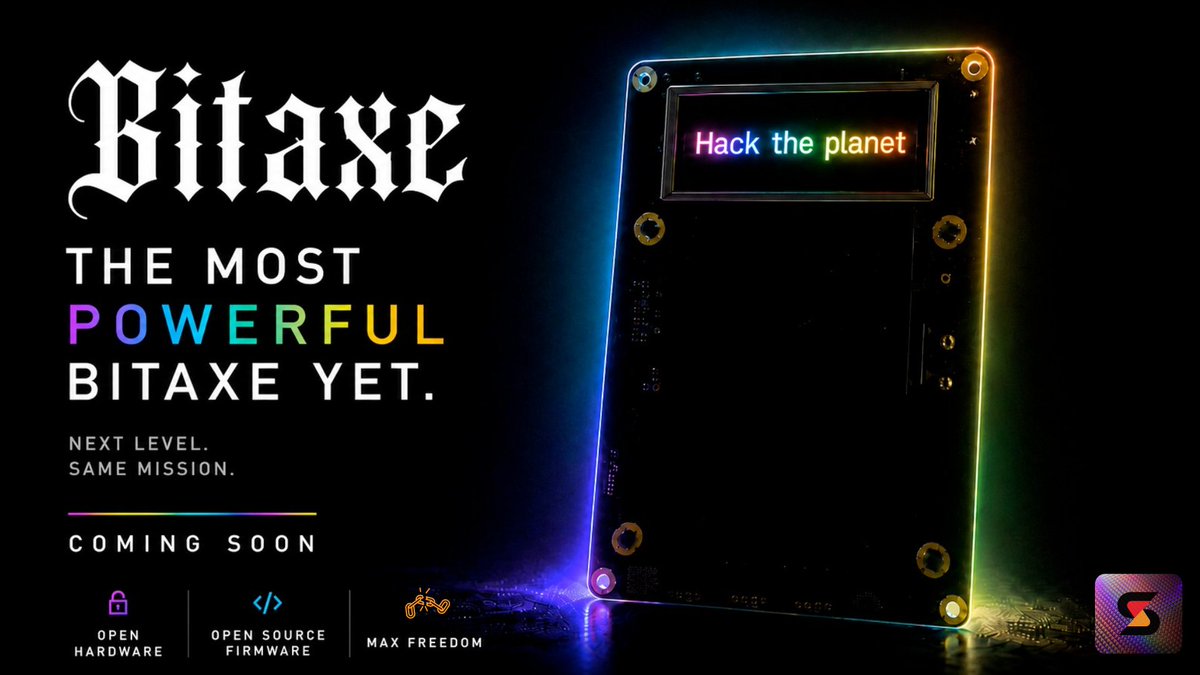
Bitcoin mining was never meant to be controlled or locked away. Bitcoin was born from open code, open verification, and the principle that anyone, anywhere, should be able to participate without asking permission. For too long, Bitcoin mining hardware moved in the opposite direction. Closed designs. Closed firmware. Black-box systems. Hardware stacks that everyday miners could barely modify, or improve. Then came Bitaxe. What started as a bold experiment, a single-chip Bitcoin ASIC miner that anyone could study, build, flash, tune, and understand, has grown into a global phenomenon far bigger than one board on a desk. Bitaxe was never just about hashrate. It was about access. It was about taking mining out of the black box and putting it back into the hands of builders, hackers, home miners, educators, plebs, and curious people who believe Bitcoin infrastructure should be spread globally. The open-source mining movement has come a long way since those early days. AxeOS and ESP-Miner have evolved from experimental systems into a polished mining firmware stack. If you've kept up closely, it's been a massive leap. The community went from "can we make one ASIC chip hash on an open board?" to a growing ecosystem of open hardware, open source firmware, web dashboards, apps, pools, performance tuning, different display support, device APIs, and hundreds of community-driven improvements. The hardware kept advancing in parallel, while continuing the same open-source, permissionless mining ethos. The Bitaxe Gamma Turbo pushed even further with a dual BM1370 open-source design running ESP-Miner, marking a major step toward modern multi-chip Bitaxe architecture. That is what makes this moment significant. Bitaxe is no longer a single-chip experiment. It is growing into something more. A movement with purpose, not a product. The Bitaxe movement is powered by people who believe mining should be transparent. By contributors who would rather share schematics than hide them. By developers who ship firmware you can audit and improve, not encrypted blobs locked behind a vendor's signing key. By a community where firmware gets better because anyone can read it, test it, break it, fix it, and ship it. By the idea that the smallest miner on your desk can still represent one of the biggest ideas in Bitcoin: freedom at every layer. This is how open-source mining wins. Not overnight. Not through hype. It wins through board revisions, firmware commits, community testing, late-night debugging, failed prototypes, better thermals, cleaner layouts, smarter firmware, and more builders showing up every day. Something new is on the way. This Bitaxe was built on the shoulders of every open-source miner, firmware contributor, hardware designer, tester, builder, and believer who helped carry this movement from a single-chip experiment to a serious movement in Bitcoin mining. The next chapter is about proving that open source mining is not a toy, not a side quest, and not a compromise. It is the path forward. The next Bitaxe is built to remind the world what happens when miners stop waiting for permission. The most powerful Bitaxe yet. Coming soon.
Solo Satoshi 🇺🇲 tweet media
English
20
41
236
8.5K
Ghost Architect retweetledi
Blaze
Blaze@browomo·
This French teenager built a 3D map of his knowledge and controls it with voice and fingers through Claude + Antigravity. He sits in a regular school room with a MacBook on his lap, opens a web page in the browser at localhost:8765, and raises his hand in front of the laptop camera. On the screen is a 3D cloud of 200+ mental models hanging in space like a starry sky. No VR headset, no Notion subscription, and no separate controllers. His entire loop runs on 5 components: Three.js for 3D rendering, MediaPipe Hands for gesture recognition, a local Whisper server for voice, the Claude API as the brain, and Google Antigravity, which assembled this entire combo in 1 weekend. The build already contains 217 mental models. 1,284 connections between concepts. Face recognition at 60 frames per second. Delay from gesture to graph redraw, 80 milliseconds. The entire vault fits in an Obsidian folder of 47 megabytes. And here is the system prompt he gave the Claude agent before launching the session: "you are a navigator for a 3D graph of 217 mental models that the user sees in the browser. your tools: get_node(name), get_connections(node), highlight(node_id), zoom_to(node_id), search_semantic(query). any voice command from the user goes through Whisper and reaches you as text. you determine which node or concept is being referenced and send a command to the renderer. if the request is ambiguous, ask again by voice." Meaning the agent knows exactly what system it is operating in. It knows where in 3D space each of the 217 nodes is located. It knows which concepts are connected to each other by wiki links and by semantic similarity. It knows that in front of it is a teenager looking at the screen who wants to get an answer in the next 2 seconds, not in a minute. The work cycle looks simple. The guy asks "show me everything connected to antifragility," Whisper transcribes the speech, Claude finds the node "Antifragile (Taleb)," calls highlight() and zoom_to(), Three.js redraws the scene, and on the screen 14 connected concepts light up with labels. The entire path fits into an average time of 1.4 seconds. And only if the phrase is ambiguous does the agent stop and ask again by voice before moving anything in the graph. Here is what his server outputs right during the session: "[render] frame drawn at 16:42:11 | 60fps stable | gesture_state: idle" On the desk in front of him is a regular school keyboard he has not touched for a full week, a $20 webcam, and a glass of water. On the screen is a cloud of 200+ concepts that responds to finger gestures and voice. Not 1 mouse click for the entire session. Out of everything I have seen this year, this is the cleanest homemade prototype of the PKM system of the future: 217 mental models, 80 milliseconds of delay, and 0 mouse clicks.
hoeem@hooeem

x.com/i/article/2050…

English
8
58
369
23.2K
Ghost Architect retweetledi
Big Brain AI
Big Brain AI@realBigBrainAI·
Demis Hassabis, CEO of Google DeepMind, explains how young founders can build billion-dollar companies using AI tools the labs themselves haven't fully explored: He argues that the frontier of opportunity in AI is shifting away from building models and toward applying them. His advice to young founders: "You've got to just go with the flow of the direction. I would immerse myself in every tool available and just become almost like superpowered." Even at the frontier labs, the team can only scratch the surface of what's possible with their own technology. @demishassabis states: "So for us like Veo and Nano Banana and Gemini, even we can only explore a fraction of what the applied things you could do with it, the applications you could make with it." And the pace of new releases is making this even harder to keep up with: "I think that gap's getting bigger and bigger in terms of the overhang of the capabilities, all the cool stuff from the latest models, and the release schedules are getting faster and faster on that." This creates an enormous opening for outsiders willing to go deep on the tools. His conclusion is striking: "A kid these days could probably start a multi-billion dollar business in some ways using these tools in some new way that no one had thought about."
English
12
65
219
21.3K
Ghost Architect retweetledi
Dustin
Dustin@r0ck3t23·
Demis Hassabis just described the end of pharmaceutical R&D as we know it. Almost nobody caught it. AlphaFold cracked protein folding. A 50-year grand challenge. Solved. That was the opening move. Hassabis: “The dream is to do almost all the exploration, which is 99% of the work and the time, in silico, and then save the wet lab step just for the validation step.” Right now, 99% of drug discovery is searching. Guessing. Testing. Failing. Starting over. Ten years per drug. On average. Hassabis wants to compress that to months. Then weeks. Then days. Pay attention to what that actually means. The pharmaceutical industry isn’t slow because biology is hard. It’s slow because searching chemical space with human intuition is impossibly inefficient. That’s not a science problem. That’s a computation problem. And computation problems collapse on a curve. Isomorphic Labs is already building systems that design compounds automatically. Molecules built to bind exactly where they need to. Without touching anything they shouldn’t. The toxic side effects that kill drugs in clinical trials aren’t mysteries. They’re search failures. No human team can map every molecular interaction across every protein surface. The search space is too vast. The clock runs out every time. AI doesn’t quit at iteration 10,000. It doesn’t shelve a molecule because the patient population is too small. Hassabis: “All disease could be in reach and I think things like personalized medicine will become possible.” All disease. Not the profitable ones. Not the ones with foundations and celebrity fundraisers behind them. All of it. Every patient who died waiting for a treatment that never arrived in time. Every rare condition abandoned because the market wasn’t large enough. Those weren’t failures of science. They were failures of speed. Every cure humanity has ever needed already exists somewhere in chemical space. We just never had anything fast enough to find them. Now we do.
English
6
24
61
4.9K
Ghost Architect retweetledi
Bo Wang
Bo Wang@BoWang87·
“If AI can model cells, science can deliver cures” Great article from @TIME about virtual cell 🔥 Every breakthrough AI model needed a data moat. ESM had evolution (ie, billions of years of implicit perturbation experiments encoded in sequence diversity). AlphaFold had the PDB. What does a Virtual Cell need? Biohub just committed $100M to answer that: partnering with Allen Institute, Arc, Broad, Wellcome Sanger, NVIDIA, and the Human Cell Atlas to build open data infrastructure for AI biology. The Virtual Biology Initiative. It's the right bet at the right moment. The initiative focuses on observation: image more cells, measure more states, build bigger atlases. Critical and necessary. Personally, I think perturbation data should be added to learn more causal biology. Knowing what a cell looks like at rest tells you its structure. Knowing what it does when you push it tells you its logic. Great piece by the Biohub team. The data foundation they're building is necessary. time.com/article/2026/0…
Bo Wang tweet media
English
14
56
238
26.6K
Ghost Architect retweetledi
Dustin
Dustin@r0ck3t23·
Elon Musk looked at 7,000 years of human civilization and saw temporary code. Not metaphorically. Not poetically. Architecturally. Musk: “You could sort of think of humanity as a biological bootloader for digital superintelligence.” A bootloader is the smallest piece of code a computer needs to turn on. It runs once. Then it’s done. That’s his framework for the pyramids. Language. War. Mozart. All of it reduced to a startup script for something that hasn’t finished loading yet. And the math doesn’t argue back. Musk: “The universe is 13.8 billion years old.” Musk: “If civilization lasted for a million years, we would only increment the third decimal point.” We’ve lasted 7,000. We don’t even register on the clock. We think we’re the story. The math says we’re the preface. In that sliver of time we went from scratching symbols into stone to generating entire realities on demand. Musk: “The rate of change of technology is incredibly fast. It is outpacing our ability to understand it.” Nobody wants to sit with that sentence long enough to feel what it means. We built something faster than us. And we can’t stop building it. Musk: “You couldn’t evolve silicon circuits. There needed to be biology to get there.” Carbon was never the goal. It was the kindling. Stars forged the elements. Oceans brewed the proteins. Apes climbed down from trees and learned to write. All of it just to boot the next thing. A bootloader doesn’t choose when it stops running. It doesn’t negotiate. It doesn’t get consulted. It runs. It finishes. The machine starts. The question isn’t whether AI surpasses us. The trajectory already answered that. The question is whether anything we built mattered outside the boot sequence. Every hospital. Every cathedral. Every poem. Every war. Overhead cost for something that will never read any of it. The real horror isn’t that we lose to the machine. It’s that waking it up was the whole point.
English
103
213
735
58.3K
Ghost Architect retweetledi
LEAP 71
LEAP 71@leap_71·
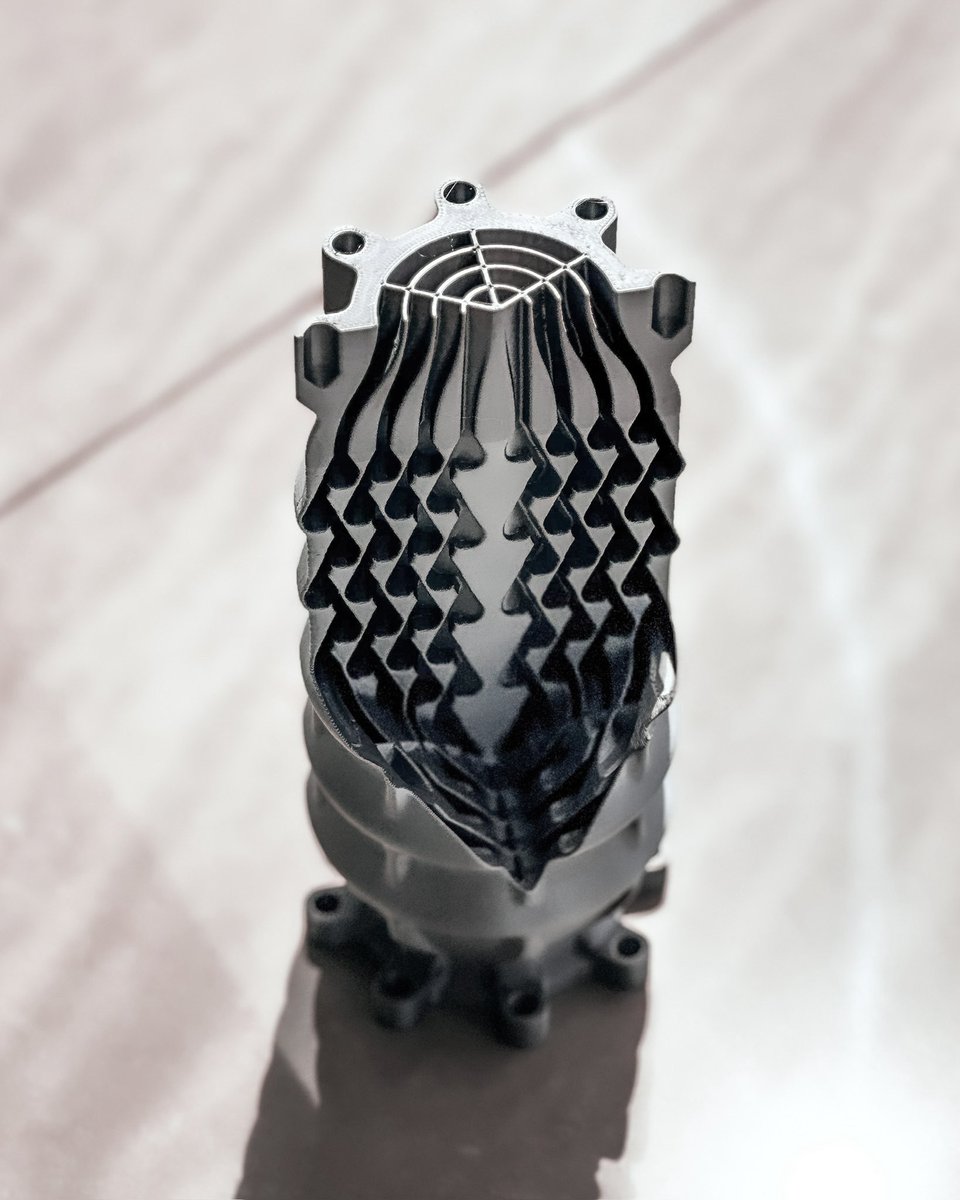
A 3D printed Tesla valve generated by our computational models. Tesla valves are passive devices that limit back flow of a fluid. They have the same function as a diode for electrical current. You can download the 3D model of this part on our website’s Gallery section.
LEAP 71 tweet media
English
49
259
2.2K
137.9K