An entire MBA fits on one page.
But you better know the math cold.
Like & comment if you want the excel.
6 topics:
*1) Unit economics*
This builds from product-level unit economics to company financials.
Quantity per unit, growth in units.
Price per unit, growth in pricing.
Cost per unit, marketing spend per unit.
Get you return on ad spend (ROAS), customer acquisition cost (CAC), LTV/CAC, gross margins, unit contribution margins, and more.
This model sets up two diverging products:
A higher gross margin (GM), higher marking cost, low pricing power, low growth product.
Against a lower GM, better pricing power, better growing, lower unit market cost product.
To show how the dynamics of the two play out over time.
*2) Accounting*
Unit drivers flow into revenue, variable COGS, and variable SG&A.
Then to EBITDA, EBIT, EBT, Net income & EPS.
Simple cash flow statements & balance sheets reconcile D&A to inflation-adjusted replacement CapEx, debt levels, & GAAP PP&E.
You have to be fluent in accounting to look at public companies.
Not because accounting itself matters.
But because accounting can obscure what matters.
And your task it to translate GAAP into meaningful business logic.
*3) Operating ratios*
Unit drivers output financials, financials output overall business ratios.
Revenue growth, EBITDA growth, EBITDA margins.
Contribution margins (= change in profit over change in revenue).
Net debt-to-EBITDA, net debt % of EV.
*4) Valuation*
You can drive valuation on multiples or a DCF.
Which are equivalent:
The discount rate minus the growth rate determines the 'terminal multiple.'
Using a P/E instead of a DCF simply uses next year as the terminal value.
This model drives value from the DCF, and maps that to the multiples to show how they connect.
*5) Corporate finance & DCFs*
DCF math attached using the CAPM.
The summary is a beta from historical returns, add the cost of debt.
To get the WACC - the theoretically correct discount rate.
DCFs are extremely assumption laden - you can get out almost whatever you want.
But realistically.
Your banker (or analyst) will make the math work out to a 7-13% discount rate.
Depending on the risks, industry, markets - and what they want to achieve.
*6) Sensitivities & the hard part*
The last section sensitizes the equity value and multiples to unit and price growth.
Bringing unit drivers full circle to valuation outcomes.
Ultimately, the hard part isn't the math.
You have to be fluent in the math, its nuances and its limitations.
If not, you will lose out to those who are.
But once you are, you also have to shift focus.
To the hard part.
Which is always in filling in the numbers.
If you're investing, that means thoughtful views on unit drivers; on how, when, and why they shift.
And if you're building, it means making the numbers on the page happen.
That's all for now.
Like & comment if you want the excel.
If you saw $299/year listed as "50% off" the monthly price (which totals $588 a year), would you feel misled given that it's technically 49.149% off instead?
BREAKING: mass media still totally silent two weeks after UN Secretary General says world's biggest carbon emitters (like the US military, for example) must drastically cut emissions starting now in 2022 if global climate catastrophe is to be averted 🧵
Feel like I'm giving away my whole secret sauce here, but fuck it😅
Comment "Send" and I'll DM you the doc going over how we CONSISTENTLY book 35+ meetings a month through Messenger with EASE.
(𝐌𝐮𝐬𝐭 𝐁𝐞 𝐅𝐨𝐥𝐥𝐨𝐰𝐢𝐧𝐠 𝐌𝐞)
Some advice to Ukrainians:
1. Ukrainian hackers post Russian casualty numbers on Russian official websites and social media accounts. That's not bad. A better idea - post instructions for sabotage. For example, if you burn trackside relay cabinets, it will lead to huge delays🧵
The narrative sounds simple: sanctions will crash the Ruble, isolate Russian economy, create massive inflation and hopefully Russia will cave.
But the chart for EUR vs RUB stubbornly disagrees… What’s happening here? Are sanctions not working? Why?
Important thread (I think)
One of my dad’s best friends called him. He was in Mariupol, a bomb landed near him and blew off his arm, killed the family standing 10 metres next to him. His apartment and everything he owns is destroyed. All he keeps repeating is “I have nothing left.”
When we say Kyiv is winning the information war, far too often we only mean information spaces we inhabit.
Pulling apart the most obvious RU info op to date (as we did using semantic modelling), very clear it is targeting BRICS, Africa, Asia. Not the West really at all.
Dear Journalists & Editors,
Please find enclosed a first Thread of 10 Threads with peer-reviewed & IPCC science to help you report on key aspects of the rapidly expanding Ecological-Climate Catastrophe.
First up: Arctic Sea Ice Loss & The Polar Jet Stream Crisis
Cheers,
Ben
👇
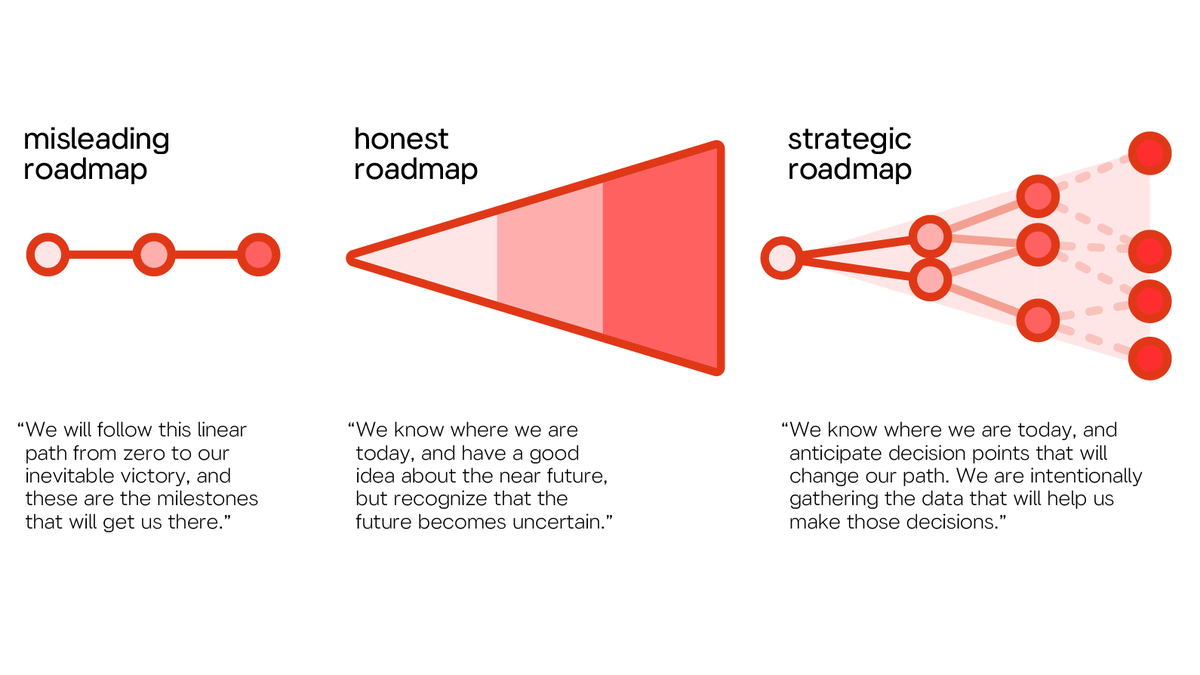
Linear roadmaps are misleading without a crystal ball for seeing the future. A roadmap that recognizes the existence of risk as time goes on is more honest. But an effective PM needs to anticipate possible branches, too - and create clear criteria for following each path.
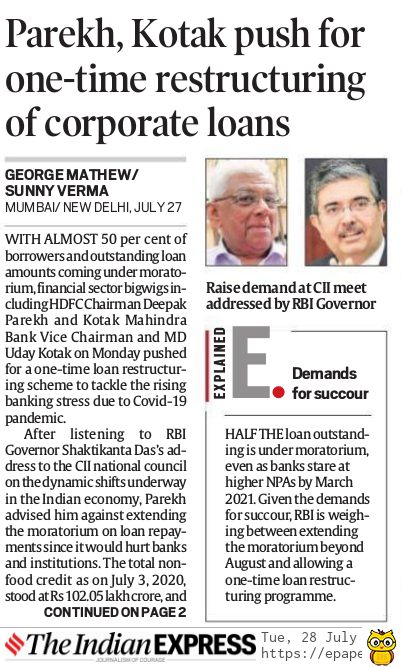
If such a demand would have come from farmers, retd agri babus/CACP babus, who masquerade as champions of farmers, economists, sarkari journos, spin doctors, all would have cried hoarse saying that this will mess up the economy; now you will not hear a word; such is the hypocrisy
📖 Free Python Programming book alert 🐍
@dabeaz has programmed in Python for 25 years, and has taught Python workshops since 2007.
He just made his entire book freely available.
If you have some basic coding skills and want to learn Python take a look: dabeaz-course.github.io/practical-pyth…
friendly reminder in times of uncertainty and misinformation: anecdotes are not data. (good) data is carefully measured and collected information based on a range of subject-dependent factors, including, but not limited to, controlled variables, meta-analysis, and randomization