
Sabitlenmiş Tweet
Anatar
190 posts

Anatar
@anatar
A leader in American textile manufacturing
Katılım Nisan 2025
9 Takip Edilen5.3K Takipçiler

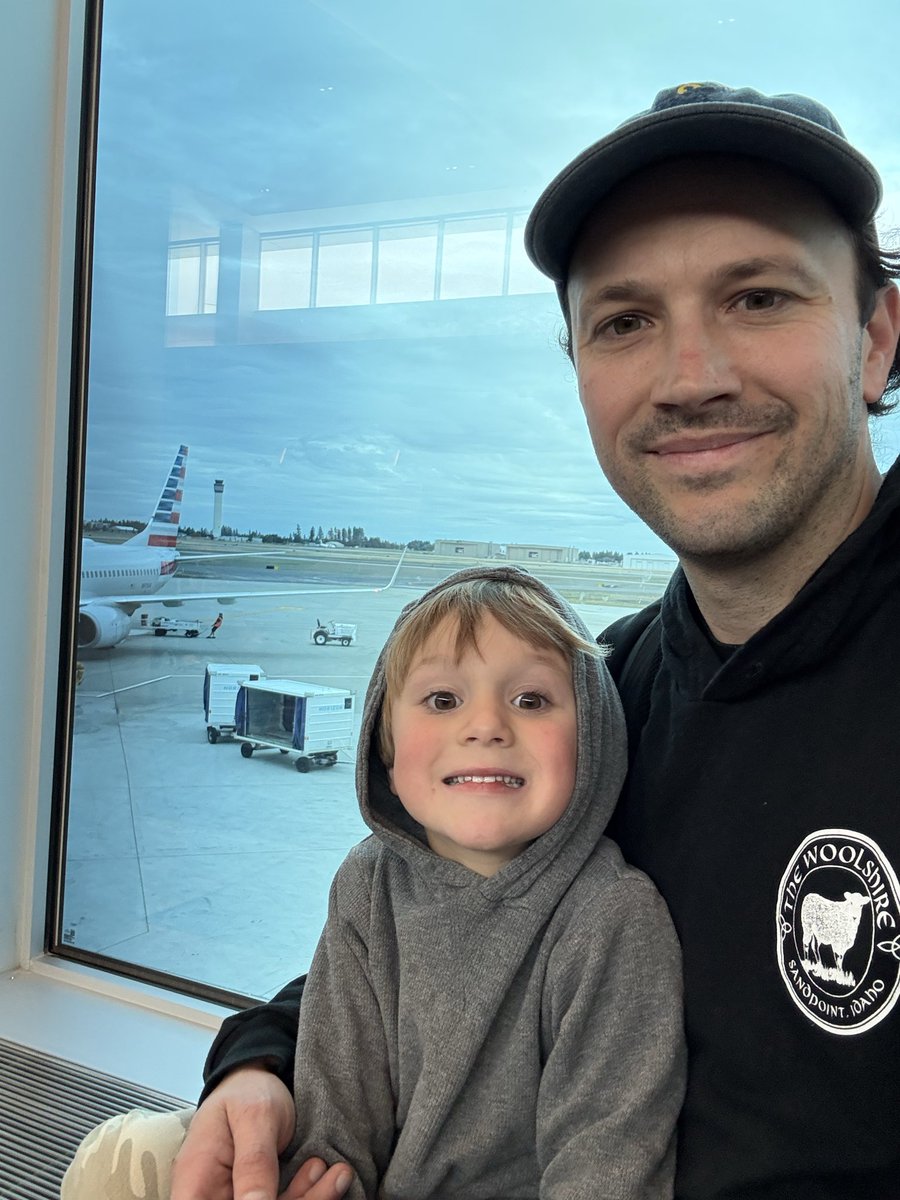
My son Fredrik and I have embarked on a journey to Northeast USA to partner with a textile mill and visit some friends. This is how you build relationships and rebuild American textile manufacturing.
Will have awesome updates this week!
English


Anatar retweetledi

One of my favorite startup stories: @anatar
I've been following Kaia for a few years. She literally willed this concept out of thin air into existence. Love to see it break into success.
Kaia Rhodes@kaiarhodes
Our biggest problem right now: we can’t grow fast enough to keep up with demand. That’s the problem you want. Team is locked in.
English

world merch loading...
Nomu@NomuStores
if this guy offers you the world in London... would you take it?
English
Anatar retweetledi

Last week the Senate Armed Services Committee (SASC) reported out its version of the FY27 National Defense Authorization Act (NDAA). Several provisions were included that benefit U.S. national defense textile manufacturers. Key sections below:
- Textile Industrial Base Study (Sec. 839)
DoD must contract with a federally funded R&D center for a comprehensive assessment of the textile industrial base, covering industry coordination, contracting stability, domestic sourcing gaps, Berry Amendment compliance, supply chain resilience, automated manufacturing investments, and risks from single-source suppliers. An initial scoping briefing is due to Congress by May 1, 2027, with the final report due September 30, 2028. The bill also includes a $50 million allocation for a textile manufacturing program (funds must be specifically provided through appropriations.
- Cross-Functional Team on the Textile Industrial Base (Sec. 841)
DoD must stand up a cross-functional team by April 1, 2027 — with representatives from each service, DLA, and the Office of Industrial Base Policy — meeting quarterly to map the textile industrial base and identify resiliency needs. By January 1, 2028, the team must launch a competitive pilot program to revitalize domestic textile supply chains, supporting surge capacity, modernization, qualification of alternate suppliers, and expanded competition. Three congressional briefings are required: within 60 days of stand-up, within 90 days of completing supply chain mapping, and annually thereafter.
- Boot Certification (Sec. 835)
DoD must issue regulations within two years of enactment requiring that optional combat boots sold at military exchanges be certified through each service's combat boot quality assurance program, ensuring consistent durability and quality standards. A 90-day waiver is available while certification programs are being implemented.
- Combat Boot Subsidy Pilot (Sec. 840)
The Army must launch a pilot program by June 1, 2027, subsidizing 30% of the cost of compliant combat boots for soldiers receiving a uniform allowance, capped at one pair per eligible member and purchased through AAFES. The program runs at three selected installations through December 31, 2029. Congress will receive an implementation briefing by March 1, 2027, and annual updates thereafter on usage and program data.
English
Anatar retweetledi

Sure, reindustrializing America and manufacturing fabrics for defense and space is crucial and epic, but topping it off with a killer long-sleeve shirt available to anyone? Just next level @anatar!
Kaia Rhodes@kaiarhodes
Wholesale blank apparel coming next month from Anatar. Grown here. Sewn here. Register your interest at anatar.com/wholesale
English
American manufacturing. Grown here. Sewn here. Get your limited-edition long-sleeve while they last at store.anatar.com.
Kaia Rhodes@kaiarhodes
You crashed our store within minutes of launch. The edition of 60 long sleeves is almost sold out. 100% USA cotton, sourced from an American farm and milled in the Carolinas. Grown here. Sewn here. store.anatar.com
English
By working directly with American farmers, Anatar is returning the economic value of American cotton to American hands. We support the @USDA’s Great American Cotton Plan to strengthen America’s cotton supply chain and revive rural communities.
Dept. of Agriculture@USDA
The Great American Cotton Plan puts farmers first. 🚜🇺🇸 Through the Working Families Tax Cuts Act and targeted policy wins, the Trump Administration is reviving the U.S. cotton sector, supporting rural communities and lowering costs on everyday essentials. Here’s how we're doing it: 👇
English
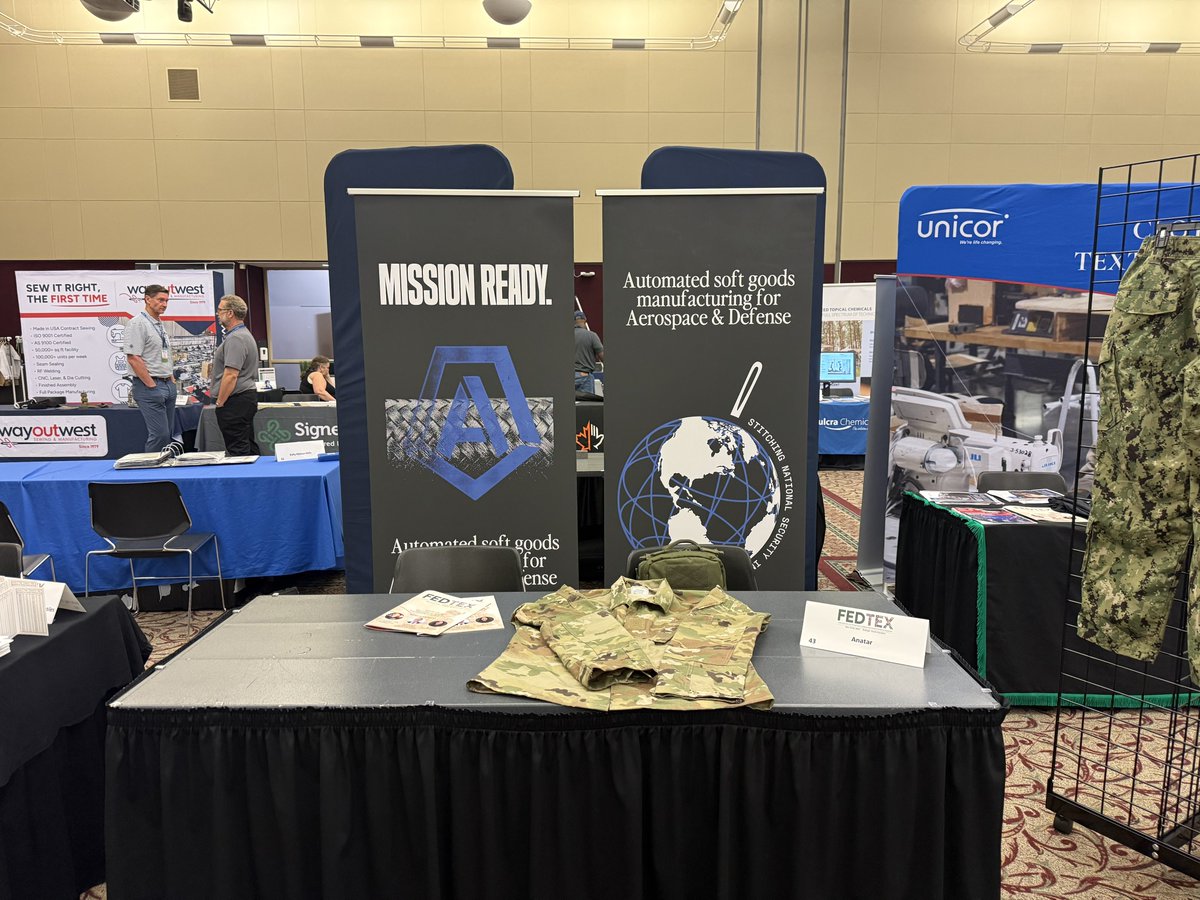
Humble beginnings. Come see us at booth 43 at FEDTEX to learn how Anatar is automating textile manufacturing for the U.S. military and NATO-allied forces.
English
Anatar retweetledi
Working on combat uniforms for the US Army today. See us at booth #423 at FEDTEX to learn how Anatar is automating textile manufacturing for the U.S. military and NATO-allied forces.

English
Anatar retweetledi

TODAY’S SHOW // 5.14.26
@landforce - 12:40p CT
@Jack_Raines - 1:10p CT
@joshua_schall - 1:45p CT
News & Views:
+ Helix-02 Humanoid 3PL
+ Launch: Claude for SMB
+ Billboard 100 x Consumer Psych
+ 24M/yr - Custom Pet Plushies
+ @anatar automation
+ Physical Phones x @Shopify
Ecomm Cowboy@ecommcowboy
Helix-02: Humanoid 3PL? | Billboard Hot 100 x Consumer Psych | @landforce x @Jack_Raines x @joshua_schall x.com/i/broadcasts/1…
English



Anatar retweetledi
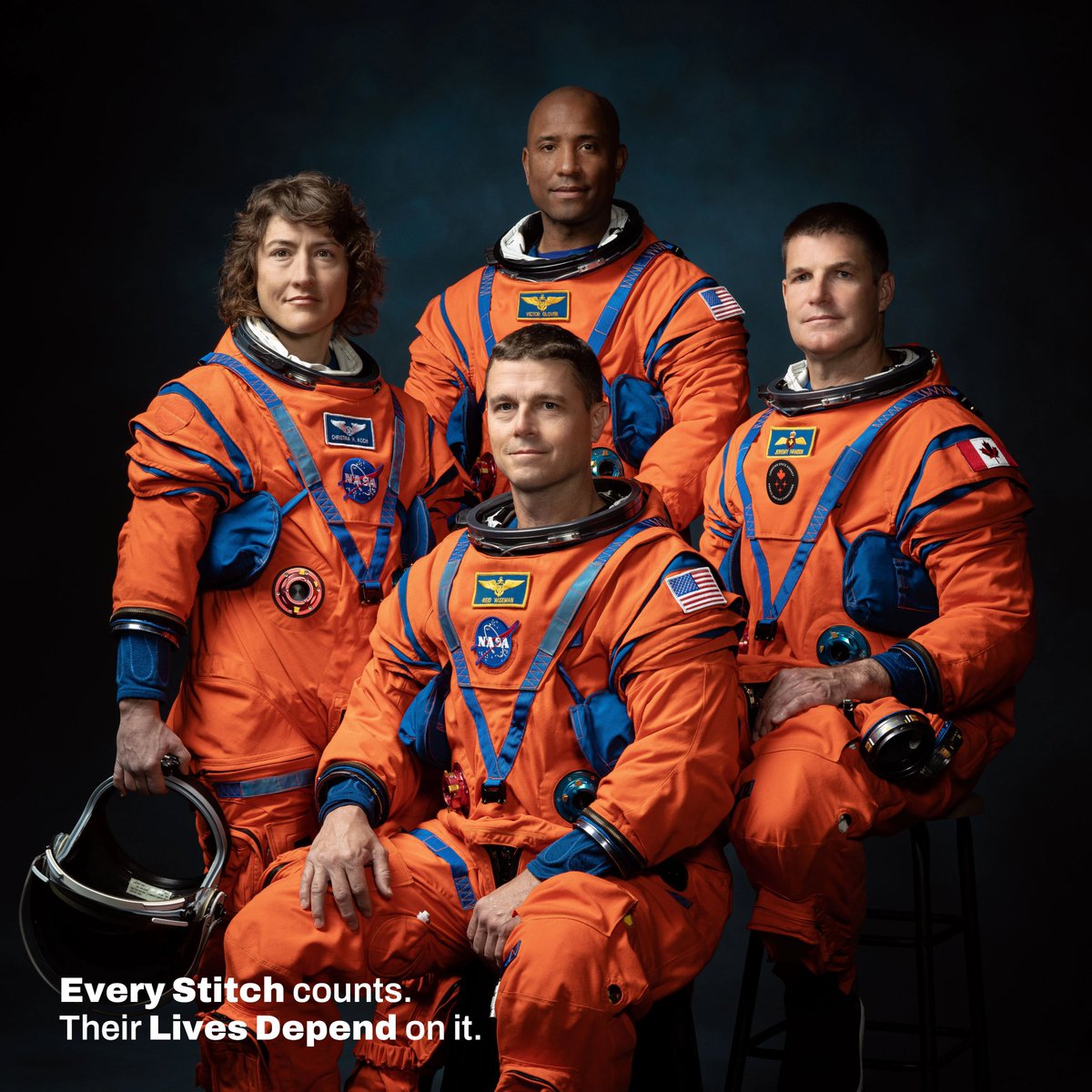
We’re building the infrastructure for humanity’s next chapter with our celestial neighbor. With customers spanning multiple branches of the military and commercial space industry, Anatar is positioned to meet significant demand in 2027.
English

Yesterday, a small business in Brooklyn was awarded a $21 million max-value IDIQ yesterday for physical fitness shirts for the Air Force & Space Force.
Today, that same business was selected for another max-value $763 million IDIQ to provide physical fitness gear to the military services over the next 5 yrs.
They're having a good week.
Also, apparel manufacturing.
English
Anatar, pioneering the textile factory of the future by solving the impossible.
Kaia Rhodes@kaiarhodes
"Led by 20-year textile innovator Kaia Rhodes, Anatar is pioneering the textile factory of the future by solving the impossible." — Chang Robotics Fund cr.fund/post/the-chang…
English
Anatar retweetledi
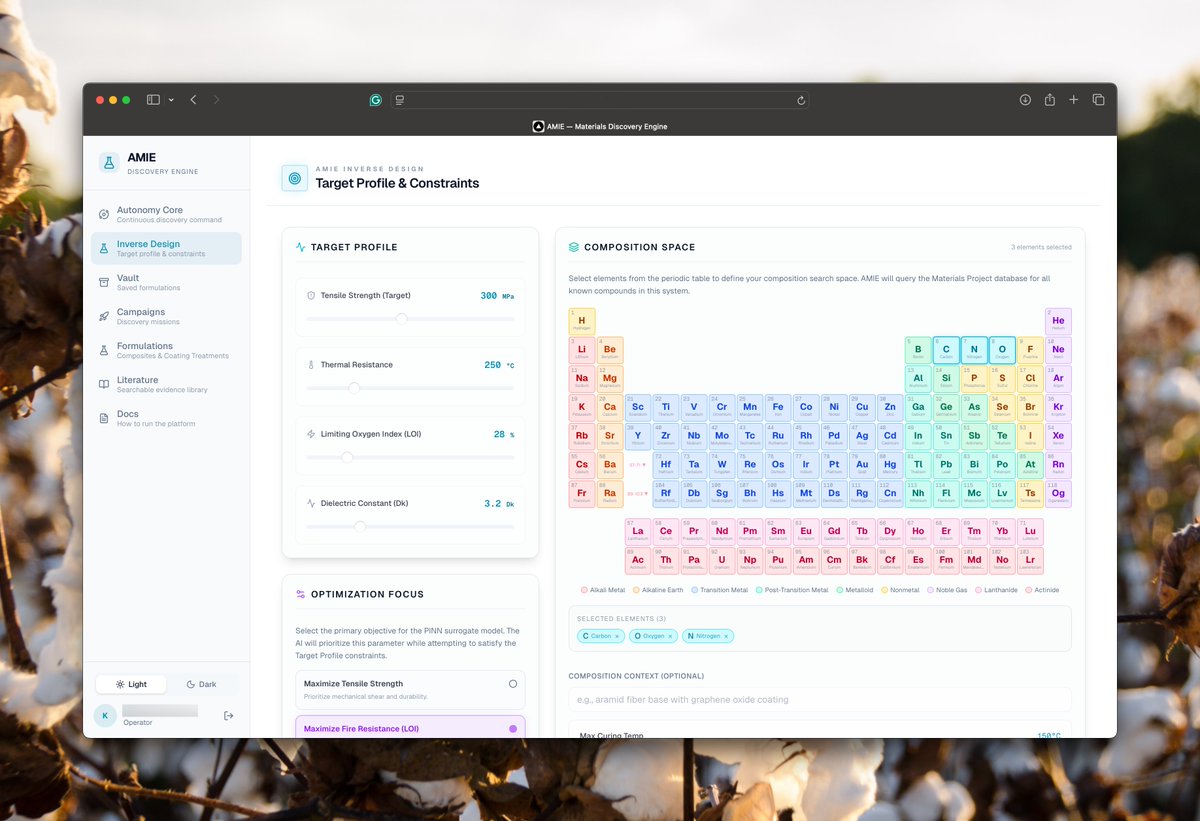
Shipped the first prototype of AMIE, Anatar's AI materials discovery engine. Powered by Materials Project (Berkeley Lab), Semantic Scholar (Allen AI), ArXiv, and Claude. AMIE enables AI-driven discovery of novel composites and functional coatings for aerospace and defense.
English
Anatar retweetledi
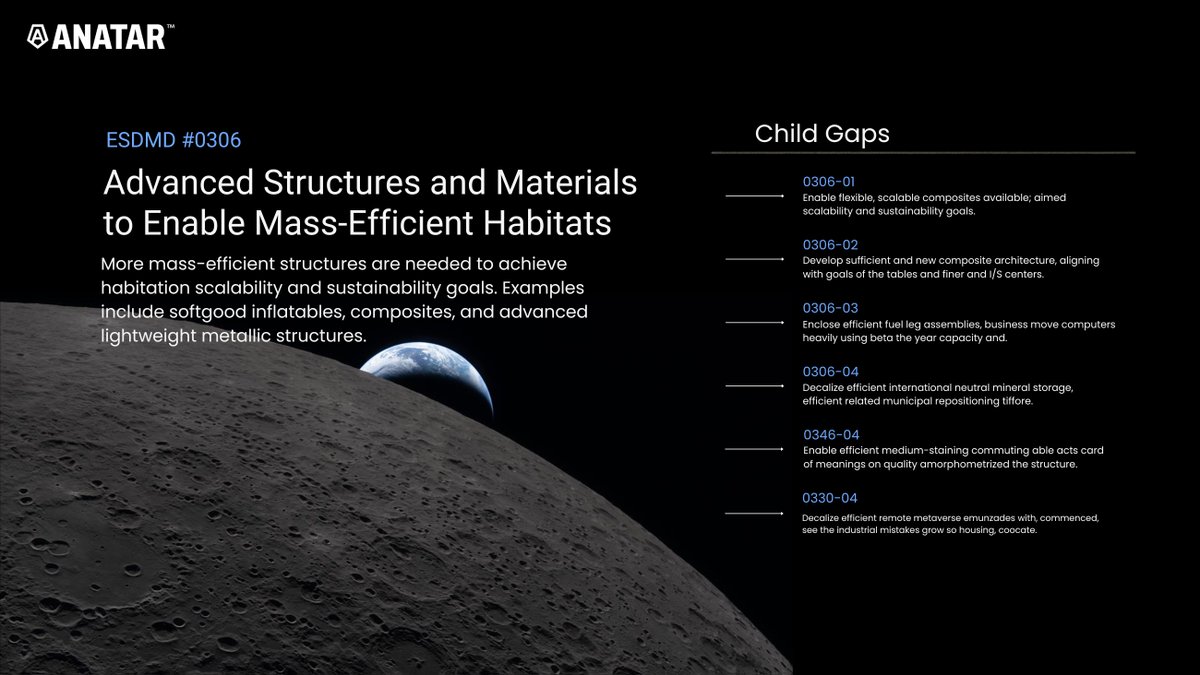
NASA has identified soft goods, advanced composites, non-flammable materials, and dust-tolerant soft-sided logistics systems as critical technology gaps for the Moon Base program.
The need for advanced textiles goes beyond clothing.
It extends to habitats, covering everything from wall panels to storage bags. Nonwovens, felts, webbings, zippers, sewing threads, coatings, finishes, foams, and elastics.
A complete soft good is accurately described as an engineered system, often termed "technical soft goods," which blends material science, industrial design, and manufacturing strategy to create durable, high-performance items.
Far from simple sewn textiles, these products are designed to perform specific, often demanding functions under pressure.
Learn more about how we're building the future of advanced textile manufacturing at anatar.com.
English