AReally

815 posts

AReally

AReally

@AndreaRilli

Katılım Şubat 2025
629 Takip Edilen52 Takipçiler
AReally retweetledi
Pilsatorius Capital
Pilsatorius Capital@Colecalciferol1·
$HUMA - Immediate action plan Humacyte (1/12) Cc: @MichaelSen, @Fresenius, @FME_Global, @FreseniusKabi, @humacyte Humacyte is dying. Humacyte is not Lauras little biolab anymore. Humacyte is facing a cash drain of USD 20-30m per quarter, with R&D spending of c. USD 70m per year. Humacyte is stumbling. We, a group of investors with sizable investments, are requesting immediate action by Humacyte to ensure survival, and preserve the healthy core for trauma patients and potentially AV access, and to transform the company towards a Trauma-only production company; we expect the following, immediate action plan to be implemented by the management team (with details in thread): - Immediate closure of non-core programmes - Ramp down of production capacity (max. 5k) - Immediate termination of any employees not related to trauma / AV (until V012) - Disposal of non-core IP / any programmes not associated with trauma / AV - Potentially via separate entity - Management downsizing / re-allocation of responsibilities - Immediate price adjustment to ramp up market penetration (USD 9,999) - Review of North Carolina facilities - sub-lease any non-core space - legal review of lease agreement - Downsizing of Board of Directors - specifically Brady W. Dougan - Renegotiation of Avenue Capital credit facility to unlock conditional tranches - Increased spend on lobbying (USD 1-2m+) - Expected value accretion (50-300% upside)
English
2
2
10
1.1K
AReally
AReally@AndreaRilli·
@SaintEquitie This morning it was indicated. Now it is no longer there
English
1
0
0
100
AReally
AReally@AndreaRilli·
@Scottnewdawn Today's earnings call removed from ABVX website!!
English
0
0
0
195
scott moore
scott moore@Scottnewdawn·
$ABVX anyone know what time is the earnings release
English
4
0
0
1.6K
AReally retweetledi
Biotech, Rumors, Deals and Acquisitions
$ESPR RUMOR: Follow-up: Sheldon Koenig, CEO of Esperion Therapeutics, is a former $MRK Merck & Co. executive who helped launch Zetia (ezetimibe)— a key component in Nexlizet. Source says both companies are in talks. NEXLIZET expected to be a yearly Billion dollar drug
English
1
2
4
687
CMA Ketan Panchal
CMA Ketan Panchal@ketanmba03·
Blue Jet Healthcare stock crashed from 1000 peak to nearly 350 - a massive ~65% fall🧐 But sometimes the market overreacts to short-term problems So what really went wrong here & could this beaten-down pharma CDMO story still have long-term potential? Let’s break it down🧵
English
2
4
7
1.2K
AReally retweetledi
Wayne
Wayne@wyv_123·
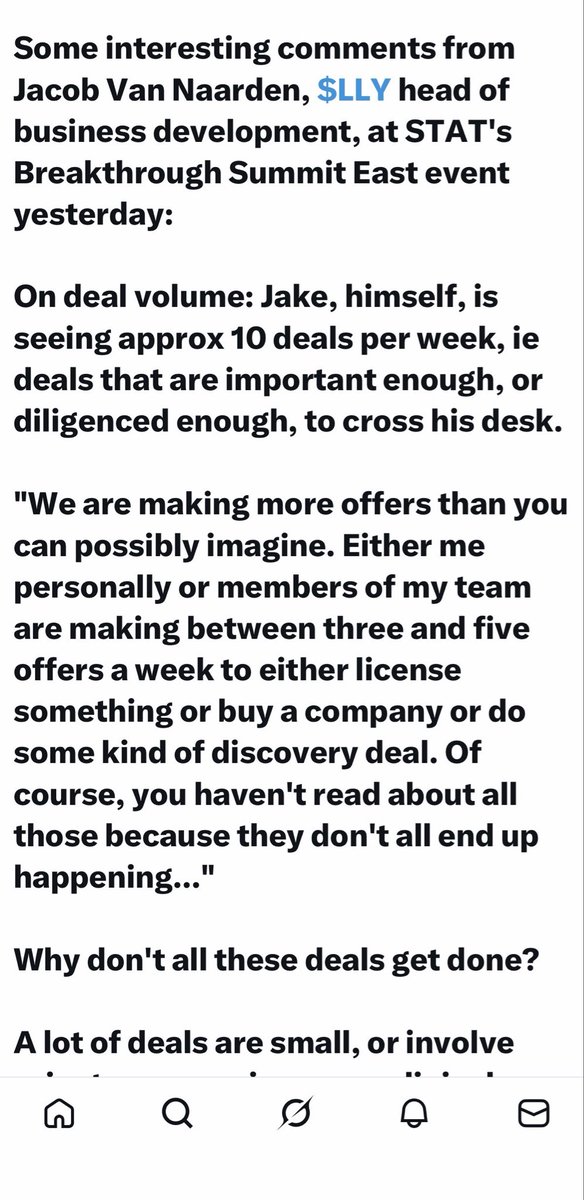
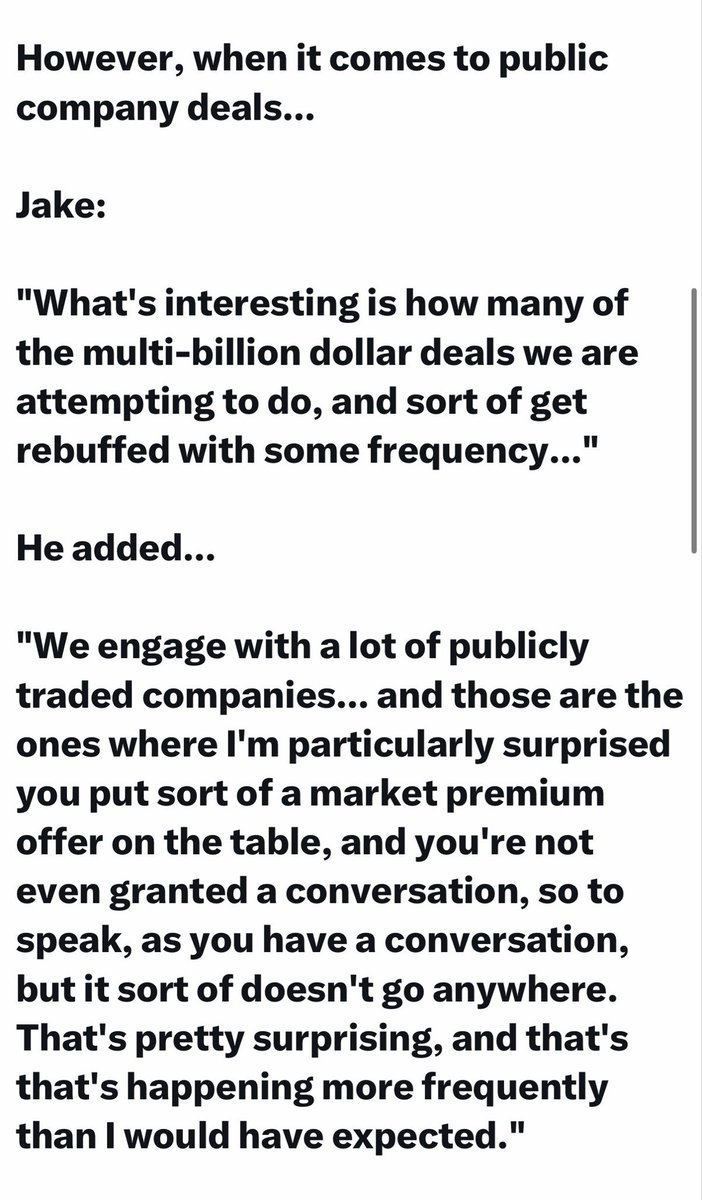
$ABVX Abi-facts: 1. Marc blew it big time with CinCor by haggling over a few extra $ per share prior to data which turned out disappointing. He ended up selling for 60% less. He would be insane to do that again. 2. Marc assembled a team of IBD experts who know clinical trials, data, exits and who have not sold shares despite a massive run. 3. La Lettre has quadrupled down on the Abivax BO situation as well as quadrupling down on destroying their reputation each time, why? 4. $LLY has plenty of cash to do a $20B deal but is notoriously cheap with questionable ethics. They did $NKTR so dirty every biotech has to be skeptical and wary of them. LLY is so tone deaf they had the nerve to complain about companies not wanting to do deals with the NKTR lawsuit pending. 5. Regarding public companies deals, LLY actually said they "SORT OF" made a market premium offer and couldn't figure out why they barely got any response. 6. With all the AI available, ABVX's internal IBD experts and the known Phase 2 and Phase 3 Obefazimod results to date, it would not take much to extrapolate the P3 Maintenance results with high confidence. Knowing all this, wouldn't Marc take a deal now if that data was going to be bad? 7. Centerview's Tokat has been hyping one or more $20B deals for 6 months. There have been ZERO. He and Marc were on a podcast before JPM where he said companies that don't hire a CCO don't have leverage when selling the company. Apparently, ABVX will announce a CCO Monday if the rumors are to be believed. 8. The LLY jets went to Paris in December and then made multiple trips to a small airport in MA ~15 minutes from Marc's house multiple times since then. 9. There's a fair amount of evidence that one or more informal offers of $15B have been hinted at for ABVX. That's 50% more than current MC but stock will probably be down 10% or more Monday because there won't be a buyout before maintenance data. And that's ok because it's likely worth $20B. 10. There's a very good chance Obe moves towards 1L or becomes 1L for UC. The preclinical antifibrotic CD data bodes well for efficacy in CD. If it hits on both, $10B per year revenue is not out of the question. Skyrizi/Tremfya/Entyvio/Rinvoq efficacy without the hassle of injection/infusion or the side effects of JAK. 11. 100s of millions of dollars or more has been gambled and lost on options over the last 5 months. Friday saw 10-40x the typical volume in Abivax Euronext shares.
English
5
2
72
13.4K
AReally retweetledi
Wayne
Wayne@wyv_123·
I can't quote Debbie Downer AF because he blocked me years ago but this is interesting. $LLY may want to look in the mirror and reflect on what they did to $NKTR. That might be why companies are reluctant to do deals with them. And $ABVX isn't taking a low ball offer.
Wayne tweet mediaWayne tweet media
English
3
1
23
2.9K
AReally retweetledi
Howard Schlauch
Howard Schlauch@HowardSchlauch·
I will continue to repeat this over and over until the guidelines change for primary prevention of cardiovascular disease: CRP mediates cholesterol uptake by arterial macrophages. CRP mediates cholesterol efflux by arterial macrophages. CRP mediates thrombosis. @ACCinTouch
Howard Schlauch@HowardSchlauch

@AmmousMD For anyone in doubt regarding the role of inflammation (particularly hsCRP), just take a look at these FOURIER outcome trial data. You can literally stratify risk levels at 20 mg/dL LDL-C based on hsCRP values! That’s f’d up! And these patients were only followed for 2.2 years.

English
0
2
2
114
AReally retweetledi
Akinchan Bhardwaj, MD, DM, FACC
Akinchan Bhardwaj, MD, DM, FACC@CathWhisperer·
🫀 Cardio DECISION-TRAP “The CT coronary calcium score is zero, so there’s no coronary disease.” That conclusion feels reassuring. But plaque biology is more nuanced. The reflex: Patient has chest pain or risk factors. Coronary calcium score returns 0. So coronary disease is considered unlikely. What can be missed?? • Non-calcified plaques can still be present • Younger patients often develop lipid-rich plaques before calcification • Acute plaque rupture may occur in lesions that were previously non-calcified • Calcium score reflects calcified plaque burden, not total plaque The mechanism: • Coronary calcium represents a later stage of plaque evolution. • Earlier atherosclerotic lesions may remain non-calcified but still vulnerable. Why does this matter ?? • Anchoring to a calcium score of zero may lead clinicians to underestimate risk in symptomatic or younger patients. • Clinical context still matters. Action points: • Interpret calcium score in the context of symptoms and risk profile • Consider CT coronary angiography if suspicion remains • Recognize that calcium scoring is a risk tool, not a diagnostic rule-out A calcium score of zero lowers probability. It does not exclude coronary disease. How often do you see symptomatic patients with CAC = 0 but abnormal CTCA? #CardioDecisionTrap #CardioX #CardioEd #MedTwitter #CardioTwitter
Akinchan Bhardwaj, MD, DM, FACC tweet media
English
5
16
48
2.5K
AReally retweetledi
Dr. Filippo Cademartiri
Dr. Filippo Cademartiri@FCademartiri·
🫀📊 Incidental CAC is the most underused preventive tool in medicine This NOTIFY-1 project tackles a simple but uncomfortable reality: 👉 We are already seeing coronary artery calcium (CAC) every day 👉 And we are systematically ignoring it 🔍 What the study shows Using routine non–ECG-gated chest CT scans, the investigators: Identified incidental CAC Actively notified clinicians and patients Measured impact on statin initiation 📈 Result: 👉 Significant increase in statin prescriptions when CAC was reported and communicated ⚠️ Let that sink in Not a new drug. Not a new scanner. Not AI. Just telling people what is already there. 🧠 The real issue is not detection—it’s translation We already have: Imaging → showing subclinical disease Guidelines → recommending action Therapies → widely available ❌ What’s missing is the last mile: acting on information 🎯 Why this matters Incidental CAC is: ✔ A free risk stratification tool ✔ Already embedded in millions of scans ✔ Highly predictive of outcomes Yet: 👉 It remains underreported, under-communicated, and underused 🚨 The uncomfortable truth If a patient has visible coronary calcium and leaves without preventive therapy… 👉 That’s not a knowledge gap 👉 That’s a system failure 🔮 Bottom line The future of prevention is not just better imaging. It’s: ✔ Using what we already see ✔ Closing the loop between imaging and action Because the problem is no longer detection. 👉 It’s what we choose to ignore.
Dr. Filippo Cademartiri tweet media
English
1
11
34
2.4K
AReally retweetledi
dough
dough@semodough·
$ABVX Piper believe the P3 UC induction data, body of long-term P2b data, and ABTECT trial design elements have largely de-risked the readout, and believe the company's bar for success (20-30% pbo-adjusted clinical remission) is highly achievable and likely conservative. continue to see the risk/ reward as attractive, and remain buyers. UC maintenance data largely de-risked, and this was always where obe was expected to shine
English
0
1
32
5.3K
AReally retweetledi
Roger Blumenthal
Roger Blumenthal@rblument1·
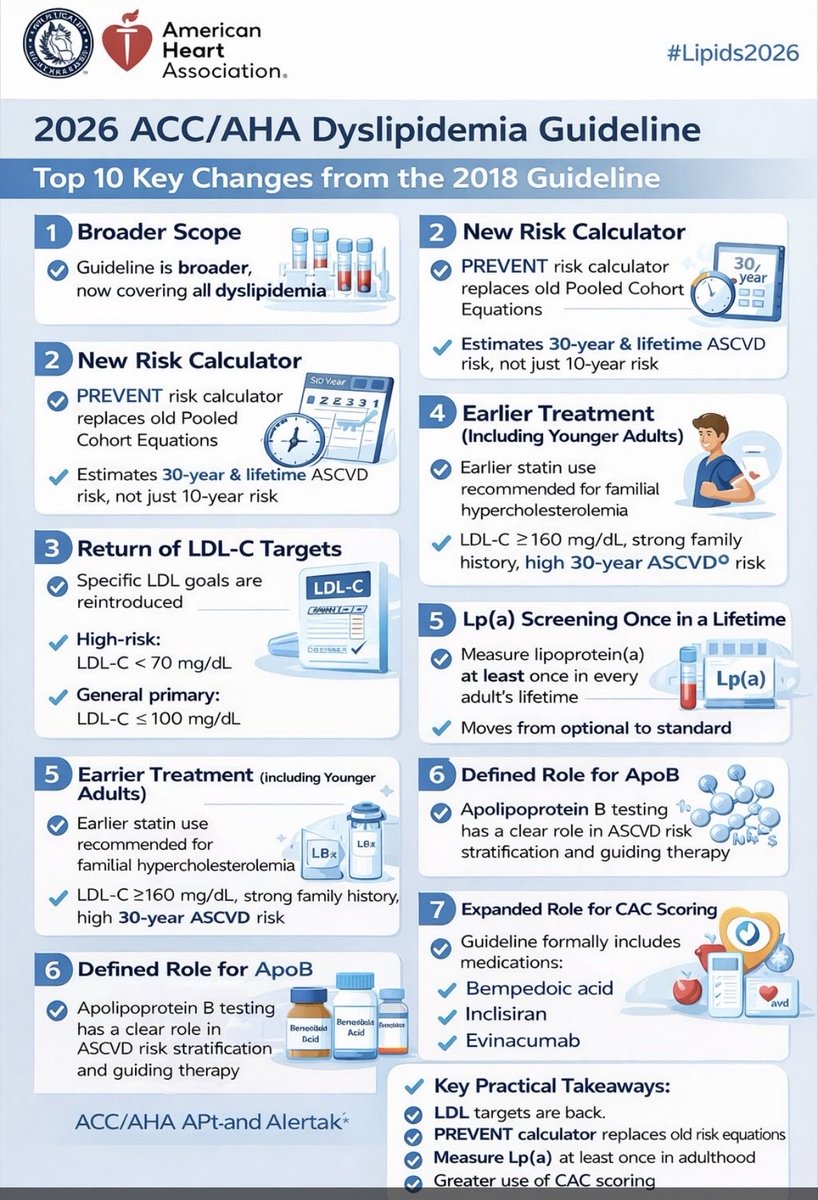
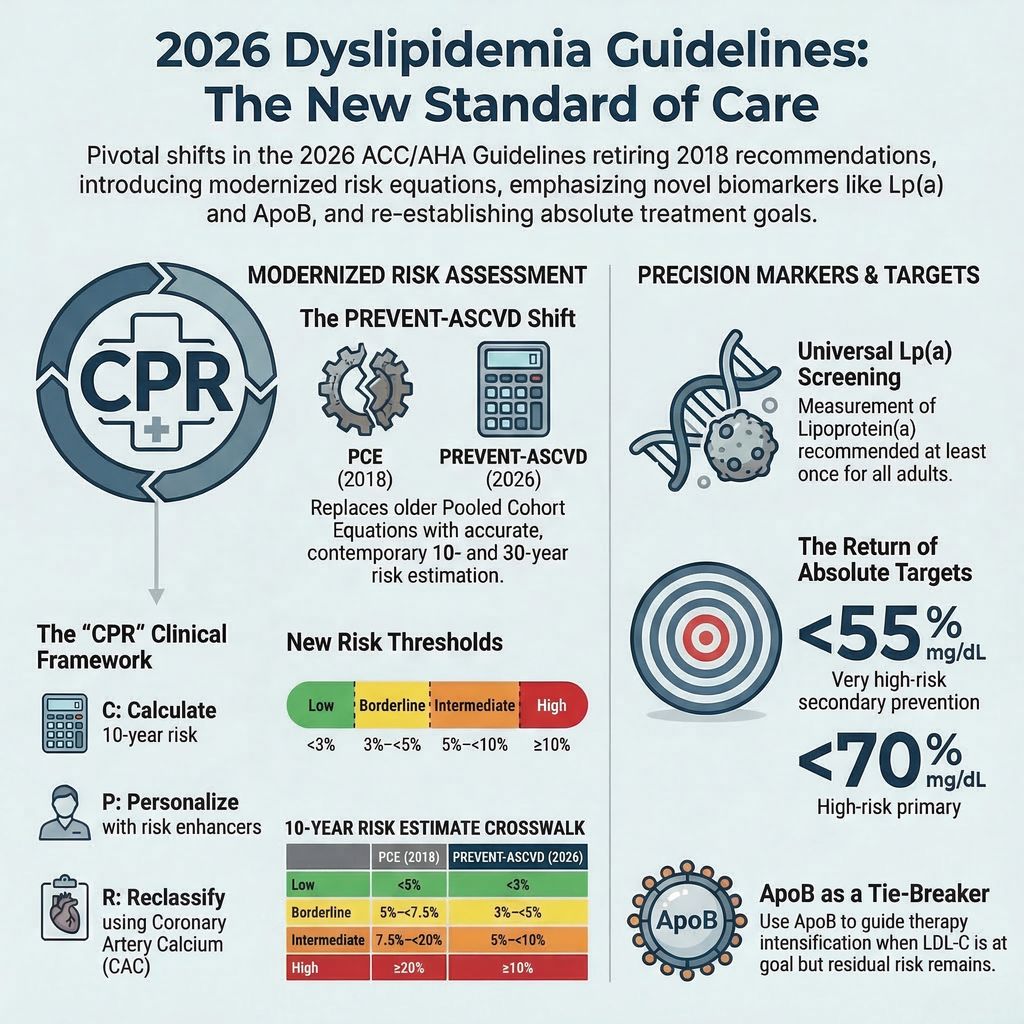
Great summary by ACC/AHA/Multisociety Dyslipidemia/Prevention GL ‘26
Roger Blumenthal tweet media
English
3
62
160
10.4K
AReally
AReally@AndreaRilli·
@IntervnCardio I am sharing this link because I am convinced that to achieve the best result, a multidisciplinary approach is needed. x.com/FCademartiri/s…
Dr. Filippo Cademartiri@FCademartiri

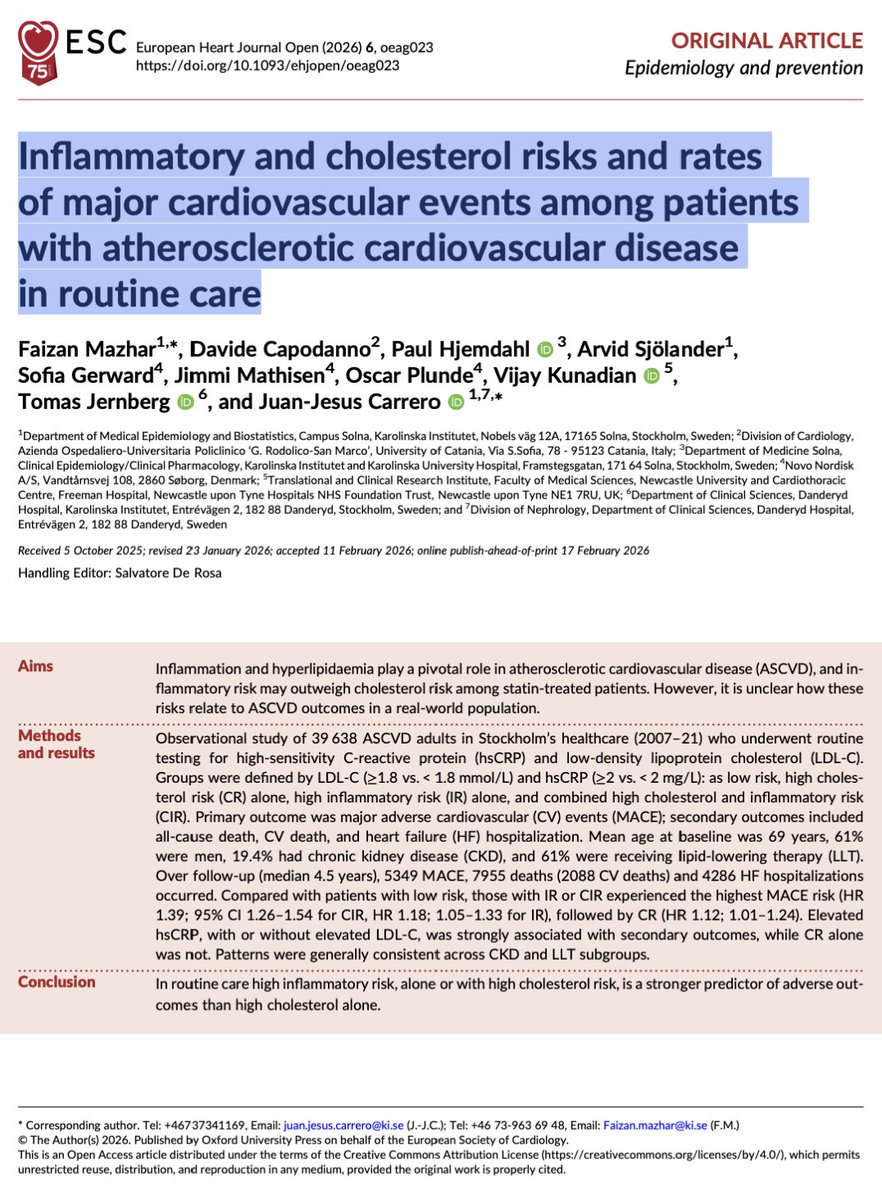
🫀 Inflammation vs cholesterol: which residual risk matters most in ASCVD? A large real-world study explored how cholesterol risk (LDL-C) and inflammatory risk (hsCRP) relate to cardiovascular outcomes in patients with established atherosclerotic cardiovascular disease (ASCVD). Researchers analyzed 39,638 patients with ASCVD in routine healthcare in Stockholm between 2007–2021. Patients were stratified into four groups based on LDL-C ≥1.8 mmol/L (≈70 mg/dL) and hsCRP ≥2 mg/L: • Low risk • High cholesterol risk • High inflammatory risk • Combined high cholesterol + inflammatory risk The primary endpoint was major adverse cardiovascular events (MACE), with additional outcomes including cardiovascular mortality, all-cause mortality, and heart failure hospitalization. 📊 Key findings 🔥 Inflammatory risk mattered more than cholesterol alone!!! Patients with high inflammatory risk (hsCRP ≥2 mg/L) had significantly higher rates of: • MACE • cardiovascular mortality • all-cause mortality • heart failure hospitalization 🧬 High cholesterol alone was associated with only a modest increase in MACE and was not strongly linked to other adverse outcomes. ⚠️ Another striking observation: ~39% of ASCVD patients were not receiving lipid-lowering therapy, highlighting persistent gaps in secondary prevention in routine care. 🧠 Why this matters The study reinforces a growing concept in cardiometabolic medicine: ➡️ Residual inflammatory risk remains a major driver of cardiovascular events even when cholesterol is treated. This helps explain why therapies targeting inflammation (e.g., colchicine, IL-1 pathways) are increasingly explored alongside lipid-lowering strategies. 📌 Take-home message ASCVD risk is not just about LDL-C. In real-world populations, inflammation appears to be an equally important — and often overlooked — driver of recurrent cardiovascular events. Future prevention strategies will likely need to target both cholesterol and inflammation.

English
0
0
0
16
Amitabh Yaduvanshi MD, DM, FACC, FSCAI
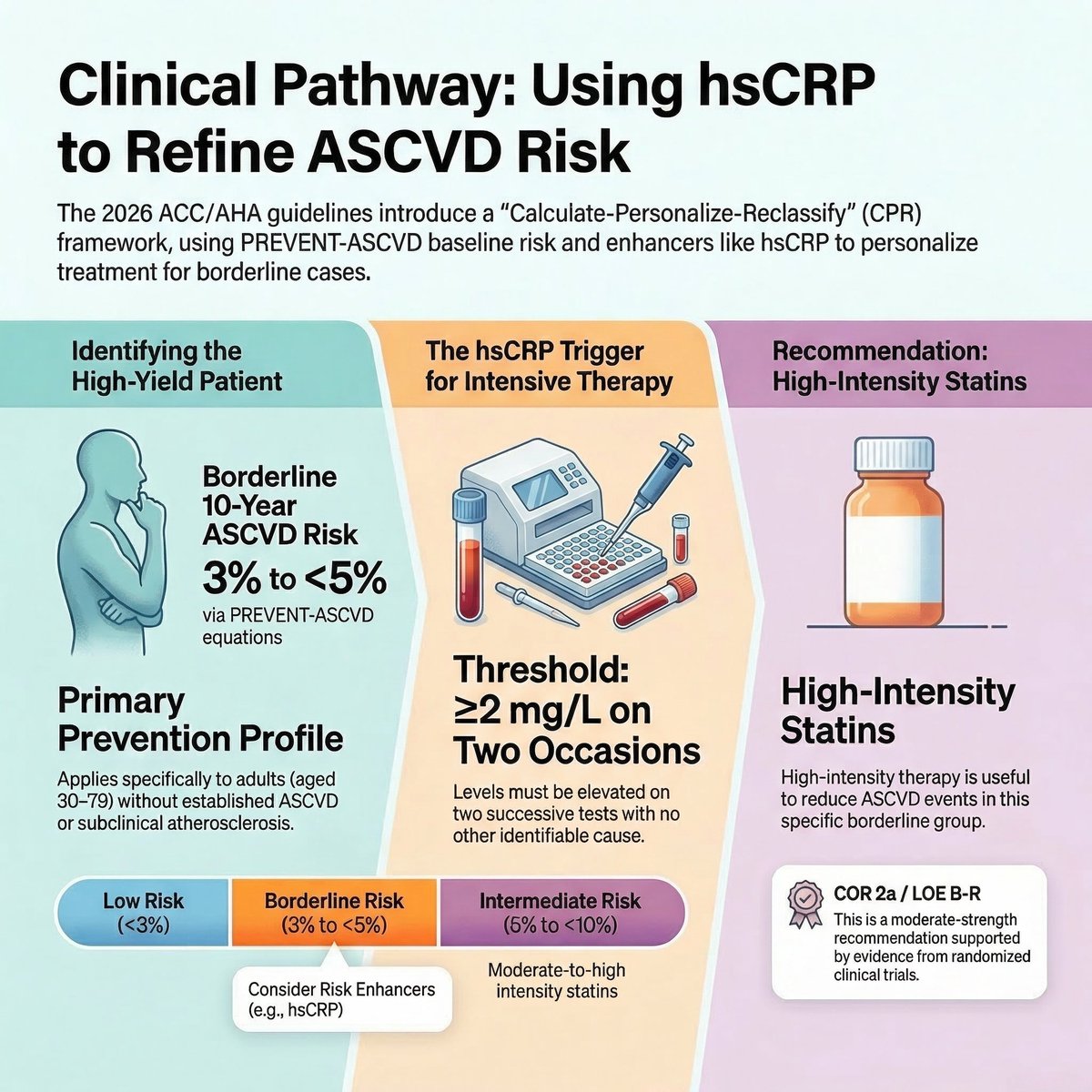
@AndreaRilli Spot on — hsCRP absolutely deserves its due! It remains a solid Class 2a risk enhancer in the 2026 guidelines: if persistently ≥2 mg/L (no acute illness) in borderline-risk patients (3–<5% on PREVENT-ASCVD), high-intensity statin is reasonable. The infographic was laser-focused on the biggest paradigm shifts — universal Lp(a) screening, ApoB as tie-breaker, and the return of absolute LDL-C targets — which are the truly novel lipid-specific upgrades from 2018. hsCRP (inflammation marker) and the lipid markers complement each other beautifully in the new CPR framework (Calculate → Personalize → Reclassify). Both matter for true precision cardiology. Appreciate the sharp eye — keeps us all accurate!
Amitabh Yaduvanshi MD, DM, FACC, FSCAI tweet media
English
3
1
4
226
Amitabh Yaduvanshi MD, DM, FACC, FSCAI
1/9 The 2026 ACC/AHA Dyslipidemia Guidelines are officially here! Replacing the 2018 guidelines, these new updates bring major shifts in risk assessment, novel lipid markers, and cholesterol targets. Here are the most salient features you need to know. 🧵👇 #Cardiology #MedTwitter
Amitabh Yaduvanshi MD, DM, FACC, FSCAI tweet media
English
14
265
752
61K
AReally retweetledi
Dr. Filippo Cademartiri
Dr. Filippo Cademartiri@FCademartiri·
🫀 Inflammation vs cholesterol: which residual risk matters most in ASCVD? A large real-world study explored how cholesterol risk (LDL-C) and inflammatory risk (hsCRP) relate to cardiovascular outcomes in patients with established atherosclerotic cardiovascular disease (ASCVD). Researchers analyzed 39,638 patients with ASCVD in routine healthcare in Stockholm between 2007–2021. Patients were stratified into four groups based on LDL-C ≥1.8 mmol/L (≈70 mg/dL) and hsCRP ≥2 mg/L: • Low risk • High cholesterol risk • High inflammatory risk • Combined high cholesterol + inflammatory risk The primary endpoint was major adverse cardiovascular events (MACE), with additional outcomes including cardiovascular mortality, all-cause mortality, and heart failure hospitalization. 📊 Key findings 🔥 Inflammatory risk mattered more than cholesterol alone!!! Patients with high inflammatory risk (hsCRP ≥2 mg/L) had significantly higher rates of: • MACE • cardiovascular mortality • all-cause mortality • heart failure hospitalization 🧬 High cholesterol alone was associated with only a modest increase in MACE and was not strongly linked to other adverse outcomes. ⚠️ Another striking observation: ~39% of ASCVD patients were not receiving lipid-lowering therapy, highlighting persistent gaps in secondary prevention in routine care. 🧠 Why this matters The study reinforces a growing concept in cardiometabolic medicine: ➡️ Residual inflammatory risk remains a major driver of cardiovascular events even when cholesterol is treated. This helps explain why therapies targeting inflammation (e.g., colchicine, IL-1 pathways) are increasingly explored alongside lipid-lowering strategies. 📌 Take-home message ASCVD risk is not just about LDL-C. In real-world populations, inflammation appears to be an equally important — and often overlooked — driver of recurrent cardiovascular events. Future prevention strategies will likely need to target both cholesterol and inflammation.
Dr. Filippo Cademartiri tweet media
English
7
44
132
10.3K