Andrew Eberhard

2.2K posts

Andrew Eberhard banner
Andrew Eberhard

Andrew Eberhard

@AndrewENZ

Slow runner and teller of dad jokes.

Auckland, New Zealand Katılım Ekim 2009
1.4K Takip Edilen648 Takipçiler
Andrew Eberhard retweetledi

David Knight Legg
David Knight Legg@KnightLegg·
A tale of two Iranians 1. - A 19 yr old national champion wrestler. Executed today for the crime of marching with 30,000 other murdered young people who just wanted freedom. Canada said nothing. - A Shia cleric of that Islamo-fascist regime. Just given Canadian citizenship. Marching in support of the regime at an al quds parade in Toronto in his first week in Canada. If there’s a way for Canada to be on the wrong side of history, this is it. Thx to @AlinejadMasih for keeping everyone informed. Here’s to a free Iran.

David Knight Legg tweet mediaDavid Knight Legg tweet media
English
691
6.8K
15.9K
218.7K
Andrew Eberhard retweetledi
Eyal Yakoby
Eyal Yakoby@EYakoby·
Today, the Islamic Republic hanged multiple Iranian civilians, some of whom were just teenagers. Amnesty International? Silent. The UN? Silent. Human Rights Council? Silent. The Red Cross? Silent.
English
1.8K
24.2K
65.9K
992.1K
Andrew Eberhard retweetledi
Brad Zubyk
Brad Zubyk@Bzubyk·
If the war keeps taking out murderous Iranian political and security leadership I am concerned that there will no longer be suitable candidates to lead the UN Human Rights Council.
English
184
1.3K
8.7K
130K
Andrew Eberhard retweetledi
Bitcoin Teddy
Bitcoin Teddy@Bitcoin_Teddy·
Bill Maher drops a reality bomb on Zohram Mamdani voters with a brutal history lesson on socialism. “We’ve run this experiment many times, and the results are always obvious,” Maher said. He looked straight into the camera and delivered a blunt warning about Mamdani. “Democrats must recognize that Zohran Mamdani is the future of the party. Unfortunately, it’s the Republican Party.” “Here’s capitalist South Korea at night from space,” Maher presented, showing a country lit up and thriving. “Here’s socialist North Korea,” he followed, with the map pitch dark. “Yeah. In 1990, Venezuela was wealthier than Poland. But then Poland, finally free of Soviet style economics, went all in on capitalism and now their economy is as big as Japan and people there have high wages, low inflation, cars, vacations, homes.” “Meanwhile, Venezuela traded capitalism for Hugo Chavez’s socialism for the 21st century, which turned out to be like socialism in the last century or any century, a f*cking mess.” “It turned one of Latin America’s richest countries into one of its poorest. Low wages, high inflation, shortages, outages, 8 million people fleeing. If you think New York can somehow reinvent this wheel, you’re in for a rude awokening.”
English
557
11.2K
49.1K
1.3M
Andrew Eberhard retweetledi
Matthew Horncastle
Matthew Horncastle@matt_horncastle·
I refuse to participate in the modern narrative that James Cook was a villain. Cook was born in poverty in 1728. He was not an aristocrat. He was not handed power. He worked from a young age, taught himself mathematics and navigation, and rose through sheer competence to become one of the most capable captains in the Royal Navy. What he achieved with the technology of the 1700s is extraordinary. He sailed into oceans where most of the map was blank. He charted enormous parts of the Pacific. His survey of New Zealand was so accurate that his charts were used by sailors for more than a century. Many of his coastal measurements were only hundreds of metres off modern satellite positions, achieved with nothing more than sextants, chronometers, and careful observation. His voyages were not just about exploration. They advanced science. One of his first missions was to observe the transit of Venus to improve humanity’s understanding of the solar system. He enforced strict health rules on his ships and virtually eliminated scurvy, something that had killed countless sailors before him. By the standards of the eighteenth century he was known for discipline, order, and attempts to avoid unnecessary violence with indigenous populations. He was operating in a harsh and dangerous era where exploration meant risking your life and the lives of everyone under your command. Was he perfect. Of course not. No human being is. Judging people from centuries ago as if they lived in our modern world is intellectually lazy. What matters is what he actually did. A poor man who rose to the top through ability. A navigator who mapped huge parts of the Pacific. A leader who pushed science, navigation, and knowledge forward. Men like James Cook expanded the known world and helped build the foundations of the modern, prosperous societies we live in today. That is not the story of a villain. That is the story of a remarkable human being.
English
268
1.2K
8.4K
143.9K
Andrew Eberhard retweetledi
David Zweig
David Zweig@davidzweig·
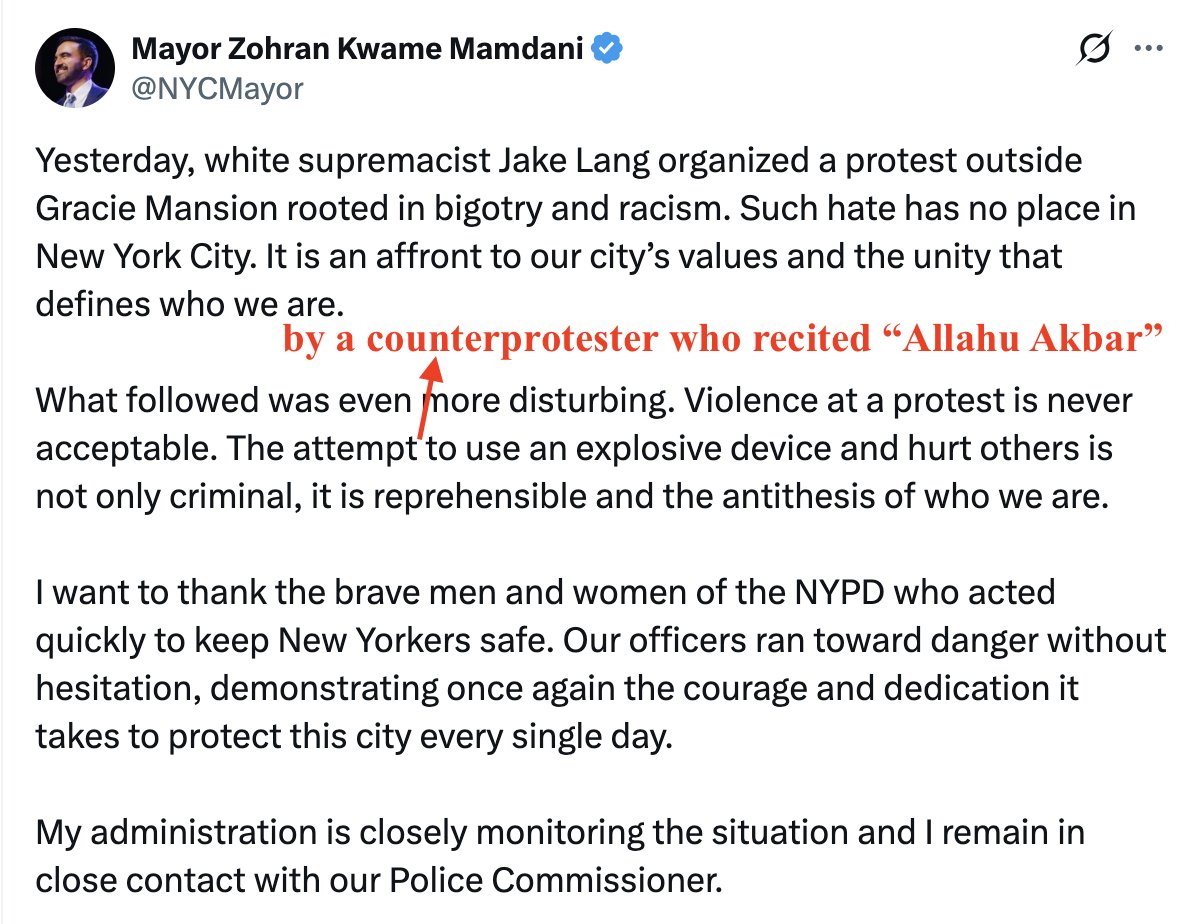
The media bias and mayor's public statement on the Gracie Mansion story is a case study in misleading narrative formation. 1/4
David Zweig tweet media
English
19
181
1.2K
77.5K
Andrew Eberhard retweetledi
Jeremy Corbin MP, Prime Ministerial Parody
A tragedy is unfolding: aside from murdering women for showing their hair, hanging thousands for being gay, murdering their political opposition, cancelling democracy, killing thousands of their own citizens for peacefully demonstrating, plundering their nation’s wealth to line their own pockets, destroying Lebanon & Gazan society via their proxies, supporting Assad’s mass murder of his own people, murdering Jews whenever possible, supporting genocide against Jews and planning the annihilation of Israel while running an annual Holocaust-mocking cartoon competition, murdering hundreds of US servicemen, announcing it was planning the assassination of Donald Trump, making proxy wars against Sunni Arabs and relentlessly trying to build a nuclear weapon to potentially satisfy an apocalyptic religious prophecy by dropping it on Israel & generally planning the end of Western civilisation, what has the Iranian regime done to deserve this attack?
English
291
1.6K
12.6K
1.1M
Freedom_Pills
Freedom_Pills@InARsWeTrustt·
@henrycooke Fundamental flaw in your plan The loan continues to gain interest costs Putting of repayments causes it to blow out faster
English
2
0
5
485
henry cooke
henry cooke@henrycooke·
Thomas Coughlan with a very fun policy idea to stem the brain drain: Raise the student loan repayment threshold dramatically. It gives almost every graduate an effective pay rise PLUS a far stronger reason to stay in NZ: nzherald.co.nz/nz/politics/a-…
English
23
4
83
13.4K
Andrew Eberhard retweetledi
Charted Daily
Charted Daily@Charteddaily·
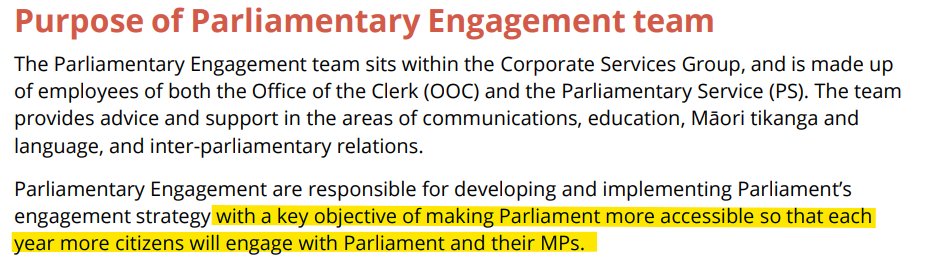
It's hard to understand the decision to abandon an X account with 35k followers, despite the engagement team having a stated objective of making Parliament more accessible and increasing engagement each year. Worth noting the 🇺🇸, 🇪🇺, 🇦🇺, 🇬🇧 & 🇨🇦 legislatures all still post on X.
Charted Daily tweet media
NZ Parliament@NZParliament

You can find House updates on our Facebook, and stay connected through our other social media channels and the Parliament website.

English
35
71
374
13.3K
Mark Cecchini, CFP®
Mark Cecchini, CFP®@markcecchini·
The majority of couples have 1 partner who takes on all responsibility for managing finances & household admin Despite this, few people have created a detailed document for their partner if they weren't around I did this for my wife, and I'm now sharing my template publicly:
English
118
232
4.5K
2M
Andrew Eberhard retweetledi
Nick shirley
Nick shirley@nickshirleyy·
🚨 Here is the full 42 minutes of my crew and I exposing Minnesota fraud, this might be my most important work yet. We uncovered over $110,000,000 in ONE day. Like it and share it around like wildfire! Its time to hold these corrupt politicians and fraudsters accountable We ALL work way too hard and pay too much in taxes for this to be happening, the fraud must be stopped.
English
46.6K
222.7K
687.4K
142.8M
Malakai ™️
Malakai ™️@saltyreigns·
Why am I getting so much pro- Muslim content on my feed?
English
34
0
51
2K
Andrew Eberhard retweetledi
Bjorn Lomborg
Bjorn Lomborg@BjornLomborg·
21 years ago, climate alarmists predicted end of the world, with Guardian dutifully reporting By now, European cities will be drowned, Britain plunged into a ‘Siberian’ climate, Nuclear conflict, mega-droughts, famine and widespread rioting Didn't happen theguardian.com/environment/20… You can see all the references in my Twitter thread: x.com/BjornLomborg/s…
Bjorn Lomborg tweet media
English
93
848
2.9K
90.9K
Graham Stephan
Graham Stephan@GrahamStephan·
For those with $1,000,000+ invested in the market - what percentage cash / cash equivalent are you holding on to?
English
480
14
676
203.7K
Andrew Eberhard retweetledi
Nicholas Decker
Nicholas Decker@captgouda24·
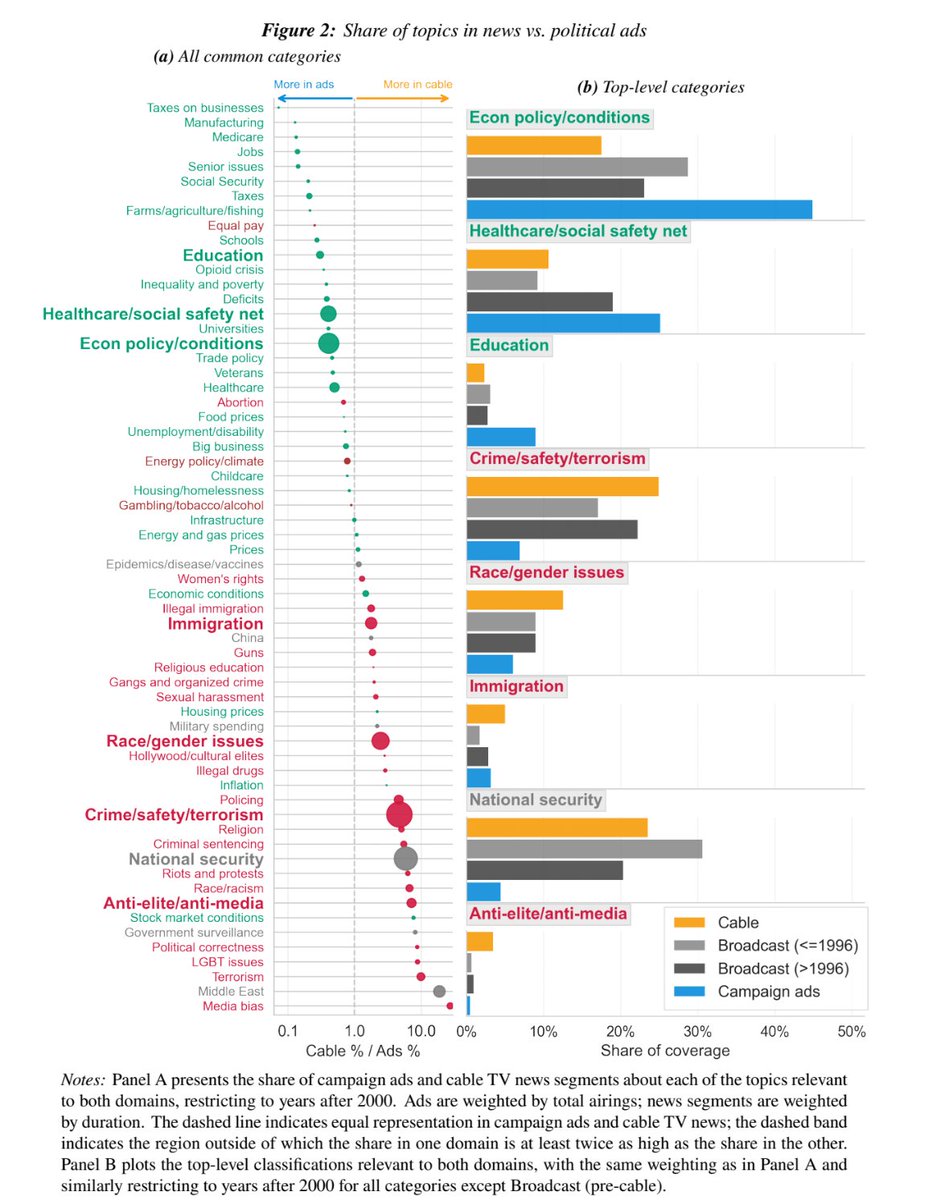
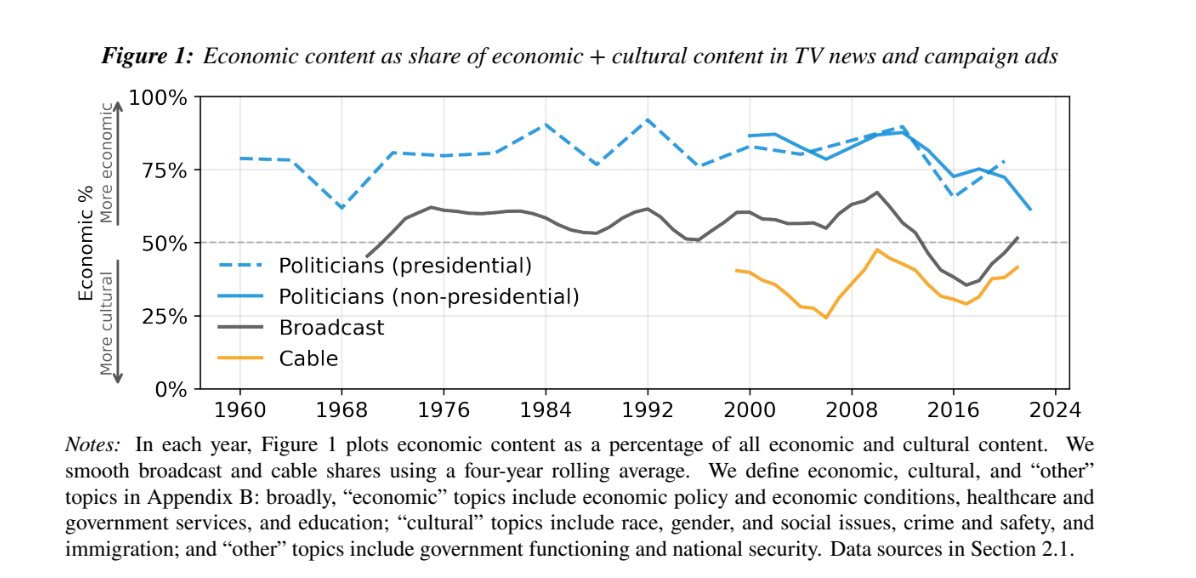
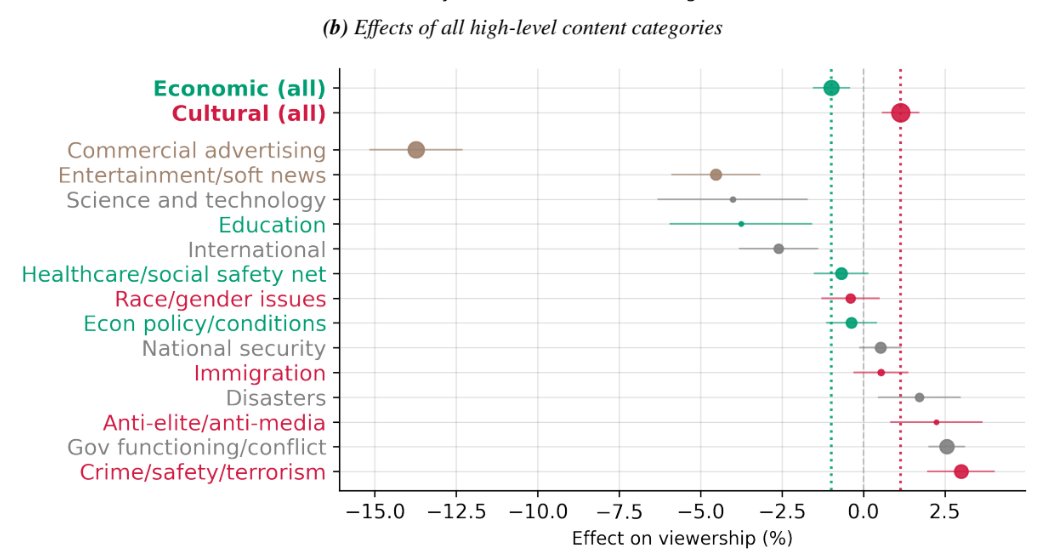
The world seems to be angrier these days. Everyone’s concerned about cultural issues. If you turn on the news, you can flip over to Fox News and hear about the wokes, the transgenders, and the left-wing liberal media; or go over to MSNBC and hear about book bans in the school library. It is rare to see discussion of substantive economic issues on television. Instead you hear about disasters, crime, and one outrageous incident a day. But the politicians aren’t that angry in their messaging. The culture war is not what you run a campaign on, unless you are in a safe district and can indulge in it. Instead, politicians run on pocketbook issues. Their ads are warm and pleasant, and tell you about how they will work to cut taxes, lower costs, and put money in your paycheck. I presume that they are not making a mistake. This must be a winning strategy for each. But why is it the case that politicians don’t win by ginning up outrage? And why does this explain why the Democratic Party is so afflicted by “The Groups”? I had the pleasure of reading “The Business of the Culture War” by Shakked Noy and Aakaash Rao recently, which pretty much explains everything about the modern world. Their core insight is that media companies and politicians have different motivations. Media companies want to sell advertising space, and so care only about the raw number of people watching. Politicians do not care about the number per se, but only their number relative to the opposing candidate. A politician benefits doubly when they persuade a voter to change their vote, while a media company benefits from a message that makes people so angry they have to watch, even if it leads more people to view their competitors. To make this case, Noy and Rao need to collect data, and establish a few facts. First, they have details on advertisements created by all candidates for major offices since 2000, plus presidential ads from 1960, and the complete video recordings of every major news network since 2014 plus transcripts going back to 1968. To deal with this extraordinary quantity of data, they have an LLM characterize segments as dealing with very narrow topics, which can then be categorized themselves. The big stylized fact is that culture war topics are way more common in the media than in ads. The ads of politicians of all kinds have much more economic content than television does, though this has trended down, and in recent years broadcast television has converged with cable news. But why do cable news companies broadcast this content? Now we need details on viewership second-by-second, which, of course, they have. They can now test which types of content gets viewers by exploiting plausibly exogenous variation in when someone flips onto a channel. While people can anticipate what programming is on at any given minute to some extent – you have the headlines at the top of the hour, human interest at the end, and so on – you can use unexpected variation in what content is on relative to what is normally on as an instrumental variable. If they flip on, and stay, that content is effective in getting voters. You can also track what content is on when viewers change the channel. The results are as we expect. Nothing is as strong as flipping to a channel and seeing advertisements, which absolutely tanks viewership, but economic content performs worse than cultural content. Importantly, the viewers gained to not come from other news channels, but from either watching non-news programming or just turning off the TV. In fact, when people change the channel when economic issues come up, they are less likely to go to the other news companies than to other entertainment options. It is important to note that these are just the short-run effects on viewership. Cable news companies need not profit by switching over to only culture war topics, because they could value the reputation of actually telling some of the news, some of the time. The gap between broadcast and cable news is consistent with broadcast news being something aired to make the network respectable, and the recent convergence due to firms finding out that trashiness sells. We also need to argue that the politicians are correct in thinking that pocketbook, kitchen-table issues make them more likely to win. This part is not going to be as credibly identified as the cable news portion, because politicians aren’t strictly maximizing their share votes, but rather their positions weighted by their chance of winning, and politicians are in turn chosen by voters who are trying to solve the same problem. You should be concerned that choice of ad is correlated with unobservable features like “charisma” – you can imagine a candidate who knows they are going to win, so they put out ads which appeal to activist groups so that they are better positioned for leadership positions in the House when they inevitably get there. In particular, raising donations in a safe seat allows you to transfer them to swing state candidates in exchange for good will, and this is something where you do not particularly care about the voters in your district who might be mobilized to vote against you. Noy and Rao’s approach is to use two-way fixed effects, controlling both for the candidate and the year. (Some candidates are more charismatic than others, so we assume that this is constant across years and adjust. Likewise, some years are better for one party than another, so we assume it is constant across candidates and adjust). Candidates which air more economic ads tend to do better. There is selection on observables, which we controlled for – you can say that selection on unobservables would have to be substantially larger than observed selection in order to explain away the results entirely. Another piece of suggestive evidence is that the swing in voting due to ads comes from higher propensity voters, which suggests that they are persuading people who are politically active. Finally, we need some evidence that all this cable news stuff matters. We’re likely to underestimate this, because “culture” will spill across treated and untreated units, but they can reuse instrumental variables for plausibly exogenous exposure to cable news to see how it changes the priorities of potential voters. They use the Martin and Yurukoglu (2017) instrument of channels being assigned higher or lower channel numbers in a way that seems random. Voters who live in places where they are exposed to more culture war programming due to the channel number placement are more likely to say that their most important issue is a culture war one. Politicians pick up on this, and include more advertisements focusing on cultural issues. This tracks with prior work on the effect of Fox News. Stefano Dellavigna and Ethan Kaplan (2007) use the rollout of Fox News to different parts of the country to argue that it caused 3 to 28% of its viewers to vote Republican who would not otherwise have voted or voted for that party. Their argument for identification is that each small town has only one cable provider, but who exactly this cable provider is varies in ways that are not correlated with observables and appear to be somewhat arbitrary. Martin and Yurukoglu, mentioned above, found that Fox News changed vote share, while MSNBC did not. But this paper says so much more about the world than just the media. The incentives of private organizations which are involved with politics are totally misaligned from those who are actually trying to win elections. If you are an organization which cares only about the influence of your particular organization, not the issue you are focused on as a whole, then you will behave in ways that grab attention even as they make your own views less likely to be the law. We can thus see at once why protestors so often behave in ways that are alienating and ineffective. I cannot possibly believe that throwing soup cans on paintings has done much at all for climate change. If a vote was called on whether people approved of Just Stop Oil, they would likely lose it by much larger margins than when they started the campaign. Yet, an organization’s real fight is not for approval, but against potential supporters not knowing who they are. In that, they have been extremely successful. This is just like how firms compete both by finding technologies, and by stealing business from their rivals, as we covered earlier this week in talking about Aghion and Howitt. Having lots of groups leads them to take actions which parasitize each other, at the expense of the party as a whole. The only way out is to impose discipline – we need to punish groups which behave in ways that sabotage the party for their personal benefit.
Nicholas Decker tweet mediaNicholas Decker tweet mediaNicholas Decker tweet media
English
6
10
110
29.4K
Andrew Eberhard retweetledi
The Free Speech Union
The Free Speech Union@SpeechUnion·
From the Crown Court's judgement in the Hamit Coskun case: "There is no offence of blasphemy in our law. Burning a Koran may be an act that many Muslims find desperately upsetting and offensive. The criminal law, however, is not a mechanism that seeks to avoid people being upset, even grievously upset. The right to freedom of expression, if it is a right worth having, must include the right to express views that offend, shock or disturb.   "We live in a liberal democracy. One of the precious rights that affords us is to express our own views and read, hear and consider ideas without the state intervening to stop us doing so. The price we pay for that is having to allow others to exercise the same rights, even if that upsets, offends or shocks us." Mr Justice Bennathan Ms T Guest JP Mr D Graves JP 10 October 2025
English
445
2.8K
12.5K
557.4K
Andrew Eberhard retweetledi
Ani O'Brien
Ani O'Brien@aniobrien·
Chloe Swarbrick needs to be held to account for her insane frothing-at-the-mouth behaviour. She is painting targets on other MPs backs. Her friends are protesting outside Winston’s house terrorising his family.
English
98
135
1K
23.9K