
Andrew Gerard retweetledi
Andrew Gerard
488 posts


Andrew Gerard
@andrewmgerard
Metascience at https://t.co/9e7G58U0Ir. Go read https://t.co/JvW4dA6ZfA
Katılım Ağustos 2025
415 Takip Edilen412 Takipçiler



This is President Nixon's book recommendations for students interested in history, biography and historical novels.

English
Andrew Gerard retweetledi

Andrew Gerard retweetledi

CHIPS needed a team that could sit across the table from large, well-capitalized semiconductor firms and negotiate deals that both protected the taxpayer and delivered on national security objectives.
A lot of the program success was built on the backs of government operators and national security professionals. Equally important, however, were the private sector hires that the program brought onboard.
This week in Factory Settings, I took a look at how the program was able to effectively recruit private sector talent.
A few of the most salient points:
- Program leaders’ decision to go on the Odd Lots podcast was referenced by several colleagues, with non-traditional recruiting pathways serving as critical for getting team members
- CHIPS gave significant empowerment to junior colleagues, allowing them deal reps well above their private sector counterparts
- The program had a tangible, positive impact on the career trajectories of the private sector talent that came through the program
Private sector talent isn't everything, and traditional government competencies are equally critical. Nevertheless, future industrial policy efforts would do well to make a concerted effort to get ex-financiers, operations professionals, and technologists working towards program success.
Read here: factorysettings.org/p/a-cheat-shee…

English
If you’re ever in East Lansing, Michigan (what, you don’t have a reason to ever be in East Lansing, Michigan?) go to the Dairy Store. University of Michigan students might be able to “read good” and “get jobs,” but MSU students have something far more beautiful than that.
Pizza@number_pizza111
Just ate ice cream from a land grant university and I Get It Now. This is literally the entire point of America. No clue why we do all that other stuff.
English
@cojobrien Being height-mogged by Virginia. Devastating.
English

This is literally illegal to build under federal law in Washington DC.
TODNewsHub@TODNewsHub
This is NOT a rendering from Singapore or Abu Dhabi 🤯🔥 It’s Tysons, Virginia. The newly approved “Piazza at Tysons” next to the Spring Hill Metro includes: 🏙️ THREE high-rise towers (up to 33 stories) 🏠 780 units 🏨 310-room hotel 🏢 760,000+ SF offices 🛍️ 83,000 SF retail ⛸️ Ice rink, parks, plazas & pickleball courts Twenty years ago this was basically suburban sprawl, now Tysons is turning into a real skyline city in real time! #TysonsCorner #Virginia #NoVA #DMV @WashProbs @tysons_va
English
Andrew Gerard retweetledi

I'm hiring for @indevmag's first not-me hire.
Help shape the future of development journalism; edit pieces that do serious cost-effectiveness analysis AND have jokes.
Up to $90k USD, fully remote worldwide.
indevelopmentmag.com/jobs/
English
I ranked them based on reads, not likes. But you're right, yours got 75 likes on Substack and @taoburr got 66.
By likes rather than reads, the 3rd place piece would have been @timhwang's Metascience in Dangerous Times, which got 29 likes (but, as I said, I added these based on reads rather than likes). macroscience.org/p/metascience-…
English


We re-launched Macroscience 6 months ago. Below I share our 3 most read pieces from the last 6 months, and my guess as to why they did well:
1. Do Not Surrender to the Tech Tree (@taoburr). Tao articulated what many people had been unable to put into words. At a crucial moment in AI development, Tao laid out a theory of tech determinism that called out for us to seize windows of opportunity. macroscience.org/p/do-not-surre…
2. To Get More Effective Drugs, We Need More Human Trials (@RuxandraTeslo and @JackScannell13). Like Tao, Rux and Jack tapped into interest in rapidly changing tech, but demonstrated how the need for human trials creates a huge bottleneck to pharmaceutical development (even in the context of powerful AI). macroscience.org/p/to-get-more-…
3. NSF Tech Labs FAQs (The @IFP Metascience Team). Turns out, people like it when you provide helpful info! We wrote this piece when NSF had released a Request for Information about their Tech Labs (now titled X-Labs) program. I hope it encouraged some people to submit RFI responses. Here's our FAQs piece: macroscience.org/p/nsf-tech-lab…
And here's the NSF X-Labs program announced last week: nsf.gov/funding/initia…
English
Andrew Gerard retweetledi

New post; after the news that the NSF was planning to shutter the Social, Behavioral, and Economic Directorate, I was reminded of the cuts to social science at the NSF during the Reagan years. So I wrote a short history of the two episodes. abundanceandgrowth.org/p/social-scien…
English
I’m only kind of kidding. IFP style think tanks could be a really useful for countries trying to make smart decisions about their development during a time of rapid change.
English

Andrew Gerard retweetledi

New blog post: The third wave of American philanthropy
Hundreds of billions of dollars in new philanthropic capital will soon become liquid. The OpenAI Foundation holds 26% of OpenAI, worth about $220B at today’s valuation. Anthropic’s seven co-founders have pledged to give away 80% of their wealth and have instituted the most aggressive donor matching program for employees in tech history.
How much does this all add up to? And how meaningful is that in the context of philanthropy today?
I was doing some simple napkin math to wrap my head around the scale of what’s coming, and radicalized myself in the process. I had dramatically underappreciated the scale of the philanthropic capital that’s about to become available and the corresponding gap in talent and organizations that will be needed to make the most of it.
This piece aims to directionally sketch the scale of what’s coming, the gap in operational capacity needed to absorb it, and what we can do to fill it.
(Link to full post in reply)
English
Andrew Gerard retweetledi

We know surprisingly little about how automation will unfold outside rich countries.
So we built the Global Automation Atlas: 18,000 tasks, 124 countries, and 2.3 million task-country comparisons.
English
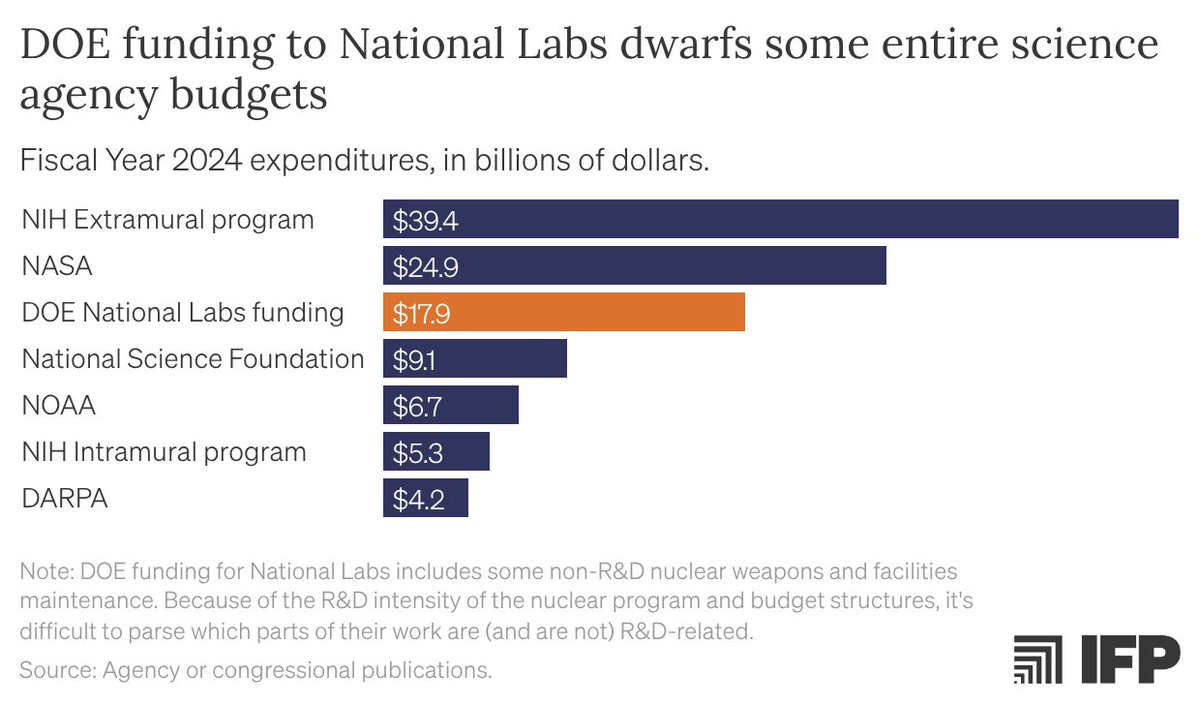
Until recently, my mental model of American science didn’t provide much space for the National Labs. I underestimated their scale and scientific output.
The Labs are massive - their budget is over 3X that of DARPA. And they’ve produced innovations like, well, the A-bomb. More recently they were integral to the Human Genome Project and Protein Data Bank.
The author of this Macroscience piece, Jordi Cabana (@CabanaChemistry), suggests that writers proposing new institutional models (e.g., X-Labs) have ignored the Labs, when the Labs can perform the same functions they seek.
Without fully agreeing with Jordi, he did convince me that metascience should take the National Labs much more seriously.
We should ask: What can new institutions learn from the Labs? What can the Labs learn from new institutions? And how can metascience better integrate the Labs into our collective mental model of American science?
Learn about the Labs here: macroscience.org/p/metascience-…
English
English


A genuinely beautiful article about the unspoken sadness of adult friendships timesofindia.indiatimes.com/blogs/civil-ir…
English
Andrew Gerard retweetledi
My generic career advice, as an economist-teacher-blogger-program director with an Econ PhD from a dept. outside T30 (T50?). As with most career advice, N = 1.
1. The danger in optimizing for a very specific career outcome is that you could get stuck at a local max.
2. Lean into your comparative advantages.
3. Send signals to different audiences. Research papers are one kind of signal, but so are blogs, policy white papers, talks, tweets, digital projects, etc.
4. It's hard to predict the future, so don't shortchange doing things that are interesting/valuable today.
English
Andrew Gerard retweetledi

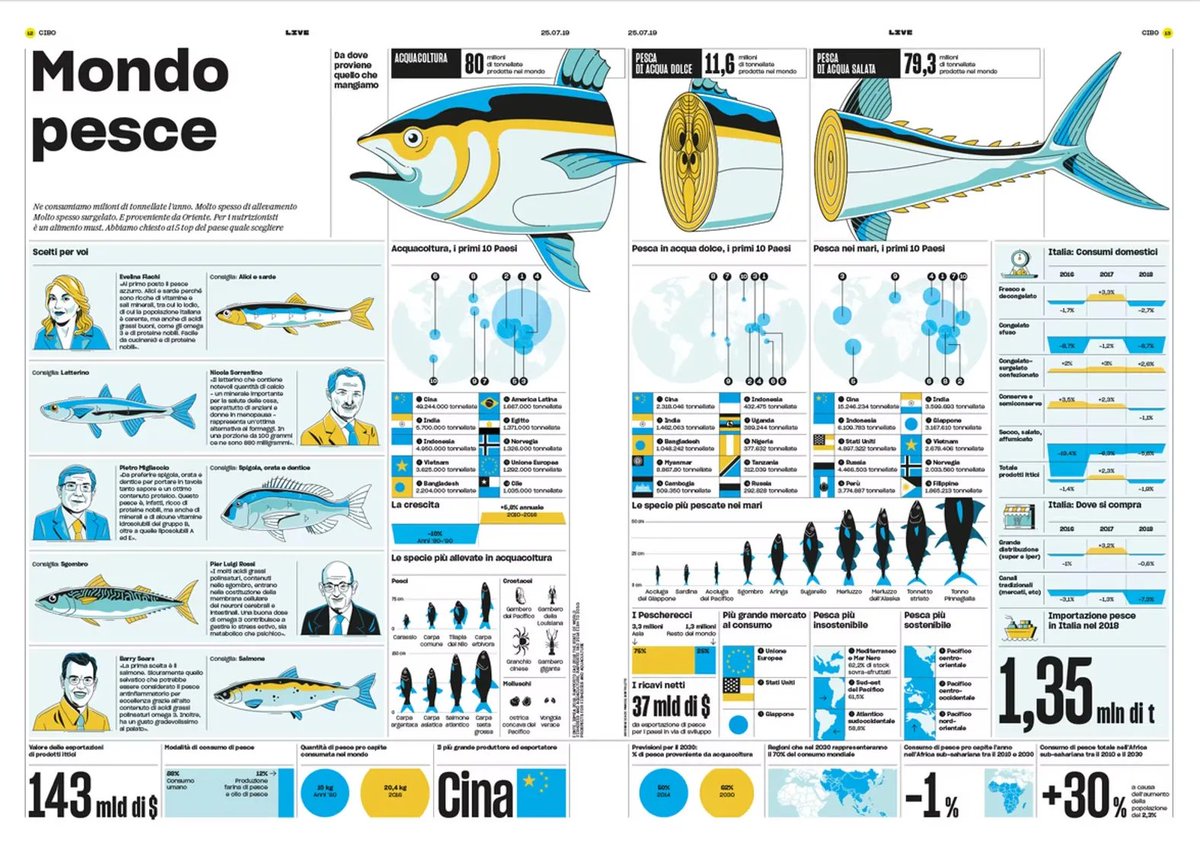
Want to learn infographic design?
Our new data visualization specialist, Manuel Bortoletti, does fantastic diagrams, geospatial visualizations and graphs.
He's teaching a two-week course in June in New York. I'd highly recommend it. Details here:
coopertype.org/events/advance…

English
Andrew Gerard retweetledi

You can also learn more about what a day on the job is like here! - coefficientgiving.org/research/day-i…
Deena Mousa@deenamousa
Come work with me! We're hiring for a number of roles, including on my team, which makes grants to incubate new cause areas. We might cover any area where we don't have an existing program, which makes the job (in my opinion) extremely interesting.
English
Andrew Gerard retweetledi

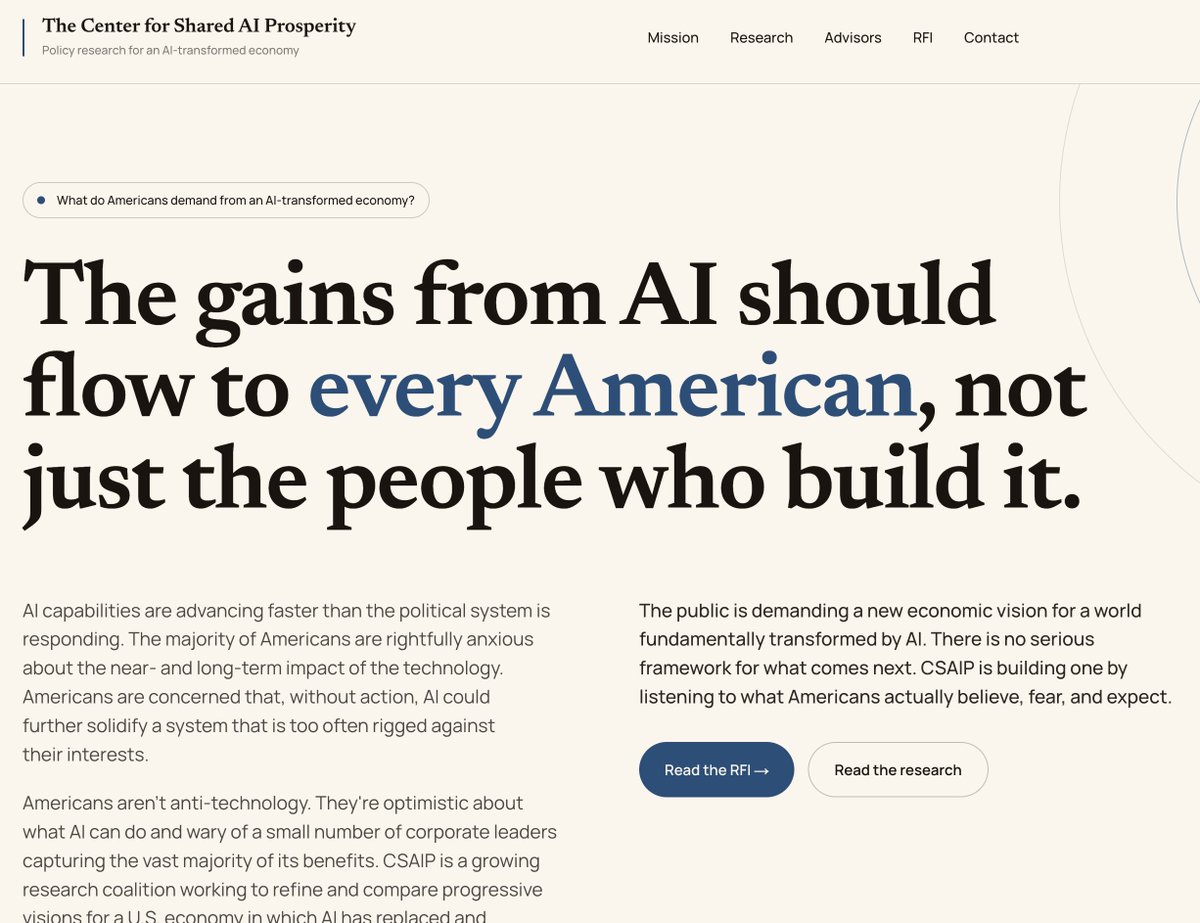
Very excited to launch a project I've been helping out with the last couple months.*
The Center for Shared AI Prosperity is an attempt by an, other than me, very impressive team (so far including @davidshor, @katz_morris, @StefFeldman, @maidinoff, Lindsay Lamont, Jesse Stinebring, @joshhendler, @goldman, and Lilah Penner Brown) to force DC policy elites to take the impending economic impacts of advanced AI more seriously.
We do not think this is a normal economic shock, though we are deeply uncertain about what kind of economic shock it will be. We could be left with a world of extreme power and wealth concentration, increasing political instability arising from that growing inequality, and deep questions about how to fund governments that have for a century-plus relied on income and payroll taxes.
Our main purpose as an organization is to surface tractable ideas to reform and grow the safety net to meet the moment; to restructure the labor market so workers are still valued and fairly paid; to remake the tax code so that the gains from AI are shared widely; and to experiment with ways of giving average Americans concrete shares in the AI surplus.
To that end, we're running a Request for Ideas, and we're offering $3,000 for the best proposals. Top ideas will get rigorous polling from Blue Rose Research to see how Americans feel about them.
We are trying to solicit submissions from a wide pool, and purposefully don't want to just ask the usual think tanks, economists, academics, etc. (Though we want them too!) If you have ideas that you think could be useful, please don't hesitate to apply. Feel free to reach out to me if you have any questions about the program.
Read more here: csaip.org
*Obligatory disclaimer: I'm doing this on my personal time, not in my capacity at Coefficient Giving. Nothing I or CSAIP say necessarily reflects CG's views.
English