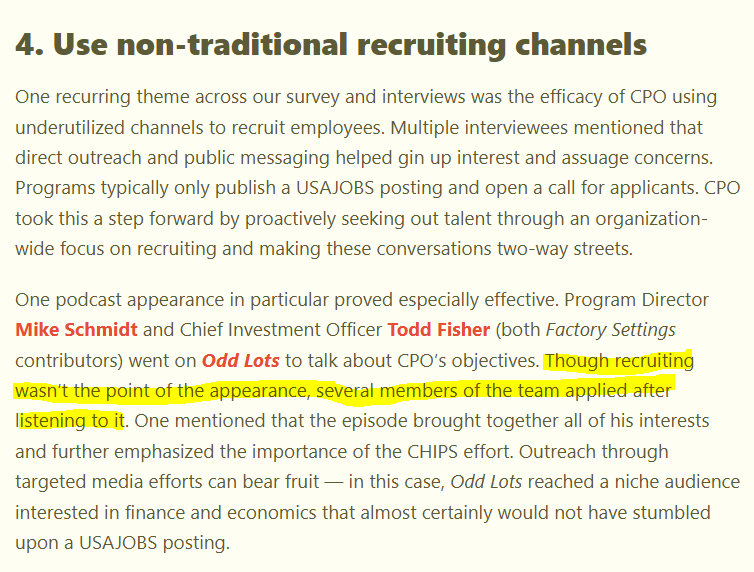
CHIPS needed a team that could sit across the table from large, well-capitalized semiconductor firms and negotiate deals that both protected the taxpayer and delivered on national security objectives. A lot of the program success was built on the backs of government operators and national security professionals. Equally important, however, were the private sector hires that the program brought onboard. This week in Factory Settings, I took a look at how the program was able to effectively recruit private sector talent. A few of the most salient points: - Program leaders’ decision to go on the Odd Lots podcast was referenced by several colleagues, with non-traditional recruiting pathways serving as critical for getting team members - CHIPS gave significant empowerment to junior colleagues, allowing them deal reps well above their private sector counterparts - The program had a tangible, positive impact on the career trajectories of the private sector talent that came through the program Private sector talent isn't everything, and traditional government competencies are equally critical. Nevertheless, future industrial policy efforts would do well to make a concerted effort to get ex-financiers, operations professionals, and technologists working towards program success. Read here: factorysettings.org/p/a-cheat-shee…