Sabitlenmiş Tweet

Strong margin expansion in tech and SaaS imminent due to 5x+ productivity unlock for dev teams from GPT-3+, so R&D as % of revenue will decline. Also startups can build MvP and product with way less devs. Booolish
English
Andrew Yeolo
327 posts
@AndrewYeolo
VC Investor @OIFVC | DMs are open
1/ Excited to share that RockSolid has raised $2.8M in pre-seed funding led by @CastleIslandVC w/ backing from @Rocket_Pool, @GSR_io, @kindredventures, @theBBFund, @ideoVC, @StanfordSBA, and others. Today, we're also launching the first official rETH vault with @Rocket_Pool.
Our next community call is starting soon in the Rocket Pool Discord: Thu 25 Sep @ 11:30pm UTC We'll chat with @rocksolidHQ about our partnership to supercharge $rETH 🤝 Plus, download the @poapxyz Home App & grab a free POAP when you join the call Link below 👇



Reservoir has raised a $14M Series A round led by @usv. We’re here to build the world’s best developer tools for token trading on every chain.
The buzz over DeepSeek this week crystallized, for many people, a few important trends that have been happening in plain sight: (i) China is catching up to the U.S. in generative AI, with implications for the AI supply chain. (ii) Open weight models are commoditizing the foundation-model layer, which creates opportunities for application builders. (iii) Scaling up isn’t the only path to AI progress. Despite the massive focus on and hype around processing power, algorithmic innovations are rapidly pushing down training costs. About a week ago, DeepSeek, a company based in China, released DeepSeek-R1, a remarkable model whose performance on benchmarks is comparable to OpenAI’s o1. Further, it was released as an open weight model with a permissive MIT license. At Davos last week, I got a lot of questions about it from non-technical business leaders. And on Monday, the stock market saw a “DeepSeek selloff”: The share prices of Nvidia and a number of other U.S. tech companies plunged. (As of the time of writing, some have recovered somewhat.) Here’s what I think DeepSeek has caused many people to realize: China is catching up to the U.S. in generative AI. When ChatGPT was launched in November 2022, the U.S. was significantly ahead of China in generative AI. Impressions change slowly, and so even recently I heard friends in both the U.S. and China say they thought China was behind. But in reality, this gap has rapidly eroded over the past two years. With models from China such as Qwen (which my teams have used for months), Kimi, InternVL, and DeepSeek, China had clearly been closing the gap, and in areas such as video generation there were already moments where China seemed to be in the lead. I’m thrilled that DeepSeek-R1 was released as an open weight model, with a technical report that shares many details. In contrast, a number of U.S. companies have pushed for regulation to stifle open source by hyping up hypothetical AI dangers such as human extinction. It is now clear that open source/open weight models are a key part of the AI supply chain: Many companies will use them. If the U.S. continues to stymie open source, China will come to dominate this part of the supply chain and many businesses will end up using models that reflect China’s values much more than America’s. Open weight models are commoditizing the foundation-model layer. As I wrote previously, LLM token prices have been falling rapidly, and open weights have contributed to this trend and given developers more choice. OpenAI’s o1 costs $60 per million output tokens; DeepSeek R1 costs $2.19. This nearly 30x difference brought the trend of falling prices to the attention of many people. The business of training foundation models and selling API access is tough. Many companies in this area are still looking for a path to recouping the massive cost of model training. Sequoia’s article “AI’s $600B Question” lays out the challenge well (but, to be clear, I think the foundation model companies are doing great work, and I hope they succeed). In contrast, building applications on top of foundation models presents many great business opportunities. Now that others have spent billions training such models, you can access these models for mere dollars to build customer service chatbots, email summarizers, AI doctors, legal document assistants, and much more. Scaling up isn’t the only path to AI progress. There’s been a lot of hype around scaling up models as a way to drive progress. To be fair, I was an early proponent of scaling up models. A number of companies raised billions of dollars by generating buzz around the narrative that, with more capital, they could (i) scale up and (ii) predictably drive improvements. Consequently, there has been a huge focus on scaling up, as opposed to a more nuanced view that gives due attention to the many different ways we can make progress. Driven in part by the U.S. AI chip embargo, the DeepSeek team had to innovate on many optimizations to run on less-capable H800 GPUs rather than H100s, leading ultimately to a model trained (omitting research costs) for under $6M of compute. It remains to be seen if this will actually reduce demand for compute. Sometimes making each unit of a good cheaper can result in more dollars in total going to buy that good. I think the demand for intelligence and compute has practically no ceiling over the long term, so I remain bullish that humanity will use more intelligence even as it gets cheaper. I saw many different interpretations of DeepSeek’s progress here in X, as if it was a Rorschach test that allowed many people to project their own meaning onto it. I think DeepSeek-R1 has geopolitical implications that are yet to be worked out. And it’s also great for AI application builders. My team has already been brainstorming ideas that are newly possible only because we have easy access to an open advanced reasoning model. This continues to be a great time to build! [Original text: deeplearning.ai/the-batch/issu… ]

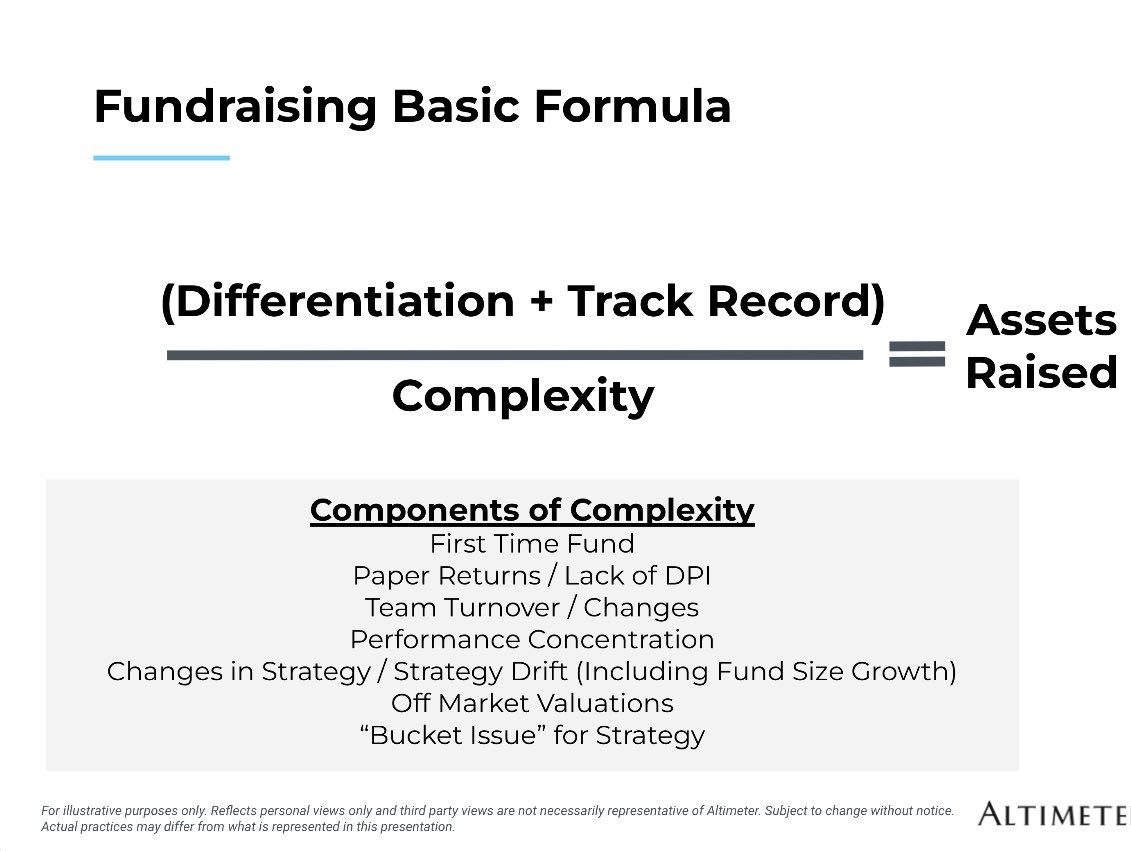
Never use debt to extend your runway. Debt is a great tool for working capital. But if you use it to extend your runway, you are betting on both your execution and the timing of the markets. Instead, focus on raising the capital you need and take the lower valuation with good terms for your company. If your company succeeds, you will forget the lower valuation very quickly.

I am pleased to announce the brilliant Team that will be working in conjunction with our White House A.I. & Crypto Czar, David O. Sacks. Together, we will unleash scientific breakthroughs, ensure America's technological dominance, and usher in a Golden Age of American Innovation! Michael J.K. Kratsios will be the new Director of the White House Office of Science and Technology Policy (OSTP), and an Assistant to the President for Science and Technology. In my First Term, Michael was unanimously confirmed by the U.S. Senate as Chief Technology Officer of the United States at the White House. He also served as the Under Secretary of Defense for Research & Engineering at the Pentagon, and received the DoD's Distinguished Public Service Medal. He graduated from Princeton, and is a Distinguished Fellow at Stanford. Dr. Lynne Parker will serve as Executive Director of the Presidential Council of Advisors for Science and Technology (PCAST), and Counselor to the Director of the Office of Science and Technology Policy. PCAST will assemble America's most distinguished minds in science and technology to advise our Administration on critical issues like Artificial Intelligence. As previously announced, David Sacks will be chairing PCAST. Dr. Parker previously served as Deputy U.S. CTO, and Founding Director of the National Artificial Intelligence Initiative Office. She received her PhD in Computer Science from MIT. Additionally, Bo Hines will be the Executive Director of the Presidential Council of Advisers for Digital Assets (the "Crypto Council"), a new advisory group composed of luminaries from the Crypto industry, and chaired by our Crypto Czar, David Sacks. Bo is a graduate of Yale University, and Wake Forest University Law School. In his new role, Bo will work with David to foster innovation and growth in the digital assets space, while ensuring industry leaders have the resources they need to succeed. Together, they will create an environment where this industry can flourish, and remain a cornerstone of our Nation's technological advancement. Sriram Krishnan will serve as Senior Policy Advisor for Artificial Intelligence at the White House Office of Science and Technology Policy. Working closely with David Sacks, Sriram will focus on ensuring continued American leadership in A.I., and help shape and coordinate A.I. policy across Government, including working with the President's Council of Advisors on Science and Technology. Sriram started his career at Microsoft as a founding member of Windows Azure. Congratulations to all!


Sending this cake to Delaware as a parting gift 😘