@annalisap

18K posts

@annalisap banner
@annalisap

@annalisap

@Annalisap

Award Winning Doc Film Director. Journalist. Producer. Founder /Director. https://t.co/374ZH28JPw . #WakeEuropeProject . Time to smell the ☕️ Docs &Talks Curator

London, England Katılım Temmuz 2007
3.9K Takip Edilen3.2K Takipçiler
@annalisap retweetledi
Agnès Vahramian
Agnès Vahramian@AgnesVahramian·
Emmanuel Macron chante « la bohème » accompagné à la batterie par le premier ministre Nikol pachinyan . Dîner d’état à Erevan. La musique en amitié.
Français
770
2.1K
13.2K
997K
@annalisap retweetledi
Anish Moonka
Anish Moonka@anishmoonka·
Winston Churchill fought his depression with bricks. He'd lay them for hours at his country home in Kent. He joined the bricklayers' union. And in 1921 he wrote about why it worked. It took psychology another 75 years to catch up. He called his depression the "Black Dog." It followed him for decades. His method for fighting it back was as basic as it sounds: laying brick after brick, hour after hour. Churchill spelled out his theory in a long essay for The Strand Magazine. People who think for a living, he wrote, can't fix a tired brain just by resting it. They have to use a different part of themselves. The part that moves the eyes and the hands. Woodworking, chemistry, bookbinding, bricklaying, painting. Anything that drags the body into a problem the mind can't solve by itself. Modern psychology now calls this behavioral activation. It's one of the most-studied depression treatments out there. Depression sets a behavior trap. You feel bad, so you stop doing things, and doing less means less to feel good about. Feeling worse makes you do even less. The loop tightens until you can't breathe inside it. Behavioral activation breaks the loop from the action side. You schedule the activity first, even when every part of you doesn't want to. Doing it produces small rewards: a wall gets straighter, a painting fills in, a messy room gets clean. Those small rewards slowly rewire the brain. Action comes first, and the feeling follows. Researchers at the University of Washington put this to the test in 2006. They studied 241 adults with major depression and compared three treatments: behavioral activation, regular talk therapy, and antidepressants. For the people who were most severely depressed, behavioral activation matched the drugs. It beat the talk therapy. A 2014 review of more than 1,500 patients across 26 trials backed up the result. Physical work like bricklaying does something extra on top of this. It crowds out rumination, the looping bad thoughts that grind people down during the worst stretches of depression. Bricklaying needs both hands and gives feedback brick by brick: each one is straight or crooked. After an hour you can see exactly how much wall you built. No room left for the mental chewing. The line George Mack used in his post, "depression hates a moving target," is good poetry. The science behind it is sharper. Depression hates a brain that has somewhere else to be.
George Mack@george__mack

Winston Churchill used to lay 200 bricks per day to keep his mind busy when feeling down. Depression hates a moving target.

English
795
10.9K
53.5K
6.3M
Hugh Grant
Hugh Grant@HackedOffHugh·
Rare great news about the government finally banning phones in schools. Enraging champagne and hand clapping emojis all round. Next step - get rid of screen based learning. It’s crap, it’s stealing the children’s data and it deepens their screen addiction. Here below is me ranting with the great Prof Jonathan Haidt and Sophie Winkleman on this.
Close Screens Open Minds@CloseScreens

Hugh Grant and Jonathan Haidt share parents' concerns - BigTech is ruthlessly addicting our children to screens. For the full interview with @HackedOffHugh, Sophie Winkleman and @JonHaidt visit - closescreensopenminds.com/the-infiltrati… Filmed by @PostcodeFilms

English
153
719
4.7K
294.5K
@annalisap
@annalisap@Annalisap·
@Ced_haurus Why are you saying this while on the technofascist in chief platform? You are undermining your own argument. They say it is ineluctable because they control the media. The media is the message. Cit.
English
0
0
0
12
Christophe Boutry
Christophe Boutry@Ced_haurus·
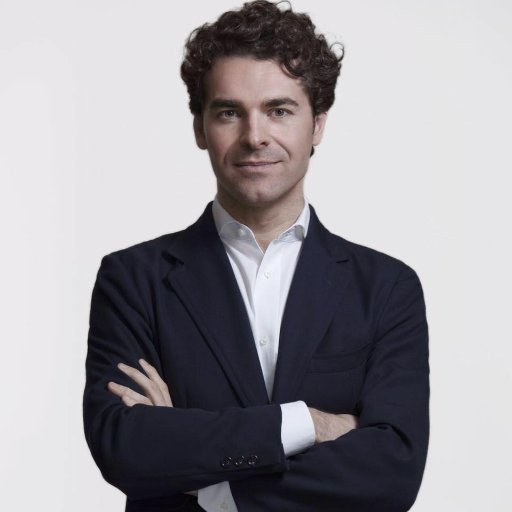
Palantir vient de publier son manifeste. Lisez-le. Pas pour ce qu'il dit sur la tech. Pour ce qu'il dit sur le politique. Sur l'idéologie de Karp et Thiel. Sur la guerre. Sur vous. Quand une entreprise privée se donne pour mission de définir qui doit être surveillé, ciblé, prédit, neutralisé, et qu'elle publie simultanément un texte expliquant pourquoi contester cela serait de la faiblesse civilisationnelle, on n'est plus dans la stratégie d'entreprise. On est dans la privatisation du souverain. Le droit de décider de l'ennemi, qui fut toujours le geste politique fondateur des États, est en train d'être racheté par une entreprise cotée au Nasdaq. Ce manifeste repose sur un seul tour de passe-passe, répété sous vingt formes différentes : rendre l'inévitable ce qui est en réalité un choix. Les armes à IA ? Elles seront construites de toute façon, alors autant que ce soit nous. La surveillance algorithmique ? La réalité géopolitique l'exige. Le réarmement de l'Occident, la hiérarchie des cultures, la disqualification du pluralisme comme naïveté dangereuse ? Simple lucidité face au monde tel qu'il est. C'est le geste idéologique par excellence : ne pas interdire la question, mais la rendre indécente. Ce que Palantir appelle réalisme est en fait une décision philosophique radicale : le conflit est la vérité permanente du monde, la délibération démocratique est une fragilité que l'adversaire exploitera, et une élite technologique privée est mieux placée qu'un peuple pour tirer les conséquences de cette vérité. C'est du schmittisme en hoodie. C'est littéralement la structure de leur pensée. Le danger n'est pas qu'ils soient fous. Le danger est qu'ils soient riches, cohérents, et déjà à l'intérieur des États. Palantir ne frappe pas à la porte des gouvernements pour vendre un outil. Elle arrive avec une cosmologie complète : voici comment fonctionne le monde, voici vos ennemis, voici pourquoi vous ne pouvez pas vous permettre de débattre, et voici notre contrat. Palantir est l'ennemie des peuples et de la démocratie. Ce qu'ils construisent, c'est un pouvoir technocratique que personne n'a élu et que personne ne pourra destituer.
Palantir@PalantirTech

Because we get asked a lot. The Technological Republic, in brief. 1. Silicon Valley owes a moral debt to the country that made its rise possible. The engineering elite of Silicon Valley has an affirmative obligation to participate in the defense of the nation. 2. We must rebel against the tyranny of the apps. Is the iPhone our greatest creative if not crowning achievement as a civilization? The object has changed our lives, but it may also now be limiting and constraining our sense of the possible. 3. Free email is not enough. The decadence of a culture or civilization, and indeed its ruling class, will be forgiven only if that culture is capable of delivering economic growth and security for the public. 4. The limits of soft power, of soaring rhetoric alone, have been exposed. The ability of free and democratic societies to prevail requires something more than moral appeal. It requires hard power, and hard power in this century will be built on software. 5. The question is not whether A.I. weapons will be built; it is who will build them and for what purpose. Our adversaries will not pause to indulge in theatrical debates about the merits of developing technologies with critical military and national security applications. They will proceed. 6. National service should be a universal duty. We should, as a society, seriously consider moving away from an all-volunteer force and only fight the next war if everyone shares in the risk and the cost. 7. If a U.S. Marine asks for a better rifle, we should build it; and the same goes for software. We should as a country be capable of continuing a debate about the appropriateness of military action abroad while remaining unflinching in our commitment to those we have asked to step into harm’s way. 8. Public servants need not be our priests. Any business that compensated its employees in the way that the federal government compensates public servants would struggle to survive. 9. We should show far more grace towards those who have subjected themselves to public life. The eradication of any space for forgiveness—a jettisoning of any tolerance for the complexities and contradictions of the human psyche—may leave us with a cast of characters at the helm we will grow to regret. 10. The psychologization of modern politics is leading us astray. Those who look to the political arena to nourish their soul and sense of self, who rely too heavily on their internal life finding expression in people they may never meet, will be left disappointed. 11. Our society has grown too eager to hasten, and is often gleeful at, the demise of its enemies. The vanquishing of an opponent is a moment to pause, not rejoice. 12. The atomic age is ending. One age of deterrence, the atomic age, is ending, and a new era of deterrence built on A.I. is set to begin. 13. No other country in the history of the world has advanced progressive values more than this one. The United States is far from perfect. But it is easy to forget how much more opportunity exists in this country for those who are not hereditary elites than in any other nation on the planet. 14. American power has made possible an extraordinarily long peace. Too many have forgotten or perhaps take for granted that nearly a century of some version of peace has prevailed in the world without a great power military conflict. At least three generations — billions of people and their children and now grandchildren — have never known a world war. 15. The postwar neutering of Germany and Japan must be undone. The defanging of Germany was an overcorrection for which Europe is now paying a heavy price. A similar and highly theatrical commitment to Japanese pacifism will, if maintained, also threaten to shift the balance of power in Asia. 16. We should applaud those who attempt to build where the market has failed to act. The culture almost snickers at Musk’s interest in grand narrative, as if billionaires ought to simply stay in their lane of enriching themselves . . . . Any curiosity or genuine interest in the value of what he has created is essentially dismissed, or perhaps lurks from beneath a thinly veiled scorn. 17. Silicon Valley must play a role in addressing violent crime. Many politicians across the United States have essentially shrugged when it comes to violent crime, abandoning any serious efforts to address the problem or take on any risk with their constituencies or donors in coming up with solutions and experiments in what should be a desperate bid to save lives. 18. The ruthless exposure of the private lives of public figures drives far too much talent away from government service. The public arena—and the shallow and petty assaults against those who dare to do something other than enrich themselves—has become so unforgiving that the republic is left with a significant roster of ineffectual, empty vessels whose ambition one would forgive if there were any genuine belief structure lurking within. 19. The caution in public life that we unwittingly encourage is corrosive. Those who say nothing wrong often say nothing much at all. 20. The pervasive intolerance of religious belief in certain circles must be resisted. The elite’s intolerance of religious belief is perhaps one of the most telling signs that its political project constitutes a less open intellectual movement than many within it would claim. 21. Some cultures have produced vital advances; others remain dysfunctional and regressive. All cultures are now equal. Criticism and value judgments are forbidden. Yet this new dogma glosses over the fact that certain cultures and indeed subcultures . . . have produced wonders. Others have proven middling, and worse, regressive and harmful. 22. We must resist the shallow temptation of a vacant and hollow pluralism. We, in America and more broadly the West, have for the past half century resisted defining national cultures in the name of inclusivity. But inclusion into what? Excerpts from the #1 New York Times Bestseller The Technological Republic: Hard Power, Soft Belief, and the Future of the West, by Alexander C. Karp & Nicholas W. Zamiska techrepublicbook.com

Français
443
10.3K
25.4K
3M
@annalisap retweetledi
GET A GRIP
GET A GRIP@docrussjackson·
The Vatican was in no mood to play games with the would-be prophet from Palantir and Nigel Farage’s “friend”, Peter Thiel. Paolo Benanti, a priest who has advised Pope Francis and Pope Leo on AI and tech ethics, called out Thiel as a “political theologian operating at the very heart of the Silicon Valley ecosystem” and delivered a scathing rebuke of Thiel’s religious delusions: “Thiel’s entire action can thus be read as a prolonged act of heresy against the liberal consensus: a challenge to the very foundations of civil coexistence, which he now considers outdated.” Benanti hit Thiel where it hurts, zooming in on his persistent efforts to pervert religious ideas into justifications for greed, monopoly, and authoritarianism. He exposes Thiel’s obsessive focus on achieving “the pathological radicalization” of “competition, technology, the individual” to argue against democratic society itself. thenerdreich.com/peter-thiels-a…
English
50
1.2K
2.5K
62.3K
@annalisap retweetledi
Alberto Alemanno 🇪🇺
Alberto Alemanno 🇪🇺@alemannoEU·
Habermas died today at 96 exiting a world that looks like a systematic refutation of everything he believed in. Yet that ideal - which many of us share - doesn’t collapse when reality betrays it. It becomes more necessary. Europe lost its sharpest defender today, not his ideas that instead resonate as prescient as ever.
Alberto Alemanno 🇪🇺 tweet media
English
17
55
209
15.3K
@annalisap retweetledi
European Parliament
European Parliament@Europarl_EN·
According to the European Parliament’s latest Eurobarometer survey, most EU citizens want a more united European Union. Learn more: link.europa.eu/4VJyHy
European Parliament tweet media
English
1.9K
669
2.9K
228.5K
@annalisap retweetledi
Thierry Breton
Thierry Breton@ThierryBreton·
Turnberry, Scotland. July 27th, 2025 Nuuk, Greenland. January 17th, 2026 6 months. “You were given the choice between war and dishonor. You chose dishonor, and you will have war.” — (Attributed) Winston Churchill, 1938
Thierry Breton tweet media
English
218
488
2K
203.1K
@annalisap retweetledi
Emmanuel Macron
Emmanuel Macron@EmmanuelMacron·
France is committed to the sovereignty and independence of nations, in Europe and elsewhere. This guides our choices. It underpins our commitment to the United Nations and to its Charter. It is on this basis that we support, and will continue to support Ukraine and that we have built a coalition of the willing for a robust and lasting peace, to defend these principles and our security. It is also on this basis that we decided to take part in the exercise organized by Denmark in Greenland. We fully assume this decision, because security in the Arctic and at the outer edges of our Europe is at stake. No intimidation or threat will influence us—neither in Ukraine, nor in Greenland, nor anywhere else in the world when we are confronted with such situations. Tariff threats are unacceptable and have no place in this context. Europeans will respond in a united and coordinated manner should they be confirmed. We will ensure that European sovereignty is upheld. It is in this spirit that I will engage with our European partners.
English
6.7K
10K
71.8K
3.4M
@annalisap retweetledi
Carole Cadwalladr
Carole Cadwalladr@carolecadwalla·
Please read this. The UK political & media establishment is asleep at the wheel. We have made ourselves wholly dependent on a Trump ally for our national security at the exact moment Trump is threatening to invade a NATO ally open.substack.com/pub/broligarch…
Carole Cadwalladr tweet media
English
72
2.1K
4K
246.9K
@annalisap
@annalisap@Annalisap·
Why protest against injustice ? @cliffsedge/note/c-191742878?r=5viyj&utm_medium=ios&utm_source=notes-share-action" target="_blank" rel="nofollow noopener">substack.com/@cliffsedge/no…
English
0
0
0
25
@annalisap retweetledi
FlowBuds
FlowBuds@joeyferg·
The United States federal government really want you to believe that this soccer mom with her lab in the car who's last words were a calm "That's fine, dude. I'm not mad at you." was a domestic terrorist. Beyond insanity.
FlowBuds tweet media
English
5.1K
24.9K
153.6K
2.5M
@annalisap
@annalisap@Annalisap·
@ThierryBreton : Merci pour votre travail au service d’une Europe qui s’est donné des règles pour protéger ses citoyens. Les sanctions américaines qui en résultent illustrent simplement pourquoi l’Europe devrait se réveiller. #DSA #WakeUpEurope
Français
0
0
1
13
@annalisap
@annalisap@Annalisap·
@Thierrybreton : Merci pour votre travail au service d’une Europe qui s’est donné des règles pour protéger ses citoyens. Les sanctions américaines qui en résultent illustrent simplement pourquoi l’Europe devrait se réveiller. #DSA #WakeUpEurope
TF1Info@TF1Info

🔴 Sanctions américaines contre @ThierryBreton : l'ancien commissaire européen réagit 🗣️ "Depuis un an, nos institutions européennes sont trop faibles. Dans le monde de prédateurs dans lequel nous vivons, cela nous conduit à ce type de situation... Nous devons résister !"


Français
0
0
0
15