Sabitlenmiş Tweet

noteに自己紹介記事を書きました。これまでの道のりをちゃんと書いたことなくてなんか新鮮でしたし、書いてると書きたいことがたくさん浮かんで大変でした。毎年書こう。
自己紹介|Arata Horie note.com/arata_horie/n/…
日本語
Arata Horie
1.9K posts

@ArataHorie
博士(工学)/ 株式会社commissure 代表取締役CTO/ 慶應メディアデザイン Embodied Media 特任講師/ 東大先端研 身体情報学分野 客員研究員/ Physical AI, Haptics, 触覚デバイス, 体験デザイン, 間身体性



1/🧠Humans are the best robot data source — but video alone misses one thing: force. 2/🙁Tactile gloves capture force — but they're costly and block the real touch manipulation depends on. 3/💪Maybe the future of touch lives on your wrist: surface EMG reads the muscles that cause force — tactile sensing without ever touching a tactile sensor. 4/🔥Want a fully open-source framework — hardware + software — to train your own force-aware learn-from-human-data robot policy? 🚀We introduce ForceBand: Learning Forceful Manipulation with sEMG -- bring force into human videos with sEMG, for force-aware manipulation ⬇️ ✦ Zero-Shot Human-to-Robot Transfer ✦ Force Beyond Vision ✦ Free-Hand Force Sensing ✦ Collect by Anyone, Anytime, Anywhere ✦ Deploy on Any Robot, Any Camera, Any Environment ✦ Open-Source & Low-Cost & Easy-to-Implement Let's squeeze every bit of signal out of human data, and let robots feel the force! 🌐 Website: forceband-emg.github.io 📄 Paper: arxiv.org/abs/2606.26093 💻 Code: github.com/Bottle101/Forc… 🎥 Video: youtube.com/watch?v=Otw6uX… 🧵 1/n


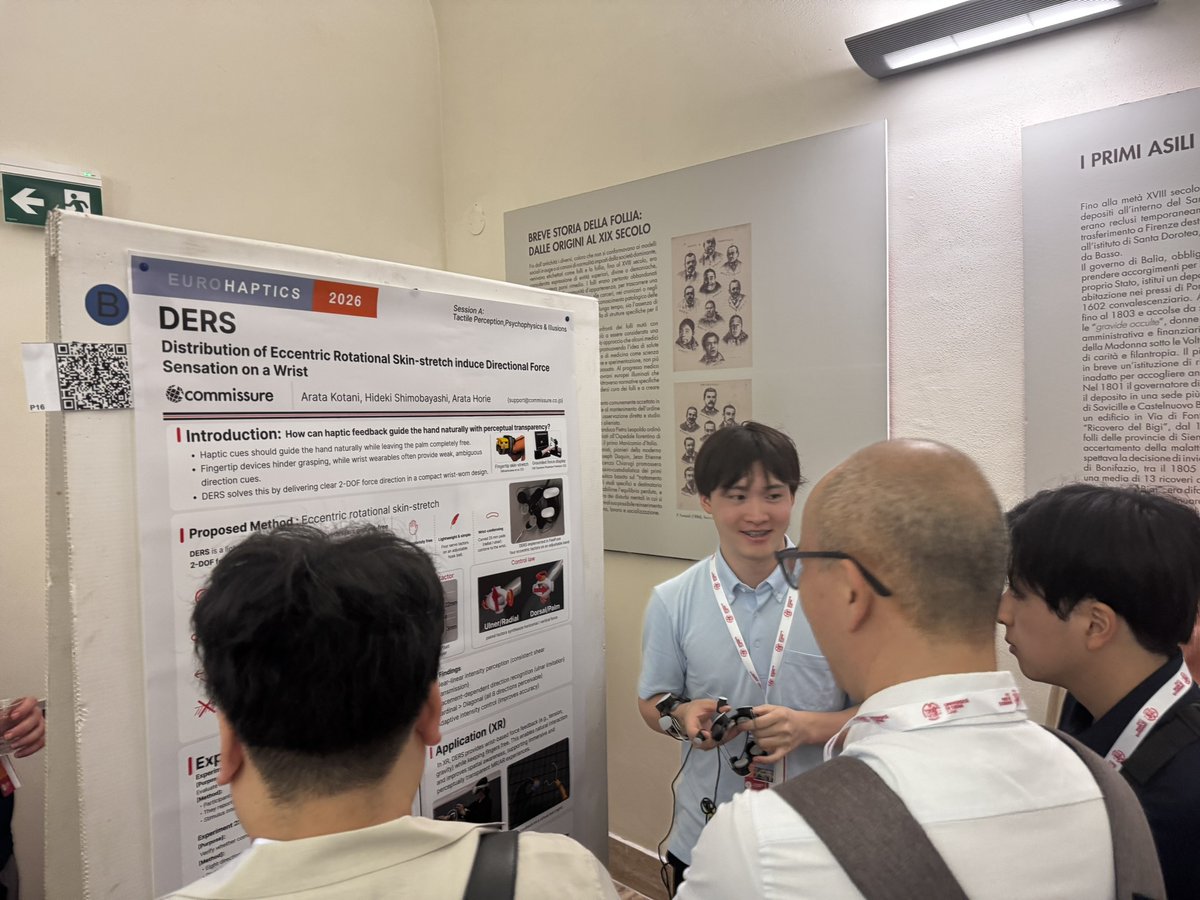
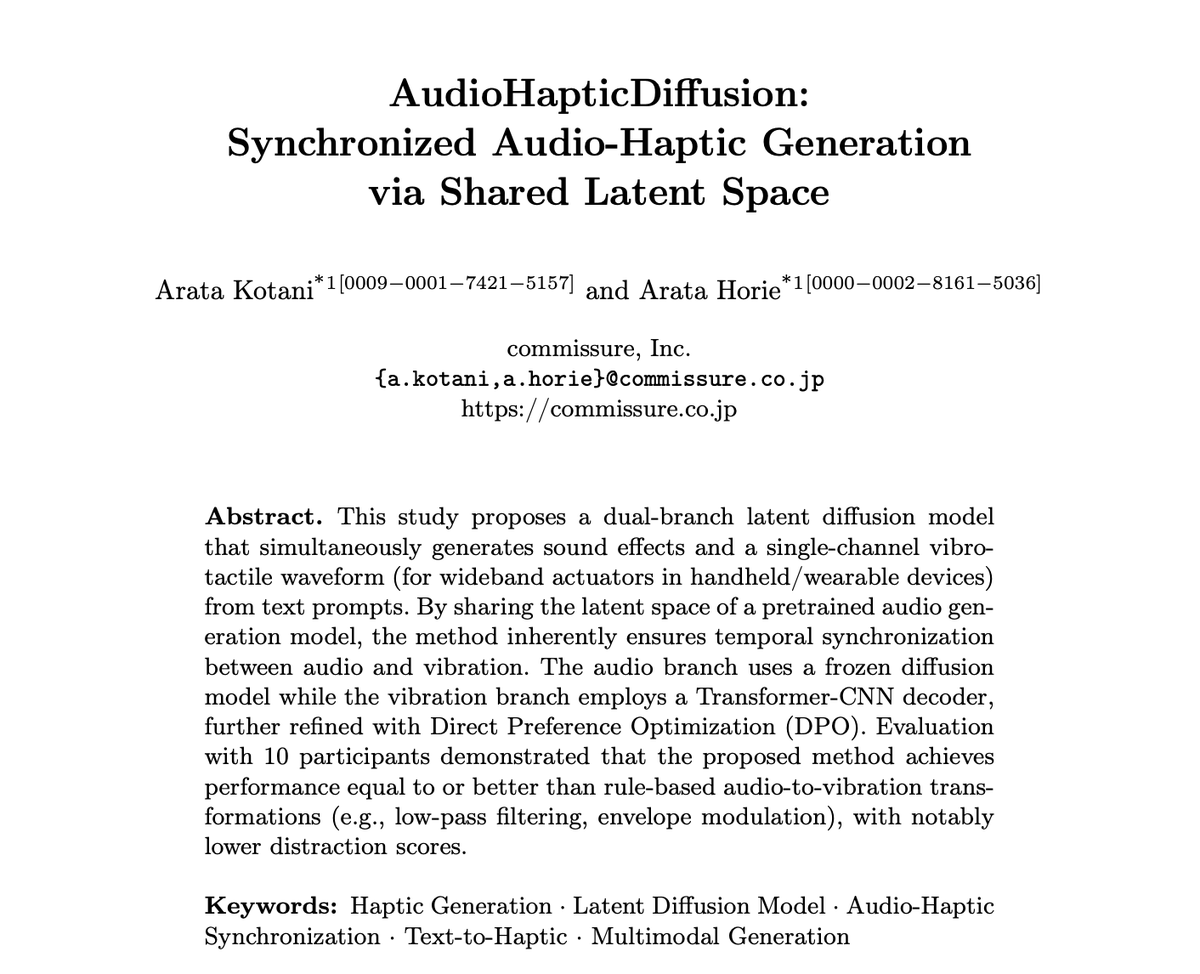
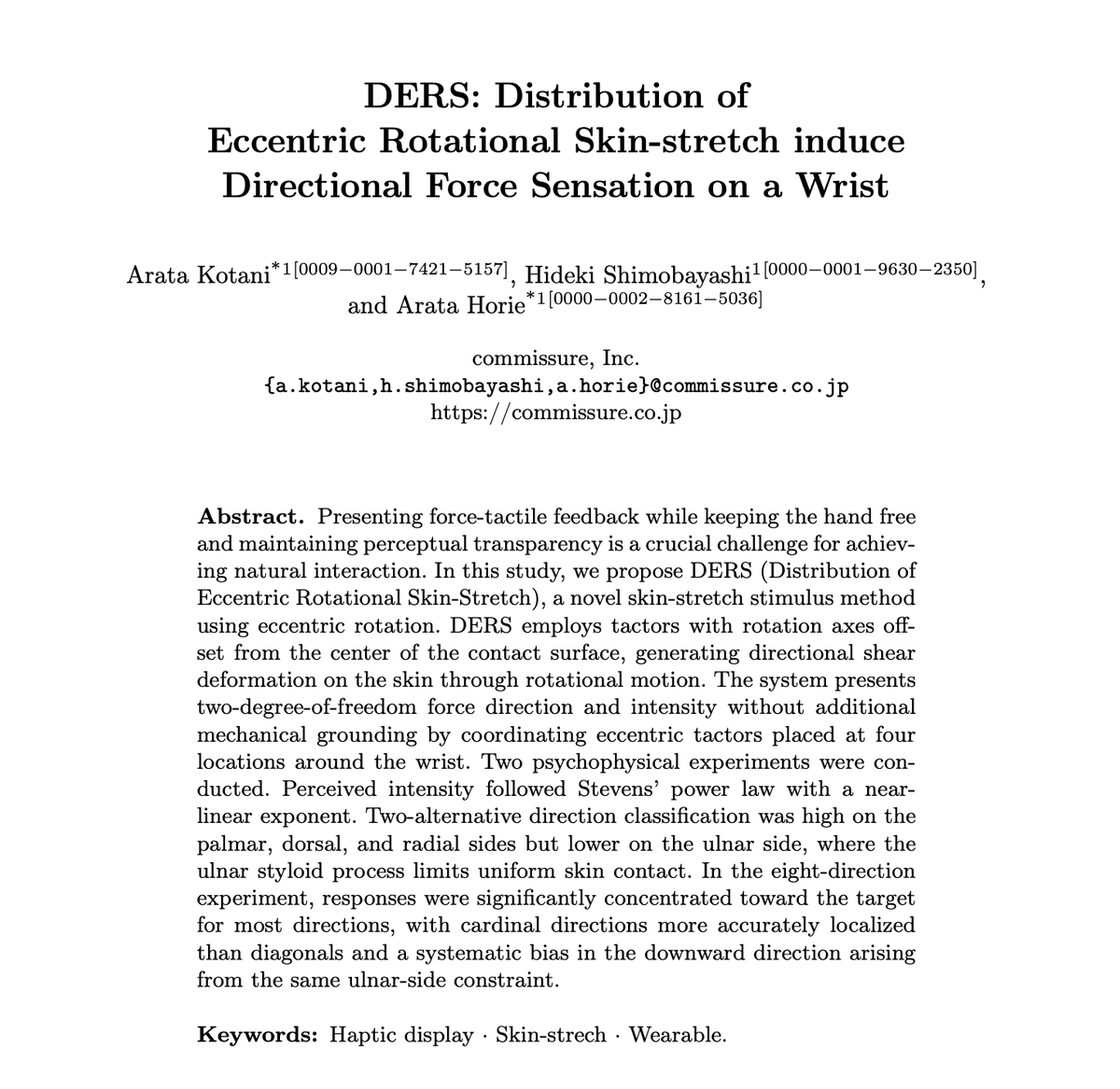
来月開催される触覚領域の国際会議『EuroHaptics 2026』に、commissureから2件フルペーパーで採択され、発表を行います!うち1件はOral Presentation(全投稿うち17%)選出です。 弊社単独での研究成果として初めての国際会議発表となります。堀江はいずれもCo-first Authorとして執筆しました。

Manipulation happens through surfaces. To understand contact-rich dexterous interaction, motion alone is not enough. We also need to know surface properties and contact state. Excited to share ART-Glove, an articulated tactile glove that captures contact-grounded information while preserving human dexterity. It provides: - Known Geometry: 16 rigid functional surfaces - Surface Motion: 22 anatomically aligned joints - Tactile Contact: 2048 piezoresistive taxels Huge thanks to my advisor Ding @zhao__ding, and to Yuxiang @yxyang1995, Maria @bauzavillalonga, Marissa, and Peide @peide_huang for the valuable advice and discussions. Paper: arxiv.org/abs/2606.16370