Pedro Lopes

10.5K posts

Pedro Lopes banner
Pedro Lopes

Pedro Lopes

@plopesresearch

Assoc. Prof. of Comp. Science @uchicagocs / Human Computer Integration Lab / XR, haptics, hw / HCI lab: https://t.co/lNuu6qMtRX / music: https://t.co/XcUgF18GAu

Chicago, IL Katılım Aralık 2010
4.1K Takip Edilen9K Takipçiler
Pedro Lopes retweetledi
Society for Neuroscience (SfN)
Tomorrow is your last chance to submit! Submitting a public comment puts your perspective on the official record, & federal agencies are required to take that input into account Help shape the outcome of the proposed OMB rule before the July 13 deadline: vist.ly/5axqd
Society for Neuroscience (SfN) tweet media
English
0
3
3
1.4K
Pedro Lopes retweetledi
Ben Lang
Ben Lang@benz145·
Could optical illusions eventually function like zero-day exploits for AI systems? Detecting one known illusion when you have an example in front of you seems relatively straightforward. The harder problem is that different illusions exploit different quirks of perception, so building a generalized solution for cases you don’t already have examples of is a huge challenge. Novel illusions could potentially pass information through an AI system undetected, while being easily recognized by a human on the other side. It could be an effective way around various AI safeguards.
Eric Lu@ericlu

I created a font called Ghost Font that only humans can read. Tested it in Fable and GPT 5.6 Sol Ultra and neither was able to decipher it correctly.

English
4
5
26
6.1K
Pedro Lopes retweetledi
Ismini Lourentzou
Ismini Lourentzou@Ismini_L·
Bumping this for anyone writing an NSF CAREER this cycle. Best of luck to everyone submitting this year! 🤞 calendly.com/lourent2-illin… 🔜 Office hours for PhD applications will be posted in September.
Ismini Lourentzou@Ismini_L

It's been an incredible year, with wonderful collaborators and a CAREER award I'm grateful for. I got a lot of feedback on mine, so I want to do the same for others. Opening office hours for faculty writing/thinking about #NSFCAREER proposals. Bring a draft, questions, or just chat. calendly.com/lourent2-illin… Happy to share tips and give honest feedback.

English
0
2
8
1.3K
Pedro Lopes
Pedro Lopes@plopesresearch·
@tomfleet Yeah! I was also thinking bar code scan with phone app? (I run a lab with a few folks that would be taking parts, consuming etc, we've made some custom made inventory sys but none lasted and I think the bar code could help!)
English
0
0
0
13
Tom Fleet
Tom Fleet@tomfleet·
@plopesresearch cut package and tape? just grab yourself one of the bluetooth barcode printers off aliexpress - I'm sure that's gotta be easy enough to frig up to a serial port / send a custom string to over bluetooth, right? aliexpress.com/item/100500988…
English
2
0
1
74
Tom Fleet
Tom Fleet@tomfleet·
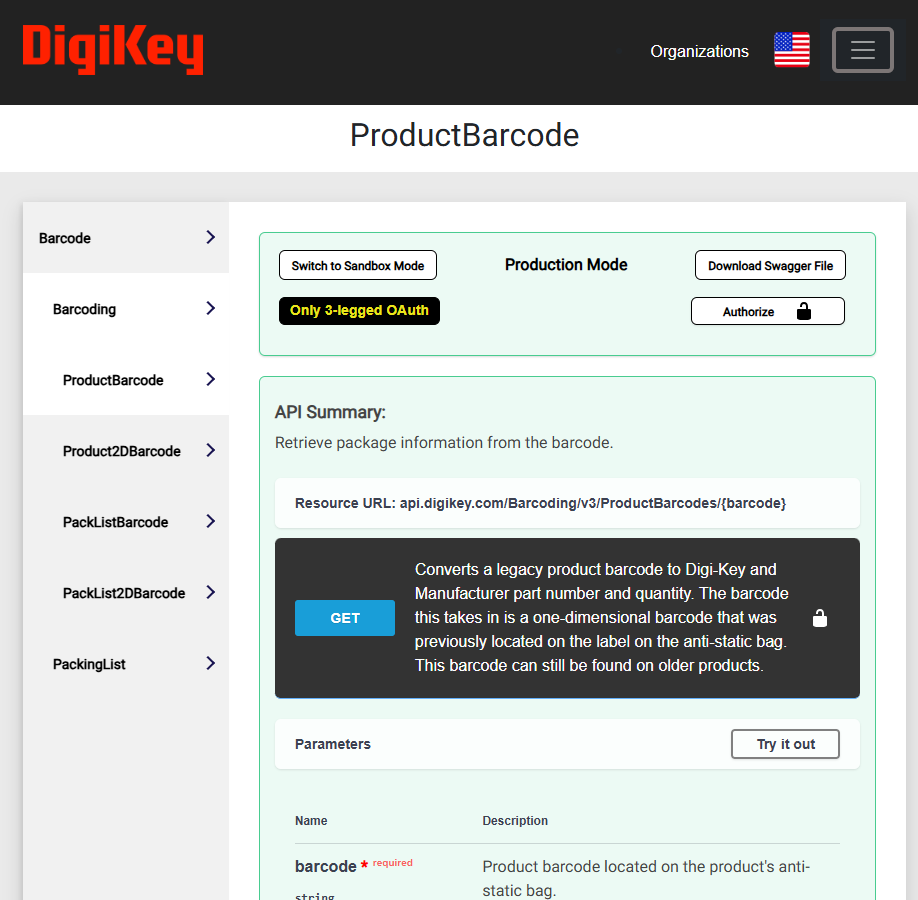
Not sure why I've never thought to look into the APIs for DigiKey. like, what do you mean there's been a barcode lookup available for me to use all this time. Seems preferable to having to take a photo to pass to Google Image OCR, to pass into a google search.
Tom Fleet tweet media
English
2
2
21
1.3K
Pedro Lopes retweetledi
Sayash Kapoor
Sayash Kapoor@sayashk·
One of the best pieces of advice I got during my PhD was that there are no repeatable paths in academia. This might sound daunting because of the lack of certainty. But once you internalize it, it is actually incredibly freeing! You don't need to participate in career games that don't interest you. You can choose to work on projects that are aligned with *your* values rather than your institution's. And because you're working on things you deeply believe in, there's much more likelihood that you'll do impactful things. Like so many other things I learned, this was advice by @random_walker. I would even extend it beyond academia: there are no repeatable paths when transformative technologies like AI are being deployed; even career paths otherwise considered "safe" will undergo massive structural changes. Might as well lean into it.
Nat Purser@NatPurser

unsolicited advice to college students and recent grads, after lots of recent coffees w/ people entering the job market: the most accomplished person you know may not have the most relevant career advice for you. they can offer immense wisdom ofc, but you should also seek out successful people in their late 20s / 30s who’ve been successful in the current job market. for example, students often tell me that their parents or an older, tenured professor have encouraged them to pursue academia because they’re bookish, intellectually curious, etc. and that may be sincere advice! — but it’s coming from someone who hasn’t confronted the relevant job market in decades. you can’t look at someone’s linkedin trajectory and assume trying to replicate it would pan out the same way now. ok good luck and godspeed.

English
12
84
886
100.1K
Pedro Lopes
Pedro Lopes@plopesresearch·
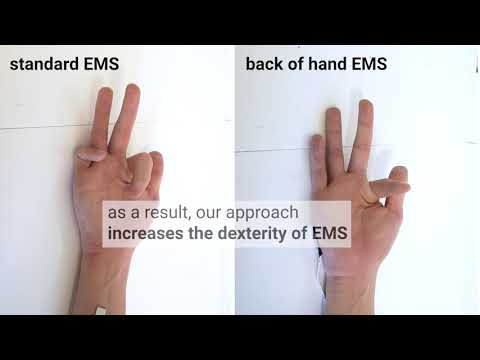
@aakashgupta "every movement comes from forearm", no, your hands also have muscles that run all the way to the base of your fingers (yes, most of the finger force does come from your forearms). We use those fingers for dexterous stimulation of human fingers: youtube.com/watch?v=C6rj64…
YouTube video
YouTube
English
0
0
2
486
Aakash Gupta
Aakash Gupta@aakashgupta·
Your fingers contain zero muscles. Every movement they make comes from muscles in your forearm pulling tendons through your wrist. Robotics spent 70 years ignoring that design. The company that finally copied it just showed a hand that lifts a 20-pound kettlebell and picks a grape off its stem without crushing it. Here's why every robot hand before this was effectively numb. Traditional designs put a motor at each joint with aggressive gearing, often 100-to-1 or 200-to-1. That gearing multiplies force on the way out, but it also swallows force on the way in. You command the hand to a position, it goes there, and no touch information ever makes it back to the motor. Strong, precise, and blind. 1X's hand runs tendons at 5-to-1 to 15-to-1 ratios, with the motors sitting in the forearm, exactly where your flexor muscles live. At ratios that low, the joints are backdrivable: push a finger and it yields, then reports exactly how hard you pushed. Force flows out and information flows back through the same physical path. Every one of the 25 joints doubles as a sensor. That's also why it survives accidents. Slam it in a drawer or hit it with a hammer and the tendons give instead of the gears shattering. The failure mode of a stiff hand is a broken hand. The failure mode of a compliant one is a measurement. A 200-to-1 gearbox makes a hand strong and numb. A 5-to-1 tendon makes it strong and sensitive. Evolution solved this first, which is why your hand's muscles aren't in your hand. The human hand has around 27 degrees of freedom. This one has 25, is waterproof enough to wash itself, and 1X says finger assemblies are validated to millions of cycles with capacity for 10,000 hands this year. For seven decades, robots picked things up the way a crane does. This is the first one built to pick things up the way you do.
Bernt Bornich@BerntBornich

Introducing NEO’s 25 Degrees of Freedom, tendon-driven hands — nearing or surpassing human-level dexterity, strength, speed, and reliability. For seventy years, robotics worked around the hand problem. The humanoid bet is the reverse: it lives or dies at the fingertips.

English
31
111
1.2K
158.8K
Pedro Lopes retweetledi
Anil Seth
Anil Seth@anilkseth·
Philosophers out there - do consider submitting to the 4th annual conference of the The International Society for the Philosophy of the Sciences of the Mind - deadline July 31st, conference is 4-6 Nov online, via @niccolo_negro philevents.org/event/show/147…
English
5
16
87
7.5K
Pedro Lopes retweetledi
Dan Grover
Dan Grover@DanGrover·
This is great point. ChatGPT was free and reached millions being distributed over the Internet. Industrial automation tech, by contrast, can take like a decade because it's distributed at great cost through multiple levels of midwestern guys in polo shirts.
Ivan Poupyrev@ipoupyrev

x.com/i/article/2074…

English
2
2
12
2.2K
Pedro Lopes retweetledi
LaurieWired
LaurieWired@lauriewired·
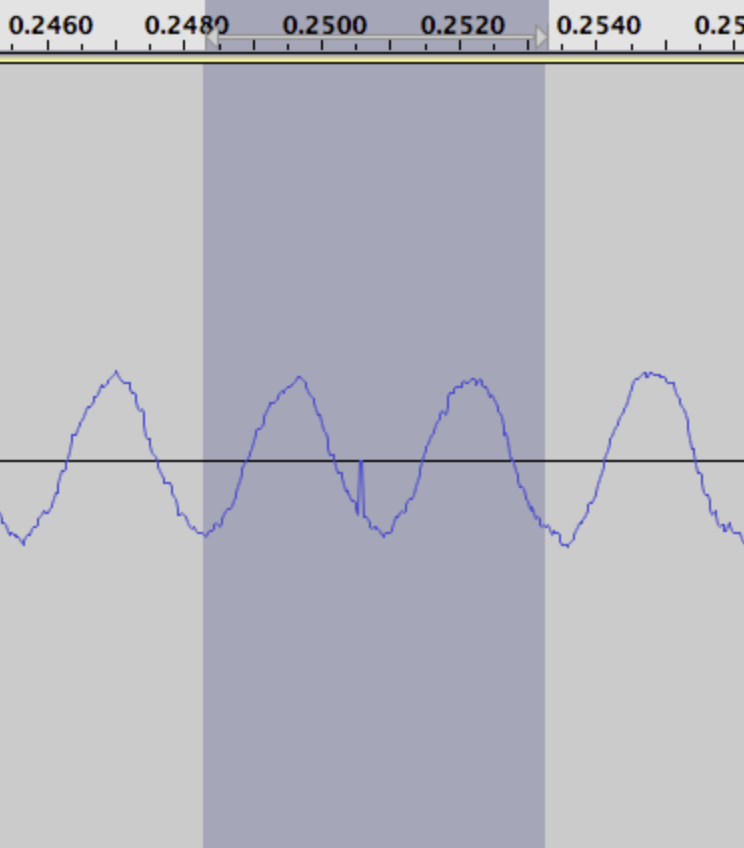
Real Time Audio on general purpose operating systems is ridiculously hard to code. Unfortunately (and unlike the visual system!) humans are *really* good at noticing audio hitches. In video, you might have ~16ms to process a video frame, and if you miss the deadline, eh, just continue to display the existing frame. It’ll hitch…but a lot of people won’t notice. The eye is fairly forgiving, mostly deals in averages. If you miss a SINGLE audio sample (.00002 sec at 44.1khz!) it’s super obvious! The ear was basically made to detect discontinuities in waveforms; the real life equivalent would be like a twig snapping. The waveform collapse (single audio sample dropped) spreads energy across every frequency band at once, almost every hair cell in your cochlea fires! There’s not really a great way to fix this. You can sample and hold, (either just the sample or the whole buffer), but the splice to the next chunk will have a *very* audible seam. Smarter systems will crossfade, and then really intelligent protocols like modern bluetooth will attempt to pitch-bend the seam. But every single one of those “fixes” costs latency and CPU time…which you don’t have in real time audio!
LaurieWired tweet mediaLaurieWired tweet media
English
72
105
2.2K
89.4K
Pedro Lopes retweetledi
Micah G. Allen
Micah G. Allen@micahgallen·
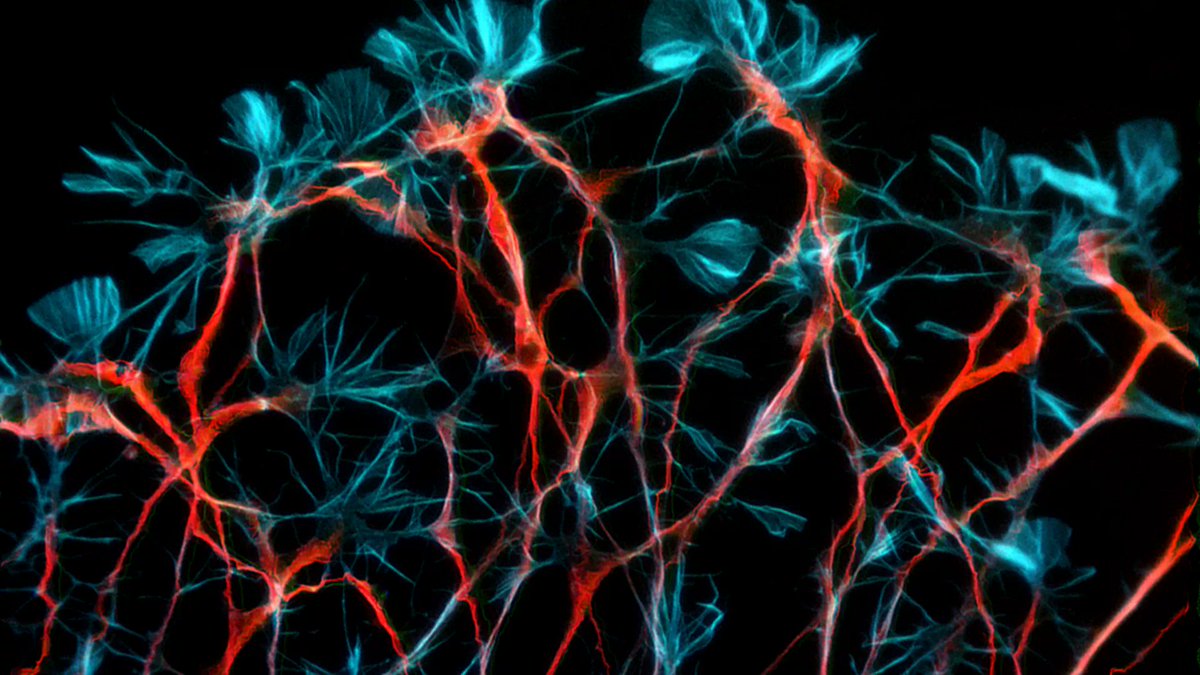
Continuous electromagnetic fields generated by neural activity may explain how the brain creates a unified experience while maintaining an edge-of-chaos state. doi.org/10.3389/fncom.…
Micah G. Allen tweet media
English
4
18
65
3.2K
Pedro Lopes retweetledi
Anna Ciaunica PhD @annaciaunica.bsky.social
Because ( among other things) we are literally born inside an Other body 😎! Great work !
Valerio Capraro@ValerioCapraro

Now out in Nature Human Behaviour 🚀 Why are humans prosocial? Our new paper suggests two routes. One is fast. One is slow. We ran a large experiment with more than 500 children aged 3 to 10. Children completed a battery of decisions measuring different forms of social behaviour. The key manipulation was simple. Half of the children had to decide quickly: within 10 seconds. The other half had to wait: at least 10 seconds before responding. Here’s the main results. Children as young as 3 were more prosocial under time pressure than after a delay. In this sense, early prosociality appears to be intuitive. But development changes the picture. As children grew older, prosociality under time pressure remained relatively stable. What changed was prosociality after deliberation. Deliberative prosociality increased with age, gradually closing the gap with intuitive prosociality around age 8. So prosociality does not seem to have a single developmental route. It may begin as a fast, internalised response. Then, with development, it may become increasingly available to reflection, reasoning, and self-control. We do not yet know the precise mechanism. One possibility is that children internalise prosocial responses very early, through a combination of biological predispositions and repeated cooperative interactions, especially in the family. Over time, these responses may become rationalised, stabilised, and integrated into more reflective decision-making. * Full paper in the first reply

English
0
4
22
1.7K
electronic Max
i figure @FourTet is fuzz testing music players to make sure their unicode implementations work
electronic Max tweet media
English
1
0
3
449
Brian Odegaard
Brian Odegaard@BrianOdegaard2·
I am excited to announce that I have received tenure at the University of Florida! Thanks to my current & former lab members, scientific mentors, collaborators, letter writers, and funding sources that have made it all possible. Looking forward to the work ahead. Onwards!
English
6
1
38
4K
Pedro Lopes retweetledi
Jens Madsen
Jens Madsen@cogniemotion·
New open dataset out in Scientific Data 🚨 We are releasing BBBD: the Brain, Body, and Behavior Dataset. Paper: nature.com/articles/s4159…
English
4
31
160
12.2K
Pedro Lopes retweetledi
Jay Van Bavel, PhD
Jay Van Bavel, PhD@jayvanbavel·
We should pay peer reviewers Paying reviewers led to faster first editorial decisions—an average of 5.5 working days versus 38 days for unpaid reviews, And review quality actually improved (as judged by handling editors on the basis of helpfulness in making an editorial decision) In this six-month experiment, reviewers who delivered a peer review within four working days that their handling editor considered good quality were paid £220 (US$290) nature.com/articles/d4158…
Jay Van Bavel, PhD tweet media
English
10
57
165
16.1K