Arnd Roth

148 posts

Arnd Roth banner
Arnd Roth

Arnd Roth

@ArndRoth

Computational neuroscience and connectomics. Now at Bluesky

Bluesky Katılım Şubat 2021
319 Takip Edilen185 Takipçiler
Arnd Roth
Arnd Roth@ArndRoth·
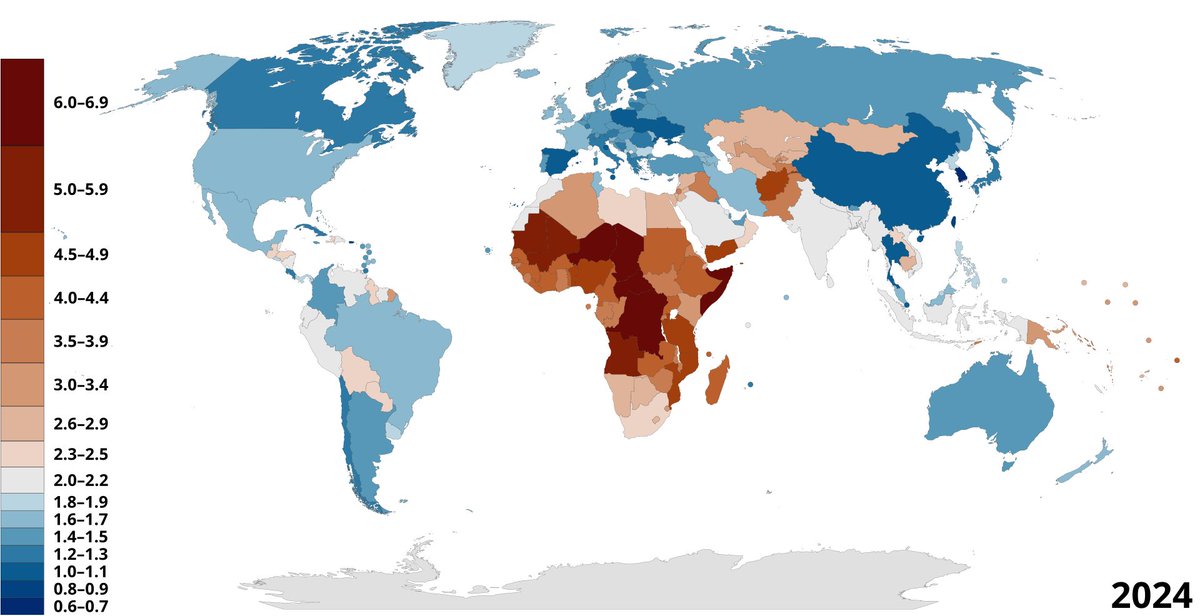
@RenaudJolivet @bopanc And it‘s a good thing. The real problem for our shared ecosystems is the unsustainable growth of the population in the reddest countries.
English
0
0
0
42
Renaud Jolivet
Renaud Jolivet@RenaudJolivet·
@bopanc Why single out Europe? Everyone is below 2.1 except Africa and Central Asia. Pic from Wikipedia.
Renaud Jolivet tweet media
English
1
0
2
71
Arnd Roth
Arnd Roth@ArndRoth·
@TMoldwin @arthur_spirling Peer review does signal boost good work and correct things that need fixing, these are the reasons it exists. Now there are additional methods and that‘s useful too
English
0
0
0
26
Toviah Moldwin
Toviah Moldwin@TMoldwin·
I don't know about that. Most papers I've reviewed were bad, some completely unsalvageable and rejected and some I let through as an act of mercy or something after torturing the authors. In a world without reviews, they would have just posted to rXiv and...that's it. I don't think the benefit to science was worth my time and I now will only review if I'm paid. So far no journal has taken me up on it when I've given them my (quite reasonable, I think) rates. The important thing is to signal boost good work and to correct things that are already signal boosted but need fixing. Peer review as it exists today does not really accomplish these things, and organic processes could probably do it in a much better way.
English
1
0
0
10
Arnd Roth
Arnd Roth@ArndRoth·
@TMoldwin @arthur_spirling In experimental neuroscience, expert reviewers will likely have done or seen similar experiments as the ones described in a manuscript, and can judge methodological weaknesses pitfalls of interpretation, etc., with the aim of improving the manuscript.
English
0
0
0
23
Toviah Moldwin
Toviah Moldwin@TMoldwin·
@ArndRoth @arthur_spirling And reviewers generally don't reproduce, so what's the point? Reproducibility should be the criteria for belief, not review, so why are we putting a stamp on something that hasn't been reproduced?
English
1
0
0
8
Arnd Roth
Arnd Roth@ArndRoth·
@TMoldwin @arthur_spirling And GPT will recommend papers not only based on their content but also where they appear, how many citations they have (which is correlated with where they appear, etc.)
English
0
0
0
19
Toviah Moldwin
Toviah Moldwin@TMoldwin·
@ArndRoth @arthur_spirling I'm pretty sure most Science and Nature readers now pick the articles based on what GPT tells them to read. And if they aren't now, in five years from now that's how everything will work.
English
1
0
0
24
Arnd Roth
Arnd Roth@ArndRoth·
@TMoldwin @arthur_spirling Science is more interdisciplinary than ever, lots of progress happens when different fields are being brought together in a project. Science and Nature readers do not read an issue cover to cover, they pick their reading material from the Table of contents.
English
1
0
0
18
Toviah Moldwin
Toviah Moldwin@TMoldwin·
I don't really understand the mindset of a person who is just reading Nature or Science cover to cover, I have rarely met such a person. But this sort of dilettante is not who most scientists are writing for, and also what is the cost-benefit of preventing this rare breed of individual from ever consuming false information? I think the age of the educated flaneur sitting back in his armchair reading an issue of Nature from cover to cover are long behind us. This is not the world we live in anymore. Scientists mostly write for others in their own field.
English
1
0
0
19
Arnd Roth
Arnd Roth@ArndRoth·
@TMoldwin @arthur_spirling CS is different from experimental neuroscience, for example. In CS you can reproduce results fairly quickly now, in experimental neuroscience that would be a multiyear effort.
English
1
0
0
17
Toviah Moldwin
Toviah Moldwin@TMoldwin·
@ArndRoth @arthur_spirling Weeds them out for whom? I don't think my scientific reading diet would be any worse off if I just looked at what the community signal-boosts from rXiv. That's how e.g. CS basically works.
English
1
0
0
20
Arnd Roth
Arnd Roth@ArndRoth·
@TMoldwin @arthur_spirling Agree with the point about reprisals. I‘m sure all reviews you have written were a service to science.
English
1
0
0
17
Toviah Moldwin
Toviah Moldwin@TMoldwin·
@ArndRoth @arthur_spirling I agree that it is generally easier to critique someone else behind a mask of anonymity, because there is less concern of reprisal, and junior people are more susceptible to reprisal, fine. But I think peer review mainly benefits journals and universities, not science broadly.
English
1
0
0
31
Arnd Roth
Arnd Roth@ArndRoth·
@TMoldwin @arthur_spirling Science, Nature have a broad readership, one of the points of having them is communicationg important results across different disciplines. That automatically means many rraders of a Nature paper are not specialists in the topic of a paper.
English
1
0
0
22
Arnd Roth
Arnd Roth@ArndRoth·
@TMoldwin @arthur_spirling Yes of course we should not blindly trust a result because it was published in either a high or not-so-high impact journal, and no good scientist would trust blindly. But while imperfect, the review process helps to weed out bogus results or simoly false claims of novelty.
English
2
0
0
34
Arnd Roth
Arnd Roth@ArndRoth·
@TMoldwin @arthur_spirling then we would be in the same situation in science that we can observe in US politics right now. There is a reason journalists can keep their sources anonymous. It‘s about speaking truth to power.
English
1
0
0
29
Arnd Roth
Arnd Roth@ArndRoth·
@TMoldwin @arthur_spirling You can only make an assessment if you are expert enough in the area. Most readers of papers in Nature or Science are not experts in the very area of a paper, they rely on fair, unintimidated reviewers. If rich bullies get their way because non-anonymous reviewers are afraid
English
2
0
0
39
Arnd Roth retweetledi
Randy Bruno
Randy Bruno@TheBrunoCortex·
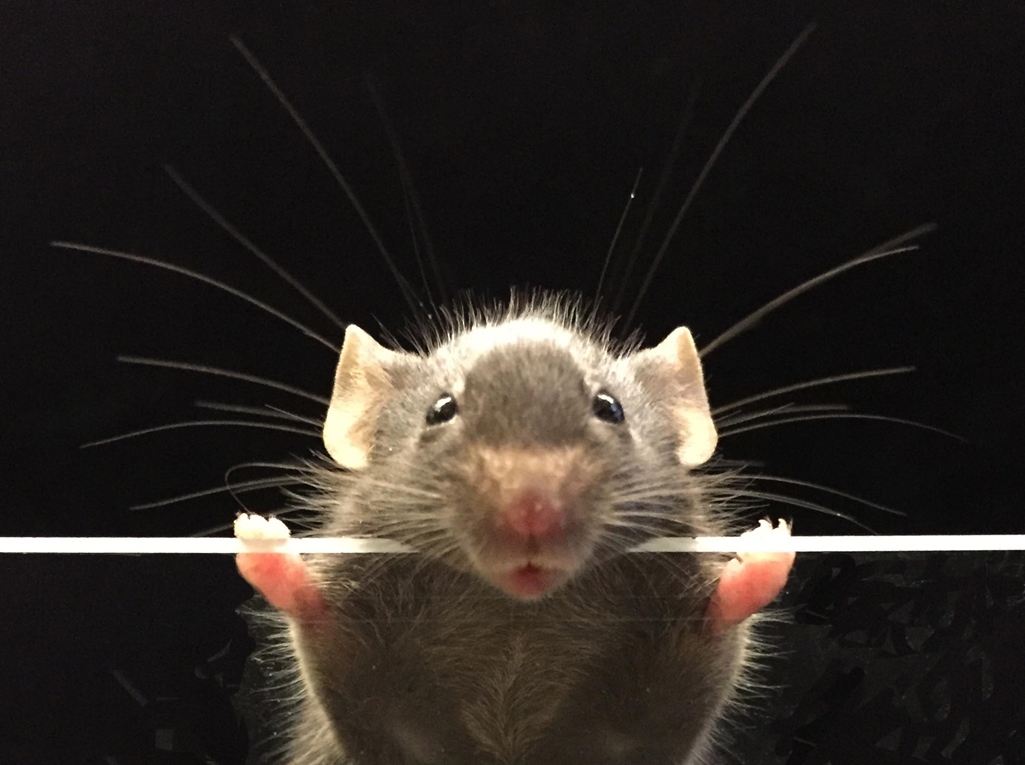
📣 The 2026 Barrels satellite meeting will precede this year's FENS meeting in Barcelona (not SfN in Washington DC). Dates: 4-5 July 2026 Barrels brings together researchers focused on all aspects of sensory-motor neuroscience (somatosensory, visual, auditory, motor, decision making, etc). Details to follow soon.
Randy Bruno tweet media
English
0
3
14
1.1K
Arnd Roth retweetledi
Reza Shadmehr
Reza Shadmehr@reziliusReza·
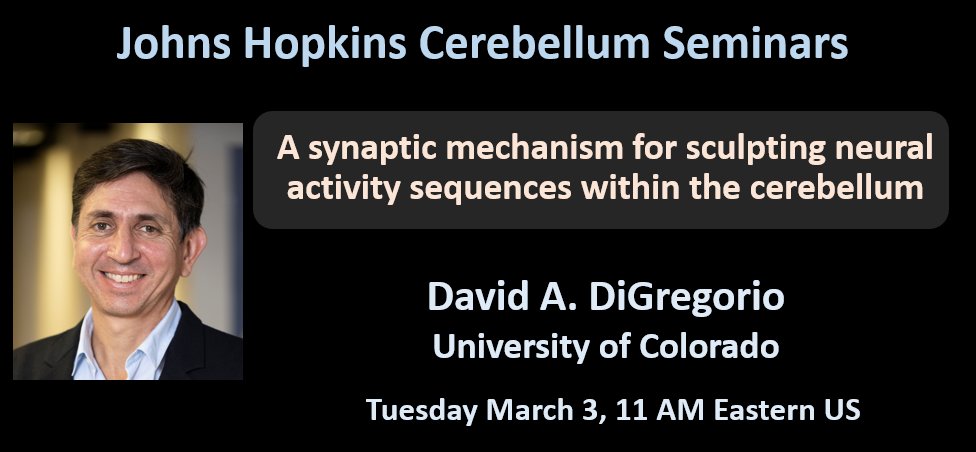
80% of the neurons in our brain are in the cerebellum, and most of those are granule cells. What are these cells doing and why do we need so many of them? David DiGregorio will explain. The talks are open to all (email me for link). Recorded talks: @shadmehrlab" target="_blank" rel="nofollow noopener">youtube.com/@shadmehrlab
Reza Shadmehr tweet media
English
0
5
29
1.7K
Arnd Roth retweetledi
Poirazi Lab
Poirazi Lab@dendritesgr·
📢 Deadline Extended! You now have more time to submit your abstract for the EMBO Workshop on Dendrites 2026 in Heraklion, Greece. 🗓️ New Deadline: 9 February 2026 meetings.embo.org/event/26-dendr…
Poirazi Lab tweet media
English
0
3
9
233
Arnd Roth retweetledi
Jacques Carolan
Jacques Carolan@JacquesCarolan·
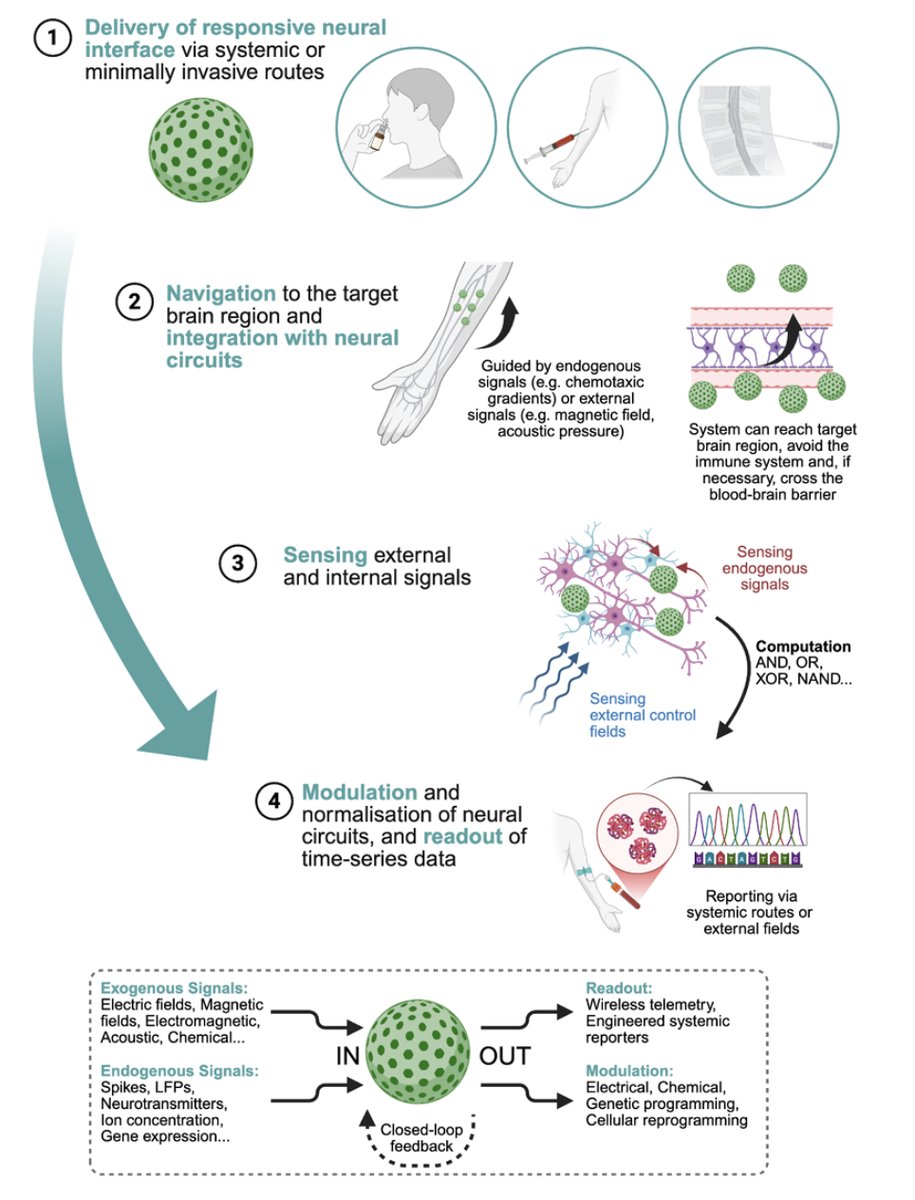
🧠 New neurotech programme alert 🧠 On 24 February @ARIA_Research is launching our newest £50m neuro programme: Massively Scalable Neurotechnologies...
Jacques Carolan tweet media
English
4
21
52
9.5K
Arnd Roth retweetledi
Katrin Vogt
Katrin Vogt@KatrinVogt3·
The first paper from the lab is now out in Science Advances: Multimodal social context modulates larval behavior in Drosophila science.org/doi/10.1126/sc… We find that fly larvae keep their distance to conspecifics in the absence of food, enjoy reading! @UniKonstanz @CollectiveBehav
Katrin Vogt tweet media
English
1
7
20
606
Arnd Roth retweetledi
Saturday Night Live
Saturday Night Live@nbcsnl·
mom has something she needs to get off her chest
English
441
2.6K
18.9K
4.5M