

Mingye Wang 0.97
550 posts
Mingye Wang 0.97
@Arthur2e5
#REDIRECT @Artoria2e5 | A2-Legacy
Nowhere Katılım Mayıs 2016
171 Takip Edilen163 Takipçiler
Mingye Wang 0.97 retweetledi


Mingye Wang 0.97 retweetledi

@Kaine894480119 @HalfACupOfRice well, the base prob for 6 star is 2% in og and 0.8% in endfield iirc
English

@HalfACupOfRice Because... you got lucky in one of them? What?
English

FUCK YOU ENDFIELD
50+ PULLS FOR ARCANE VS LITERALLY THE FIRST DAY FREE PULL
THIS IS WHY OG ARKNIGHTS IS THE SUPERIOR GAME


English
Mingye Wang 0.97 retweetledi


@neonaga99 @nad_main welp, someone’s gonna be real popular with these two supports
English

@Arthur2e5 @nad_main i have no idea who you guys are but not only are you right but you also need to know i got both wang and ch'3n earlier in like 20 pulls
English
The evil fucking meta defining red woman that has no plot relevance what so ever in both games
GoodSmile_US@GoodSmile_US
Prepare to melt down any defense! Nendoroid Surtr from “Arknights” is back for a rerelease. Be sure to recruit this formidable, ice-cream-loving Guard to your squad. Preorder now at GOODSMILE ONLINE SHOP US! Shop: goodsmile.link/nGiqyL #Arknights #Goodsmile
English

Mingye Wang 0.97 retweetledi


@bpbpnk @blind_via the "put tooth parts in mouth so they mineralize on tooth" strategy. bit funny that this is the only way enamel gets patched, but evolution said good enough.
English


There has been enamel restoring pastes you can buy for a while now, when the dentist recommended it to me, he made a joke about putting himself out of a job. Can't wait to hear the dentists complain about this one.
SARS‑CoV‑2 (COVID-19)@COVID19_disease
🚨 BREAKTHROUGH: Scientists at the University of Nottingham have developed a new enamel-repairing gel that starts restoring teeth in just 2 WEEKS. This could replace fillings and change dental treatment worldwide, with use expected around 2026–2027.
English
中文



@W0DEHOUSE @israelkayos @Rainmaker1973 it does suck quite a bit that there are so many not-so-related groups of viruses that antivirals don’t tend to be as broad-spectrum as antibiotics often are. and most lab tests only work if you know what you’re looking for (the "sequence everything" NGS is still uncommon)
English
@W0DEHOUSE @israelkayos @Rainmaker1973 they do tend to bring their own tools for replication, so many nucleoside analogs can hit them without hurting us too badly. the protease they use to unpack the polyprotein too. then there’s the shell or spike bits that some drugs target.
English

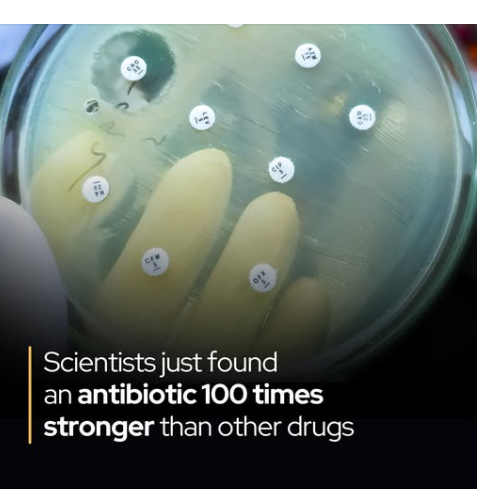
The most powerful antibiotic you’ve never heard of was sitting under scientists’ noses for decades.
A team from the University of Warwick and Monash University has discovered a hidden molecule that’s over 100 times stronger than existing antibiotics against drug-resistant bacteria like MRSA and VRE. It’s called pre-methylenomycin C lactone – and it was quietly lurking inside a well-known bacterium studied since the 1950s.
Streptomyces coelicolor is a familiar name in microbiology, known for producing the antibiotic methylenomycin A. But no one had tested the intermediate compounds created during its production – until now.
By deleting specific genes in the bacterium’s biosynthetic pathway, researchers uncovered two previously unknown intermediates. One of them, pre-methylenomycin C lactone, turned out to be a game-changer: 100x more active against Gram-positive bacteria than methylenomycin A.
The compound worked exceptionally well against methicillin-resistant Staphylococcus aureus (MRSA) and vancomycin-resistant Enterococcus (VRE), two of the deadliest superbugs on the World Health Organization’s priority list. Even more promising: in lab tests, the bacteria didn’t develop resistance to the compound – a rare outcome in antimicrobial research.
["Discovery of Late Intermediates in Methylenomycin Biosynthesis Active against Drug-Resistant Gram-Positive Bacterial Pathogens." Journal of the American Chemical Society, 2025]
English




@PDepuydt @lauriewired unfortunately, yeah. there are similar things that allow finer grained erase like EEPROM, but the extra lines cost space and space is money (maybe speed too? idk)
English

@Arthur2e5 @lauriewired Rewriting the whole whiteboard for just one cell change? 🤔
English

Erasing (not writing!) is the main thing that kills SSDs.
With the industry pushing towards HBF as a DRAM / HBM alternative, endurance is the name of the game.
There’s two knobs you can adjust for NAND flash that make a huge difference:
Peak erase voltage (~20V) and the length of the pulse (~3.5ms).
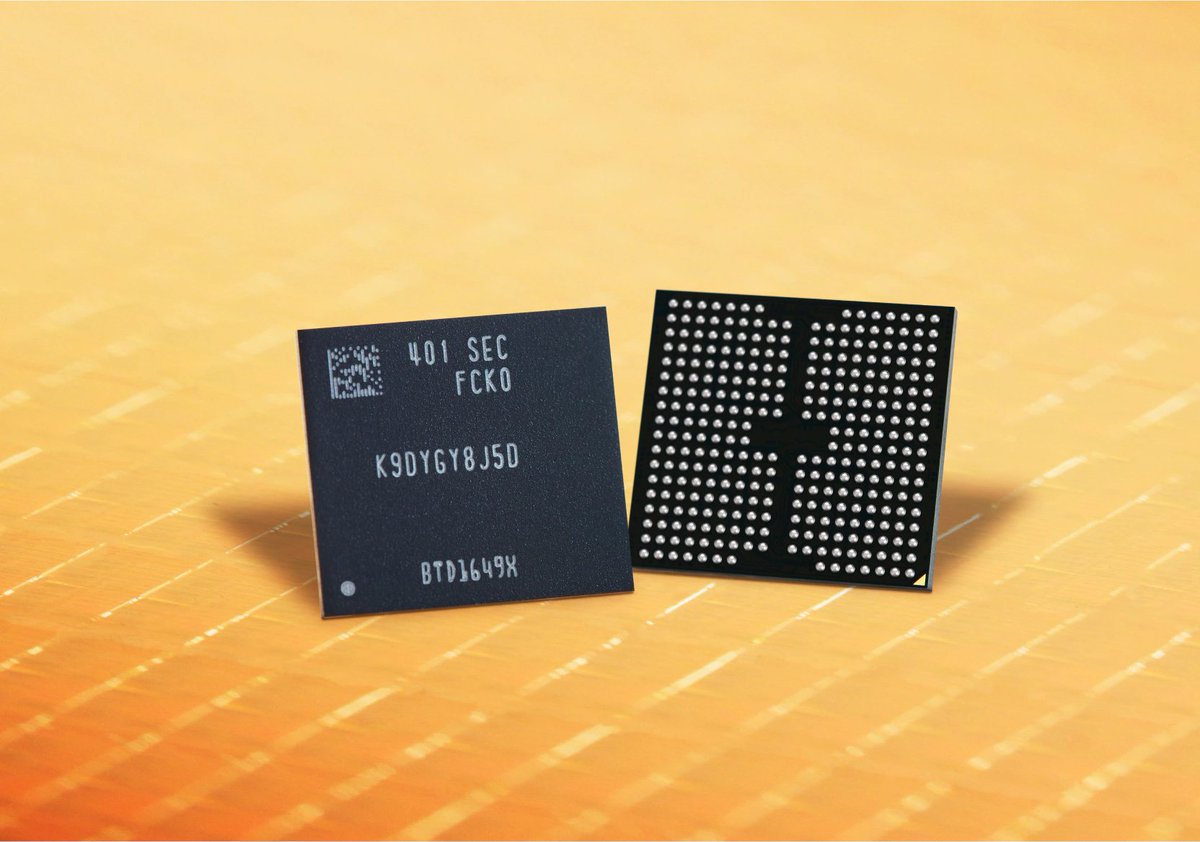
As you (might) expect, modern SSDs very much err on the side of caution; risk of losing user data is too high. But what if you’re willing to live on the edge a little? Research came out of Korea recently where ordinary Samsung 3D TLC NAND lifetime was pushed +43%!
See, erasing on an SSD is kind of a multi-step process. As the cells age, the block will need multiple pulse “rounds” to erase. It usually looks like this:
Normal Erase:
3.5ms pulse -> check, too many cells fail -> 3.5ms pulse -> check
The REO research is a bit more clever. Using a basic predictive model, they a shallow erase by using smaller increments in the final pulse.
REO (the paper) Erase:
3.5ms pulse -> check, too many cells fail (but we’re close!) -> *1.5ms* small pulse -> check
You can actually be quite aggressive with this technique! I think of it like erasing a whiteboard. Sure, you can go overboard cleaning it perfectly…but you can still use it even if you only did a quick wipedown. Might be a little smudgy, but it works.
What’s awesome about this is that with these shorter pulses, you increase cell lifetime AND improve performance! p99.99 tail read latency got ~22% better.

English
@PDepuydt @lauriewired or think of a big lab microplate with many wells (google it). the only things you can do in this analogy is either dump the entire thing out or add stuff to individual cells, no withdrawal from individual cells.
English
@PDepuydt @lauriewired no, the whiteboard analogy applies here. without an erase to a high-voltage all-1 state, there’s no way to usefully write data by draining certain cells to a desired lower voltage level.
English
