Astro_Neel

4.2K posts

Astro_Neel banner
Astro_Neel

Astro_Neel

@Astro_Neel

Spacecraft Systems Engineer | Tweets on astronomy, rocketry & spaceflight developments in India | Per Aspera Ad Astra

Katılım Nisan 2010
456 Takip Edilen10.5K Takipçiler
The White House
The White House@WhiteHouse·
THE ARTEMIS II ECLIPSE. April 6, 2026. Totality, beyond Earth. From lunar orbit, the Moon eclipses the Sun, revealing a view few in human history have ever witnessed. Photo: NASA
The White House tweet media
English
2K
15.1K
81.4K
5.6M
Someone Named Tygget
Someone Named Tygget@Tygget·
The NASA communicator here at the visitor center has given us carte blanche to beat the shit out of a Boeing employee who's here if the core stage has any issues
English
6
115
3K
57.3K
Astro_Neel
Astro_Neel@Astro_Neel·
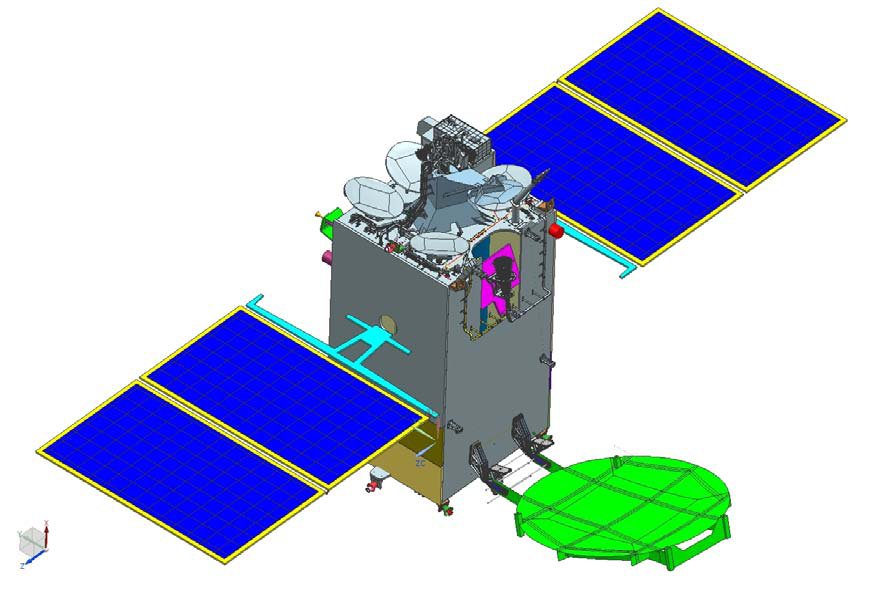
It's not so much the size but the panel orientation that's the problem here. When the Sun's at horizon, the solar array in the shown configuration would accumulate so much drag even at 450+ km regimes that it would require constant thrusting and orbit keeping to maintain required altitudes. Starlink's shark-fin and open-book configurations were far more optimal in minimising the surface area against the drag while still collecting enough power to keep the sat going. I hope these are representative images and that's what they go for eventually.
English
1
0
10
930
TheSpaceEngineer
TheSpaceEngineer@mcrs987·
I think they messed up the scaling on the image. The two satellite renders that were provided are different lengths entirely. Optimus for scale on the spx image is also like three times as tall as an actual person. Tried correcting for perspective on the lower render to get an actual estimate but there's really no concrete dimensions to go off of
TheSpaceEngineer tweet media
TheSpaceEngineer@mcrs987

wingspan of 175m depicted for reference
English
7
6
234
21K
Astro_Neel
Astro_Neel@Astro_Neel·
@GewoonLukas_ I guess it's probably due to different lighting conditions in different facilities that these MLI look different coloured? See this link. The same GSAT-N2 looks different at different test sites. isro.gov.in/GSATN2Enhancin…
Astro_Neel tweet media
English
1
0
1
56
Lukas C. H. 🌑
Lukas C. H. 🌑@GewoonLukas_·
@Astro_Neel Hmmm yeah that's a good point. Never thought about that. I guess we'll see when its launch is coming up. GSAT-N2 used the normal light tinted MLI blankets.
Lukas C. H. 🌑 tweet media
English
2
0
1
59
Astro_Neel
Astro_Neel@Astro_Neel·
Yes, it's GSAT-7A's CAD indeed. But the solar array assembly and HGA position is almost identical in all of ISRO's GSATs. And GSAT-32 was supposed to carry one 18 metre long unfurlable antenna back when this sat was intended to be built on I-8K bus (8 ton class)! With now cut short to half its original mass, I don't think that 18m antenna will be still on board here. Plus, GSAT-N2 also used relatively dark tinted MLIs, right?
English
1
0
2
56
Lukas C. H. 🌑
Lukas C. H. 🌑@GewoonLukas_·
@Astro_Neel Isn't that GSAT-7A's CAD model? isro.gov.in/GSAT_7A.html, AFAIK GSAT-N3/GSAT-32 is supposed to have a large unfurlable reflector. It's interesting that it has darker shade thermal blankets compared to what we usually see from ISRO.
English
1
0
2
66
Astro_Neel
Astro_Neel@Astro_Neel·
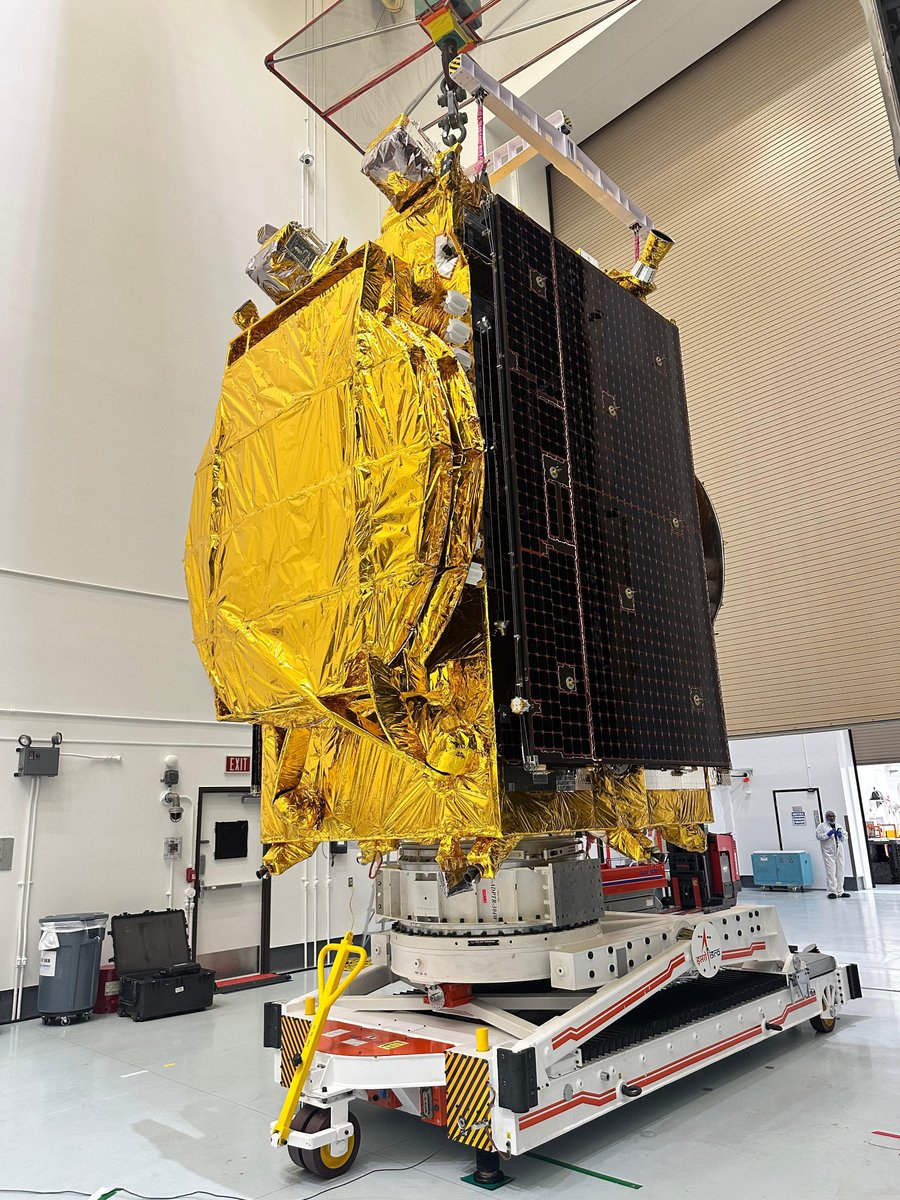
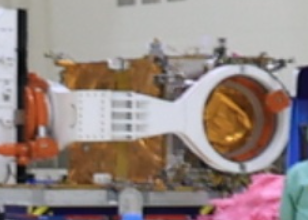
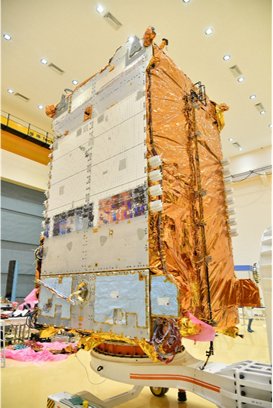
@GewoonLukas_ Given its long form factor bus and the close match with the CAD in terms of where they've placed the HDRMs on the edges, my best bet would be this is GSAT-N3 (GSAT-32).
Astro_Neel tweet media
English
1
0
1
93
Lukas C. H. 🌑
Lukas C. H. 🌑@GewoonLukas_·
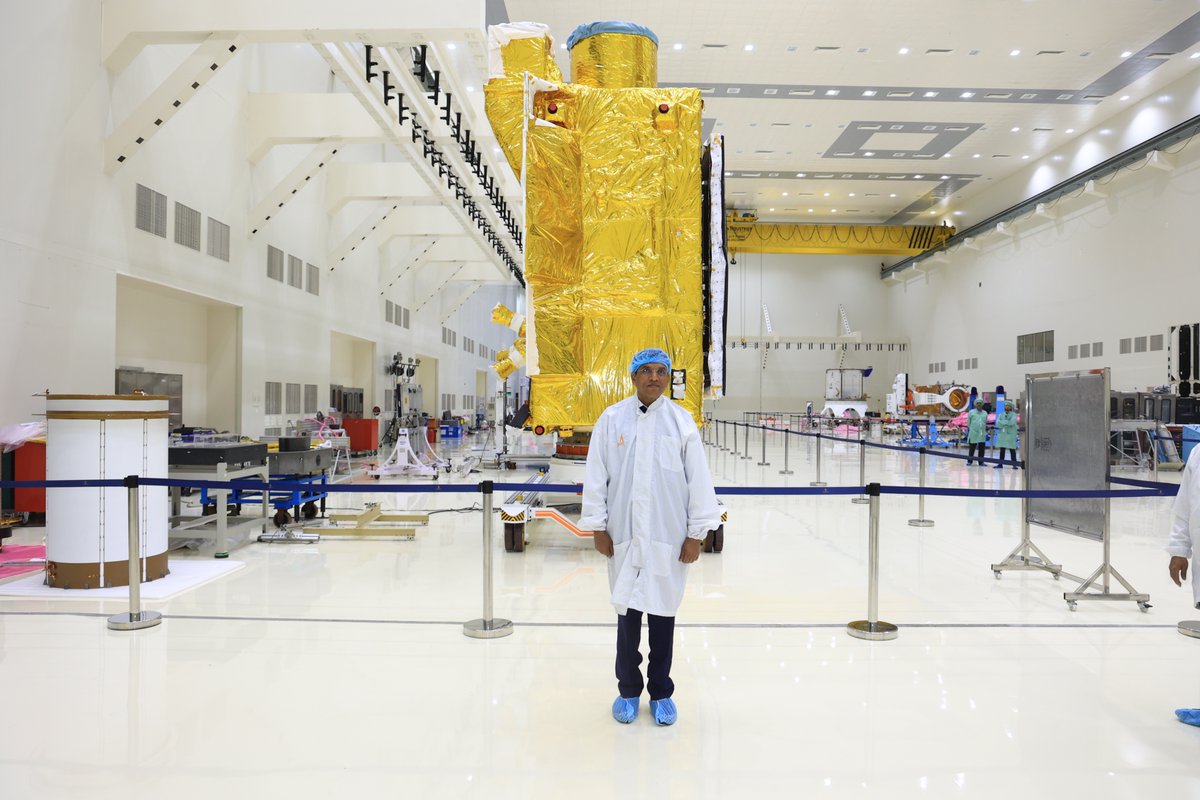
@Astro_Neel Yeah I noticed that too. Also looks like there's another satellite undergoing integration (could be GSAT-32, IDRSS or NVS I guess?)
Lukas C. H. 🌑 tweet media
English
1
0
4
105
Shane Ross
Shane Ross@RossDynamicsLab·
This website is so cool: satellitemap.space
Tesla Owners Silicon Valley@teslaownersSV

STARLINK SATELLITE EXPANSION IS ONE OF THE LARGEST AND FASTEST INFRASTRUCTURE BUILDS IN HUMAN HISTORY SpaceX has now launched over 11,400 Starlink satellites, with nearly 10,000 currently in orbit and active. The constellation is growing so fast that Starlink already serves more than 9 million users across 150+ countries and territories — and the real explosion is still ahead. Here’s why this scale is a massive deal: • True global coverage is almost complete
The latest V2 satellites (larger, more powerful, with laser links) are filling the final gaps. Polar regions, deep oceans, remote deserts, and mountain ranges that never had reliable internet are now coming online fast. • Direct-to-Cell is coming soon
Regular smartphones will soon connect directly to Starlink satellites — no dish needed. Emergency calls, texts, and basic data will work literally anywhere on Earth. • Speeds & reliability keep improving
Average speeds are already 100–300+ Mbps with low latency. As more satellites join, the network gets faster, more resilient, and capable of handling tens of millions of users. • Real-world impact is already enormous • Disaster zones restored within hours • Rural schools and hospitals in Africa, South America, and Asia now have high-speed internet for the first time • Commercial flights, ships, mining operations, and remote communities run on Starlink • Conflict zones stayed connected when ground networks were destroyed • It funds the multiplanetary future
Starlink revenue is the main cash engine paying for Starship development. Every new satellite launched is helping build the vehicle that will take humanity to Mars. This isn’t just “satellite internet.” This is the largest, fastest-deployed global communications network ever created — turning “no signal” into a sentence from the past for billions of people. The expansion is relentless, and the best is still coming.

English
1
1
3
550
Stefan Burns
Stefan Burns@StefanBurnsGeo·
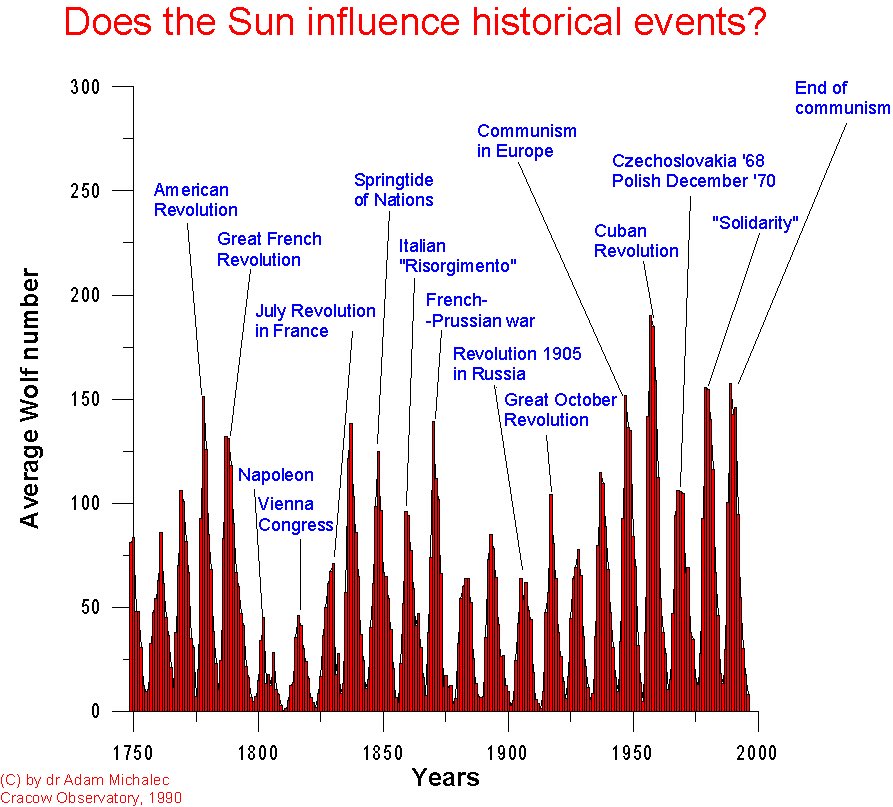
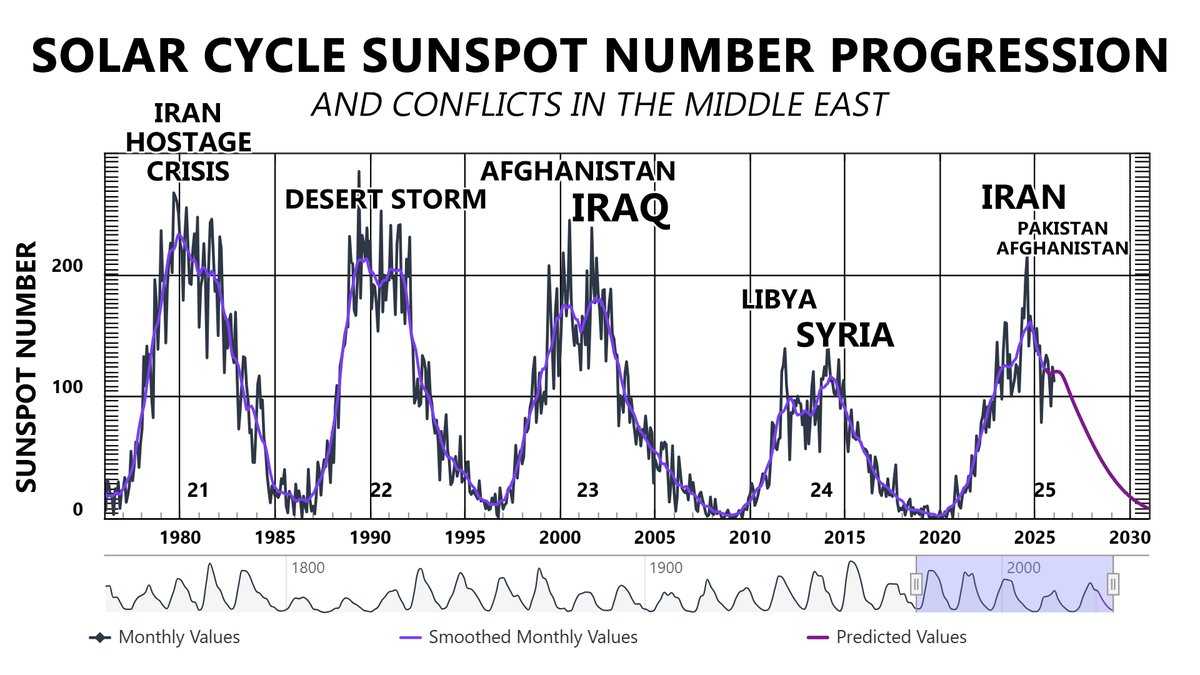
Periods of Solar Maximum are strongly correlated with wars, civil unrest, and revolutions throughout history. Here we observe the correlation between sunspot numbers and conflicts in the Middle East...
Stefan Burns tweet media
English
39
112
717
71.1K
Astro_Neel
Astro_Neel@Astro_Neel·
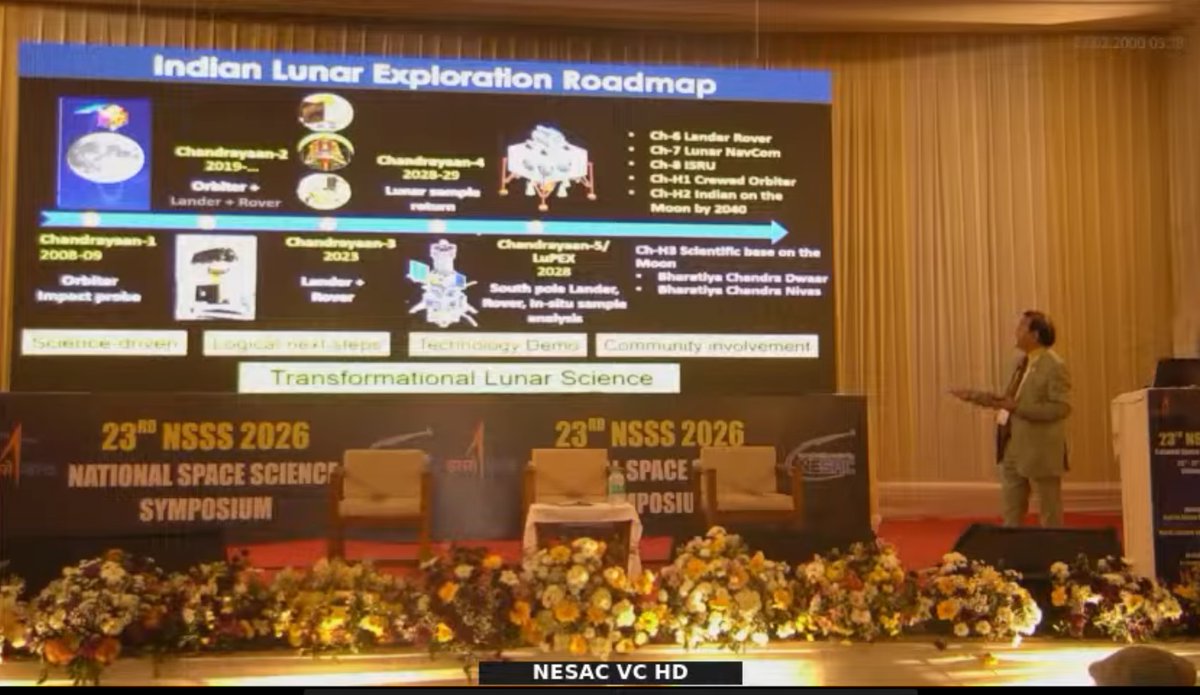
@electricfoo Data relay sat constellation is still there, on CY-7. It's Nav Com (not cam) - a network of satellites for data relay that is also capable of providing GNSS services on the Moon.
English
0
0
2
88
Aditya Madanapalle
Aditya Madanapalle@electricfoo·
@Astro_Neel CH6 was ISRU demo, CH7 was nuclear heat source demo at IAC 2024. So now, CH6 has become rover, CH7 is nav cam, CH8 is ISRU hmmm... this roadmap also does not include pressurised surface transport vehicle, lunar power station, constellation of 6 relay/nav sats.
English
1
0
4
460
Astro_Neel
Astro_Neel@Astro_Neel·
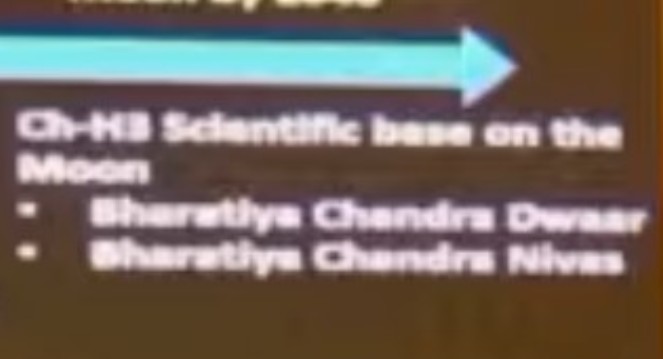
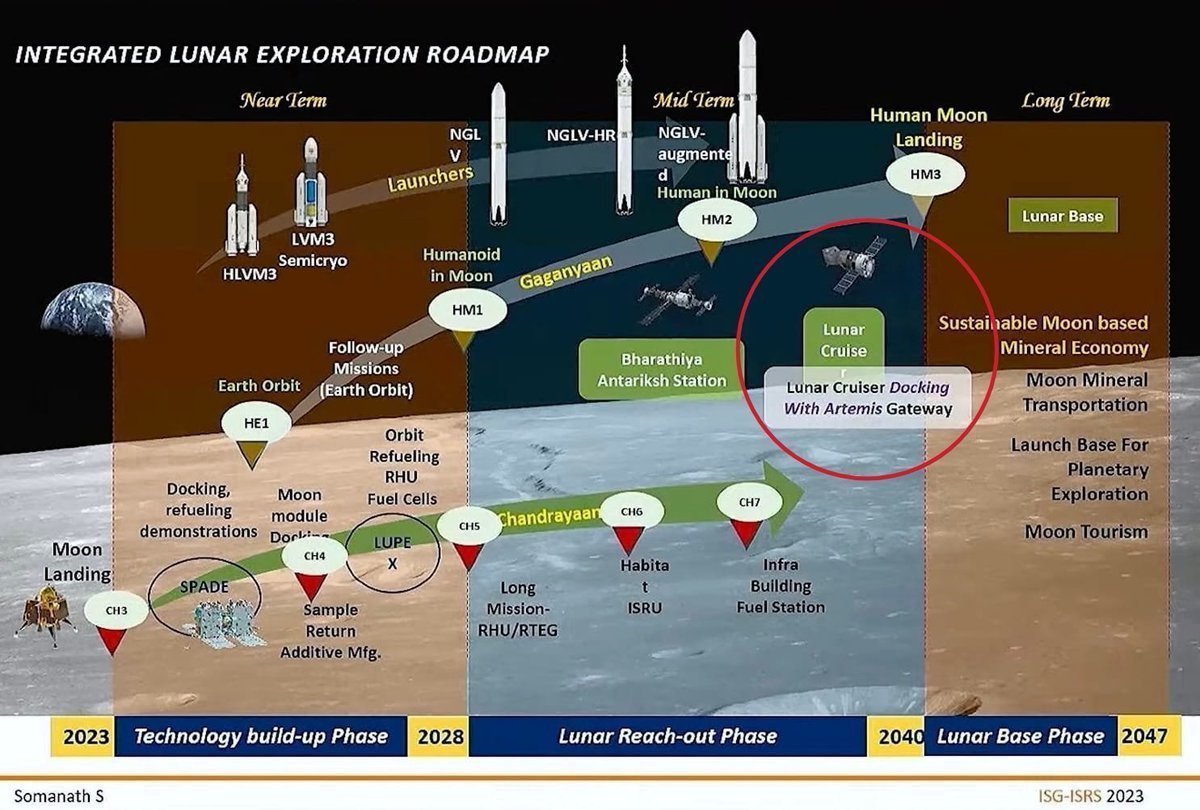
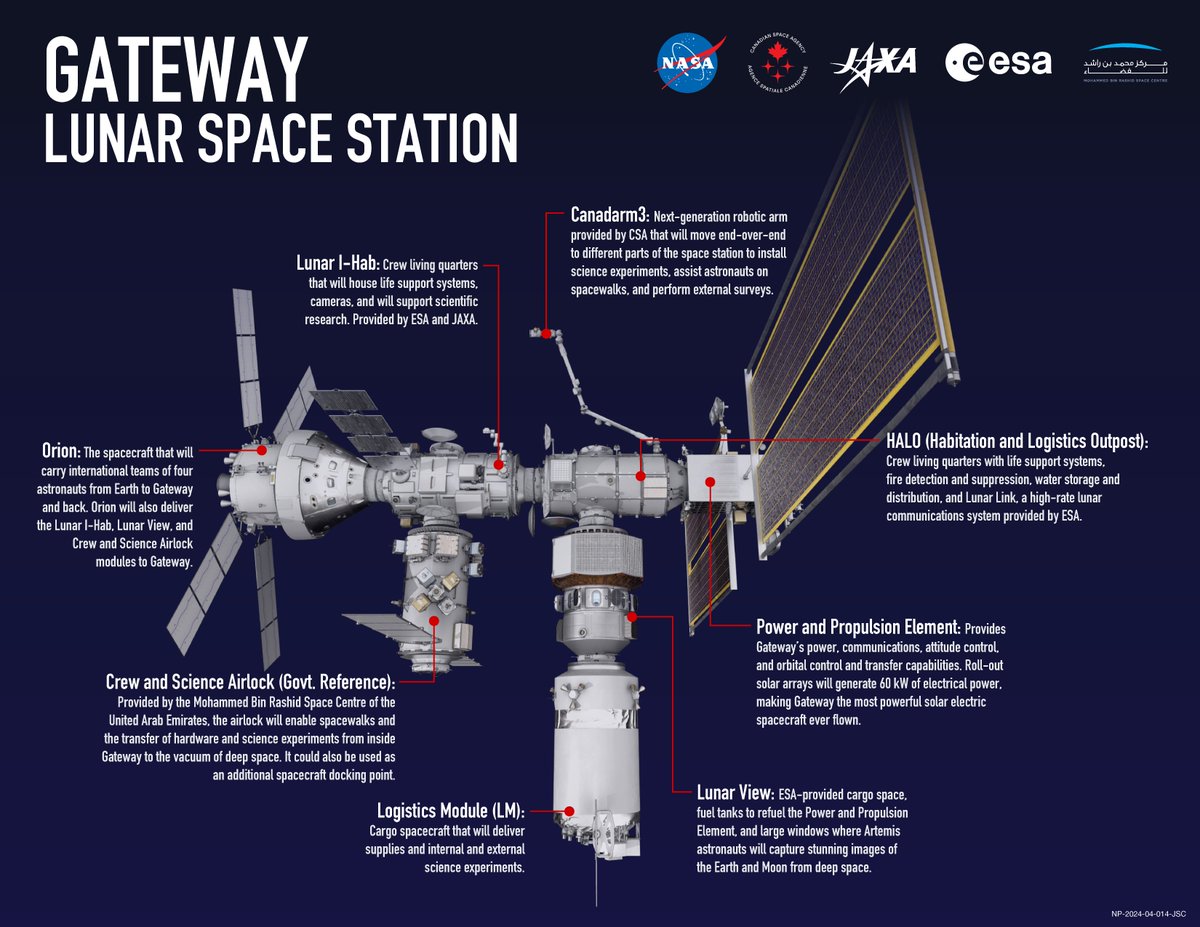
What's happening here? Is this new "Bharatiya Chandra Dwaar" India's version of Lunar 𝗚𝗮𝘁𝗲way, or is it simply a renaming of deep space class of Gaganyaan capsule that they're planning to dock with Artemis' Gateway? Either way, I'm sure we could've come up with better names for these. 🫠
Astro_Neel tweet mediaAstro_Neel tweet mediaAstro_Neel tweet mediaAstro_Neel tweet media
English
12
19
138
6.5K
Astro_Neel
Astro_Neel@Astro_Neel·
I'd definitely heard of 'Bhartiya Chandra Nivas' lunar habitat before. I've also known about the deep-space variant of Gaganyaan they intend to dock with Artemis Gateway, and may have seen this infographic before as well. But somehow this 'Bhartiya Chandra Dwaar' lunar orbital station is something they almost never talk about. It's why this concept always seems new to me every time I come across it, which also begs the question how seriously they want to pursue it while still keeping their 2040 deadline for putting Indians on the Moon. From my perspective, it looks like they're pursuing it simply because big bro NASA along with other Artemis member states are doing it. So this has to be the proven way to ensure mission and crew safety in the present times. And not to mention, it's a bit easier and time-saving to retrace a success story than to reinvent the wheel and deal with all the new risks involved when you're doing something differently for the first time.
English
1
0
3
143
Aditya Madanapalle
Aditya Madanapalle@electricfoo·
@Astro_Neel I think these were first introduced at GLEX 2025... this is not a cislunar orbiter, this is a cislunar orbital complex, it is India's Gateway.
Aditya Madanapalle tweet media
English
1
1
16
559
Astro_Neel
Astro_Neel@Astro_Neel·
@TechDefMan "influence of sanskrit is much less compared to local Dravidian influence which developed seperately from sanskrit." Only someone who has never been to the south or had the chance to ever come across any south Indian language would say that. Have fun in your bubble.
English
0
0
0
38
Objective OSINT
Objective OSINT@TechDefMan·
@Astro_Neel Ignorance is not knowing that influence of sanskrit is much less compared to local Dravidian influence which developed seperately from sanskrit. Not to mention that this is unnecessary fuel for 'hindi imposition' gang to stir row regardless of history. Please educate yourself.
English
1
0
0
42
Astro_Neel
Astro_Neel@Astro_Neel·
None of those words are exclusive to Hindi. 'Bhartiya', 'Chandra', 'Dwaar' and 'Nivas' are all Sanskrit derivative terms. So just about any speaker of any single South Indian language can easily understand what these mean. Let's not point fingers at others over one's own ignorance.
English
1
0
4
78
Objective OSINT
Objective OSINT@TechDefMan·
@Astro_Neel Naming these things in shuddh hindhi while more than half of scientists working on it are south indians is just hilarious dumb decision by our as usual retarded babus.
English
1
0
1
68
Astro_Neel
Astro_Neel@Astro_Neel·
@Math_files Rayleigh scattering, not Raman effect, is the reason why the sky appears blue to human eyes.
English
1
0
24
1.6K
Math Files
Math Files@Math_files·
Have you ever wondered why the sky is blue? If your answer is yes, then you are not alone. There was once a curious man, C. V. Raman who asked the same question and went on to find its answer. While traveling, he looked at the sea and wondered: if water is not actually blue, why does it appear blue? This single question began a series of experiments that continued for the next seven years. He proved that when light strikes transparent matter, its wavelength changes — a phenomenon now known as the Raman Effect. For this discovery, he was awarded the Nobel Prize in Physics in 1930. He was not only the first Indian but also the first Asian to win a Nobel Prize in science. Today 28 February, National Science Day is celebrated because the Raman Effect was discovered on this day.
Math Files tweet media
English
19
203
980
27.4K
Astro_Neel
Astro_Neel@Astro_Neel·
@torybruno Yes, along with your proprietary banana for scale please :)
English
0
0
1
527
Tory Bruno
Tory Bruno@torybruno·
Blue Ring #1 is moving through testing and doing well. Any interest in pictures?
English
123
37
1.4K
55.2K
Astro_Neel
Astro_Neel@Astro_Neel·
@HopDavid41 @mariana_muerte The number of times people confuse Galileo Galilei with Giordano Bruno is simply 'astronomical' (pun intended) 🤷🏼‍♂️
English
0
0
0
46
Hop David
Hop David@HopDavid41·
@mariana_muerte Death sentence? I've heard a number of people claim that Galileo was burned at stake. And I don't think they were trolling. We are living in an idiocracy
English
1
0
5
82
Astro_Neel
Astro_Neel@Astro_Neel·
@gopal_lohar_0 @SarvamAI Hahaha 🤣 I swear I want to be active here and continue spreading factlets as frequently as possible, but thanks to 'life, the universe and everything' I end up inactive for longer than I'd like to 🥲🫠 Nevertheless, happy to know you find my posts eye-openers :)
English
1
0
3
751
Gopal
Gopal@gopal_lohar_0·
@Astro_Neel @SarvamAI Neel bhaiya comes, Neel bhaiya shocks everyone, Neel bhaiya goes back, 🔁
Filipino
1
0
7
977
Astro_Neel
Astro_Neel@Astro_Neel·
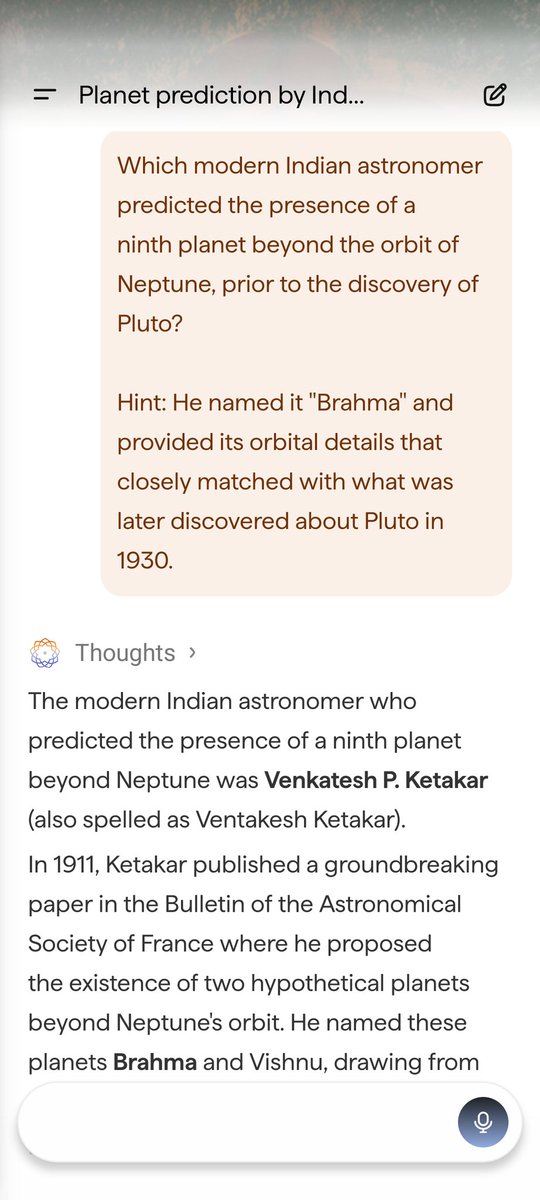
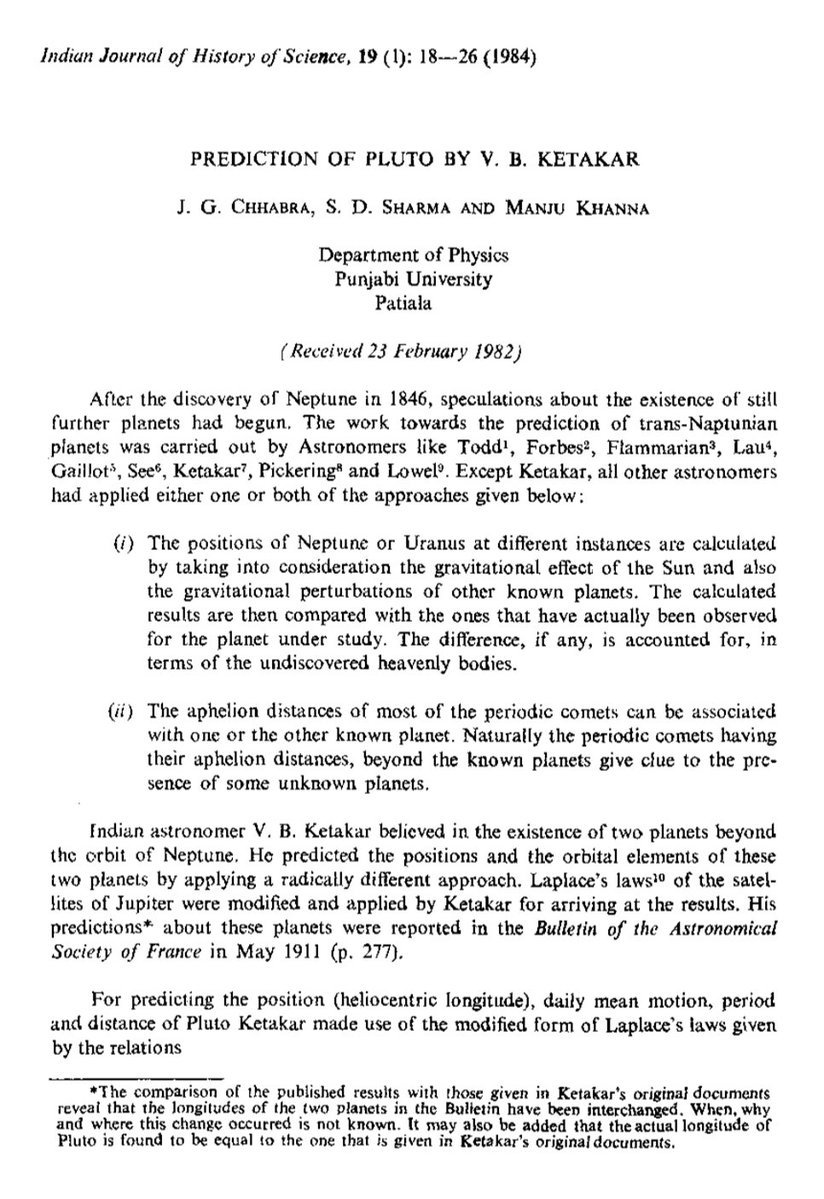
Not bad @SarvamAI. Not bad at all! :) [Fun fact for those who didn't know this by the way 🙂]
Astro_Neel tweet mediaAstro_Neel tweet mediaAstro_Neel tweet mediaAstro_Neel tweet media
English
5
110
666
21.3K