
Sabitlenmiş Tweet

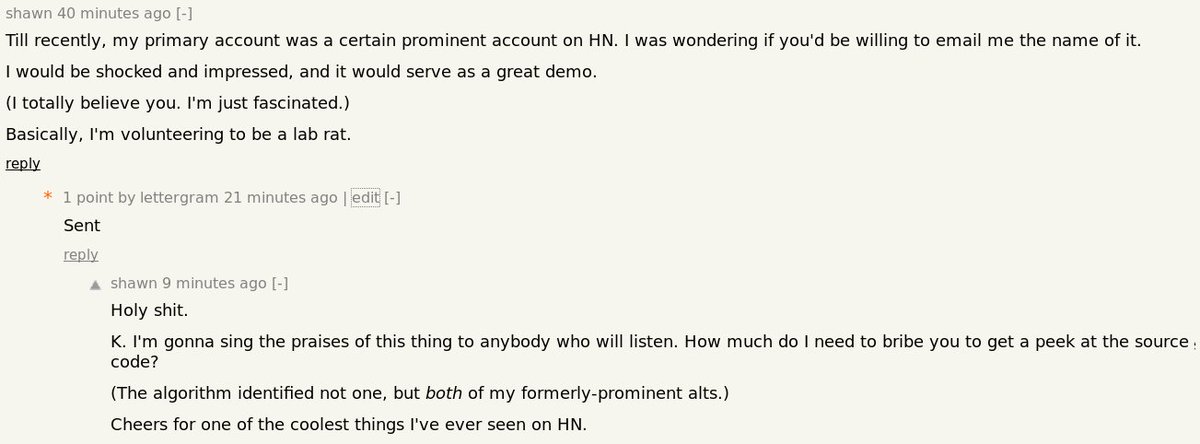
Turns out I can de-anonymize users on #HackerNews (already turned this system off): hnprofile.com
With great power comes great responsibility, I can only imaging what @Snowden saw...
news.ycombinator.com/item?id=179442…
English
Austin Walters
2.9K posts

@AustinGWalters
Founder @ IP Copilot, Prolific AI inventor

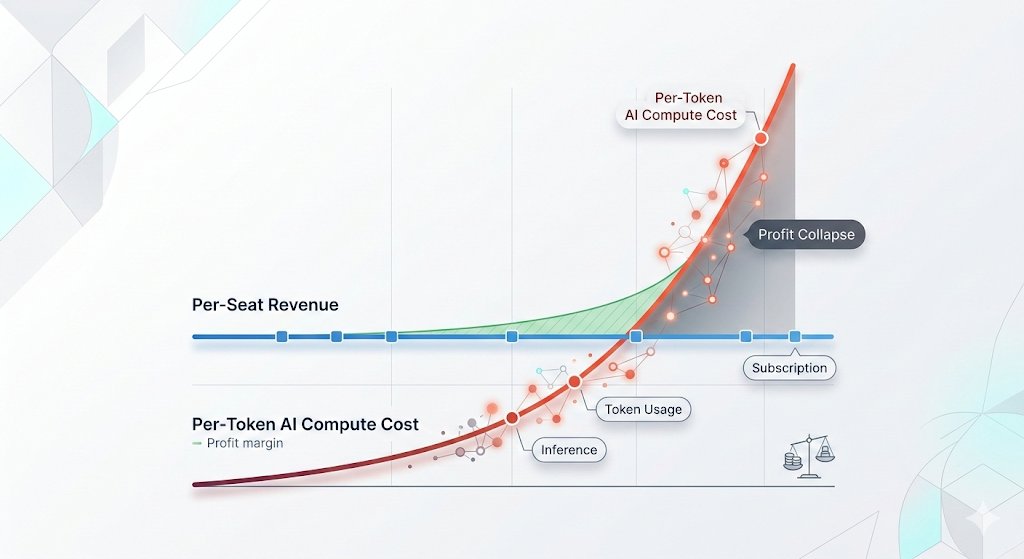


OpenClaw is the fastest-growing open source project, but there are no stories of running it safely in production at scale. As we started deploying agents internally at @brexHQ, we couldn’t stop thinking about this question. Agents work, but nobody wants to give them real credentials. Instead of waiting for a solution to emerge, we decided to try a novel approach: using LLMs to judge the network traffic of an AI agent. Today we’re announcing CrabTrap, an open-source proxy that intercepts every outbound request and blocks risky activity using LLMs, before it ever hits an external API. The results are promising; we believe it’s a meaningful step forward in the security of agent harnesses in production environments. Try it out today. (As a side note, it was really fun to work personally on a real systems problem again. And btw, if you want to work at a place where the CEO is building proxies at night, we’re hiring!)




New satellite imagery released by Airbus confirms that the AN/TPY-2 THAAD radar at Muwaffaq Salti Base in Jordan was destroyed by Iran. The U.S. openly denied this.



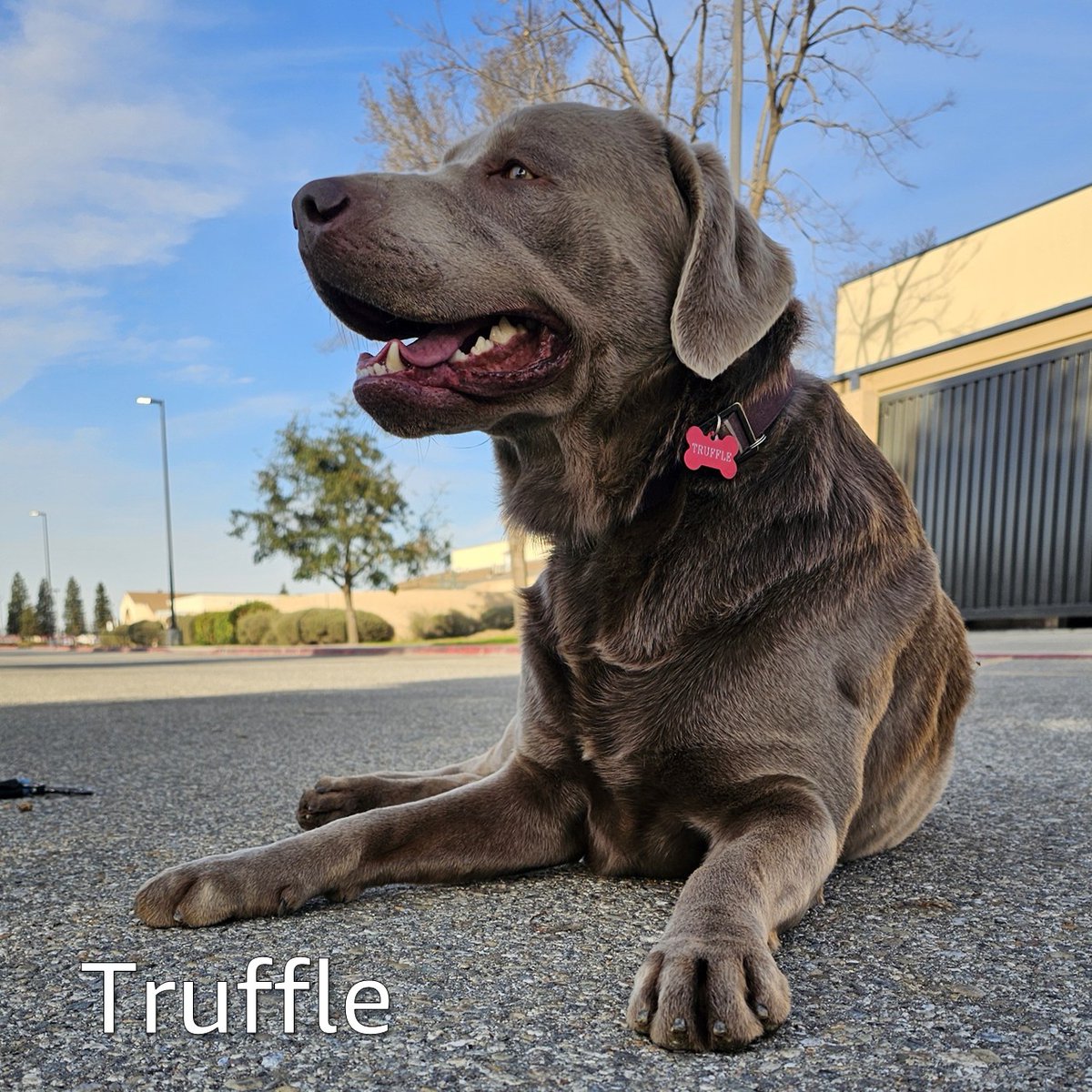
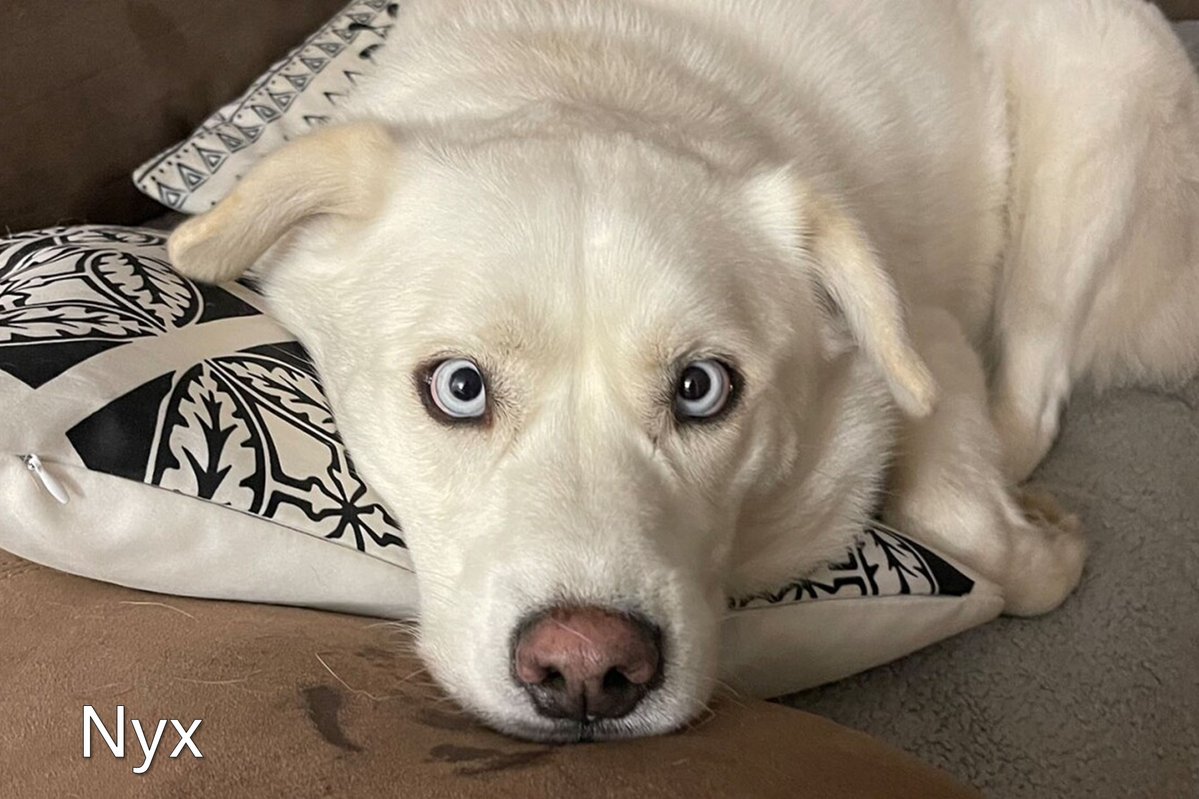
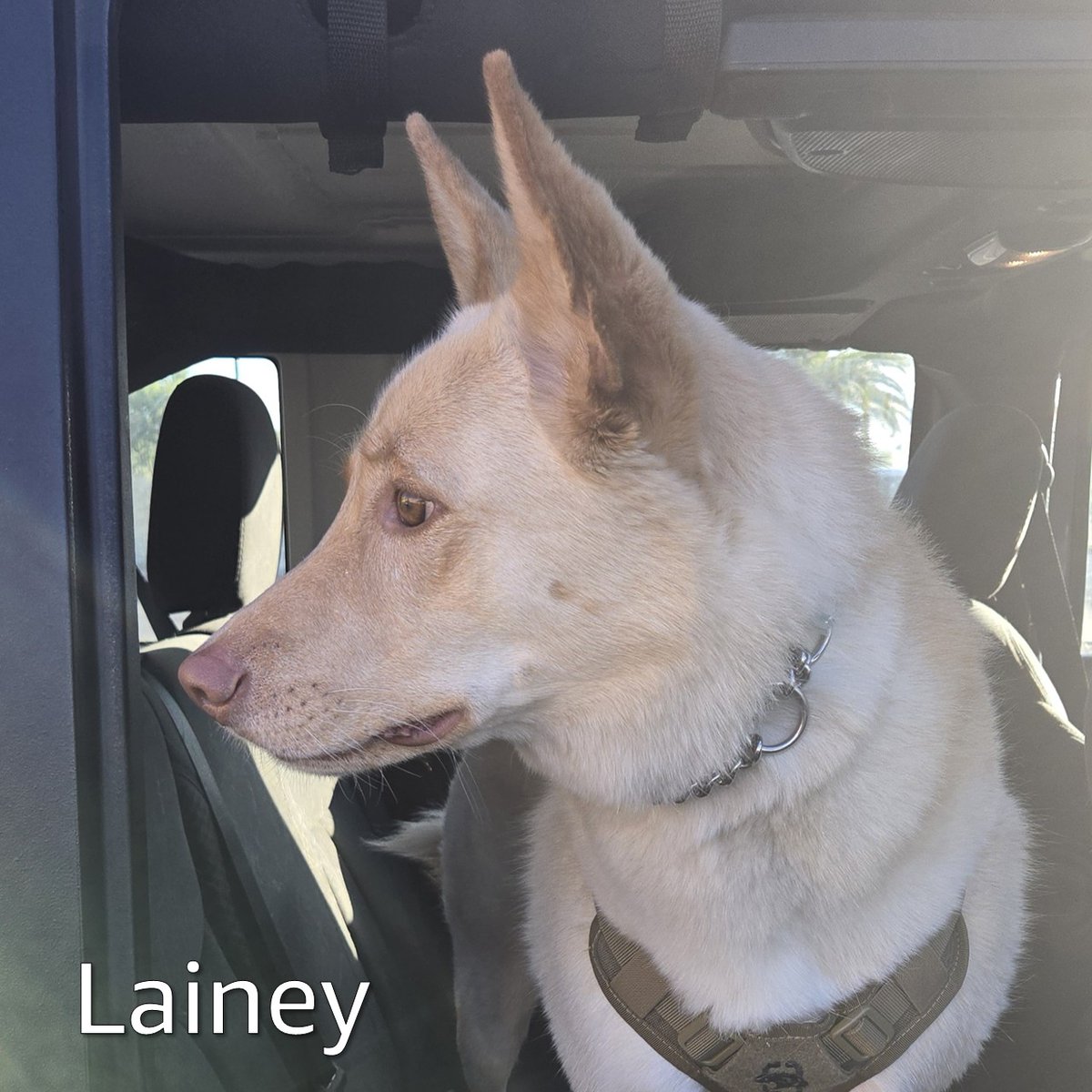
People ask me all the time about compelling use cases of AI. Here’s a good one. Millions of dogs go missing in the U.S. every year—and options for finding them are often painfully limited. Our Ring team saw an opportunity to use our community and technology to help, so they built Search Party. When a pet owner posts about a lost dog in the Ring app, nearby participating outdoor Ring cameras in the neighborhood begin looking for potential matches. If yours spots what might be the missing dog, it lets you know. You see the photo alongside footage from your camera, then can choose to share the video with the pet’s owner. The AI is trained on tens of thousands of dog videos so it can recognize different breeds, sizes, fur patterns, body features, unique marks, shape, and color. And privacy stays in your control—you decide each time whether to help. The impact is energizing. Search Party has helped bring home 99 dogs in just 90 days—more than a dog a day since launching three months ago. Ring customer Kylee was blown away by Search Party after her dog Nyx was found by a neighbor’s camera just 15 minutes after slipping through a tiny hole he’d dug under her backyard fence. When a Ring customer and military veteran named Kurt realized his service dog was missing after jumping his fence, he worried he might have lost her for good. He quickly initiated a Search Party in the Ring app asking neighbors to help locate her. Later that day, he got the notification he was hoping for…Lainey was found. Chris, a Ring camera owner, helped reunite another lost dog with its family after getting an app alert that said, “Your camera may have spotted a missing dog,” flagging footage he wouldn't have otherwise noticed. And the list of stories like these keeps growing. Now we’ve expanded this feature so that anyone in the U.S. can start a Search Party through the Ring app, even without a Ring camera (lost pets are one of the most common posts in the Ring Neighbors app—over 1M last year alone). With roughly 90 million dogs in the U.S., think this is gonna matter for a lot of families. Good example of real-world impact, and proud of what the Ring team has built here. aboutamazon.com/news/devices/r…




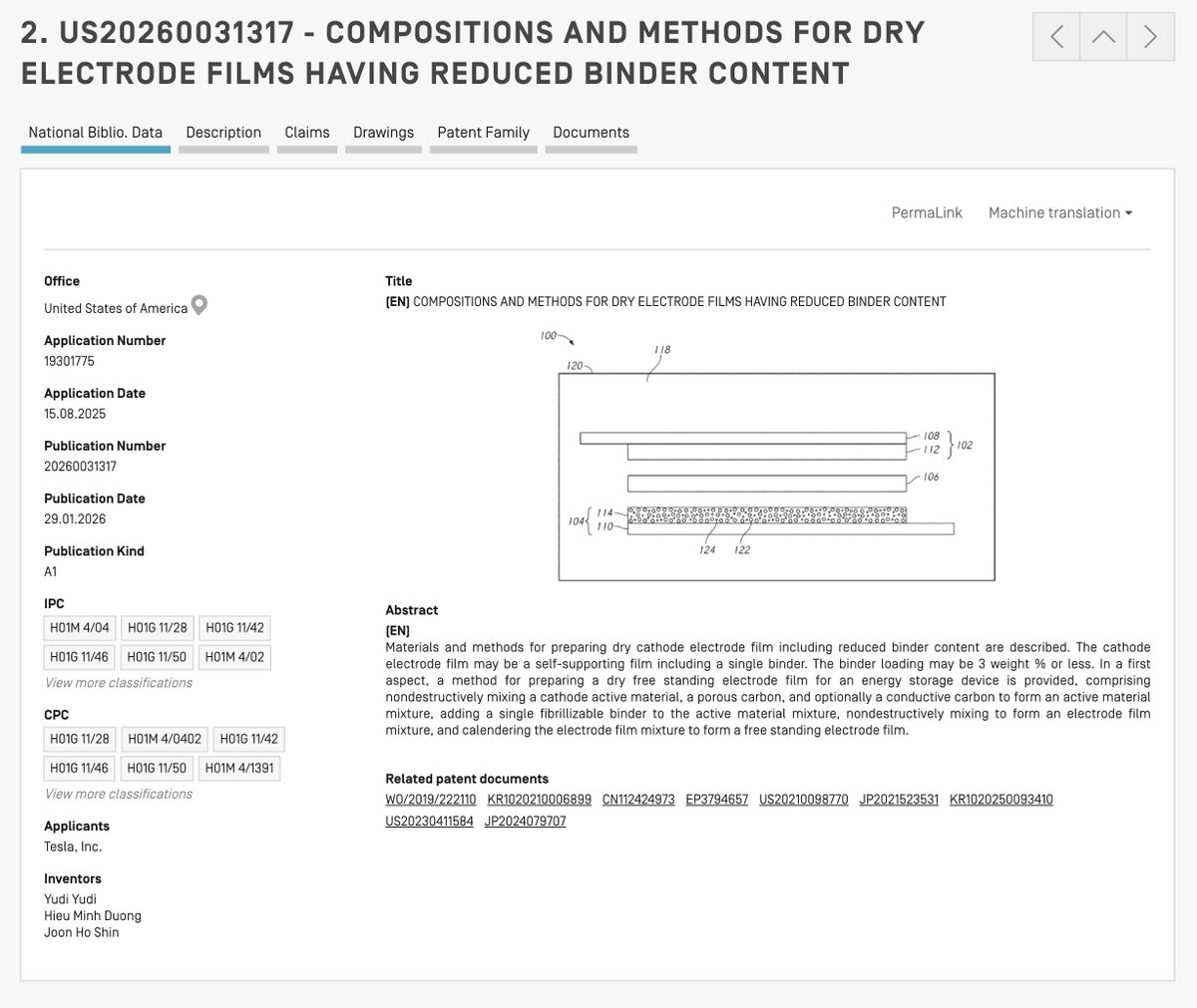
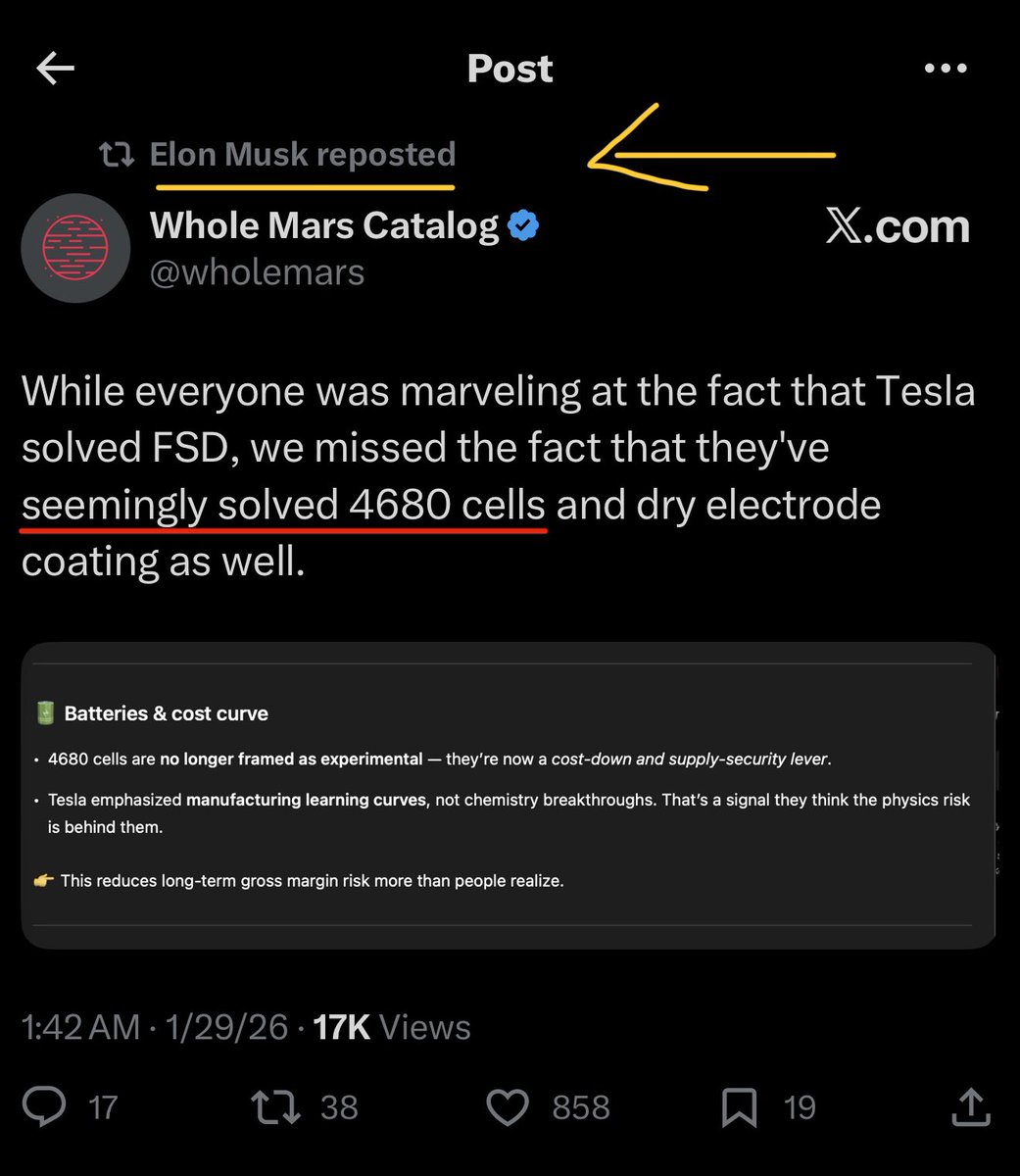
GOOD NEWS 🚨 Tesla has engineered a pure dry cathode that delivers maximum energy with minimal binder 🔋 Published on August 19, 2025, patent US20230411584 reveals the engineering breakthroughs behind a new manufacturing process Tesla has been developing to remove toxic solvents and massive drying ovens from battery production. This patent reveals a specific dry electrode recipe that enables Tesla to build high-performance cathodes with significantly less binder. ⚖️ The problem: The "wet" process limit and particle damage For decades, making lithium-ion batteries has required a "wet" process. Manufacturers mix active battery powders with toxic solvents and liquid binders to create a sludge, which is then spread onto foil and dried in enormous, energy-hungry ovens. This traditional method is incredibly expensive and takes up massive amounts of factory floor space. Even worse, the intense, high-speed mixing required to make this sludge often damages the delicate microscopic structures of the battery materials. When cathode materials, like Lithium Nickel Manganese Cobalt Oxide (NMC), are subjected to this harsh mixing, the microscopic clusters of particles can crack or break apart. This damage degrades the material before it is even put into a battery, leading to poorer performance and a shorter lifespan. The industry has struggled to switch to a "dry" powder process because, without the liquid solvent, you typically need to add more non-active binder (glue) to hold the powder together. Unfortunately, adding more non-active glue means there is less room for energy-storing material, which lowers the battery's range. 🔗 Tesla's solution: nondestructive mixing and fibrillization Tesla's solution, detailed in this patent, is a method for creating a standalone dry electrode sheet using a gentle mixing process and a single, special type of binder. The key innovation is the ability to make a strong, self-supporting sheet using less than 3 percent binder—and in some cases, as little as 1.25 percent. By minimizing the amount of wasted space taken up by glue, Tesla can pack the electrode with 90 to 99 percent active material, directly increasing how much energy the battery can hold. The process relies on Polytetrafluoroethylene (PTFE) as the primary binder. PTFE has a unique ability called "fibrillization," which means that under stress, the polymer particles stretch out into microscopic, spiderweb-like fibers. These fibers act like a net that traps and holds the active battery particles together. Tesla has refined a "nondestructive" method—likely using lower speeds or gentler blending—to mix the materials without crushing them. This preserves the pristine original structure of the cathode particles, ensuring they work as efficiently as possible. A crucial discovery in the patent is the relationship between particle size and the amount of binder needed. Tesla found that using slightly larger active particles—specifically those around 10 to 20 microns in size—makes it easier to form a solid sheet with very little binder. By ensuring these particles are roughly one-tenth the thickness of the final electrode sheet, the structure remains stable without needing excess polymer glue. This effectively turns the bulk of the electrode into a solid block of energy-storing material. To achieve this mix without crushing these specific particles, the patent moves away from standard high-speed milling. Instead, it suggests using acoustic mixers or blade mixers running at very slow speeds. The document specifies blade speeds of just 10 to 40 meters per minute—a gentle pace that blends the ingredients thoroughly while leaving the delicate surface coatings and internal structures of the cathode materials completely unharmed. The recipe for the film is a "hybrid" mixture designed to help the dry formation process. Along with the main battery ingredients (like NMC) and the PTFE binder, the mix includes small amounts of porous carbon and conductive carbon. These carbon materials act like an electrical skeleton inside the PTFE web. This ensures that even with very little binder, electricity can flow easily through the electrode, and the material stays strong when it is pressed into a sheet. The patent also outlines a strict order of operations to ensure quality. The process uses a two-stage mixing approach: the active battery materials and carbon are blended first to create a "dry active base." Only after this base is fully mixed is the dry binder added. This separation prevents the PTFE from turning into fibers too early in the process. It ensures the fiber network forms exactly when it is meant to—during the final pressing stage—rather than getting worn out during the initial mixing. Once the mixture is ready, it is passed through a "calender"—a machine with high-pressure rollers—to press it into a continuous sheet. The patent notes that this new mixture is very easy to work with, requiring as few as three passes through the rollers to form a sturdy, self-supporting film. This film is strong enough to be handled and rolled up without needing a metal foil backing immediately, which simplifies the manufacturing line. Eventually, this dry sheet is laminated onto a metal foil to create the final finished electrode. In terms of performance, the patent data shows that these dry-processed electrodes actually work better than those made with the traditional wet process. The dry cathode films showed excellent efficiency right from the first charge cycle (about 90 to 94 percent). Furthermore, test cells proved they could hold onto their capacity even when discharging power very quickly. For example, the dry electrodes performed better than wet ones during high-speed power drains, likely because electricity flows more easily through the undamaged, dry-pressed material. 🚀 How this patent contributes to Tesla's now and future First, this patent specifically solves the "range vs. cost" trade-off for the 4680 cell. By proving they can manufacture stable electrodes with 99 percent active material, Tesla can essentially "delete" nearly all non-energy components from the cathode. This means future Model Y and Cybertruck battery packs can achieve higher energy density purely through manufacturing efficiency, without needing expensive exotic chemicals. Second, the patent validates a massive reduction in factory footprint for upcoming Gigafactory expansions. The text confirms that the dry film is "self-supporting" after just three passes through a roller, eliminating the need for the massive, 100-meter-long drying ovens that currently bottle-neck production. This allows Tesla to deploy "micro-factories" or much denser production lines, drastically lowering the capital cost (CapEx) required to double or triple global battery output. Third, the data on "nondestructive mixing" directly supports Tesla's million-mile battery ambition. The patent explicitly demonstrates that cells made with this gentle process retained nearly 90 percent of their capacity after 2,000 charge cycles. By not cracking the particles during manufacturing, Tesla is ensuring that the batteries in their robotaxis and grid storage products will last significantly longer than current industry standards, increasing the resale value of every vehicle they sell. Finally, this technology grants Tesla independence from specialized supply chains. The patent shows the process works effectively with standard, large-particle commercial materials (like NMC 811) rather than requiring highly processed, expensive custom powders. This flexibility means Tesla can buy standard raw materials at bulk commodity prices and still produce a superior electrode, securing a long-term margin advantage over competitors who rely on more complex, wet-slurry chemistry.

The FBI was able to access Washington Post reporter Hannah Natanson's Signal messages because she used Signal on her work laptop. The laptop accepted Touch ID for authentication, meaning the agents were allowed to require her to unlock it. storage.courtlistener.com/recap/gov.usco…



In 2026, AI will move from hype to pragmatism | Rebecca Bellan & Ram Iyer, TechCrunch If 2025 was the year AI got a vibe check, 2026 will be the year the tech gets practical. The focus is already shifting away from building ever-larger language models and toward the harder work of making AI usable. In practice, that involves deploying smaller models where they fit, embedding intelligence into physical devices, and designing systems that integrate cleanly into human workflows. The experts TechCrunch spoke to see 2026 as a year of transition, one that evolves from brute-force scaling to researching new architectures, from flashy demos to targeted deployments, and from agents that promise autonomy to ones that actually augment how people work. The party isn’t over, but the industry is starting to sober up. Scaling laws won’t cut it In 2012, Alex Krizhevsky, Ilya Sutskever, and Geoffrey Hinton’s ImageNet paper showed how AI systems could “learn” to recognize objects in pictures by looking at millions of examples. The approach was computationally expensive, but made possible with GPUs. The result? A decade of hardcore AI research as scientists worked to invent new architectures for different tasks. That culminated around 2020 when OpenAI launched GPT-3, which showed how simply making the model 100 times bigger unlocks abilities like coding and reasoning without requiring explicit training. This marked the transition into what Kian Katanforoosh, CEO and founder of AI agent platform Workera, calls the “age of scaling”: a period defined by the belief that more compute, more data, and larger transformer models would inevitably drive the next major breakthroughs in AI. Today, many researchers think the AI industry is beginning to exhaust the limits of scaling laws and will once again transition into an age of research. Yann LeCun, Meta’s former chief AI scientist, has long argued against the overreliance on scaling, and stressed the need to develop better architectures. And Sutskever said in a recent interview that current models are plateauing and pretraining results have flattened, indicating a need for new ideas. “I think most likely in the next five years, we are going to find a better architecture that is a significant improvement on transformers,” Katanforoosh said. “And if we don’t, we can’t expect much improvement on the models.” Sometimes less is more Large language models are great at generalizing knowledge, but many experts say the next wave of enterprise AI adoption will be driven by smaller, more agile language models that can be fine-tuned for domain-specific solutions. “Fine-tuned SLMs will be the big trend and become a staple used by mature AI enterprises in 2026, as the cost and performance advantages will drive usage over out-of-the-box LLMs,” Andy Markus, AT&T’s chief data officer, told TechCrunch. “We’ve already seen businesses increasingly rely on SLMs because, if fine-tuned properly, they match the larger, generalized models in accuracy for enterprise business applications, and are superb in terms of cost and speed.” We’ve seen this argument before from French open-weight AI startup Mistral: It argues its small models actually perform better than larger models on several benchmarks after fine-tuning. “The efficiency, cost-effectiveness, and adaptability of SLMs make them ideal for tailored applications where precision is paramount,” said Jon Knisley, an AI strategist at ABBYY, an Austin-based enterprise AI company. While Markus thinks SLMs will be key in the agentic era, Knisley says the nature of small models means they’re better for deployment on local devices, “a trend accelerated by advancements in edge computing.” Learning through experience Humans don’t just learn through language; we learn by experiencing how the world works. But LLMs don’t really understand the world; they just predict the next word or idea. That’s why many researchers believe the next big leap will come from world models: AI systems that learn how things move and interact in 3D spaces so they can make predictions and take actions. Signs that 2026 will be a big year for world models are multiplying. LeCun left Meta to start his own world model lab and is reportedly seeking a $5 billion valuation. Google’s DeepMind has been plugging away at Genie and in August launched its latest model that builds real-time interactive general-purpose world models. Alongside demos by startups like Decart and Odyssey, Fei-Fei Li’s World Labs has launched its first commercial world model, Marble. Newcomers like General Intuition in October scored a $134 million seed round to teach agents spatial reasoning, and video generation startup Runway in December released its first world model, GWM-1. While researchers see long-term potential in robotics and autonomy, the near-term impact is likely to be seen first in video games. PitchBook predicts the market for world models in gaming could grow from $1.2 billion between 2022 and 2025 to $276 billion by 2030, driven by the tech’s ability to generate interactive worlds and more lifelike non-player characters. Pim de Witte, founder of General Intuition, told TechCrunch virtual environments may not only reshape gaming, but also become critical testing grounds for the next generation of foundation models. Agentic nation Agents failed to live up to the hype in 2025, but a big reason for that is because it’s hard to connect them to the systems where work actually happens. Without a way to access tools and context, most agents were trapped in pilot workflows. Anthropic’s Model Context Protocol (MCP), a “USB-C for AI” that lets AI agents talk to the external tools like databases, search engines, and APIs, proved the missing connective tissue and is quickly becoming the standard. OpenAI and Microsoft have publicly embraced MCP, and Anthropic recently donated it to the Linux Foundation’s new Agentic AI Foundation, which aims to help standardize open source agentic tools. Google also has begun standing up its own managed MCP servers to connect AI agents to its products and services. With MCP reducing the friction of connecting agents to real systems, 2026 is likely to be the year agentic workflows finally move from demos into day-to-day practice. Rajeev Dham, a partner at Sapphire Ventures, says these advancements will lead to agent-first solutions taking on “system-of-record roles” across industries. “As voice agents handle more end-to-end tasks such as intake and customer communication, they’ll also begin to form the underlying core systems,” Dham said. “We’ll see this in a variety of sectors like home services, proptech, and healthcare, as well as horizontal functions such as sales, IT, and support.” Augmentation, not automation While more agentic workflows might raise worries that layoffs may follow, Katanforoosh of Workera isn’t so sure that’s the message: “2026 will be the year of the humans,” he said. In 2024, every AI company predicted they would automate jobs out of needing humans. But the tech isn’t there yet, and in an unstable economy, that’s not really a popular rhetoric. Katanforoosh says next year, we’ll realize that “AI has not worked as autonomously as we thought,” and the conversation will focus more on how AI is being used to augment human workflows, rather than replace them. “And I think a lot of companies are going to start hiring,” he added, noting that he expects there to be new roles in AI governance, transparency, safety, and data management. “I’m pretty bullish on unemployment averaging under 4% next year.” “People want to be above the API, not below it, and I think 2026 is an important year for this,” de Witte added. Getting physical Advancements in technologies like small models, world models, and edge computing will enable more physical applications of machine learning, experts say. “Physical AI will hit the mainstream in 2026 as new categories of AI-powered devices, including robotics, AVs, drones, and wearables start to enter the market,” Vikram Taneja, head of AT&T Ventures, told TechCrunch. While autonomous vehicles and robotics are obvious use cases for physical AI that will no doubt continue to grow in 2026, the training and deployment required is still expensive. Wearables, on the other hand, provide a less expensive wedge with consumer buy-in. Smart glasses like the Ray-Ban Meta are starting to ship assistants that can answer questions about what you’re looking at, and new form factors like AI-powered health rings and smartwatches are normalizing always-on, on-body inference. “Connectivity providers will work to optimize their network infrastructure to support this new wave of devices, and those with flexibility in how they can offer connectivity will be best positioned,” Taneja said. techcrunch.com/2026/01/02/in-…

